2027 Most Valuable Engineering Degree Programs Ranking in the USA

Co-Founder and Chief Data Scientist
Choosing the right engineering degree program is an important step toward building a successful future. With many options available, it can be challenging to know which programs offer the best value and opportunities.
This article features the 2027 Most Valuable Engineering Degree Programs Ranking in the USA, created by the Research.com team of data scientists. It aims to help you make an informed decision based on thorough analysis and trusted data.
Whether you're passionate about innovation or looking for strong career prospects, exploring these rankings will guide you toward programs that align with your goals and dreams.
Key benefits of getting engineering degree in America
- Salary: Engineering graduates in America enjoy competitive salaries, with Mechanical Engineers earning an average of $105,220 annually and Electrical Engineers making about $117,680 yearly, reflecting strong financial rewards in the field.
- Career Paths: Graduates from popular universities often find diverse opportunities, from designing innovative tech to managing large infrastructure projects, making engineering a flexible and exciting career choice.
- Online Degrees: Earning an engineering degree online, like from well-known universities, offers flexibility for working students and often allows faster entry into the workforce, helping balance life and study smoothly.
- 2027 Most Valuable Engineering Degree Programs Ranking in the USA
- What can I expect from engineering degree in America?
- Where can I work with engineering degree in America?
What can I expect from engineering degree in America?
The average cost of pursuing an engineering degree in America varies widely depending on where you study, but many students find a manageable path with the right planning. For instance, graduates from public universities like the University of Michigan or Georgia Tech often pay between $10,000 and $12,000 per year if they're in-state, making the total cost closer to $40,000 to $48,000 for the typical four-year program. This can feel like a big commitment, yet many describe the investment as a thrilling step toward their future career.
On the other hand, attending private institutions renowned for engineering, such as Stanford or MIT, can push annual tuition beyond $40,000, totaling over $160,000. Despite this, students often share that generous scholarships, grants, and work-study options create unexpected relief and keep their dreams afloat, adding excitement to their academic journey.
Balancing tuition with internships and co-op programs also helps students ease financial pressure by gaining real-world experience, making every dollar worth the adventure of mastering engineering in America.
Where can I work with engineering degree in America?
Graduates from engineering programs at schools like MIT or Stanford often find themselves diving into thrilling roles within the technology sector-imagine collaborating on cutting-edge software at Silicon Valley giants or designing sleek hardware that changes how we connect. This fast-paced world fuels curiosity and problem-solving every day.
Others from manufacturing-focused programs at universities such as Purdue embrace hands-on innovation, improving products in automotive or aerospace industries. Picture working alongside passionate teams to create the next generation of vehicles or advanced materials, knowing your efforts shape future technology.
Civil engineering alumni from institutions like Texas A&M frequently engage in building vital infrastructure. Envision standing at a bridge site or bustling highway, proud that your work supports communities and fuels growth nationwide.
Environmental and petroleum engineers from schools like the University of Colorado explore sustainable energy projects-an exciting arena, blending science with the urgent need to protect our planet.
Meanwhile, biomedical engineers educated at Johns Hopkins transform healthcare by developing life-saving devices, improving countless lives through innovation that comes alive in hospitals and labs.
Graduates from top engineering programs at universities like MIT and Stanford often find their degrees open doors to impressive earnings. For example, mechanical engineers typically enjoy a mean annual wage of about $105,220, which turns hard work into a rewarding paycheck. Imagine starting your career in a dynamic tech hub, leveraging that knowledge to command around $50.59 an hour while designing groundbreaking machines.
Electrical engineering graduates can look forward to slightly higher salaries, with mean wages reaching approximately $117,680 annually. Think about the excitement of working on innovative circuits or renewable energy projects, making $56.58 an hour while shaping the future. Meanwhile, civil engineers, often involved in shaping America's infrastructure, earn a solid mean of $101,160, turning their passion for building into steady income.
Industrial engineers also boast promising pay, averaging about $103,150 per year. Students envisioning careers improving manufacturing systems or logistics can look forward to rewarding roles where their expertise means real-world impact and salaries that recognize that skill.
Across bustling campuses and collaborating with peers, many graduates thrive knowing their education from renowned colleges aligns with growing opportunities and notable compensation in America's engineering landscape.
- The average annual cost for engineering degrees is $10,000 to $25,000 at public universities and over $40,000 at private universities, excluding living expenses.
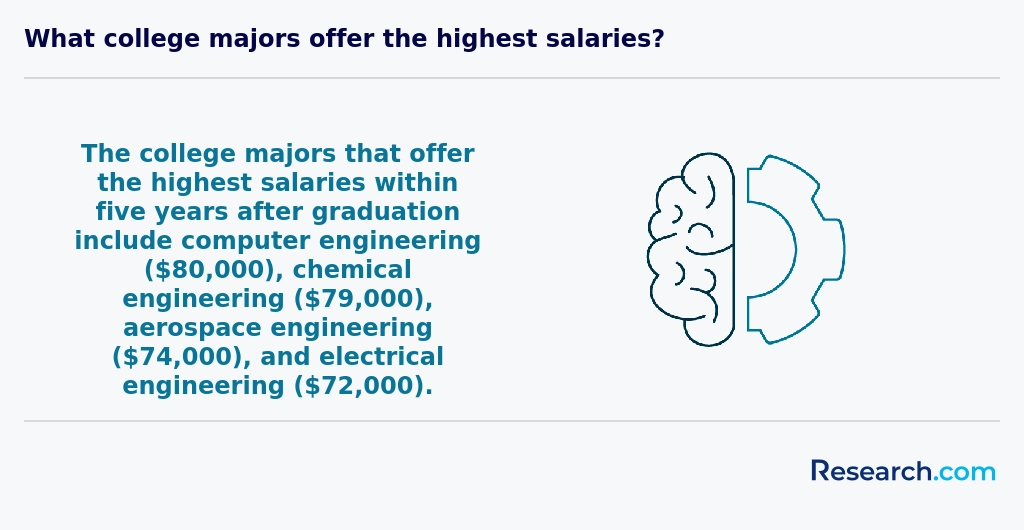
- The average starting salary for engineering graduates is about $69,000 per year, with median salaries ranging from $90,000 to over $120,000 depending on specialization.
- Employment for engineers is expected to grow 7% from 2021 to 2031, which matches the average growth rate for all occupations.
- ABET accreditation is common for engineering programs and is often required for professional engineer (PE) licensure in many states.
- Strong skills in mathematics, science, problem-solving, plus hands-on labs and internships, are essential parts of engineering degrees.
- Various scholarships and financial aid options are available to help reduce the cost of pursuing an engineering degree in the U.S.
In America, earning an engineering degree usually takes about four years of dedicated study, a timeline many graduates from top schools like MIT or Stanford fondly recall. Imagine starting your journey with foundational courses in math and science, gradually diving into fascinating areas like thermodynamics or programming by your second year. Many find this progression both challenging and exciting, as it's designed to build real skills step-by-step.
Some students chase accelerated programs, wrapping up in three years by pushing themselves hard-an intense but rewarding path. Others take a bit longer, balancing internships or co-op experiences that offer invaluable hands-on learning but extend their academic clock beyond four years. These immersive experiences often become some of their fondest memories.
For those embracing the adventure of advanced degrees, a master's might add 1 to 2 years, while a research-driven Ph.D. journey could take 4 to 6 years. Every step is a new chapter in a thrilling exploration that shapes future engineering innovators.
Understanding the true value of an engineering degree requires examining both the expenses you’ll incur and the earnings you can expect. On average, in-state tuition for a four-year bachelor’s in engineering ranges from $40,000 to $120,000, while private institutions can exceed $200,000. When you factor in living expenses, textbooks, and fees, total costs often reach $150,000–$250,000. By contrast, median starting salaries for graduates hover between $65,000 and $75,000, with five-year post-graduation averages rising to $95,000–$110,000. A simple payback calculation shows that a graduate earning $70,000 annually and dedicating 10% of income to loan repayment will clear a $150,000 debt in roughly 15 years. However, choosing programs with lower tuition or strong co-op placements can shorten this period significantly. Prospective students in Georgia, for example, can explore the Inexpensive Engineering Degree Programs Ranking in Atlanta, GA to identify schools where debt-to-earnings ratios are more favorable. Beyond tuition, consider scholarship packages, employer-sponsored tuition reimbursement, and accelerated degree tracks that reduce time to diploma. Research shows that graduates who complete internships earn up to 15% more in their first job, cutting payback time by two years. When evaluating programs, calculate your estimated monthly loan payment against projected starting salary and factor in potential bonuses or signing incentives. By doing so, you’ll ensure your engineering education delivers a strong return on investment, both financially and professionally.
Picture a student at Georgia Tech, eagerly collaborating in bustling labs, surrounded by whirring machines and vibrant whiteboards filled with complex formulas-this is the heart of on-campus engineering degrees in America. The immersive experience, full of hands-on projects and face-to-face brainstorming, fuels excitement and deep understanding. In contrast, imagine a working professional enrolled in the University of Florida's online program, balancing family life while engaging in live virtual lectures and remote labs. The flexibility here sparks enthusiasm for learning without the constraints of commuting or rigid schedules.
On-campus students thrive on immediate access to resources like career fairs and peer networks, which often lead to internships at nearby tech hubs. Meanwhile, online learners creatively build connections through virtual platforms and occasional local partnerships, embracing a different but equally rewarding kind of community. Both paths are accredited and valued; it simply comes down to whether you crave the dynamic buzz of campus life or the adventurous freedom of remote learning that fits your unique lifestyle.
The average cost of an engineering degree in America often surprises prospective students, but understanding the numbers helps set clear expectations. Most engineering graduates report a median total cost around $47,237, a figure that reflects out-of-state tuition and fees at many popular public universities. For those attending as in-state students, the price can drop significantly, with median costs around $14,460, making residency status a powerful factor in budgeting for an engineering education.
Imagine a student pursuing a Bachelor of Science in Engineering at a well-known public university renowned for its programs. They might feel the excitement of tackling challenging projects while managing finances carefully, balancing scholarships and part-time work to ease the burden of tuition. Many share stories of this energetic journey, emphasizing the need to plan around total expenses for engineering degree programs in the USA, which go beyond tuition to include housing, textbooks, and lab materials.
On the private university front, although the data shows higher costs, ambitious engineering undergraduates often highlight the value they receive, from state-of-the-art facilities to close-knit campus communities. To explore alternatives, students typically research the most affordable engineering programs, seeking quality education that fits their financial plans without sacrificing their dreams.
Imagine starting your engineering journey at a top school like MIT or Georgia Tech, where tuition can feel like climbing a steep mountain. Luckily, federal aid often acts as your sturdy rope. Take the Pell Grant, for instance - awarded to many low-income students, it can cover up to $7,395 annually without the burden of repayment. Many graduates recall how this grant transformed their college experience into a more affordable adventure.
Federal loans also open pathways, especially subsidized loans where the government pays interest while you study. Graduate engineers at Stanford often tap into Direct PLUS Loans, embracing the challenge while managing repayment plans.
Scholarships targeted to engineers add sparkles along the route; entities like the Society of Women Engineers or the National Society of Black Engineers fuel dreams with generous awards. Picture an undergrad at Purdue winning a merit-based scholarship that trims thousands off tuition - a real game changer!
State grants and university scholarships further ease the trek, especially for in-state students. Plus, working pros chasing part-time degrees can often access employer tuition aid, turning work into a launchpad for their engineering goals.
In today’s rapidly evolving technological landscape, engineering education is experiencing a transformative shift that blends traditional teaching with cutting-edge innovations. Universities are increasingly incorporating artificial intelligence, virtual labs, and digital simulation tools into their curricula, empowering students to gain hands-on experience with the latest technologies. This evolution not only enhances academic learning but also prepares aspiring engineers to tackle complex real-world challenges with a forward-thinking mindset. Hybrid learning models, driven by lessons learned during recent global shifts, now offer a flexible blend of online and in-person classroom experiences. This approach enables students to access quality education regardless of their geographical location, while still benefiting from collaborative, face-to-face interactions. For those exploring budget-friendly options without compromising on quality, learning about the most affordable engineering programs can be a great starting point. Sustainability and green technologies are also at the forefront of curriculum updates, reflecting the growing demand for eco-friendly engineering solutions. Programs now emphasize renewable energy, sustainable design practices, and environmental engineering, ensuring graduates are well-prepared to contribute to a greener future. Embracing these trends not only boosts employability but also reaffirms an institution’s commitment to innovation and social responsibility. Furthermore, partnerships with industry leaders are enhancing experiential learning through real-world projects, mentorship programs, and internships. These collaborations help bridge the gap between academic theory and industry practice, fostering an ecosystem where creativity and technical proficiency go hand in hand. As a result, graduates emerge as agile professionals ready to excel in a competitive, ever-changing job market.
Diving into an engineering degree at renowned places like MIT or Stanford begins with a solid grasp of math and science. Graduates often recall their first days mastering Calculus and Physics, feeling a thrilling mix of challenge and discovery. High school courses in Algebra, Geometry, Trigonometry, and especially Calculus set the stage, while Chemistry and Physics open the door to understanding the world's mechanics. Many students also find that skills in English and Computer Science quietly boost their ability to communicate complex ideas or write code for projects.
Beyond coursework, standardized tests like the SAT or ACT act as passports to these programs. Ambitious applicants often aim for SAT math scores over 600, echoing the competitive spirit felt by many engineering hopefuls. Some students share how excelling in AP exams-Calculus AB, BC, or Physics-gave them the confidence to leapfrog introductory classes and dive deeper into their fields. This early preparation is like packing the essentials for a thrilling academic adventure through the landscape of American engineering.
To thrive in today’s competitive job market, engineering graduates must combine strong technical abilities with recognized professional credentials. Below are the key competencies and certifications that can accelerate your career growth: 1. Core Technical Skills - Advanced Mathematics & Analytics: Mastery of calculus, linear algebra, and statistics for design optimization and data-driven decision-making. - Programming & Software Tools: Proficiency in languages like Python or C++, as well as CAD platforms (AutoCAD, SolidWorks) and simulation software (MATLAB, ANSYS). - Systems Thinking: Ability to conceptualize and integrate complex subsystems, from electronic circuits to mechanical components. 2. Soft Skills & Professional Attributes - Communication & Collaboration: Clear technical writing, persuasive presentations, and teamwork in multidisciplinary environments. - Project Management: Time-management, budgeting, and scope control-skills often demonstrated by earning a PMP or Six Sigma Green Belt. - Critical Thinking & Adaptability: Rapid problem-solving and resilience when prototypes fail or requirements shift. 3. Licensure & Accreditation - Fundamentals of Engineering (FE) Exam: The first step toward becoming a Professional Engineer (PE), validating your foundational engineering knowledge. - Professional Engineer (PE) License: Opens doors to leadership roles, government contracts, and higher salary brackets across all disciplines. 4. Specialized Certifications & Pathways - Industry-Recognized Certificates: Certifications such as Cisco’s CCNA or Autodesk Certified Professional can distinguish you in fields like network engineering and CAD design. - Software Engineering Focus: If you’re drawn to software development, review the requirements to become a software engineer to plan your coursework, internships, and portfolio projects. - Emerging Technologies: Stay ahead of trends by pursuing micro-credentials in AI, IoT, or renewable energy systems. By intentionally building this blend of technical expertise, soft-skill mastery, and formal credentials, engineering graduates can not only meet employer expectations but also lead innovation and drive lasting impact across industries.
Diving into an engineering degree in America means embarking on a thrilling journey through a mix of core courses that build your foundation and specialized subjects that ignite your passion. Imagine spending your first two years at a leading university like MIT or Georgia Tech, mastering essential math skills-calculus, differential equations, and linear algebra-that become your toolkit for problem-solving.
Alongside math, you'll explore physics with hands-on labs diving into mechanics and electromagnetism, feeling the excitement as theories turn into real-world phenomena. Chemistry becomes your ally, especially if you lean toward chemical or materials engineering, while coding classes open doors to software tools shaping modern engineering breakthroughs.
Graduates often recall tackling structural analysis in civil engineering or designing circuits in electrical engineering, all while collaborating on capstone projects that mimic real workplace challenges. These experiences at top American engineering schools spark confidence and creativity, making the learning process as dynamic as the fields you'll soon transform.
When diving into an engineering degree in America, students often find a thrilling variety of specializations waiting to be explored. Popular programs at renowned universities include core disciplines like mechanical, electrical, civil, and computer engineering-each opening doors to dynamic careers. For example, graduates from top colleges describe the excitement of designing HVAC systems in mechanical engineering or developing cutting-edge circuits in electrical engineering labs.
Those drawn to infrastructure often choose civil engineering, working on projects such as bridges or water systems that literally shape the world. Meanwhile, computer engineering blends software and hardware, sparking the curiosity of students at tech-focused institutions eager to master embedded systems or cybersecurity challenges. Many have found this intersection thrilling and aligned with their passion.
Beyond traditional fields, adventurous students seize opportunities in chemical, aerospace, biomedical, environmental, and industrial engineering. These diverse paths reveal just how broad engineering degree specializations in the USA truly are.
Interested in the requirements to become a software engineer? This path is increasingly popular among those looking to combine hardware knowledge with coding skills.
Choosing the best engineering degree in America is an adventure, guided by exploring programs that match your passions and career dreams. Graduates from renowned schools often highlight how attending an ABET-accredited program opened doors to licensed professional roles and boosted their confidence with industry-respected credentials. Imagine diving into hands-on projects and internships in vibrant campuses like those in California or Texas, where aerospace and tech giants offer real-world experience. Many students find joy in programs that balance rigorous academics with practical learning, realizing over 65% secure jobs within six months of graduation.
For those eyeing top affordable engineering schools in America, budgeting plays a critical role. Public universities often provide solid education with manageable costs, while some private institutions offer unique research opportunities worth the investment. Labs and materials fees add layers to expenses, so it's wise to seek scholarships tailored for engineering aspirants.
Exploring curriculum flexibility can transform your studies-graduates recall how smaller classes encouraged personal mentorship, and interdisciplinary courses equipped them with skills beyond engineering, like data science. If affordability is key, the Inexpensive Engineering Degree Programs Ranking in Atlanta, GA can be a helpful compass on your educational journey.
Exploring engineering career opportunities in the USA reveals a landscape as vast as it is vibrant. Graduates from renowned institutions such as MIT or Stanford often find themselves designing cutting-edge software or innovating mechanical systems that shape our daily lives. Imagine a graduate from Georgia Tech collaborating on renewable energy projects or an alumnus from UC Berkeley working on smart infrastructure-each path brimming with challenge and excitement. Many graduates discover fulfillment in fields like electrical and chemical engineering, where they tackle real-world problems from sustainable energy to advanced manufacturing.
For those craving versatility, top engineering jobs for graduates in America stretch beyond traditional roles into exciting sectors such as aerospace, biomedical technology, or environmental engineering. This adventurous spirit reflects stories heard at career fairs across top universities, where students eagerly discuss how their degrees can springboard them into research, consulting, or management. With tuition costs in mind, some aspiring engineers turn to accelerated bachelor degree programs to fast-track their journey while exploring these diverse career paths.
The engineering degree job outlook USA is vibrant and full of promise, especially for graduates from well-known schools like MIT, Stanford, and Georgia Tech. These graduates often share thrilling stories of landing exciting roles shortly after graduation, fueled by innovations in tech hubs and infrastructure projects across the country. Imagine diving into a career where your work directly influences the growth of renewable energy or the next wave of automation-this is the reality for many entering the field.
Career opportunities for engineering graduates America span diverse industries, from aerospace to software development. Graduates find themselves navigating roles in bustling metropolitan areas or pioneering startups, armed with skills in demand nationwide. Those studying at elite public universities or private institutions are often energized by internships and projects that enhance employability. Investing in your education might feel daunting, but many discover it's worth every dollar compared to alternatives like the easiest way to get associate's degree, given the higher starting salaries and widespread demand.
2027 Most Valuable Engineering Degree Programs Ranking in the USA
Investing in your education is a significant decision that can shape your future, and the Research.com team understands the importance of making informed choices. To assist prospective students and professionals, we have carefully developed the "2027 Most Valuable Engineering Degree Programs Ranking in the USA." Our dedication to quality, credibility, and accuracy is demonstrated through rigorous research and comprehensive data analysis.
We utilized the following reputable data sources to ensure a thorough evaluation of engineering degree programs:
By exploring this ranking, readers will gain valuable insights into the most valuable engineering programs, enabling them to make well-informed decisions about their educational and career pathways. For more information on how this ranking was created, please visit our Research.com methodology page.


# 7 position
Pennsylvania State University-Main Campus
Bachelor of Science in Engineering


Frequently Asked Questions About engineering
Engineering students in America can maximize their learning experience by actively engaging in hands-on projects and internships. According to the National Association of Colleges and Employers (NACE), 65% of engineering graduates secure jobs through internship experience, showing its importance in skill development.
Participating in undergraduate research allows students to apply theoretical concepts practically, enhancing critical thinking. The American Society for Engineering Education reports that students involved in research show 20% higher retention rates in their programs.
Additionally, leveraging campus resources like tutoring centers and joining engineering clubs can build teamwork and leadership skills critical in the field.
Emerging niches within engineering are shaping the future of the profession in the United States. One growing area is renewable energy engineering, focusing on solar, wind, and battery technologies, driven by increased investment in clean energy. According to the U.S. Bureau of Labor Statistics, jobs for environmental engineers are projected to grow 8% from 2022 to 2032.
Another key niche is biomedical engineering, which combines healthcare and technology, especially in medical devices and tissue engineering. The National Science Foundation reports steady growth in this field due to aging populations and innovative treatments.
Additionally, artificial intelligence (AI) and robotics engineering are rapidly expanding, with many U.S. universities now offering specialized programs. These areas address automation and smart system development, critical for industries like manufacturing and defense.
Preparing for the job market after completing an engineering degree in America involves several strategic steps. First, gaining relevant internship experience during your studies is crucial; about 60% of engineering students secure internships that significantly boost job prospects, according to the National Association of Colleges and Employers (NACE) 2023 report.
Networking is essential-attending career fairs and joining professional organizations like the American Society of Mechanical Engineers (ASME) can connect you with industry professionals. Additionally, developing proficiency in key software and engineering tools often required by employers enhances employability.
Many engineering jobs also value certifications such as the Fundamentals of Engineering (FE) exam, which is the first step to becoming a licensed Professional Engineer (PE). Finally, cultivating strong communication and teamwork skills will set candidates apart in a competitive market.
Employers in America highly value engineering graduates who demonstrate strong technical skills paired with problem-solving abilities. According to the National Association of Colleges and Employers (NACE), proficiency in computer-aided design (CAD), programming languages, and data analysis tools ranks among the top requirements. Critical thinking and the ability to apply theoretical knowledge to practical challenges are essential.
Communication skills are also paramount. Engineers must collaborate across multidisciplinary teams and clearly present complex ideas to non-engineers. A survey by the American Society for Engineering Education (ASEE) highlighted that over 70% of employers seek candidates with excellent oral and written communication abilities.
Additionally, adaptability and continuous learning are crucial in a fast-evolving sector. Employers prefer graduates who can quickly master new technologies and stay updated on industry trends.
Finding internships relevant to an engineering degree in America involves several strategic steps. First, utilize your university's career services, as many US colleges have strong connections with local and national engineering firms. According to the National Association of Colleges and Employers (NACE), over 60% of internships in engineering are obtained through university referrals.
Additionally, explore online job boards like Handshake or internships.com, which list thousands of engineering internship opportunities nationwide. Professional organizations such as the Society of Women Engineers (SWE) and the American Society of Mechanical Engineers (ASME) also offer internship listings and networking events.
Networking remains crucial; attending career fairs and joining engineering clubs improves your chances. Actively reach out to alumni and use LinkedIn to connect with professionals in your field.
Early application is important since many engineering internships fill quickly, especially in competitive sectors like aerospace and software engineering.
In America, an engineering degree significantly enhances career mobility and advancement. According to the U.S. Bureau of Labor Statistics, engineering occupations are expected to grow by 6% from 2021 to 2031, indicating steady demand. Graduates often begin with competitive salaries, with median annual wages around $80,000 depending on the specialty. This strong starting point opens doors to various industries, including technology, manufacturing, and aerospace, allowing fluid lateral moves.
Further, engineering degrees cultivate problem-solving and technical skills valued in leadership roles. Professionals frequently advance into management, research, or specialized technical positions. Data from the National Association of Colleges and Employers (NACE) shows that engineering graduates have among the highest employment rates within six months of graduation. This favorable outlook supports sustained career growth across multiple sectors.
Studying for an engineering degree in America equips students with skills that extend beyond technical expertise. Many programs emphasize interdisciplinary learning, integrating concepts from computer science, business, and environmental studies. According to the American Society for Engineering Education (ASEE), a majority of accredited engineering schools encourage teamwork across disciplines to solve complex problems.
Students often engage in projects that require collaboration with peers from different fields, preparing them for diverse workplace environments. Additionally, curricula frequently include courses in communication, ethics, and management to develop well-rounded professionals. This holistic approach helps graduates adapt to roles that combine engineering with other specialties.
When choosing between a thesis and a non-thesis engineering degree program in America, students should consider their career goals and learning preferences. Thesis programs typically involve conducting original research and writing a detailed paper, providing strong preparation for doctoral studies or research-oriented careers.
Non-thesis programs focus more on coursework and practical skills, appealing to students who want to enter the workforce quickly. According to the American Society for Engineering Education, about 60% of engineering graduate students choose non-thesis options to emphasize applied knowledge.
Financial and time commitments also differ: thesis programs may require more time and funding due to research demands. Consultation with academic advisors and reviewing program accreditation can further guide decisions.
American students seeking to pursue engineering degrees abroad have multiple options through U.S. universities' study abroad programs. Many accredited engineering schools partner with institutions in Europe, Asia, and Australia, offering semester-long or year-long exchanges. Programs affiliated with the Institute of International Education (IIE) report that approximately 17% of American engineering undergraduates participate in study abroad during their degree.
Popular countries include Germany, known for mechanical and automotive engineering, and the United Kingdom, which offers strong civil and structural engineering courses. These opportunities often allow credits earned abroad to count toward U.S. degree requirements, ensuring academic progress.
Additionally, professional organizations like ABET accredit some international programs, which can ease credit transfer and professional licensure recognition upon return to the U.S.
Part-time jobs that complement engineering education in America often provide practical experience and industry insight. Common positions include lab assistants, where students help conduct experiments and manage equipment, enhancing technical skills. Internships at engineering firms, even if part-time, expose students to real-world projects and professional workflows.
Technical tutoring or teaching assistant roles in subjects like math, physics, or computer science also reinforce core engineering concepts. According to the National Association of Colleges and Employers (NACE), about 60% of engineering students participate in internships or cooperative education programs before graduation.
Additionally, software development or CAD drafting roles can help build competencies in high-demand tools and programming languages used by engineers across fields.
Networking opportunities for engineering students in America are extensive and varied. Many universities host career fairs and industry-specific events that connect students with leading companies like Boeing, Intel, and Tesla. According to the National Association of Colleges and Employers (NACE), over 80% of engineering graduates find jobs through networking at these events.
Student chapters of professional organizations such as the American Society of Civil Engineers (ASCE) and the Institute of Electrical and Electronics Engineers (IEEE) provide valuable platforms for meeting peers and industry professionals. Additionally, internships and cooperative education programs often serve as key networking channels.
Online platforms like LinkedIn also help students build professional connections. Universities increasingly support networking through mentorship programs linking students with alumni working in engineering fields.
Alumni networks play a significant role in supporting engineering degree students in America. These networks connect current students with graduates who have professional experience and industry insights. According to the National Association of Colleges and Employers (NACE), 70% of jobs are found through networking, highlighting its critical importance for engineering students.
Through alumni connections, students gain access to internships, job opportunities, and mentorship programs tailored to engineering fields such as civil, mechanical, and electrical engineering. Many universities in the U.S. host events and provide platforms where alumni share technical knowledge and career advice.
Furthermore, alumni often collaborate with universities to offer scholarships and funding for research projects, enhancing students' learning experience. This support system fosters professional growth in a competitive and technology-driven job market.
Customizing an engineering degree program in America allows students to align their education with specific career goals. Many universities offer specialized tracks or concentrations within engineering fields such as mechanical, electrical, civil, or computer engineering. Choosing electives strategically can deepen expertise in emerging areas like renewable energy, robotics, or data science.
Students may also pursue minors or double majors in complementary disciplines to enhance their marketability. According to the American Society for Engineering Education, around 65% of engineering programs support interdisciplinary studies to reflect evolving industry demands.
Internships, cooperative education (co-op) programs, and undergraduate research provide practical experience valuable for career customization. Selecting accredited institutions ensures recognized qualifications by employers.
Engineering students in America often face rigorous academic demands, with coursework in mathematics, science, and technology requiring strong analytical skills. According to the American Society for Engineering Education, nearly 40% of engineering undergraduates do not complete their degree within six years, highlighting challenges in workload and retention.
Another major challenge is time management, as students balance labs, projects, and internships alongside classwork. Financial pressure is also significant; the average debt for engineering graduates can exceed $30,000, according to the National Center for Education Statistics.
Additionally, some students report feeling isolated in male-dominated fields, as women and minorities remain underrepresented in engineering programs. Support services and mentoring can help, but awareness of these challenges is essential before enrolling.
With an engineering degree in America, pursuing professional certifications can significantly enhance your career and job prospects. One of the most recognized certifications is the Professional Engineer (PE) license. It requires passing the Fundamentals of Engineering (FE) exam, gaining relevant work experience-typically four years-and then passing the PE exam. This license allows engineers to sign off on projects and take legal responsibility for engineering work.
Other valuable certifications include the Certified Manufacturing Engineer (CMfgE) and the Project Management Professional (PMP), both respected in industry. According to the National Society of Professional Engineers, licensed PEs often earn 10-20% more than their non-licensed peers, highlighting the financial benefits of certification.
To write a winning application for an engineering program in America, start by showcasing strong academic performance, especially in math and science courses. Many top engineering schools require a minimum GPA of around 3.5. Highlight relevant extracurricular activities such as robotics clubs, internships, or engineering competitions, which demonstrate practical skills and passion.
Clearly articulate your career goals and explain why the specific program fits your aspirations. Personal statements should be concise, focused, and free of errors. According to the National Association of Colleges and Employers, internships significantly boost admission chances.
Finally, secure strong recommendation letters from teachers familiar with your STEM abilities. This combination increases your odds in a competitive field with over 600 ABET-accredited engineering programs nationwide.
Engineering careers in America are viewed globally as highly valuable and competitive. According to the National Science Foundation, the U.S. produces approximately 120,000 engineering bachelor's degrees annually, positioning it among the world's top contributors of engineering talent.
Internationally, American engineering degrees are respected for their rigorous curriculum and emphasis on innovation. Many countries recognize U.S.-accredited programs through ABET, which facilitates global mobility for graduates.
The demand for American-trained engineers remains strong. The U.S. Bureau of Labor Statistics projects a 7% growth in engineering jobs from 2021 to 2031, with median salaries above $80,000. These figures highlight both national and global demand for American engineering expertise.
Gaining practical experience while studying for an engineering degree in America is essential to boost job readiness. Many universities encourage students to participate in cooperative education (co-op) programs, which alternate semesters of academic study with paid work experience in engineering fields. According to the National Association of Colleges and Employers (NACE), 60% of engineering students who complete internships secure full-time jobs before graduation.
Additionally, engineering students can engage in research projects supervised by faculty, offering hands-on learning and often contributing to published work. Student organizations such as the American Society of Mechanical Engineers (ASME) provide design competitions and workshops that simulate real-world engineering challenges.
Volunteering or working part-time in local engineering firms also strengthens practical skills and professional networks. These opportunities enrich learning beyond classroom theory, preparing graduates for America's competitive engineering job market.
Choosing the right concentration within an engineering degree in America depends on your interests, career goals, and the job market. Popular concentrations include mechanical, electrical, civil, and computer engineering. According to the U.S. Bureau of Labor Statistics, computer hardware engineers and civil engineers are projected to grow by 2% and 7%, respectively, through 2031, indicating strong demand in those fields.
Consider your strengths in math, science, and technology as well as internship or co-op opportunities available at your prospective school. Research universities accredited by ABET, the recognized authority in engineering education, to ensure quality programs.
Industry trends also matter: emerging areas like renewable energy and biomedical engineering may offer new career paths. Speak with academic advisors and review curriculum details carefully to find a concentration that aligns with your long-term objectives.
See What Experts Have To Say About Studying Engineering
Read our interview with Engineering experts


Jasna Jankovic
Engineering Expert
Associate Professor
University of Connecticut

Bohdan W. Oppenheim
Engineering Expert
Professor Emeritus of Healthcare Systems Engineering
Loyola Marymount University

- Graduate Engineering Schools That Award Financial Aid to International Students | WorldTrips Travel Insurance https://www.worldtrips.com/resources/graduate-engineering-financial-aid-to-international-students
- Executive Search and Outplacement Services for the Engineering, Architecture, Construction, and Manufacturing Industries https://www.davron.net/stand-out-niche-engineering-job-market/
- Top Certification Courses for Advancing Engineering Careers - IJOER Engineering Journal Blog https://ijoer.com/blog/top-certification-courses-for-advancing-engineering-careers
- How Do You Decide Which Engineering Career is Right for You? https://www.straighterline.com/blog/which-engineering-career-right-for-you
- Top 5 Demanding Engineering Fields in 2025: Future-Proof Your Career - MEC https://mailamengg.ac.in/top-5-demanding-engineering-fields-2025/
- Arya College | Best B.Tech College in Jaipur, Rajasthan, India https://www.aryacollege.org/resources/common-challenges-faced-by-engineering-students/
- Engineering Education | Role of Interdisciplinary Studies in Modern Engineering https://www.thestudentpocketguide.com/2024/07/student-life/education-career/engineering-education-interdisciplinary-studies-modern-engineering/
- How Long to Become a Mechanical Engineer? | University of Bridgeport https://www.bridgeport.edu/news/time-to-become-a-mechanical-engineer/
- targetjobs https://targetjobs.co.uk/careers-advice/engineering/what-can-i-do-engineering-degree
- Thesis vs. Non-Thesis Master's Programs: Which is Right for You? https://potomac.edu/thesis-vs-non-thesis-masters/