2027 Most Affordable Engineering Degree Programs Ranking in the USA

Co-Founder and Chief Data Scientist
Choosing the right engineering degree program is an important step toward a rewarding career. In this article, you'll find the 2027 Most Affordable Engineering Degree Programs Ranking in the USA, carefully created by the Research.com team of data scientists. This ranking is designed to help you make an informed choice by highlighting programs that combine quality education with affordability.
Exploring this list can open doors to exciting opportunities without overwhelming financial burdens. Pursuing an engineering degree offers valuable skills and a bright future, and this guide makes it easier to find the best fit for you.
Key benefits of getting engineering degree in America
- Engineering degree graduates enjoy strong salary prospects, with Mechanical Engineers earning a mean annual wage of $105,220 and Electrical Engineers earning around $117,680, reflecting rewarding financial benefits.
- A graduate from a popular university can explore diverse career paths such as civil, industrial, mechanical, or electrical engineering, offering opportunities in both private and public sectors for exciting, impactful work.
- Online engineering degrees from reputable schools provide flexibility and accessibility, allowing graduates to balance work and study while gaining the skills needed for successful careers without relocating or sacrificing time.
- 2027 Most Affordable Engineering Degree Programs Ranking in the USA
- What can I expect from engineering degree in America?
- Where can I work with engineering degree in America?
What can I expect from engineering degree in America?
The price tag on an engineering degree in America can feel like a thrilling rollercoaster ride-public universities offer a ticket around $10,740 per year if you're an in-state student, while private colleges might charge you near $38,070 annually. Imagine a graduate from a large state school, juggling textbooks and late-night labs, relieved by that lower in-state tuition, yet just as proud and prepared as peers at prestigious private institutions where the stakes (and costs) are higher.
Take a mechanical engineering student at a flagship public university. They might balance part-time work and co-op programs, which provide hands-on experience alongside more manageable tuition fees. Meanwhile, an electrical engineering graduate from a renowned private college often enjoys state-of-the-art facilities and smaller class sizes, yet faces the challenge of higher tuition bills.
This blend of cost and opportunity creates a dynamic, real-life equation for every aspiring engineer in America-where investment meets innovation, and the price you pay sparks a journey full of discovery and future possibilities.
Where can I work with engineering degree in America?
With an engineering degree in America, your career map stretches from bustling Silicon Valley startups to the sprawling factories of the Midwest. Imagine a graduate from MIT diving into the aerospace sector, fine-tuning the next generation of electric jets, or a University of Michigan alum optimizing automotive production lines in Detroit's manufacturing plants. The tactile thrill of building, testing, and perfecting flows naturally here.
Over in Austin, software-savvy engineers, fresh from UT, are crafting algorithms that power smart cities, while others with a civil engineering background from UC Berkeley are sketching the highways and bridges that stitch communities together. These real-world projects don't just pay the bills; they create legacies of innovation.
Meanwhile, graduates with a biomedical bent from Johns Hopkins find themselves at the intersection of engineering and medicine, designing life-saving devices or enhancing medical imaging technologies. Electrical engineers, perhaps from Georgia Tech, energize the green revolution through smart grid innovations and renewable energy systems.
Government labs and agencies like NASA and the EPA beckon those who relish tackling grand challenges, blending research with real impact, proving that in America, an engineering degree is the passport to shaping tomorrow's world.
Picture yourself fresh out of an engineering program at a top American university like Stanford or MIT, already eyeing that paycheck. Mechanical engineers, for example, boast an average annual salary of about $105,220-enough to fuel dreams of a new car or downtown apartment. Electrical engineers take it a notch higher, pulling in around $117,680, validating those late-night study marathons in cutting-edge labs. Civil engineers, the architects of cities, receive roughly $101,160 on average, turning blueprints into lucrative realities.
Graduates from programs across the U.S. often report starting slightly lower but quickly climbing as their skills sharpen, experiences stack, and networks grow. Imagine the pride of knowing your expertise not only shapes infrastructure but also puts a hefty number on your paycheck-numbers backed by the U.S. Bureau of Labor Statistics. These salaries reflect not just a job but the power of an engineering education earned right here in America.
- Engineering bachelor's degrees usually take four years and include math, science, and specialized courses.
- Annual tuition averages about $10,000 for in-state public universities and can exceed $50,000 at private schools.
- Total costs including housing and books often surpass $100,000, with financial aid available for many students.
- The average starting salary for engineering graduates was around $74,000 in 2023, higher than most other fields.
- Engineering jobs are expected to grow by 6% from 2022 to 2032, driven by technology and infrastructure needs.
- Getting a Professional Engineer (PE) license requires exams and experience and can improve career opportunities.
Picture yourself walking through the bustling halls of MIT or the University of Michigan, clutching textbooks that span from thermodynamics to coding. For most, wrapping up an engineering bachelor's degree here takes around four years of focused full-time study, a rhythm shaped by ABET's disciplined standards and packed class schedules.
Many graduates recount the challenge and excitement of balancing projects, labs, and internships-sometimes pushing their journey to five years if they dive into co-op programs or double majors. Imagine a student interning at a Detroit automaker, adding real-world grit to their education, extending the timeline but enriching their resume.
Some ambitious peers accelerate their pace, enrolling in summer courses or taking heavier loads to taste graduation a little sooner. Graduate studies, like a master's from Stanford or a doctorate at Georgia Tech, add layers of mastery, often demanding an extra one to six years of deep research and discovery.
This adventure is not just about time but also investment-financial and personal. Public universities make pathways more affordable, while private institutions offer cutting-edge resources worthy of the cost. Many find scholarships and aid guiding them throughout this transformative voyage.
When evaluating the 2024 Most Affordable Engineering Degree Programs, understanding the return on investment (ROI) is essential for making a financially sound choice. By comparing program costs against expected career earnings, you can pinpoint schools that not only minimize debt but also accelerate your path to a lucrative engineering salary. Average Debt and Salary Benchmarks • Bachelor’s degree debt: $28,400 (national average) • Starting salaries: $65,000–$75,000 for entry-level engineers • Mid-career salaries: $100,000+ for experienced professionals Key ROI Metrics 1. Payback Period: Divide your total cost of attendance by your expected starting salary to estimate how many years it will take to recoup your investment. For example, a $40,000 total cost program with a $70,000 starting salary has a payback period of roughly seven months of gross earnings. 2. Debt-to-Income Ratio: Aim for a ratio below 0.4 to ensure manageable loan payments. Lower ratios indicate less financial stress and greater flexibility for savings or graduate studies. 3. Salary Growth Potential: Specializations in high-demand fields often yield faster salary growth. For instance, roles like network security engineer offer robust entry salaries and strong long-term prospects-learn more about what does a network security engineer do and how it impacts your ROI. Strategies to Maximize ROI • Opt for in-state tuition or tuition waivers when possible to cut upfront costs. • Leverage internships and co-op programs to earn income and build professional networks before graduation. • Apply for merit-based scholarships early; even small awards can reduce the overall debt burden. • Consider accelerated or dual-degree tracks that shorten time to completion without compromising accreditation. By focusing on programs that deliver strong post-graduation salaries relative to their affordability, you’ll ensure your engineering degree remains both a prestigious credential and a smart financial investment.
Imagine juggling a full-time job while tackling a mechanical engineering degree from Georgia Tech online-flexible video lectures and virtual labs become your best allies at 2 a.m. after work. That remote convenience means skipping campus rush-hour and dorm fees, a relief for many balancing life's chaos. But there's a trade-off: no late-night lab sessions building robots with classmates or spontaneous hallway debates with professors.
Contrast that with the buzz felt by a civil engineering student at the University of Michigan, hands deep in concrete mix designs during immersive on-campus labs. The camaraderie forged in those in-person sessions often sparks internships and life-changing networks, fostering confidence beyond textbooks.
Both paths, thriving under ABET's watchful accreditation, demand rigorous coursework. Yet the on-campus route dances closer to tactile experience, while online offers time-tested flexibility for driven students nationwide. Either way, graduates from Harvard's engineering programs emphasize the pride carried from mastering their craft, whether from the lecture hall or the living room.
Understanding the return on investment (ROI) of an engineering degree is crucial for making informed decisions. By comparing average total program costs with starting salaries, students can estimate the time it takes to recoup their educational expenses. On average, a public in-state bachelor’s in engineering costs around $40,000 in tuition and fees, while out-of-state and private programs can exceed $100,000. Considering a mean starting salary of $70,000 for entry-level graduates, in-state students may break even in just under one year, whereas private school attendees often require 1.5 to 2 years. Factors influencing ROI include:
- Scholarship and grant awards, which can reduce net costs by 20–50%.
- Internship earnings, which offset expenses and enhance early career income.
- Regional salary variations; for instance, engineers in Baton Rouge earn an average of $132,920 annually, improving payback timelines. For localized insights, explore the Most Affordable Engineering Degree Programs Ranking in Baton Rouge, LA. Ultimately, evaluating program costs alongside realistic salary projections helps prospective students choose the most cost-effective path to a lucrative engineering career.
An engineering degree in America typically dances around a median total cost of about $47,237, weaving together tuition, fees, and more. For in-state students basking in the benefits of public universities, the number shrinks comfortably to approximately $14,460. Imagine starting your journey at a beloved institution like the University of Michigan or Georgia Tech-graduates often recall juggling budgets but feeling that solid foundation was worth every penny.
Living through four years of textbooks, lab supplies, and the occasional caffeine splurge, students revel in the challenge knowing that their investment often yields a rewarding career. The average cost of engineering degree USA is more than just numbers; it's the gateway to innovation hubs and hands-on projects, say, at Caltech or Purdue, where ambition meets possibility. While the upfront costs might feel daunting, many find solace in scholarships, grants, or work-study, brightening the path ahead.
For those hunting affordable engineering degree programs in the USA, opportunities to trim expenses exist without sacrificing learning quality. Choosing wisely can mean affording not only tuition but also a lively college experience. Some students even explore the most affordable engineering schools, where flexibility and cost-efficiency meet.
Imagine walking onto the vibrant campus of MIT or Georgia Tech, where dreams of engineering breakthroughs mix with the practical grind of tuition bills. Many students here breathe easier thanks to the mighty Pell Grant, a federal gift that can cradle up to $7,395 each year for those who need it most, making the colossal costs of engineering education suddenly feel less daunting.
Federal loans, like Direct Subsidized and Unsubsidized Loans, act as trustworthy bridges over financial gaps, sometimes covering as much as $57,500 during your undergraduate journey. Picture a hardworking undergrad juggling circuits and calculus, relieved knowing the government picks up interest while they build their future in the classroom.
State scholarships add local flavor, with programs tailored for STEM hopefuls from California to New York, complementing university scholarships that celebrate academic merit or leadership, often spotlighting diversity in dynamic engineering cohorts at institutions ranging from Stanford to Purdue.
Private scholarships and employer tuition reimbursement programs spark hope for working students balancing night classes with full-time jobs, proving that financial aid in America isn't just assistance-it's a lifeline woven through every step of an aspiring engineer's story.
Imagine stepping onto the vibrant campus of Georgia Tech or Purdue, where the hum of innovation fills the air-before you get there, you need more than just dreams. Enrolling in an engineering program demands a strong foundation in math and science, like mastering algebra and calculus while juggling chemistry and physics in high school. Graduates often recall the thrill when AP Calculus scores opened doors, proving they could handle the challenge.
Standardized tests such as the SAT or ACT remain stepping stones, though some schools now pause on requiring them, making room for your unique story to shine. It's exhilarating to realize that maintaining a GPA between 3.2 and 4.0, especially in those tough STEM courses, is a badge of honor reflecting dedication and grit prized by schools like Stanford or MIT.
Beyond books, hands-on experience through internships or STEM clubs adds color to your journey, just like those biomedical engineering students who blend biology with creativity. And while tuition costs-$11,600 in-state to over $50,000 at private universities-may prompt serious budgeting, countless scholarships fuel hopeful futures.
In wrapping up, we've explored the benefits, challenges, and promising career paths associated with engineering degrees in America. As you plan your educational journey, consider factors such as program quality, hands-on learning opportunities, and long-term financial viability. Take note of emerging trends in sustainable technologies and digital innovation which can further enrich your academic portfolio. For practical insights on balancing quality education with financial planning, explore our comprehensive guide on the most affordable engineering schools. By combining thoughtful research with proactive planning, you can confidently select a program that aligns with both your academic goals and career ambitions.
Imagine diving headfirst into the vibrant classrooms of an engineering powerhouse like MIT or Stanford, where your first weeks revolve around conquering calculus, physics, and chemistry-the triumvirate that forms the backbone of every engineering mind in America. These aren't just dusty textbooks; they're the proving grounds for the wonders of differential equations and linear algebra, taught with an energy that fuels late-night study sessions and "aha" moments.
Graduates from top American universities recall hands-on labs where the abstract morphed into reality: soldering circuits in electrical engineering, or unraveling fluid mechanics mysteries in mechanical engineering workshops. Alongside these technical adventures, courses in engineering economics and ethics prepare you for real-world dilemmas-balancing budgets and moral choices in projects you'll someday lead.
- Specialized tracks let you delve into cutting-edge areas like renewable energy or AI, reflecting America's pulse on innovation.
- Internships aren't optional-they're the vital bridge from classroom theories to tangible, career-launching experiences.
Imagine diving into engineering degree specializations in the USA as a thrilling journey through the heart of innovation. Graduates from top universities often describe civil engineering as a canvas where cityscapes and bridges are painted with vision and grit, especially as America's infrastructure demands thoughtful renewal. Meanwhile, mechanical engineering beckons those who revel in crafting the moving parts of the future, from the roar of engines in Detroit's automotive hubs to the silent precision of aerospace labs near NASA centers.
Electrical engineering sparks excitement by fusing electricity and cutting-edge electronics, powering smart cities and renewable energy projects. Computer engineering graduates tell stories of blending hardware with software, riding the wave of a 14% growth in software careers, and sometimes venturing towards roles like what does a network security engineer do. Exploring types of engineering majors in America reveals other fascinating paths: chemical engineers mixing breakthroughs in pharmaceuticals, environmental engineers nurturing sustainable futures, and biomedical engineers crafting lifesaving devices-all nurtured by energetic academic communities across beloved colleges.
Choosing the best engineering degree in America is like mapping your own innovation journey-where passion meets practical. Imagine standing amid the spirited energy of a bustling campus at a renowned university, where graduates rave about how ABET accreditation unlocked doors to professional licensure and dynamic careers. Accreditation isn't just a stamp; it's your ticket to quality education and recognized expertise in fields from civil to computer engineering.
Cost whispers in every student's ear, and many chase the dream through scholarships, part-time jobs, or selecting from the most affordable engineering degrees in the USA. There's value in exploring options like the Most Affordable Engineering Degree Programs Ranking in Baton Rouge, LA, where dollars stretch without sacrificing quality.
Remember the exhilaration a graduate from a top computer engineering school felt landing a $110,000+ salary just a year after walking their campus? That's the payoff when you align your degree choice with booming labor market demands and your innate strengths. Dive into programs with vibrant research, strong faculty, and hands-on internships-the real gears behind those electrifying career launches.

Imagine launching your career from a place like MIT or Georgia Tech, where engineering isn't just a degree but a launchpad into realms as diverse as automotive design, renewable energy, and robotics. Graduates often find themselves weaving through innovative tech startups or spearheading infrastructure projects that reshape skylines-this encapsulates the vibrant tapestry of engineering career opportunities in the USA. From coding intricate software architectures at Silicon Valley firms to developing sustainable energy solutions in Colorado's pioneering labs, the paths are as dynamic as your ambitions.
Those fresh out of top universities like Stanford or Caltech often transition smoothly into roles blending technical prowess with leadership-they become problem-solving managers steering groundbreaking projects. Many report the thrill of transforming complex theories into tangible products, whether constructing bridges or innovating biomedical devices. For those balancing studies and life, exploring best 6 month associate online programs can be a savvy way to fast-track entry into these top engineering jobs for graduates in America, proving that flexible study routes can pair well with big career dreams.
Imagine a graduate from a top engineering program in California stepping into Silicon Valley's buzzing tech world, their degree acting as a golden ticket. The engineering degree job outlook USA paints a vibrant picture: a 7% growth in jobs amidst rapid technological revolutions and infrastructure leaps. Graduates from renowned schools near Boston or Austin find themselves courted by sectors ranging from aerospace to cybersecurity, each offering a playground for their specialized skills.
These students often share stories of landing roles with starting salaries north of $70,000, a solid reward for perseverance through challenging coursework and long nights. The diverse geographic hubs like Texas or Massachusetts promise not just jobs but thriving communities where engineering careers evolve alongside innovation. Prospective learners weighing options may also explore pathways through college open enrollment to overcome entry barriers and join this energetic field.
The career opportunities for engineering graduates America offers are as diverse as the disciplines themselves - from green energy projects sparking environmental solutions to cutting-edge AI labs humming in university towns, crafting futures that feel tangible and thrilling.
2027 Most Affordable Engineering Degree Programs Ranking in the USA
Investing in your education is a significant decision that can shape your future, and the Research.com team understands the importance of making informed choices. To assist prospective students, we have meticulously crafted the "2027 Most Affordable Engineering Degree Programs Ranking in the USA." Our commitment to quality, credibility, and accuracy is reflected in the extensive research and analysis conducted to compile this ranking.
We utilized the following reputable data sources to ensure a comprehensive evaluation of affordable engineering programs:
By exploring this ranking, readers will gain valuable insights into the most cost-effective engineering degree programs, empowering them to make well-informed decisions about their education and career paths. For more information on how this ranking was created, please visit our Research.com methodology page.


Frequently Asked Questions About engineering
Engineering degree students in America can maximize their learning experience by actively engaging in hands-on projects and internships. According to the National Society of Professional Engineers, students who complete internships are 20% more likely to secure employment within six months after graduation.
Participating in research opportunities and joining engineering clubs or societies also enhance practical skills. The American Society for Engineering Education reports that students involved in extracurricular activities demonstrate higher retention rates.
Additionally, utilizing campus resources like tutoring centers and seeking mentorship from faculty can improve understanding of complex concepts.
Finally, focusing on developing communication and teamwork skills prepares students for real-world engineering challenges in the US workforce.
The engineering field in America is rapidly evolving with several emerging niches gaining significant attention. One prominent area is renewable energy engineering, focusing on sustainable solutions like solar and wind power. According to the U.S. Bureau of Labor Statistics (BLS), jobs in this sector are expected to grow 11% from 2020 to 2030, faster than average for all occupations.
Another growing niche is biomedical engineering, driven by innovations in healthcare technology. The National Science Foundation reports a surge in biomedical engineering degrees issued annually, highlighting increased interest among students.
Additionally, fields like data engineering and environmental engineering are expanding as companies seek expertise in big data management and environmental conservation.
Preparing for the job market after completing an engineering degree in America involves multiple strategic steps. First, students should pursue internships or cooperative education (co-op) programs during their studies; the National Association of Colleges and Employers (NACE) reports that 60% of engineering graduates receive job offers from their internship employers. Building a strong professional network through career fairs and campus organizations is essential.
Additionally, earning certifications in relevant software or specialized fields can boost employability. Engineering graduates should also develop soft skills such as communication and teamwork, which are highly valued by U.S. employers, according to the Society of Women Engineers.
Staying updated on emerging technologies and considering graduate education can further enhance job prospects in a competitive market.
Employers in America seek a combination of technical and soft skills in engineering graduates. Strong proficiency in mathematics, science, and computer programming remains fundamental. According to the National Association of Colleges and Employers (NACE), 92% of engineering employers prioritize problem-solving abilities as the top skill. Communication skills are also vital; nearly 88% of employers value the ability to convey complex information clearly to team members and clients.
Teamwork is another key skill since engineers often collaborate on projects. Additionally, familiarity with industry-specific software like CAD tools or programming languages such as Python is frequently required. Critical thinking and adaptability help graduates navigate the fast-changing technology landscape in the U.S. engineering job market.
Finding internships relevant to an engineering degree in America involves several strategic steps. Most universities with accredited engineering programs collaborate closely with industry partners to offer internship opportunities. According to the National Association of Colleges and Employers (NACE), about 60% of engineering graduates in the U.S. complete at least one internship before graduating, which is crucial for employment prospects.
Students should utilize their college career services, attend engineering career fairs, and join professional organizations such as the American Society of Mechanical Engineers (ASME) or the Institute of Electrical and Electronics Engineers (IEEE). Additionally, online platforms like Handshake and LinkedIn provide listings specifically for engineering internships.
Applying early and tailoring resumes to highlight technical skills and coursework improves chances. Federal programs, including those at NASA and the Department of Energy, offer competitive internships for engineering students nationally, often paying well and providing valuable research experience.
An engineering degree in America significantly enhances career mobility and advancement opportunities. According to the National Association of Colleges and Employers (NACE), engineering graduates consistently rank among the highest-paid new college hires, with an average starting salary exceeding $75,000 in 2023. This financial advantage reflects strong demand across industries such as technology, manufacturing, and infrastructure.
The degree equips students with technical skills valued in various sectors, enabling easier transitions between roles like design, project management, and research. Employers often prefer engineering graduates for leadership tracks, partly due to their problem-solving and analytical abilities.
Additionally, licensure as a Professional Engineer (PE) offers further career growth and higher salaries, making advanced qualifications worthwhile for long-term advancement.
Studying for an engineering degree in America provides strong preparation for interdisciplinary roles by integrating knowledge from multiple fields. U.S. engineering programs often include coursework in computer science, business, and liberal arts, fostering well-rounded skills. According to the American Society for Engineering Education, nearly 60% of accredited programs require collaborative projects that mimic real-world challenges.
Many curricula emphasize teamwork and communication, essential for working across disciplines. Additionally, experiential learning through internships and cooperative education connects students with industries like healthcare, energy, and technology, enhancing their ability to navigate diverse sectors.
This broad educational approach equips graduates to adapt to rapidly evolving industries and collaborate effectively with specialists from different backgrounds.
When choosing between a thesis and a non-thesis engineering degree program in America, consider your career goals and learning preferences. A thesis program involves conducting original research and writing a formal document, which is ideal if you plan to pursue a PhD or a research-oriented career. According to the National Science Foundation, about 20% of US engineering graduates choose thesis tracks for this reason.
Non-thesis programs focus more on coursework and practical skills, suitable for those aiming for industry positions or professional certifications. These programs often require additional projects or exams rather than a research thesis. Both options typically require about 30 to 36 credit hours for completion. Choose based on whether you prefer hands-on problem solving or deep academic research.
Students based in America who want to study engineering abroad have multiple pathways available. Many U.S. universities offer exchange programs or dual-degree options in partnership with foreign institutions. These programs allow students to spend a semester or full year overseas while earning credit toward their American degree.
Additionally, prestigious study abroad organizations support engineering majors by providing access to programs in countries renowned for engineering education like Germany, Japan, and Australia. According to the Institute of International Education, over 10% of U.S. study abroad participants in recent years have majored in engineering or related STEM fields.
Moreover, some students choose to enroll directly in international universities recognized by ABET, the American accreditation body for engineering programs, ensuring their qualifications remain valuable back home.
Part-time job opportunities can significantly enhance the educational experience for engineering students in America. Many students find roles as lab assistants or research aides at their universities, gaining hands-on experience with equipment and experiments. According to the National Science Foundation, about 30% of engineering undergraduates participate in internships or co-op programs, many of which offer part-time employment.
Additionally, tutoring in mathematics or physics is common, allowing students to reinforce their own knowledge while helping peers. Technical writing, CAD drafting, and software development for local businesses or startups are also valuable options that build professional skills.
These roles not only supplement income but improve practical understanding of engineering principles, aligning academic theory with real-world application.
Engineering students in America have numerous networking opportunities that can enhance their educational experience and career prospects. Many universities host engineering career fairs, connecting students with hundreds of employers annually. According to the National Association of Colleges and Employers, over 80% of engineering graduates find jobs through networking events or referrals.
Student organizations, such as the American Society of Civil Engineers or the Society of Women Engineers, provide platforms for peer networking, mentorship, and industry contacts. Additionally, regional and national conferences offer students the chance to meet professionals and learn about emerging technologies.
Alumni networks provide essential support for engineering students in America by connecting them with experienced professionals. These networks often offer mentorship, which helps students navigate academic challenges and career planning. According to the National Society of Professional Engineers, 70% of engineering graduates find their first job through alumni connections.
Additionally, alumni networks facilitate internships and job placements by leveraging industry ties. This access is valuable in a competitive job market, especially in STEM fields where practical experience is crucial. Many universities' engineering programs host alumni events, promoting networking opportunities that can lead to research collaborations or entrepreneurial ventures. Such support enriches the educational experience and enhances career outcomes for engineering students nationwide.
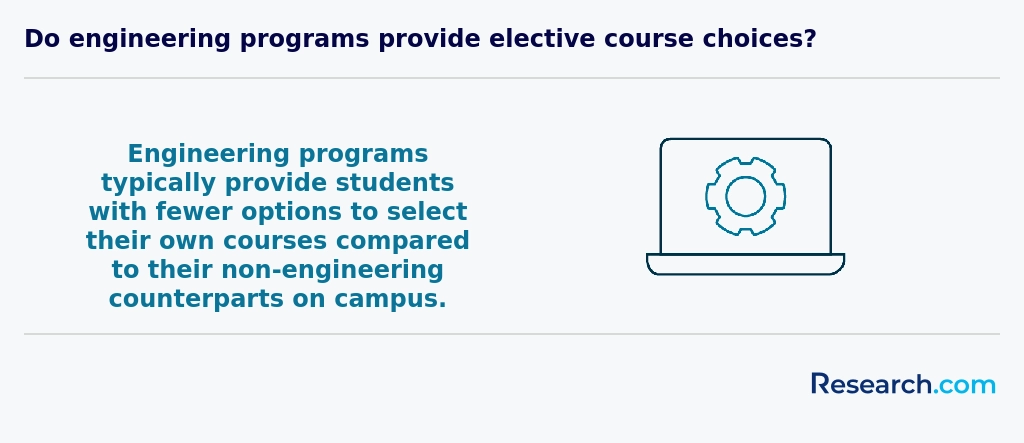
In the United States, customization of engineering degree programs is increasingly common to help students align education with career goals. Many universities offer specialized tracks or concentrations within broader engineering disciplines, such as mechanical, electrical, or civil engineering. Students can often select electives or minors in areas like computer science, business, or environmental studies to complement their technical skills.
Internships, co-op programs, and hands-on projects provide practical experience and industry connections, which are crucial since 83% of employers prioritize work experience for engineering hires (National Association of Colleges and Employers, 2023). Additionally, some schools allow for interdisciplinary study, combining engineering with management or entrepreneurship, enhancing career flexibility.
Engineering students in America often face significant academic pressure due to the rigorous curriculum. According to the American Society for Engineering Education (ASEE), many programs require mastery of advanced mathematics, physics, and technical courses, which can lead to high stress levels. Time management is another common challenge, as students balance demanding coursework with internships and extracurricular activities.
Financial concerns also affect many students. The National Center for Education Statistics reports that engineering students frequently carry substantial student loan debt, with average borrowing around $30,000 upon graduation. Additionally, women and minority students face hurdles related to underrepresentation and inclusivity in engineering fields, which can impact retention and success rates.
With an engineering degree in America, you can pursue several professional certifications to advance your career. The most recognized is the Professional Engineer (PE) license, which requires passing the Fundamentals of Engineering (FE) exam, gaining work experience, and then passing the PE exam. According to the National Society of Professional Engineers, over 85% of licensed engineers hold a PE license, enhancing job prospects and earning potential.
Other certifications include the Certified Manufacturing Engineer (CMfgE) from SME and the Project Management Professional (PMP), valuable for engineers managing projects. Certifications like Certified Energy Manager (CEM) can also benefit those in sustainability fields.
Many certifications require ongoing education to maintain, ensuring engineers stay current with industry standards and technologies.
To write a winning application for an engineering program in America, start by highlighting your strong foundation in math and science, as these subjects are critical for engineering success. According to the National Center for Education Statistics, U.S. engineering programs often emphasize standardized test scores such as the SAT or ACT in these areas.
Showcase any relevant extracurricular activities, such as robotics clubs, internships, or summer programs, which demonstrate your passion and practical experience. Admissions committees appreciate applicants with real-world engineering exposure.
Additionally, craft a focused personal statement explaining why you want to pursue engineering and how your goals align with the program's offerings. Mention your problem-solving skills and teamwork abilities, which are valued traits in this field.
The global outlook on engineering careers recognizes the field as vital for innovation and economic growth. In the United States, engineering remains one of the most in-demand professions, with the U.S. Bureau of Labor Statistics projecting a 6% employment growth in engineering jobs from 2021 to 2031. This demand aligns with worldwide trends emphasizing technology, infrastructure, and sustainability.
American engineering degrees are highly respected internationally due to rigorous accreditation standards by ABET, ensuring graduates meet global competency requirements. This makes U.S.-trained engineers competitive globally and capable of working across borders and industries.
According to the National Science Foundation, about 120,000 engineering bachelor's degrees were awarded by U.S. institutions in 2021, reflecting strong interest and investment in the field. This large talent pool contributes to innovations recognized worldwide.
Engineering careers are often linked with high salaries, job stability, and opportunities to work on impactful projects, making them attractive globally but especially in the U.S. market. These factors contribute to sustained interest in engineering education within America.
Gaining practical experience while studying for an engineering degree in America is essential for career readiness. Many engineering programs encourage internships, co-op placements, and research projects. According to the National Society of Professional Engineers, over 60% of students participate in internships during their studies.
Cooperative education, or co-op programs, provide extended work terms that integrate academic learning with professional experience. These often last six months to a year and allow students to earn money while gaining hands-on skills.
Additionally, engineering students can engage in faculty-led research projects or join student organizations focused on engineering challenges. Federal agencies like the National Science Foundation offer research internships during summer breaks, providing valuable experience.
Choosing the right concentration within an engineering degree in America involves understanding both your interests and labor market demands. Popular concentrations include mechanical, electrical, civil, and computer engineering. According to the U.S. Bureau of Labor Statistics, computer and software engineers see a projected growth of 15% from 2021 to 2031, faster than average.
Evaluate your strengths and preferred subjects by reviewing introductory courses offered in the first year of study. Many universities encourage exploration before declaring a major concentration.
Consider potential salary outcomes; the National Association of Colleges and Employers reports median starting salaries around $72,000 for engineering graduates in 2023.
Research university program accreditation by ABET, ensuring education quality and better employment opportunities.
See What Experts Have To Say About Studying Engineering
Read our interview with Engineering experts

Jasna Jankovic
Engineering Expert
Associate Professor
University of Connecticut

Bohdan W. Oppenheim
Engineering Expert
Professor Emeritus of Healthcare Systems Engineering
Loyola Marymount University

Joseph Reichenberger
Engineering Expert
Professor of Civil Engineering & Environmental Science
Loyola Marymount University

- How Do You Decide Which Engineering Career is Right for You? https://www.straighterline.com/blog/which-engineering-career-right-for-you
- Student blog: Networking tips for engineering students https://asu-london.ac.uk/news/student-blog-networking-tips-for-engineering-students/
- The engineering career mobility report: Who gets promoted? https://www.signalfire.com/blog/engineering-career-trends-pt1
- Engineering Internships: Find 1037 Engineering Intern Jobs https://internshala.com/internships/engineering-internship/
- Guide to Types of Engineering Programs and Careers https://www.ycp.edu/news/types-of-engineering-degree-programs
- 40 Different Types of Engineering Degrees https://typesofengineeringdegrees.org/
- Most Popular Engineering Majors in the U.S. - Weil College Advising https://www.weilcollegeadvising.com/blog/most-popular-engineering-majors-in-the-u-s
- All STEM Placements/Internships | Gradcracker - Careers for STEM Students https://www.gradcracker.com/search/all-disciplines/engineering-work-placements-internships
- Engineering Design Challenges There are 80 items. https://clearinghouse.starnetlibraries.org/138-engineering-design-challenges
- What To Look for When Getting an Engineering Job After College | H+M EPC https://www.hm-ec.com/blog-posts/what-to-look-for-when-getting-an-engineering-job-after-college-hm