Choosing a counseling master's in Philadelphia means choosing a career pathway, not just a campus: clinical practice, school counseling, and other specialties can have different training and credential requirements. This guide explains how to compare programs, costs, formats, and career prospects before committing. It also features the 2027 Most Popular Master's in Counseling Degree Programs Ranking in Philadelphia, created by the Research.com team of data scientists to help students make an informed choice about programs worth considering. Use it to narrow your options and identify what to verify with each school.
Key findings about Counseling degrees in Philadelphia
For clinical practice in Pennsylvania, choose a master's whose coursework and supervised training you can verify against the Pennsylvania State Board of Social Workers, Marriage and Family Therapists and Professional Counselors' requirements; graduation alone does not confer an LPC license.
The U.S. median annual wage for substance abuse, behavioral disorder, and mental health counselors was $59,350 in May 2025, with employment projected to grow 18% from 2025 to 2035 (U.S. Bureau of Labor Statistics). These are national occupation figures, not Philadelphia graduate earnings.
La Salle's Professional Clinical Counseling M.A. and Jefferson's Community and Trauma Counseling master's present different curricular emphases. Compare each program's current credit requirements, placement arrangements, total price, and intended credential before treating popularity as a reason to enroll.
What can I expect from a Counseling degree in Philadelphia?
A counseling master's combines study of human development, assessment, ethics, and counseling methods with supervised practice. The most important distinction is the credential destination: a clinical counseling degree may be designed around professional-counselor licensure, while a school counseling pathway must address school-specific certification rules. A degree with counseling in its name is not automatically interchangeable with either one.
Philadelphia offers access to varied training settings, from schools to health systems and community behavioral-health providers. That variety can help students explore populations and practice settings, but placement location, supervision, and schedule matter more than proximity alone. Ask whether the program arranges placements or expects students to find approved sites themselves.
Where can I work with a Counseling degree in Philadelphia?
Depending on their specialization and credentials, graduates may seek roles in community mental-health agencies, hospitals, substance-use treatment programs, schools, college counseling services, or private practice. In Philadelphia, choosing between a school placement and a clinical placement can shape which supervisors, clients, and postgraduation roles a student can access.
Independent clinical practice generally requires state licensure beyond the degree. Pennsylvania's professional-counselor board sets education, examination, and supervised-experience requirements for the LPC; the Pennsylvania Department of Education governs school certification. Students considering work across the Delaware River should check New Jersey's rules separately rather than assume a Pennsylvania-oriented program satisfies them (Pennsylvania Department of State; Pennsylvania Department of Education; New Jersey Division of Consumer Affairs).
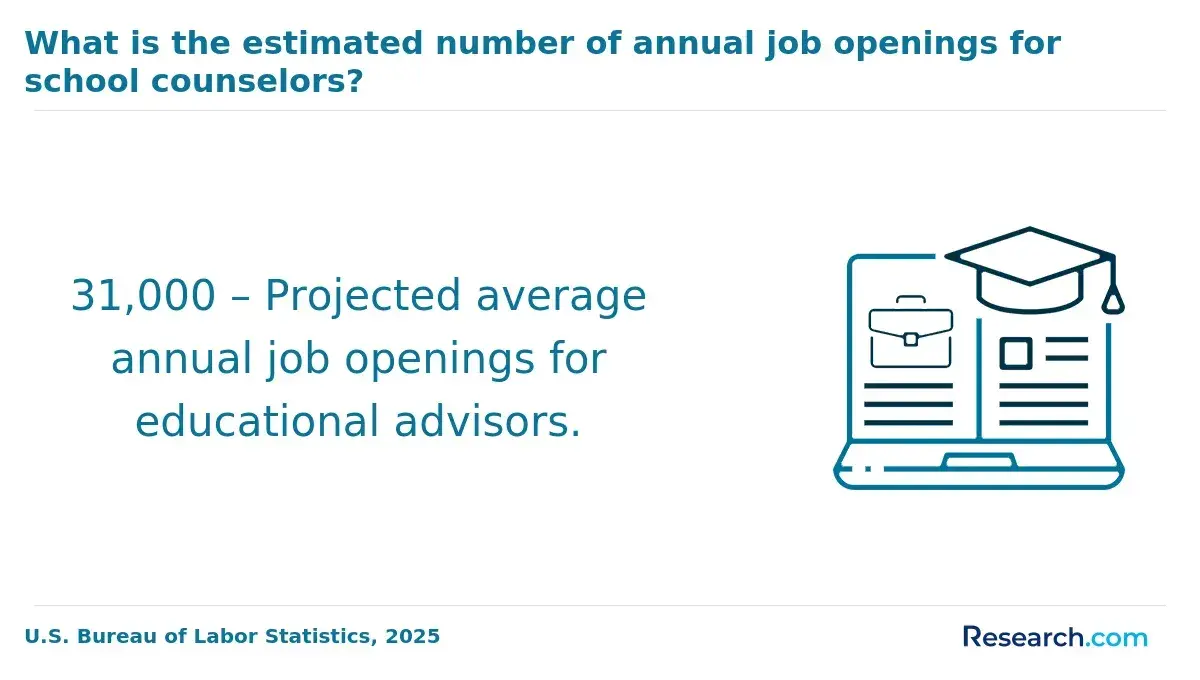
Pay depends on occupation, employer, location, experience, and licensure status - not on a master's title by itself. The following national medians are useful benchmarks for comparing career directions, but they are not starting salaries or forecasts of what a Philadelphia graduate will earn.
Career direction
U.S. median annual wage, May 2025
U.S. projected employment growth, 2025-2035
Mental health or addiction counseling
$59,350
18%
School counseling
$64,330
3%
Marriage and family counseling
$66,940
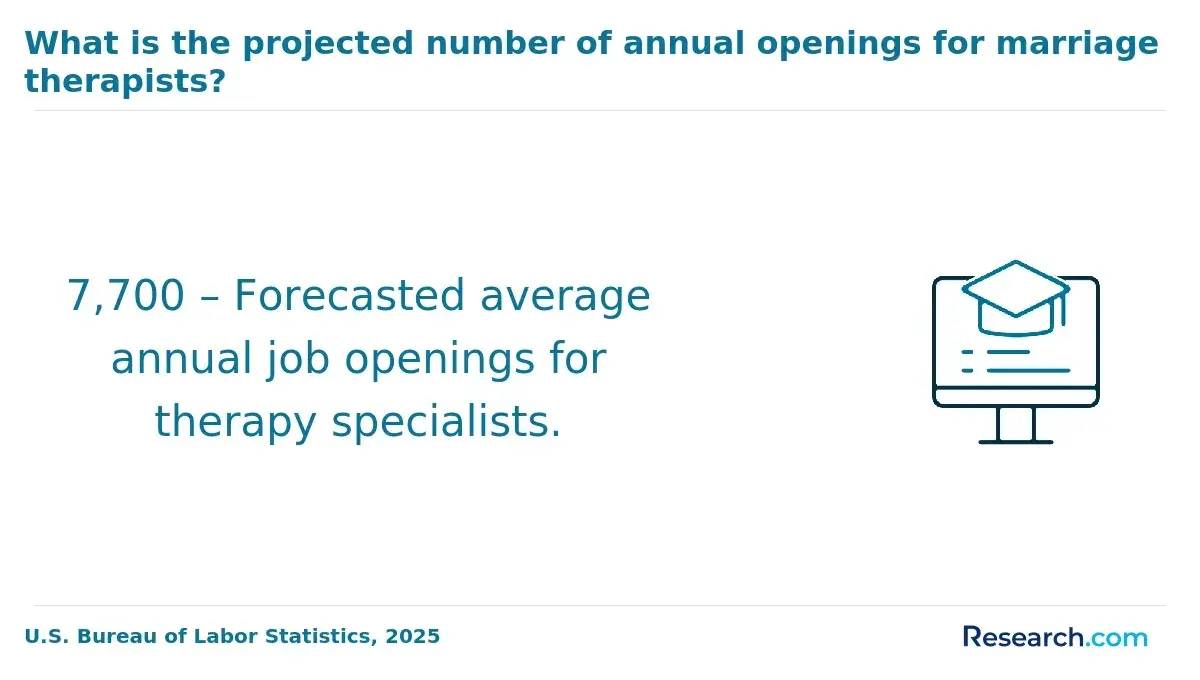
14%
Rehabilitation counseling
$46,850
2%
Source: U.S. Bureau of Labor Statistics, Occupational Outlook Handbook and Employment Projections. These occupational groups have different entry and licensing requirements. Use the figures to test whether a prospective career can support your expected borrowing, not to assign a salary to a particular program.
The two named programs offer different starting points for a shortlist. Their published degree titles identify distinct areas of emphasis; applicants should confirm current curriculum, fieldwork, outcomes, and costs directly with each institution before treating either as the better fit.
La Salle University - Professional Clinical Counseling M.A.: The program is explicitly framed around professional clinical counseling, making it a relevant option for applicants pursuing that practice direction. Compared with Jefferson's trauma-focused program, ask La Salle how its clinical curriculum and placements support the particular settings and Pennsylvania credential you want (La Salle University).
Thomas Jefferson University - Community and Trauma Counseling master's: Its named emphasis on community and trauma counseling offers a more specifically defined lens than La Salle's broader professional-clinical title. Students drawn to trauma-informed work should ask which courses and approved placements put that emphasis into practice, rather than assuming the title alone establishes specialized competence (Thomas Jefferson University).
Neither program title establishes licensure eligibility or comparative student outcomes. If clinical credentialing is your priority, compare the schools' written disclosures with Pennsylvania board requirements and review other best counseling programs using the same checklist.
A counseling master's commonly takes about two to three years of full-time study; part-time enrollment can take longer. The actual timeline depends on required credits, course sequencing, and when supervised placements are available. A seemingly accelerated schedule may be difficult to combine with full-time work once clinical hours begin.
Request a term-by-term plan showing when practicum and internship occur. Ask whether missed courses are offered the next term, whether fieldwork can be completed near your job or home, and how any accepted transfer credits change the graduation date - not merely the credit total.
Online study may make coursework easier to fit around work or commuting, while campus study can simplify access to in-person faculty activities and local placement contacts. Neither format removes supervised fieldwork requirements. For a Philadelphia student, the decisive questions are where clinical hours can be completed, who secures the site, and whether the schedule fits the student's employment.
Do not assume an online degree qualifies for licensure everywhere. Ask the school for written confirmation of how its curriculum aligns with Pennsylvania requirements and, if you might move, the requirements of your intended destination state. Check programmatic accreditation status separately from institutional accreditation (CACREP; Pennsylvania Department of State).
There is no single reliable Philadelphia-wide price for a counseling master's: programs differ in credits, tuition policies, fees, and placement-related expenses. Published tuition also is not the same as net cost after grants or employer support. Because a verified, comparable current local average is not available here, a city "average" would be less useful than a written estimate for each program.
Ask for the full program price at your expected enrollment pace, including fees, books, travel to field sites, and any required checks or insurance. Then compare that amount with aid and earnings you may give up during practicum. A lower sticker price is valuable only if the program also fits your credential goal and schedule; the most affordable counseling programs are a useful place to start that comparison.
Graduate students can investigate federal loans through the FAFSA, university scholarships, graduate assistantships, employer tuition benefits, and funding tied to eligible service commitments. Federal loan eligibility and limits depend on current Federal Student Aid rules and the student's circumstances; an admission offer is not an aid award (Federal Student Aid).
Ask each financial-aid office for a personalized award estimate covering the entire degree. Check whether scholarships continue during part-time terms or internships, whether an assistantship conflicts with fieldwork hours, and whether service funding restricts future employment. Borrow against a realistic repayment plan, not the highest salary associated with counseling.
View the chart data as a table
Graduates (2024-25) by program (Source: Research.com)
Category
Value
La Salle University
22
Thomas Jefferson Univers
25
Applicants generally need a bachelor's degree and must meet the school's published admissions requirements, which may include transcripts, recommendations, a statement of purpose, and an interview. Prerequisite coursework, minimum academic standards, and application dates vary by program; verify them on the current admissions page rather than assuming one Philadelphia school's rules apply to another.
If your undergraduate degree is outside psychology or a related field, ask whether prerequisite courses are required before enrollment. Also ask how prior graduate credits are reviewed: acceptance of a transfer course does not necessarily mean it will satisfy a required counseling or licensure component.
Clinical counseling curricula typically address counseling theories, helping skills, assessment, group work, ethics, multicultural practice, research, and supervised practicum or internship. Programs may also cover diagnosis, substance use, trauma, or family systems according to their focus. Exact course titles are less important than whether the transcript and supervised work meet the rules for your intended credential.
Compare course catalogs side by side and request the program's licensure-alignment statement. A missing required topic can be costly to remedy after graduation, particularly if it also affects access to an approved placement (Pennsylvania Department of State).
Common directions include clinical mental health, school, addiction, marriage and family, rehabilitation, and trauma-focused counseling. These are not merely elective preferences: school roles can involve educator certification, and marriage and family therapy follows a different licensing path from professional counseling (Pennsylvania Department of Education; Pennsylvania Department of State).
Choose a specialization by working backward from a job description and its required credential. If you are undecided, favor a program that clearly documents its principal credential pathway and offers placements that let you test your interest; do not assume a brief concentration changes the license for which a degree prepares you.
The best choice is the program that meets your intended credential requirements at a manageable total cost and schedule. Popularity can help you discover options, but it cannot tell you whether a placement works with your job or whether your coursework will meet a licensing board's rules.
Before applying, use this sequence to turn a shortlist into a decision:
Name the job and state in which you intend to practice; identify the responsible licensing or certification authority.
Request written details on accreditation, credential alignment, supervised placements, and any published program-level completion or exam outcomes.
Compare full-degree net cost, likely borrowing, time away from work, and the chances that your schedule permits completion.
Ask current students or recent graduates how placement scheduling and supervision work in practice, then verify any consequential claims with the program.
Return on investment depends on debt, aid, completion probability, earnings before and after the degree, time away from work, and how long you expect to use the credential. The most valuable counseling programs can inform that review, but cannot replace your own budget and career plan.
View the chart data as a table
Median wage by counseling career path (U.S., BLS May 2025) (Source: BLS)
Category
Value
Psychologists
99,110
Postsecondary Teachers
85,330
Marriage & Family Therapists
66,940
School & Career Counselors
64,330
Mental Health Counselors
59,350
Rehabilitation Counselors
46,850
A clinical-program graduate might pursue supervised counselor work and, after meeting state requirements, seek independent licensure. A school-counseling graduate would instead need to follow the applicable educator-certification route. Other graduates may work in community programs or related support roles whose responsibilities and credential requirements differ (Pennsylvania Department of State; Pennsylvania Department of Education).
This degree is a strong potential fit if you want sustained client-facing work and can accommodate supervised training. If you want a quick credential without fieldwork, or primarily want a research or administrative role, compare alternatives before taking on graduate debt. Start with the position you want, then confirm which degree and credential its employers actually request.
View the chart data as a table
Median wage by U.S. state - Mental Health Counselors (BLS OEWS, May 2025) (Source: BLS)
State
Value
AK
80,770
AL
47,310
AR
51,580
AZ
65,300
CA
59,250
CO
62,390
CT
63,590
DC
60,450
DE
56,020
FL
56,790
GA
58,960
HI
60,090
IA
60,880
ID
63,360
IL
60,730
IN
53,760
KS
59,470
KY
54,190
LA
37,910
MA
59,890
MD
59,530
ME
59,970
MI
61,690
MN
58,780
MO
56,910
MS
46,990
MT
59,000
NC
55,490
ND
68,630
NE
63,770
NH
54,840
NJ
62,820
NM
74,100
NV
57,210
NY
59,450
OH
58,360
OK
59,350
OR
74,590
PA
52,010
PR
46,790
RI
65,120
SC
52,370
SD
53,650
TN
49,580
TX
62,630
UT
63,890
VA
59,880
VT
61,810
WA
68,910
WI
62,220
WV
49,430
WY
62,980
The national outlook is strongest among the counseling occupations shown here for substance abuse, behavioral disorder, and mental health counselors: the U.S. Bureau of Labor Statistics projects 18% employment growth from 2025 to 2035. That signals broad demand, not a guaranteed opening in Philadelphia or a prediction for any one specialty or employer.
Philadelphia's schools, health systems, and community providers give students several types of potential placement and employer to investigate. Search current local postings for the exact credential, supervision status, and schedule required. If most roles you want require an LPC or school certification, prioritize a program that clearly supports that pathway over one chosen for its ranking position alone.
2027 Most Popular Master's in Counseling Degree Programs Ranking in Philadelphia
Investing in graduate education is a consequential decision. Research.com created its counseling rankings to help readers compare programs using documented measures rather than relying on reputation alone. Its team reviews outcomes, accreditation, eligibility for federal aid, and cost, while recognizing that no ranking can determine whether a program meets an individual student's licensure and financial goals.
The ranking draws on these data sources:
IPEDS database: institutional enrollment, completion, and education data.
Peterson's database: program and institutional information used in comparisons.
Research.com's Best counseling ranking first combines program completion, employment or doctoral admission, applicable licensure-exam results, CACREP accreditation, and institutional Title IV eligibility; program cost then contributes a smaller share of the final score. Criteria that do not apply are excluded and the remaining weights are adjusted. Other rankings order programs by the dimension named in their titles, so a popularity ranking should not be read as a measure of clinical quality or personal fit. The same approach applies to online and campus programs. See Research.com's methodology for more detail, and use the ranking as a shortlist to check against current program disclosures.
# 1 position
La Salle University
Master
M.A. in Professional Clinical Counseling
Delivery mode: campus
43.60
/ 100
Final score
Program length
2 years, 1 semester full-time
Specialization
Clinical Mental Health Counseling
Required credits
60 semester credits
GPA range
3.00 - 4.00
Program completion rate
69% (2024-25)
Employment or doctoral admission
82% (2024-25)
Licensure exam pass rate
88% (2024-25)
Application deadline
Fall: August 10; Spring: December 10
Application process
direct
GRE
no
Prerequisites
Official transcripts must reflect a minimum of 9-12 hours in psychology, marriage and family studies or counseling.
Additional requirements
Official transcript(s); resume/CV; three letters of recommendation; essay/personal statement on interest in counseling and mission alignment; engagement with program faculty/staff via Open House, virtual info session, or one-on-one meeting.
Accreditation
Accredited by the Council for Accreditation of Counseling and Related Educational Programs (CACREP), with institutional accreditation from the Middle States Commission on Higher Education (MSCHE).
La Salle University earned a Research.com Student Interest Score of 43.6/100, supported by 22 graduates (2024-25) and 69% program completion rate. The program is CACREP-accredited, valid through 2031-03-31.
# 2 position
Thomas Jefferson University
Master
Community & Trauma Counseling Master of Science
Delivery mode: hybrid
45.40
/ 100
Final score
Program length
two years (seven semesters)
Specialization
Clinical Mental Health Counseling
Required credits
60 semester credits
Accreditation
Accredited by the Council for Accreditation of Counseling and Related Educational Programs (CACREP), with institutional accreditation from the Middle States Commission on Higher Education (MSCHE).
Thomas Jefferson University earned a Research.com Student Interest Score of 45.4/100. The program is CACREP-accredited, valid through 2030-03-31.
Frequently asked questions about Counseling degree in Philadelphia
Is a counseling master's required to become an LPC in Pennsylvania?
A qualifying graduate education is part of the pathway, but a degree alone is insufficient. Check the Pennsylvania licensing board's current education, examination, and supervised-experience requirements before enrolling (Pennsylvania Department of State).
How long does a Philadelphia counseling master's take?
Plan on roughly two to three years full time, with a longer timeline possible part time. Ask the school for a schedule that includes practicum and internship.
Can I complete the degree online?
Some counseling coursework can be delivered online, but supervised field experience still requires an approved setting. Confirm placement support and alignment with the rules of the state where you plan to practice.
Does CACREP accreditation guarantee licensure?
No. CACREP accredits eligible counseling programs; state boards determine licensure eligibility, and graduates may also need an exam and supervised experience (CACREP; Pennsylvania Department of State).
Is a more popular program necessarily a better investment?
No. Compare credential fit, total net cost, completion timeline, placement access, and your likely borrowing before deciding.
See What Experts Have To Say About Studying Counseling