2027 Most Affordable Counseling Degree Programs Ranking in Denver
Choosing the right counseling degree program in Denver can feel overwhelming, but this article simplifies that decision. The 2027 Most Affordable Counseling Degree Programs Ranking in Denver was carefully crafted by the Research.com team of data scientists to guide you toward quality and affordable options.
By exploring this ranking, you'll discover programs that balance cost and value, helping you find the best fit for your goals. Pursuing a counseling degree opens doors to meaningful careers, and this guide supports your journey with trusted insights.
Key benefits of getting counseling degree in Denver
- Counseling degree graduates in Denver can expect rewarding salaries, such as Addiction Counselors earning about $60,080 annually and Community Outreach Coordinators making around $54,020, providing financial stability and career satisfaction.
- Graduates from local universities often explore diverse careers including Rehabilitation Specialist or Family Support Worker, offering meaningful roles that impact communities positively.
- Online counseling degrees offer flexibility and convenience, enabling students to balance work and study easily, as demonstrated by many successful graduates from Denver's prominent online programs.
What can I expect from counseling degree in Denver?
In Denver, the cost of earning a counseling degree often feels like an investment rather than a mere expense. Graduates from well-known institutions report tuition that typically dances around the national averages-but with a local twist. Public universities and community colleges here tend to offer more wallet-friendly options, making mental health education accessible without sacrificing quality. Imagine sitting in a practicum classroom at a Denver university, knowing that scholarship opportunities and assistantships might smooth your path, easing that financial weight while you focus on learning to guide others through their toughest moments.
Students describe a balance where tuition feels aligned with the rich experience they receive, from hands-on internships in Denver's vibrant communities to the satisfaction of training that meets Colorado's strict licensure demands. The affordability, combined with the city's expanding mental health market, creates a hopeful atmosphere where investment in your degree feels like planting seeds for a flourishing career right in your hometown.
Where can I work with counseling degree in Denver?
Graduates from counseling programs at Denver's well-regarded universities often find themselves weaving through a tapestry of opportunities where empathy meets action. Imagine stepping into a community mental health center bustling with energy, helping individuals untangle their struggles with anxiety or addiction-that's a reality for many counseling grads connecting their classroom knowledge to the vibrant streets of Denver.
Picture a counselor collaborating with Denver Public Schools, guiding students from kindergarten to high school through academic and emotional challenges, fostering resilience in every session. Others dive into bustling hospital corridors like those at Denver Health, co-creating healing plans alongside doctors and social workers for patients battling trauma or chronic illness.
Some graduates choose the brave path of private practice, building close-knit therapy spaces infused with personal passions-whether it's marriage support or career coaching. Meanwhile, nonprofit roles in places like Aurora Mental Health Center let counselors become vital anchors in crisis intervention and youth rehabilitation, sparking hope where it's needed most.
How much can I make with counseling degree in Denver?
Graduates holding counseling degrees from institutions like the University of Denver or Regis University often step into the Denver job market with promising salary prospects. Imagine a new graduate starting as a Rehabilitation Specialist earning around $48,430 annually, feeling a genuine boost knowing their work truly shapes lives.
As experience blossoms, some find themselves thriving as Addiction Counselors, pulling in approximately $60,080 a year while guiding individuals toward recovery. Community Outreach Coordinators, often former counseling grads, enjoy a mean annual wage near $54,020, blending meaningful connections with respectable paychecks.
Denver's urban pulse coupled with growing mental health awareness creates fertile ground for Intervention Specialists earning a solid $76,000. Graduates recall late-night study sessions at local campuses with excitement about these tangible numbers, driving home the value of their commitment.
Denver's vibrant counseling scene rewards passion-with each dollar earned reflecting both dedication and the city's unique demand for skilled helpers.
- Key benefits of getting counseling degree in Denver
- What can I expect from counseling degree in Denver?
- Where can I work with counseling degree in Denver?
- How much can I make with counseling degree in Denver?
- How do we rank schools?
- 2027 Most Affordable Counseling Degree Programs Ranking in Denver
- What counseling degree graduates have to say
- Key Findings
- How long does it take to complete counseling degree in Denver?
- What's the difference between online and on-campus counseling degree?
- What is the average cost of counseling degree in Denver?
- What financial aid is available to counseling degree students in Denver?
- What are the prerequisites for enrolling in counseling degree program in Denver?
- What courses are typically in counseling degree programs in Denver?
- What types of specializations are available in counseling degree programs in Denver?
- How do you choose the best counseling degree in Denver?
- What career paths are available for counseling degree students in Denver?
- What is the job market for counseling degree in Denver?
- Frequently Asked Questions About counseling
- Top Trending Counseling Rankings
- See What Experts Have To Say About Studying Counseling
How do we rank schools?
Investing in your education is a significant decision that can shape your future, and the Research.com team understands the importance of making informed choices. To assist prospective students in Denver, we have meticulously crafted the "2027 Most Affordable Counseling Degree Programs Ranking in Denver." Our commitment to quality, credibility, and accuracy is reflected in the extensive research and analysis conducted to compile this ranking.
We utilized the following reputable data sources to ensure a comprehensive evaluation of counseling programs:
By exploring this ranking, readers will gain valuable insights into the most affordable and credible counseling degree programs in Denver, empowering them to make well-informed decisions about their educational investments. For more information on how this ranking was created, please visit our Research.com methodology page.
2027 Most Affordable Counseling Degree Programs Ranking in Denver
# 1 position

The University of Colorado Denver/Anschutz Medical Campus offers a master's program focused on counseling. The program has a total cost of $47,636. It is considered less selective with an acceptance rate of 75% and receives 14,931 applicants. A high level of financial aid is available, with 94% of students receiving some form of assistance.
# 2 position

The Metropolitan State University of Denver offers a Master's program focused on counseling. The program has an open admission policy with a 99% acceptance rate, welcoming 11,622 applicants. The total cost is $48,929. Moderate financial aid is available, with 74% of students receiving support. This program provides an accessible opportunity for graduate-level counseling education at a competitive cost.
# 3 position
Regis University
Master
Regis University offers a Master's program focused on counseling with a total cost of $63,124. The program has an open admission policy, accepting 86% of its 5,722 applicants. A high percentage of students, 99%, receive financial aid, providing strong support for enrollment. This program is suitable for students seeking advanced counseling education with significant financial assistance options available.
# 4 position
University of Denver
Master
The University of Denver offers a Master's program focused on counseling with a total cost of $79,365. The program has an open admission policy, accepting 78% of its 18,786 applicants. It provides high levels of financial aid, with 99% of students receiving support. This makes it accessible to many prospective students interested in advancing their careers in counseling.
# 5 position
University of Denver
Doctor
The University of Denver offers a Doctoral program focused on counseling, with a total cost of $79,365. The program has an open admission policy, accepting 78% of its 18,786 applicants. Financial aid is highly accessible, with 99% of students receiving support. This makes the program a viable option for many seeking advanced counseling education at the doctoral level.
What counseling degree graduates have to say
- "Studying counseling at the University of Denver gave me access to experienced faculty who are genuinely invested in student success. The hands-on training and internship opportunities prepared me to confidently support clients in real-world settings." - Emily
- "Regis University's counseling program in Denver offered a warm, community-oriented environment where I truly grew both personally and professionally. The blend of theory and practical experience helped me develop strong skills and empathy for future clients." - Javier
- "Metropolitan State University of Denver stands out for its flexible schedule and diverse student body. Balancing work and study was possible while gaining comprehensive counseling knowledge tailored to Denver's unique cultural landscape." - Sophia
Key Findings
- Master's degrees are typically required for licensure as a Licensed Professional Counselor (LPC) in Colorado.
- The cost of a master's counseling degree in Denver ranges from $25,000 to $60,000, with public universities generally more affordable for in-state students.
- Starting salaries for counseling graduates in Denver average around $47,000 annually, increasing to $65,000-$75,000 with experience and licensure.
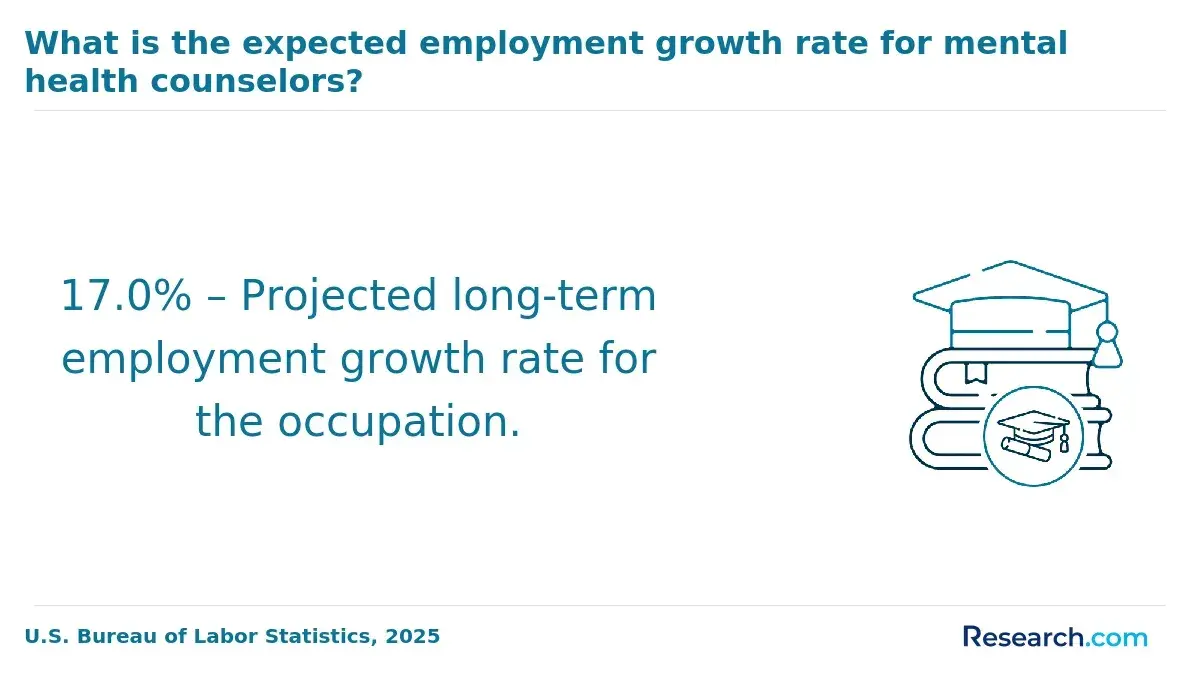
- Colorado's employment for substance abuse, behavioral disorder, and mental health counselors is expected to grow 14% from 2022 to 2032, faster than the national average.
- Licensure requires 2,400 hours of supervised clinical experience, passing the National Counselor Examination, and ongoing education.
- Denver offers various counseling specialties including school counseling, marriage and family therapy, and clinical mental health counseling.
How long does it take to complete counseling degree in Denver?
Earning a counseling degree in Denver unfolds like a rewarding journey tailored by time and ambition. For many, the four-year stretch of a bachelor's degree at places like Metropolitan State University of Denver or the University of Colorado Denver feels like building a solid foundation-immersed in psychology and human growth, students often describe this phase as awakening a deep sense of purpose, where every lecture sparks a new insight.
Graduates who move on to master's programs, such as those at the University of Denver, experience an intense but fulfilling two to three years packed with 48 to 60 credit hours and supervised internships. Imagine balancing coursework with real-world client sessions-these moments often bring a profound sense of accomplishment and readiness for licensure.
Some follow a part-time tempo, extending the adventure to four or more years, savoring each step without rushing. For those chasing doctoral dreams, the path stretches into a creative, sometimes arduous, four to seven-year exploration of research and personal growth, mirroring a deep dive into the essence of counseling itself.
What's the difference between online and on-campus counseling degree?
Imagine juggling a full-time job while earning your counseling degree from the comfort of your living room-this is the magic of online programs. Graduates from Regis University often describe the freedom to study whenever inspiration strikes, a lifesaver for those balancing family or work. Yet, the rhythm changes when it comes to hands-on experiences; in Denver, even online learners roll up their sleeves for in-person practicum hours, grounding theory in the vibrant local community.
On the flip side, stepping onto the University of Colorado Denver's campus immerses students in an energetic world of real-time connections. The buzzing hallways, spontaneous study groups, and face-to-face workshops create an atmosphere where counseling skills grow naturally alongside friendships and professional networks. Many graduates treasure this sensory immersion, feeling it sharpens their empathy and communication in ways screens can't quite replicate.
Both paths demand accreditation by CACREP, safeguarding quality and licensure eligibility. Tuition often nudges online students toward savings in commuting and housing, but the priceless value of Denver's palpable community ties balances the scales uniquely for each learner.
What is the average cost of counseling degree in Denver?
In Denver, the average cost of a counseling degree vibrates around a median total of $63,124, with in-state students typically seeing a somewhat gentler number near $46,340. Imagine a graduate from a local public university, where the tuition per credit hour hovers around $300-balancing ambition with affordability. They recount late-night study sessions fueled by coffee and determination, knowing each credit brings them closer to a career in healing. Meanwhile, those enrolled at esteemed private institutions may face costs soaring above $700 per credit hour, morphing the price tag into a lofty challenge, yet one often softened through scholarships and grants.
Affordable counseling degree programs Denver students seek often blend realistic budgeting with emotional empowerment. A graduate's eyes light up when recalling the supportive practicum experiences, which, although adding about 15-20% more to the baseline tuition for supplies and fees, enrich their hands-on learning journey immeasurably. These real-world moments transform abstract theory into practiced empathy and skill, despite the financial nuances.
From navigating fees to embracing financial aid, counseling students in Denver embody perseverance. Some even explore accelerated degree programs to trim time and costs, turning financial hurdles into stepping stones. The path to becoming a licensed counselor in Denver, though textured with expenses, offers a vibrant mix of challenges and rewards, accessible through thoughtful planning and passion.
What financial aid is available to counseling degree students in Denver?
Imagine wrapping up a late-night study session at the University of Denver, feeling the weight of tuition bills lighten thanks to a research assistantship that covers part of the cost while boosting your resume. Many counseling students here tap into federal lifelines like FAFSA, opening doors to Direct Unsubsidized Loans and those elusive Federal Supplemental Educational Opportunity Grants that feel like win-win safety nets.
Across town at Metropolitan State University of Denver, grad students chase the Colorado Graduate Grant-need-based aid that's like a secret handshake between residents and their home state, easing the financial squeeze. For those juggling internships and part-time jobs, scholarships from the American Counseling Association act like little bursts of encouragement, affirming their dedication in ways that dollars alone can't capture.
Then there's the quiet confidence of employees in Denver's healthcare systems or nonprofits, who find tuition reimbursement programs become unexpected allies on their journey, turning employers into partners invested in their growth. These financial streams weave a tapestry of support unique to Denver's counseling community, making the pursuit of a degree feel less daunting and more like a shared adventure.
What are the prerequisites for enrolling in counseling degree program in Denver?
To step into the world of counseling in Denver, imagine the gateway as a careful blend of academic achievement and personal story. Graduates from programs at institutions like the University of Denver or Metropolitan State University often recall the anticipation of submitting official transcripts that echo years of dedication-high school diploma or a bachelor's degree in hand, depending on the level they aimed for.
Many felt a quiet thrill meeting GPA requirements around 2.5 to 3.0, knowing that peeling through prerequisite courses like psychology or human development built a sturdy foundation. It's not just grades; letters of recommendation from mentors or supervisors become treasured testimonials, while personal statements open a window into their passion to serve and connect.
Some remember nervously deciding whether to tackle the GRE, while others focused their energy on real-world experiences-volunteering in social service centers or engaging with diverse Denver communities-showing their readiness beyond the classroom. These steps collectively become the colorful threads weaving each counseling journey uniquely Denver.
What courses are typically in counseling degree programs in Denver?
Imagine diving straight into Foundations of Counseling at the University of Denver, where graduates recall the "aha" moments sparked by unraveling the profession's ethical puzzles and history. Then, picture walking through the stages of human life in Human Growth and Development, a course that feels like mapping the intricate story of people they'll soon help.
Courses like Theories and Techniques of Counseling at Metropolitan State University unfold like a toolkit, equipping students with diverse therapeutic models-ready to adapt to any client's narrative. Group Counseling sessions are vivid spaces where students experience firsthand the dynamics of guiding multiple voices with empathy and clarity.
Assessment classes transform abstract tests into real-world instruments, while Multicultural Counseling reminds Denver's students daily of the power in embracing diverse stories-whether urban or rural. Career Counseling and Program Evaluation tie theory to action, often inspired by local Colorado issues like substance abuse.
Hands-on practicum placements act as the rite of passage, turning classroom theory into heartfelt practice, cementing bonds between classrooms and the community's pressing mental health needs.
What types of specializations are available in counseling degree programs in Denver?
Imagine immersing yourself in a Denver counseling degree where your passions shape your path. Graduates from local universities often dive into mental health counseling, navigating emotional landscapes alongside clients battling disorders or crises, reflecting the city's growing awareness and 15% job growth forecast in this field. Another vibrant channel is school counseling, where alumni channel empathy to support K-12 students managing stress and life's twists under Colorado's specific certification standards.
Those drawn to relational healing might find themselves in marriage and family therapy programs, embraced by Denver's strong MFT community. Graduates here often speak about the rewarding challenge of untangling family dynamics, balanced with the region's median salary near $55,000. Meanwhile, the pragmatic edge of substance abuse counseling attracts dedicated souls eager to tackle addiction head-on, with a paycheck averaging $44,000 and training rooted in evidence-based intervention.
Across popular counseling programs, career counseling flourishes amid Denver's tech and healthcare booms, helping students guide others through professional reinvention. Exploring counseling degree specializations Denver offers often sparks graduates to discover unique, meaningful vocations. For those weighing options, investigating certifications online that pay well can complement the journey towards becoming a skilled counselor ready to impact Colorado's vibrant communities.
How do you choose the best counseling degree in Denver?
Imagining yourself walking through the halls of the University of Denver or Metropolitan State University of Denver, you sense the pulse of programs designed not just to teach but to transform. Graduates from these top counseling schools in Denver 2027 often share how their hands-on clinical training-embedded deep in Denver's diverse community settings-meant stepping from textbook theory into real, human stories. Their palpable excitement comes from knowing these practicum experiences were a gateway to licensure and meaningful work.
Choosing a program isn't about the flashiest brochure but the concrete reality of accreditation, especially the gold standard CACREP seal, which ensures your degree meets Colorado's licensing bar. That's why many lean towards best affordable counseling degree programs Denver offers, often public universities, balancing cost with quality. Navigating this journey feels less daunting when you remember counseling is a heart-driven profession; your degree should connect you with genuine learning and practical pathways.
Finally, as you map out your future, consider how programs support flexibility for students juggling life's chaos. Graduates cherish those evening or hybrid classes letting them thrive inside and outside the classroom. If you want to explore good majors that pay well after your counseling degree, click good majors that pay well to guide your next steps.
What career paths are available for counseling degree students in Denver?
Graduates with a counseling degree in Denver find themselves stepping into vibrant roles that ripple through the city's expanding health and education landscapes. Imagine walking the halls of the University of Colorado Denver, where future licensed professional counselors (LPCs) train to offer healing through individual and group therapy, addressing mental health with compassion and expertise. These careers sweeten with salaries between $56,000 and $65,000, reflecting Denver's growing demand fueled by an enhanced understanding of mental wellness.
For those drawn to schools, counseling graduates dive into student development, tackling behavioral hurdles with heart. Denver public schools seek these heroes, offering roles where salaries hover around $50,000 to $60,000. Counseling careers in Denver also branch toward addiction recovery specialists, equipped with additional certifications, playing crucial parts in battling the opioid crisis within healthcare.
Beyond clinical spaces, graduates explore creative niches such as marriage and family therapy or rehabilitation counseling, often nurtured at local colleges. These avenues, promising competitive pay, remind students of the journey's worth, especially when paired with studies from affordable programs at non profit accredited colleges. The city's ecosystem offers diverse Denver counseling degree job opportunities tailored for those ready to enrich lives and communities.
What is the job market for counseling degree in Denver?
The counseling degree job outlook Denver graduates face is vibrant and expanding, fueled by a growing awareness of mental health's importance across the city's diverse communities. Graduates from well-known Denver universities often find themselves diving into real-world roles quickly, from school counseling in bustling educational institutions to therapy sessions at outpatient clinics nestled within the city's neighborhoods. One graduate recently shared how their hands-on internship seamlessly transitioned into a full-time job, driven by Denver's unique need for empathetic professionals in community mental health centers.
The landscape for mental health counselor employment Denver-wide sparkles with opportunity, thanks to supportive local licensure processes and employers keen on harnessing fresh talent. Salaries ranging around $50,000 to $60,000 reflect not just numbers but the city's commitment to valuing these roles as integral to public well-being. Those who pursue counseling degrees here embrace rich, relatable career pathways that marry passion with practical impact.
Many students balance their studies with work thanks to accessible tuition rates and flexible programs at Denver's public universities. These real-life chances to grow-combined with dynamic job prospects-create a compelling environment for anyone exploring a counseling degree. Discover more about opportunities like these through anchors part-time Ph.D. in economics.
Frequently Asked Questions About counseling
Counseling degree students in Denver can maximize their learning experience by engaging actively in both academic and practical opportunities. Participating in internships or supervised clinical hours is crucial, as Colorado requires at least 2,000 supervised hours for licensure as a Licensed Professional Counselor (LPC). Students should seek placements in diverse settings like community mental health centers or schools to gain varied experience.
Additionally, joining student organizations related to mental health and counseling promotes networking and professional growth. Utilizing campus resources such as tutoring and writing centers can also improve academic performance. According to the Colorado Department of Higher Education, Denver offers multiple accredited programs with strong practicum components, which enhance hands-on learning.
Attending workshops and statewide conferences further bridges classroom knowledge with current counseling practices. Staying informed about Colorado's licensure laws and ethical standards helps students prepare for future careers effectively. Overall, combining coursework with practical experience and professional involvement is key to success in Denver's counseling programs.
The counseling field in Denver is evolving, with several emerging niches attracting attention from students and professionals. One growing area is telehealth counseling, driven by increased demand for remote mental health services. According to Colorado's Department of Regulatory Agencies, telehealth licenses have risen by over 30% since 2020.
Another niche is trauma-informed counseling, which addresses the rising need for specialized support for individuals affected by physical and emotional trauma. Denver's diverse population has heightened demand for counselors skilled in cultural competence and trauma recovery.
Additionally, career counseling focused on technology and sustainability sectors is expanding, reflecting local economic trends. These niches offer promising paths for counseling degree graduates seeking alignment with regional workforce needs and evolving mental health care models.
After earning a counseling degree in Denver, preparing for the job market requires focused steps that align with state requirements and local demand. First, graduates should pursue licensure through the Colorado Board of Licensed Professional Counselor Examiners, which mandates supervised clinical hours and passing the National Counselor Examination.
Building professional networks through local organizations like the Colorado Counseling Association can enhance job opportunities. Denver's healthcare sector showed a 12% growth in counseling roles from 2019 to 2023, according to the Colorado Department of Labor, indicating a competitive but expanding market.
Additionally, developing specialized skills, such as trauma-informed care or substance abuse counseling, improves employability.
Employers in Denver seek counseling graduates with strong communication skills, essential for building trust and effectively addressing client needs. Active listening is particularly valued, as it helps counselors understand clients' concerns and tailor interventions.
In addition, cultural competence is critical in Denver's diverse communities, enabling counselors to work sensitively with clients from varied backgrounds. According to the Colorado Department of Labor and Employment, adaptability and problem-solving abilities are also among the top skills sought in counseling professionals.
Knowledge of ethical standards and confidentiality rules, consistent with guidelines from organizations like the American Counseling Association, is mandatory. Finally, practical experience through internships or supervised practice enhances employability in the local job market.
Finding internships in Denver relevant to a counseling degree involves a proactive approach and familiarity with local resources. Students should begin by contacting their college's career services, which often have established partnerships with Denver-area counseling centers, hospitals, and nonprofit organizations. Many internships are available through mental health clinics like The Center for Counseling and Psychological Services in Denver.
The Colorado Department of Higher Education reports that internships linked to graduate counseling programs often offer 300-600 hours of supervised clinical experience, essential for licensure. Additionally, professional groups such as the Colorado Counseling Association provide listings of internship opportunities and networking events.
Online platforms focused on healthcare internships, combined with Denver regional job boards, also support students in locating suitable positions. Initiating contact early, preparing a strong resume, and pursuing local certifications can enhance internship prospects greatly.
Obtaining a counseling degree in Denver significantly enhances career mobility and advancement opportunities within the region. Accredited programs in Denver prepare graduates for licensure as Licensed Professional Counselors (LPC), a requirement for many clinical and private practice roles. According to the Colorado Department of Regulatory Agencies, holding an LPC license increases employability in settings such as mental health clinics, schools, and hospitals.
Denver's growing demand for mental health professionals, projected to increase by 14% through 2030 per the U.S. Bureau of Labor Statistics, supports advancement prospects. Additionally, higher degrees like master's or doctoral levels often result in access to supervisory or specialized positions with higher salaries, as reported by the Colorado Workforce Development Council.
Studying for a counseling degree in Denver equips students with skills relevant to interdisciplinary roles in healthcare, education, and social services. Programs often emphasize collaboration with professionals from psychology, social work, and medical fields, reflecting the integrated care models widely adopted in Colorado. According to the Colorado Department of Higher Education, many Denver counseling programs include practicum experiences in diverse settings such as hospitals, schools, and community agencies.
These experiences develop communication, assessment, and treatment planning skills essential for team-based approaches. Additionally, Denver's emphasis on culturally responsive counseling prepares graduates to engage with varied populations alongside other specialists.
Choosing between a thesis and a non-thesis counseling degree program in Denver depends largely on your career goals and learning preferences. A thesis program typically involves conducting original research, which is ideal if you plan to pursue a PhD or work in research-oriented roles. This path may take longer to complete but offers strong preparation for academic or clinical research careers.
Non-thesis programs focus more on coursework and practical training, often allowing faster completion. They suit students aiming to enter counseling practice directly, especially in Denver's growing mental health field, where hands-on skills are crucial.
According to the Colorado Department of Higher Education, counseling job growth in Denver is projected at 15% through 2030, favoring practical experience. It's also important to review program accreditation and field placement opportunities when deciding between these options.
Students based in Denver who wish to study counseling abroad have several options, primarily through exchange programs and partnerships between Denver institutions and foreign universities. Many counseling programs accredited by the Council for Accreditation of Counseling and Related Educational Programs (CACREP) maintain international links, allowing credits earned abroad to count toward a degree.
While no specific Denver schools offer full counseling degrees entirely overseas, students can enhance their education by enrolling in summer sessions or semester exchanges in countries with recognized counseling accreditation systems. According to the Colorado Department of Higher Education, these opportunities often align with requirements for state licensure.
Financial aid and scholarship programs may assist students pursuing international study, though eligibility depends on the institution's agreements and the student's enrollment status. It is essential to verify that the foreign curriculum meets Colorado licensure guidelines before committing to programs abroad.
Students pursuing counseling degrees in Denver have several part-time job options that complement their education and build relevant experience. Positions such as behavioral health technician or peer support specialist often align with counseling skills and typically offer flexible hours suitable for students. According to the Colorado Department of Labor and Employment, these roles also provide practical exposure to mental health settings and client interaction.
Denver's growing demand for mental health professionals means part-time opportunities can be found in community clinics, school counseling programs, and nonprofit organizations. Additionally, roles like research assistant in psychology departments can enhance understanding of therapeutic techniques through evidence-based studies.
Such jobs help students strengthen communication, crisis intervention, and case management skills, essential for future counseling licensure. The average hourly wage for part-time behavioral health workers in Denver is approximately $15-$20, based on recent local labor reports.
Denver offers counseling students a variety of valuable networking opportunities essential for career development. Local universities frequently host events and workshops that connect students with licensed counselors and industry professionals. For example, the Colorado Counseling Association has a strong presence in Denver, providing monthly meetings and conferences where students can meet experienced practitioners.
Additionally, Denver's diverse healthcare and mental health agencies often collaborate with educational institutions, enabling internships and practicum placements that expand professional contacts. According to the Colorado Department of Higher Education, these experiences significantly increase job placement rates for counseling graduates.
Students can also join specialized groups such as the Denver Metro Area Counseling Network, which encourages peer mentoring and knowledge sharing.
Alumni networks offer significant benefits to counseling degree students in Denver. Graduates from local institutions often connect through these networks, creating opportunities for mentorship and professional guidance. According to the Colorado Department of Higher Education, Denver's counseling programs emphasize experiential learning, where alumni provide valuable insight into local clinical practices and internship openings.
These networks also facilitate job placement in Denver's growing mental health sector, which the U.S. Bureau of Labor Statistics projects to expand by 21% from 2021 to 2031. Alumni in Denver frequently share job leads and professional development resources, helping current students transition efficiently into counseling careers.
In addition, alumni associations organize networking events, workshops, and continuing education opportunities, fostering lifelong connections that support both academic and practical growth. For many students, these resources enhance learning beyond the classroom and increase competitiveness in Denver's counseling job market.
Customizing your counseling degree program in Denver allows you to align your education with your unique career goals. Many local institutions offer specializations such as mental health counseling, school counseling, or addiction counseling. Selecting electives and practica related to your interests enhances practical skills and employability.
The Colorado State Board of Licensed Professional Counselor Examiners emphasizes supervised clinical hours, which vary by specialization. Denver students can often tailor these experiences through partnerships with local agencies. Additionally, online and evening classes provide flexibility for working professionals.
Understanding licensure requirements for your desired counseling field in Colorado ensures your program meets necessary standards. Consulting academic advisors can help you build a plan that optimizes credits, internships, and certifications, leading to targeted career paths.
Counseling students in Denver face several common challenges throughout their academic journey. One primary difficulty is balancing rigorous coursework with fieldwork requirements, as many programs in Denver mandate extensive supervised clinical hours, often totaling over 600 hours. This can be time-consuming and stressful, especially for students juggling work or family obligations.
Another challenge is meeting Colorado's licensure requirements, which include passing the National Counselor Examination and completing specific state-mandated training like ethics and multicultural competence. Navigating these requirements can be confusing without proper guidance.
Financial strain also impacts many students, with the average graduate tuition for counseling programs in Denver ranging from $12,000 to $25,000 annually, per the Colorado Department of Higher Education. This cost poses a significant hurdle for some.
With a counseling degree in Denver, graduates can pursue several professional certifications that enhance their career opportunities. One common certification is the Licensed Professional Counselor (LPC), which requires completing supervised clinical hours and passing a state exam. Colorado's licensing board mandates 3,000 hours of supervised experience typically over two years.
Another certification is the National Certified Counselor (NCC) credential offered by the National Board for Certified Counselors. This requires a master's degree in counseling, passing a national exam, and continuing education to maintain certification.
Specializations such as Marriage and Family Therapist (MFT) or Licensed Addiction Counselor (LAC) are also available, each with specific state prerequisites. According to the Colorado Department of Regulatory Agencies, these credentials improve employability in Denver's growing mental health sector.
Writing a winning application for a counseling program in Denver requires careful preparation and an understanding of local expectations. Start by clearly articulating your motivation for pursuing counseling, focusing on how you plan to serve Denver's diverse communities. Programs typically value applicants with relevant volunteer or work experience in mental health or social services.
Strong academic records matter; maintaining a GPA of 3.0 or higher improves your chances, as reported by the Colorado Department of Higher Education. Personal statements should highlight your communication skills and cultural competence, both essential in Denver's multicultural environment.
Additionally, securing compelling letters of recommendation from supervisors or professors who can attest to your character and professionalism strengthens your profile.
Counseling as a career holds significant value worldwide, yet its recognition and educational requirements vary by country. In the United States, including Denver, licensed professional counselors must typically complete a master's degree, complete supervised clinical hours, and pass licensing exams. According to the Colorado Department of Regulatory Agencies, counseling licensure ensures professionals meet standardized competency levels.
Globally, some countries emphasize psychology more broadly, while the U.S. distinguishes counseling as a specialized practice focused on mental health support and therapy. This distinction affects curriculum design and career pathways, making U.S degrees particularly relevant for those seeking comprehensive clinical training.
Denver's counseling programs align with national accreditation standards, preparing graduates to meet the increasing demand for mental health services. The region's growing population and heightened awareness of mental health contribute to favorable job prospects for counselors.
Gaining practical experience while studying for a counseling degree in Denver is essential for career readiness. Many accredited programs include supervised internships or practicum placements as graduation requirements. These opportunities allow students to work directly with clients under licensed professionals' guidance.
Denver offers diverse settings for hands-on experience, including hospitals, schools, community centers, and nonprofit organizations. According to the Colorado Department of Higher Education, internships in the area often exceed 600 hours, aligning with state licensure requirements.
Additionally, joining local counseling associations can provide networking and volunteer work prospects, further enhancing practical skills before graduation.
Choosing the right concentration within a counseling degree program in Denver involves understanding your career goals and the local job market. Common concentrations include mental health counseling, school counseling, and substance abuse counseling. According to the Colorado Department of Labor & Employment, mental health counselors are among the fastest-growing occupations in Denver, with a projected growth rate of 22% through 2030.
Consider accreditation when selecting programs, as the Council for Accreditation of Counseling and Related Educational Programs (CACREP) ensures high-quality education. Also, review each concentration's curriculum and required practicum hours to match your hands-on learning preferences.
Networking opportunities and internship availability in Denver's diverse communities can make a difference in your practical training. Lastly, evaluate licensure requirements specific to Colorado, which vary depending on the counseling specialization.
Related Counseling Rankings for Nearby Cities
- 2027 Most Affordable Counseling Degree Programs Ranking in Lubbock
- 2027 Most Affordable Counseling Degree Programs Ranking in Kansas City
- 2027 Most Affordable Counseling Degree Programs Ranking in Tempe
- 2027 Most Affordable Counseling Degree Programs Ranking in Des Moines
- 2027 Most Affordable Counseling Degree Programs Ranking in Tucson
- 2027 Most Affordable Counseling Degree Programs Ranking in Denton
- 2027 Most Affordable Counseling Degree Programs Ranking in Springfield
- 2027 Most Affordable Counseling Degree Programs Ranking in Dallas
- 2027 Most Affordable Counseling Degree Programs Ranking in Minneapolis
- 2027 Most Affordable Counseling Degree Programs Ranking in Saint Paul
Top Trending Counseling Rankings
See What Experts Have To Say About Studying Counseling
Read our interview with Counseling experts
Charles Figley
Counseling Expert
Kurzweg Distinguished Chair in Disaster Mental Health
Tulane University
References
- Paid Clinical Internship https://www.pathwaysmhs.org/internship-program.html
- How To Attract Ideal Therapy Clients - Owl Practice https://owlpractice.ca/blog/therapy-niche-how-to-attract-ideal-clients/
- How do I Gain Practical Experience as a Counselling Student? https://www.firstpsychologytraining.co.uk/blog-detail
- Counselor Salary https://onlinecounselingprograms.com/become-a-counselor/salary/
- Mindful Career : Career Coaching https://mindful-career.com/student-career-guidance
- 6 Therapy Niches to Consider for Your Practice — Talkspace https://www.talkspace.com/blog/therapy-niches/
- Best Online Master's In Mental Health Counseling 2025 https://www.psychology.org/rankings/best-mental-health-counseling-programs/
- How to Become a Counselor in Colorado (CO): State Licensure & Degrees https://www.counselingschools.com/licenses/colorado
- Office of Financial Aid and Scholarships https://www.msudenver.edu/financial-aid/
- Interdisciplinary Training: Preparing Counselors for Collaborative Practice https://nexusipe.org/informing/resource-center/interdisciplinary-training-preparing-counselors-collaborative-practice