Choosing an Arizona counseling master's program means choosing a career pathway, not just a school. A degree designed for school counseling may not meet your goal of becoming a licensed mental health counselor, and an online program still requires supervised work with clients. This guide explains the differences, costs, timelines, and career prospects. It also features the 2027 Best Master's in Counseling Degree Programs Ranking in Arizona, created by the Research.com team of data scientists to help students make an informed choice about which programs are worth considering.
Key findings about Counseling degrees in Arizona
For a prospective Arizona mental health counselor, program-to-license fit matters more than format: verify that the degree meets Arizona Board of Behavioral Health Examiners education requirements before comparing prices.
The U.S. median annual pay for substance abuse, behavioral disorder, and mental health counselors was $59,350 in May 2025; employment is projected to grow 18% from 2025 to 2035 (U.S. Bureau of Labor Statistics). These are national occupation figures, not Arizona graduate outcomes.
Research.com's Best ranking gives program cost about 7% of its final score. Compare the full cost of attendance and likely borrowing separately if affordability is your deciding factor.
What can I expect from a Counseling degree in Arizona?
A counseling master's combines study of human development, assessment, ethics, and counseling methods with supervised practice. The first decision is which population and credential you want to serve. Clinical mental health counseling generally points toward behavioral health practice; school counseling prepares students for school-based work; and rehabilitation counseling emphasizes disability, functioning, and access to services.
These paths are not interchangeable. In Arizona, the Board of Behavioral Health Examiners regulates professional counseling licensure, while the Arizona Department of Education handles school counselor certification. A degree title alone does not establish eligibility for either credential. Ask a program to identify the specific Arizona requirements its curriculum addresses and any additional steps graduates must complete (Arizona Board of Behavioral Health Examiners; Arizona Department of Education).
This investment is most sensible if you want sustained, client-facing work and can accommodate supervised training and any post-degree credentialing. If your goal is primarily research, organizational training, or a school role without clinical practice, compare degrees built specifically for those aims before committing to a clinical counseling program.
Where can I work with a Counseling degree in Arizona?
Depending on specialization and credentials, Arizona graduates may work in community behavioral health agencies, hospitals, substance-use treatment settings, schools, rehabilitation services, or private practices. Employment setting affects both the work and the credential required: a district school counselor position is not the same pathway as providing clinical therapy in a behavioral health clinic.
Location also changes the training decision. Students outside the Phoenix, Tucson, and Flagstaff areas should ask how a program arranges approved field placements near them; an online classroom does not remove the need for in-person supervised work. Before accepting an offer, confirm who finds placement sites, whether travel is required, and whether a site can support the population you hope to serve.
Pay depends on occupation, employer, experience, and credential - not simply possession of a master's degree. The following national BLS occupation figures provide comparable benchmarks for major counseling paths. They are May 2025 median annual wages, paired with projected U.S. employment growth for 2025-2035; neither measure predicts an individual graduate's pay in Arizona (U.S. Bureau of Labor Statistics, Occupational Outlook Handbook and Employment Projections).
Career direction
U.S. median annual pay, May 2025
U.S. projected growth, 2025-2035
Clinical mental health or addiction counseling
$59,350
18%
School counseling
$64,330
3%
Marriage and family counseling
$66,940
14%
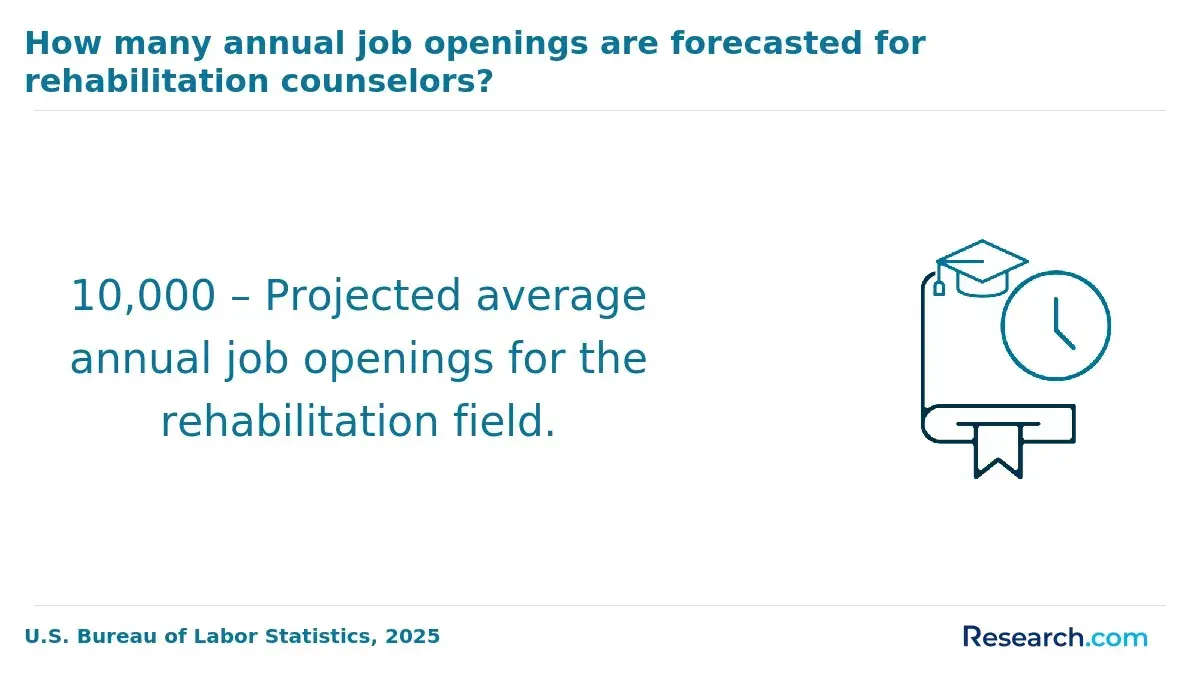
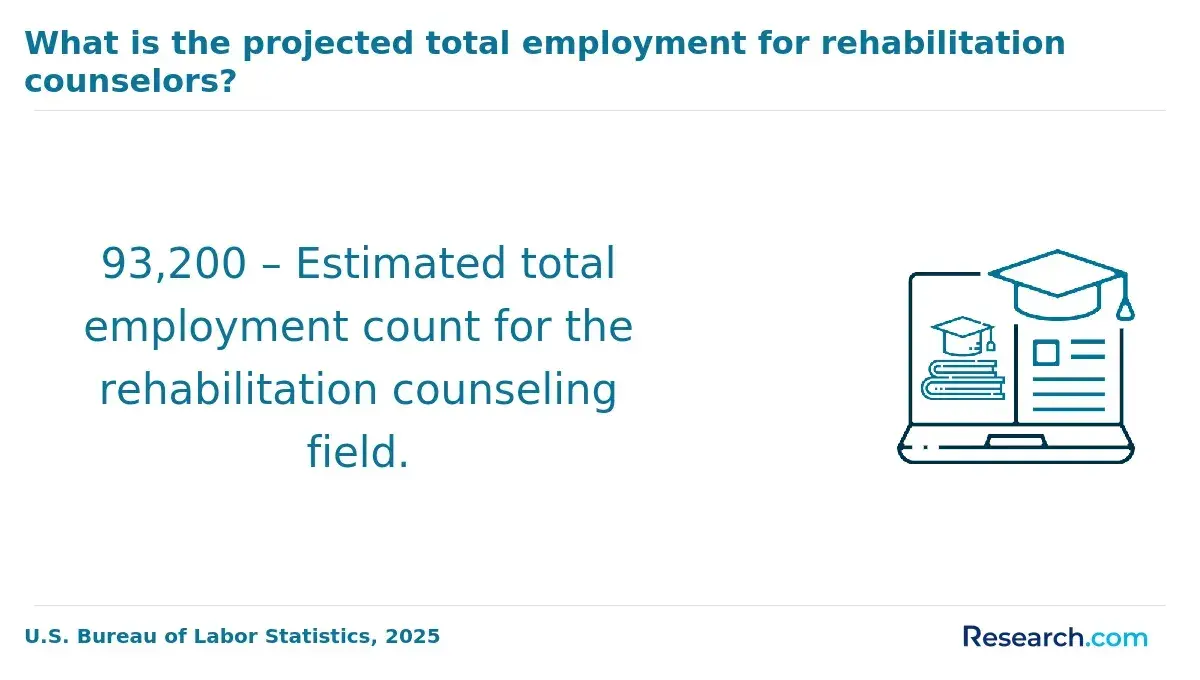
Rehabilitation counseling
$46,850
2%
The gap between occupations is a reason to choose a career target before estimating a degree's return. For a personal comparison, use Arizona job postings for your intended credential and location, then account for your current earnings, time away from work, borrowing, and the supervised experience you may need after graduation. Do not treat a national median as a starting salary.
Arizona's options differ most in credential target, degree structure, and how students complete practice requirements. These program-specific distinctions are more useful than comparing university names alone; verify current catalogs and placement policies before applying.
University of Arizona - M.A. in Counseling: The program offers counseling pathways within one master's degree rather than requiring every applicant to pursue the same practice setting (University of Arizona, M.A. in Counseling program). That makes it worth examining if you are weighing clinical, school, or rehabilitation goals; identify the exact pathway and its credential alignment before comparing its price with a single-focus degree.
Northern Arizona University - M.A. in Clinical Mental Health Counseling: This degree is explicitly directed toward clinical mental health practice (Northern Arizona University, Department of Educational Psychology). It is the more relevant NAU option for applicants planning behavioral health work rather than school counselor certification; ask where and how its required clinical placements can be completed.
Northern Arizona University - school counseling M. Ed. pathway: NAU's separate counseling education plan gives school-focused applicants a distinct curriculum to investigate rather than treating its clinical mental health degree as a substitute (Northern Arizona University, academic catalog). Compare the plan against Arizona Department of Education certification requirements if your intended workplace is a school.
Prescott College - M.S. in Counseling: Its counseling degree is a distinct option for students comparing a private college's program structure with Arizona's public-university pathways (Prescott College, M.S. in Counseling program). Ask for a written breakdown of required in-person activities, placement support, and total charges; those details determine whether its format is workable from your home community.
University of Phoenix - online clinical mental health counseling master's: Online academic delivery distinguishes this option for applicants who cannot regularly commute to campus (University of Phoenix, clinical mental health counseling master's program). Its clinical training still requires appropriate supervised experience, so confirm placement responsibilities and Arizona licensure alignment rather than assuming "online" means fully remote.
Program descriptions establish intended pathways, not individual licensure eligibility or guaranteed placement. Request each school's current degree plan, accreditation status, fieldwork handbook, and available program-level outcomes to make a like-for-like comparison.
A counseling master's commonly takes about two to three years of full-time study; part-time enrollment generally takes longer. Your actual timeline depends on course sequencing, the availability of supervised placements, and whether the program admits students to required courses every term. Graduation may also precede the supervised experience and other steps needed for independent clinical licensure (Arizona Board of Behavioral Health Examiners).
An accelerated schedule makes sense if you can reduce work hours and secure placements on time. A part-time plan may protect your income, but ask for a term-by-term schedule: a required course or internship offered infrequently can extend completion more than the advertised credit load suggests.
Online and on-campus counseling degrees should be judged against the same end goal: appropriate education and supervised preparation for your intended credential. Online delivery can reduce travel for Arizona students far from a campus, while campus study may make regular face-to-face interaction and access to nearby placement networks easier. Neither format automatically resolves fieldwork requirements.
Ask an online program whether any intensives require travel, who approves local supervisors, and what happens if a placement falls through. Ask a campus program whether courses and fieldwork fit your work schedule. The strongest choice is the format you can complete while obtaining suitable supervised experience - not the one with the most convenient course website.
There is no single Arizona master's-in-counseling price that fairly represents every program: published institutional tuition figures may combine different graduate fields, exclude fees, or use different credit loads. For a useful estimate, request each school's current program credit requirement and tuition schedule, then add mandatory fees, books, travel or lodging for any intensives, and costs connected with placements. Public-university resident and nonresident rates can differ, so establish your tuition classification before comparing offers (institutional tuition schedules; NCES/IPEDS).
Compare total expected cost, not the price of one credit. A lower tuition rate can lose its advantage if a longer schedule reduces earnings or adds living expenses. The most affordable counseling programs can help form a shortlist, but obtain a personalized cost estimate from each school before deciding.
Start with the FAFSA and each program's aid office. Graduate students may be considered for federal Direct Unsubsidized Loans, institutional scholarships, assistantships, and, where offered, employer tuition support; eligibility and funding vary. Ask whether an assistantship's work schedule can coexist with required clinical hours (Federal Student Aid; institutional financial aid offices).
Federal graduate borrowing rules matter particularly for a student entering in 2027. Under the rules described by Federal Student Aid, new graduate students generally cannot begin borrowing Graduate PLUS loans under the post-July 2026 restrictions; certain previously enrolled borrowers with qualifying earlier borrowing may have transitional eligibility. Have the aid office check your individual status rather than building a budget around Graduate PLUS availability (Federal Student Aid, Graduate PLUS guidance).
Calculate the funding gap after grants and earnings, then ask what borrowing would be needed across the entire degree - not only its first year. If projected debt is difficult to justify against the occupation and setting you want, compare aid offers and the most valuable counseling programs before enrolling.
View the chart data as a table
Best score distribution across ranked programs (Source: Research.com)
Category
Value
65-69
1
70-74
0
75-79
0
80-84
0
85-89
0
90-94
4
95-99
1
Applicants generally need a bachelor's degree and must meet the school's academic and application requirements. Programs may request transcripts, recommendations, a statement of purpose, an interview, or prerequisite coursework; requirements vary, so do not assume a psychology major is universally required. Placement sites may impose additional screening before clinical training begins (institutional admissions and fieldwork policies).
If you have prior graduate coursework, request a written transfer-credit evaluation before accepting admission. A school's willingness to transfer an academic course does not necessarily mean the course satisfies its practice sequence or an Arizona credential requirement. Applicants changing careers should also ask how the program helps them prepare for client-facing work, not just whether they meet the admission minimum.
Expect coursework in counseling theories and techniques, ethics, human development, assessment, multicultural practice, research literacy, and supervised practicum or internship. Clinical mental health students should examine preparation for diagnosis and treatment; school counseling students should look for school-based consultation and student-support work; rehabilitation students should look for disability-related practice (institutional counseling curricula).
Course titles are a starting point, not proof of credential fit. Compare the complete syllabus and supervised-training plan with the Arizona regulator's applicable requirements. A program can cover a topic without offering the particular coursework or field experience your intended credential requires.
The consequential choice is usually between clinical mental health, school, and rehabilitation counseling. Some students may also seek focused preparation in substance-use counseling or work with couples and families. Check whether a proposed focus is a formal degree pathway, an elective grouping, or simply a topic addressed in coursework; those descriptions can have very different implications for credential eligibility (institutional degree plans; Arizona Board of Behavioral Health Examiners; Arizona Department of Education).
If you are undecided, compare the work settings and regulators attached to each path before choosing the broadest-sounding title. A specialization is valuable when it supports the clients you want to serve and the credential you intend to seek - not merely because it appears on a transcript.
Start with your intended job and work backward to its credential. Then compare only programs that can plausibly support that path. These checks help expose costly mismatches before you commit:
Identify whether your target requires Arizona professional counseling licensure, school counselor certification, or another credential; confirm requirements with the appropriate regulator.
Ask each program for written confirmation of its current institutional and, where relevant, CACREP programmatic accreditation status and how its curriculum addresses your intended credential.
Compare full program costs, aid, expected completion time, and the income you may give up during fieldwork - not tuition rates alone.
Ask for recent program-level completion, placement, and applicable exam outcomes, including the reporting period and how each measure is defined.
Confirm who secures placements, whether approved sites exist near you, and how the school handles delayed placements or transferred coursework.
A ranking is useful for narrowing the field, not replacing those checks. The most popular counseling programs offer another way to explore options, but popularity cannot establish credential fit or return on investment. A careful return-on-investment comparison includes aid, debt, completion probability, your current earnings, possible post-degree earnings, the time horizon, and the value of money over time.
View the chart data as a table
Projected job growth 2025-2035 by counseling career path (U.S., BLS) (Source: BLS)
Category
Value
Mental Health Counselors
18
Marriage & Family Therapists
14
Postsecondary Teachers
7
Psychologists
6
School & Career Counselors
3
Rehabilitation Counselors
2
All occupations
3
A master's can support a path toward clinical counseling, school counseling, rehabilitation counseling, or related behavioral health work, depending on the program and additional qualifications. An initial supervised role and independent clinical practice are different career stages: finishing the degree does not itself confer an Arizona professional counseling license (Arizona Board of Behavioral Health Examiners).
Work backward from a specific job posting. Check the credential it requires, the populations served, and whether the employer accepts applicants who are still completing supervised experience. If you want to work in schools, verify certification expectations with the Arizona Department of Education rather than assuming a clinical mental health credential is equivalent.
View the chart data as a table
Programs by specialization (Source: Research.com)
Category
Value
Clinical Mental Health Counseling
4
School Counseling
1
Clinical Rehabilitation Counseling
1
The national outlook is strongest among the counseling occupations shown above for clinical mental health and addiction-related work: BLS projects 18% employment growth from 2025 to 2035. That projection indicates broader demand but does not establish the number of openings in an Arizona community or guarantee a position after graduation (U.S. Bureau of Labor Statistics, Employment Projections).
For a local decision, review current postings in the Arizona areas where you can realistically live and complete supervised experience. Separate positions open to new graduates from those requiring independent licensure, and note whether employers seek school, substance-use, or general clinical experience. This is especially important if you cannot relocate: national growth may not translate into a convenient placement or first job.
2027 Best Master's in Counseling Degree Programs Ranking in Arizona
Investing in a master's degree is a consequential decision. Research.com developed this ranking to help readers compare programs using documented measures rather than reputation alone, and its team reviewed multiple education data sources to support the ranking's quality, credibility, and accuracy.
The Best ranking begins with a graduate-outcomes-and-accreditation score: program completion accounts for 40%; employment or doctoral admission, 20%; applicable licensure exam pass rates, 20%; CACREP programmatic accreditation, 16%; and institutional Title IV eligibility, 4%. When a measure does not apply, its weight is redistributed among the applicable measures. Program cost then contributes a smaller share - about 7% of the final score. The same approach applies to online and campus programs; other Research.com counseling rankings order programs by the dimension named in each ranking.
The ranking draws on these sources:
IPEDS database - institutional enrollment, completion, and cost information.
Use the ranking to narrow your options, then confirm current tuition, program accreditation, placement arrangements, and Arizona credential requirements directly with each school and regulator. The Research.com methodology explains the ranking approach in more detail.
# 1 position
University of Arizona
Master
Master of Arts in Counseling
Delivery mode: campus
95.09
/ 100
Final score
Specialization
Clinical Mental Health Counseling
Required credits
60 semester credits
GPA range
3.00 - 4.00
Program completion rate
98% (2023-24)
Employment or doctoral admission
100% (2023-24)
Licensure exam pass rate
96% (2023-24)
Application deadline
Fall: January 15
Application process
direct
GRE
no
Prerequisites
At least a 3.0 GPA on a 4.0 scale during the last 60 credit hours, or 12 credits of graduate coursework from a CACREP-accredited institution with at least a 3.0 GPA.
Additional requirements
Completed application, official undergraduate and graduate transcripts, and Graduate College application fee. Applicants select a specialization during application and must be accepted by the Graduate College and the DPS Department.
Accreditation
Accredited by the Council for Accreditation of Counseling and Related Educational Programs (CACREP), with institutional accreditation from the WASC Senior College and University Commission (WSCUC).
University of Arizona earned a Research.com Counseling Program Score of 95.09/100, supported by 96% licensure exam pass rate and 98% program completion rate. The program is CACREP-accredited, valid through 2032-10-31.
# 2 position
Northern Arizona University
Master
Clinical Mental Health Counseling, Master of Arts
Delivery mode: campus
93.44
/ 100
Final score
Program length
about 2 years (60 credit hours, most students full-time)
Specialization
Clinical Mental Health Counseling
Required credits
60 semester credits
GPA range
3.00 - 4.00
Program completion rate
92% (2024-25)
Employment or doctoral admission
100% (2024-25)
Licensure exam pass rate
93% (2024-25)
Application deadline
Flagstaff: January 10; North Valley (Phoenix): February 15; Tucson: February 15; Yuma: April 1
Application process
direct
GRE
Conditional: GRE General Test (verbal and quantitative) required if cumulative GPA is below 3.0
Prerequisites
Program Prerequisite course: EPS 525 Introduction to Statistics or successful completion of an upper-division undergraduate Statistics course within the past three years of admittance.
Additional requirements
Transcripts; undergraduate degree from a regionally accredited institution with a 3.0 GPA on a 4.0 scale (or equivalent); GRE General Test scores required only if cumulative GPA is below 3.0.
Accreditation
Accredited by the Council for Accreditation of Counseling and Related Educational Programs (CACREP), with institutional accreditation from the Higher Learning Commission (HLC).
Northern Arizona University earned a Research.com Counseling Program Score of 93.44/100, supported by 93% licensure exam pass rate and 92% program completion rate. The program is CACREP-accredited, valid through 2030-10-31.
# 3 position
Northern Arizona University
Master
Counseling - School Counseling, Master of Education
Delivery mode: campus
91.72
/ 100
Final score
Specialization
School Counseling
Required credits
60 semester units
GPA range
3.00 - 4.00
Program completion rate
91% (2024-25)
Employment or doctoral admission
90% (2024-25)
Application deadline
Flagstaff: January 10; North Valley (Phoenix): February 15
Application process
direct
GRE
Conditional: GRE required if cumulative GPA is below 3.0
Prerequisites
EPS 525 or an upper-division undergraduate Statistics course completed within the past three years.
Additional requirements
Transcripts (regionally accredited bachelor's, 3.0 GPA); GRE (or waiver if GPA >= 3.0); interview; IVP Fingerprint Clearance Card; recommendation(s)/reference(s); responses to specific essay questions.
Accreditation
Accredited by the Council for Accreditation of Counseling and Related Educational Programs (CACREP), with institutional accreditation from the Higher Learning Commission (HLC).
Northern Arizona University earned a Research.com Counseling Program Score of 91.72/100, supported by 91% program completion rate and 90% employment or doctoral admission rate. The program is CACREP-accredited, valid through 2030-10-31.
# 4 position
University of Arizona
Master
Master of Arts in Counseling
Delivery mode: campus
91.50
/ 100
Final score
Specialization
Clinical Rehabilitation Counseling
Required credits
60 semester credits
GPA range
3.00 - 4.00
Program completion rate
100% (2023-24)
Employment or doctoral admission
100% (2023-24)
Application deadline
Fall: January 15
Application process
direct
GRE
no
Prerequisites
At least a 3.0 GPA on a 4.0 scale during the last 60 credit hours, or 12 credits of graduate coursework from a CACREP-accredited institution with at least a 3.0 GPA.
Additional requirements
Completed application, official undergraduate and graduate transcripts, and Graduate College application fee. Applicants select a specialization during application and must be accepted by the Graduate College and the DPS Department.
Accreditation
Accredited by the Council for Accreditation of Counseling and Related Educational Programs (CACREP), with institutional accreditation from the WASC Senior College and University Commission (WSCUC).
University of Arizona earned a Research.com Counseling Program Score of 91.5/100, supported by 100% program completion rate and 100% employment or doctoral admission rate. The program is CACREP-accredited, valid through 2032-10-31.
# 5 position
Prescott College
Master
Master of Science in Counseling
Delivery mode: hybrid
91.28
/ 100
Final score
Specialization
Clinical Mental Health Counseling
Required credits
60 semester credits
Acceptance rate
37.23%
Application deadline
Fall: priority February 15, March 15, April 15; final June 1 if space is available. Spring: priority September 15, October 15; final November 15 if space is available.
Application process
direct
GRE
no
Prerequisites
Bachelor's degree from an accredited U.S. institution or an equivalent four-year degree from a recognized institution abroad. Final-year applicants may receive conditional admission, with degree completion required before enrollment.
Additional requirements
Application; two professional or academic references; application essay; resume or CV; bachelor's transcripts (official transcripts required before the first term); required admissions interview.
Accreditation
Accredited by the Council for Accreditation of Counseling and Related Educational Programs (CACREP), with institutional accreditation from the Higher Learning Commission (HLC).
Prescott College earned a Research.com Counseling Program Score of 91.28/100. The program is CACREP-accredited, valid through 2028-10-31.
# 6 position
University of Phoenix - Online
Master
Master of Science in Counseling - Clinical Mental Health Counseling
Delivery mode: hybrid
67.03
/ 100
Final score
Specialization
Clinical Mental Health Counseling
Required credits
60 semester credits
GPA range
2.50 - 4.00
Program completion rate
34% (2024-25)
Employment or doctoral admission
80% (2024-25)
Licensure exam pass rate
70% (2024-25)
Application deadline
rolling
Application process
direct
GRE
no
Prerequisites
Bachelor's degree from an institutionally accredited institution (any field) with 2.5 GPA; successful completion of CCMH/502 Graduate Portfolio for admission
Additional requirements
Online application, official transcripts, required admission forms, criminal conviction acknowledgement form, CCMH/502 Graduate Portfolio and admissions committee approval; no essays, no application fee, no GRE
Accreditation
Accredited by the Council for Accreditation of Counseling and Related Educational Programs (CACREP), with institutional accreditation from the Higher Learning Commission (HLC).
University of Phoenix - Online earned a Research.com Counseling Program Score of 67.03/100, supported by 70% licensure exam pass rate and 34% program completion rate. The program is CACREP-accredited, valid through 2033-03-31.
Frequently asked questions about Counseling degree in Arizona
Does a counseling master's qualify me to practice independently in Arizona?
No. Independent professional counseling licensure has requirements beyond graduation, including applicable supervised experience and examination requirements. Confirm the current pathway with the Arizona Board of Behavioral Health Examiners before choosing a program.
Is an online counseling master's acceptable for an Arizona career?
Online coursework can be an option, but the degree must fit the credential you seek and its required supervised training must be completed appropriately. Confirm program accreditation, curriculum alignment, and local placement arrangements.
Should I choose clinical mental health or school counseling?
Choose based on the setting and credential you want. Clinical mental health counseling generally targets behavioral health practice; school counseling targets student services in schools. Arizona regulates these pathways through different agencies.
Is CACREP accreditation the same as university accreditation?
No. CACREP accredits eligible counseling programs; institutional accreditation applies to the college or university. Check both separately and ask how each relates to your intended credential (Council for Accreditation of Counseling and Related Educational Programs; U.S. Department of Education).
How can I tell whether the degree is worth its cost?
Compare the full cost and likely debt with your current income, the time needed to finish and become credentialed, and realistic pay for your target occupation and location. Request program-level outcomes; do not use a national salary median as a promised first-year wage.
See What Experts Have To Say About Studying Counseling