2027 Most Valuable Accounting Degree Programs Ranking in South Dakota

Co-Founder and Chief Data Scientist
Choosing the right accounting degree program is an important step for South Dakota students aiming to build a successful career. This article introduces the 2027 Most Valuable Accounting Degree Programs Ranking in South Dakota, created by the Research.com team of data scientists.
By exploring this ranking, you'll gain clear insights into programs that offer the best value and opportunities. Understanding these options can help you make a confident, informed decision.
Pursuing an accounting degree opens doors to rewarding professional paths, and this guide is here to support your journey toward that bright future.
Key benefits of getting accounting degree in South Dakota
- Salary for accounting degree graduates: Graduates can expect competitive wages, such as Staff Accountants earning a mean annual salary of $90,780 or Bookkeepers with about $49,580 yearly, reflecting strong financial rewards in South Dakota.
- Career paths: An accounting graduate from a popular South Dakota university might explore roles like Tax Preparer, Associate Auditor, or Accounts Payable Clerk, offering diverse opportunities to grow professionally in various industries.
- Online degree benefits: Earning an accounting degree online from a respected South Dakota college allows flexibility with schedules and decreased commuting costs, making education more accessible without sacrificing quality.
- 2027 Most Valuable Accounting Degree Programs Ranking in South Dakota
- What can I expect from accounting degree in South Dakota?
- Where can I work with accounting degree in South Dakota?
What can I expect from accounting degree in South Dakota?
The average cost of getting an accounting degree in South Dakota is pretty reasonable compared to other states. Students attending schools like the University of South Dakota or South Dakota State University usually find tuition to be affordable, especially for in-state residents. Many graduates share how manageable the expenses felt, allowing them to focus more on studying financial accounting, taxation, and other key courses without stressing about sky-high bills.
With additional fees and materials, the total yearly cost at these universities tends to hover around a mid-range price point for a public university, which makes it a practical choice for many locals. Plus, a lot of students appreciate the value since programs often include hands-on internship opportunities with local firms, making every dollar invested feel worthwhile for future job prospects.
For those thinking about accounting, knowing you can get a solid education in South Dakota without breaking the bank is a huge relief. It's one of the perks graduates often mention when looking back on their college days.
Where can I work with accounting degree in South Dakota?
If you earn an accounting degree in South Dakota, you're in a great spot for landing jobs across a bunch of industries. Graduates from schools like South Dakota State University or the University of South Dakota often find themselves working in public accounting firms in places like Sioux Falls or Rapid City. These gigs usually involve audits, tax prep, and advising clients, which is perfect for those who enjoy a dynamic work environment.
Some grads choose to join companies in agriculture or healthcare, handling budgets, financial reports, and internal audits. Imagine working for a big agricultural cooperative in the state-it's a real chance to apply your skills where local economy meets everyday life.
Others take a route into government roles, helping with tax collection or financial oversight at state agencies like the Department of Revenue. With South Dakota's no personal income tax policy, the focus on business and sales taxes creates unique challenges that really keep things interesting.
Plus, remote work opportunities mean you can serve clients nationwide without leaving South Dakota, combining flexibility with steady demand. It's no wonder many accounting grads feel positive and confident about their career paths here.
If you're earning an accounting degree in South Dakota-say at South Dakota State University or the University of South Dakota-you can expect some pretty solid pay once you graduate. For example, staff accountants in the state pull in a mean annual wage of about $90,780, which is great for recent grads stepping into roles handling financial reports and audits. If you start out as a bookkeeper, tax preparer, associate auditor, or accounts payable clerk, the mean wage is closer to $49,580. That's still a decent paycheck, especially when you consider the low cost of living around places like Sioux Falls or Rapid City.
Many grads feel pretty excited when they see how their salary jumps with a bit of experience or after earning certifications like the CPA. Imagine finishing your degree at a school in Sioux Falls and quickly moving up to a staff accountant role that pays nearly twice as much as entry-level bookkeeping gigs. Plus, without South Dakota's state income tax, take-home pay stretches further, making those first jobs even sweeter financially.
- In-state public university tuition for an accounting bachelor's degree in South Dakota ranges from $9,000 to $12,000 annually.
- Private colleges typically charge over $20,000 per year, while community colleges offer associate degrees or transfer programs for $4,000 to $6,000 each year.
- Entry-level accountants earn between $45,000 and $52,000 annually, with higher salaries in metropolitan areas like Sioux Falls and Rapid City.
- Experienced accountants can expect median salaries between $65,000 and $75,000 after five to ten years.
- Job growth for accountants in South Dakota is about 5% annually, driven by sectors such as agriculture, finance, and healthcare.
- CPA licensure requires 150 credit hours, often met by a master's degree or extra coursework beyond a bachelor's degree.
Most students in South Dakota wrap up their accounting degree in about four years if they're going the traditional bachelor's route. Whether they're at South Dakota State University or the University of South Dakota, the full-time grind usually blends general classes with accounting-focused ones in a way that feels manageable and steady. It's common to hear grads say they appreciated the mix of in-person and online courses, especially since these schools offer flexible schedules that work well for juggling jobs or family.
If you want to become a CPA, though, it often means sticking around a bit longer-think another one to two years for a master's. Many find tackling a Master of Accountancy or an MBA with an accounting focus worth the extra time since it helps meet South Dakota's 150-credit requirement for the CPA exam. Some students who took the accelerated associate degree path finished faster, but most found it didn't quite open all the doors they wanted in the accounting world here.
Going full-time helps keep everything on track, especially given tuition rates around $8,000 to $10,000 yearly. So, it's little wonder students often push through steadily, knowing the payoff is huge.
When choosing an accounting program in South Dakota, accreditation and affordability are crucial factors to consider. Accreditation ensures that the program meets certain standards of quality and prepares students for the CPA exam. The cost of attending an accounting program can vary significantly, and students should explore options such as scholarships, grants, and federal loans to help fund their education. For those looking for an affordable accounting school in south dakota, researching programs that offer a balance of quality and affordability is essential. By considering these factors, students can make informed decisions about their education and future careers in accounting.
If you're thinking about studying accounting in South Dakota, the biggest difference between online and on-campus programs is how you experience your learning. Online degrees are super flexible-perfect if you're juggling work or family. You can watch lectures and do assignments anytime, which many grads from places like South Dakota State University really appreciate because it lets them keep their day jobs without feeling overwhelmed.
On the flip side, on-campus programs at schools like the University of South Dakota offer that hands-on vibe. Students love the chance to chat face-to-face with professors and classmates, join accounting clubs, and get help right when they need it. It feels more personal and interactive, which is great if you thrive on real-time feedback and networking.
Cost-wise, online degrees may save you some cash on gas and housing, but both types qualify you for the CPA exam as long as they're accredited, so you're good either way.
The average cost of earning an accounting degree in South Dakota usually falls around $12,748 for in-state students. This is a pretty reasonable number compared to many other states, making it an attractive choice for local students who want solid education without breaking the bank. Graduates from schools like South Dakota State University often mention how manageable their tuition was, especially when combined with scholarships or financial aid they qualified for.
For out-of-state students, though, things get a bit pricier. The median total cost for them jumps to about $28,220, which includes tuition, fees, and other essentials. That's still competitive nationally, considering the quality of education and support students receive. Many students at private universities in South Dakota, such as Augustana University, find the overall total cost for their accounting degrees aligns with this figure regardless of residency, since private schools typically don't differentiate in-state versus out-of-state tuition.
If you're curious about the average accounting degree cost South Dakota residents face, it's helpful to account for additional expenses too-housing, meals, books, and transportation can add quite a bit but are usually offset by the lower tuition. Many students have found success balancing these costs, and if you're looking to learn more, check out this affordable accounting school in south dakota to see options designed to fit various budgets perfectly.
In today’s rapidly evolving financial landscape, building an accounting career goes far beyond earning a degree. Prospective and current students benefit greatly from a clear understanding of the skills and industry trends that propel professional growth. Continuous learning, networking, and certifications such as the CPA and CMA are key elements to staying competitive. Embracing emerging technologies, like cloud accounting and advanced data analytics, not only broadens career opportunities but also enhances decision-making and strategic planning skills. A strong emphasis on soft skills-such as communication, problem solving, and adaptability-complements technical expertise. These [required skills for accounting] are essential in navigating workplace challenges and advancing in one’s career. Additionally, participating in professional organizations, attending workshops, and pursuing specialized training programs can provide valuable insights into industry best practices and foster long-term connections through mentoring and peer networking. By integrating these professional development strategies, accounting graduates can not only secure rewarding positions immediately after graduation but also cultivate a resilient career path that adapts to the future of accounting.
If you're diving into an accounting degree in South Dakota, you'll be happy to know there are plenty of financial aid options designed to ease the cost. For example, many students at South Dakota State University rely on federal aid like the Pell Grant, which can cover thousands of dollars and doesn't need to be paid back. It really takes some pressure off when tuition sits around $8,000 to $10,000 a year for in-state public schools.
Besides federal help, there are state-specific scholarships like the South Dakota Opportunity Scholarship that reward solid academic performance. Graduates often share how these scholarships made a huge difference in balancing their budgets while focusing on school rather than stress.
Work-study programs on campuses, including the University of South Dakota, also give students a chance to earn money through part-time jobs related to accounting, making day-to-day expenses more manageable while gaining valuable experience.
Don't forget professional groups such as the South Dakota Society of CPAs, which sometimes offer scholarships tied to dedication towards accounting or local community service. Plus, if you're already working, some companies support tuition reimbursement, which is a game-changer for working students boosting their credentials without breaking the bank.
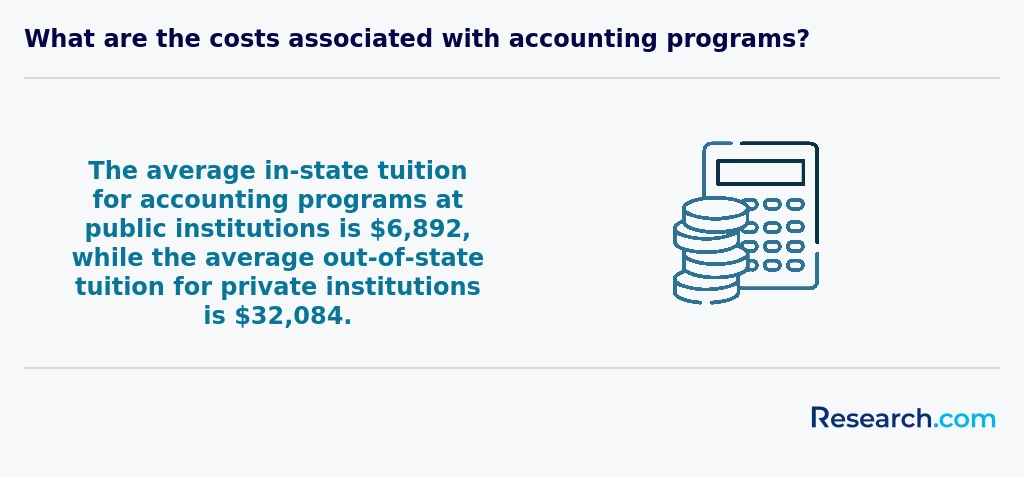
Many graduates recoup their tuition investment within 2–4 years, thanks to competitive starting salaries such as $50,000–$60,000 for entry-level staff accountants and $47,440 for bookkeepers. With average in-state tuition of $6,892 per year, a four-year bachelor’s degree totaling approximately $27,568 can be paid back quickly, especially when accounting for annual salary growth rates of 4–6%. Specializations in areas like forensic or management accounting often accelerate this return, with median mid-career earnings surpassing $90,000. Career advancement hinges on strategic credentialing and experiential learning. CPA licensure typically boosts salaries by 15–20% and expedites promotion to roles such as audit manager or financial controller within six to eight years post-graduation. Programs emphasizing internships and industry partnerships report that over 80% of graduates secure full-time roles within six months, further shortening the timeframe to profitability. Budget-conscious students can explore cost-effective alternatives that deliver strong ROI without compromising quality. For example, Research.com’s Low Cost Accounting Degree Programs Ranking in Arizona showcases institutions with lower tuition and comparable career outcomes. By selecting programs with high CPA exam pass rates, robust career services, and transparent alumni salary data, prospective accountants can maximize their return on investment and set the stage for sustained career growth.
If you're aiming to enroll in an accounting degree in South Dakota, you'll need to tick a few essential boxes. Most schools, like those popular at public universities here, expect you to have a high school diploma or GED. A solid grasp of math-think algebra and geometry-is super helpful since accounting relies heavily on numbers. Graduates often mention how having those math skills made their first accounting classes feel much less intimidating.
Some colleges still ask for SAT or ACT scores, but many have gone test-optional lately. That said, submitting scores around 1040 to 1160 on the SAT can definitely boost your chances, especially if you're applying to competitive programs. It's a relief for many students that this part can sometimes be optional, letting them focus on other parts of their application.
On top of that, having done some basic coursework in business or accounting beforehand can give you a head start. Applicants should get ready to submit transcripts, recommendation letters, and maybe a brief essay explaining why accounting excites them. Meeting deadlines is key-graduates often share how staying organized made all the difference during the application season.
Also, don't forget to consider tuition costs. Studying accounting in South Dakota is pretty affordable compared to other states, with public school tuition averaging about $9,000 a year. This balance of quality education and manageable costs is something many recent grads appreciate as they look forward to their careers.

To become a licensed Certified Public Accountant (CPA) in South Dakota, graduates must complete 150 semester hours of college credit-typically including 24 hours of accounting and 24 hours of business courses-before applying to the South Dakota Board of Accountancy. Candidates then register for and pass all four sections of the Uniform CPA Exam (AUD, FAR, REG, BEC) within an 18-month rolling period. Upon exam completion, applicants must accrue 2,000 hours of supervised experience under a licensed CPA and submit verification forms to the board. Active CPAs are required to complete 80 hours of Continuing Professional Education (CPE) every two years to maintain licensure. Beyond the CPA credential, South Dakota graduates can boost career prospects by pursuing specialized designations. The Certified Management Accountant (CMA) credential, offered by the Institute of Management Accountants, requires passing two exam parts and two years of professional experience in management accounting and financial management. The Certified Internal Auditor (CIA) credential, administered by the Institute of Internal Auditors, entails three exam segments and one to two years of relevant internal auditing experience. Strategically combining these designations can significantly enhance both expertise and compensation. Accounting professionals often explore “what is the highest paid accountant” to align certification choices with high-earning roles. For example, CPAs with a CMA may advance into controller or CFO positions more rapidly, while CIAs often transition into high-level risk management or forensic roles. Mapping out your licensure timeline and aligning it with your career objectives ensures you stay competitive in South Dakota’s evolving accounting job market.
If you're diving into an accounting degree in South Dakota, expect a solid mix of courses that really get you ready for the real world. Most programs, like those at South Dakota State University or the University of South Dakota, line up classes such as financial accounting, managerial accounting, auditing, and taxation. Graduates often mention how these courses gave them a clear picture of handling real company books and tax forms, which made internships way less intimidating.
Alongside the core stuff, you'll tackle business law and economics classes, helping you see how laws and market forces shape financial decisions. Plus, math isn't just for theory; expect stats or calculus to sharpen your analytical skills-Super useful when you're slicing through spreadsheets or forecasting budgets.
Many grads remember how electives like forensic or international accounting let them explore cool niches. And don't forget ethics-because knowing what's right is just as important as knowing the numbers. Overall, courses in South Dakota aren't just about crunching numbers; they prepare you for the whole accounting adventure.
When you dive into an accounting degree in South Dakota, you'll find some pretty cool specializations to choose from. Lots of graduates from popular schools like the University of South Dakota or South Dakota State University talk about how focusing on tax accounting really helped them understand federal tax codes-even if South Dakota itself doesn't have a state income tax. Others find auditing a great fit since many local companies and government agencies need auditors who can keep things transparent and honest. This variety in South Dakota accounting concentration options makes it easy to match your studies with your career goals.
Forensic accounting is another interesting path, blending investigation with accounting to catch fraud-perfect if you want to work with law enforcement or private firms. Plus, fields like management accounting or government accounting open doors to roles within businesses and local governments here. Many grads say their programs were designed around what the required skills for accounting are today, which really gave them a leg up when starting their careers.
When picking the best accounting degree programs South Dakota has, start by checking if the school is accredited by top groups like ACBSP or AACSB. Graduates from places like South Dakota State University often say that having those credentials made a huge difference when applying for CPA licenses and jobs. It's also smart to explore programs that offer real-world experiences-internships and hands-on projects can turn classroom knowledge into actual skills.
Cost definitely matters too. Many folks find affordable accounting colleges in South Dakota that don't break the bank-public universities usually have lower tuition, around $9,400 a year. Graduates often mention how this balance of price and quality helped them avoid big debt while still feeling confident about their education.
Employment is another biggie. With South Dakota's low unemployment and steady demand for accountants growing, especially near Sioux Falls, picking a program with strong job placement support really pays off. Some grads recommend getting involved with local groups like the South Dakota Society of CPAs to network and boost career chances. If you want to know what is the highest paid accountant and how to reach that level, choosing the right degree here can set you up for that journey.

If you're thinking about accounting careers in South Dakota, there's a lot to be excited about. Graduates from popular schools like the University of South Dakota often land jobs at public accounting firms, where they get hands-on experience as auditors or tax pros. It's a great way to build skills and prep for that CPA license, which many say really opens doors.
Not everyone heads to public firms, though. Plenty of grads find rewarding roles in the private sector-think managing budgets or financial reporting for manufacturing or healthcare companies based right here. It's the kind of work that keeps businesses running smoothly and pays steadily.
Government accounting is another solid path. Working for state or local agencies means dealing with public funds and keeping everything transparent, which graduates say feels pretty meaningful.
If you want to explore these options but are worried about costs, South Dakota's public universities offer affordable programs. For tips on low-cost routes, check out the Low Cost Accounting Degree Programs Ranking in Arizona.
South Dakota accounting degree job opportunities really range far and wide, so there's something here for every accounting student eager to start their career strong.
Graduates with an accounting degree in South Dakota find a pretty steady job market that fits well with the state's friendly business vibe. Places like South Dakota State University and the University of South Dakota have alumni landing jobs quickly in roles like junior accountants or financial consultants. The demand here often comes from industries such as finance, agriculture, and healthcare, so there's no shortage of options for those starting out. The South Dakota accounting career opportunities are especially appealing because the cost of living and education are both reasonable, meaning you're less likely to be buried in debt when you begin working.
Many grads also boost their prospects by going for certifications, especially CPA licenses, since South Dakota streamlines the process to match national standards. If you want to know what certification pays the most, that could be a smart move. With salaries averaging around $65,000 in South Dakota, the outlook looks solid and invites students to build a comfortable, rewarding career without the chaos of a bigger city.
2027 Most Valuable Accounting Degree Programs Ranking in South Dakota
Investing in your education is a significant decision that can shape your future, and the Research.com team understands the importance of making informed choices. To assist prospective students in South Dakota, we have meticulously crafted the "2027 Most Valuable Accounting Degree Programs Ranking in South Dakota." Our commitment to quality, credibility, and accuracy is reflected in the extensive research and analysis conducted to compile this ranking.
We utilized the following reputable data sources to ensure a comprehensive evaluation of accounting programs:
By exploring this ranking, readers will gain valuable insights into the most valuable accounting degree programs available in South Dakota, helping them make informed decisions about their educational paths. For more details on our methodology, please visit our Research.com methodology page.


# 4 position
National American University-Rapid City
Bachelor of Science in Accounting


Frequently Asked Questions About accounting
Accounting degree students in South Dakota can maximize their learning experience by engaging with local professional organizations such as the South Dakota Society of Certified Public Accountants (SDSCPA). This offers networking and mentorship opportunities often essential for career growth. Participating in internships with regional firms can provide practical skills and enhance job prospects in the state's robust agricultural and financial sectors. Furthermore, students should take advantage of resources offered by accredited institutions like South Dakota State University, which provide access to updated accounting software and tailored coursework aligned with the CPA exam.
Emerging niches within the accounting field reflect the dynamic nature of the profession, especially for students pursuing degrees in South Dakota. One rapidly growing area is forensic accounting, which integrates investigative skills with accounting to detect fraud and financial misconduct. The increasing complexity of regulations and digital transactions drives demand here.
Another expanding niche is environmental accounting, focusing on how organizations manage and report environmental costs and sustainability initiatives. This is particularly relevant as more companies prioritize corporate social responsibility.
Technology-related roles, such as data analytics and cybersecurity accounting, are also vital. Accountants skilled in interpreting big data and securing financial information are highly sought after, aligning with trends shown by the South Dakota Department of Labor's employment projections.
After earning an accounting degree in South Dakota, preparing for the job market requires both strategic planning and practical experience. Internships are essential; they provide hands-on experience and improve your resume. Many South Dakota companies, especially in Sioux Falls and Rapid City, offer internship opportunities in accounting and finance.
Networking is also crucial. Joining professional associations like the South Dakota CPA Society can connect you with employers and mentors. According to the U.S. Bureau of Labor Statistics, the demand for accountants in South Dakota is projected to grow about 7% through 2031, reflecting steady job opportunities.
Additionally, consider obtaining the Certified Public Accountant (CPA) license to increase competitiveness in the state's market. CPA requirements in South Dakota include 150 credit hours and passing the Uniform CPA Exam. Overall, combining relevant experience with certification significantly enhances employment prospects.
Employers in South Dakota highly value accounting graduates with strong technical skills, including proficiency in accounting software such as QuickBooks and Excel. According to the South Dakota Department of Labor, candidates who demonstrate competency in data analysis and financial reporting have a competitive edge. Communication skills are also critical, as accountants must clearly explain complex financial information to clients and colleagues.
Problem-solving and attention to detail are essential for accuracy in financial statements and compliance with tax regulations. Ethical judgment remains a top priority due to the importance of trust in handling sensitive financial data. Familiarity with South Dakota's tax laws and business environment further enhances a graduate's employability in the region.
Finding internships in South Dakota related to accounting degree programs begins with leveraging connections at local colleges such as the University of South Dakota and South Dakota State University. These schools often have dedicated career centers that host accounting-specific internship fairs, connecting students with regional employers.
Major accounting firms like Eide Bailly and BKD have offices across South Dakota and frequently offer internships to students. Exploring job boards from the South Dakota CPA Society can also provide timely internship listings. Additionally, using platforms like Handshake and LinkedIn helps to identify opportunities targeted to South Dakota accounting students.
South Dakota's low unemployment rate of about 2.5% (Bureau of Labor Statistics, 2024) means internships can be competitive, so starting early and networking is key.
An accounting degree significantly enhances career mobility and advancement opportunities in South Dakota's job market. According to the U.S. Bureau of Labor Statistics, South Dakota has seen steady growth in accounting roles, reflecting the demand for skilled financial professionals across industries. Graduates with this degree often qualify for positions such as auditors, controllers, and financial analysts, which tend to offer higher salaries and leadership potential.
Employers in South Dakota emphasize certification, such as CPA licensure, which is more accessible with an accounting degree and increases prospects for promotions. Additionally, the degree provides foundational skills in compliance and tax regulations relevant to local businesses.
Studying for an accounting degree in South Dakota offers students a strong foundation for interdisciplinary roles by combining core accounting principles with courses in business, finance, and information systems. Many programs emphasize skills in data analysis, communication, and ethical decision-making, which are essential for roles that bridge accounting with management, technology, or compliance.
South Dakota colleges often include experiential learning opportunities, such as internships and case studies, to expose students to real-world business challenges. According to the South Dakota Board of Accountancy, graduates frequently pursue careers not only in traditional accounting but also in consulting, financial planning, and IT auditing.
This broad preparation aligns with workforce demands in the state's growing economic sectors, including agriculture, manufacturing, and healthcare, where interdisciplinary knowledge improves problem-solving and collaboration.
Choosing between a thesis and a non-thesis accounting degree program in South Dakota depends largely on your career goals and interests. Thesis programs typically focus on research, ideal for students aiming at academic roles or advanced study like a PhD. According to the National Center for Education Statistics, thesis options are often encouraged in research universities, but fewer South Dakota institutions offer this compared to non-thesis tracks.
Non-thesis programs emphasize practical skills and coursework, which suits those seeking to enter the workforce quickly, especially in public accounting or business. The South Dakota Board of Accountancy reports many graduates enter CPA roles requiring strong applied knowledge, which non-thesis paths support well.
Consider your learning preferences and future plans, as well as the availability of faculty mentorship for thesis projects, when making your decision.
Students based in South Dakota who wish to study accounting abroad have several pathways to consider, including exchange programs, study abroad partnerships, and international internships. Many universities in South Dakota, such as South Dakota State University, offer opportunities to study accounting through affiliated programs in countries like the United Kingdom, Australia, and Canada.
These programs allow students to earn credits toward their degree while gaining international experience. According to the Institute of Management Accountants, global exposure increasingly benefits accounting professionals by broadening cultural and regulatory understanding.
Financial aid and scholarships may be available to help offset costs. Students should also ensure that foreign courses meet South Dakota Board of Accountancy requirements for CPA eligibility if they plan to practice professionally in the state.
Part-time job opportunities in South Dakota can provide valuable experience for students pursuing an accounting degree. Roles such as bookkeeping assistants, tax preparers, and payroll clerks are commonly available at local accounting firms, small businesses, and non-profits. The Bureau of Labor Statistics reports that entry-level accounting positions often require familiarity with software like QuickBooks and Microsoft Excel, skills students can develop on the job.
Internships with regional firms or government agencies in South Dakota's cities, including Sioux Falls and Rapid City, offer exposure to practical accounting tasks. According to the South Dakota Department of Labor, accounting jobs are projected to grow by about 7% from 2022 to 2032, indicating steady demand. These positions help students apply theoretical knowledge and improve employability after graduation.
Accounting students in South Dakota have several networking opportunities that can enhance their professional development. Universities such as the University of South Dakota and South Dakota State University offer active chapters of organizations like Beta Alpha Psi, which connect students with accounting professionals through events and conferences. These groups often collaborate with the South Dakota Society of Certified Public Accountants (SDCPA), providing access to statewide meetings, internships, and job fairs.
Moreover, the state's CPA mobility laws facilitate networking beyond South Dakota, allowing students to build broader professional connections. The SDCPA also hosts an annual convention attracting over 500 accounting professionals, offering valuable chances to meet industry leaders and recruiters.
Alumni networks play a crucial role in supporting accounting degree students in South Dakota by providing valuable connections within the local job market. Many universities in the state, such as South Dakota State University and the University of South Dakota, maintain active alumni associations focused on professional growth. These networks offer mentorship opportunities, helping students navigate certification processes like the CPA licensure required in South Dakota.
Furthermore, alumni frequently share job openings and internship opportunities, which is vital as the state's accounting job market is competitive but growing, especially in Sioux Falls and Rapid City. According to the Bureau of Labor Statistics, South Dakota's employment of accountants is expected to grow by 7% through 2030, indicating increasing demand.
Access to experienced professionals also enhances students' understanding of industry trends and regional regulatory requirements, directly benefiting their career readiness.
Students pursuing an accounting degree in South Dakota can tailor their education by selecting electives and concentrations that align with their career goals. Many universities in the state offer options such as forensic accounting, taxation, or auditing, allowing students to focus on areas of interest. Additionally, incorporating practical experiences like internships or cooperative education programs can enhance real-world skills.
South Dakota's demand for accountants is growing, with the Bureau of Labor Statistics projecting a 7% job growth through 2031 nationwide. Choosing coursework that fulfills the 150-credit hour requirement for CPA licensure in South Dakota is crucial for those pursuing certification.
Some programs also provide opportunities for networking and professional development through partnerships with local accounting firms and organizations like the South Dakota Society of CPAs.
Accounting students in South Dakota often face several challenges related to the rigorous nature of the curriculum and the local job market. Many report struggling with mastering complex topics such as taxation, auditing, and financial reporting, which require strong analytical skills and attention to detail.
Access to internships and practical experience can be limited, especially in rural areas, which may affect students' ability to gain relevant hands-on skills before graduation. According to the South Dakota Board of Accountancy, the demand for CPAs remains steady, but competition for entry-level positions can be intense.
Additionally, balancing coursework with part-time jobs or family responsibilities is a common issue for many students in the state.
With an accounting degree in South Dakota, you can pursue several respected professional certifications that enhance employment prospects. The most sought-after credential is the Certified Public Accountant (CPA), required for many accounting roles and governed by the South Dakota Board of Accountancy. Candidates must meet education, examination, and experience requirements specific to the state. Another key certification is the Certified Management Accountant (CMA), which focuses on financial management and strategy.
The Certified Internal Auditor (CIA) is also valuable for accounting professionals interested in auditing careers. These certifications help demonstrate expertise and can lead to higher salaries and better job security.
To write a winning application for an accounting program in South Dakota, start by emphasizing your academic achievements, particularly in math and business-related subjects. South Dakota schools value strong GPAs and relevant coursework. Highlight any internships or work experience in accounting or finance to demonstrate practical skills.
Tailor your personal statement to show your passion for accounting and your career goals. Mention South Dakota-specific interests if applicable, such as local industries like agriculture or banking, which heavily rely on accounting professionals. According to the Bureau of Labor Statistics, South Dakota expects steady growth in accounting jobs through 2030, so emphasize your long-term commitment.
Finally, ensure your application is error-free and submit all required documents promptly to increase your chances of acceptance.
The global perspective on an accounting career highlights its steady demand and adaptability across various economies. In the United States, including South Dakota, a degree in accounting opens doors internationally due to the universal nature of financial principles and accounting standards.
South Dakota's accounting professionals often engage with international financial regulations like IFRS (International Financial Reporting Standards), which are used globally alongside US GAAP (Generally Accepted Accounting Principles). This dual knowledge enhances career opportunities worldwide.
According to the U.S. Bureau of Labor Statistics, accounting jobs are projected to grow 7% nationally from 2022 to 2032, with South Dakota reflecting similar trends. This growth indicates strong global relevance, as companies increasingly operate across borders.
Proficiency in accounting systems paired with cultural awareness makes graduates competitive candidates for multinational firms, which value accounting expertise combined with global insight.
Gaining practical experience while studying for an accounting degree in South Dakota is essential for career readiness. Many universities encourage students to participate in internships with local accounting firms or businesses. These internships provide real-world exposure and can sometimes lead to job offers after graduation.
Students can also engage in cooperative education (co-op) programs that blend classroom learning with paid work experience. South Dakota's economic sectors, such as agriculture and finance, offer relevant internship opportunities.
Additionally, joining campus organizations like accounting clubs or participating in case competitions can develop practical skills and professional networks.
According to the South Dakota Board of Accountancy, practical experience is a vital component for future Certified Public Accountants (CPAs), often requiring 1-2 years post-degree.
Choosing the right concentration within an accounting degree program in South Dakota depends on your career goals and the local job market. Popular concentrations include auditing, taxation, forensic accounting, and managerial accounting. South Dakota's economy, with its strong agricultural, financial services, and manufacturing sectors, often demands expertise in tax and audit-related fields. According to the South Dakota Department of Labor and Regulation, demand for accountants and auditors is expected to grow by 6% through 2030, particularly for those with specialized skills.
It is helpful to research concentrations offered by local colleges and align them with your interests and South Dakota's industry needs. For example, taxation is critical due to the state's tax regulations, and forensic accounting is growing with increasing needs for fraud detection. Speak to academic advisors, review course content, and consider internships available locally to make a well-informed choice.
- 2027 Most Valuable Accounting Degree Programs Ranking in Minnesota
- 2027 Most Valuable Accounting Degree Programs Ranking in Colorado
- 2027 Most Valuable Accounting Degree Programs Ranking in Illinois
- 2027 Most Valuable Accounting Degree Programs Ranking in Indiana
- 2027 Most Valuable Accounting Degree Programs Ranking in Arkansas
- 2027 Most Valuable Accounting Degree Programs Ranking in Kentucky
- 2027 Most Valuable Accounting Degree Programs Ranking in Louisiana
- 2027 Most Valuable Accounting Degree Programs Ranking in Alabama
- 2027 Most Valuable Accounting Degree Programs Ranking in Georgia
- 2027 Most Valuable Accounting Degree Programs Ranking in Delaware
See What Experts Have To Say About Studying Accounting
Read our interview with Accounting experts


John Wermert, Ph.D., CPA
Accounting Expert
Associate Professor of Accounting
Middle Tennessee State University

- Guide to Transition into an Accounting Career https://teach.com/online-ed/business-degrees/online-masters-accounting/how-to-transition-to-an-accounting-career/
- Mastering the Art of Networking: A Guide for Accounting Students https://www.wscpa.org/blog/607cb669-8d98-427e-8c9b-06129d9297e8:mastering-the-art-of-networking-a-guide-for-accounting-students
- Accounting Degree | Associates in Applied Science | Western Dakota Technical College https://www.wdt.edu/degree-programs/accounting/
- Accounting Degree Programs in South Dakota | Accounting.com https://www.accounting.com/states/south-dakota/
- Inside the world of accounting internships: What to expect : ThisWayToCPA : AICPA https://www.thiswaytocpa.com/work-experience/articles/internships/inside-world-accounting-internships-what-expect/
- Skills You Need for a Career Path in Accounting | AIU https://www.aiuniv.edu/degrees/business/articles/top-skills-for-career-in-accounting
- Why Is Accounting So Hard? Understanding Challenges and Misconceptions https://www.glasscubes.com/why-is-accounting-so-hard-understanding-challenges-and-misconceptions/
- Accountant Cover Letter Example https://www.careertoolbelt.com/professions/accountant/cover-letter-example/
- Accounting Bachelor's Degree https://northern.edu/degrees/accounting-bachelors-degree-online
- Are accounting students overloaded and under-supported? https://www.studentvoice.ai/blog/accounting-students-challenges-with-workload-and-support/