
2027 Most Affordable Accounting Degree Programs Ranking in Milwaukee

Co-Founder and Chief Data Scientist
Choosing the right accounting degree program in Milwaukee can be challenging, especially when budget matters. This article introduces the 2027 Most Affordable Accounting Degree Programs Ranking in Milwaukee, created by the Research.com team of data scientists to guide you through the options.
By exploring this ranking, you gain valuable insights into affordable programs that offer quality education. Earning an accounting degree opens doors to rewarding careers and financial stability. Let this article help you make an informed, confident decision about your future in accounting.
Key benefits of getting accounting degree in Milwaukee
- Salary for accounting degree graduates: Graduates in Milwaukee can expect competitive salaries, such as a Staff Accountant earning around $90,780 annually and Bookkeepers making about $49,580 per year, highlighting strong financial rewards.
- Career paths: An accounting degree opens doors to diverse roles in Milwaukee, including Tax Preparer, Associate Auditor, and Accounts Payable Clerk, providing flexibility and growth in many industries.
- Online degree benefits: Earning an accounting degree online from a Milwaukee university offers convenience and the ability to balance work and study, empowering graduates to advance their careers without disrupting their lives.
- 2027 Most Affordable Accounting Degree Programs Ranking in Milwaukee
- What can I expect from accounting degree in Milwaukee?
- Where can I work with accounting degree in Milwaukee?
What can I expect from accounting degree in Milwaukee?
The cost of an accounting degree in Milwaukee can vary significantly depending on the institution and residency status. Graduates from the University of Wisconsin-Milwaukee often highlight how in-state tuition made their education more affordable, allowing them to focus on mastering complex topics like tax regulations and auditing without the added stress of overwhelming debt. Meanwhile, students attending private schools such as Marquette University may face higher tuition fees but often benefit from more extensive networking opportunities within Milwaukee's finance sector.
Many accounting students appreciate that Milwaukee's institutions balance cost with quality by offering strong programs recognized by bodies like the AICPA. Some graduates recall how financial planning and scholarships played a key role in managing expenses, emphasizing that total costs also include materials and living expenses in an urban setting.
While price is a crucial factor, Milwaukee-based graduates frequently stress that the practical internships and connections they gained often outweigh pure tuition costs, providing a valuable return on investment in the city's competitive job market.
Where can I work with accounting degree in Milwaukee?
Graduates from accounting programs at institutions like the University of Wisconsin-Milwaukee often find themselves considering a variety of career paths within the city's robust economic landscape. Many begin in public accounting firms such as Deloitte or local names like Wipfli LLP, where roles like staff accountant offer valuable hands-on experience. One graduate described the satisfaction of contributing to real audits early in their career, emphasizing how this builds confidence and professional skills.
Corporate accounting also attracts graduates, with companies like Harley-Davidson and Northwestern Mutual providing roles in financial reporting or internal audit. These positions often come with the appeal of structured growth and specialization, though some find the corporate environment less flexible compared to other options.
Those looking for stability might explore government work, joining agencies like the Wisconsin Department of Revenue. Here, graduates appreciate the balance between meaningful public service and professional stability. Meanwhile, nonprofit organizations require specialized fund accounting skills, offering graduates a chance to align their work with community impact.
Entrepreneurship and consulting are alternative paths, especially for graduates eager to serve Milwaukee's diverse small-business community. This route offers freedom and direct client interaction but demands strong self-motivation and business acumen. Each path requires weighing personal career goals against opportunities in Milwaukee's dynamic job market.
Graduates with an accounting degree in Milwaukee can anticipate earning varied salaries depending on their chosen path. For example, staff accountants typically see a mean annual wage around $90,780, which aligns well with data reflecting local economic conditions. Entry-level roles such as bookkeepers, tax preparers, associate auditors, and accounts payable clerks generally earn about $49,580 annually, offering a strong foundation for recent graduates.
Those completing their studies at Milwaukee's prominent institutions often report positive early career experiences, citing internships and networking opportunities as vital factors in securing competitive positions that approach or exceed these averages. Graduates find that working in sectors like manufacturing and financial services enhances their earning potential.
It is important to recognize that while mean wages provide useful benchmarks, salaries in Milwaukee vary based on employer size and personal credentials. For instance, holding a CPA license or gaining several years of experience can push earnings well beyond starting figures, sometimes surpassing $100,000 for managerial roles.
- Annual tuition for accounting degrees in Milwaukee ranges from $7,000 to $15,000 at public institutions, while private colleges may charge over $20,000.
- Entry-level accountants in Milwaukee typically earn around $50,000 per year, with mid-career salaries between $65,000 and $80,000.
- Senior accountants and those with CPA certification can earn salaries above $90,000 in the Milwaukee area.
- There are approximately 12,000 to 15,000 accounting and auditing jobs in Milwaukee, with a projected job growth of 5% over the next decade.
- Milwaukee offers internship opportunities and has professional organizations like the WICPA to support students preparing for certification exams.
- Many accounting programs in Milwaukee provide flexible options such as evening or online classes to accommodate working students.
Completing an accounting degree in Milwaukee typically ranges from two years for an associate's degree to about four years for a bachelor's degree at institutions like Milwaukee Area Technical College or the University of Wisconsin-Milwaukee. Graduates from these programs often share how balancing coursework with part-time jobs influenced their pace, sometimes extending beyond the standard timeline.
Some students find accelerated programs appealing, allowing degree completion in as little as three years by taking extra courses during summers at places like Marquette University. This option suits those eager to enter the workforce sooner, creating a motivating but challenging experience.
Graduate degrees, such as a master's or MBA with an accounting focus, usually add one to two years. Many find part-time or online options valuable, though these formats may extend the duration depending on individual schedules.
It's important to remember that pursuing CPA licensure involves additional credits, which can further lengthen the educational pathway but often feel rewarding as students advance their careers.
Students pursuing accounting degrees in Milwaukee often encounter clear contrasts between online and on-campus programs. Graduates from the University of Wisconsin-Milwaukee's on-campus program frequently share how face-to-face interactions with professors and peers deepened their understanding through real-time discussions and group projects. These in-person experiences, coupled with easy access to campus resources like tutoring centers and career services, create a structured environment that many find motivating and supportive.
Conversely, graduates from online programs appreciate the flexibility to study around work and family commitments. For instance, an adult learner balancing a part-time job found the asynchronous format invaluable, enabling them to absorb complex topics like auditing or taxation at their own pace without sacrificing income. Yet, some online students mention missing out on spontaneous networking opportunities that naturally arise in a classroom setting, which can be crucial in the local Milwaukee accounting community.
Cost considerations also weigh differently. While public universities in Wisconsin average about $10,400 annually for in-state tuition, online students might save on commuting and housing but should be mindful that tuition rates and fees can vary. Ultimately, Milwaukee students must weigh lifestyle preferences alongside educational quality when choosing between these two paths.
Earning an accounting degree in Milwaukee, WI is only the first step toward advancing your career; obtaining professional certifications like the CPA, CMA, or CIA can dramatically boost your marketability and salary potential. In Wisconsin, CPA licensure requires 150 semester hours of education, passing all four sections of the Uniform CPA Exam, and one year of supervised work experience. Many Milwaukee programs integrate exam review courses-covering auditing, financial accounting, regulation, and business environment-into their curricula to help students pass on the first attempt. To meet the 150-credit requirement, some graduates choose to pursue a master’s degree that aligns with licensure prerequisites. For example, students seeking a cost-effective path to satisfy credit hour mandates can explore our Inexpensive Online Master's in Accounting Degree Programs Ranking in the South, which highlights programs designed for CPA preparation. Specialized electives in ethics, advanced taxation, and forensic accounting also offer targeted exam prep and real-world applications, strengthening both professional credentials and practical skills. Beyond the CPA, certifications such as the Certified Management Accountant (CMA) and Certified Internal Auditor (CIA) require a combination of education, examination, and relevant work experience. Milwaukee institutions frequently partner with organizations like the Institute of Management Accountants (IMA) and the Institute of Internal Auditors (IIA) to provide discounted exam fees, study groups, and networking events. By strategically selecting courses and leveraging campus or online resources, students can streamline their journey from degree completion to professional licensure.
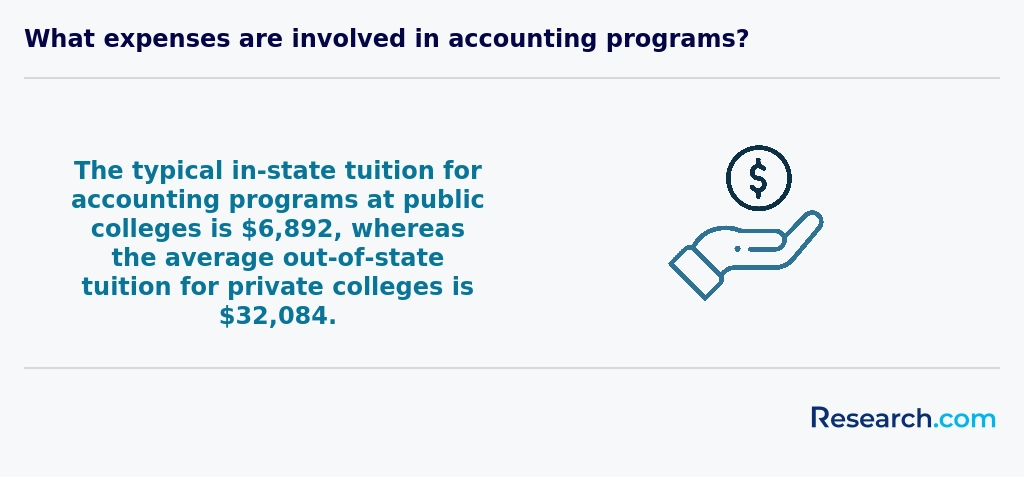
The average cost of an accounting degree in Milwaukee depends heavily on the type of institution and residency status. For in-state students pursuing a bachelor's degree at well-known public universities, the median total cost is approximately $43,640, making it a more affordable route for many local students. Graduates often recall balancing this cost with part-time jobs and scholarships, which helped ease the financial strain while gaining valuable experience in the city's vibrant business community.
Private colleges in Milwaukee typically come with a higher price tag, pushing the median total cost closer to $55,997. While this may seem steep, students often value the smaller class sizes and personalized attention from faculty, which contributed significantly to their confidence and readiness for the competitive job market in accounting. These aspects can justify the expense for those seeking a more tailored educational experience.
For students focused on Milwaukee affordable accounting degree programs cost is a key factor; many start at local community colleges, where tuition and fees are much lower. These students frequently transfer credits to four-year universities later, effectively reducing their overall expenditure without sacrificing educational quality.
Additional expenses such as textbooks, supplies, and living costs can add several thousand dollars annually, so prospective students should budget accordingly. To explore options further, consider consulting the most affordable accounting schools in Wisconsin for detailed program costs and financial aid opportunities.

To ensure a smooth educational journey, it's essential for accounting students in Milwaukee, WI, to have a solid understanding of financial planning and budgeting. Creating a budget that accounts for tuition, living expenses, and other costs associated with pursuing an accounting degree can significantly reduce financial stress. Students can start by exploring the most affordable accounting schools in Wisconsin, which can help minimize debt and make their educational goals more achievable. By prioritizing needs over wants and taking advantage of financial aid options, students can maintain a healthy financial balance while focusing on their studies. Effective financial planning also involves saving for certification exams, such as the CPA, and considering the potential return on investment for their degree. With careful budgeting and planning, accounting students in Milwaukee can set themselves up for long-term financial success and make the most of their educational investment.
Accounting students in Milwaukee typically rely on a combination of federal, state, and institutional financial aid to manage their education costs. For many attending institutions like the University of Wisconsin-Milwaukee, completing the FAFSA opens doors to federal grants such as the Pell Grant, which relieves financial pressure without the burden of repayment. Graduates often reflect on how subsidized loans with low-interest rates made financing their education feel more manageable during stressful periods.
State grants like the Wisconsin Higher Education Grant (WHEG) also play a vital role, especially for local students with demonstrated need. Those enrolled in private nonprofit colleges around Milwaukee may benefit from the Wisconsin Tuition Grant, helping fill gaps left by federal aid.
Institutional scholarships, such as those offered by the Lubar School of Business, frequently reward academic merit and leadership, inspiring many to maintain high performance. Additionally, private scholarships from organizations like the Milwaukee AICPA chapter provide targeted support for exam fees or software expenses, easing the path toward professional certification.
These layered funding sources often alleviate the financial uncertainty faced by accounting students, enabling them to focus more confidently on their studies and career aspirations.
Accreditation serves as a key indicator of an accounting program’s academic rigor and industry recognition. Prospective students should prioritize institutions that hold regional accreditation from bodies such as the Higher Learning Commission (HLC), ensuring that coursework meets broad educational standards and that credits are transferable. Beyond regional approval, specialized accreditation from organizations like AACSB (Association to Advance Collegiate Schools of Business), ACBSP (Accreditation Council for Business Schools and Programs), or IACBE (International Accreditation Council for Business Education) demonstrates a program’s commitment to excellence in accounting education. Programs accredited by AACSB are often lauded for their research intensity and faculty qualifications, while ACBSP and IACBE accreditations emphasize teaching quality and student outcomes. Graduates from these programs typically benefit from stronger employer recognition, streamlined pathways to CPA licensure, and eligibility for certain scholarships and federal grants. When evaluating affordability alongside quality, it’s important to verify that lower tuition does not come at the expense of these critical quality markers. For those considering advanced degrees, accredited online formats can offer the flexibility and credential recognition needed to advance rapidly. Many students find that enrolling in the most affordable online master’s in accounting not only reduces debt load but also maintains the high accreditation standards required for CPA exam eligibility and competitive job placement. Before committing, review each program’s accreditation status on the U.S. Department of Education’s Database of Accredited Postsecondary Institutions and Programs (DAPIP) and confirm that your chosen school’s accounting curriculum aligns with Wisconsin’s Board of Accountancy requirements for CPA credit. This due diligence ensures that your investment in an affordable degree yields both quality education and long-term career value.
Enrolling in an accounting degree program in Milwaukee commonly requires a high school diploma or GED, ensuring students have basic skills needed to begin rigorous academic work. Graduates from the University of Wisconsin-Milwaukee frequently recall that having a strong math foundation, especially in algebra and statistics, made early coursework more manageable and less stressful.
While some institutions ask for standardized test scores like the SAT or ACT, many have adopted test-optional policies, reflecting changing admissions landscapes. One graduate from Marquette University mentioned that the absence of mandatory test scores helped reduce anxiety during the application process, making their focus more on personal statements and letters of recommendation, which some schools still request.
Community colleges in Milwaukee often use placement tests to tailor course loads, helping students avoid the frustration of being placed in classes that are too easy or too demanding. This flexibility encourages students to enter programs confident and prepared, highlighting how prerequisites can support rather than hinder academic progress.
- High school diploma or GED
- Standardized test scores (depending on school)
- Strong math background
- Placement tests for some programs
- Letters of recommendation or personal statements (varies)

An increasing number of students are choosing an associate degree in accounting as a cost-effective and accelerated pathway to launch their careers in finance within Milwaukee. This program offers the practical skills necessary to excel in entry-level roles while providing a flexible option for those who wish to advance their education later. With lower tuition costs and a shorter duration compared to bachelor's programs, many students quickly gain the foundational knowledge required to work in accounting, positioning themselves for growth in various financial disciplines. In fact, starting your journey with an associate degree opens up diverse associate in accounting career options that can lead to roles such as bookkeeping, accounting clerk, or financial assistant-each offering hands-on experience that is highly valued by employers. These programs are designed with real-world applications in mind, integrating modern technology and current industry standards to ensure graduates are job-ready from day one. As the accounting field continues to evolve, an associate degree not only enhances employability but also provides a strategic stepping stone for further certifications and advanced studies, making it an ideal choice for those ready to make a significant impact on their future careers.
Accounting students in Milwaukee, particularly at institutions like the University of Wisconsin-Milwaukee and Marquette University, usually engage with courses that combine theoretical frameworks and practical applications. Graduates often mention how foundational classes in financial and managerial accounting prepared them to understand and create accurate financial statements, a skill repeatedly valued in internships and entry-level roles.
They also highlight intermediate accounting and cost accounting courses, which go deeper into accounting standards and budget management, offering concrete tools for day-to-day company operations. Taxation and auditing classes provide insights into complex legislation and financial scrutiny, often described by students as challenging but rewarding, especially when applying knowledge to real company scenarios during projects.
Additionally, coursework in accounting information systems introduces students to the software and data analysis methods essential in modern accounting roles. Some graduates appreciate how these courses offer hands-on experience with technology used by local Milwaukee businesses.
Many find supplementary classes in economics, business law, and ethics essential for understanding the broader business context, enhancing not only their technical proficiency but also their confidence in professional decision-making.
Accounting degree specializations in Milwaukee typically include taxation, auditing, and forensic accounting, each offering distinct pathways aligned with local industry needs. Graduates from Milwaukee's universities often share how specializing in taxation helped them navigate complex tax codes during internships at regional firms, highlighting the practical value this focus has in CPA exam preparation. Others find auditing rewarding, especially given Milwaukee's mix of national companies where internal and external auditing skills are in demand.
Some graduates gravitate toward forensic accounting, driven by a desire to combat financial fraud in the Milwaukee business scene, which mirrors national transparency trends. Additionally, programs frequently offer areas like management accounting, governmental accounting, and financial analysis, reflecting the diverse career goals students express in program feedback. Considering Milwaukee accounting programs focus areas, students appreciate how these options prepare them for real-world challenges.
It's important to weigh these options thoughtfully. Costs and career outcomes vary, and students often consult resources including associate in accounting career options at local colleges for guidance tailored to their ambitions.
Choosing the best accounting degree in Milwaukee involves balancing several key factors beyond just reputation. Graduates from local universities often emphasize the value of attending institutions with strong regional accreditation and AACSB-accredited programs, which boosts confidence in educational quality and job-readiness. However, some students find value in exploring less traditional paths, especially when considering the top accounting programs cost Milwaukee institutions charge. Public universities like the University of Wisconsin-Milwaukee offer more affordable tuition, which helps reduce financial stress while still providing quality education.
Many students appreciate programs that offer practical internship experiences with Milwaukee-area businesses, helping build local networks and ease the transition into the workforce. Specializations such as forensic or tax accounting also attract those aiming to align their studies with career interests. Graduates often note the importance of programs with solid CPA exam pass rates, since licensure is critical for many accounting careers.
For those exploring flexible options, considering the most affordable online master's in accounting can be an excellent alternative, especially when balancing work and study. Ultimately, understanding Milwaukee's job market demand and salary prospects evokes optimism, prompting students to choose programs that offer strong employer connections in the city.
Graduates with an accounting degree in Milwaukee often pursue diverse career paths that reflect the city's varied economic landscape. Many find opportunities in public accounting at local CPA firms, where they handle auditing, tax preparation, and consulting. This pathway is popular among graduates from Milwaukee institutions, as earning a CPA license enhances employability and salary potential within Wisconsin's competitive market. For students weighing options, it's important to consider that success in public accounting often requires rigorous certification and long hours, which may not suit everyone's lifestyle.
Another common direction is corporate accounting with major Milwaukee-based companies, focusing on financial analysis, budgeting, and internal audits. Graduates from area colleges frequently share how this option offers more predictable hours compared to public firms, appealing to those seeking work-life balance. Government accounting roles also attract degree holders interested in stability and structured schedules, serving city and state agencies where compliance and financial reporting are priorities. Exploring specialized fields like forensic accounting and tax consultancy can be rewarding too, especially given rising demand locally.
Students curious about return on investment often compare starting salaries-typically $50,000 to $55,000-with the annual costs of education, which range widely. Those looking for affordable education should consult resources like the Inexpensive Online Master's in Accounting Degree Programs Ranking in the South to align their studies with career goals. Understanding these nuanced accounting career opportunities in Milwaukee helps graduates make informed decisions grounded in real experiences.
The accounting job outlook Milwaukee offers remains encouraging but requires careful consideration. Graduates from local institutions such as Marquette University and the University of Wisconsin-Milwaukee often find a steady demand for their skills, with roles spanning from entry-level staff accountant positions to advanced jobs like internal auditor and tax advisor. These students experience firsthand how Milwaukee's economy-with its solid base in manufacturing, finance, and healthcare-creates varied opportunities for accounting professionals.
For many Milwaukee accounting degree employment opportunities, the median annual salary hovers around $70,000, which aligns with national averages while factoring in regional cost of living. Graduates pursuing certifications such as the CPA generally report enhanced job prospects and higher wages. Those familiar with the city's growing network of professionals appreciate the practical benefits, like easy access to associations such as the Milwaukee Chapter of WICPA.
Costs of studying accounting locally are another important factor. Community colleges and universities in Milwaukee provide affordable options, often below the national average. Some students choose to build on their accounting foundation by enrolling in 1 year master degree programs, tailoring their credentials to fit Milwaukee's competitive market.
2027 Most Affordable Accounting Degree Programs Ranking in Milwaukee
Investing in your education is a significant decision that can shape your future, and the Research.com team understands the importance of making informed choices. To assist prospective students in Milwaukee, we have meticulously crafted the "2027 Most Affordable Accounting Degree Programs Ranking in Milwaukee." Our commitment to quality, credibility, and accuracy is reflected in the extensive research and analysis conducted to compile this ranking.
We utilized the following reputable data sources to ensure a comprehensive evaluation of accounting programs:
By exploring this ranking, readers will gain valuable insights into the most affordable accounting degree options in Milwaukee, empowering them to make well-informed educational decisions aligned with their financial and academic goals. For more details on our methodology, please visit our Research.com methodology page.


Frequently Asked Questions About accounting
Accounting degree students in Milwaukee can maximize their learning experience by combining classroom education with practical opportunities. Milwaukee hosts several accredited institutions offering accounting programs, such as University of Wisconsin-Milwaukee and Marquette University, both known for strong ties to local businesses. Internships with Milwaukee-area firms provide students valuable real-world exposure, enhancing skills beyond textbooks. Students should also engage with professional organizations like the Wisconsin Institute of Certified Public Accountants, which offers networking events and mentorship.
Utilizing campus resources such as tutoring centers and career services improves academic success and job preparedness. Milwaukee's growing economy means accounting graduates have access to diverse industries, emphasizing the importance of versatile skills in taxation, auditing, and financial analysis. Keeping current with changes in U.S. accounting standards and software tools is critical for career readiness. According to the U.S. Bureau of Labor Statistics, accounting jobs in Milwaukee have a steady demand, underscoring the value of thorough, practical education.
Emerging niches within the accounting field reflect growing economic trends and technological advances. In Milwaukee, accountants skilled in forensic accounting are in demand, assisting in fraud detection and litigation support. The rise of data analytics has also created opportunities for professionals who can interpret large financial datasets. According to the Bureau of Labor Statistics, jobs for accountants with expertise in data analytics are expected to grow faster than average nationwide, including in Wisconsin.
Environmental accounting is gaining traction as companies focus on sustainability. Local firms increasingly require accountants to track environmental costs and compliance. Additionally, cybersecurity accounting is emerging as businesses seek protection against financial cyber threats. These niches offer diverse career paths for Milwaukee students pursuing accounting degrees.
Graduates with an accounting degree in Milwaukee can enhance their job prospects by gaining professional certifications like the CPA, which is highly valued in Wisconsin. According to the Wisconsin Department of Safety and Professional Services, CPA licensure requires passing the Uniform CPA Exam and meeting education and experience criteria.
Building a professional network through local organizations such as the Milwaukee Chapter of the Wisconsin Institute of CPAs offers access to job openings and mentorship. Internships during study at Milwaukee area institutions provide practical experience and often lead to job offers.
The demand for accountants in Milwaukee is steady, with the Bureau of Labor Statistics projecting a 5% growth in accounting jobs statewide through 2031, reinforcing the value of strong credentials and connections.
Employers in Milwaukee seek accounting degree graduates with strong analytical and problem-solving skills. Mastery of Generally Accepted Accounting Principles (GAAP) is essential for navigating financial regulations. Proficiency in accounting software like QuickBooks and Microsoft Excel is highly valued, reflecting Milwaukee's active business environment. Communication skills, both written and verbal, are critical for explaining complex financial information to clients and managers.
The Wisconsin Department of Workforce Development highlights a 7% growth in accounting jobs locally, increasing the demand for candidates who can manage audits, tax preparation, and financial reporting effectively. Attention to detail and ethical standards remain top priorities given regulatory scrutiny.
Finding internships in Milwaukee relevant to an accounting degree involves leveraging local resources and networks. Start by exploring career services at Milwaukee-area colleges like the University of Wisconsin-Milwaukee, which partners with regional employers to offer internship placements.
Local accounting firms and corporations often list internships on their websites or through job portals such as Handshake and Indeed. The Greater Milwaukee Business Foundation and the Milwaukee Chapter of the Wisconsin Institute of Certified Public Accountants frequently advertise internships tailored to accounting students.
According to the Wisconsin Department of Workforce Development, sectors like finance and insurance employ over 15,000 people in Milwaukee, creating strong demand for accounting interns.
Attending industry meetups and networking events through professional organizations can also connect students with potential internship opportunities in the city.
Obtaining an accounting degree in Milwaukee significantly enhances career mobility and advancement opportunities within the local job market. Milwaukee's growing economy, supported by industries such as manufacturing, finance, and healthcare, creates steady demand for skilled accounting professionals. According to the U.S. Bureau of Labor Statistics, the Milwaukee-Waukesha area saw a 5% growth in accounting jobs between 2021 and 2023, reflecting expanding opportunities.
An accounting degree provides foundational knowledge crucial for roles like auditor, tax examiner, and financial analyst, which often require certification such as CPA licensure-a process facilitated by formal education. Employers in Milwaukee prioritize candidates with degrees for leadership roles, increasing salary potential and job security. Educational programs tailored to Milwaukee's market help graduates adapt quickly, boosting upward mobility in local firms and corporate offices.
Studying for an accounting degree in Milwaukee equips students with skills that extend beyond traditional accounting tasks, preparing them for interdisciplinary roles. Local universities often emphasize integrating business, finance, and data analysis coursework alongside core accounting principles. This approach enables graduates to collaborate effectively with professionals in marketing, information technology, and management.
Milwaukee's diverse economy, including manufacturing, finance, and healthcare sectors, provides practical opportunities for students to apply interdisciplinary knowledge. According to the Wisconsin Department of Workforce Development, accounting-related jobs in Milwaukee grew by 6% between 2018 and 2023, reflecting increasing demand for versatile professionals.
Programs also focus on communication and critical thinking skills, which are essential for roles that overlap with compliance, auditing, and consulting. This broad skill set enhances employability in varied organizational settings.
When choosing between a thesis and a non-thesis accounting degree program in Milwaukee, consider your career goals and learning preferences. Thesis programs typically require original research and a formal paper, ideal for students interested in academic or research-based roles. Non-thesis options focus on coursework and practical skills, better suited for those aiming directly for professional certifications or industry positions.
In Milwaukee, several universities offer both options, with non-thesis programs often completed faster and sometimes at a lower cost. According to the Wisconsin Technical College System, local employers value practical experience alongside education, which can influence this choice.
Factors such as time commitment, faculty expertise, and potential networking opportunities should also be weighed carefully.
Students based in Milwaukee who wish to study accounting abroad have several pathways that integrate with U.S. higher education standards. Many universities in Milwaukee offer study abroad programs tailored for accounting majors, including partnerships with institutions in countries like the United Kingdom, Canada, and Australia. These programs typically last one semester to a full academic year and allow credits to be transferred back to the student's home university. According to the Institute of Management Accountants, international exposure can enhance understanding of global accounting standards such as IFRS, which is valuable in the U.S. market.
Milwaukee's universities also provide access to exchange programs supported by the National Association of State Boards of Accountancy, enabling students to gain practical experience abroad while fulfilling educational requirements for CPA certification. Financial aid and scholarships are often available to Milwaukee students pursuing these international experiences, making study abroad more accessible. Local institutions emphasize the importance of understanding cross-border financial regulations, which aligns with Milwaukee's growing business connections internationally.
Milwaukee offers diverse part-time job opportunities that can enhance accounting degree education. Positions such as bookkeeping assistants, tax preparers, and accounting clerks are common and provide practical experience with financial records and compliance. These roles help students apply classroom concepts in real-world settings, building valuable skills.
Local accounting firms and non-profits frequently seek part-time help, especially during tax season. The Wisconsin Department of Workforce Development reports steady demand for accounting support roles in Milwaukee, reflecting growth in the financial services sector. Additionally, university career centers often connect students with internships and campus-based accounting jobs, further expanding professional networks.
Accounting students in Milwaukee have access to various strong networking opportunities. The city is home to several higher education institutions like the University of Wisconsin-Milwaukee and Marquette University, which host accounting clubs and events that connect students to local professionals.
Organizations such as the Milwaukee chapter of the Wisconsin Institute of Certified Public Accountants (WICPA) provide student memberships, workshops, and networking events tailored for accounting students. These events often feature guest speakers from prominent local firms, allowing students to build contacts in the industry.
Additionally, Milwaukee's vibrant business community, including regional offices of top accounting firms like PwC and KPMG, frequently offer internships and recruitment events on campus. According to the Milwaukee Economic Development Corporation, these firms contribute significantly to job growth in the financial sector, benefiting accounting students seeking career connections.
Alumni networks provide significant benefits to accounting degree students in Milwaukee by offering access to experienced professionals and local job opportunities. These networks often facilitate mentorship programs, helping students navigate the competitive accounting job market specific to Milwaukee's financial sector.
According to the Public Accounting Report, alumni connections increase the likelihood of internships and entry-level positions by up to 30%. Milwaukee's accounting firms frequently recruit through university alumni associations, which serve as valuable bridges between education and employment.
Furthermore, alumni events and workshops foster skill development and industry awareness, essential for careers in accounting. Such networks also promote lifelong learning and professional growth beyond graduation.
Customizing your accounting degree program in Milwaukee allows you to align your education with specific career goals such as public accounting, corporate finance, or taxation. Many local colleges and universities offer electives and concentrations tailored to these paths. For example, you might focus on auditing, forensic accounting, or information systems, depending on your interests.
Internships and cooperative education opportunities with Milwaukee-based firms enhance practical experience. According to the Milwaukee Business Journal, the city's strong financial sector includes over 500 accounting firms, increasing chances for relevant work placements.
Additionally, some programs provide preparation for CPA certification, a key credential for advancing in accounting careers nationwide.
Accounting students in Milwaukee face several common challenges during their studies. A primary difficulty is managing the heavy workload, as accounting programs require strong skills in mathematics, analytical thinking, and attention to detail. Many students report struggling with complex topics such as tax codes and auditing standards.
Another challenge is balancing coursework with part-time jobs or internships, which are crucial for gaining practical experience but can add stress. According to a 2023 report by the Wisconsin Department of Workforce Development, 35% of accounting students in Milwaukee work while studying.
Lastly, preparation for the CPA exam presents a significant hurdle. Milwaukee students often find it hard to allocate sufficient study time alongside college responsibilities, given the exam's rigor and low pass rates nationwide.
With an accounting degree in Milwaukee, you can pursue several respected professional certifications. The most recognized is the Certified Public Accountant (CPA) credential, which requires meeting education and experience criteria, plus passing a rigorous exam. Milwaukee accountants benefit from Wisconsin's specific state requirements, including 150 semester hours of education.
Other valuable certifications include the Certified Management Accountant (CMA) and the Certified Internal Auditor (CIA). These certifications focus on management accounting and internal auditing, respectively, expanding career opportunities beyond traditional public accounting roles.
The demand for credentialed accountants in Milwaukee is growing, with the U.S. Bureau of Labor Statistics projecting a 9% employment growth for accountants and auditors nationwide through 2032.
Writing a winning application for an accounting program in Milwaukee requires clear focus on your academic background and career goals. Highlight any prior coursework or experience related to accounting, finance, or business, as schools value relevant preparation. Milwaukee is home to well-regarded institutions like the University of Wisconsin-Milwaukee, where applicants with strong math skills and analytical thinking have better admission chances.
Be sure to craft a concise personal statement explaining why you want to pursue accounting specifically within Milwaukee's growing financial sector, which adds local relevance. Including details about your commitment to ethical accounting practices can strengthen your profile, as ethics is a priority in this profession.
Strong letters of recommendation from instructors or professionals familiar with your skills help demonstrate readiness. Lastly, check each program's prerequisites carefully and meet all application deadlines to ensure consideration.
The accounting profession offers a global outlook due to international business growth and financial regulations. In Milwaukee, students studying accounting gain foundational skills that meet both U.S. Generally Accepted Accounting Principles (GAAP) and International Financial Reporting Standards (IFRS), essential for multinational companies. According to the Bureau of Labor Statistics, accounting jobs in Wisconsin, including Milwaukee, are expected to grow by 6% through 2032, reflecting steady demand worldwide.
Many Milwaukee accounting programs emphasize ethical practices and technology, preparing graduates for roles in global firms. This reflects broader trends where accountants must understand cross-border tax laws and financial compliance. Professional certifications like CPA remain valuable internationally, enhancing career flexibility.
Gaining practical experience while studying for an accounting degree in Milwaukee is essential for career readiness. Many local universities and colleges encourage students to participate in internships. These opportunities allow students to work with accounting firms or corporate finance departments in Milwaukee, gaining hands-on skills. According to the Wisconsin Department of Workforce Development, internships can significantly boost employment prospects by providing real-world knowledge.
Additionally, Milwaukee offers various student chapter programs such as those affiliated with the American Institute of CPAs (AICPA), which facilitate networking and practical workshops. Volunteering for nonprofit organizations can also provide valuable experience in managing finances.
Choosing the right concentration within an accounting degree program in Milwaukee depends on your career goals and interests. Popular concentrations include auditing, taxation, forensic accounting, and management accounting. Each offers different career paths, with taxation specialists in Milwaukee often benefiting from the city's diverse business environment.
Consider labor market data from the U.S. Bureau of Labor Statistics, which shows Milwaukee has a steady demand for accountants and auditors, with an average annual wage around $73,000. Research local employers and industry trends to identify which concentration matches growth opportunities.
Additionally, check if Milwaukee schools have strong ties to local firms or offer internship opportunities in your concentration of choice. This real-world experience can be crucial for career success.
- 2027 Most Affordable Accounting Degree Programs Ranking in Madison
- 2027 Most Affordable Accounting Degree Programs Ranking in Chicago
- 2027 Most Affordable Accounting Degree Programs Ranking in Grand Rapids
- 2027 Most Affordable Accounting Degree Programs Ranking in Indianapolis
- 2027 Most Affordable Accounting Degree Programs Ranking in Saint Paul
- 2027 Most Affordable Accounting Degree Programs Ranking in Minneapolis
- 2027 Most Affordable Accounting Degree Programs Ranking in Cincinnati
- 2027 Most Affordable Accounting Degree Programs Ranking in Saint Louis
- 2027 Most Affordable Accounting Degree Programs Ranking in Columbus
- 2027 Most Affordable Accounting Degree Programs Ranking in Cleveland
See What Experts Have To Say About Studying Accounting
Read our interview with Accounting experts

John Wermert, Ph.D., CPA
Accounting Expert
Associate Professor of Accounting
Middle Tennessee State University


- Accounting Certifications Guide | Accounting.com https://www.accounting.com/certifications/overview/
- Everything About Bachelor’s in Accounting https://www.allbusinessschools.com/accounting/bachelor-degree-in-accounting/
- Accounting Degree: Associate or Bachelor’s | Monroe University https://www.monroeu.edu/news/accounting-degree-associate-or-bachelors
- 5 accounting certifications without a degree | Becker https://www.becker.com/blog/career/5-accounting-certifications-you-can-earn-without-a-degree
- The Diverse Skills you Gain with an Accounting Degree https://www.accounting-education.org/blog/accounting-degree-diverse-skills/
- Accounting https://www.wctc.edu/WCTC/Academics/Program-List/Accounting
- Know more about thesis vs non- thesis: what is the difference? https://studyfans.com/en/blogs/816
- Are accounting students overloaded and under-supported? https://www.studentvoice.ai/blog/accounting-students-challenges-with-workload-and-support/
- Expectations of accounting students in relation to their ... https://sevenpubl.com.br/anais7/article/download/4780/8840/19578
- How to Find Your Ideal Accounting Niche - INAA https://www.inaa.org/how-to-find-your-ideal-accounting-niche/


