2027 Mechanical Engineering Career Paths With the Strongest Salary Growth

Co-Founder and Chief Data Scientist
Mechanical engineering students and early-career engineers face a high-stakes choice: stay broad or specialize in fields with faster salary growth. The U. S. Bureau of Labor Statistics reports a median annual wage of $102,320 for mechanical engineers and projects 11% job growth from 2023 to 2033, well above the average for all occupations. This guide explains which mechanical engineering paths offer stronger earning potential, what education and skills matter, and how to compare programs so you can choose a career route with better long-term value.
Key Things You Should Know
- Mechanical engineering salary growth is strongest when engineers move into robotics, aerospace, energy systems, advanced manufacturing, medical devices, simulation, or engineering management rather than staying in narrowly defined drafting or maintenance support roles.
- The BLS median annual wage for mechanical engineers is $102,320, but pay varies widely by industry, location, security clearance, software skill, licensure, and whether the role involves systems design, product ownership, or team leadership.
- For most high-growth roles, the safest education path is an ABET-accredited bachelor's degree in mechanical engineering plus targeted coursework in controls, CAD/CAE, thermodynamics, materials, data analysis, manufacturing, or mechatronics.
Which mechanical engineering career paths show the strongest long-term salary growth?
The strongest salary growth in mechanical engineering usually comes from combining core mechanical knowledge with scarce technical depth, business responsibility, or regulated-industry expertise. Entry-level mechanical engineers often begin with design, testing, manufacturing, or project support. Pay tends to rise faster when they become owners of complex systems, lead cross-functional teams, or specialize in areas where failure is expensive and technical requirements are strict.
The BLS projects 11% employment growth for mechanical engineers from 2023 to 2033. That forecast matters because it suggests demand is not limited to one sector; it is spread across manufacturing modernization, automation, renewable and conventional energy systems, transportation, aerospace, electronics, and product development.
The table below ranks major mechanical engineering paths by long-term salary-growth potential. It does not guarantee individual earnings, but it shows where compensation can expand as engineers build specialized skills, credentials, and responsibility.
| Career path | Why salary growth can be strong | Typical responsibilities | Best fit for |
| Robotics and automation engineering | Employers value engineers who can integrate mechanical systems, sensors, controls, and production software. | Design robotic workcells, select actuators, model motion, improve automated lines, troubleshoot controls-related failures. | Students who enjoy mechatronics, programming, manufacturing, and systems integration. |
| Aerospace and defense mechanical systems | Complex products, compliance requirements, and security-cleared roles can raise compensation potential. | Work on propulsion, thermal systems, structures, testing, reliability, and mission-critical components. | Engineers comfortable with documentation, simulation, testing, and regulated design environments. |
| Energy systems and thermal engineering | Power generation, HVAC, batteries, turbines, and thermal management require deep technical expertise. | Analyze heat transfer, fluid flow, efficiency, emissions, cooling, combustion, or renewable-energy equipment. | Students strong in thermodynamics, fluids, heat transfer, and applied math. |
| Advanced manufacturing and process engineering | Companies pay for engineers who reduce defects, improve throughput, and modernize production systems. | Optimize production lines, select equipment, implement lean manufacturing, validate processes, manage quality issues. | Practical problem-solvers who enjoy factory environments and measurable business impact. |
| Medical device and biomechanics engineering | Regulated healthcare products combine mechanical design, materials, testing, and documentation discipline. | Design implants, instruments, wearable devices, prosthetics, or test fixtures while following quality systems. | Engineers interested in human-centered design, materials, testing, and FDA-regulated development. |
| CAE, simulation, and computational engineering | High-value design decisions increasingly rely on finite element analysis, computational fluid dynamics, and digital twins. | Run structural, thermal, fatigue, vibration, or fluid simulations to reduce physical prototyping costs. | Students who like modeling, numerical methods, coding, and design optimization. |
| Engineering management and technical program leadership | Salary often rises when engineers manage budgets, timelines, suppliers, people, and product decisions. | Lead teams, manage schedules, coordinate design reviews, communicate with executives, balance cost and performance. | Experienced engineers who can translate technical trade-offs into business decisions. |
For long-term growth, avoid choosing a path based only on the first job title. A role with a slightly lower starting salary can become more valuable if it gives you exposure to design authority, manufacturing scale-up, regulated testing, customer requirements, or systems-level ownership.
What are typical starting and mid-career salaries for mechanical engineers in major roles?
Mechanical engineering salaries vary because the title "mechanical engineer" covers many jobs. A new graduate doing CAD support in a low-cost region may earn much less than an engineer working on defense systems, robotics integration, or semiconductor manufacturing in a high-cost market. The BLS median annual wage of $102,320 is best used as a national benchmark, not as a personal salary prediction.
The table below gives practical salary context by role level. Ranges are intentionally broad because compensation depends on industry, geography, employer size, clearance requirements, overtime eligibility, and whether bonuses or equity are included.
| Role category | Common entry point | Typical early-career salary context | Typical mid-career salary context | Salary-growth lever |
| Mechanical design engineer | Design engineer I, product engineer, CAD engineer | Often below or near the national median while building design judgment. | Can move above the median with ownership of assemblies, testing, suppliers, and cost targets. | Advanced CAD, GD&T, tolerance analysis, design for manufacturing, product ownership. |
| Manufacturing or process engineer | Manufacturing engineer I, quality engineer, production engineer | Can be competitive when tied to high-volume or high-value production. | Rises with responsibility for yield, automation, capital equipment, and plant-level performance. | Lean, Six Sigma, automation, root-cause analysis, process validation. |
| Thermal or fluids engineer | Test engineer, HVAC engineer, thermal analyst | Usually improves with strong analytical coursework and simulation ability. | Can become strong in energy, aerospace, electronics cooling, and power systems. | CFD, heat transfer, thermodynamics, test correlation, energy modeling. |
| Robotics or mechatronics engineer | Automation engineer, controls-support engineer, test automation engineer | Often benefits from programming and controls skills beyond the standard ME curriculum. | Can rise quickly when the engineer integrates hardware, software, safety, and production needs. | PLC basics, Python, sensors, motion control, machine vision, industrial safety. |
| Aerospace or defense mechanical engineer | Systems mechanical engineer, structures engineer, propulsion support engineer | Varies by contractor, location, degree level, and clearance eligibility. | Can strengthen with specialized analysis, testing authority, documentation discipline, and program responsibility. | FEA, vibration, reliability, materials, configuration control, security clearance. |
| Engineering manager or technical program manager | Usually reached after several years of engineering work | Not typically an entry-level path. | Often exceeds individual-contributor pay when the role includes people, budget, or product responsibility. | Leadership, finance basics, risk management, communication, customer-facing judgment. |
The smartest way to interpret salary data is to ask what the role teaches. Early jobs that expose you to design reviews, production failures, customer requirements, or test data often build better mid-career leverage than jobs limited to repetitive CAD changes or documentation updates.
Which industries hire mechanical engineers with the highest earning potential and bonuses?
Mechanical engineers work across almost every physical-product industry, but compensation tends to be higher where products are technically complex, capital-intensive, safety-critical, or difficult to replace. Bonuses and equity are more common in sectors where engineering decisions directly affect product revenue, production scale, or operational cost.
The BLS wage benchmark above $100,000 is useful, but industry choice can shift an engineer's ceiling. The table below summarizes U.S. industries where mechanical engineers often find stronger earning potential and why those employers pay for specialized skill.
| Industry | Why earning potential can be higher | Common mechanical engineering work | Compensation considerations |
| Aerospace and defense | High reliability requirements, long product cycles, complex systems, and security-sensitive work. | Structures, propulsion, thermal control, testing, materials, flight hardware, ground systems. | Clearance eligibility, advanced degrees, and systems experience can affect pay. |
| Semiconductor and electronics manufacturing | Facilities and tools require precision thermal, vibration, vacuum, and automation expertise. | Equipment design, process support, facilities systems, contamination control, reliability improvement. | High-cost regions may pay more but can also raise living expenses. |
| Robotics, automation, and industrial equipment | Employers need engineers who reduce labor constraints, improve throughput, and integrate smart systems. | End-effectors, motion systems, fixtures, sensors, safety systems, production automation. | Bonuses may be tied to project delivery, uptime, or manufacturing performance. |
| Energy, utilities, and power systems | Equipment failures are expensive, and efficiency improvements can have large financial impact. | Turbines, boilers, heat exchangers, pumps, HVAC, batteries, renewable systems, plant reliability. | Licensure can matter more in consulting, facilities, and public-facing engineering work. |
| Medical devices and life sciences manufacturing | Products require strict testing, documentation, materials knowledge, and quality-system compliance. | Device design, test methods, tooling, process validation, reliability, human factors collaboration. | Regulatory experience can increase mobility between employers. |
| Automotive and electric mobility | Electrification creates demand for thermal management, lightweighting, manufacturing, and battery packaging. | Battery enclosures, powertrain components, chassis, thermal systems, manufacturing launch support. | Pay varies widely by OEM, supplier tier, union environment, and location. |
Bonus potential is not just about the industry label. It often depends on whether the role is close to revenue, production yield, uptime, safety, or customer delivery. A manufacturing engineer who cuts scrap in a high-volume plant may have more visible business impact than a design engineer in a slow-moving support role.
What degrees and training do you need to enter high-growth mechanical engineering careers?
A bachelor's degree in mechanical engineering is the standard entry credential for most professional mechanical engineering jobs. High-growth roles usually require more than the degree title, however. Employers look for evidence that students can model systems, build prototypes, interpret data, work in teams, and communicate design trade-offs clearly.
Students interested in biomechanics, prosthetics, wearable technology, ergonomics, or human-performance products may also compare mechanical engineering with an exercise science degree online, especially if their goal is closer to movement science than machine design.
The table below compares education options by career target. Use it to decide whether you need a full engineering degree, a graduate credential, or targeted training layered onto an existing background.
| Education or training path | Best for | Typical career value | Important limitation |
| ABET-accredited B.S. in Mechanical Engineering | Most entry-level engineering roles | Provides the broadest access to design, manufacturing, energy, robotics, aerospace, and licensure pathways. | Curriculum can be demanding and may require in-person labs. |
| M.S. in Mechanical Engineering | Specialized roles in thermal systems, robotics, simulation, materials, or research-heavy product development | Can strengthen eligibility for advanced technical positions and higher-responsibility work. | ROI depends heavily on employer tuition support and specialization. |
| Engineering management master's or MBA | Engineers moving into leadership, program management, operations, or product strategy | Helps experienced engineers manage budgets, teams, suppliers, and business trade-offs. | Less useful before you have enough technical experience to lead credibly. |
| Certificates in CAD, robotics, quality, or manufacturing | Skill-building for students, technicians, or engineers pivoting specialties | Can improve employability when paired with projects and engineering fundamentals. | Usually not a substitute for an engineering degree in roles requiring engineering judgment. |
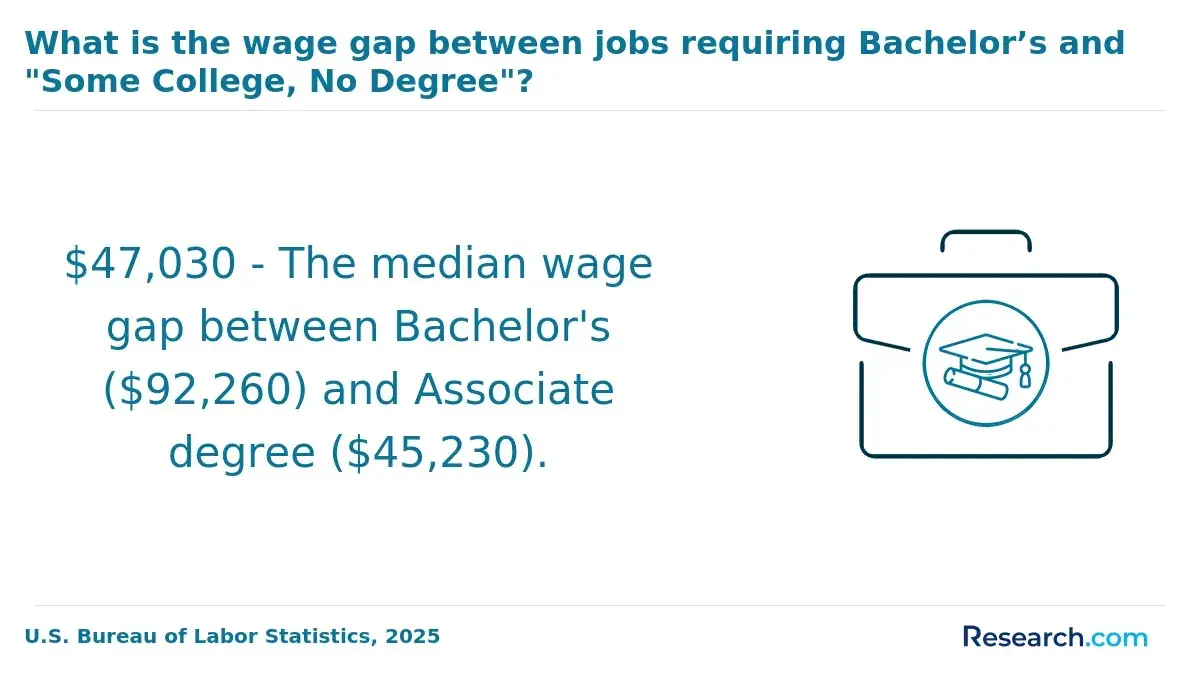
| Associate degree or technician training | Mechanical design technician, manufacturing technician, test technician roles | Can be a lower-cost entry into engineering environments and may support later transfer. | May limit advancement into professional engineer roles without a bachelor's degree. |
Before enrolling, check whether the program includes labs, senior design, industry-sponsored projects, internship support, and software access. These features often matter more to employers than a long list of electives that are not connected to hands-on work.
How do online mechanical engineering programs compare to campus-based options for career outcomes?
Online mechanical engineering programs can work well for disciplined students, working adults, military learners, and transfer students who need flexibility. The main challenge is that mechanical engineering is lab-intensive. A credible online or hybrid program must still provide meaningful access to experiments, instrumentation, prototyping, design projects, and faculty feedback.
Students comparing online engineering options may also review online electrical engineering career outcomes, since electrical, computer, and mechanical engineering increasingly overlap in robotics, controls, power systems, and embedded devices.
The table below compares online, hybrid, and campus-based formats from a career-outcomes perspective. The best option depends less on delivery mode and more on accreditation, lab quality, project depth, and employer recognition.
| Program format | Strengths | Career risks | Best fit |
| Campus-based mechanical engineering | Direct access to labs, machine shops, research groups, student teams, and local recruiting. | Less flexible for working adults and may require relocation or higher living costs. | Traditional students who want immersive labs, clubs, internships, and faculty interaction. |
| Hybrid mechanical engineering | Balances online theory courses with scheduled in-person labs or intensives. | Travel for labs can add cost and scheduling pressure. | Working students who can travel periodically and need ABET-aligned engineering training. |
| Fully online engineering-related program | Maximum flexibility for theory, management, or completion-focused study. | May not meet requirements for hands-on engineering roles if labs are weak or accreditation is missing. | Students upgrading credentials, pursuing engineering technology, or focusing on management rather than licensure. |
When comparing formats, ask admissions teams direct questions rather than relying on marketing language. The most important questions are whether the degree title is mechanical engineering or engineering technology, whether ABET accreditation applies to that exact program, how labs are completed, and what employers recruit graduates.
What coursework and technical skills best position mechanical engineers for salary advancement?
Salary advancement depends on becoming the engineer who can solve expensive problems, not just the engineer who can complete assigned calculations. The best coursework builds a bridge between theory, software, testing, manufacturing, and business impact.
Engineers who want to move deeply into modeling, predictive maintenance, simulation automation, or AI-enabled design may eventually compare graduate analytics routes, including a doctorate in data analytics online, though most mechanical engineers should first build strong applied engineering experience before pursuing a research-focused doctorate.
The following skill areas are especially valuable because they make mechanical engineers more useful across robotics, aerospace, energy, manufacturing, and product development.
- CAD and product definition: Learn industry-standard CAD, geometric dimensioning and tolerancing, tolerance stack-ups, drawings, design reviews, and design for manufacturing.
- CAE and simulation: Build practical ability in finite element analysis, computational fluid dynamics, thermal modeling, vibration, fatigue, and model validation against test data.
- Controls and mechatronics: Study sensors, actuators, feedback control, PLC basics, embedded systems, motor selection, and robotics fundamentals.
- Manufacturing and quality: Understand machining, additive manufacturing, injection molding, welding, process capability, root-cause analysis, and failure mode and effects analysis.
- Programming and data analysis: Use Python, MATLAB, SQL basics, data visualization, statistical thinking, and automation scripts to analyze tests and reduce repetitive engineering work.
- Communication and leadership: Practice technical writing, design presentations, cost trade-offs, supplier communication, and risk explanations for non-engineers.
Common mistakes include treating software as a substitute for fundamentals, graduating without project evidence, ignoring manufacturing realities, and avoiding communication-heavy assignments. A stronger approach is to build a portfolio with design calculations, prototypes, test results, simulation comparisons, and a short explanation of the trade-offs you made.
How do program accreditation and ABET approval impact mechanical engineering salaries and mobility?
ABET accreditation is one of the most important quality signals in mechanical engineering education. It indicates that a program has been reviewed against recognized standards for curriculum, faculty, facilities, student outcomes, and continuous improvement. For students, the practical value is mobility: more employers, graduate schools, and licensing boards recognize the degree as meeting baseline engineering preparation.
ABET approval does not automatically raise a graduate's salary, and it should not be marketed as a pay guarantee. Its value is that it reduces credential risk. If you later want to pursue the Fundamentals of Engineering exam, become a licensed Professional Engineer, work in public-facing engineering, or move across states, graduating from an ABET-accredited program can make the process smoother.
The table below explains where accreditation matters most. Use it to avoid choosing a program that looks convenient but limits future options.
| Career goal | How ABET accreditation helps | When it may matter less |
| Entry-level mechanical engineering | Signals that the curriculum meets recognized engineering standards. | Some employers may hire from non-ABET programs for support roles, especially with strong projects or experience. |
| Professional Engineer licensure | Often supports eligibility for the FE exam, PE exam pathway, and state board review. | Rules vary by state, and some boards provide alternate routes with additional experience. |
| Graduate engineering study | Helps admissions committees evaluate prerequisites and technical readiness. | Strong applicants from nontraditional backgrounds may be admitted with prerequisite coursework. |
| Federal, defense, utilities, and consulting employers | Can reduce screening concerns for safety-critical or regulated engineering work. | Some roles prioritize clearance, experience, or specialized technical skills. |
| Engineering technology roles | ABET-accredited engineering technology programs can be valuable for applied roles. | They may not be treated the same as mechanical engineering degrees for all PE or design-authority paths. |
A major red flag is a school that says it is "aligned with ABET standards" but cannot show that the exact degree program is ABET-accredited. Check the program name, campus, delivery format, and accreditation status before applying.
What are the job outlook and demand forecasts for mechanical engineers in emerging fields?
The outlook for mechanical engineers is positive because the field sits at the center of physical innovation. Even as software and AI change engineering workflows, companies still need professionals who understand materials, heat, motion, manufacturability, safety, and real-world failure modes.
The BLS projects about 19,800 openings for mechanical engineers each year, on average, from 2023 to 2033. For readers, the key takeaway is that demand includes both new job growth and replacement needs as experienced engineers retire or move into management.
Emerging fields are changing what employers expect from mechanical engineers. The most resilient candidates are those who can combine mechanical fundamentals with digital tools, cross-disciplinary communication, and hands-on validation.
- AI-assisted design: Engineers increasingly use generative design, automated simulation setup, and data-driven optimization, but they still need judgment to verify constraints, manufacturability, and safety.
- Robotics and automation: Labor constraints and reshoring efforts increase demand for engineers who can integrate machines, sensors, fixtures, safety systems, and controls.
- Electrification and thermal management: Electric vehicles, batteries, data centers, and electronics require stronger heat-transfer, packaging, and reliability expertise.
- Advanced manufacturing: Additive manufacturing, digital twins, and connected factories reward engineers who understand both production data and physical processes.
- Sustainable energy and building systems: Efficiency, grid modernization, HVAC upgrades, and industrial decarbonization create opportunities for thermal, fluid, and energy-systems engineers.
The biggest risk is assuming that a mechanical engineering degree alone will keep skills current. To stay competitive, graduates should keep learning software, coding, systems engineering, and manufacturing technologies after their first job.
How much do mechanical engineering degrees cost, and what financial return can graduates expect?
The financial return on a mechanical engineering degree depends on tuition, time to graduation, debt, internships, location, and career path. Because the BLS median wage for mechanical engineers is $102,320, the degree can offer strong long-term value, but only if students control costs and choose programs that lead to credible engineering employment.
College Board's 2024 pricing data shows the cost gap students must evaluate: average published tuition and fees for public four-year in-state students were $11,610, compared with $30,780 for public out-of-state students and $43,350 for private nonprofit four-year institutions. Those figures exclude housing, books, transportation, tools, and lost work time, so total cost can be much higher.
The table below summarizes cost factors that affect ROI. It is especially useful when two programs have similar reputations but very different net prices.
| Cost factor | Why it matters | How to evaluate it |
| Net price after aid | Sticker price can be misleading because grants, scholarships, and tuition discounts vary. | Compare financial aid offers using total annual net cost, not tuition alone. |
| Time to degree | Extra semesters add tuition and delay full-time engineering earnings. | Ask about four-year graduation rates, course sequencing, and availability of required labs. |
| Transfer credit acceptance | Accepted credits can reduce cost, but missing prerequisites can extend the timeline. | Request a written transfer evaluation before enrolling. |
| Co-op and internship access | Paid experience can offset costs and improve job placement. | Review employer partners, co-op structure, and career services outcomes. |
| Software, lab, and equipment fees | Engineering programs may require tools, licenses, lab kits, or travel for labs. | Ask for a full program cost sheet, including required non-tuition expenses. |
| Living expenses | Housing and transportation can outweigh tuition differences. | Compare total cost of attendance and realistic local rent or commuting costs. |
To evaluate return, estimate total debt at graduation, expected starting role, and likely advancement path. A lower-cost ABET-accredited public program with strong co-op placement may produce a better ROI than a more expensive school with limited engineering recruiting, even if the expensive school has broader name recognition.
How can prospective students evaluate and choose mechanical engineering programs for career growth?
Choosing a mechanical engineering program is not just an academic decision. It is a career-platform decision. The right program should help you build engineering judgment, complete credible projects, access internships, and graduate with a credential employers understand.
Students interested in sports equipment, wearable sensors, rehabilitation devices, or human-performance products may also compare an accelerated exercise science degree online with mechanical engineering, but they should choose mechanical engineering if their goal is to design, test, and own engineered products.
Use the following steps to compare programs in a practical way. This sequence helps you avoid common mistakes such as focusing only on rankings, ignoring accreditation, or underestimating total cost.
- Verify that the exact mechanical engineering program is ABET-accredited, including the campus or online format you plan to attend.
- Compare net price, not sticker price, and include housing, fees, software, transportation, lab travel, and the cost of extra semesters.
- Review the curriculum for thermodynamics, fluids, heat transfer, mechanics, materials, controls, manufacturing, CAD, labs, and senior design.
- Ask how students get internships, co-ops, undergraduate research, competition-team experience, and industry-sponsored projects.
- Look for evidence of employer connections in your target field, such as aerospace, robotics, energy, medical devices, automotive, or manufacturing.
- Request outcomes information, including job titles, industries, graduate-school placements, and career services support for engineering students.
- Check whether the program supports your preferred pace, especially if you are transferring credits, working part time, or considering a hybrid format.
- Talk to current students or alumni about course availability, advising quality, lab access, workload, and how well the program prepared them for interviews.
A good program fit is not always the most prestigious option. It is the program that gives you the best combination of recognized accreditation, manageable cost, rigorous engineering practice, employer access, and enough flexibility to finish on time.
Other Things You Should Know About Mechanical Engineering
In 2027, mechanical engineering roles in renewable energy, robotics, and AI integration are set to see the strongest salary growth. As industries prioritize sustainable solutions and automation, these sectors demand highly specialized skills, driving up salaries for qualified engineers.
Some mechanical engineers work remotely or hybrid, especially in simulation, CAD, technical sales, project management, and documentation-heavy roles. Fully remote work is less common for jobs that require labs, manufacturing floors, testing facilities, or hardware troubleshooting.
Coding is not required for every mechanical engineering role, but it is increasingly useful. Python, MATLAB, and data-analysis skills can help engineers automate calculations, analyze test data, run simulations, and work more effectively with software and controls teams.
Mechanical engineering typically emphasizes theory, design analysis, and preparation for professional engineering roles. Mechanical engineering technology is usually more applied and hands-on, often preparing graduates for testing, production, applications, or technical operations roles. Both can be valuable, but they may lead to different licensure and advancement options.
References
- Mechanical engineering careers guide https://www.imeche.org/careers-education/careers-information/mechanical-engineering-careers-guide/how-much-do-engineers-earn
- Mechanical Engineering Careers, Degrees And Vocational Qualifications — Born To Engineer https://www.borntoengineer.com/resources/mechanical-engineering-careers-degrees-and-vocational-qualifications
- Top Skills Mechanical Engineers Need for High Paying AI Jobs https://galgotiacollege.edu/best-skills-mechanical-engineers-for-high-paying-jobs
- Top 15 Highest‑Paying Pharmacy Jobs in the UK 2025 (Including Salaries) https://apexlearning.org.uk/highest-paying-mechanical-engineering-jobs-2025-2026/
- Mechanical Engineering Career Paths - Complete Guide | Vista Projects https://www.vistaprojects.com/mechanical-engineering-career-paths-guide/
- Jobs After Pursuing a Mechanical Engineering Degree: A Detailed Guide https://internshala.com/blog/jobs-after-mechanical-engineering/
- Mechanical Engineering Degrees, Online Included https://typesofengineeringdegrees.org/mechanical-engineering/
- Top Jobs for a Mechanical Engineer in 2026 https://www.stonebridge.uk.com/blog/engineering/jobs-for-a-mechanical-engineer-or/
- Is Your Program Recognized? - ABET https://www.abet.org/global-engagement/mutual-recognition-agreements/is-your-program-recognized/
- Top 10 Highest Paying Jobs in Mechanical Engineering | CADD https://caddcentre.com/blog/top-10-high-paying-jobs-in-mechanical-engineering/