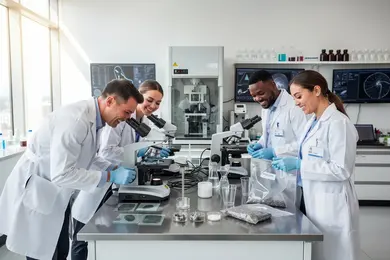
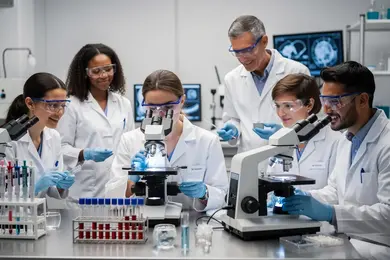
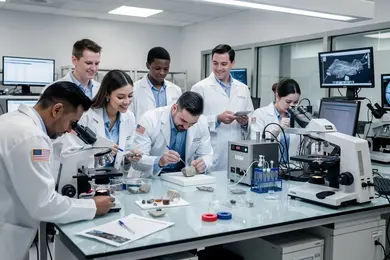
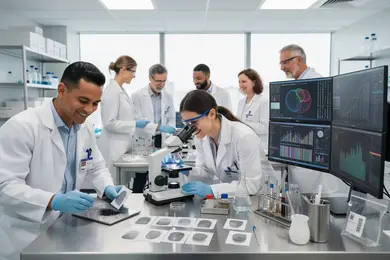
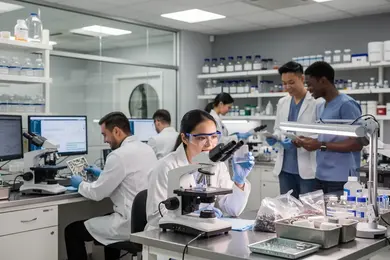
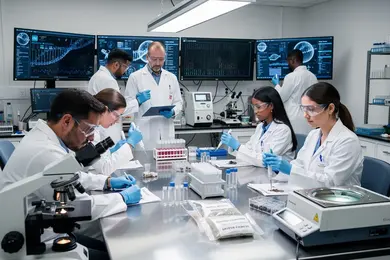
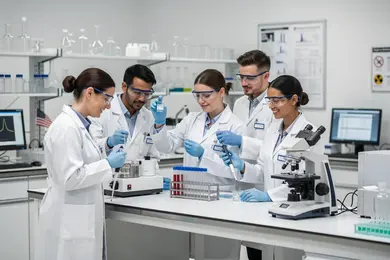
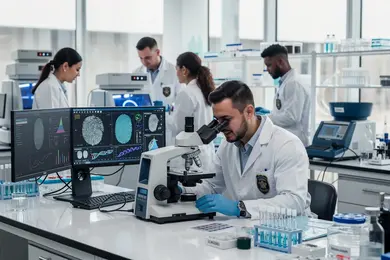
2027 Online Forensic Science Degrees That Help Build Microscopy and Observation Skills

Co-Founder and Chief Data Scientist
Microscopy errors in forensic casework can lead to wrongful convictions or missed evidence, a risk magnified when professionals lack rigorous, hands-on training focused on observation skills. With more than 40% of adult learners enrolling in online programs according to the National Center for Education Statistics, flexibility increasingly shapes how forensic practitioners build these critical competencies amid demanding schedules. This shift challenges students to find programs that deliver practical, observable skill development digitally-without compromising the precision employers expect. This article evaluates online forensic science degrees that strengthen microscopy and observation abilities, equipping prospective students to navigate program quality and workforce relevance when advancing or pivoting their careers.
Key Things You Should Know
- Microscopy-intensive forensic science degrees often extend program length by 6-12 months due to required hands-on lab components, increasing tuition by an average 15%, according to the National Center for Education Statistics 2024.
- Employers prioritize candidates with certified microscopy skills, with 72% of forensic labs in a 2024 Bureau of Labor Statistics survey requiring advanced observation proficiency for entry-level analysts, raising hiring thresholds.
- Integrating microscopy training online reduces geographic access barriers but risks skills dilution; data from recent forensic education assessments show up to 22% lower practical competency scores without in-person observation.
What is an online forensic science degree and how does it build microscopy skills?
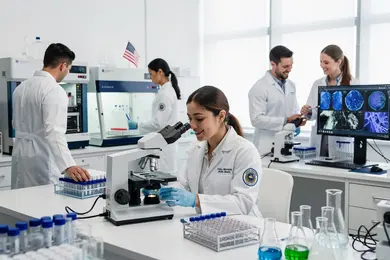
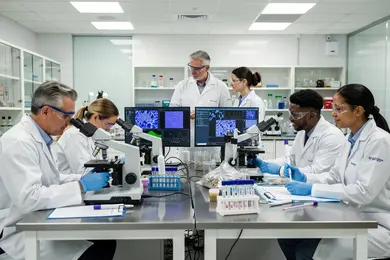
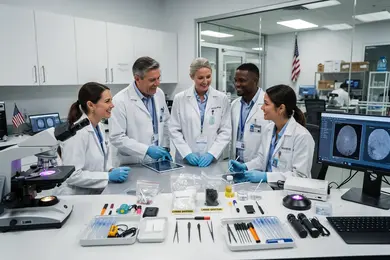
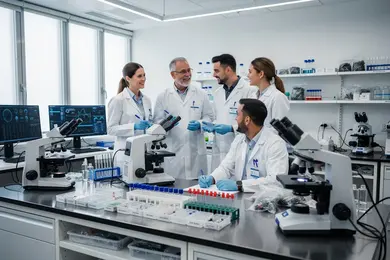
Online forensic science degree programs with microscopy training respond directly to industry demands for candidates proficient in detailed microscopic examination, a skill set difficult to replicate without hands-on lab experience. These programs offer remote learners essential observation skills through virtual lab simulations that use high-resolution digital imaging and software emulating compound and electron microscopes. Such training aims to bridge the gap left by limited physical lab access, but actual microscope operation competence often requires supplemental internships or local crime lab partnerships.
Employers show a marked preference for graduates with strong academic backgrounds; 94% of forensic science technicians held bachelor's degrees in 2025 per O*NET Online, illustrating how an online forensic science degree enhances observation skills critical for evidentiary analysis. Coursework typically covers fiber and hair analysis, sample preparation, and trace evidence identification-all fundamental to detecting minute forensic clues under magnification.
Application varies significantly by sector: for instance, toxicology labs rely on microscopy to distinguish contaminants from biological samples, while digital forensics benefits from enhanced observational abilities to identify manipulated images. Decision-makers must weigh the trade-offs between virtual learning convenience and the necessity for hands-on practice to ensure job readiness and long-term career viability.
Those evaluating this pathway should also consider program accreditation, technological resources, and real-world exposure opportunities, as these factors affect alignment with employer expectations and practical workforce integration. For guidance on related pathways, explore what can you do with a forensic psychology degree.
How do online forensic science programs compare with campus-based options for lab and microscopy training?
Online forensic science programs face a critical shortfall in replicating the hands-on lab training, particularly microscopy skill development, provided by campus-based programs. This gap impacts student readiness because microscopy demands direct interaction with specialized instruments and real samples, which virtual labs cannot fully substitute. Employers expect forensic technicians to demonstrate precise observational abilities honed through in-person lab work-a benchmark online formats without local partnerships or mandatory residencies struggle to meet.
Graduates entering forensic labs must confidently operate compound and electron microscopes under stringent protocols. Campus-based training ensures access to these tools alongside immediate faculty mentorship and troubleshooting, aligning closely with employer expectations. In contrast, online forensic science programs lab training comparison reveals that students relying solely on remote instruction often face delayed proficiency and hiring disadvantages, frequently requiring additional certification or post-graduate training.
The U.S. Bureau of Labor Statistics projects 14% employment growth for forensic science technicians from 2023 to 2033, underscoring the value of rigorous lab experience for employability. Students balancing flexibility with practical skill acquisition should critically evaluate online options for required regional lab affiliations or in-person practicums to mitigate workforce readiness gaps.
For those exploring adjacent pathways, understanding what can you do with an environmental science degree offers additional insight into interdisciplinary career pivots that may complement forensic science skill sets.
Which U.S. online forensic science degrees are properly accredited and recognized by employers?
Employers in crime labs and law enforcement consistently require forensic science degrees accredited by the Forensic Science Education Programs Accreditation Commission (FEPAC) and recognized regional bodies such as MSACS and HLC. Degrees that lack these credentials often lead to early candidate disqualification, particularly in competitive metropolitan markets where microscopic evidence analysis skills are mandatory. These employer-recognized U.S. forensic science degree programs emphasize rigorous microscopy training, evidence collection, and chain-of-custody protocols-skills that are foundational for roles involving trace evidence or controlled substance identification.
Programs at institutions like the University of Florida and Michigan State University illustrate the practical advantage of integrating local lab partnerships or robust virtual simulations to ensure students master real-world microscopic evidence evaluation. This hands-on approach correlates strongly with employer preferences, as graduates proficient in these areas command better job prospects and salary potential.
Arizona State University's 2024 career data for crime scene investigators-positions heavily dependent on microscopic examination-show a median annual salary of $72,060 and projected job growth of 12.8%. Prospective students should prioritize programs offering forensic microscopy labs and internships connected to forensic networks, as these foster essential observation skills beyond theoretical knowledge.
Those considering this path must analyze their options carefully; pursuing an accredited animal science degree online or similar related disciplines can sometimes supplement foundational laboratory competencies but will not replace targeted forensic microscopy training in employer evaluations.
What microscopy, observation, and laboratory courses are typically included in online forensic science curricula?
Online forensic science programs increasingly demand proficiency in microscopy and laboratory techniques to meet employer expectations for precision and evidentiary reliability. Core coursework typically covers compound and stereomicroscopes, emphasizing specimen preparation, slide analysis, and accurate scale calibration. Practical skill development is reinforced through hands-on virtual labs simulating tasks like fiber and hair analysis or trace evidence identification, which focus on applications directly translatable to forensic lab settings.
Observation skills courses included in forensic science online degree curricula are intentionally rigorous, training students in detailed visual acuity, pattern recognition, and meticulous case documentation. These are often practiced through digital imaging software and timed visual exercises, mirroring real-case pressures where observational accuracy is vital to avoid misinterpretation of evidence.
Laboratory modules integrate toxicology, DNA analysis, and chemical reagent protocols designed to simulate real-world crime lab scenarios, including blood spatter analysis and unknown substance identification. This hands-on virtual training, supplemented by synchronous faculty mentorship, addresses practical shortcomings inherent in remote learning and prepares students for employment in forensic labs, medical examiner offices, and law enforcement agencies.
Cost remains a significant consideration; for example, Georgia Military College offers its online Associate of Applied Science in Forensic Laboratory Technology for about $8,415 annually, positioning such programs as cost-effective alternatives under $9,000 per year. Prospective learners should also evaluate options for comparable investments elsewhere or compare with expenses cited for an MLIS degree cost to gauge financial feasibility within their career pivot plans.
What admission requirements do online forensic science programs have for prospective students?
Admission criteria for online forensic science programs emphasize a blend of academic credentials and practical experience, which directly affects employability in forensic microscopy and laboratory roles. A bachelor's degree with a minimum GPA around 3.0, focusing on biology, chemistry, or criminal justice, typically serves as the baseline. Candidates lacking this background often face additional coursework requirements, especially those transitioning from unrelated fields.
Many programs now waive GRE requirements, transitioning the evaluative focus toward detailed personal statements that articulate specific forensic laboratory ambitions. This approach favors applicants who demonstrate clear professional intent over generic academic achievement. Admissions committees also expect three recommendation letters underscoring analytical rigor and stress management skills essential in high-pressure forensic environments.
Practical experience remains a decisive factor. For example, working professionals are often required to provide proof of lab work or forensic employment to handle advanced microscopy modules confidently. This underscores a workforce reality: theoretical knowledge alone seldom suffices for complex hands-on forensic tasks.
Financial considerations are nontrivial. Grand Canyon University's rate, at $610 per credit for 36 credits-totaling roughly $21,960-reflects the intensive technical instruction required. Additional expenses such as technology fees and lab kits, especially for remote learners, must be factored into budgeting decisions.
To gauge candidate viability, some programs also require a CV demonstrating ongoing professional development in scientific or forensic disciplines, predicting retention and successful mastery of forensic observation and analysis techniques critical to investigatory and legal outcomes.
- Minimum GPA and relevant science coursework required
- Practical lab experience or forensic employment favored
- GRE frequently waived in favor of focused personal essays
- Letters of recommendation assess analytical and pressure tolerance skills
- Significant financial investment including tuition and fees
How long do online forensic science degrees take and what do they cost?
Choosing an online forensic science credential involves balancing time, cost, and employer expectations with realistic career goals. Graduate certificates, such as University of Florida's Graduate Certificate in Fundamentals of Forensic Science, require about 12 credits and under a year to complete, offering accelerated skill development suited for entry-level roles or rapid specialization in microscopy and lab methods.
Master's degrees demand 30 to 36 credits over two to three years part-time, reflecting a significant investment of time and money but aligning with federal forensic laboratories' preference for advanced credentials. Pricing ranges highlight this divide: graduate certificates typically cost $5,000 to $10,000, while master's programs can exceed $50,000 depending on residency and program prestige.
Working professionals face a tradeoff-certificates reduce opportunity costs by enabling faster reentry into the workforce, but they usually limit advancement beyond technician roles. Employers at state or local crime labs might accept certificates, but leadership or specialized forensic analyst positions generally require the full master's.
- The decision to pursue a certificate versus a master's should consider the targeted job market segment and long-term career trajectory
- Shorter certificates mitigate tuition risk but may restrict advancement without additional credentials
- Master's programs entail greater upfront costs and time, offset by broader employability and higher-level opportunities
Aligning education path length and expense with immediate hiring realities and career ambitions is essential to avoid credential oversaturation that can diminish return on investment in forensic science education.
What forensic science careers rely most on strong microscopy and observation skills?
Proficiency in microscopy and observation directly influences the accuracy and reliability of forensic analysis, affecting outcomes in legal contexts. Trace evidence analysts rely on diverse microscopic techniques to differentiate fibers, hair, paint chips, and glass fragments-each link potentially pivotal in connecting suspects, victims, and crime scenes. Forensic biologists must scrutinize blood and tissue samples at the cellular level to ensure DNA profiling validity, while crime scene investigators detect subtle impressions or residues invisible without acute observational skill.
Employers expect forensic professionals to demonstrate not only theoretical knowledge but practical competency certified by accreditation entities like the American Society of Crime Laboratory Directors. This expectation creates a critical need for programs integrating hands-on laboratory experiences and scenario-based training, challenging purely theoretical or online education models.
Key operational factors for prospective students include:
- Access to in-person microscopy labs or validated virtual simulations
- Structured opportunities for real-case scenario work to reinforce observation accuracy
- Consistent skill refinement in manual inspection and detailed documentation beyond digital automation
Programs listed through International and Distance-Learning Forensic Science Options Educations.com reveal a growing market of 27 distance-learning degrees emphasizing these competencies globally in 2025, yet balancing convenience with rigorous technical training remains a practical tradeoff affecting employability and long-term career progression.
What salaries and promotion opportunities can graduates with forensic microscopy skills expect?
Forensic microscopy roles typically start with salaries between $50,000 and $65,000 annually, aligning with Bureau of Labor Statistics data for crime lab and forensic science technicians. Advancement to senior analyst or specialized forensic microscopist positions often requires a combination of formal education and demonstrable technical expertise, increasing pay to $85,000 or higher. Employers, particularly in government labs, emphasize bachelor's degrees as a baseline for promotion, partly because microscopy skills directly impact the precision of evidence analysis.
Transitioning from an associate to a bachelor's degree in forensic science generally takes about two additional years and significantly improves eligibility for supervisory roles and higher salaries. Professionals upgrading their education must also accumulate practical experience, often developing a portfolio that includes casework and proficiency with advanced microscopy tools such as electron microscopes or digital imaging. This skill set can command salary premiums of 10-20% over standard pay in applied laboratory settings.
In the private sector-pharmaceuticals, materials science, and related fields-demand for forensic microscopy expertise pushes salaries further into the $70,000 to $90,000 range. The progression from entry-level certifications to a four-year degree remains a critical pathway, balancing the challenges of further study with tangible gains in job responsibilities and compensation. Ongoing professional development and specialized certifications are essential for those seeking leadership roles within forensic microscopist career tracks.
What certifications or licenses may forensic science graduates need for lab or crime scene roles?
Forensic science graduates aiming for lab or crime scene roles must navigate a complex certification and licensing landscape that often shapes job eligibility and career trajectory. Holding certifications such as those from the American Board of Criminalistics (ABC)-including specialties like Bloodstain Pattern Analysis or Latent Print Examination-is frequently a baseline requirement. These credentials verify technical competence in evidence evaluation, crucial for courtroom admissibility and employer confidence.
State licensure requirements differ widely but can be decisive, especially for positions involving controlled evidence handling or forensic chemists and DNA analysts. In some cases, licensure demands ongoing education and renewal, imposing recurring time and financial commitments that should factor into career planning.
Employers expect proficiency with industry-standard laboratory methodologies backed by formal training or accreditation programs like ISO/IEC 17025. For example, Hamline University's forensic science major outcomes underscore the reliance on microscopy in multiple lab roles, signaling that lacking such certification restricts advancement and limits placement options.
Key considerations for prospective forensic professionals include:
- Selecting certifications aligned with intended specialization and jurisdiction early on to avoid ineligible applications
- Budgeting for upfront and ongoing certification fees alongside coursework
- Understanding that practical microscopy skills and accredited lab experience are essential differentiators
Neglecting these credentials often results in reduced employability or constrained progression, highlighting the strategic necessity of integrating credential planning into educational pathways rather than treating it as an afterthought.
How can students evaluate and choose a reputable online forensic science program focused on lab skills?
Selecting an online forensic science program with a focus on microscopy requires careful prioritization of accreditation and substantive hands-on lab experience. Accreditation by entities such as the Forensic Science Education Programs Accreditation Commission (FEPAC) or regional bodies ensures adherence to rigorous industry standards that directly influence employability.
Practical skill development hinges on access to immersive training environments. Programs combining high-resolution virtual microscopy software with scheduled in-person lab residencies or partnerships with local forensic facilities provide an advantage over purely simulated experiences, which rarely replicate the nuanced observational challenges encountered in real cases.
For working professionals balancing full-time jobs, hybrid models that concentrate on intensive, short-term on-site microscopy residencies offer a viable compromise between flexibility and technical competency. Conversely, students targeting rapid integration into forensic labs with advanced optical equipment should seek programs with direct mentorship or internships, facilitating smoother transitions to employer expectations.
Graduate employment rates and employer collaborations are critical markers of curriculum relevance-programs integrating advanced instrumentation and data analysis better prepare candidates to meet evolving technological demands outlined in ForensicsColleges.com's analysis.
Faculty actively engaged in forensic research or consultancy bring current operational insights that sharpen analytical judgment vital for casework, representing a tangible difference in workforce readiness.
Other Things You Should Know About Forensic Science
Most programs require a compound microscope with 40x, 100x, and 400x magnification, prepared slides, a camera adapter, and a logbook for observation notes. Some also require access to a 1,000x oil-immersion objective for trace-evidence modules and a webcam for lab demonstrations.
In 2027, online forensic science programs often incorporate virtual microscopy tools and simulation labs to teach microscopy skills. These technologies allow students to manipulate and analyze virtual specimens, providing practical experience despite the lack of physical lab access.
Yes, pursuing certifications such as the International Association for Identification (IAI) Certified Crime Scene Investigator or microscopy-specific credentials enhances employability since many employers expect verified practical competencies. Online degrees often cover theory and some lab techniques but do not guarantee mastery recognized by certifying bodies. Prioritizing programs that prepare students for these certifications improves hiring prospects and career advancement.
Accelerated programs enable faster entry into the workforce but often require heavy weekly time commitments that may hinder deep skill acquisition, especially for microscopy techniques needing repeated practice. Longer programs offer more time for skill reinforcement and often include access to better support resources. Candidates should weigh their current professional and personal demands against their need for comprehensive training to decide which pacing aligns better with their career priorities.
References
- How To Become a Forensic Scientist: Requirements & Steps https://www.forensicscolleges.com/blog/htb/how-to-become-forensic-scientist
- Compare Forensic Scientist Schools & Training Programs https://www.criminaljusticeprograms.com/specialty/forensic-science-degrees/
- Online Forensic Science Degree https://www.aiuniv.edu/degrees/criminal-justice/bachelors-forensic-science
- Tips for Students Pursuing Careers in Forensic Science https://forensicstats.org/blog/tips-for-students-pursuing-careers-in-forensic-science
- Forensic Science Technician Education Requirements: What You Need to Know https://www.scuhs.edu/mshgg-article/forensic-science-technician-education-requirements-what-you-need-to-know/
- Crime Scene FAQs https://theiai.org/crime_scene_faqs.php
- How to Become a Forensic Science Technician | University of Bridgeport https://www.bridgeport.edu/news/how-to-become-a-forensic-science-technician/
- Checking your browser before redirecting. https://sgsuniversity.ac.in/blog/top-skills-learned-in-b-sc-forensic-science-that-lead-to-high-demand-jobs/
- 2025 Most Popular Online Forensic Science Degrees https://www.onlineu.com/degrees/forensic-science
- What Is Forensic Science? Courses After 12th, Career Scope & Future Prospects in India https://growinjob.com/what-is-forensic-science-courses-career-scope-prospects/