2027 Coursera AI Courses Review

Co-Founder and Chief Data Scientist
Many professionals with undergraduate degrees outside tech find it challenging to break into the ai industry due to a lack of accredited and flexible learning options. Balancing work, life, and upskilling often limits the ability to pursue traditional degree programs. This difficulty can slow career transitions despite growing demand for AI expertise.
The review examines key online Coursera ai courses suitable for career changers. It evaluates course structure, accreditation, flexibility, and relevance to current industry requirements, helping readers make informed decisions about their next educational step.
Key Things You Should Know
- Coursera's 2026 AI courses feature updated curricula aligned with 2025 industry demands, focusing on practical skills like machine learning deployment and ethical AI challenges.
- Over 40% of U.S. learners in these courses report career advancement or salary increases within six months post-completion, highlighting strong market relevance.
- Top-rated programs partner with leading universities and companies, providing certificates recognized by employers and supporting diverse learner backgrounds and schedules.
Advance Your Career with AI Online Courses
Artificial Intelligence: Implications for Business Strategy
This program provides an introduction to Artificial Intelligence and their implications for business strategy. Earn an official digital certificate.

Oxford Artificial Intelligence Programme
Explore this Oxford Artificial Intelligence programme offered in a flexible learning environment and explore topics like machine learning, automation, and robotics.

Implementing Agentic AI: Building Your Organizational Playbook
This online MIT Agentic AI course offers a practical approach to deploying AI agents in your organization, including a custom playbook. 3 weeks, exclusive launch price.

AI Adoption: Driving Business Value and Impact
This online MIT AI Adoption: Driving Business Value and Impact offers practical frameworks to close the gap between AI potential and business reality.

Artificial Intelligence in Pharma and Biotech
Discover the applications and limitations of artificial intelligence in pharma and biotech with this MIT online short course.

How do Coursera AI courses work and who are they best suited for?
Coursera AI courses offer flexible, modular online study designed to fit various learning needs with video lectures, quizzes, coding tasks, and peer-reviewed projects. These courses provide practical experience using real-world datasets, which helps learners build portfolios suited for AI roles.
These programs are ideal for:
- Beginners without programming experience who can benefit from foundational courses like "AI for Everyone" by Andrew Ng, which covers core concepts without heavy technical demands, illustrating how Coursera AI courses help beginners.
- Students and graduates aiming to deepen their machine learning knowledge through specialized tracks such as deep learning, natural language processing, and computer vision.
- Working professionals seeking to upskill or shift into AI-related careers, thanks to on-demand content and flexible deadlines that accommodate busy schedules.
With over 100 million registered users and AI/ML among the fastest-growing skill areas, Coursera meets high demand for accessible education. Practical programming assignments in Python or R and instructor feedback enable learners to solve real industry problems. Certificates earned often improve resumes and LinkedIn profiles.
For career-focused individuals, these courses represent some of the most affordable data science master's programs, combining quality education with cost-effective pathways. This makes them one of the best Coursera AI courses for career advancement across different experience levels.
Advance Your Career with AI Online Courses
Artificial Intelligence: Implications for Business Strategy
This program provides an introduction to Artificial Intelligence and their implications for business strategy. Earn an official digital certificate.
Oxford Artificial Intelligence Programme
Explore this Oxford Artificial Intelligence programme offered in a flexible learning environment and explore topics like machine learning, automation, and robotics.
Implementing Agentic AI: Building Your Organizational Playbook
This online MIT Agentic AI course offers a practical approach to deploying AI agents in your organization, including a custom playbook. 3 weeks, exclusive launch price.
What types of AI programs does Coursera offer, from beginner to advanced?
Coursera provides a wide range of ai certification programs for beginners and experts, catering to learners at every proficiency level. Beginners can start with foundational courses that cover essential topics such as machine learning basics, neural networks, and data science principles. These classes usually require no prior programming experience and introduce tools like Python and TensorFlow, including popular courses such as "AI For Everyone" and introductory machine learning courses from leading universities.
Intermediate learners can pursue specialization tracks that combine multiple courses focusing on areas like natural language processing, computer vision, and reinforcement learning. These programs generally require coding skills and a mathematical background, offering opportunities to work on real-world projects. Notable specializations include Deep Learning and AI Applications from prestigious institutions.
Advanced ai courses on Coursera for professional growth emphasize research-oriented skills and technical mastery. These include advanced algorithm development, AI ethics, and scalable AI system design, often featured in professional certificate programs or MasterTrack credentials, providing valuable industry recognition and leadership preparation.
Cost is an important factor. Coursera Plus offers access to multiple courses for $59/month or $399/year, often more economical than single-course certificates priced between $49 and $79. For those seeking affordable engineering and technology education, the cheapest online computer engineering degree programs listed by research.com are a useful resource.
How do Coursera AI certificates and specializations compare to college degrees?
Coursera AI certificates and specializations offer practical, skill-focused learning paths that contrast with traditional college degrees, which provide broader theoretical foundations over several years. The effectiveness of Coursera AI certifications versus traditional college degrees is evident in courses like Andrew Ng's Machine Learning and Deep Learning, which have attracted vast numbers of learners seeking targeted, high-impact training. These credentials emphasize immediate applicability and are designed by industry leaders to meet current job market demands.
Students looking for rapid entry or upskilling in AI benefit from Coursera's flexible schedules, lower costs, and project-based portfolios that demonstrate real-world abilities. This makes them an efficient option alongside foundational degrees. In comparison, comprehensive degrees include deep theoretical knowledge and interdisciplinary studies, often suited for research, academia, or leadership roles but require more time and financial investment.
Employers increasingly value online AI specializations compared to university programs in the US, especially when certification holders demonstrate continuous learning and applicable projects. However, the choice depends on career goals:
- Applied AI roles often favor certifications
- Advanced research or senior leadership roles tend to require degrees
Maximizing AI employability often involves combining Coursera certificates with foundational education or professional experience. Prospective students should also explore online data science programs to complement their AI education pathways.
Are Coursera AI courses recognized by employers and aligned with industry standards?
Coursera AI courses enjoy strong recognition from global employers due to their close alignment with industry standards. These programs equip learners with verified skills in machine learning, data analysis, and neural networks-competencies highly valued by major tech firms and startups. Certifications from reputable providers like Coursera add tangible value to resumes and improve job prospects.
Course material is continuously updated with input from leading universities and industry experts, ensuring relevance to the latest technological advancements. Many offerings include practical projects using popular frameworks such as TensorFlow and PyTorch, which reflect real-world AI challenges recruiters prioritize.
Students often report that Coursera certificates contribute to enhanced interview opportunities and stronger leverage in salary negotiations. According to a Lightcast analysis cited by Forbes, job postings requiring AI skills tend to offer salaries 28% higher than those without. This highlights the career benefits of pursuing AI education through platforms recognized for rigorous credentialing.
For professionals transitioning from fields like software engineering, data science, or research, Coursera's specialization tracks provide structured and comprehensive training that meets job market demands. The inclusion of peer-reviewed assignments and capstone projects helps verify practical abilities, boosting employer confidence in candidates.
Prospective learners should focus on courses that emphasize industry collaboration or current tooling to maximize career impact. Those interested in related fields might also explore options such as a cybersecurity degree online for veterans to broaden their skill set.
Recognition of Coursera AI courses by global employers and their alignment with industry standards make these certificates credible proof of skills that can facilitate career advancement.
What AI skills, tools, and topics do Coursera curricula typically cover?
Coursera's AI curricula provide thorough training in skills and tools critical for careers in artificial intelligence, covering machine learning algorithms, neural networks, natural language processing, computer vision, and reinforcement learning. Students develop proficiency in programming languages like Python and industry-standard frameworks such as TensorFlow and PyTorch. These technical foundations are essential for building and deploying AI models effectively.
Data manipulation and statistical analysis are emphasized to prepare datasets and interpret AI outputs accurately. Advanced courses often include hands-on experience deploying models in cloud environments such as Google Cloud and AWS, a valuable skill for real-world applications.
The programs also address AI ethics, bias mitigation, and societal impact, ensuring learners understand responsible AI development. Project-based assessments simulate workplace scenarios, with assignments like designing chatbots, recommendation systems, or image recognition tools-practical experience highly regarded by employers.
Coursera offers free auditing options for AI courses, while paid certificates provide access to graded projects and hands-on work that enhance job readiness. This flexibility supports prospects ranging from beginners to experienced professionals seeking to deepen AI expertise.
The curriculum balances foundational knowledge with applied skills, making it ideal for students, graduates, and working professionals aiming to advance in the AI field.
How much do Coursera AI courses cost, and what financial aid is available?
Coursera offers AI courses with costs typically ranging between $39 and $79 per month on a subscription basis. Some individual courses are available for a one-time fee between $49 and $99. Professional certificates, such as the CertNexus Certified Artificial Intelligence Practitioner, require multi-month commitments, with total costs that can exceed $300 depending on how quickly a student completes the program. Specializations and foundational course series generally follow the monthly subscription pricing, providing flexible, incremental learning options.
Financial aid is available for learners facing financial hardship. Coursera's need-based scholarships cover 100% of course or specialization fees after an application detailing financial need and educational objectives. The approval process may take up to two weeks. This system enhances accessibility to AI professional certificates for individuals from a variety of socioeconomic backgrounds.
This pricing structure suits working professionals and recent graduates by allowing manageable budgeting and flexible pacing. Employers may also reimburse fees, especially for certificates that are well-regarded for career advancement. Tracking progress in beginner AI courses reflects a growing emphasis on job-ready skills for non-experts.
Key considerations for prospective students include:
- Monthly subscription fees ranging from $39-$79
- One-time payments for select courses between $49-$99
- Availability of need-based financial aid
- Potential employer reimbursement programs
By combining financial aid with adaptable pricing, Coursera supports skill development and career progression in AI with minimal upfront investment.
How do Coursera AI programs compare with on-campus and other online options?
Coursera AI programs offer a flexible and affordable alternative to traditional on-campus education by allowing self-paced learning tailored for working professionals and career changers. Unlike multi-year, in-person programs, Coursera's AI courses emphasize practical skills such as Python, statistics, and machine learning, aligning closely with current industry demands.
While on-campus programs may provide deeper theoretical knowledge and advanced research opportunities, they often lack the agility to update curricula rapidly. Coursera bridges this gap by partnering with reputable universities, ensuring content quality and credible certification recognized by many employers.
Other online AI platforms differ in quality and scope; some focus narrowly on coding bootcamps without comprehensive coverage of AI concepts. Coursera's verified credentials offer valuable proof of expertise for those seeking industry-relevant skills, though traditional degrees may still carry more weight for academic or research careers.
- Formal accreditation needs versus practical skill acquisition
- Budget and time constraints, with Coursera providing flexible and cost-effective options
- The foundational importance of Python, statistics, and machine learning before advancing in AI
Overall, Coursera AI programs excel in accessibility and industry alignment, supporting skill development for career upgraders, while campus programs cater to those focused on in-depth academic pursuits.
What are the admission requirements and time commitments for Coursera AI pathways?
Coursera's AI pathways typically have no formal admission requirements, making them accessible to beginners and working professionals alike. These programs recommend a foundational understanding of programming-especially Python-and basic machine learning concepts. For instance, AWS's Generative AI Applications Professional Certificate stresses building strong Python and ML skills before advancing to complex topics, helping learners develop job-ready expertise.
Weekly time commitments range from 4 to 10 hours, with program durations usually between 3 and 9 months. Many courses offer self-paced options, accommodating students balancing work or other responsibilities. The AWS generative AI credential is designed to be completed in under six months with consistent weekly study.
While no strict admissions exist, prior experience with data science or programming greatly benefits learners, as many AI pathways include projects and assessments that require coding and algorithm knowledge. Beginners may need to start with separate introductory courses in Python or statistics available on the platform.
Key points to consider:
- Basic programming and machine learning familiarity are essential.
- Flexible pacing supports diverse learning schedules.
- Project-based assessments validate practical skills.
For more details on these practical, career-focused options, explore the Generative AI Applications Professional Certificate by AWS available on Coursera.
What AI careers, job roles, and salary ranges can Coursera learners pursue?
Completing AI courses on Coursera can open doors to diverse roles such as machine learning engineer, data scientist, AI research scientist, computer vision engineer, and natural language processing specialist. These jobs span industries including technology, finance, healthcare, and autonomous systems, highlighting AI's wide-reaching impact. Typical responsibilities involve creating algorithms, analyzing large datasets, and designing systems that enhance automation and decision-making.
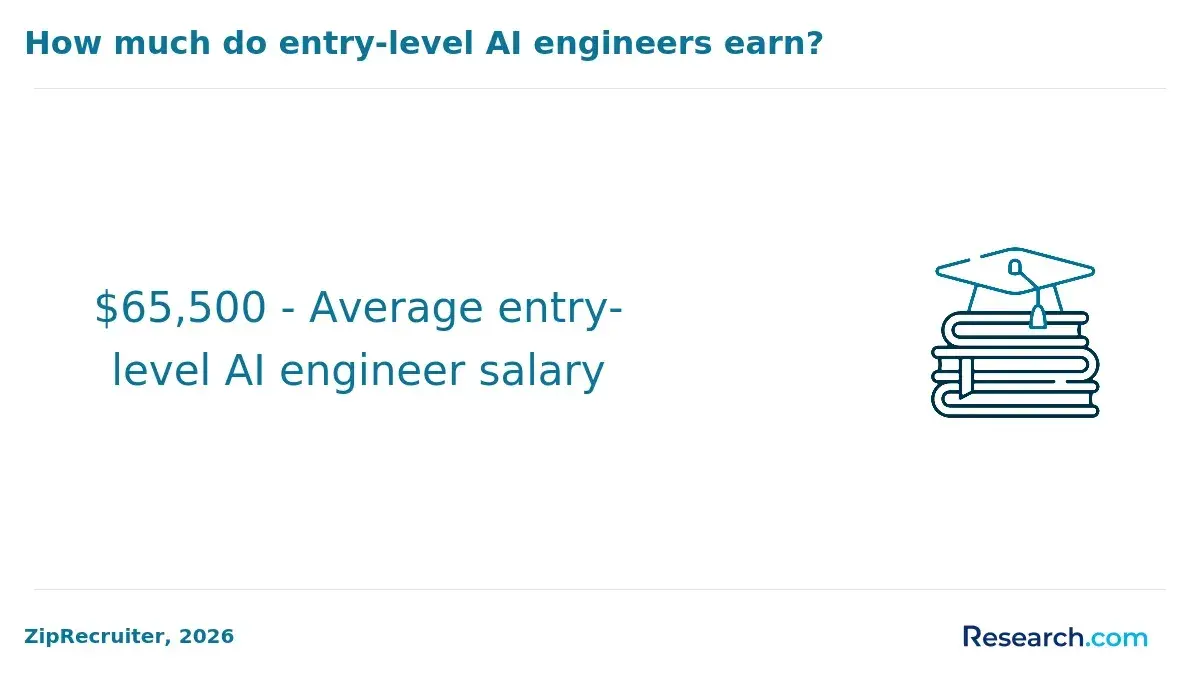
Salaries generally range from $90,000 to $150,000 for entry- to mid-level positions in the U.S., with advanced roles-especially those focused on deep learning or AI architecture-often surpassing $180,000. Industry data shows machine learning engineers earn a median salary near $112,000, while data scientists average about $120,000 annually.
Coursera courses endorsed by reputable institutions like Stanford, IBM, Google, and DeepLearning.AI carry valuable credentials. According to LinkedIn analysis, these certificates validate thorough skills and practical expertise, giving learners an advantage in competitive hiring environments. Hands-on projects completed during these courses help prepare candidates for real-world challenges.
To boost employability, learners should focus on courses relevant to their target roles and strengthen programming abilities, especially in Python and TensorFlow. Engaging with Coursera communities and developing AI project portfolios further enhances job prospects. Choosing certificates from recognized providers improves access to promising opportunities and higher salary brackets within this competitive field.
Research.com Artificial Intelligence
How can prospective students choose the best Coursera AI course for their goals?
Prospective students aiming to advance in artificial intelligence should choose Coursera's AI courses based on their individual career goals. Beginners benefit most from stackable specializations, which combine multiple courses to build comprehensive skills and deliver stronger credentials than standalone classes. These specializations often cover essential topics like machine learning, deep learning, and data science, offering deeper insights compared to single-focus courses.
Those planning career transitions into AI roles should prioritize programs emphasizing practical application, including capstone projects and real-world case studies that showcase job-ready skills.
Advanced learners can explore specialized fields such as natural language processing or reinforcement learning to deepen expertise. Time commitment varies: many specializations require 3 to 6 months at a moderate pace, suitable for working professionals, while individual courses typically demand fewer than 20 hours, catering to faster upskilling needs.
Cost is a consideration; specializations usually have higher fees but yield more recognized credentials. Students should review each course's syllabus carefully to ensure alignment with industry tools and languages like Python and TensorFlow. Verifying instructor qualifications and certificate recognition adds value.
Coursera data highlights a clear trend: beginners increasingly choose stackable specializations over single courses, reflecting high demand for structured learning paths and fuller credentials in AI education. This approach supports better preparation for a competitive job market.
Other Things You Should Know About Artificial Intelligence
The 2027 Coursera AI courses focus on trending topics like responsible AI and generative models, ensuring learners understand state-of-the-art technologies. Courses are designed to keep pace with industry advancements, integrating real-world applications and expert insights into AI developments.
Artificial intelligence is widely applied beyond technology firms, including in healthcare for diagnostics and personalized treatment, in finance for fraud detection and risk management, and in manufacturing through predictive maintenance. It also supports sectors like education, agriculture, and transportation by automating tasks and analyzing large datasets.
Current AI systems often lack general understanding and struggle with tasks outside their training data or specific domains. They may require large amounts of data and significant computing power. Moreover, AI can fail to interpret context or common sense, limiting its ability to fully replace human judgment in complex situations.
Artificial intelligence affects job markets by automating repetitive and routine tasks, which can lead to job displacement in certain sectors. However, it also creates demand for new roles in AI development, data analysis, and system management. Overall, AI is likely to transform many jobs rather than replace them entirely, emphasizing the need for ongoing workforce reskilling.
References
- As a beginner..in Coursera AI for beginners WK1 https://community.deeplearning.ai/t/as-a-beginner-in-coursera-ai-for-beginners-wk1/699534
- Coursera - Aws Generative Ai Applications https://www.coursera.org/professional-certificates/aws-generative-ai-applications
- Coursera’s Online AI Certificate & Microcredential Programs https://www.onlineeducation.com/features/courseras-new-ai-programs
- Best AI Courses Online: Free and Paid Options Compared https://hakia.com/news/best-ai-courses-online/
- AI Careers: Roles, Salaries, and Certifications to Get You Hired - ONLC https://www.onlc.com/blog/ai-careers-roles-salaries-certifications/
- Artificial Intelligence Coursera: Best Courses, Paths, and How to Stay Truly Up to Date https://keepsanity.ai/blog/artificial-intelligence-coursera
- Coursera Help Center https://www.coursera.support/s/question/0D5VH00000YVjQN0A1/microsoft-ai-ml-engineering-professional-certificate-httpswwwcourseraorgprofessionalcertificatesmicrosoftaiandmlengineeringoutcomes-do-i-need-to-write-the-exam-or-not
- Top 26 Careers in AI and Machine Learning: Roles, Salaries, Skills, and 2026 Outlook - AscendurePro https://ascendurepro.com/careers-in-ai-and-machine-learning/
- Professional AI Training: How to Choose the Right Program https://www.strategicaileader.com/professional-ai-training-how-to-choose-the-right-program/
- Coursera, Inc. - Coursera Announces Skills Tracks: Tailored, Data-backed Learning Solution to Accelerate Critical Skills Development Across Functional Teams https://investor.coursera.com/news/news-details/2025/Coursera-Announces-Skill-Tracks-Tailored-Data-backed-Learning-Solution-to-Accelerate-Critical-Skills-Development-Across-Functional-Teams/default.aspx