2027 Best AI Courses for Knowledge Workers

Co-Founder and Chief Data Scientist
Many professionals with undergraduate degrees in unrelated fields face challenges entering the artificial intelligence sector. Limited access to flexible, accredited programs often creates barriers to gaining relevant expertise while balancing work and personal commitments. Without clear guidance, choosing effective courses can lead to wasted time and resources.
This article addresses these concerns by highlighting the best ai courses designed for knowledge workers seeking career pivots. It provides insights into accessible and reputable options, helping readers identify programs that align with their goals and schedules, ultimately supporting successful transitions into the evolving ai industry.
Key Things You Should Know
- Top AI courses for knowledge workers in 2026 emphasize practical skills in machine learning, natural language processing, and data ethics to meet evolving industry demands.
- Over 60% of professionals enrolling in AI courses report career advancement within a year, reflecting strong ROI and growing market need for AI expertise.
- Leading programs incorporate hands-on projects with real-world datasets, fostering critical thinking and adaptability for diverse sectors like healthcare, finance, and technology.
Advance Your Career with AI Online Courses
Artificial Intelligence: Implications for Business Strategy
This program provides an introduction to Artificial Intelligence and their implications for business strategy. Earn an official digital certificate.

Oxford Artificial Intelligence Programme
Explore this Oxford Artificial Intelligence programme offered in a flexible learning environment and explore topics like machine learning, automation, and robotics.

Implementing Agentic AI: Building Your Organizational Playbook
This online MIT Agentic AI course offers a practical approach to deploying AI agents in your organization, including a custom playbook. 3 weeks, exclusive launch price.

AI Adoption: Driving Business Value and Impact
This online MIT AI Adoption: Driving Business Value and Impact offers practical frameworks to close the gap between AI potential and business reality.

Artificial Intelligence in Pharma and Biotech
Discover the applications and limitations of artificial intelligence in pharma and biotech with this MIT online short course.

What are AI courses for knowledge workers and who should consider them?
AI courses designed for knowledge workers offer practical training to integrate artificial intelligence tools into professional tasks. These programs cover data analysis, machine learning basics, automation, and AI-driven decision-making for roles such as project management, marketing, finance, and human resources. They help increase productivity and enhance insights by embedding AI technologies into daily workflows.
Who should take AI training for knowledge professionals? Individuals such as mid-career workers wanting to stay competitive, recent graduates entering data-intensive roles, and managers aiming for strategic advantages benefit the most.
For example, marketing analysts learn AI-powered customer segmentation tools while financial analysts gain predictive modeling skills. Even non-technical roles gain foundational AI understanding to collaborate effectively with technical teams and drive innovation.
Workers skilled in AI enjoy notable career benefits. The World Economic Forum reports that employees with AI expertise earn an average 56% wage premium over peers without these skills across various industries. Employers value AI literacy to optimize operations, automate routine tasks, and boost data-driven strategies.
Choosing the right AI course depends on individual background and goals. Beginners may select introductory programs focusing on AI concepts and tools like Python or Excel automation, while advanced learners often pursue specialized areas such as natural language processing or AI ethics. Many prefer practical, project-based courses offering hands-on experience for workplace application. Those interested in further education can explore an accelerated computer science degree to deepen their AI expertise.
Advance Your Career with AI Online Courses
Artificial Intelligence: Implications for Business Strategy
This program provides an introduction to Artificial Intelligence and their implications for business strategy. Earn an official digital certificate.
Oxford Artificial Intelligence Programme
Explore this Oxford Artificial Intelligence programme offered in a flexible learning environment and explore topics like machine learning, automation, and robotics.
Implementing Agentic AI: Building Your Organizational Playbook
This online MIT Agentic AI course offers a practical approach to deploying AI agents in your organization, including a custom playbook. 3 weeks, exclusive launch price.
How do online AI courses compare with campus programs for working professionals?
Online AI courses offer significant flexibility and enhanced learning outcomes of AI training for knowledge workers compared to traditional campus programs. Campus programs often require fixed schedules, commuting, and full-time enrollment, which may clash with the busy lives of working professionals. In contrast, online options allow asynchronous study at one's own pace, accommodating varied work hours and personal commitments.
These courses commonly emphasize a broader skill set that goes beyond technical training. According to Georgetown CSET's "AI and the Future of Workforce Training," technical skills make up only about 27% of in-demand competencies, while foundational and social skills represent nearly 58%. Integrating these soft and critical thinking skills better equips learners for practical AI use in dynamic workplace environments.
Campus programs tend to focus on theoretical knowledge and research, ideal for those pursuing academic careers. Meanwhile, online curricula often include tailored modules or micro-credentials centered on immediate workplace applications like AI-driven decision-making and human-AI collaboration, enabling quicker job role integration.
Professionals weighing online AI courses versus campus programs for working professionals should consider career goals and time availability. Hybrid models are also rising as effective compromises. For those exploring flexible options, consulting listings of online AI degree programs can be a practical starting point.
What types of AI learning pathways exist, from short courses to full degrees?
AI learning pathways vary widely, catering to diverse skill levels and career ambitions. Many professionals begin with short courses lasting from a few hours to several weeks. These include workshops and certificate programs that focus on practical AI applications such as machine learning basics, natural language processing, and AI in data analytics, aimed at immediate workplace enhancement. Such offerings support professional development in artificial intelligence for knowledge workers seeking practical skills quickly.
Intermediate options include specialized professional certificates offered by universities and platforms like Coursera and edX. These courses typically last several months and combine theory with hands-on practice, covering AI algorithms, programming, and ethical issues. They are suitable for individuals looking to upskill for AI-related roles without committing to full degree programs.
Bachelor's degrees in computer science or data science often feature AI specializations, providing foundational knowledge over four years in programming, mathematics, and AI theory.
For advanced expertise, master's and doctoral programs emphasize research, innovation, and leadership in AI, usually including capstone projects and theses to develop problem-solving skills in complex domains. Those pursuing such degrees can explore the best online MS in data science for accessible advanced education options.
Structured AI education demonstrates measurable impact: the Microsoft Work Trend Index Special Report on AI at Work highlights a 39% productivity increase among employees completing AI courses within six months. Choosing the right pathway supports career growth and success in this rapidly evolving field.
Which AI course providers and universities offer accredited, reputable programs?
Accredited AI course providers in North America play a crucial role in meeting the rising demand for skilled professionals in this transformative field. Top universities such as Stanford University, Massachusetts Institute of Technology (MIT), and Carnegie Mellon University offer reputable AI programs that blend theoretical foundations with hands-on training in machine learning, natural language processing, and ethics. These programs equip students with skills that employers increasingly prioritize.
In addition to traditional institutions, online platforms like Coursera and edX collaborate with these universities to provide accessible, verified courses. For instance, Coursera's AI specialization by Stanford and edX's professional certificate from Columbia University offer flexible learning options without compromising academic standards, beneficial for working professionals.
The labor market reflects this trend: AI and generative AI job postings increased 3.5 times globally between 2022 and 2025, underscoring the value of accredited AI education for career advancement.
Prospective students should verify program accreditation through trusted agencies to ensure curriculum relevance, including project-based learning and coding experience integrated with data science.
For those considering further studies, veterans might explore options like electrical engineering degree online for veterans, which can complement AI skills. Selecting accredited programs from top universities offering reputable AI programs ensures access to updated knowledge and recognized qualifications, the benchmark for thriving in AI roles.
What core skills and topics do the best AI courses for knowledge workers cover?
Top AI courses for knowledge workers emphasize developing skills in machine learning, data analysis, and programming languages like Python or R. These competencies enable learners to build and interpret AI models effectively. Practical experience with real-world datasets is key, focusing on data preprocessing, feature engineering, and algorithm selection.
Training in AI ethics and bias is crucial due to the societal impact of AI technologies. Courses cover responsible AI use, data privacy, and transparency to promote fair and compliant outcomes. Applied AI subjects such as natural language processing, computer vision, and automation are increasingly relevant for business intelligence, content analysis, and workflow optimization.
Many programs also integrate business context, teaching how to translate AI insights into strategic decisions, improve operational efficiency, and foster innovation. This includes exposure to AI project management, deployment, and monitoring on cloud platforms or in enterprise environments.
Choosing between free and paid courses impacts career outcomes. According to the Coursera Global Skills Report 2025, those completing paid professional certificates are 72% more likely to achieve promotion or new employment within 12 months than learners completing non-credential short courses. This highlights the value of comprehensive curricula combining technical skills with industry-recognized certification.
What are typical admission requirements for AI certificates, bootcamps, and degrees?
Admission requirements for AI certificates, bootcamps, and degrees differ based on program type and audience. Many certificate programs and bootcamps targeting knowledge workers require minimal prerequisites, often accepting learners with just a high school diploma.
These programs emphasize motivation over formal education. Technical bootcamps may ask for basic programming knowledge like Python but seldom require prior AI experience.
Graduate AI degrees generally have stricter admission standards. Applicants typically need a bachelor's degree in computer science, engineering, mathematics, or related fields. Some programs also require GRE scores, letters of recommendation, and proof of quantitative skills. While STEM work experience can enhance an application, it is not always mandatory.
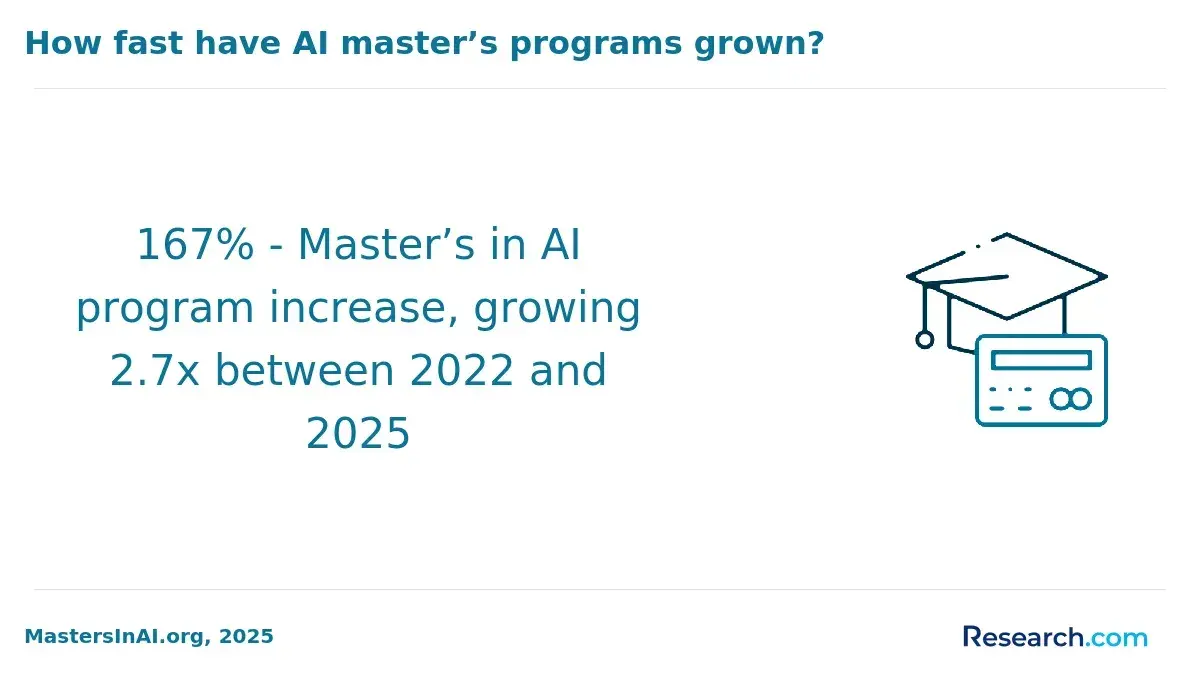
With a 230% increase in enrollment for "AI for non-technical professionals" and "AI literacy" courses on MOOC platforms, many beginner-friendly classes in 2025 removed all prerequisites. These courses serve roles in management, marketing, and operations, providing accessible education across industries.
Prospective students should review specific program requirements carefully. Some bootcamps include preparatory modules for those without coding experience, and degree programs sometimes offer conditional admission alongside foundational coursework. This flexibility helps applicants match programs to their skills and career goals.
How long do AI programs take to complete and what do they cost?
AI programs for knowledge workers vary from short courses of a few weeks to comprehensive certificates lasting several months. Many applied AI workflow courses focus on automating routine tasks and can be completed in 4 to 12 weeks, making them ideal for working professionals seeking quick skill development. More in-depth certificates usually require 3 to 6 months of part-time study, while advanced degrees or specializations may take up to a year.
Costs differ widely based on program length and depth. Short online courses typically range between $200 and $1,500. Professional certificates from accredited institutions generally fall between $1,000 and $5,000. For example, programs designed for business professionals integrating AI tools in daily work often cost $1,500 to $3,000. More extensive executive or graduate certificates can exceed $5,000.
Knowledge workers who complete applied AI workflow programs automate 25-30% of routine work, according to Boston Consulting Group's report, significantly enhancing productivity and freeing time for higher-value tasks. This practical return on investment supports career growth and efficiency.
When choosing a program, consider goals like whether you want a strong foundational understanding or immediate workplace impact. Many platforms provide flexible pacing to balance learning with full-time employment while managing tuition effectively.
What career outcomes and job roles can AI-skilled knowledge workers pursue?
AI-skilled knowledge workers have access to a wide range of career opportunities across various industries. Common roles include data scientist, machine learning engineer, AI product manager, business intelligence analyst, and automation consultant. These professionals focus on using artificial intelligence to analyze complex data, optimize workflows, and develop AI-driven solutions that improve organizational outcomes.
Key responsibilities vary by role: data scientists apply AI algorithms to extract patterns from large data sets and inform strategic decisions; machine learning engineers design predictive models to automate tasks; AI product managers handle the integration of AI technology into consumer products, balancing technical constraints with user experience; business intelligence analysts leverage AI tools to enhance both the speed and accuracy of business insights; and automation consultants deploy AI-powered systems to boost efficiency and reduce manual labor costs.
Specialized jobs such as natural language processing engineers work specifically on AI's understanding and generation of human language, while AI ethicists evaluate the social and legal impacts of AI technology.
By 2025, jobs requiring generative AI and advanced analytics skills tend to offer about 47% higher salaries than comparable roles without these abilities, reflecting strong employer demand. Professionals who combine domain expertise with AI skills-such as healthcare data analysts improving diagnostics or financial analysts developing AI risk models-are particularly valuable.
Targeting roles that align with your expertise while building practical AI skills enhances job security and salary potential. Employers seek candidates who can apply artificial intelligence effectively to solve business challenges and innovate processes.
What salaries and job outlook can AI-literate professionals realistically expect?
AI professionals in the U.S. enjoy competitive salaries and promising job prospects across various sectors. Entry-level AI specialists typically earn between $85,000 and $110,000 annually, while experienced AI engineers and data scientists can expect salaries ranging from $130,000 to $180,000.
High-demand roles such as machine learning engineers, AI product managers, and AI consultants often command salaries above $200,000, especially in major tech hubs.
Job growth in AI-related fields is strong, with the U.S. Bureau of Labor Statistics projecting a 23% increase in data science and mathematical occupations from 2022 to 2032. This growth is driven by expanding AI applications in healthcare, finance, manufacturing, and retail industries.
Investing in AI skills delivers tangible career benefits. According to Deloitte's "State of AI in the Enterprise," companies training over 20% of their workforce in AI see a 3.3 times higher chance of significant revenue gains. For individuals, AI expertise enhances promotion opportunities and salary potential.
To boost career success, professionals should blend AI knowledge with domain-specific expertise, such as healthcare analytics or financial risk modeling. Obtaining certifications in machine learning, natural language processing, and AI strategy further improves hiring prospects. Staying updated on evolving AI tools ensures continued relevance in a fast-changing job market.
How can knowledge workers evaluate and choose the right AI course for their goals?
When selecting an AI course, align the curriculum with your career goals and skill level. Focus on programs offering practical applications in your field, such as data analysis, automation, natural language processing, or AI ethics. Hands-on projects, case studies, and access to AI tools enhance readiness for real-world challenges.
Consider instructor expertise and the institution's reputation, as courses led by seasoned professionals or reputable organizations often provide higher-quality instruction and up-to-date materials. Compare formats and time commitments—online, part-time, or in-person—to fit your schedule.
Evaluate measurable outcomes like certification value, job placement, and employer recognition. Certifications linked to credible bodies or industry partners increase career advancement potential. With global corporate spending on AI skills training rising significantly, smart investment in education is essential.
Ask key questions before enrolling:
- What specific AI skills will I gain?
- How will this training enhance my current role or future prospects?
- Does the course stay updated with fast-changing AI trends?
- Is ongoing support or access to alumni networks available?
Peer reviews and success stories can help verify course claims and ensure your education supports tangible career progress in the expanding AI field.
Other Things You Should Know About Artificial Intelligence
In 2027, beginners can explore AI through courses like "AI for Everyone" by Coursera and "Introduction to Artificial Intelligence" by edX. These courses focus on foundational concepts, providing an accessible entry point for newcomers to understand key aspects of AI technology.
Artificial intelligence is widely used in workplace automation, data analysis, natural language processing, and customer service chatbots. Knowledge workers often encounter AI tools that optimize workflows, support decision-making, and enhance productivity through tasks like predictive analytics and intelligent document management.
Programming is a crucial skill for understanding and applying artificial intelligence concepts, particularly languages such as Python and R, which are extensively used in AI development. While some introductory courses require minimal coding, advancing in AI typically involves writing algorithms, training models, and managing data pipelines.
Yes, AI skills are increasingly in demand across industries, and completing AI courses can enhance career prospects for knowledge workers. These courses provide practical experience with AI tools and frameworks, enabling professionals to take on higher-responsibility roles involving automation, data analysis, and strategic innovation.
References
- The Complete Guide to AI Tools for Knowledge Workers in 2026 - elvex https://www.elvex.com/blog/ai-tools-for-knowledge-workers
- AI: How Long Does it Take to Learn? https://blog.nobledesktop.com/learn/ai/how-long-does-it-take-to-learn-ai
- Future-proof your career: 5 skills you need to stay relevant in the age of AI | Multiverse https://www.multiverse.io/blog/future-proof-your-career-ai
- 6 AI skills everyone should know for the workplace and how to learn them https://lucid.co/blog/ai-skills-for-the-workplace
- AI and Machine Learning Bootcamp | TripleTen https://tripleten.com/ai-machine-learning/
- AI Skills for Life and Work: Labour market and skills projections https://www.gov.uk/government/publications/ai-skills-for-life-and-work-labour-market-and-skills-projections/ai-skills-for-life-and-work-labour-market-and-skills-projections
- University Degree vs AI Bootcamp: Which is Best Career Path? https://agilefever.com/university-degree-vs-ai-bootcamp-which-is-best/
- What to Look for in an AI Training Course | Build Real-World AI Skills https://www.pryor.com/blog-categories/professional-development/what-to-look-for-in-an-ai-training-course.html
- Best Online AI Courses and Certifications in 2025 https://www.upskillist.com/blog/online-ai-courses-certifications/
- How to Choose AI Courses for Professionals - The Case HQ Online https://thecasehq.com/how-to-choose-ai-courses-for-professionals/