2027 Best AI Courses for Six Sigma Professionals

Co-Founder and Chief Data Scientist
Many Six Sigma professionals face challenges integrating emerging technologies into their process improvement skills. As artificial intelligence reshapes industries, understanding its application alongside Six Sigma methodologies becomes critical for career advancement. However, finding courses that blend these fields effectively while accommodating busy schedules is difficult. This gap often slows professionals seeking to enhance decision-making and operational efficiency with AI tools.
This article explores top AI courses tailored for Six Sigma practitioners, highlighting flexible, accredited programs that facilitate a seamless transition into AI-enhanced roles, enabling readers to stay competitive and relevant in evolving markets.
Key Things You Should Know
- Integrating AI courses into Six Sigma training enhances process optimization skills, with 62% of professionals reporting productivity gains in 2025 after combining these methodologies.
- Top AI courses for Six Sigma emphasize machine learning applications in data analysis, critical for achieving advanced quality control and predictive maintenance.
- Certification programs offering hands-on AI projects alongside Six Sigma principles show a 45% higher employment rate within six months post-completion.
Advance Your Career with AI Online Courses
Artificial Intelligence: Implications for Business Strategy
This program provides an introduction to Artificial Intelligence and their implications for business strategy. Earn an official digital certificate.

Oxford Artificial Intelligence Programme
Explore this Oxford Artificial Intelligence programme offered in a flexible learning environment and explore topics like machine learning, automation, and robotics.

Implementing Agentic AI: Building Your Organizational Playbook
This online MIT Agentic AI course offers a practical approach to deploying AI agents in your organization, including a custom playbook. 3 weeks, exclusive launch price.

AI Adoption: Driving Business Value and Impact
This online MIT AI Adoption: Driving Business Value and Impact offers practical frameworks to close the gap between AI potential and business reality.

Artificial Intelligence in Pharma and Biotech
Discover the applications and limitations of artificial intelligence in pharma and biotech with this MIT online short course.

What are the best AI courses for Six Sigma professionals?
Top AI courses for six sigma professionals combine foundational knowledge with practical applications in process improvement. Ideal programs offer training in machine learning, data analytics, and automation, specifically tailored to operations management. For instance, courses that cover predictive analytics using Python or R help Six Sigma practitioners forecast process outcomes and reduce variation more effectively.
Certified experts benefit from AI courses featuring AI-driven quality control, intelligent workflow optimization, and real-time decision-making modules. Providers like Coursera and edX offer specialized programs such as "AI for Everyone" by Andrew Ng and "Applied Data Science with Python," which deliver skills directly applicable to Six Sigma projects. Emphasis is placed on applied techniques that integrate smoothly with Six Sigma tools like DMAIC and Lean principles.
These top AI training programs for six sigma experts also include data visualization, anomaly detection, and root cause analysis through AI, enhancing the ability to identify inefficiencies faster. Training on cloud-based AI platforms supports scalable solutions across manufacturing or service environments. A 2024 McKinsey Global Survey found 72% of high-performing operations organizations utilize AI or advanced analytics in core process-improvement workflows, highlighting the urgency of such skills.
Key course selection factors are instructor expertise in industrial AI, up-to-date tools like TensorFlow or Power BI, and the chance to apply AI in business process reengineering. Prospective students may find it valuable to explore programs listed in a computer science accelerated degree for relevant foundational training.
Advance Your Career with AI Online Courses
Artificial Intelligence: Implications for Business Strategy
This program provides an introduction to Artificial Intelligence and their implications for business strategy. Earn an official digital certificate.
Oxford Artificial Intelligence Programme
Explore this Oxford Artificial Intelligence programme offered in a flexible learning environment and explore topics like machine learning, automation, and robotics.
Implementing Agentic AI: Building Your Organizational Playbook
This online MIT Agentic AI course offers a practical approach to deploying AI agents in your organization, including a custom playbook. 3 weeks, exclusive launch price.
How can Six Sigma professionals use AI in process improvement?
Six Sigma professionals benefit greatly from AI-driven process optimization, which enhances data analysis, predictive modeling, and decision-making accuracy. Machine learning models, a vital part of integrating machine learning with Six Sigma methodologies, analyze large operational datasets to predict equipment failures or quality deviations, allowing for early preventive measures. AI automates the identification of process variations and root causes, achieving faster and more precise fault detection than traditional approaches.
Dynamic process optimization is enabled by AI's ability to learn from continuous data streams, reducing cycle times and waste while improving process capability indices like Cp and Cpk. Natural language processing extracts insights from unstructured data such as customer feedback, revealing hidden inefficiencies within workflows.
Professionals facing challenges in manual data collection or complex multivariable analyses leverage AI-powered automation and visualization tools to enhance the rigor and reproducibility of DMAIC phases, speeding up project completion. In sectors like healthcare and manufacturing, AI-based anomaly detection uncovers subtle defects that conventional control charts may miss.
Scalability of Six Sigma initiatives improves as AI standardizes best practices and integrates with robotic process automation to streamline repetitive tasks, allowing experts to focus on strategic problem-solving. For those interested in expanding their expertise, obtaining certifications linked to Six Sigma and AI is a strong career move. Consider pursuing an online mechanical engineering degree to enhance your skills and job prospects.
Which AI skills matter most for Six Sigma careers?
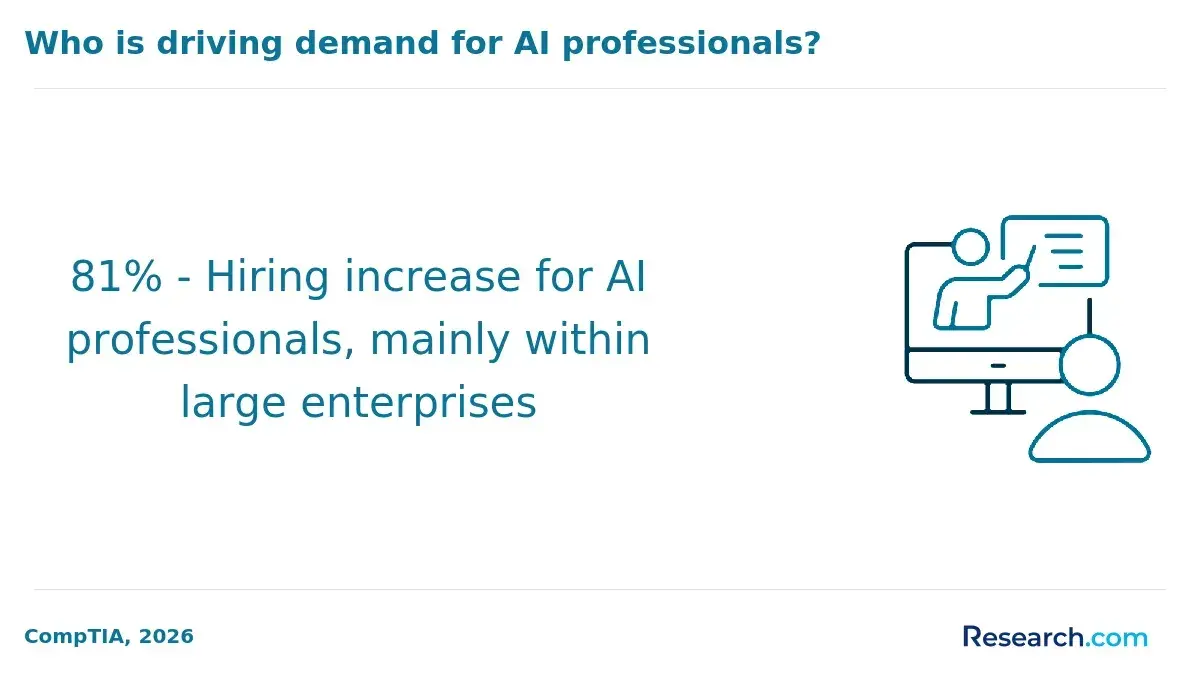
For Six Sigma professionals aiming to advance in their careers, developing AI-driven process improvement techniques for Six Sigma is increasingly important. Mastery of AI-driven data analytics allows practitioners to leverage machine learning applications in Six Sigma projects, analyzing large datasets to identify patterns and predict outcomes more accurately than traditional methods.
AI-based automation tools can significantly boost process efficiency by automating routine quality inspections and error detection. Combining robotic process automation (RPA) with artificial intelligence streamlines workflows and accelerates continuous improvement cycles while maintaining precision.
Strategic AI leadership skills, blending technical know-how and management, enhance an organization's ability to realize value from AI investments. Reports show that companies with AI-educated leaders are nearly twice as likely to achieve significant benefits. These leaders enable collaboration between data scientists and operational teams, turning AI insights into actionable quality improvements.
Natural language processing (NLP) also plays a role, helping analyze customer feedback to uncover hidden process quality issues. Integrating NLP with Six Sigma methodologies reveals root causes that quantitative data alone might miss.
Six Sigma professionals should become well-versed in AI ethics and governance to ensure responsible deployment, especially as automated decisions impact compliance and risk. Those interested in further advancing their expertise may consider a cyber security degree to complement their knowledge in AI and process optimization.
Are online AI courses better than campus programs for Six Sigma professionals?
Online AI courses offer significant advantages for Six Sigma professionals compared to traditional campus programs, primarily due to their flexibility, accessibility, and up-to-date content. Many Six Sigma practitioners balance demanding work schedules, making fixed-timed campus classes challenging. Online courses allow learning at an individual pace, which supports applying AI concepts directly to ongoing projects.
The best online AI courses for Six Sigma professionals also incorporate real-world datasets and simulations to strengthen practical skills in AI-enhanced DMAIC processes and statistical modeling. According to IDC's 2024 Global AI in Quality Management report, companies that integrate AI into statistical process control experience defect reductions 27% faster than those relying solely on traditional Six Sigma methods. Online programs frequently update their material to reflect such industry insights more rapidly than many campus offerings.
Online offerings include diverse formats like micro-credentials and modular learning paths, enabling targeted skill development in areas such as predictive analytics or root-cause analysis automation. This contrasts with the often rigid structure of campus syllabi. However, campus programs may still appeal to individuals seeking deeper networking or academic prestige, although hybrid and cohort-based online courses now replicate these experiences via virtual collaboration tools.
For professionals interested in advanced study options, exploring online PhD data science programs can be a valuable next step to deepen expertise.
Considering the advantages of campus vs online AI training for Six Sigma roles, online courses generally provide greater flexibility, current content, and practical application essential for measurable quality improvement.
What should an AI course curriculum include for Six Sigma learners?
An AI course curriculum tailored for Six Sigma learners should blend core Six Sigma methodologies with advanced data analytics and machine learning. Beginning with essential topics like process mapping, DMAIC methodology, and statistical quality control, the training ensures a firm grasp of traditional Six Sigma tools. It then advances to data preprocessing, feature engineering, and AI algorithms relevant to predictive maintenance and quality control, effectively bridging Six Sigma with AI applications.
Practical learning modules must emphasize integrating AI tools into Six Sigma projects through demonstrations of AI-driven anomaly detection, machine learning-based root cause analysis, and automated decision-making systems that optimize processes. Case studies can illustrate AI's impact on reducing defects and minimizing unplanned downtime.
Proficiency in software such as Python, R, or specialized AI-enhanced Six Sigma platforms is vital to support model training and deployment. Key AI performance metrics aligned with manufacturing quality and Six Sigma goals-such as accuracy, recall, and precision in defect detection-should be covered.
Capgemini's Smart & Autonomous Manufacturing survey reports a 16% average increase in Overall Equipment Effectiveness and a 15% reduction in unplanned downtime among manufacturers applying AI-driven quality and process optimization tools, showing tangible value in combining AI with Six Sigma.
Addressing ethical issues like data privacy and algorithm bias is crucial to preparing learners for responsible AI deployment in quality management. This comprehensive approach equips professionals to enhance manufacturing outcomes effectively.
What prerequisites do AI courses typically require?
AI courses tailored for Six Sigma professionals build on a solid foundation in statistics, programming, and process management. Proficiency in a programming language like Python or R is commonly expected, as these are widely used in data analysis and automation. A strong grasp of statistical concepts-including hypothesis testing, regression analysis, and probability-is vital since AI models depend heavily on interpreting data and recognizing patterns.
Experience with Six Sigma methodologies enhances the practical application of AI tools. Familiarity with DMAIC (Define, Measure, Analyze, Improve, Control) phases enables professionals to integrate AI-driven process mining and automation more effectively, optimizing workflows to reduce waste and improve quality.
Advanced training often requires understanding machine learning algorithms, data structures, and SQL databases. Process mining-focused courses emphasize workflow analytics, benefiting from prior knowledge of business process modeling or BPMN (Business Process Model and Notation).
Organizations that combine process mining with AI-based automation report an average 32% decrease in end-to-end process cycle times in finance and customer service, according to Gartner's 2024 Process Mining Market Guide. This data underscores the importance for Six Sigma professionals to merge domain expertise with technical skills to harness AI's potential fully.
- Programming proficiency (Python or R)
- Knowledge of statistics and data analysis
- Experience with Six Sigma and process management
- Familiarity with machine learning basics
- Database and SQL skills
- Understanding of business process modeling
How long do AI courses for Six Sigma professionals take?
AI courses tailored for Six Sigma professionals vary in length from a few weeks to several months, depending on the course's depth and delivery style. Many shorter, self-paced online programs last 4 to 8 weeks, focusing on essential AI concepts like machine learning, data analytics, and process optimization. These are suitable for professionals aiming to quickly incorporate AI tools within Six Sigma frameworks without interrupting their work schedules.
More intensive courses, often including hands-on projects, case studies, and certification exams, typically run 3 to 6 months. These provide comprehensive training on AI algorithms, predictive analytics, and automated quality control-key elements for advanced Six Sigma applications. Some offerings come from university partnerships or professional platforms, featuring part-time formats that help learners balance upskilling with full-time employment.
Choosing the optimal course length depends on your objectives:
- Short, targeted training suits those focusing on specific Six Sigma DMAIC phases (Define, Measure, Analyze, Improve, Control).
- Longer, in-depth courses support broader digital transformation roles involving AI integration.
A 2024 edX impact survey found that 39% of learners completing AI and data-skills courses under $100 reported a salary increase or new job within a year. This highlights how even short, affordable AI courses can deliver substantial career benefits, making them an efficient choice for Six Sigma professionals balancing time and cost.
What do AI courses for Six Sigma professionals cost?
AI courses for Six Sigma professionals vary widely in cost based on curriculum depth, duration, and provider prestige. Entry-level online programs typically range from $200 to $1,500 and cover foundational AI concepts integrated with Six Sigma methods. These are ideal for those beginning to explore AI's role in process improvement without significant financial commitment.
Mid-tier certification programs generally cost between $2,000 and $7,500. These often include hands-on projects, industry tools access, and mentoring to apply AI techniques within Six Sigma frameworks. Such offerings are commonly available from technical universities or specialized education platforms.
Executive-level AI courses targeted at Six Sigma leaders or senior managers usually fall between $10,000 and $25,000. Prestigious institutions like MIT Sloan provide programs emphasizing strategic AI deployment and analytics. According to MIT Sloan's executive education report, alumni of their AI and analytics programs saw an average 13% salary increase within a year, emphasizing the value of higher-tier programs.
When choosing a course, balance cost against expected return on investment, such as career advancement and salary growth. Employer sponsorship, scholarships, or payment plans can ease financial barriers for pricier options.
- Does the program focus on AI applications directly relevant to Six Sigma?
- Are case studies or practical projects part of the curriculum?
- What is the institution's reputation and alumni success?
- Is the course schedule flexible for working professionals?
Carefully weighing these factors helps maximize your investment in AI skills that complement Six Sigma expertise.
What jobs can Six Sigma professionals pursue with AI training?
Six Sigma professionals with AI training unlock career paths that combine process improvement with advanced analytics. Common roles include AI integration specialists, data-driven process analysts, and automation consultants who leverage machine learning models to enhance quality control, reduce defects, and optimize workflows.
Positions such as AI project managers and AI-driven quality engineers focus on guiding AI adoption within Six Sigma frameworks to ensure alignment with organizational goals. Operations research analysts use AI algorithms to improve decision-making and resource allocation, increasing the efficiency of Six Sigma initiatives.
Industries increasingly value Six Sigma experts with AI skills for supply chain optimization, product lifecycle management, and enhancing customer experiences. AI-powered dashboards enable rapid identification of bottlenecks, supporting precise root cause analysis-a core Six Sigma principle.
Udacity's 2024 Student Outcomes Report reveals that 70% of AI nanodegree graduates completing capstone projects with real business data secured a job, promotion, or significant role change within one year, demonstrating the benefit of combining AI expertise with Six Sigma methodologies.
To succeed, professionals should master AI applications such as data visualization, statistical modeling, and process automation. Skills in Python, R, and TensorFlow are highly valued. Additionally, knowledge of ethical AI use and data governance is crucial, especially in regulated sectors like healthcare and manufacturing.
Which certifications help Six Sigma professionals prove AI expertise?
Six Sigma professionals seeking to demonstrate expertise in artificial intelligence benefit from certifications that combine process improvement with data analytics. The Certified Analytics Professional (CAP) is widely recognized across industries for validating skills in applying analytics to business contexts such as predictive modeling and data-driven decision-making. This credential supports Six Sigma methodologies by enhancing the interpretation of data critical to optimizing processes.
For those beginning their AI journey, the AI For Everyone course by deeplearning.ai offers foundational knowledge relevant to automation and predictive analytics in Six Sigma projects. More technical credentials, like the IBM AI Engineering Professional Certificate, equip professionals with hands-on experience in machine learning pipelines and AI deployment, enabling integration of AI tools in quality management.
Lean Six Sigma Black Belt holders can also consider the Microsoft Certified: Azure AI Engineer Associate certification, which focuses on designing and implementing AI solutions on Azure-boosting continuous improvement initiatives that leverage cloud-based AI services. Similarly, the Google Professional Machine Learning Engineer credential is respected for demonstrating advanced AI system design skills pertinent to data-driven process improvements.
According to PwC's 2024 AI Jobs Barometer, roles requiring a mix of process improvement and AI skills are projected to grow approximately 2.5 times faster than the overall job market over five years. Choosing the right certification depends on your career goals, with foundational programs suited for newcomers and engineer-focused credentials for professionals deploying AI-enabled Six Sigma solutions in complex environments.
Other Things You Should Know About Artificial Intelligence
In 2027, key AI courses for Six Sigma professionals include "AI for Continuous Improvement" by Coursera, MIT's "AI in Industry Applications," and edX's "AI-Powered Six Sigma: Driving Efficiency." These courses equip professionals with tools to effectively merge AI with Six Sigma methodologies.
AI enhances decision-making by providing advanced data analytics, pattern recognition, and predictive modeling that uncover insights beyond traditional statistical tools. These capabilities allow Six Sigma professionals to identify root causes faster, forecast outcomes with higher accuracy, and optimize processes dynamically. As a result, AI supports more informed and timely decisions throughout improvement cycles.
Machine learning is a key component of AI that automates data analysis by learning from historical process information without explicit programming. In Six Sigma, machine learning models can detect anomalies, classify defects, or predict process variations, enabling continuous process improvement. This automated insight generation reduces manual analysis and enhances the scalability of Six Sigma initiatives.
AI-driven automation can handle repetitive and data-intensive tasks typically found in Six Sigma projects, such as data collection and preliminary analysis. However, it does not replace human expertise in interpreting results, designing interventions, or making complex decisions that require context and judgment. Instead, AI serves as a tool that augments human capabilities, making Six Sigma projects more efficient and effective.
References
- AI Operational Excellence (AI-OPEX) Certification https://www.6sigmacertificationonline.com/ai-operational-excellence-certification/
- Lean Six Sigma Jobs & Career Opportunities | MANTEC Training https://mantec.org/job-six-sigma/
- Can Artificial Intelligence and Lean Six Sigma Improve Your Business ? https://ilssi.org/how-can-artificial-intelligence-and-lean-six-sigma-improve-your-business-together/
- Integrating Lean Six Sigma & AI - PEX Network https://www.processexcellencenetwork.com/lean-six-sigma-business-performance/articles/reimagining-process-excellence-in-banking-integrating-lean-six-sigma-ai-in-a-new-era-of-continuous-improvement
- Integrating AI and Machine Learning with Six Sigma https://qesacademy.com/integrating-ai-and-machine-learning-with-six-sigma/
- How Long Does It Take to Get Lean Six Sigma Black Belt? | Leanscape https://leanscape.io/how-long-does-it-take-to-get-lssbb
- Black Belt Excellence Training: Register online now! https://www.theleansixsigmacompany.de/black-belt-excellence/
- Artificial Intelligence and Lean Six Sigma - Acuity Institute https://acuityinstitute.com/courses/lean-six-sigma-courses/artificial-intelligence-and-lean-six-sigma/
- Lean Six Sigma Certification Online, Certification Price vs Average Salary https://www.sixsigmacouncil.org/six-sigma-certifications/
- Why AI-Enabled Lean Six Sigma Green Belt? https://www.benchmarksixsigma.com/forum/topic/41447-why-ai-enabled-lean-six-sigma-green-belt/