2027 Best AI Courses for Government Professionals Using Generative AI

Co-Founder and Chief Data Scientist
Government professionals face increasing pressure to integrate generative AI tools efficiently while navigating regulatory and ethical challenges. Many lack the specialized training to harness these technologies effectively, which can hinder project outcomes and public service innovation.
This skills gap complicates decision-making and slows digital transformation efforts within government agencies. Addressing this issue requires targeted education that blends AI theory with practical applications relevant to public sector needs.
This article explores the best AI courses designed specifically for government professionals, highlighting flexible and accredited programs that enable a smooth transition into the AI-driven landscape of public administration.
Key Things You Should Know
- Government professionals increasingly adopt generative AI courses to enhance policy analysis, with enrollment growing 35% annually through 2025, reflecting rising demand for AI literacy in public service.
- Top courses emphasize ethical AI use, data privacy, and practical applications, addressing compliance with federal regulations like the AI in Government Act of 2024.
- Hands-on training in generative AI tools boosts productivity; 62% of graduates report improved decision-making capabilities within one year of completion.
Advance Your Career with AI Online Courses
Artificial Intelligence: Implications for Business Strategy
This program provides an introduction to Artificial Intelligence and their implications for business strategy. Earn an official digital certificate.

Oxford Artificial Intelligence Programme
Explore this Oxford Artificial Intelligence programme offered in a flexible learning environment and explore topics like machine learning, automation, and robotics.

Implementing Agentic AI: Building Your Organizational Playbook
This online MIT Agentic AI course offers a practical approach to deploying AI agents in your organization, including a custom playbook. 3 weeks, exclusive launch price.

AI Adoption: Driving Business Value and Impact
This online MIT AI Adoption: Driving Business Value and Impact offers practical frameworks to close the gap between AI potential and business reality.

Artificial Intelligence in Pharma and Biotech
Discover the applications and limitations of artificial intelligence in pharma and biotech with this MIT online short course.

What are the best AI courses for government professionals?
Top generative AI training programs for public sector employees focus on practical skills in generative AI, ethics, and AI governance tailored to government applications. Leading courses like Carnegie Mellon University Heinz College's AI for Government Leaders and Georgetown University's GovAI certificate emphasize deploying AI tools effectively within public services.
Addressing the skills gap identified in Deloitte's "Government Trends 2024" report, where 56% of U.S. federal executives cited a lack of AI skills, these programs enhance both technical knowledge and strategic implementation. Core topics include machine learning basics, workflow automation, and policy modeling supported by real-world government case studies.
Many programs integrate hands-on labs using government datasets to train professionals on AI risk assessment, such as bias detection and compliance with federal standards. Government employees seeking advancement benefit from flexible online options, including Johns Hopkins University's Engineering for Professionals and the University of Virginia's Data Science in Government course, which balance theory and public sector application.
- Strong AI skill development tackles operational inefficiencies and bridges strategic decision-making gaps.
- Training includes ethical AI use and maintaining public trust in government technology.
- Practical exercises use popular generative AI tools adapted for government workflows.
For those exploring related educational pathways, the fastest way to get a computer science degree can complement AI training and expand career opportunities in government technology fields.
Advance Your Career with AI Online Courses
Artificial Intelligence: Implications for Business Strategy
This program provides an introduction to Artificial Intelligence and their implications for business strategy. Earn an official digital certificate.
Oxford Artificial Intelligence Programme
Explore this Oxford Artificial Intelligence programme offered in a flexible learning environment and explore topics like machine learning, automation, and robotics.
Implementing Agentic AI: Building Your Organizational Playbook
This online MIT Agentic AI course offers a practical approach to deploying AI agents in your organization, including a custom playbook. 3 weeks, exclusive launch price.
How do generative AI courses help government workers?
Generative AI training benefits for government employees by providing practical tools to automate document generation, data summarization, and report writing, which reduces manual effort and improves efficiency. These skills help public-sector professionals interpret AI-generated insights, enhancing data-driven decision-making for better policy analysis and resource allocation.
The impact of generative AI courses on public sector productivity is significant, with studies estimating up to 30% time savings on routine writing, research, and documentation tasks. This could translate into $150-$240 billion in annual productivity gains globally, emphasizing the importance of this training for government workers focused on strategic priorities.
Training also addresses challenges of handling unstructured data, enabling staff to quickly extract relevant information from legislative texts, public feedback, or regulatory materials. Additionally, courses often cover AI ethics and data privacy, crucial for responsible AI adoption in government.
Government professionals can apply generative AI skills to:
- Automate report drafting and policy briefings.
- Streamline public communication with AI-generated responses.
- Enhance data analysis for budgeting and program evaluation.
- Improve interagency collaboration through standardized document creation.
Mastering generative AI supports career growth and meets public-sector demands in a digital age. Those interested in advancing their skills can explore options such as an engineering online degree that incorporates AI training to better prepare for emerging workplace needs.
Which AI course formats work best for public sector employees?
Effective AI course delivery methods for public sector professionals emphasize flexibility and practical relevance to government workflows. Self-paced online courses allow federal workers to develop skills while managing demanding schedules. Incorporating hands-on labs or simulations enables learners to apply generative AI training formats for government employees directly to challenges like data analysis and process automation.
Blended learning, combining live instructor-led sessions with asynchronous content, fosters collaboration and real-time problem-solving, ideal for federal roles needing teamwork. Cohort-based courses encourage peer networking within the public sector, enhancing shared knowledge and career development.
Specialized short courses and micro-credentials focus on AI ethics, compliance, and security, addressing critical concerns unique to government environments. Modular designs let learners build expertise incrementally in areas such as natural language processing and machine learning frameworks, keeping pace with evolving technologies.
According to U.S. Office of Personnel Management FedScope data analyzed by the Burning Glass Institute, IT and data professionals in federal positions with AI/ML skills earn 14-20% higher salaries than their non-AI-skilled counterparts, underlining the value of targeted AI education.
Public sector employees aiming to enhance their careers should seek courses that integrate live interaction, practical projects, and relevant curricula. Those exploring advanced qualifications might consider a PhD in AI online to deepen expertise.
What skills do generative AI courses teach government professionals?
Generative AI courses for government professionals deliver essential skills focused on both technical expertise and ethical governance. These courses impart knowledge about AI model architecture, prompt engineering, and practical AI applications like automating document analysis or enhancing citizen engagement through chatbots. Developing generative AI skills for government professionals ensures they can effectively implement AI in public sector environments.
Ethical considerations are paramount, with strong emphasis on data privacy protocols, bias reduction techniques, and building responsible AI frameworks. This focus reflects alarming trends: 68% of government organizations faced significant AI-related ethical or compliance issues, while only 38% had established formal responsible AI frameworks, highlighting the need for compliance-focused education.
The curriculum also covers risk assessment and impact analysis, helping participants identify potential harms before deployment. Practical skills include scenario planning and maintaining audit trails that support legal and ethical transparency in AI decision-making.
Complementary skills address collaborative project management, integration with existing digital infrastructure, and continuous monitoring for AI system performance. These essential skills taught in generative AI courses for public sector professionals prepare them to manage AI adoption confidently and responsibly.
For those interested in related fields, veteran-friendly online cybersecurity degree programs offer further pathways to strengthen career prospects in government technology roles.
Are online AI courses better than campus programs for government staff?
Online AI courses offer significant advantages for government professionals, including flexible schedules, updated content, and wide accessibility. With 72% of U.S. federal agencies piloting or deploying generative AI applications by late 2024 yet only 19% having agency-wide policies on GenAI use, rapid skill development is essential. Online programs can swiftly update material to reflect new technologies and regulations, helping staff stay current with evolving AI tools and governance frameworks.
Campus programs, while structured and beneficial for early-career employees pursuing foundational knowledge, often have slower curricula changes and less alignment with emerging government AI challenges. Online courses typically use modular formats, enabling professionals to concentrate on specific topics such as ethics, risk management, or technical implementation tailored to government contexts.
Additional benefits of online learning include interactive forums and live sessions, fostering peer collaboration and expert engagement across agencies and states. For example, courses featuring case studies on generative AI applications in public safety or healthcare provide directly applicable insights often missing in traditional programs.
In contrast, campus-based offerings deliver valuable in-person networking and broad AI foundations but may be less practical for experienced government staff needing efficient, role-specific training. Overall, online education remains a preferred method for timely and pragmatic AI skill development in government settings.
What admissions requirements do AI training programs usually ask for?
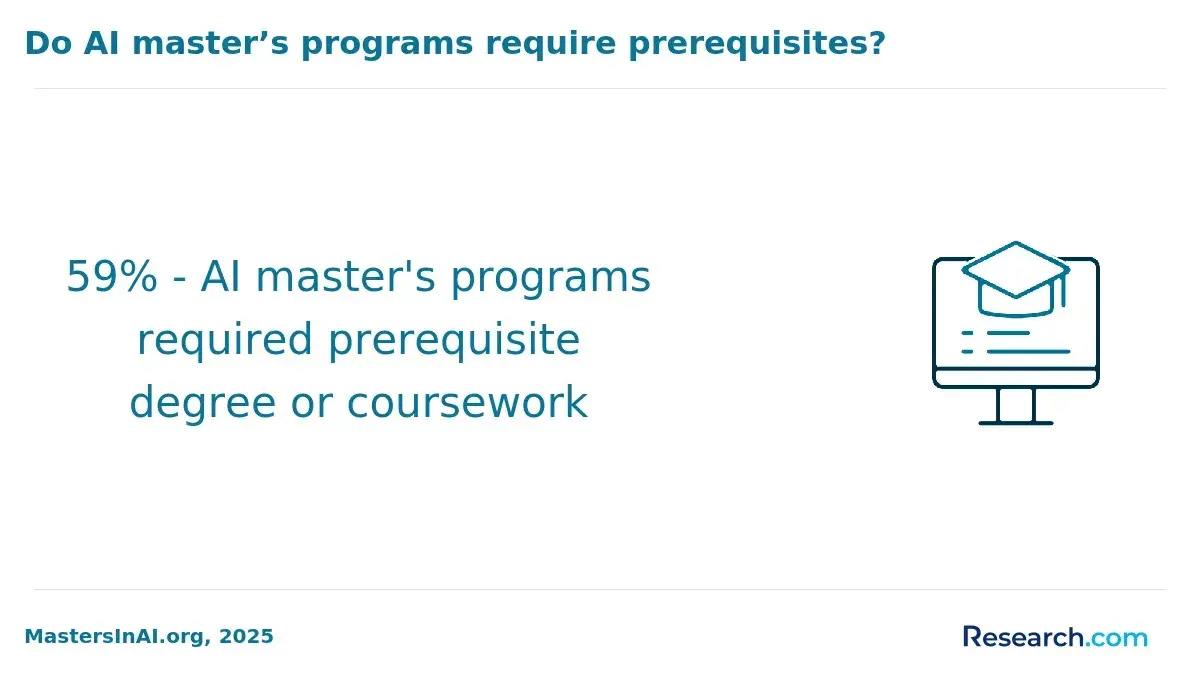
AI training programs for government professionals usually require at least a bachelor's degree, often in computer science, data science, engineering, or public administration. Some programs consider equivalent professional experience, especially when candidates demonstrate skills in programming or data analysis. Advanced programs typically expect foundational knowledge in math, statistics, or coding languages like Python or R.
Admissions commonly involve submitting transcripts, resumes, and recommendation letters showcasing relevant experience. Some courses ask for a statement of purpose highlighting career goals and motivation for AI degrees or training within the public sector. Prerequisite assessments may be used to ensure applicants are prepared to engage with complex topics such as generative AI algorithms or ethics in government service.
Executive-level and certificate programs often require practical government experience, reinforcing the connection between AI concepts and public administration challenges. Beginner-level courses sometimes provide preparatory modules to help bridge technical knowledge gaps.
Growing demand for AI skills in government is clear. The OECD survey on AI skills in the public sector reports only 21% of public servants in advanced economies have formal AI training, yet 61% expect AI to significantly impact their jobs within five years. This gap underlines the need for accessible education pathways balanced with strong technical competence to equip government employees for emerging AI-driven roles.
How long do generative AI courses for government professionals take?
Generative AI courses for government professionals vary widely in duration, from a few hours to several months, depending on the program's depth and format. Introductory courses often take less than 10 hours, providing quick foundational knowledge suited for busy schedules. More extensive certifications typically require 8 to 12 weeks of part-time study, featuring lectures, hands-on projects, and assessments to accommodate working professionals.
Some programs focus on specific public sector applications such as automated report generation, policy simulation, or citizen engagement tools. For instance, basic courses on generative AI text applications might last about 4 weeks with 3-5 hours weekly, while advanced training involving Python coding or AI pipeline development can extend to 3 months or more.
Multi-course certificate tracks may span 3 to 6 months, offering deeper expertise that can significantly improve career prospects. According to the Coursera & Burning Glass Institute "Global Skills Report: Public Sector Focus 2024," government workers who earned at least one AI or data science certificate saw a median promotion rate increase of 28% over two years compared to peers without such credentials.
To maximize benefits, professionals should consider courses with flexible schedules, practical exercises, and direct relevance to their roles. Agencies may facilitate participation through sabbaticals or continuing education credits, allowing employees to extend learning time without disrupting workflow.
How much do AI courses for government professionals cost?
AI courses for government professionals vary significantly in cost based on provider, depth, and delivery format. Basic online introductory courses typically cost between $200 and $800, providing foundational knowledge on generative AI applications tailored for the public sector. More advanced certificate programs or specialized workshops usually range from $1,500 to $5,000 and often include compliance, data security, and ethical AI deployment.
Given the sensitivity of government data, many courses focus on risk mitigation. For example, a 2024 Gartner report highlighted that 45% of public-sector AI incidents involved employees inputting regulated data into AI tools without safeguards. Training that incorporates such real-world case studies tends to cost more but is crucial for minimizing breaches.
Programs from established institutions or industry groups aiming for practical certification generally charge $2,000 to $4,000 for several weeks of instruction. Executive education programs led by universities may exceed $6,000, including policy and implementation strategies. Employers may offer tuition reimbursement or partner with vendors, and government grants can subsidize fees.
Most government AI training options fall between $500 and $5,000. Prospective students should prioritize courses offering official certification and strong compliance content related to generative AI risks. This ensures both value and relevancy in a rapidly evolving field.
What jobs can government professionals pursue after AI training?
Government professionals with AI training can pursue diverse and impactful roles that enhance public services. Key positions include AI policy analysts who create ethical frameworks for AI use, data scientists and machine learning engineers who analyze data and optimize resources, and AI project managers who guide AI solution development in alignment with agency goals.
Emerging roles include AI-enabled automation specialists improving workflow efficiency, natural language processing experts building citizen communication systems, and intelligence analysts who incorporate AI tools to strengthen national security efforts.
Compliance officers skilled in AI ensure agencies follow legal and privacy standards. These roles suit individuals across operational and strategic levels with backgrounds in computer science, public administration, or data analysis. As U.S. federal civilian agencies increase AI-related workforce training and spending by 23% between FY 2023 and FY 2025, reaching $3.4 billion, demand for AI-savvy personnel grows.
Professionals wondering how AI training can advance their government careers should identify department-specific AI uses, such as healthcare data analysis in federal health agencies or geospatial AI for environmental monitoring. Upskilling in AI ethics, model development, or system auditing opens further advancement paths both within and beyond government service.
How should government professionals choose an accredited AI course?
Accreditation is crucial when selecting an AI course for government professionals, ensuring programs meet recognized educational standards and are valued by employers. Accredited curricula cover key areas such as machine learning basics, ethical AI use, data privacy, and generative AI applications that address public sector challenges. Look for courses accredited by trusted organizations like ABET or other regionally recognized bodies.
Focus on courses tailored to government AI roles with practical skills in workflow automation, predictive analytics, or natural language processing applicable to policy and administrative contexts. Confirm inclusion of case studies or projects using government data or regulatory frameworks.
Flexible delivery options—whether online, hybrid, or in-person—help balance work with learning. Instructor expertise also matters; prioritize programs taught by professionals experienced in government AI initiatives or public sector research.
AI roles in government are expected to grow 22% annually through 2030, outpacing general public sector job growth, highlighting the need for accredited courses offering up-to-date and relevant training. Additional selection factors include:
- Verified career support such as job placement or internships within government agencies
- Clearly defined learning outcomes aligned with federal AI competency frameworks
- Assessment methods that evaluate both theory and practical skills
- Recognition by public administration or technology professional associations
Choosing an accredited AI course built on these criteria ensures development of reliable, marketable skills aligned with expanding government AI career opportunities.
Other Things You Should Know About Artificial Intelligence
Government professionals must consider issues such as data privacy, transparency, and fairness when implementing artificial intelligence. Ethical AI use involves ensuring algorithms do not perpetuate bias or discrimination and maintaining accountability for automated decisions. Additionally, respecting citizens' rights and complying with legal frameworks are critical components of responsible AI deployment in public services.
In 2027, leading AI courses for government professionals include the "Generative AI in Public Sector" by MIT, Stanford’s "AI Governance for Leaders", and the "AI for Policy" program from Carnegie Mellon. These courses provide practical insights into leveraging generative AI for efficient governance while addressing ethical considerations.
Government agencies often encounter challenges such as limited technical expertise, budget constraints, and legacy system integration when adopting artificial intelligence. Additionally, concerns about data security and ensuring transparency in AI-driven decisions can slow down implementation. Overcoming these obstacles requires strategic planning and investment in workforce training.
Artificial intelligence can support public policy development by providing data-driven insights and forecasting potential outcomes of policy options. AI tools analyze large datasets to highlight trends and simulate the effects of policy changes, aiding policymakers in making informed decisions. This capability enhances policy effectiveness and responsiveness to public needs.
References
- Artificial intelligence for the public sector https://academy.itu.int/training-courses/full-catalogue/artificial-intelligence-public-sector
- Artificial Intelligence https://prospectus.governmentcampus.co.uk/04-artificial-intelligence/
- AI Tool Aims to Make Work Life Easier for Government Employees - PSHRA https://pshra.org/ai-tool-aims-to-make-work-life-easier-for-government-employees/
- AI Literacy Programs in Europe – Supporting Article 4 of the EU AI Act https://artificialintelligenceact.eu/ai-literacy-programs/
- How to Help State and Local Government Employees Learn and Use AI Tools in Their Work - ELGL https://elgl.org/how-to-help-state-and-local-government-employees-learn-and-use-ai-tools-in-their-work/
- Free AI training for all, as government and industry programme expands to provide 10 million workers with key AI skills by 2030 https://www.gov.uk/government/news/free-ai-training-for-all-as-government-and-industry-programme-expands-to-provide-10-million-workers-with-key-ai-skills-by-2030
- Guidance for staff training on AI | digital.gov.au https://www.digital.gov.au/ai/ai-in-government-policy/staff-training
- ReSPA KMP | AI and digital transformation in government https://kmp.respaweb.eu/trainings/102/ai-and-digital-transformation-in-governmentrn
- The Future-Proof Public Sector: Organisational Transformation in Times of AI https://www.eipa.eu/courses/public-sector-ai/
- AI Education Partnerships for Universities https://www.becomeaicertified.com/learning-solutions-for-individuals/for-government