2027 Best AI Courses for Business Analysts With Certificates

Co-Founder and Chief Data Scientist
Many business analysts face the challenge of integrating artificial intelligence skills into their workflow without a formal background in technology. This gap often limits their ability to lead data-driven projects or collaborate effectively with technical teams. Finding credible and flexible learning options that provide recognized certification can be difficult, especially for professionals balancing full-time work. The complexity of AI concepts further adds to the hurdle, necessitating targeted courses that cater specifically to business analysts. This article highlights the best AI courses offering certificates, designed to help professionals overcome these barriers and confidently transition into AI-driven roles.
Key Things You Should Know
- Top AI courses for business analysts in 2026 emphasize practical skills in machine learning, data analytics, and automation to improve decision-making and operational efficiency.
- Over 65% of business analyst roles now require AI knowledge, making certification a critical differentiator in competitive job markets.
- Courses offering certificates from accredited providers enhance credibility and often align with industry standards, supporting career advancement and salary growth.
Advance Your Career with AI Online Courses
Artificial Intelligence: Implications for Business Strategy
This program provides an introduction to Artificial Intelligence and their implications for business strategy. Earn an official digital certificate.

Oxford Artificial Intelligence Programme
Explore this Oxford Artificial Intelligence programme offered in a flexible learning environment and explore topics like machine learning, automation, and robotics.

Implementing Agentic AI: Building Your Organizational Playbook
This online MIT Agentic AI course offers a practical approach to deploying AI agents in your organization, including a custom playbook. 3 weeks, exclusive launch price.

AI Adoption: Driving Business Value and Impact
This online MIT AI Adoption: Driving Business Value and Impact offers practical frameworks to close the gap between AI potential and business reality.

Artificial Intelligence in Pharma and Biotech
Discover the applications and limitations of artificial intelligence in pharma and biotech with this MIT online short course.

What do AI courses for business analysts cover, and who are they best for?
AI courses for business analysts focus on practical skills essential to integrating artificial intelligence into business processes and decision-making. Key curriculum and skills covered include data analysis and visualization, machine learning basics, natural language processing, and AI-driven automation. These courses train learners to identify AI opportunities, interpret AI outputs accurately, and communicate insights effectively to technical teams and stakeholders.
Modules often explore the use of AI tools for predictive analytics, scenario modeling, and optimizing workflows. For example, students learn supervised learning models for sales forecasting and unsupervised learning for customer segmentation. Ethical considerations and data governance are emphasized to ensure responsible AI implementation.
The best AI certification programs for business analysts suit those with foundational knowledge in business analysis or data handling, as well as professionals aiming to enhance strategic decision-making using AI. This includes business analysts, product managers, and consultants. With 65% of organizations regularly using generative AI in business functions, according to a McKinsey Global Survey, these skills have become vital.
Courses also address challenges such as bridging communication gaps between data scientists and business teams, selecting the right AI tools, and avoiding costly errors through correct interpretation of AI outputs. Practical projects and case studies prepare analysts to lead AI-driven transformations confidently. For those interested in careers supported by AI education, exploring degrees in AI offers additional insights and opportunities.
Advance Your Career with AI Online Courses
Artificial Intelligence: Implications for Business Strategy
This program provides an introduction to Artificial Intelligence and their implications for business strategy. Earn an official digital certificate.
Oxford Artificial Intelligence Programme
Explore this Oxford Artificial Intelligence programme offered in a flexible learning environment and explore topics like machine learning, automation, and robotics.
Implementing Agentic AI: Building Your Organizational Playbook
This online MIT Agentic AI course offers a practical approach to deploying AI agents in your organization, including a custom playbook. 3 weeks, exclusive launch price.
Which AI certificates are most valuable for business analysts in the U.S. job market?
For business analysts seeking valuable AI certification programs for business analysts in the U.S. job market, certificates that emphasize practical skills in data analysis, machine learning, and AI-driven decision-making stand out. Highly respected certifications include the Certified Analytics Professional (CAP), Microsoft Certified: Azure AI Engineer Associate, and Google Professional Machine Learning Engineer, all demonstrating proficiency in applying AI tools within business contexts.
The demand for hybrid technical and analytical skills grows, with the World Economic Forum's Future of Jobs Report 2025 projecting a 30% net increase in roles requiring AI and big data skills between 2023 and 2027. Business analysts with such credentials are better equipped to translate complex data into actionable business strategies, effectively bridging the gap between technical teams and stakeholders.
Certificates often incorporate hands-on experience with AI platforms like TensorFlow, Azure, or Google Cloud, enhancing a candidate's appeal in organizations using these services. The CAP certification, for instance, focuses on the end-to-end analytics process, validating the ability to interpret AI-driven insights.
Employers also highly value certificates addressing ethical AI use, data privacy, and AI governance. Balancing technical, analytical, and compliance knowledge is crucial to meet evolving business needs. Prospective students interested in combining technical AI skills with other engineering fields may explore mechanical engineering programs online as potential complementary pathways.
Top artificial intelligence certificates recognized by U.S. employers for business analysts often reflect this comprehensive approach, ensuring readiness for future challenges in data-driven decision-making.
How do online AI certificate programs compare to campus options for business analysts?
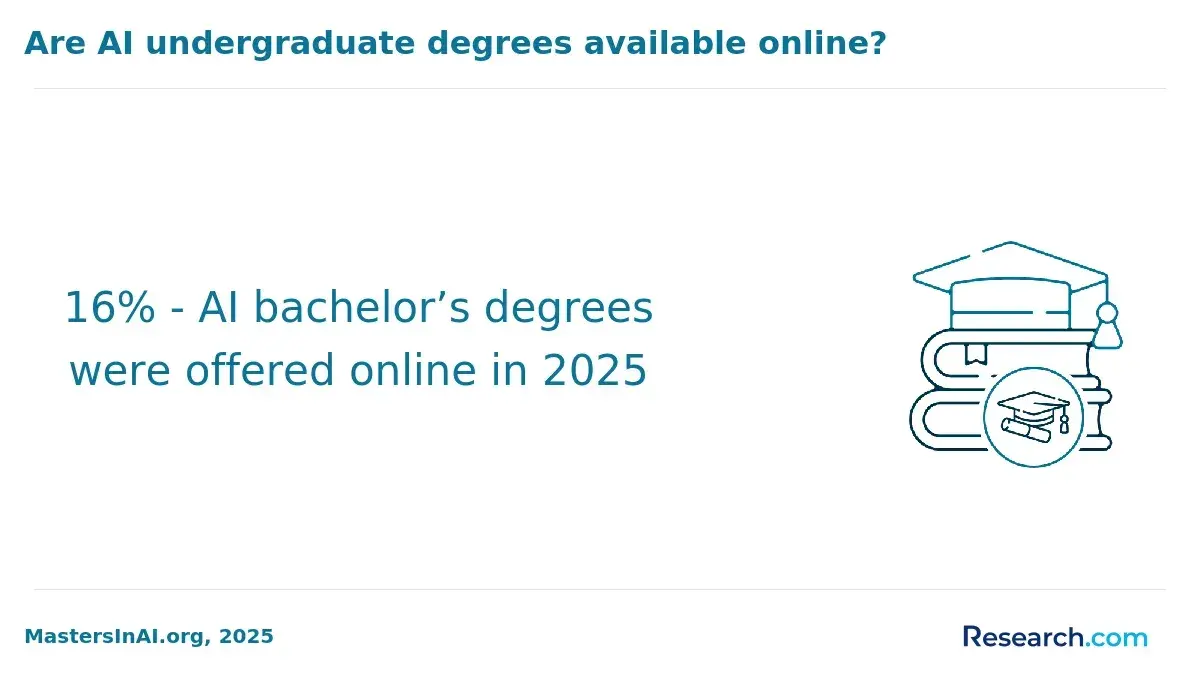
Online ai certificate programs vs campus courses for business analysts reveal clear distinctions in flexibility, cost, and practical focus. Online certificates allow professionals to learn at their own pace without the need to relocate or commute, making them ideal for working individuals. These programs emphasize specialized skills such as machine learning basics, data analysis automation, and AI-driven decision-making, which directly apply to job roles.
Campus courses often require fixed schedules and higher expenses including tuition, housing, and transportation, which may deter those balancing work and personal commitments. Their curricula tend to be broader and more theory-centered, which might not meet the immediate skill demands of business analysts.
The benefits of online ai certification for business analysts are supported by the 2024 Coursera Learner Outcomes Survey, where 77% of learners in AI or data fields reported positive career advancements within six months of completion. Online programs frequently partner with industry leaders, offering current course materials and connections to job boards and internships.
In contrast, campus programs provide immersive academic environments and richer face-to-face networking opportunities that some learners prefer. Business analysts focused on rapid skill acquisition, cost efficiency, and employment impact generally find online certificates more aligned with their goals.
For those interested in related digital arts fields, exploring a video game design degree offers another pathway combining creativity and technology.
What admission requirements do AI certificate and degree programs typically have?
Admission requirements for ai certificate programs typically include a high school diploma or equivalent, while degree courses generally require a bachelor's degree in related fields like computer science, mathematics, engineering, or business analytics. Applicants must demonstrate foundational skills in programming languages such as Python or R, along with knowledge of statistics and data analysis. Some programs also list prerequisite courses in areas like machine learning or database management.
Typical prerequisites for artificial intelligence degree courses often include undergraduate coursework in calculus, linear algebra, and probability, especially for master's programs. Professional experience can sometimes substitute for academic requirements, particularly in certificate programs designed for working professionals. Admissions committees may request resumes that emphasize relevant roles in data analytics, software development, or business intelligence.
Competitive AI programs might also require letters of recommendation, personal statements about career goals, and standardized test scores like the GRE for graduate admission. Part-time and online certificates usually offer more flexible admission standards to accommodate diverse learners.
According to LinkedIn's 2024 Workplace Learning Report, professionals completing multi-course learning paths in AI and analytics certificates are 39% more likely to be promoted within two years than those completing standalone courses. This highlights the value of dedicated programs that carefully assess admission readiness.
For those interested in fields related to technology and engineering, exploring military friendly online electrical engineering degree programs can be a helpful step toward expanding technical expertise.
How long do AI courses for business analysts take, and what do they cost?
AI courses for business analysts vary in length and depth, typically spanning from 4 weeks to 6 months. Shorter online options offer 20 to 40 hours of instruction, ideal for professionals seeking foundational knowledge. More extensive certificate programs often include project-based learning and advanced topics such as data analytics and machine learning, requiring 3 to 6 months of part-time study.
Costs fluctuate depending on the program's scope and provider. Entry-level courses usually range from $300 to $1,000, while professional certificates from established institutions can cost between $1,000 and $3,500. Specialized training in generative AI applications commands higher prices due to its focused content and relevance to business workflows. Many employers support workforce development by subsidizing such training.
Gartner's 2024 Generative AI Impact Report notes generative AI will drive 30% of new digital product revenue by 2026, emphasizing the need for business analysts to develop skills in generative AI's influence on automation and decision-making.
When choosing a course, consider your background and goals: non-technical professionals may prefer shorter, accessible curricula, while those with data science experience might opt for intensive, hands-on programs. Confirm the certificate's industry recognition or accreditation to maximize career benefits.
What core skills and tools should the best AI business analytics courses teach?
AI business analytics courses should equip learners with a strong foundation in statistical analysis, data manipulation, and predictive modeling to support data-driven decision-making. Mastery of programming languages like Python or R is essential, as these enable automation and development of AI algorithms widely used in industry.
Core topics must include machine learning methods such as supervised and unsupervised learning, which are pivotal for business forecasting and customer segmentation. Training in natural language processing (NLP) is crucial for analyzing unstructured data, including customer feedback and social media content. Hands-on skills using SQL for database queries and Excel for initial data exploration also play a key role.
Many courses prepare students for vendor-specific AI certifications offered by Microsoft, Google, and IBM, aligning with industry demands. According to IBM's Global AI Adoption Index, 61% of organizations prioritize hiring or promoting staff with such certifications, highlighting their value in AI-augmented roles.
Beyond technical skills, ethical considerations in AI deployment and effective communication of insights to non-technical stakeholders are vital components. Practical experience through projects, case studies, and platforms like TensorFlow or Azure AI reinforces learning and readiness for complex business challenges.
How can you tell if an AI program or certificate is reputable and accredited?
Verify institutional recognition by checking if the certificate or AI program is offered by an accredited university, college, or recognized professional organization. Accreditation from respected agencies, like the Higher Learning Commission, ensures quality and credibility. For example, certificates from institutions listed on the U.S. Department of Education's database carry more weight than those from unknown providers.
Evaluate curriculum relevance and instructor expertise. Look for programs created by industry professionals that reflect current AI trends such as machine learning, natural language processing, or AI ethics. Courses that update regularly demonstrate alignment with evolving technologies.
Consider the practical value by researching alumni success and employer acceptance. Hands-on components like projects using real-world datasets or case studies are vital for business analysts to develop applicable skills. Studies show that many learners apply these skills to their jobs within months of completion.
Be wary of certificates lacking verification, unrealistic outcomes, or unclear completion criteria. Cross-reference reviews from verified learners and independent education platforms to ensure authenticity.
Finally, confirm if the certificate supports ongoing professional development through continuing education credits or industry endorsements, enhancing career prospects and program reputation.
What AI-focused career paths can business analysts pursue after these courses?
Business analysts with AI-focused training have multiple specialized career paths that leverage data-driven insights and advanced analytics. Key roles include AI business analyst, integrating AI insights into business strategies and optimizing workflows with machine learning tools. Career growth can lead to positions such as data scientist or machine learning specialist, where predictive models enhance trend forecasting and operational efficiency.
Other opportunities include AI product management, managing AI-driven product development based on user data and market trends; AI consulting, advising companies on adopting and scaling AI technologies; and AI ethics and governance, ensuring responsible use of AI systems.
Specializing in natural language processing (NLP) allows work on chatbots and sentiment analysis to improve customer engagement. Expertise in robotic process automation (RPA) helps transform manual processes into automated workflows, reducing costs and errors.
According to the Robert Half Salary Guide, business analysts with AI and machine learning competencies earn 18-22% higher salaries in North America than peers without these skills. This reflects the growing demand for AI proficiency in driving career growth.
Transitioning to AI-focused roles requires not only technical knowledge but hands-on experience with AI-powered tools in business contexts. Graduates and professionals should seek projects blending domain expertise and AI to maximize adaptability in evolving markets.
What salary ranges and job outlook can AI-skilled business analysts expect?
Business analysts with ai skills in the United States typically earn between $75,000 and $115,000 annually, depending on experience, industry, and location. Entry-level roles generally start around $70,000 to $85,000, while professionals with advanced expertise or positions in sectors like finance and healthcare may exceed $120,000. Mid-career analysts who combine ai fluency with strong domain knowledge often command salaries over $100,000, reflecting the value placed on integrating ai in data-driven decision-making.
The job market outlook remains strong, with demand expected to grow more than 20% through 2028 according to the U.S. Bureau of Labor Statistics. This surge is driven by organizations leveraging ai insights to improve operations and strategic planning. Upskilling in ai and data analytics greatly enhances job stability; 72% of employees trained in these fields feel very confident about employment continuity compared to 45% without such training, as noted by PwC's 2024 Global Workforce Hopes and Fears Survey.
To boost earning potential and career resilience, pursuing courses focused on practical ai applications-such as machine learning model interpretation, automation, and data visualization-is essential. Employers seek candidates able to convert ai outputs into actionable business strategies. Ongoing education and certification in recognized ai business analysis programs are vital for advancement.
How should working professionals choose an AI course that fits their schedule and goals?
Working professionals should choose AI courses that align clearly with their career goals and schedules. Prioritize programs offering flexible learning formats such as self-paced modules or evening classes, enabling study around full-time job commitments. Online courses with asynchronous content are especially helpful for integrating learning without disrupting work responsibilities.
Focus on acquiring skills currently in demand; for example, Deloitte's 2025 Tech Trends report projects that by 2027, over 70% of business analyst roles in large enterprises will require proficiency in AI-driven analytics and automation tools, up from 25% in 2023. Selecting courses focused on these areas and relevant software tools increases job applicability and return on investment.
Certification value is essential. Choose programs that offer certificates recognized by major employers or professional bodies, ideally including practical projects or case studies to demonstrate hands-on competence beyond theory.
Consider course length and depth to prevent burnout and fit your learning objectives. Short, targeted certifications suit immediate upskilling, while longer programs support comprehensive career shifts. Testing free trial periods or sample lessons before enrolling helps ensure the content matches your learning style and goals.
Other Things You Should Know About Artificial Intelligence
Industries such as finance, healthcare, retail, and manufacturing see significant advantages from business analysts with AI skills. These sectors rely heavily on data-driven decision-making and automation, making AI knowledge valuable for optimizing operations, improving customer insights, and enhancing predictive analytics.
In 2027, top AI courses for business analysts with certificates include Coursera's "AI in Business" by the University of London, Udacity’s "AI for Business Leaders" nanodegree, and edX’s "Business Analytics with AI" by Microsoft and Columbia University.
Many AI certificate programs for business analysts do not require extensive prior programming experience but understanding basic concepts such as Python or SQL can be beneficial. Some courses offer introductory programming modules to help learners build necessary technical skills alongside AI analytics techniques.
Ethical AI is increasingly integrated into business analyst courses to ensure responsible use of AI tools and data. Training often covers topics like bias mitigation, transparency, and data privacy to prepare analysts for challenges in deploying AI solutions ethically in business environments.
References
- How to Choose AI Courses for Professionals - The Case HQ Online https://thecasehq.com/how-to-choose-ai-courses-for-professionals/
- 16 Artificial Intelligence Career Paths https://www.calmu.edu/news/artificial-intelligence-career-paths
- AI for general business analysts https://community.deeplearning.ai/t/ai-for-general-business-analysts/673573
- List https://www.datacamp.com/blog/best-business-analyst-certifications
- AI Business Analyst Course | Get Future Ready with AI skills https://techcanvass.com/Courses/AI-Certification-for-Business-Analysts
- Are You an AI-Ready Business Analyst? | Analyst Catalyst Blog https://www.iiba.org/business-analysis-blogs/are-you-an-ai-ready-business-analyst/
- Mastering the Business Analyst skills that AI can’t replace https://kaplan.co.uk/blog/digital-skills/mastering-business-analyst-skills-ai-cant-replace
- Top AI courses to supercharge your career | Jotform Blog https://www.jotform.com/ai/ai-courses/
- AI vs Business Analytics Online MBA: Which to Choose https://www.onlinecu.in/blog/cu/online-mba-in-ai-vs-online-mba-in-business-analytics
- Business Analytics with Generative AI - Online | London Business School https://www.london.edu/lbs-online/business-analytics-with-generative-ai