2027 Is Educational Policy a Hard Major? What Students Should Know
Audited and Verified:
Our Editorial and Data Verification Process
Research.com uses government datasets, official education statistics and primary institutional information to support its career and degree guides. Our review process checks factual accuracy, occupational definitions, source dates and the requirements associated with the credentials discussed.
How This Article Was Fact-Checked
Our editorial team verifies salary estimates, employment projections, education requirements and program information against original data providers and official organizations. Salary figures are checked against the relevant occupational definitions and reporting periods. Information about licensure, accreditation and required in-person training is reviewed separately.
Fact-checked and verified on:

Co-Founder and Chief Data Scientist
Educational policy is frequently seen as a rigorous major because of its interdisciplinary character and focus on critical analysis. Roughly 15% of students enrolled in U.S. educational policy programs describe the workload as noticeably heavier than that of other social science majors. This view mirrors both the academic rigor and the analytical abilities needed to navigate complex educational systems and policies.
This article will cover typical course difficulty, workload expectations, and core skills such as research and communication. It will also look at personal factors that shape how challenging students find the major, helping prospective students judge whether educational policy fits their academic strengths and career goals.
Key Benefits of Educational Policy as a Major
- Educational policy offers adaptable coursework that supports career changers and full-time workers returning to school, enabling them to balance professional and academic responsibilities effectively.
- It provides critical analytical and leadership skills, preparing students for diverse roles in education reform, policy analysis, and administration, enhancing both academic and professional growth.
- Students gain confidence managing rigorous research projects and policy evaluations, which are essential for mastering complex issues and succeeding in challenging coursework.
Where Does Educational Policy Rank Among the Hardest College Majors?
Within national difficulty rankings, educational policy is usually considered moderately challenging, placed under the social sciences rather than the more demanding STEM or business fields. Studies that analyze evaluations from more than 150,000 professors and almost 3 million student reviews rank about 46% of education policy professors as hard, pointing to a mid-level workload and academic intensity.
This mirrors its balance between analytical demands, including quantitative analysis and policy evaluation, and considerable writing and critical thinking components. Unlike majors with heavy labs or practicums, educational policy programs usually center on analytical frameworks and empirical research, producing a workload less time-intensive than technical STEM disciplines yet more demanding than many education-specific majors.
The difficulty of educational policy differs considerably based on the type of institution and student background. Research universities with doctoral programs generally provide a rigorous curriculum that emphasizes statistical methods, whereas liberal arts colleges may offer a more conceptual approach.
By comparison, educational policy is less challenging than engineering or advanced science majors, which receive higher difficulty ratings, and business programs that also rank above it. Still, it is viewed as tougher than early childhood or elementary education majors, which students often find easier.
In the end, students with strong quantitative skills or research experience often see educational policy as more approachable, while those from less technical backgrounds may find data and policy analysis more demanding.
What Factors Make Educational Policy a Hard Major?
Several academic and skill-related demands make educational policy a difficult major for many students. Its interdisciplinary nature calls for mastering varied subjects while building advanced analytical skills to address complex educational issues.
- Academic rigor in educational policy programs: Students encounter a curriculum that requires deep understanding across literature, social sciences, sciences, and specialized education policy courses. The focus on critical analysis, applied problem-solving, and synthesizing complex concepts calls for mastery of qualitative and quantitative research methods.
- Workload demands of educational policy majors: Completing at least 30 credits of major coursework in addition to university-wide requirements creates considerable time pressure. Many students also take complementary courses or pursue dual majors, which intensifies the academic burden.
- Analytical complexity: Educational policy programs demand strong research and writing skills to examine multidimensional educational challenges. This means navigating both theoretical frameworks and practical applications, which can be especially demanding at advanced levels.
- Field-specific demands: Honors tracks and advanced projects require maintaining a high GPA (usually 3.3 or above) and completing research that often calls for original contributions to the field. These heightened expectations add to the program's difficulty.
For students considering graduate options that build on this foundation, some may look at a one year masters degree to further strengthen expertise while managing time efficiently.
Who Is a Good Fit for a Educational Policy Major?
Recognizing the right student profile helps support success in an educational policy major, where analytical skills and a commitment to equity are essential. Understanding the best skills for education policy majors can help prospective students prepare for the program's rigorous demands.
- Analytical Thinkers: These students are skilled at examining complex social, political, and economic factors that influence education. Their critical thinking abilities allow them to navigate empirical research and policy analysis with confidence.
- Curious Social Observers: Driven by a wish to understand education systems deeply, they bring a commitment to equity and justice that fuels their academic engagement and real-world problem solving.
- Collaborative Learners: At ease working in diverse teams and community settings, they gain from the program's interdisciplinary nature and strengthen their ability to address educational challenges collectively.
- Students with Interdisciplinary Backgrounds: Those with experience in education, sociology, or political science can use broad knowledge to tackle educational dilemmas, mirroring the kinds of students who succeed in education policy.
- Resilient and Reflective Candidates: Handling demanding assignments and reflective essays requires resilience. These students prepare for roles such as advocates or policy analysts by synthesizing complex information effectively.
For more on choosing the right degree, explore the top online college degrees for seniors.
Educational policy majors frequently encounter challenges because of the interdisciplinary nature and amount of reading and writing involved. Yet, with focused strategies, students can better navigate these demands and improve their academic experience.
- Build core skills early: Develop abilities in analytical reading, writing, and quantitative reasoning to handle complex course materials effectively.
- Adopt consistent study routines: Establish regular study schedules, practice summarizing key concepts, and work with peers to deepen comprehension and retention.
- Manage time proactively: Arrange coursework, internships, and projects using digital tools that help divide large assignments into manageable parts and keep deadlines visible.
- Leverage academic support: Use writing centers, faculty mentorship, and policy-focused seminars to sharpen understanding and receive constructive feedback.
- Gain hands-on experience: Join internships or community programs to link theoretical knowledge with real-world contexts, reinforcing learning and confidence.
Admissions to educational policy programs in the US are moderately competitive, largely because many applicants compete for limited spots. Top-tier schools such as Harvard and Stanford often have acceptance rates between 15% and 20%, while less competitive institutions may admit up to 50% or more. Competition rises in metropolitan areas and government-focused regions where interest in policy careers is strong. Program capacity and prerequisite requirements also play important roles in the selection process.
Selectivity varies widely according to GPA expectations, as most programs require at least a 3.0 undergraduate GPA. Relevant coursework in education or social sciences is usually required, and some programs prefer applicants with prior professional or internship experience, with up to 90% of incoming students having such backgrounds. Growing demand at prestigious institutions has led to tighter admissions standards in recent years.
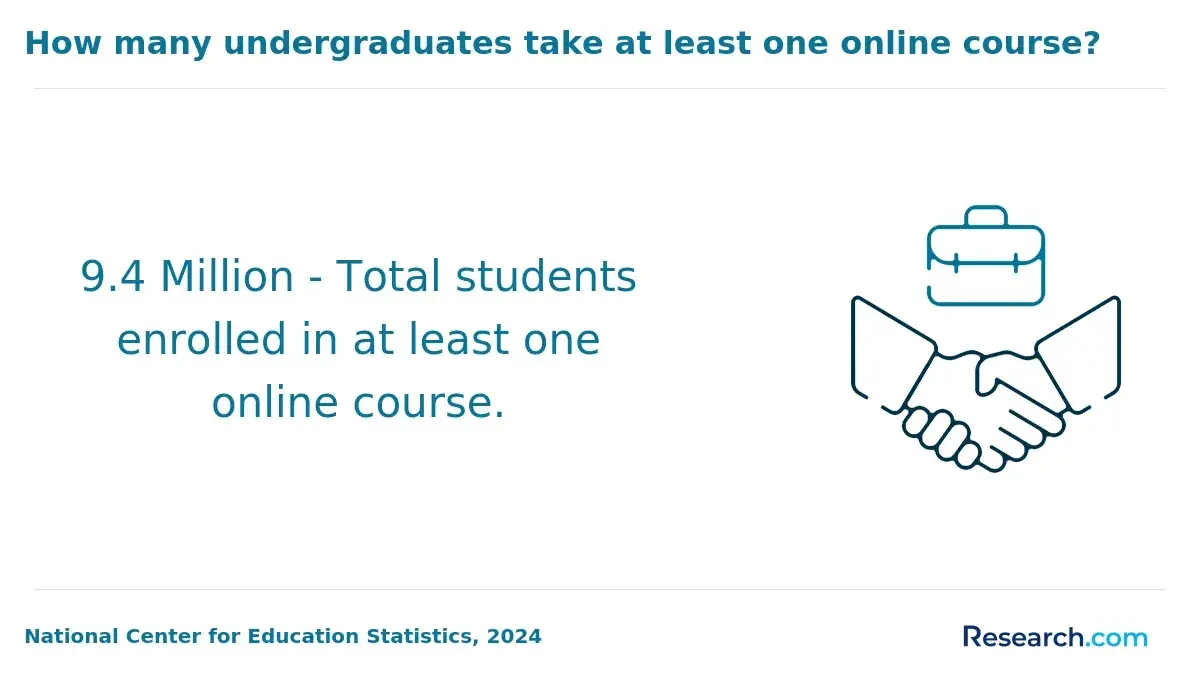
Online educational policy programs are neither always harder nor easier than traditional on-campus majors; instead, the challenges vary by format and individual preferences. Both paths require comparable academic rigor but provide distinct student experiences.
Below is a comparison of key factors that influence the difficulty of online vs on-campus educational policy majors, focusing on academic expectations, workload and pacing, interaction and support, learning environment, and unique challenges.
- Curriculum and workload: Both online and on-campus programs usually follow the same standards, ensuring comparable workload and academic rigor.
- Flexibility and pacing: The flexibility of an online educational policy degree program lets students study at their own pace, which helps those managing work or family but requires strong self-motivation and time management.
- Interaction and support: On-campus students benefit from immediate feedback and face-to-face collaboration, whereas online students often have less direct interaction, making it harder to resolve questions promptly.
- Learning environment: Online learners must handle distractions such as social media and overcome technical difficulties, while on-campus students manage structured schedules and in-person expectations.
- Unique challenges: Technical problems can interrupt online coursework, while on-campus students may face stricter attendance policies and less schedule flexibility.
When weighing the challenges of online vs on-campus educational policy major options, it is important to match the program format with personal learning style and circumstances. For those interested in career outcomes, exploring high earning master's degrees related to policy can also inform decision-making.
Accelerated educational policy programs are usually harder than traditional formats because of their compressed timelines and intensified workload, which require students to absorb material much faster and manage a dense course load. This accelerated Educational Policy program workload increases academic pressure and demands exceptional time management and motivation.
Here is a comparison of accelerated vs traditional Educational Policy difficulty, focusing on key factors that affect student experience:
- Course pacing and content density: Accelerated programs cover a semester's material in as little as five to eight weeks, providing a highly condensed curriculum compared with the gradual pace of traditional programs.
- Workload management for different students: First-time or younger students often find accelerated programs overwhelming, whereas those with prior experience handle the intensity better.
- Academic expectations and skill demands: Both formats require strong analytical and writing skills, yet accelerated programs increase pressure to master and apply policy analysis techniques quickly.
- Learning retention and stress levels: Accelerated formats can advance early milestones such as credit accumulation but may reduce deep understanding and increase stress compared with traditional settings.
- Flexibility and scheduling structure: Accelerated programs offer flexible scheduling suited to working or nontraditional students, while traditional programs provide structured pacing and more consistent academic support.
For students balancing work or family commitments, accelerated programs offer a way to complete studies quickly, though they give up some aspects of the traditional collegiate experience. Those interested in enrolling might consider reviewing online college courses that accept FAFSA to explore adaptable program offerings.
Students majoring in educational policy can often handle a part-time job alongside their studies, though success depends on factors such as course difficulty, weekly academic demands, available schedule flexibility, and strong personal study habits. The workload usually includes varied reading assignments, research projects, and occasional internships, which can cause weekly time commitments to fluctuate.
Those with effective time management and flexible job options tend to balance both responsibilities more easily. However, demanding semesters with advanced policy analysis or project deadlines may limit how feasible it is to work alongside school.
Balancing part-time work with an educational policy program generally involves careful planning around academic cycles and credit selection. Students often choose jobs with adaptable hours, such as campus positions or remote roles, to fit changing study needs.
Managing credit loads to avoid overload during intensive project phases helps sustain academic performance while working. The discipline's mix of reading-heavy coursework, technical assignments, and internship requirements means some weeks are more demanding, making campus or online academic resources valuable for maintaining balance and ensuring steady progress.
The career options open to educational policy majors differ greatly in difficulty, responsibility, and the skills they require. Certain positions call for analytical rigor equal to that of the degree, whereas others seem less rigorous or instead test graduates' leadership and advocacy abilities.
The list that follows covers roles commonly taken up by educational policy graduates, along with a summary of how demanding each one is compared with the major.
- Education policy analyst: Carries out research, examines data, and assesses education policies for government bodies, think tanks, or nonprofit groups. This position is usually as rigorous as the degree, calling for solid research abilities, critical reasoning, and the capacity to pull together complicated information while meeting strict deadlines.
- Educational consultant: Offers guidance to schools or education organizations on putting policy into practice and evaluating programs. The job stresses flexibility and communication, and it tends to be less analytically demanding than policy analysis, with more emphasis on practical answers and relationships with clients.
- School administrator: Supervises personnel, directs daily operations, and applies policies in K-12 environments. This career requires leadership, sound decision-making, and the balancing of varied expectations, so its challenges differ from the analytical rigor of the major.
- Community-based education advocate: Collaborates with community groups to advance educational equity and shape policy at the grassroots level. Although less intellectually rigorous than research positions, this route can be emotionally taxing and calls for perseverance, empathy, and solid skills in community engagement.
- Academic researcher or professor: Performs original research, publishes results, and teaches at the university level. This career is at least as demanding as the major, if not more so, because of continuing expectations for scholarship, obtaining grants, and adding to academic debates.
Career results in education policy span a range from roles centered on analysis to those centered on leadership or advocacy. Such differences shape how difficult jobs seem compared with educational policy jobs and influence earning potential. Data from the National Center for Education Statistics show that education majors, including policy students, report a median GPA of roughly 3.36, a little above average, which suggests somewhat less stringent grading but not a lighter workload or lower analytical demands.
For anyone weighing career choices, gaining an understanding of what can you do with a trade school diploma can help, since certain paths overlap with policy-related education roles that call for a varied mix of skills.
No direct connection exists between higher salaries and the difficulty of an educational policy major. Although this field requires strong analytical abilities and familiarity with legal and social sciences, earnings depend more on how effectively graduates develop in-demand skills such as data analysis and policy evaluation. Academic challenge can improve capabilities, but salary is mainly driven by market demand and the specific job functions graduates pursue. Simply put, tougher coursework does not guarantee better pay.
Several factors shape the salary landscape for educational policy graduates. Industry demand plays a key role, with positions such as education policy analysts or executive directors offering median salaries from around $74,700 to $87,900, but these roles are competitive and not abundant.
Entry-level jobs, such as education researcher or coordinator, tend to pay less, typically between $46,000 and $55,000. Geographic location also affects earnings, with some states reporting educator salaries above $100,000, while others fall short. In addition, having advanced degrees and relevant experience can substantially increase income in this field.
What Graduates Say About Educational Policy as Their Major
- Hayes: "Studying educational policy proved genuinely demanding yet deeply rewarding. The classes compelled me to reason critically about practical problems, and even though the typical price of attendance was hard to handle, it became a valuable investment given the career prospects it created. Today I hold a position that lets me drive meaningful improvement in education, which makes all the hard moments worthwhile."
- Draven: "Learning educational policy required considerable commitment, which sometimes felt overwhelming, particularly when trying to manage substantial tuition expenses. Looking back, though, the experience taught me to grasp in nuanced terms how policies influence education systems, and that knowledge has proved invaluable in the research position I hold now. The financial and academic hurdles were substantial, yet they equipped me well for my professional path."
- Rielle: "The educational policy major came with its own set of difficulties, largely because of the complicated theoretical frameworks and the steep tuition fees involved. Even so, it deeply influenced my personal values and career direction, giving me skills to advocate effectively for fair education. I appreciate the experience, costs notwithstanding, since it genuinely changed the way I see education and policy work."
Other Things You Should Know About Educational Policy Degrees
The majority of educational policy programs call for a supervised internship or practicum totaling 120 to 300 hours in the junior or senior year. Students generally work with a school district, a state education agency, a nonprofit, or a policy office, then submit a reflection paper or final portfolio to receive credit.
Indeed, pursuing educational policy in 2027 frequently includes group assignments. Cooperation and teamwork are necessary when students examine case studies, craft policy proposals, and tackle practical challenges. Such abilities are important for later positions in policy-making, nonprofit organizations, and educational institutions.
Quantitative abilities are crucial within the 2027 educational policy major, since policy analysis frequently requires interpreting data and judging research results. Students need such abilities to gauge program effectiveness, handle education statistics, and guide decisions aimed at improving educational systems.
- Elements of the educational policy model in schools (a systematic review) https://pmc.ncbi.nlm.nih.gov/articles/PMC10127502/
- Education Policy Studies - Not Sure? | Penn State College of Education https://ed.psu.edu/academics/departments/department-education-policy-studies/education-policy-studies-not-sure
- How To Choose Between Online Vs. Traditional Education Programs | PLNU https://www.pointloma.edu/resources/accelerated-undergraduate/how-choose-between-online-vs-traditional-education-programs
- Educational Policymaking Process: From Idea to Implementation | Online Exam Prep https://prep.educom360.com/educational-policymaking-process-from-idea-to-implementation/
- Bridging the gap between policy and practice in education https://oecdedutoday.com/bridging-gap-between-policy-practice-education/
- What Jobs are Available with an Education and Public Policy Degree? – Best Master's in Education https://www.bestmastersineducation.com/faq/what-jobs-are-available-with-an-education-and-public-policy-degree/
- Create Change in Educational Research and Policy | All Education Schools https://www.alleducationschools.com/teaching-careers/educational-research-policy/
- Career Options With A Master's in Education Policy | Resilient Educator https://resilienteducator.com/degrees/career-masters-education-policy/
- Education Policy and Leadership https://education.uoregon.edu/epol
- Are Online Classes Harder than In-Person? https://straighterline.com/blog/are-online-classes-hard