2027 How Long Does It Take to Earn an Online Educational Policy Degree?
Audited and Verified:
Our Editorial and Data Verification Process
Research.com uses government datasets, official education statistics and primary institutional information to support its career and degree guides. Our review process checks factual accuracy, occupational definitions, source dates and the requirements associated with the credentials discussed.
How This Article Was Fact-Checked
Our editorial team verifies salary estimates, employment projections, education requirements and program information against original data providers and official organizations. Salary figures are checked against the relevant occupational definitions and reporting periods. Information about licensure, accreditation and required in-person training is reviewed separately.
Fact-checked and verified on:

Co-Founder and Chief Data Scientist
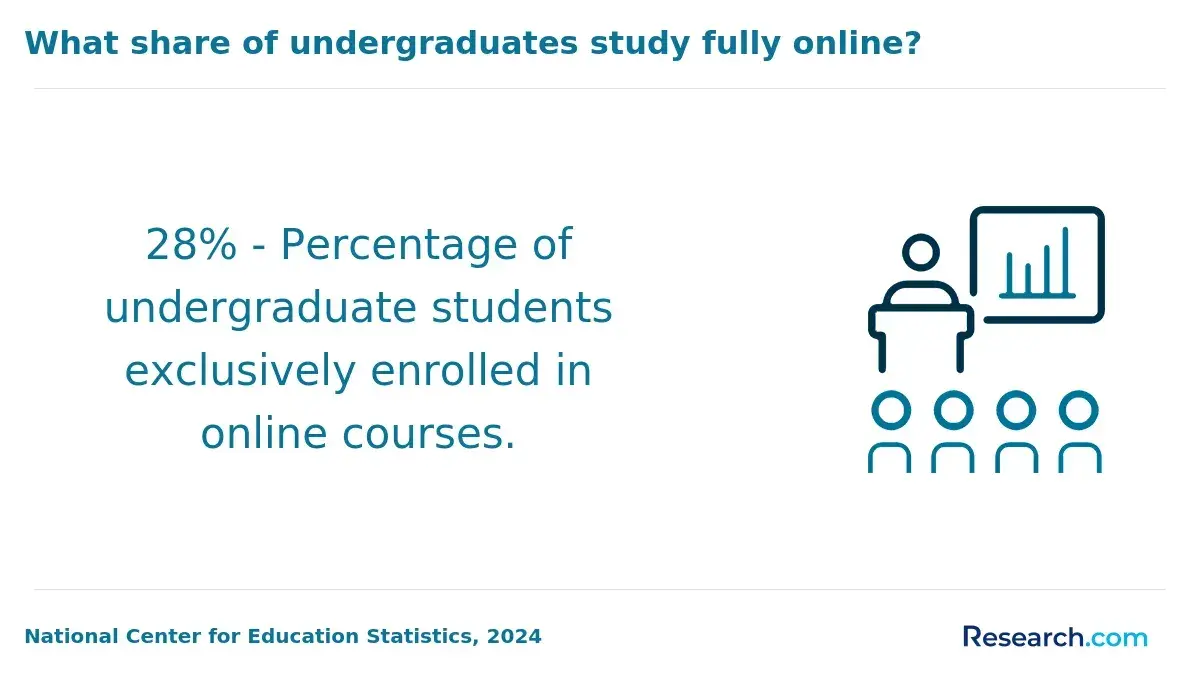
Online education provides exceptional flexibility, making it simpler for busy professionals to move ahead in their careers. Per the National Center for Education Statistics, enrollment in fully online graduate programs has risen steadily by more than 5% each year, a sign of increasing demand for remote learning options. Knowing how long it takes to earn an online Educational Policy degree is important for planning a successful academic path.
This article examines typical completion times, main factors that affect program length, and advice on choosing the right program according to personal goals and schedules. The goal is to support informed, confident decisions about earning this degree online.
Key Benefits of Online Educational Policy Degree
- Most online educational policy degree programs take between 1.5 to 3 years to complete, allowing students to start their careers or advance professionally within a reasonable timeframe.
- Flexible scheduling options help students balance coursework with work or family commitments, making part-time progress common and extending timelines without compromising learning quality.
- Accelerated programs are available that can reduce completion time to about 12-18 months, appealing to motivated learners seeking faster entry into education policy roles.
What is the Average Completion Time for Online Educational Policy Programs?
Online educational policy degree programs usually differ in length according to degree level and format, with completion times spanning from slightly more than a year to several years for part-time study. Knowing the typical time needed to finish online educational policy degree programs can help prospective students plan their academic and professional goals more effectively.
The following is a summary of typical program lengths by degree level.
- Master's in Educational Policy: Most full-time online master's programs in educational policy require roughly two to three years to finish. Accelerated options can cut this to as few as 12 to 14 months, while part-time tracks may lengthen the timeline for working professionals managing several commitments.
- Doctor of Education (EdD) in Educational Policy: Full-time EdD students usually complete online programs in about three years, including both coursework and dissertation research. Accelerated paths or embedded research projects can bring this down to as little as two years. Part-time EdD students generally need between four and seven years, based on their pace and dissertation requirements.
- Specialized or Accelerated Programs: A few institutions provide highly accelerated online degrees in formats such as seven-week courses, allowing completion in slightly more than a year. Such options suit students who want quick certification or who have prior experience, transfer credits, or integrated capstone projects.
Completion times differ because of factors including study pace, program structure, transfer credits, and capstone or dissertation requirements. To get a clearer view of the online educational policy degree program length that fits individual circumstances, prospective students should review specific programs closely and ask for advising.
For students thinking about broader educational pathways, reviewing a comprehensive list of college majors may also offer useful insights.
What Factors Can Affect How Long It Takes to Earn an Online Educational Policy Degree?
The time needed to earn an online educational policy degree differs widely because of several factors that affect how fast students can move toward graduation. Knowing these main influences can help prospective students plan their academic journey more effectively.
The following are the primary factors that affect program length, each helping to speed up or lengthen completion time.
- Enrollment Status (Full-time vs. Part-time): Students who study full-time usually complete their educational policy programs in about three years. By contrast, part-time students often need four to seven years because they balance coursework with jobs or family responsibilities.
- Transfer Credits: Relevant post-master's or Educational Specialist (EdS) credits can shorten the total time required. Acceptance of transfer credits, however, depends on institutional policies and differs by program, so it is important to verify this in advance.
- Course Load and Academic Calendar: Carrying heavier course loads or entering accelerated programs with year-round classes can cut completion time. Some programs allow motivated students to graduate in as few as 24 to 32 months by beginning research early and staying continuously enrolled.
- Dissertation or Capstone Requirements: The size and complexity of final projects strongly affect program length. More demanding research or writing stages can lengthen the timeline as students devote considerable effort to finishing these key components.
- Personal and Professional Commitments: Personal circumstances have a major effect on the online educational policy degree timeline; people who work full-time or support families often select part-time study to preserve flexibility, which naturally lengthens the duration but fits life demands.
- Institutional Policies and Support: Clear degree requirements, flexible credit transfer rules, and access to online courses help students move forward smoothly. Schools that offer strong advising and detailed program maps help minimize unnecessary delays.
For students looking for options suited to their needs, exploring online universities with open admission can expand access and may affect how quickly they finish their studies.
What Are the Different Types of Online Educational Policy Programs Available?
Students looking for online educational policy programs can choose from several degree types and specializations suited to different career goals and educational interests. The main options include the programs below, each meant to prepare graduates for particular roles in policy-making, leadership, or research within the education sector.
- Online master's in educational policy: These programs offer foundational knowledge in governance, policy analysis, and strategic planning. Usually lasting 18 to 24 months, they support part-time or full-time study and fit early- to mid-career professionals who aim to influence policy or move up in administrative roles.
- Online Ed.D. in educational policy: The Doctor of Education degree stresses advanced policy research, data analysis, and leadership skills. Often completed part-time over 2 to 3 years, these programs focus on turning research into actionable policy and are ideal for professionals seeking leadership roles in government, nonprofits, or school districts.
- Specialized concentrations (e.g., K-12 leadership, higher education, rural education): Many programs provide specific tracks to meet needs in district administration, higher education policy, or rural education challenges. These concentrations prepare students for targeted leadership and policy roles in their selected areas.
- Policy research and data analysis programs: Created to build strong analytical and research capabilities, these degrees prepare graduates for roles in policy evaluation, academic research, and data-driven decision-making. They suit students interested in rigorous policy analysis and program assessment.
Online educational policy degree programs in the United States usually require a set range of credit hours for completion, which differs considerably by degree level and individual program structure. Knowing the typical credit hour requirements can help prospective students plan their study timelines and balance their commitments effectively.
The following is a summary of average credit hour requirements by degree level for online educational policy programs.
- Bachelor's degree: Most online bachelor's degrees related to educational policy require about 120 credit hours. Full-time students often finish these programs in roughly four years. Part-time students or those transferring credits may lengthen or shorten this timeframe based on their circumstances and institutional policies.
- Master's degree (M.Ed. or M.A.): These programs generally require 30 to 36 credit hours. Full-time learners commonly complete them within 18 to 24 months, while part-time students may need up to three years or longer. Some programs allow up to six transfer credits, which can shorten the overall duration. Program elements such as theses or practicums can affect credit demands and pacing.
- Educational Specialist degree (Ed.S.): Usually a post-master's credential, the Ed.S. requires roughly 30 credit hours. Students can finish it in one to two years depending on full- or part-time status. Sequential cohort structures and transfer policies for graduate work can affect the timeline and credit load.
- Doctoral degree (Ed.D. or Ph.D.): These programs generally range from 60 to 72 credit hours, including core courses, research, and dissertation credits. Full-time enrollment may lead to completion in three to five years; part-time study often takes longer. Transfer credits and prior graduate coursework can affect both required credits and total duration.
A graduate of an online educational policy degree whom I spoke with reflected on the emotional and logistical challenges of finishing the required credits. They described balancing a full-time job and family responsibilities with semesters full of rigorous coursework. Especially taxing were the times when asynchronous classes required deep engagement late at night, demanding discipline and resilience.
However, the program's structure, including clear credit requirements and flexible transfer options, helped them make steady progress, making eventual graduation a rewarding milestone. Their experience showed how understanding credit hour expectations early can empower students to handle the demands with confidence and sustain motivation throughout their journey.
A typical online educational policy curriculum usually combines foundational and specialized courses designed to give students both theoretical knowledge and practical skills for careers in education policy, leadership, and advocacy.
The following list highlights examples of core courses and subject areas commonly offered in these programs, showing the varied learning focus areas students can expect.
- Public Institutions and the Policy Process: This course examines how public institutions operate and the stages of policy-making, highlighting the development and implementation of education policies across government levels. Students learn to assess policy effects and understand the interaction between education systems and broader societal forces, preparing for roles in policy analysis and government agencies.
- Social, Historical, and Philosophical Foundations of American Education: Focusing on the evolution of education in the U.S., this course explores key social, historical, and philosophical factors that shape current policies and practices. It offers essential context for understanding reforms and ongoing debates within a broader societal framework.
- Organizational Behavior in Educational Settings: Covering leadership, communication, and change management in education, this course builds skills important for leading schools, districts, or policy organizations and fostering equitable environments.
- Program Evaluation: Students gain quantitative and qualitative research methods for evaluating educational programs and policies, learning to gather and analyze data to inform decisions in research, consulting, or government roles.
- Law and Education: This course reviews legal principles and landmark court decisions that affect education, with attention to equity, access, student rights, and governance, all essential for compliance and legal advocacy in policy work.
- Public Finance in Education: Students examine budgeting, funding mechanisms, and economic challenges in education, enabling them to analyze fiscal policies and advocate for fair resource distribution.
- Principles of Education Research: Introducing research design, ethics, and statistical analysis, this course prepares students to produce and interpret evidence-based research that shapes policy.
- Diversity and Equity in Education: Exploring multiculturalism, inequality, and social justice, students learn to create policies that address the needs of diverse populations, a critical area in closing achievement gaps.
- Urban Education Reform: This course explores challenges specific to urban education, including segregation and funding disparities, preparing students to carry out innovative policies for metropolitan school systems.
Online educational policy programs usually offer several start dates during the year, giving considerable flexibility that helps working professionals and busy students begin their studies at a convenient time. This adaptability lets learners pursue their academic goals without waiting for traditional academic calendar cycles.
The following are the most common start schedules for online educational policy programs:
- Traditional Academic Calendar: Many reputable programs, such as those at the University of Michigan and American University, match start dates to the standard academic year, usually beginning in the fall and sometimes in summer or spring. This option fits students who prefer a predictable timeline and want to coordinate studies alongside other commitments.
- Summer-Only or Cohort Starts: Some programs admit students once a year, often in summer, with all students moving through the program together as a cohort. This cohort model, used by the University of Kansas, appeals to learners who seek a structured experience and strong peer connections throughout the program.
- Rolling Admissions: Certain programs review applications on a rolling basis after priority deadlines, admitting students as space becomes available. This flexible schedule helps applicants who need extra time to prepare or who want to start at the earliest opportunity once admitted.
- Monthly or Quarterly Starts: Institutions focused on serving working adults often provide start dates several times a year, sometimes monthly or quarterly. For example, Walden University's PhD in Educational Policy, Leadership, and Management highlights frequent start dates, enabling students to begin coursework year-round and maximize scheduling flexibility.
Accelerated online educational policy programs greatly reduce the time needed to earn a degree compared with traditional formats, giving motivated students a chance to advance their careers more quickly. These programs achieve faster completion through several innovative approaches that streamline coursework and scheduling.
The following are common ways accelerated programs help students finish their educational policy degree sooner:
- Shorter Course Terms: These programs often use condensed course blocks, such as 7-week sessions rather than the usual 15-week semesters, allowing students to take more classes within a year and move through the curriculum faster.
- Year-Round Enrollment: By providing multiple start dates and continuous enrollment, programs let students study through summer and winter terms without breaks, which reduces delays common in traditional academic calendars.
- Transfer Credits: Many programs accept transfer credits from prior coursework or relevant professional experience, allowing students to skip introductory topics and move to advanced courses, reducing total coursework needed.
- Competency-Based Learning: This approach lets students advance as soon as they show mastery, especially helping those with prior knowledge by focusing time only on new material and accelerating overall progress.
- Integrated Capstone or Dissertation: Especially at the doctoral level, integrating project or dissertation work into regular courses lets students complete these requirements at the same time, significantly shortening time to degree.
I spoke with a graduate of an online accelerated educational policy degree who said that managing an intense course load in shorter terms was initially daunting but ultimately rewarding. They described the challenge of balancing full-time work and family responsibilities with rapid learning cycles, noting that the program's flexible schedule and continuous enrollment options were crucial.
The ability to transfer prior graduate credits saved months, and competency-based assessments let them avoid repeating material they already knew well. Despite stressful moments, they valued the seamless integration of dissertation work within coursework, which helped sustain momentum and kept motivation high throughout the program.
Finishing an online educational policy degree faster can greatly affect overall education costs, making it a practical option for many students. Accelerated programs are designed to reduce the time needed to graduate, which often brings tangible financial benefits.
The following are the main ways that finishing an online educational policy degree faster can lead to cost savings and better financial outcomes:
- Lower Tuition Costs: Accelerated programs let students take fewer semesters to complete their degree, reducing total tuition expenses because many institutions charge tuition per credit hour or term. This reduction in tuition from completing an educational policy degree faster can lead to substantial savings compared with traditional timelines.
- Reduced Living Expenses: A shorter program duration means students spend less time paying for housing, food, and other living costs tied to their education. This reduction matters especially for those who might otherwise need to relocate or remain away from work for longer periods.
- Earlier Entry Into the Workforce: Completing a degree sooner lets students start full-time employment or career advancement earlier, providing a quicker return on investment through greater earning potential. This advantage strengthens the cost savings of accelerated online educational policy degree programs by offsetting education costs with earlier income.
- Less Time Off Work: Working professionals gain from accelerated degrees by reducing disruption to their careers. Less time away from work means steady income levels and fewer financial challenges caused by juggling job responsibilities with studies.
For people researching affordable educational options, exploring cheap master degrees online can offer additional insights into cost-effective online programs that fit accelerated timelines.
Graduates can often begin working within weeks to a few months after earning their online Educational Policy degree, depending largely on how long it takes to find employment after online Educational Policy degree completion. This timeline varies by field, such as government, nonprofit, or academia, as well as by current market demand. People with relevant prior experience or professional backgrounds in education or policy analysis usually move into new roles faster.
By contrast, those entering highly competitive sectors or seeking advancement without prior experience may face longer job searches. As a result, job prospects improve considerably when graduates combine their degree with applicable work history.
Online Educational Policy programs are designed to support practical learning alongside employment, which improves online Educational Policy graduate job prospects. Many programs encourage internships, capstone projects, or field experiences, enabling students to build valuable professional networks and gain hands-on skills before graduation.
This immersion helps students show real-world competence and makes the move to employment smoother. Networking with faculty, peers, and industry professionals during study adds another advantage. For those seeking accelerated career paths, exploring short PhD programs online may also offer efficient opportunities to advance in education policy roles.
The average salary for education policy graduates in the US generally ranges from about $49,000 to more than $100,000 annually, depending on career level, experience, and industry. To offer a clearer picture of expected earnings, here is a summary of average salaries by common career paths and roles for people with an online educational policy degree.
- Entry-Level Roles: Recent graduates often start as policy analysts or research assistants, earning between $49,000 and $65,000 annually. Salaries differ by employer type, such as government agencies, nonprofits, or think tanks, as well as by geographic location and prior experience.
- Mid-Career Professionals: Policy analysts with several years of experience or those supervising junior staff can expect salaries from $65,000 to $94,000. Advancement and pay increases often depend on additional credentials, networking, and taking on complex projects.
- Specialized Positions: Graduates who focus on research or advocacy roles, such as senior policy advisors or program evaluators, earn median salaries between $75,000 and $85,000. Specialized skills, including data analysis or legislative affairs, especially in large metro areas, can raise compensation.
- Leadership Roles: Those with advanced degrees (EdD or PhD) may become postsecondary education administrators or academic deans, earning from $69,000 to more than $100,000, with academic deans averaging around $105,462. These roles require significant experience, and pay varies by institution and region.
- Industry Variations: Beyond traditional public sector jobs, opportunities in private consulting, philanthropy, or corporate training often offer higher salaries. People with strong analytical skills and advanced qualifications tend to earn at the higher end of the education policy analyst salary United States spectrum. For more details on career options related to education, see top vocational degree careers.
Here's What Graduates of Online Educational Policy Programs Have to Say About Their Degree
- Jamal: "Earning my online educational policy degree was a transformative experience that let me balance my full-time job while deepening my understanding of the complexities involved in shaping fair and effective education systems. The program's flexibility meant I could engage with coursework and discussions at any time, building a sense of community despite the virtual setting. Now I advocate confidently for policy improvements that genuinely consider underrepresented communities, which is a dream come true for me. This journey has strengthened my passion for equity in education and empowered me to make a tangible difference."
- Isabella: "Studying for an educational policy degree online pushed me to build strong self-discipline and time management skills, especially while balancing family responsibilities. The curriculum expanded my perspective on how legislative decisions affect classroom realities, awakening a desire to influence those decisions directly. After graduation, I secured a role as a policy analyst where I contribute to research that helps shape supportive educational reforms. This program not only strengthened my professional qualifications but also deepened my commitment to improving student well-being across diverse districts."
- Ravi: "As an educator passionate about community impact, enrolling in an online educational policy program gave me unique opportunities to connect with peers nationwide and exchange ideas on educational equity and innovation. The experience strengthened my leadership skills and broadened my understanding of systemic challenges facing schools today. Graduating has opened doors for me to lead initiatives that promote inclusive education policies locally, giving me a profound sense of accomplishment and hope. This program truly enhanced my career trajectory and personal growth at the same time."
Other Things You Should Know About Online Educational Policy Degree Programs
Yes, many online Educational Policy degree programs accept transfer credits. Usually, programs review the content and relevance of prior courses to confirm that they meet their academic standards. Students should consult their chosen institution about specific transfer credit policies.
Most online educational policy degrees conclude with a capstone or thesis worth 3 to 6 credits that takes one term to complete. Many programs require students to examine policy data, write a formal recommendations report, and present findings to a faculty committee.
In 2027, an online Educational Policy degree usually takes 1-2 years for a master's and 3-4 years for a bachelor's, depending on part-time or full-time enrollment. Elements such as program structure and transferred credits can affect the duration.
Some programs include capstone projects, internships, or practicums that offer real-world policy analysis experience. Even fully online degrees may arrange placements locally or through virtual projects, strengthening practical understanding alongside theoretical knowledge.
- How Long Does an Online EdD Program Take? Full-Time vs. Part-Time Options Explained https://snatika.com/single-blog/how-long-does-an-online-edd-program-take-full-time-vs-part-time-options-explained
- Education Policy, M.S.Ed. https://www.gse.upenn.edu/academics/education-policy-msed
- How Long Does it Take to Complete a Master's Degree Online? https://graduate.northeastern.edu/knowledge-hub/how-long-does-it-take-to-get-an-online-degree/
- How the College Credit Transfer Process Works and How it Can Be Improved | ACE Blog https://ace.edu/blog/how-the-college-credit-transfer-process-works-and-how-it-can-be-improved/
- Do College Credits Expire? The Ultimate Guide https://www.edvisorly.com/student-guides/do-college-credits-expire
- 5-great-tips-for-graduating-early-online-education-advantages https://www.waldenu.edu/programs/resource/5-great-tips-for-graduating-early-online-education-advantages
- Master of Education (M.Ed.) in Educational Administration and Policy (Tier 1 School Leadership Track) | UGA Online | Online Degrees, Certificates and Courses https://online.uga.edu/degrees-certificates/master-education-educational-administration-policy-tier-1-school-leadership-track/
- Accelerated Online Master’s Degree in Education (MEd) | Warner Pacific https://www.warnerpacific.edu/programs/master-of-education/
- Education Policy Jobs - Careers & Salaries - School of Education https://drexel.edu/soe/resources/career-path/education-policy/
- Educational Leadership | Accelerated Online https://usm.maine.edu/academics/academic_programs/educational-leadership-online/