2027 Online vs Campus Digital Media Outcomes Report: Graduation Rates, Cost, and Career Trade-Offs

Co-Founder and Chief Data Scientist
An adult learner with 45 transfer credits faces a complex decision when choosing between online and campus-based digital media programs: while online formats often promise accelerated timelines, many accept fewer transfer credits, extending time to degree and inflating costs. A 2024 national survey revealed only 57% of institutions fully accept transfer credits for online digital media degrees compared to 78% for on-campus options, signaling uneven credit recognition. This gap reflects institutional caution toward remote learning quality and creates hidden delays for students seeking efficiency. This article analyzes graduation rates, cost implications, and career outcomes to clarify these critical trade-offs and guide informed decisions.
Key Things to Know About Online vs Campus Digital Media Outcomes
- Online digital media programs show a 12% lower graduation rate than campus-based options, indicating varying student engagement and persistence that may affect credential attainment timelines.
- Employer surveys from 2024 reveal a growing but cautious acceptance of online digital media degrees, underscoring the importance of portfolio strength over delivery mode for initial job placement.
- Cost analyses demonstrate online programs reduce relocation and commuting expenses but often extend time-to-completion, creating trade-offs between short-term affordability and earlier workforce entry.
- Key Things to Know About Online vs Campus Digital Media Outcomes Key Things to Know About Online vs Campus Digital Media Outcomes
- What Are the Biggest Differences Between Online and Campus Digital Media Program Outcomes? Online vs Campus Outcomes
- How Do Graduation Rates Compare Between Online and Campus Digital Media Programs? Comparing Graduation Rates
- Why Do Online and Campus Digital Media Students Have Different Completion Rates? Why Completion Rates Differ
- How Do Online and Campus Digital Media Programs Compare on Total Cost? Total Cost Comparison
- What Hidden Costs Should Students Expect in Online vs Campus Digital Media Programs? Hidden Program Costs
- How Does Financial Aid Affect the Cost of Online and Campus Digital Media Programs? Financial Aid Impact
- Do Online and Campus Digital Media Graduates Have Different Career Outcomes? Comparing Career Outcomes
- How Do Employers View Online vs Campus Digital Media Degrees? How Do Employers View Online vs Campus Digital Media Degrees?
- Which Digital Media Degree Format Offers Better Flexibility for Working Adults? Which Digital Media Degree Format Offers Better Flexibility for Working Adults?
- How Should Students Choose Between an Online and Campus Digital Media Program? Choosing Your Program Format
What Are the Biggest Differences Between Online and Campus Digital Media Program Outcomes?
Graduation rates in online versus campus digital media programs often reflect deeper differences in student demographics and structural support. Campus programs show a median completion rate near 60%, while online cohorts typically graduate around 45%, influenced by higher part-time enrollment and competing adult responsibilities. This gap impacts not only timely graduation but also the total cost incurred, as extended enrollment periods and associated fees can erode any upfront tuition savings that online formats may advertise. For example, a working professional choosing an online program for flexibility may face longer debt exposure and slower career entry compared to a peer enrolled full-time on campus.
The trade-offs extend into career preparation and employer perceptions, which weigh heavily on hands-on experience and network access. Campus students benefit from direct mentoring, internships, and immediate access to collaborative labs, factors that strengthen candidacy for roles demanding teamwork and applied technical skills. Online learners often must navigate limited experiential options or virtual alternatives, which can affect immediate employment outcomes and longer-term earnings trajectories within digital media fields. These dynamics underscore the importance of aligning program choices with one's need for flexibility, career signaling, and the nature of targeted digital media paths, all while considering how SLP programs online and similar models balance these factors differently.
Ultimately, cost and career trade-offs in online and campus digital media education hinge on persistence, program structure, and access to institutional resources. Students prioritizing structured environments and immediate immersion may find greater benefit on campus, supporting faster completion and lower debt, while those requiring pacing flexibility must prepare for extended timelines and proactive self-direction. Prospective learners should critically evaluate how graduation rates comparison in online versus campus digital media programs translates into operational challenges, financial realities, and employer expectations before committing to a delivery format.
How Do Graduation Rates Compare Between Online and Campus Digital Media Programs?
Graduation rates between online and campus digital media programs reveal complex trade-offs shaped by student backgrounds, program delivery, and institutional support mechanisms. For example, the National Center for Education Statistics reports a six-year graduation rate near 62% for full-time, first-time students in campus-based digital media tracks, compared to roughly 45% for fully online equivalents. This disparity often reflects greater challenges for online learners, who frequently balance work and family obligations alongside part-time enrollment, which can extend time to completion or increase stop-out risk. Meanwhile, campus programs typically benefit from cohort structures, in-person advising, and routine faculty interaction that support steady progress and lower dropout rates.
Raw graduation statistics can be misleading without context since online programs' flexibility attracts a broader range of academic preparedness and life circumstances, including adult learners returning after breaks and transfer students with uneven credit applicability. Institutional selectivity and program design also influence outcomes: campus programs may have stricter admissions criteria and highly structured pathways, while online offerings often emphasize asynchronous pacing and less direct oversight, which can challenge student engagement and persistence. Consequently, prospective students should consider how advising availability, cohort connection, and workload management fit their individual situations rather than viewing graduation rates as pure indicators of quality or difficulty.
One student recalled hesitating to choose an online digital media program despite work demands, uncertain if the flexible pace would offer enough structure to avoid falling behind. After consulting with alumni and advisors, they learned that part-time enrollment and limited cohort interaction in the online track made timely graduation harder without proactive planning. Ultimately, the student opted for a hybrid format to maintain some campus engagement while accommodating employment, recognizing the importance of steady academic support and clear milestones for completion amid competing responsibilities.
Why Do Online and Campus Digital Media Students Have Different Completion Rates?
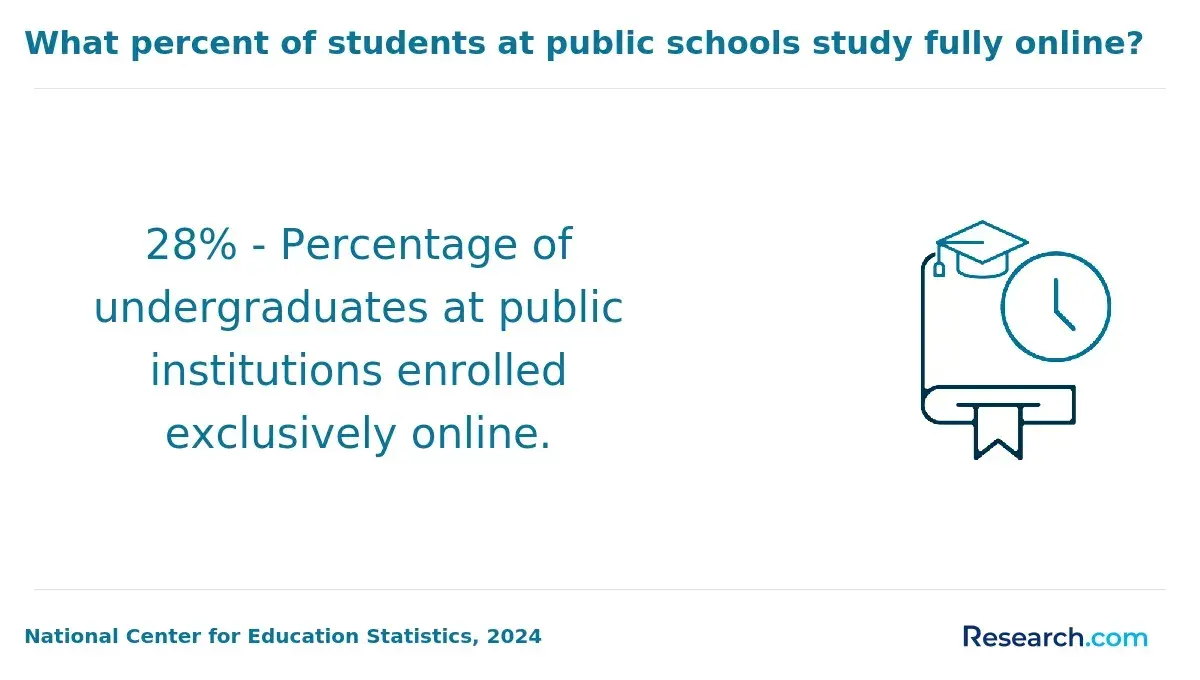
Completion disparities between online and campus digital media students often stem from differences in enrollment patterns and institutional support rather than instructional quality alone. Campus cohorts tend to follow structured course sequences with synchronous classes and benefit from real-time faculty interactions and peer collaboration, which foster continuity and timely degree completion. In contrast, many online learners enroll part-time while balancing jobs or family commitments, leading to prolonged time to degree and higher stop-out risks. The National Center for Education Statistics (NCES) 2024 data highlights this gap with a six-year graduation rate near 62% for full-time campus students compared to about 38% for similar online cohorts, reflecting the compounded challenges online students face beyond academic rigor.
Student demographics also play a central role: online digital media programs often serve a higher share of adult learners, first-generation students, and underrepresented minorities who encounter systemic barriers impacting persistence. Campus environments typically provide embedded advising, cohort models, and tutoring centers that support steady progression, whereas online programs, while improving virtual support, still grapple with students' sense of isolation and less seamless integration into academic communities. Additionally, online learners frequently assemble credits from diverse sources-prior learning assessments or community college transfers-introducing administrative delays that can stall momentum. Prospective students should weigh these trade-offs carefully, considering their schedule stability and need for proactive advising when interpreting graduation statistics and planning their educational pathway.
How Do Online and Campus Digital Media Programs Compare on Total Cost?
Tuition differences between online and campus digital media programs often mask the broader financial implications influencing total cost. Public four-year institutions typically price online tuition 10-20% lower, but mandatory campus fees, housing, meal plans, and transportation for on-campus students substantially increase expenses. For example, a full-time campus student might face annual costs exceeding $8,000 for living and commuting, which online learners avoid. Conversely, online students may incur technology or distance-learning fees, yet these are usually less burdensome than combined campus charges. Understanding these distinctions is critical when assessing total outlay, as substantial ancillary costs can erode online's sticker price advantage.
Cost factors affecting online and campus digital media degrees also include financial aid eligibility and enrollment patterns. Some scholarships prioritize in-person attendance, limiting grant opportunities for online students, while working adults enrolled online can maintain income streams and often access employer tuition support. College Scorecard data from 2024 indicates online graduates borrow about 15% less, but extended program durations common with part-time online study may counterbalance debt savings. Prospective learners can benefit from reviewing these tradeoffs aligned with their career and financial contexts to decide which format optimally supports graduation timelines and debt management. For those exploring flexible credentials within technology fields, resources like a cybersecurity degree online illustrate similar complexities between price, mode of delivery, and outcome.
What Hidden Costs Should Students Expect in Online vs Campus Digital Media Programs?
Comparing online and campus digital media programs requires scrutinizing hidden costs that extend beyond published tuition and can reshape overall affordability. Online learners often face mandatory technology fees, specialized software licenses, and remote proctoring charges-collectively averaging several hundred dollars per year-expenses typically bundled into the campus tuition model. Meanwhile, campus-based students encounter sizable living costs, including housing and meal plans that can add over $12,000 annually, alongside transportation expenses often exceeding $1,500 per year. These indirect costs influence not just budgets but also time management and graduation pacing, as campus students may need to balance part-time work to cover living expenses, potentially affecting academic progress.
These financial trade-offs have material consequences on program selection and career planning. For example, a student living outside a metropolitan area might find that commuting costs and childcare responsibilities make campus attendance impractical despite lower upfront tuition. Conversely, while online programs offer scheduling flexibility, the accumulation of fees for software access, secure testing, and dedicated internet service can erode presumed savings. According to a 2024 National Center for Education Statistics report, nearly 30% of online digital media students incur around $500 annually in additional fees, underscoring how hidden expenses vary by format and can shift a student's total cost of attendance substantially.
A graduate reflected that weighing these factors was complex. Initially enticed by an online program's lower tuition, she hesitated after discovering steep software subscription fees and mandatory remote exam charges that were not clearly advertised. At the same time, she recognized that attending campus full-time would require relocating and absorbing costly housing and transit expenses. After careful budgeting and discussions with advisors, she chose online learning but prepared financially for these hidden costs, acknowledging that the upfront sticker price alone was an incomplete measure of true educational investment.
How Does Financial Aid Affect the Cost of Online and Campus Digital Media Programs?
Financial aid plays a pivotal role in shaping the net cost differences between online and campus digital media programs, but its effects go beyond simple price tags. Campus students often benefit from institutional scholarships tied to residency or on-site participation, alongside assistantships and work-study options that offer both financial relief and experiential value-opportunities less accessible to fully online learners. This disparity means students must assess how aid eligibility intertwines with enrollment intensity and program pacing, especially since campus attendees generally face higher living expenses and tend to enroll full-time, which influences borrowing needs and cumulative debt outcomes.
For many working adults or military personnel, online digital media programs may present a more pragmatic financial aid environment that leverages employer tuition benefits and flexible scheduling, allowing simultaneous income generation and reduced opportunity costs. However, online students might encounter fewer tailored scholarships or dedicated financial advising, potentially increasing reliance on loans or out-of-pocket payments despite generally lower sticker prices and ancillary fees. Comparing financial aid impact on online and campus digital media program costs, therefore, requires careful evaluation of how varied aid structures, eligibility rules, and support services affect not just upfront costs but also long-term debt risk and degree completion speed.
Prospective students navigating these choices should also consider enrollment patterns and federal aid nuances, including FAFSA updates that refine loan packaging in line with family contribution expectations. An analytical understanding of these dynamics-rather than simple tuition comparisons-provides a clearer picture of real value and cost-efficiency. Those seeking a bridge between cost and career outcomes may explore options among top online MBA schools for analogous flexible funding models. Ultimately, comparing financial aid benefits for campus versus online digital media students is an exercise in aligning financial realities with educational and workforce goals.
Do Online and Campus Digital Media Graduates Have Different Career Outcomes?
Employment outcomes for online and campus digital media graduates are closely aligned when programs are properly accredited, with data from the National Center for Education Statistics showing about 78% of online graduates and 82% of campus graduates securing relevant full-time roles within a year. Nevertheless, employer perceptions still favor campus credentials slightly, as 62% of surveyed employers in 2024 associate on-campus experiences with more tangible practical skills, citing hands-on labs and in-person faculty mentorship. This distinction impacts hiring in fields where physical training matters, though many transcripts do not specify delivery format, somewhat equalizing the credential's market value over time.
The decision between online and campus formats often hinges on career goals beyond initial employment. Campus programs typically provide stronger local alumni networks and internship pipelines that can accelerate advancement in regional job markets, while online students benefit from geographic flexibility and the ability to juggle work with study schedules. Career advising access is comparable across formats, but face-to-face job fairs and mentorship are more prevalent on campus, offering relationship-building opportunities that some employers value for ongoing professional development.
Licensure and certification readiness in digital media depends more on program accreditation and specialized training than delivery method, with certain roles requiring physical labs not always available online. Financially, online degrees often incur lower debt due to reduced tuition and no relocation expenses, potentially improving long-term return on investment. Prospective students should weigh practical experience requirements, networking access, and geographic mobility against typical employer expectations to determine which pathway aligns with their professional objectives and lifestyle constraints.
How Do Employers View Online vs Campus Digital Media Degrees?
Employers assessing digital media degrees increasingly focus on accreditation, program rigor, and applied experience rather than just whether a degree was earned online or on campus. A 2024 survey by the National Association of Colleges and Employers found that about 68% of employers regard degrees from accredited online programs as equally credible to campus degrees when the institution has a strong reputation and the curriculum aligns with industry expectations. Hiring managers often scrutinize internship opportunities, project portfolios, and practical assignments as key indicators of a candidate's readiness, with clear transcript and diploma wording helping to mitigate lingering skepticism around online credentials.
In practice, campus graduates may enjoy some advantages in early career stages due to access to networking and on-site career resources, which can lead to marginally faster job placements or promotions. This disparity, however, diminishes when online learners accumulate substantial work experience or present robust portfolios tailored to employer needs in digital media. Employer familiarity plays a critical role as well: recruiters with prior exposure to graduates of specific online programs tend to evaluate those credentials more confidently. Consequently, students should weigh factors such as experiential learning components and the visibility of collaborative work when deciding between online and campus formats, as these elements can influence employer perception and career trajectories differently depending on industry norms and individual backgrounds.
Which Digital Media Degree Format Offers Better Flexibility for Working Adults?
The key flexibility advantage for working adults choosing between online and campus digital media degree options lies in how each format manages scheduling constraints and practical commitments. Online programs often reduce commute burdens and allow asynchronous coursework, which can be essential for students juggling shift work or caregiving duties, yet these programs may still require synchronous sessions, proctored exams, or fieldwork that limit true schedule control. Campus programs typically demand more fixed attendance and commuting, but offer greater access to faculty, specialized equipment, and peer networking through cohort models, which some learners find crucial for mastering technical skills and maintaining motivation.
Flexibility has clear consequences for persistence and graduation; online digital media students face a 6% lower completion rate compared to campus students, reflecting challenges in self-directed learning and engagement despite fewer bureaucratic barriers to part-time enrollment or stopping out. These trade-offs can directly affect total cost exposure and time-to-degree, especially for adults balancing fluctuating work demands. For those prioritizing uninterrupted career continuity and minimal campus visits, online formats hold an edge, but the potential value of immersive, hands-on learning and peer cohort support in campus programs may justify the logistical challenges for others pursuing career flexibility.
Working adults researching flexible digital media degree options for working adults should weigh the impact of program design on employability and long-term outcomes, including how industry expectations align with experiential learning opportunities. Some learners may even explore alternatives such as doctoral programs without dissertation to deepen expertise while maintaining professional commitments, underscoring how tailored academic paths intersect with career realities in evolving media industries.
How Should Students Choose Between an Online and Campus Digital Media Program?
Graduation rates typically favor campus digital media programs, which show completion rates 10-15 percentage points higher than fully online counterparts, reflecting how course sequencing, structured access to labs, and in-person faculty support impact persistence. However, for working adults balancing jobs or caregiving, the flexibility of an online format can outweigh this gap, even though it demands greater self-management and often results in higher dropout risks. Students must weigh total cost beyond tuition alone; campus attendance incurs commuting, housing, and fees that can push annual spending over $30,000, while online programs reduce some expenses but may require costly technology investments, shifting the overall financial calculus substantially. This cost comparison is critical when comparing graduation rates and costs of online versus campus digital media programs.
Access to internship placements, networking, and employer expectations also influence return on investment, especially in digital media fields where portfolio building and industry connections drive career outcomes. Campus programs facilitate face-to-face networking and spontaneous collaboration that many online students must replicate through digital channels and virtual career services. A 2024 survey by the U.S. Department of Education found that over 70% of employers in technical fields accept accredited online degrees as equivalent, provided practical components are included-highlighting the importance of program design over format alone. Prospective learners should assess their need for direct interaction, structured environments, and flexible scheduling against career goals to optimize both academic success and labor market outcomes, particularly when navigating the trade-offs inherent in digital media program selection. For further insight into related career implications, reviewing resources on forensic career paths and salary may offer useful parallels in evaluating educational investments.
References
- Navigating Education: Unraveling the Pros and Cons of Online Courses vs. Campus Learning https://lset.uk/blog/navigating-education-unraveling-the-pros-and-cons-of-online-courses-vs-campus-learning/
- In-Person Learning vs. Online Learning: Which Is Right for You? | ACE Blog https://ace.edu/blog/examining-in-person-instruction-from-a-virtual-mindset-what-can-we-improve/
- Online College Tuition Comparison: Online vs. In-Person https://www.uagrantham.edu/blog/online-college-tuition-comparison-online-vs-in-person/
- Can You Get Financial Aid for Online College? Finding Out https://beal.edu/can-you-get-financial-aid-for-online-college/
- [PDF] DIGITAL COMPETENCES OF UNIVERSITY GRADUATES https://www.ht.csr-pub.eu/index.php/ht/article/download/93/80
- 6 Surprising Things Students Said About A Year Of Online Learning https://ubisglobal.com/blog/6-surprising-things-students-said-about-a-year-of-online-learning/
- How Employers View Online Degrees: Interviews with Nine Hiring Executives https://www.onlineeducation.com/features/how-employers-view-online-degrees
- How Online Learning Helps Adults Change or Advance Careers https://www.eucdl.com/post/how-online-learning-helps-adults-change-or-advance-careers
- Why online learning is more efficient and cost-effective https://gamestrategies.io/en/blog/why-online-learning-is-profitable-and-efficient-for-companies/
- A new way to look at the costs of digital media in education | Tony Bates https://www.tonybates.ca/2015/01/09/a-new-way-to-look-at-the-costs-of-digital-media-in-education/
Other Things You Should Know About Digital Media
The practical skills in digital media often hinge on access to specialized equipment and collaborative projects, which tend to be more structured and consistent in campus settings. Online programs may rely heavily on simulations or software-based assignments, which can limit exposure to real-time, team-based problem solving. Prospective students should weigh whether the program's approach to experiential learning aligns with industry expectations-for careers requiring strong portfolio work or teamwork, campus programs often provide clearer advantages.
Campus programs naturally facilitate face-to-face networking with peers, faculty, and visiting professionals, supporting long-term industry connections. Online students face challenges creating the same depth of relationships due to asynchronous schedules and limited informal interaction. For digital media careers reliant on collaborations or referrals, prioritizing programs with robust, synchronous networking opportunities-even if online-can mitigate this drawback.
Online digital media programs often demand greater self-discipline, as students manage flexible deadlines and independent projects without immediate instructor oversight. Campus courses typically have a fixed schedule and more immediate feedback, which can help maintain consistent progress. Students less confident in managing open-ended tasks may find campus formats better suited to sustaining momentum and meeting rigorous project deadlines.
While employer biases have diminished, some hiring managers in creative industries still prefer degrees from campus programs due to perceived rigor and direct collaboration experience. However, online programs accredited and integrated with industry tools can equalize this gap over time. When possible, choosing a program with strong industry partnerships or internship options can outweigh format concerns and improve hiring prospects.