2027 Digital Media Degree Completion Time Report: How Long Students Actually Take to Graduate

Co-Founder and Chief Data Scientist
Many students pursuing a digital media degree encounter variable timelines shaped by factors beyond credit requirements. Work obligations, internship opportunities, and shifting personal circumstances often extend the traditional path. According to the National Student Clearinghouse Research Center's 2024 report, nearly 40% of undergraduates nationwide take longer than six years to graduate-a trend influenced by stop-outs, transfers, and part-time enrollment.
In digital media fields, hands-on projects and technology learning curves further complicate pacing. Understanding these realities provides clearer expectations than relying solely on catalog durations. This article examines how long students actually take to graduate, the common influences on their progress, and patterns relevant to educational planning.
Key Things To Know About Digital Media Degree Completion Time
- Pinpointing your graduation timeframe allows you to strategically target rapid-growth media careers, such as user experience (UX) designer, digital content strategist, social media manager, or multimedia specialist. Establishing a firm completion date ensures you can build an industry-ready portfolio and time your applications perfectly with seasonal agency and tech hiring cycles.
- Projecting your exact graduation date helps you map out your immediate return on investment, given that digital media degree holders earn a median salary of around $60,000 per year. Knowing this timeline also helps you chart long-term career progression into advanced roles like web and digital interface design, where median wages jump to over $98,000.
- Clarifying your completion schedule makes it easier to leverage the structural benefits of an online program, allowing you to choose between accelerated terms or flexible, self-paced learning. This structural control enables you to gain continuous hands-on experience at production studios or agencies while finishing your coursework, ensuring you graduate without missing out on full-time income.
- What Is the Average Graduation Time for Digital Media Students? Average Graduation Timeline
- What Factors Have the Biggest Impact on Graduation Speed? Graduation Timeline Factors
- How Does Full-Time Versus Part-Time Enrollment Affect Graduation Timelines? Full-Time vs. Part-Time Graduation Timeline
- Do Online Digital Media Students Graduate Faster Than Campus-Based Students? Online vs. On-Campus Graduation Timeline
- How Many Months or Years Can Transfer Credits Save? Transfer Credits
- Do Accelerated Digital Media Programs Significantly Reduce Completion Time? Accelerated Program Timeline
- Does Taking Longer to Graduate Increase the Cost of a Digital Media Degree? Impact on Program Cost
- Does Graduating Faster Improve Career Prospects? Impact on Career Prospects
- Which Scheduling Mistakes Commonly Delay Graduation? Mistakes to Avoid
What Is the Average Graduation Time for Digital Media Students?
The average graduation time for digital media students in the United States typically centers around four and a half years for full-time enrollees at four-year institutions, reflecting recent data from the National Center for Education Statistics. This figure accounts for common delays caused by part-time attendance, where students often extend their studies by an additional one to two years due to work responsibilities or personal commitments.
Typical degree completion timelines for digital media programs therefore vary significantly depending on whether a student maintains full-time status or balances their coursework with external obligations, influencing both progress and overall time to degree.
Variation in graduation timelines is driven largely by program design elements such as integrated internships, capstone projects, or technical workshops that add semesters but enhance real-world skills and employability. Conversely, accelerated or competency-based programs may shorten the path but require intense study schedules that not all students can sustain. Transfer students often experience extended timelines due to credit transfer issues and adapting to different curricula, further complicating time-to-degree estimates.
Enrollment format-whether online or on-campus-also factors into these differences, especially as online programs may offer greater scheduling flexibility yet demand heightened self-discipline. Students contemplating their academic journey should carefully weigh these structural and personal variables alongside employer expectations that prioritize relevant experience equally with formal credentials.
These graduation timelines carry broader implications for academic planning and financial investment, influencing when students can enter the workforce and begin practical career-building. Delays in completion affect not only tuition costs but also opportunity costs tied to foregone earnings or delayed employment. Understanding the interplay between enrollment patterns, program requirements, and career goals enables students to make informed decisions about pacing their studies.
For those seeking condensed options, exploring alternatives such as 1 year MSW programs online in related fields may illustrate the tradeoffs between duration and depth of preparation.
What Factors Have the Biggest Impact on Graduation Speed?
Graduation speed in digital media degree programs results from a complex interplay of factors rather than any single variable. Academic planning choices, institutional policies, student enrollment behavior, and external life demands all combine to shape how quickly a student can finish their degree.
Understanding these influences provides a more realistic perspective on graduation timelines and helps students make strategic decisions regarding course loads, enrollment status, and program formats tailored to their circumstances.
- Enrollment Status and Course Load: Full-time enrollment significantly accelerates degree completion because students accumulate credits more quickly. A 2024 report by the National Center for Education Statistics indicates that roughly 60% of full-time bachelor's students in arts and media-related fields graduate within six years, compared to substantially lower rates for part-time students. Part-time enrollment often reflects competing priorities such as work or family, which stretches out study timelines.
- Credit Transfer and Prior Academic Preparation: Students entering with transfer credits or Advanced Placement credits can reduce total course requirements, shortening time to graduation. However, inconsistent credit acceptance policies across institutions create unpredictability, often causing delays. This factor is critical for transfer students who must navigate institution-specific evaluations before realizing a potentially accelerated path.
- Program Structure and Flexibility: Programs offering asynchronous or competency-based learning enable individualized pacing, allowing motivated students to accelerate their course completion. Conversely, programs with fixed course sequences, limited semester offerings, or prerequisites can create bottlenecks that prolong graduation timelines. The alignment of course availability with student scheduling needs is a decisive institutional influence.
- Work and Life Obligations: Many digital media students are working adults balancing employment, family, and education. Employment obligations often compel students to extend their programs to maintain manageable workloads. This balancing act directly slows graduation speed but may enhance practical skills development, reflecting an important tradeoff between immediate completion and career readiness.
- Financial Stability and Academic Advising: Financial constraints that interrupt enrollment can delay degree completion substantially. Continuous engagement with academic advisors correlates with more consistent on-time graduation, as advisors help students navigate complex degree requirements, transfer policies, and administrative hurdles. Institutional support systems therefore play a vital role in smoothing progression.
- Employer Expectations and Experiential Learning: In digital media fields, employers often prioritize updated technical skills and relevant experience, encouraging students to add internships, certifications, or portfolio projects alongside coursework. While this can extend time to graduation, it enhances long-term employability and job market readiness, illustrating a strategic tradeoff between speed and depth of preparation.
For prospective students weighing their enrollment strategies, a clear-eyed understanding of these factors-especially how enrollment status affects graduation speed in digital media programs-and their interactions offers a foundation for better academic planning. Those interested in broader educational pathways might also explore specific professional trajectories such as an MLIS degree, which similarly involve considerations of pacing, coursework, and career integration.
How Does Full-Time Versus Part-Time Enrollment Affect Graduation Timelines?
Full-time enrollment in digital media degree programs generally leads to more predictable and shorter graduation timelines, often aligning with the traditional four-year schedule. Students taking a full course load per term benefit from consistent credit accumulation and more immediate access to sequential required courses, which helps maintain academic momentum. Part-time students frequently face extended degree durations, sometimes exceeding six years, as they must balance fewer credits with external obligations like employment or family.
According to the National Center for Education Statistics in 2024, part-time students encounter limited scheduling flexibility and reduced institutional support, factors that contribute to slower progress.
Several interrelated factors dictate how enrollment status impacts completion speed. The number of credits attempted per semester directly affects how rapidly students can advance, but course availability and sequencing within programs also play crucial roles. Many digital media programs limit when core classes are offered, constraining part-time students' ability to enroll in needed courses every term.
Beyond program structure, personal circumstances such as work schedules and caregiving responsibilities often restrict part-time learners, reducing their ability to maintain steady academic engagement. Institutional support mechanisms-including advising and flexible scheduling-can alleviate some challenges, yet these services vary widely and often favor full-time enrollees.
Choosing between full-time and part-time enrollment influences not only graduation timing but also academic intensity, financial planning, and workforce entry. While full-time study tends to accelerate degree completion and quicker access to career opportunities, it demands a higher immediate time and financial commitment. Part-time paths allow integration of work experience alongside studies but delay credential attainment, which may affect earning potential and progression in fast-moving digital media fields.
Workforce stakeholders often weigh demonstrated skills heavily, but a formal degree's timely completion remains a vital credential signaling readiness in competitive job markets.
Do Online Digital Media Students Graduate Faster Than Campus-Based Students?
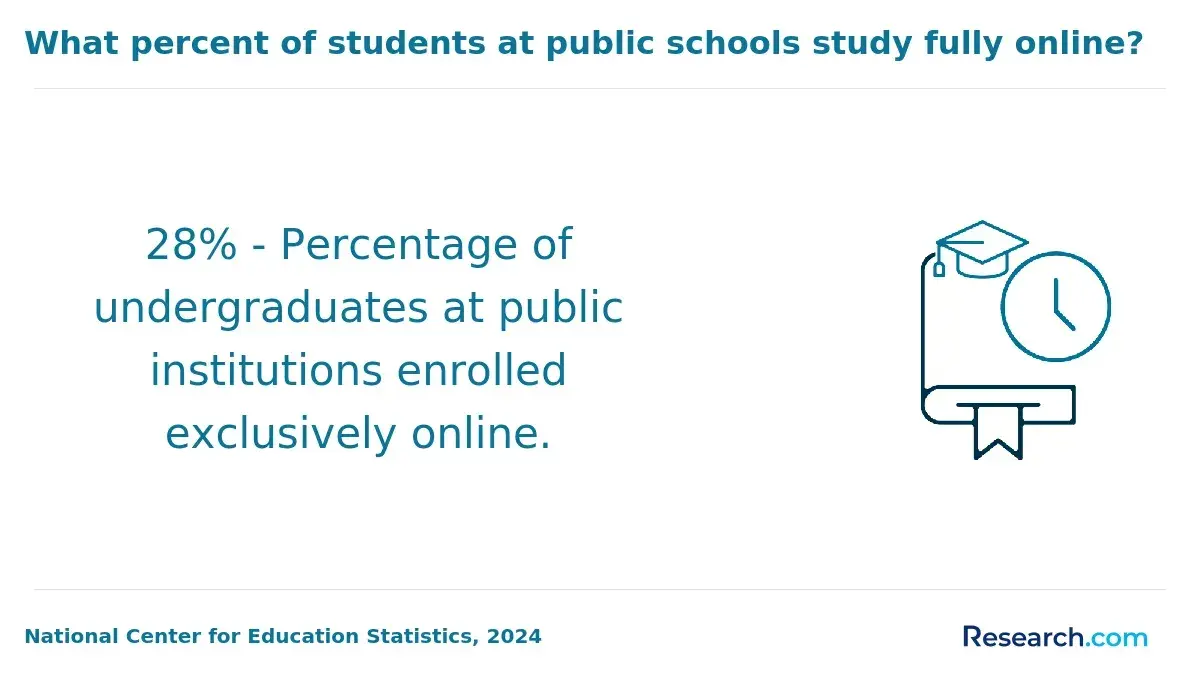
There is a prevailing perception that online digital media students tend to complete their degrees faster than their campus-based peers, but the reality is nuanced and varies significantly across institutions and individual circumstances. Data from the National Center for Education Statistics in 2024 reveals that approximately 65% of students in fully online digital media programs graduate within four years, compared to about 55% for traditional on-campus programs.
However, these figures mask important variability influenced by program design, student preparedness, and the flexibility afforded by each modality. Faster completion rates online often reflect the availability of accelerated course schedules and year-round enrollment options rather than an inherent advantage of the modality itself.
Key drivers of graduation speed include the degree of scheduling flexibility and the structure of course delivery. Online programs frequently offer asynchronous lessons and the ability to enroll in intensive courses outside standard academic terms, thereby enabling motivated or working students to progress at an individualized pace. In contrast, campus-based programs may impose stricter semester schedules and require in-person attendance, limiting the ability to accelerate.
Enrollment status-full-time versus part-time-also impacts timelines, as working adults balancing jobs or family obligations often opt for part-time study regardless of modality. Additionally, internship or practicum requirements commonly tied to in-person programs can extend time-to-completion, while online formats might provide more options for virtual or flexible work experiences. Ultimately, student time management and motivation remain critical determinants of whether an online or campus-based path leads to earlier graduation.
The choice between online and campus-based digital media study affects more than just scheduling; it also shapes how students manage academic discipline and balance competing life demands. Online learners must exercise greater self-regulation without the regular structure of face-to-face classes, which can lead to both accelerated progress for some and delays for others.
Those who thrive under less direct oversight may finish sooner and enter the workforce faster, but students requiring in-person engagement often find campus environments better suited to maintaining consistent progress. The modality selected should align with the student's ability to manage pacing, external responsibilities, and the specific curricular expectations that influence long-term career entry timing.
How Many Months or Years Can Transfer Credits Save?
Transfer credits can notably shorten the duration required to complete a digital media degree, but the actual time saved varies widely, typically spanning from a few months up to more than a year. According to data from the National Student Clearinghouse Research Center (2024), students transferring 30 to 60 credits often reduce their graduation timeline by approximately one to two years compared to those starting without prior credits.
However, this impact depends heavily on how well those transfer credits align with the core degree requirements rather than electives alone. When foundational courses like general education and introductory media theory are accepted, students may bypass significant course loads, accelerating their progression through the program.
The extent of time saved through transfer credits is primarily influenced by institutional policies, accreditation compatibility, and the equivalency of transferred coursework. Many digital media programs impose limits on transferable credits, commonly capping transfers at 50-75% of total degree requirements to preserve program integrity and comply with residency rules.
Additionally, credit acceptance requires a thorough evaluation to ensure transferred courses match the curriculum standards of the receiving institution, which means that misalignment or outdated coursework can reduce transferability. Program structure is also critical; mandatory hands-on or specialized digital media courses often must be completed onsite or through approved online formats, limiting total time reduction despite credit transfers.
These factors shape not only how many months or years transfer credits save but also influence academic planning and financial investment decisions. Students must navigate sequencing of remaining coursework carefully to avoid delays caused by prerequisite dependencies or limited course offerings. Workforce considerations likewise play a role-while accelerated graduation may appeal to some, employers typically emphasize demonstrated competencies over speed, reinforcing the need for comprehensive skill development within digital media curricula.
For students evaluating their options, including those interested in programs like the shortest MBA, understanding these nuances helps frame realistic expectations about the transfer credit impact on digital media degree completion time.
Do Accelerated Digital Media Programs Significantly Reduce Completion Time?
Accelerated digital media programs aim to reduce traditional degree timelines by condensing coursework that might typically span four years into two or three. These programs restructure curricula to increase course density and pace, often requiring students to carry heavier class loads or progress through terms with fewer breaks. The design intends to streamline the academic path without sacrificing essential foundational knowledge or practical components, but the effectiveness of such compression depends heavily on institutional structures and how prerequisite courses and project requirements are managed.
Actual time savings hinge on several critical factors. If accelerated pacing results in a significant increase in term credit loads while maintaining internship or capstone components, students might experience genuine reductions in completion time. However, rigid prerequisite sequencing and fixed experiential requirements can limit flexibility, forcing some students to extend timelines despite the compressed curriculum.
Furthermore, the intensity of accelerated courses can lead to greater stress or the need for course retakes, both of which counteract the expected acceleration. The balance between academic workload and available student resources, such as advising and support, also plays a decisive role in whether accelerated programs deliver on their promise.
Trade-offs in accelerated formats often manifest as higher weekly study demands and reduced scheduling flexibility, which can impact students who are working or managing other responsibilities. While faster completion is appealing, it can compromise the depth of learning and reflection critical to developing robust skills in digital media fields. Students must weigh the operational pressures of dense course timelines against the benefits of thorough skill acquisition and practical experience, which employers frequently prioritize over mere speed of graduation.
Does Taking Longer to Graduate Increase the Cost of a Digital Media Degree?
Extended completion timelines for a digital media degree often increase the total tuition and related expenses, particularly in institutions that charge fees per term or credit hour. Students taking longer may face higher cumulative tuition charges and lose access to financial aid packages designed with standard four-year graduation expectations, elevating their out-of-pocket costs. The added semesters can generate indirect costs as well, including updated technology fees and ongoing software subscription expenses essential for keeping pace in this rapidly evolving field.
Such delays also defer full-time employment start dates, which can, according to the National Center for Education Statistics, translate into substantial opportunity costs beyond direct educational expenses. This dynamic contributes to the broader issue of digital media degree completion costs becoming significantly higher for students who extend beyond typical timelines.
However, the relationship between extended graduation time and total cost is not uniformly straightforward. Some programs use flat-rate tuition or offer pricing models that accommodate part-time enrollment at consistent per-credit rates, enabling students to pace their studies without steep financial penalties. Additionally, employer tuition assistance or flexible institutional policies can mitigate cost increases.
Importantly, students' enrollment decisions-such as course load adjustments-play a crucial role in the accumulation of expenses and the timing of entering the workforce, whose salary prospects vary widely depending on market demand and skill currency.
Prospective students weighing pace and cost considerations may explore pathways like the quickest cheapest master's degree options to optimize outcomes within the context of digital media degree completion costs and the impact of extended graduation time on digital media tuition.
Does Graduating Faster Improve Career Prospects?
Graduating faster from a digital media degree program can enable earlier entry into the workforce and potentially shorten the job search period. However, employers rarely assess candidates based solely on how quickly they completed their degree. The average time to graduate digital media degree programs generally reflects a balance between academic depth and practical experience, and accelerated timelines may signal efficiency but not necessarily readiness or skill. Hiring managers typically consider a broader mix of factors beyond simple time-to-degree when positioning candidates for early career roles.
Whether faster graduation improves career prospects depends largely on internship exposure, the quality of a candidate's portfolio, mastery of relevant skills, and professional networking within the industry. Firms prioritize applicants who demonstrate proven, hands-on creative problem-solving and adaptability, as evidenced by substantial work samples and meaningful experiential learning. Research from labor market analyses shows faster completion offers limited advantage if it compromises opportunities to build these critical career assets. For many students, balancing speed with industry-aligned skill development is more significant than the graduation date itself.
Trade-offs between accelerated degree timelines and experiential depth have broader implications. Extended study periods might allow for specialization or cross-disciplinary skills that enhance long-term employability and career resilience. Rather than focusing narrowly on time saved, students should consider how their graduation speed aligns with building a competitive profile that meets employer expectations.
For a detailed perspective on how career outlooks and salaries compare in related fields, see the FBI criminal profiler salary overview for an example of workforce signaling influencing hiring outcomes.
Which Scheduling Mistakes Commonly Delay Graduation?
Graduation delays in digital media programs frequently stem not from academic difficulty but from avoidable scheduling and enrollment planning mistakes. These issues can affect students across associate, bachelor's, and certificate programs as well as those studying online or on campus. Recognizing how course sequencing, credit load management, and institutional policies interact to disrupt academic momentum is critical to maintaining consistent progress and avoiding extended time-to-degree.
- Improper Sequencing of Prerequisite Courses: Many digital media curricula enforce strict prerequisite chains, and skipping foundational classes leads to blocked registration for advanced courses, resulting in unplanned semesters off or repeated classes. This often arises when students underestimate or bypass academic advising, ignoring semester-restricted course availability.
- Inconsistent Credit Loads Per Term: Overloading credits can cause burnout and course withdrawals, whereas underloading slows progression by extending required terms. Working adults, in particular, struggle to balance workloads and academic demands, intensifying this dilemma. Research from the National Student Clearinghouse Research Center in 2024 highlights that nearly 31% of creative arts students exceed six years for a four-year degree largely due to uneven credit accumulation.
- Transfer Credit Misalignment: Transfer students confront administrative gaps like unclear credit equivalencies or missing articulation agreements, forcing course repetition or added requirements. Without careful transfer planning, these structural barriers elongate degree timelines despite prior coursework.
- Poor Integration of Experiential Components: Internship, portfolio, and capstone requirements often demand precise timing within the curriculum. Failure to schedule these practical experiences appropriately delays graduation since these are mandatory for program completion and future employability.
Other Things You Should Know About Digital Media
Opting for specialized electives in niche digital media areas often means fewer alternative course options if scheduling conflicts arise, which can extend graduation time due to limited flexibility. Broad foundational courses typically have more frequent offerings and can be substituted more easily, helping maintain steady progress. For students prioritizing timely graduation, focusing on widely available core courses first is advisable, while reserving specialization for later terms when scheduling is more predictable.
Hands-on projects, prevalent in digital media programs, often require substantial out-of-class commitments, which can slow progression if students underestimate the workload. Unlike theoretical courses, these projects demand iterative revisions and collaboration that depend on team members' availability, introducing scheduling risks. Time management skills become critical; students who account realistically for project demands can minimize delays, while those who do not may face extended semesters or course repeats.
Integrating employer-prioritized skills, such as proficiency in emerging design software or video production tools, can lengthen degree completion if it requires extra certifications or additional courses outside the standard curriculum. However, this tradeoff often enhances employability and can justify a marginally longer timeline by increasing job readiness. Students should critically assess local job market expectations and consider extending their studies if the added credentials align with clear career advancement opportunities.
In 2027, the time it takes to earn a Digital Media degree depends on course load flexibility, academic support, and access to online resources. Work-life balance, elective choices, and self-paced options also play critical roles in determining graduation timelines.