2027 Cheapest Accredited Online Anthropology Degree Programs: Tuition, Fees, and Financial Aid

Co-Founder and Chief Data Scientist
Finding the cheapest accredited online anthropology degree is harder than comparing tuition rates. Mandatory fees, residency rules, transfer-credit limits, and financial aid can change the real price quickly. College Board's latest Trends in College Pricing report lists average public four-year in-state tuition and fees at $11,610, which shows why students are scrutinizing online options more carefully.
This guide is for prospective bachelor's students, adult learners, and transfer students who want an affordable, legitimate program. You will learn how to compare accreditation, advertised tuition, total cost, net price, and aid before enrolling.
Key Things You Should Know
- The lowest published online anthropology tuition among widely available accredited options is typically found at public universities for in-state students, such as UF Online at about $129.18 per credit and UCF Online at about $179.19 per credit; out-of-state students may find flat or reduced online rates more competitive.
- A 120-credit bachelor's degree can add technology fees, distance-learning fees, books, fieldwork costs, graduation fees, and transcript fees before grants or scholarships are applied.
- Net price matters more than sticker price because FAFSA-based aid, Pell Grants of up to $7,395 for eligible students, institutional scholarships, employer tuition benefits, and transfer credits can make a higher-tuition program cheaper in practice.
What Are the Cheapest Accredited Online Anthropology Degree Programs?
The cheapest accredited online anthropology degree programs are usually bachelor's programs offered by public universities with low resident tuition, reduced online nonresident tuition, or a single online rate. Anthropology is less common online than business, psychology, or criminal justice, so students should compare a small pool of legitimate programs carefully instead of assuming every low-cost online school offers the major.
The table below compares several accredited online anthropology bachelor's options using published tuition rates commonly listed for current online undergraduate study. Use it as a screening tool, then confirm the current rate, mandatory fees, and financial aid estimate directly with each school before applying.
| Program | Credential | Institutional Accreditation | Published Online Tuition Snapshot | Estimated Tuition for 120 Credits Before Fees and Aid | Best Cost Fit |
| University of Florida Online | BA in Anthropology | Southern Association of Colleges and Schools Commission on Colleges | About $129.18 per credit for Florida residents; about $552.62 per credit for nonresidents | About $15,502 for Florida residents; about $66,314 for nonresidents | Florida residents seeking the lowest advertised tuition. |
| University of Central Florida Online | BA in Anthropology | Southern Association of Colleges and Schools Commission on Colleges | About $179.19 per credit for Florida residents; about $327.32 per credit for nonresidents | About $21,503 for Florida residents; about $39,278 for nonresidents | Online learners who benefit from reduced nonresident online pricing. |
| Florida International University Online | BA in Anthropology | Southern Association of Colleges and Schools Commission on Colleges | About $235.57 per credit for Florida residents; about $648.87 per credit for nonresidents | About $28,268 for Florida residents; about $77,864 for nonresidents | Florida residents who want a large public research university option. |
| Southern New Hampshire University | BA in Anthropology | New England Commission of Higher Education | About $330 per credit for online undergraduate students | About $39,600 | Students who prefer a flat online tuition model regardless of state residency. |
| Oregon State University Ecampus | BA or BS in Anthropology | Northwest Commission on Colleges and Universities | About $366 per credit for online undergraduate anthropology courses | About $43,920 | Students who want a public university with a consistent Ecampus rate. |
| Arizona State University Online | BA in Anthropology | Higher Learning Commission | Often published as a per-credit range, commonly starting around the mid-$500s per credit before fees | Often above $67,000 before fees if completed entirely at the lower end of the range | Students prioritizing brand, scale, course availability, or employer partnerships over lowest tuition. |
For many students, the practical short list starts with UF Online, UCF Online, FIU Online, SNHU, and Oregon State because they combine recognized institutional accreditation with clearly published online anthropology pathways. However, the cheapest choice depends heavily on residency, transfer credits, aid eligibility, and whether a student can attend full time.
Students comparing anthropology with adjacent people-focused majors may also want to compare the cost structure of a cheapest online counseling degree, especially if their long-term goal involves direct client service, licensure, or graduate study.
How Were the Cheapest Online Anthropology Degree Programs Ranked?
The most useful affordability ranking does not simply sort schools by the lowest per-credit rate. A low tuition rate can become expensive if the school charges high online fees, requires many credits to be completed in residence, or offers limited aid to online learners.
This ranking framework prioritizes the cost factors that most directly affect a student's final bill. It also separates price from value so readers can identify both the lowest-cost programs and the programs that may justify a higher price.
- Institutional accreditation came first because students need a recognized college or university to qualify for federal financial aid, transfer credits, and graduate school consideration.
- Published online tuition was used as the first affordability screen, with separate attention to in-state, out-of-state, and flat-rate online pricing.
- Estimated tuition-only degree cost was calculated around a standard 120-credit bachelor's degree, while noting that transfer students may need fewer credits.
- Mandatory fees and online student charges were considered as cost modifiers because they can narrow or reverse tuition-based rankings.
- Financial aid access, transfer-credit policies, online availability, and student support were treated as value factors rather than simple price factors.
A key limitation is that schools update tuition and fees regularly, and some programs charge different rates by course level, college, term, or residency status. Before choosing a program, students should request a written cost estimate based on their exact transfer credits and intended enrollment pace.
How Can You Verify the Accreditation of an Online Anthropology Degree Program?
Accreditation is the first filter for any affordable online anthropology degree. In the United States, most anthropology bachelor's programs do not rely on specialized programmatic accreditation; instead, students should confirm that the institution itself is accredited by an agency recognized by the U.S. Department of Education or the Council for Higher Education Accreditation.
Verification protects students from enrolling in a low-cost program that may not qualify for FAFSA, transfer credit, graduate school admission, or employer recognition. Use this sequence before submitting an application fee.
- Search the school in the U.S. Department of Education's Database of Accredited Postsecondary Institutions and Programs and confirm the institution name, campus, and accrediting agency.
- Check the school's own accreditation page and make sure the listed accreditor matches the federal database.
- Confirm that the online anthropology degree is offered by the accredited institution, not by an unaffiliated third-party training provider.
- Ask whether online students in the anthropology major are eligible for federal financial aid, institutional scholarships, academic advising, library access, and career services.
- If you plan to attend graduate school, ask prospective graduate programs whether they accept degrees from the institution you are considering.
Anthropology itself is not usually a licensure-bound major at the bachelor's level, but accreditation still matters. Students interested in archaeology, museum work, cultural resource management, applied research, public health, or graduate anthropology should be especially careful because employers and graduate committees may review institutional legitimacy, fieldwork preparation, methods coursework, and transcripts.
How Much Does an Accredited Online Anthropology Degree Really Cost?
The real cost of an accredited online anthropology degree includes tuition, mandatory fees, books, supplies, technology requirements, and the cost of any fieldwork, internship, or in-person requirement. It also depends on whether the student needs all 120 credits or transfers in prior coursework.
The table below shows how different cost definitions change the affordability picture. This matters because schools often advertise tuition prominently while fees and net price require extra digging.
| Cost Term | What It Means | Why It Matters for Online Anthropology Students |
| Tuition | The academic charge per credit, course, semester, or subscription period. | This is the easiest number to compare, but it rarely represents the full amount due. |
| Mandatory fees | Required charges such as technology, distance-learning, student services, library, or graduation fees. | Fees can make a low-tuition program more expensive than it first appears. |
| Total program cost | Tuition plus mandatory fees and required learning expenses for all remaining credits. | This is the better number for comparing schools before aid. |
| Financial aid | Grants, scholarships, loans, work-study, tuition assistance, and other funding sources. | Aid can reduce out-of-pocket costs but loans must be repaid. |
| Net price | The estimated amount paid after grants and scholarships are subtracted. | This is often the most meaningful affordability measure for eligible students. |
To estimate your own cost, multiply the per-credit tuition by the number of credits you still need, then add mandatory fees and subtract grants or scholarships you do not have to repay. For example, a transfer student who needs 60 credits at $330 per credit starts with $19,800 in tuition before fees and aid, while a first-time student needing 120 credits at the same rate starts with $39,600.
Students comparing affordability across majors should also think about time to completion and opportunity cost. Some career-focused alternatives, including quick degrees that pay well, may have different timelines, prerequisite demands, and earnings pathways than anthropology.
Which Tuition Models Make Online Anthropology Degree Programs More Affordable?
Online anthropology programs may use several tuition models, and the cheapest model depends on a student's residency, course load, transfer credits, and schedule. A student taking one course per term may benefit from predictable per-credit pricing, while a full-time student may save more through flat-rate tuition if the school allows heavier course loads.
These are the tuition models most likely to affect the final cost of an online anthropology bachelor's degree.
- In-state public tuition: This is often the lowest advertised rate, but it usually requires state residency and may not apply to all online students.
- Out-of-state public tuition: This can be much higher than resident tuition unless the university offers a reduced online nonresident rate.
- Flat online tuition: Private nonprofit and some public online programs charge the same rate regardless of state, which can help nonresident students compare costs more easily.
- Per-credit tuition: Students pay for each credit attempted, which is transparent but can become costly if courses are repeated or transfer credits are not accepted.
- Flat-rate term tuition: Students pay one rate for a range of credits in a term, which can lower cost per credit for students who can handle full-time or accelerated study.
- Competency-based or subscription tuition: Students pay for a time period and complete as much approved coursework as they can, but this model is less common for anthropology than for business, technology, or general studies.
The best model is the one that matches how you will actually study. If you work full time, a low flat-rate full-time plan may not help if you can only complete one or two courses each term; if you have many transfer credits, a higher per-credit school with generous transfer acceptance may beat a lower-rate school with strict residency rules.
Accelerated and flat-rate pricing models are more common in business programs, which is why students comparing formats sometimes review options such as a fast track MBA 6 months online to understand how speed, workload, and tuition structure interact.
What Fees and Hidden Costs Should Online Anthropology Degree Students Expect?
Fees are where many "cheap" online anthropology degrees become less cheap. Some fees are modest, while others recur every term or every credit, so students should ask for a complete fee schedule before comparing programs.
The following expenses are especially important for anthropology students because the major often involves reading-intensive courses, research methods, cultural analysis, and sometimes field or lab-based learning.
- Online course or distance-learning fees that apply per credit or per course.
- Technology fees for learning platforms, proctoring systems, student portals, or online support.
- Books, e-books, ethnographies, lab materials, or digital course packs.
- Statistics, research methods, GIS, language, or archaeology software requirements when applicable.
- Proctored exam fees, identity verification fees, or testing-center charges.
- Internship, field school, museum practicum, or archaeological fieldwork costs if the program includes or recommends them.
- Graduation, transcript, application, transfer evaluation, and late registration fees.
- Reliable computer, webcam, internet, and backup technology costs.
A useful rule is to request a "cost of attendance" estimate, not just tuition. The cost of attendance may include tuition and fees, books and supplies, housing and food, transportation, personal expenses, and loan fees; online students may not pay campus housing, but they still face living and technology costs while studying.
Red flags include schools that will not provide a clear fee schedule, advertise unusually low tuition without explaining accreditation, pressure students to enroll immediately, or avoid giving a transfer-credit estimate in writing. A legitimate low-cost program should be able to explain what you will pay, what aid may apply, and what costs are optional versus required.
How Does FAFSA and Federal Financial Aid Work for Online Anthropology Degree Programs?
FAFSA can be used for accredited online anthropology degree programs if the school participates in federal student aid and the student meets eligibility rules. Online delivery alone does not disqualify a program, but the institution, credential level, enrollment status, satisfactory academic progress, and student eligibility all matter.
The latest federal Pell Grant maximum is $7,395 for eligible students, which can significantly reduce tuition at lower-cost public online programs. The actual award depends on financial need, enrollment intensity, cost of attendance, and federal eligibility formulas, so students should avoid assuming they will receive the maximum amount.
Students can use this process to check financial aid before committing to a program.
- Confirm that the institution is accredited and participates in Title IV federal student aid.
- Submit the FAFSA using the school's federal school code as early as possible for the aid year you plan to attend.
- Review the school's financial aid offer and separate grants and scholarships from loans.
- Ask whether online anthropology students are eligible for the same institutional aid as campus students.
- Check minimum enrollment requirements because part-time enrollment can change grant amounts, loan eligibility, and disbursement timing.
- Confirm satisfactory academic progress standards, including GPA, completion rate, and maximum time frame rules.
Federal loans can help cover costs, but they should be compared carefully against expected debt and career plans. Dependent undergraduate annual loan limits generally start at $5,500 for first-year students and rise in later years, which means loans may not cover the full cost at higher-priced programs without additional funding.
Which Scholarships, Grants, and Tuition Benefits Can Help Pay for an Online Anthropology Degree?
Grants and scholarships are usually better than loans because they generally do not have to be repaid if the student meets the award conditions. Anthropology students should search broadly because awards may be based on financial need, academic merit, first-generation status, transfer status, research interests, military affiliation, tribal affiliation, public service, or geographic location.
These funding sources are the most practical places to start when trying to lower the net price of an online anthropology degree.
- Federal Pell Grants for eligible undergraduate students with financial need.
- State grants for residents attending eligible in-state public or private institutions.
- Institutional scholarships offered by the university, college, online division, honors program, or transfer office.
- Departmental awards for anthropology, social science, archaeology, museum studies, global studies, or research-methods students.
- Community college transfer scholarships for students entering with an associate degree.
- Employer tuition reimbursement or tuition assistance for working adults.
- Military, veteran, National Guard, and dependent education benefits.
- Tribal education grants, cultural heritage scholarships, or community-based awards for eligible students.
Students should ask whether each award is renewable, whether it applies to online programs, whether summer courses are covered, and whether the award requires full-time enrollment. A one-time scholarship can reduce the first bill, but a renewable grant can change the total degree cost more dramatically.
Because scholarships may not cover every expense, it is smart to compare anthropology with other online paths before borrowing heavily. Students exploring creative digital work, for example, may compare the structure of a game development online degree against anthropology to understand differences in portfolios, software costs, and career entry routes.
Can Transfer Credits, Prior Learning, and Competency-Based Study Lower the Cost of an Online Anthropology Degree?
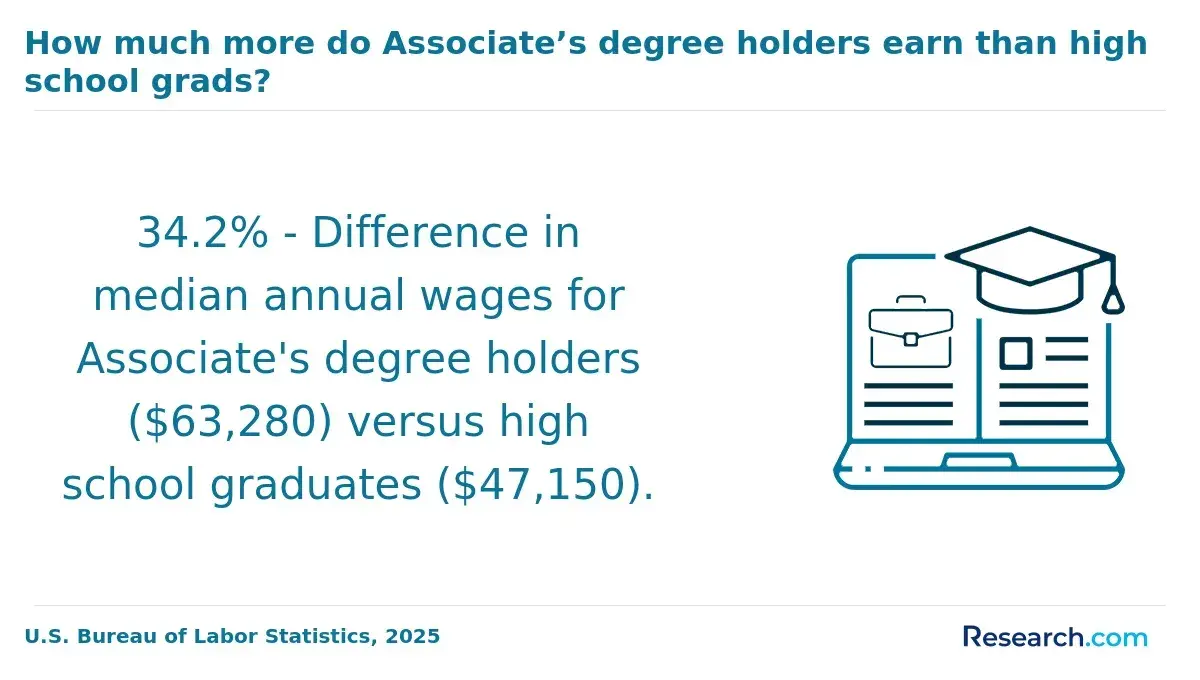
Transfer credit is one of the strongest cost-saving tools for online anthropology students. Since most bachelor's degrees require about 120 credits, students who transfer an associate degree or prior college coursework may cut the number of credits they must pay for at the four-year institution.
The savings can be substantial, but only if the credits apply to degree requirements rather than general elective space. Students should complete these checks before choosing the cheapest advertised program.
- Request an unofficial transfer review before applying if the school offers one, then request an official evaluation after admission.
- Ask how many total credits can transfer and how many must be completed at the university through residency requirements.
- Confirm whether prior anthropology, sociology, history, biology, statistics, language, or general education courses apply to the major or only count as electives.
- Check whether credits from community colleges, military training, standardized exams, workplace learning, or portfolio assessment are accepted.
- Compare the remaining credits required at each school, not just the per-credit tuition.
- Ask whether transfer students can still receive institutional scholarships, honors opportunities, and departmental advising.
Prior learning assessment can help some adult learners, but anthropology majors should be realistic: upper-division theory, ethnographic methods, archaeology, biological anthropology, and capstone courses often must be completed through the degree-granting institution. Competency-based study may reduce costs in some online majors, but it is not widely available for full anthropology bachelor's programs.
This same credit-efficiency principle applies across many online degree choices. Students evaluating social science pathways may also ask what can you do with a forensic psychology degree to compare how transfer credits, graduate school expectations, and career goals affect total value.
How Should Students Compare the Net Price, Quality, and Return on Investment of Online Anthropology Degree Programs?
The best-value online anthropology degree is not always the one with the lowest tuition. A stronger value may come from a program that accepts more transfer credits, offers better grants, provides research or internship support, helps students prepare for graduate school, or has courses aligned with the student's career goal.
Anthropology careers vary widely. Some graduates use the degree in education, research support, museums, nonprofits, public health, user experience research, cultural resource management, international programs, or graduate study. Many professional anthropologist and archaeologist roles require a master's degree or higher, so bachelor's students should evaluate whether the undergraduate program prepares them for either immediate work or further study.
The table below shows how to compare affordability and quality together. The goal is to avoid choosing a program that is cheap upfront but weakly aligned with your academic or career plan.
| Comparison Factor | What to Look For | Why It Affects Value |
| Net price | Estimated cost after grants and scholarships. | This is closer to what the student may actually pay than tuition alone. |
| Transfer acceptance | Major-applicable credits, residency requirements, and articulation agreements. | More accepted credits can reduce both time and cost. |
| Curriculum depth | Cultural anthropology, archaeology, biological anthropology, linguistic anthropology, theory, and methods. | A balanced curriculum supports graduate study and broader career options. |
| Research and field opportunities | Capstones, internships, museum projects, field schools, data analysis, or community-based research. | Applied experience can strengthen resumes and graduate applications. |
| Student support | Online advising, tutoring, library access, career services, and faculty availability. | Support can improve persistence, especially for working adults. |
| Debt risk | Loan amount compared with realistic career and graduate school plans. | Lower borrowing gives students more flexibility after graduation. |
Before enrolling, students should ask the admissions and financial aid offices for a written estimate that includes remaining credits, tuition, fees, aid, transfer credits, and expected time to completion. They should also ask the anthropology department how often required online courses are offered, whether any campus visits are required, and whether internships or field experiences are optional or required.
Common mistakes include choosing the lowest tuition without verifying accreditation, ignoring fees, assuming every scholarship is renewable, comparing full 120-credit prices when you are a transfer student, and borrowing for a program before checking whether the curriculum fits your career plan. The better approach is to compare net price, completion path, academic fit, and future flexibility together.
Other Things You Should Know About Anthropology
Neither is automatically better. A BA often includes more language, culture, and humanities coursework, while a BS may include more science, statistics, or lab-oriented requirements. Choose based on your goals: cultural research, museum work, public service, graduate study, archaeology, or applied social science.
Some programs offer fully online coursework, while others may recommend or require internships, field schools, labs, or local applied projects. Ask whether any in-person component is required, optional, or only necessary for students pursuing archaeology or cultural resource management.
Yes, if the program is institutionally accredited and includes strong coursework in theory, research methods, writing, and anthropology subfields. Students planning graduate study should prioritize faculty access, research opportunities, methods training, and letters of recommendation, not tuition alone.
Anthropology students commonly develop qualitative research, cultural analysis, writing, interviewing, ethics, comparative reasoning, and data interpretation skills. Depending on electives, they may also build skills in archaeology, GIS, public health, museum studies, statistics, or user research.
References
- The Importance of Understanding Transfer Credit Policies https://www.sophia.org/blog/higher-education/understanding-transfer-credit-policies/
- 2025 Most Affordable Online Colleges for Anthropology Degrees https://www.onlineu.com/most-affordable-colleges/anthropology-degrees
- Findings (Beyond Transfer) - Public Agenda https://publicagenda.org/resource/beyond-transfer/findings/
- Top 20 Low-Cost Online Bachelor's in Anthropology https://www.greatvaluecolleges.net/rankings/online-bachelors-anthropology/
- Online Anthropology, B.A. - Earn Your Anthropology Degree Online https://www.msudenver.edu/online/anthropology-ba/