2027 Accredited Online Anthropology Degree Programs That Accept the Most Transfer Credits

Co-Founder and Chief Data Scientist
Choosing an online anthropology degree is often a transfer-credit decision as much as a major decision. The College Board's 2024 pricing report shows average published tuition and fees at public four-year colleges reached $11,610 for in-state students, so every accepted credit can affect cost and time. This guide is for students with prior college, an associate degree, military training, AP/CLEP scores, or unfinished coursework. You'll learn which accredited online anthropology programs are most transfer-friendly, how credits are evaluated, and how to estimate whether a program will actually save you time and money.
Key Things You Should Know
- Many transfer-friendly online anthropology bachelor's programs allow up to 90 semester credits toward a 120-credit degree, but students usually must complete at least 30 credits through the degree-granting university.
- The most valuable transfer credits are not always the most numerous; credits that satisfy general education, foreign language, statistics, methods, or anthropology major requirements shorten the degree more than excess electives.
- Cost savings depend on accepted credits, tuition rate, fees, and residency rules; a high transfer maximum only has strong ROI if the credits apply directly to remaining degree requirements.
Which Accredited Online Anthropology Degree Programs Accept the Most Transfer Credits?
The most transfer-friendly accredited online anthropology programs generally accept up to 90 semester credits, or the quarter-credit equivalent, toward a 120-credit bachelor's degree. However, the advertised maximum is only the ceiling; your actual accepted credits depend on course content, grades, accreditation of the sending school, whether courses duplicate requirements, and how many credits must be completed in residence.
The table below compares accredited online anthropology bachelor's options with transfer policies that are commonly among the most generous for this field. Use it as a starting point, then request an official transfer evaluation before enrolling.
| Institution | Online Anthropology Degree | Regional or Institutional Accreditation | Common Transfer-Credit Ceiling | Key Transfer Consideration |
| Southern New Hampshire University | BA in Anthropology | NECHE | Up to 90 semester credits | Strong fit for students with broad prior college credit who need flexible elective application. |
| Arizona State University Online | BA in Anthropology | HLC | Up to 90 semester credits, with lower limits often applying to community college coursework | Best for students whose prior credits map cleanly into ASU general studies, electives, or major requirements. |
| Oregon State University Ecampus | BA or BS in Anthropology | NWCCU | Up to 135 quarter credits, roughly comparable to 90 semester credits | Useful for students who want an established public university option and can meet upper-division and residency rules. |
| University of Central Florida Online | BA in Anthropology | SACSCOC | Often up to 90 semester credits, subject to degree applicability | Especially transfer-friendly for students coming from Florida public colleges with aligned associate-degree pathways. |
| Washington State University Global Campus | BA in Anthropology | NWCCU | Often up to 90 semester credits | Good option for students who need online access to a public research university anthropology curriculum. |
| University of Florida Online | BA in Anthropology | SACSCOC | Transfer acceptance depends heavily on lower-division preparation, residency rules, and degree requirements | Worth considering for students with strong academic records and credits that align with UF's degree plan. |
A program that accepts 90 credits is usually the upper end for a bachelor's degree because the school still needs to award a meaningful portion of the credential itself. Before ranking programs by transfer maximum alone, compare how many of your credits apply to general education, major requirements, upper-division coursework, and electives.
How Do Online Anthropology Degree Programs Evaluate Transfer Credits?
Online anthropology programs usually evaluate transfer credits in two stages: first for university-level acceptance and then for degree applicability. A course may transfer to the university as elective credit but still fail to reduce the specific anthropology courses you need for graduation.
Most schools look at a few core factors during evaluation. Understanding these criteria helps you predict which credits are likely to count before you spend money on application fees or enrollment deposits.
- Institutional accreditation: Credits from regionally or institutionally accredited colleges are usually easier to transfer than credits from unaccredited or non-collegiate providers.
- Course grade: Many institutions require a minimum grade, often a C or higher, although rules vary by school and by major requirement.
- Course equivalency: Evaluators compare your previous course description, syllabus, credit hours, level, and learning outcomes with courses in the anthropology degree plan.
- Credit level: Lower-division credits may satisfy general education or introductory anthropology requirements, while upper-division major requirements are more likely to require completion at the new institution.
- Age of coursework: Anthropology courses may transfer more easily than rapidly changing technical courses, but statistics, research methods, and lab-related credits may face age or content review.
- Duplicate content: If two prior courses cover substantially similar material, only one may count toward the degree.
The best first step is to gather official transcripts from every college attended, along with syllabi for anthropology, statistics, research methods, language, or social science courses. If a school offers an unofficial pre-evaluation, use it for screening, but rely on the official evaluation before making a final decision.
How Can Transfer Credits Shorten an Online Anthropology Degree?
A standard U.S. bachelor's degree in anthropology typically requires about 120 semester credits. Transfer credits shorten the degree only when they replace credits you would otherwise need to complete, not when they sit outside the degree plan as unused electives.
The table below shows how different transfer-credit totals can affect an online anthropology completion timeline. These are planning estimates; actual timelines depend on course availability, term length, prerequisites, advising, and whether upper-division anthropology courses are offered every term.
| Accepted Transfer Credits | Credits Remaining in a 120-Credit Degree | Possible Full-Time Completion Pace | Important Limitation |
| 30 credits | 90 credits | About three academic years | Most of the major and upper-division work likely remains. |
| 60 credits | 60 credits | About two academic years | Common for associate-degree holders, but major sequencing may still matter. |
| 75 credits | 45 credits | About 18 months to two years | Works best when general education and electives are already complete. |
| 90 credits | 30 credits | About one academic year, if courses are available | Residency and upper-division requirements often prevent finishing faster than the course schedule allows. |
Students comparing anthropology with accelerated professional programs should be careful not to assume that all "fast" degrees work the same way. For example, a fast track MBA 6 months online may be structured around graduate-level acceleration, while an anthropology bachelor's degree is usually shortened through transfer credit, summer enrollment, and efficient course sequencing.
How Much Can Transfer Credits Reduce the Cost of an Online Anthropology Degree?
Transfer credits can reduce tuition most directly when the school charges by the credit and the accepted credits reduce the number of credits you must take. The College Board reported average published tuition and fees of $30,780 for out-of-state students at public four-year institutions in 2024-25, which makes credit efficiency especially important for students considering online programs outside their home state.
To estimate savings, use a simple formula before comparing programs: accepted credits that apply to the degree multiplied by the school's current per-credit tuition, then subtract any added fees, transcript costs, PLA assessment fees, or technology fees. The key phrase is "apply to the degree," because unused elective credits may not reduce your bill.
Cost comparisons are also field-specific. A student comparing anthropology with another helping-profession path, such as the cheapest online counseling degree, should remember that counseling can involve graduate education and licensure requirements, while anthropology career paths are broader and may require graduate study only for certain research or academic roles.
Common cost mistakes include assuming that a 90-credit transfer policy automatically removes 90 credits of tuition, ignoring residency requirements, and overlooking fees charged per term rather than per credit. A more expensive program can still be the better value if it accepts more usable credits and allows you to graduate sooner, but only if the official degree audit confirms the reduction.
Can Military, Professional, or Prior Learning Credits Transfer to an Online Anthropology Degree?
Some online anthropology programs accept nontraditional credit, including military training, standardized exams, workplace learning, professional certifications, or portfolio-based prior learning assessment. These credits are most likely to count toward electives or general education, not advanced anthropology major requirements.
Students with military or professional backgrounds should ask schools how each category is reviewed, because policies vary widely. The most common sources include the following:
- Joint Services Transcript credits: Military training may be reviewed using credit recommendations, but the school decides whether the credit applies to the anthropology degree.
- CLEP, DSST, AP, or IB exams: These can sometimes satisfy general education, language, history, or social science requirements if the score meets the institution's threshold.
- ACE-recommended workplace learning: Some corporate or professional training may be accepted, especially when the university has a formal prior-learning policy.
- Portfolio assessment: Students document college-level learning from work, service, travel, research, or community experience, but approval is not automatic.
Portfolio credit can be valuable, but it is not the same as creative or technical portfolio admission in fields such as a game development online degree. In anthropology, prior learning usually must demonstrate academic outcomes such as cultural analysis, research methods, writing, ethics, or social science reasoning.
Which Types of Previous College Credits Transfer Best to Online Anthropology Degrees?
The credits that transfer best are usually lower-division courses from accredited colleges that match standard bachelor's-degree requirements. Anthropology is interdisciplinary, so students may benefit from prior coursework in sociology, psychology, history, geography, statistics, biology, language, writing, and global studies.
The table below summarizes which prior credits tend to have the strongest degree value. It distinguishes credits that merely transfer from credits that are likely to reduce the actual path to graduation.
| Previous Credit Type | Transfer Likelihood | Degree Value in Anthropology | What to Verify |
| General education courses | High when from an accredited college | Often reduces the largest lower-division requirement block | Whether the school accepts a completed general education package or reviews course by course. |
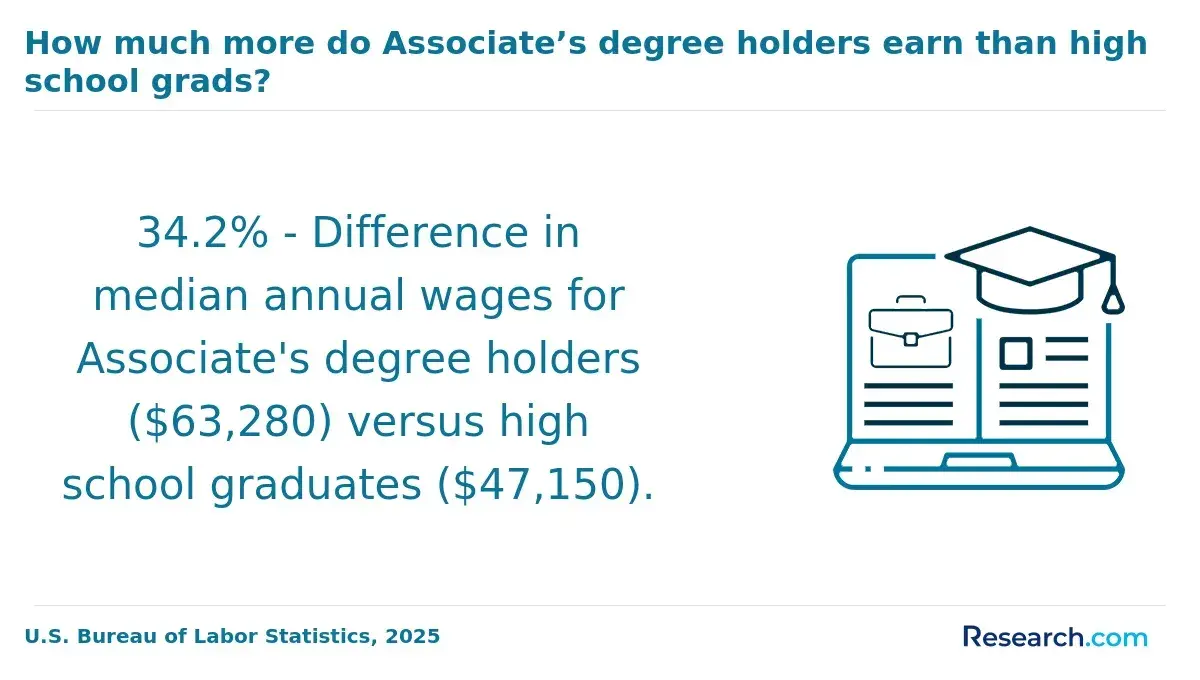
| Associate degree credits | High, especially with state articulation | Can leave mostly major and upper-division coursework | Whether the associate degree satisfies general education automatically or only partially. |
| Introductory anthropology courses | High if content aligns | May satisfy major prerequisites or lower-division major requirements | Whether cultural, biological, archaeological, or linguistic anthropology credits match the new curriculum. |
| Statistics or research methods | Moderate to high | Can be very valuable for social science research preparation | Whether the course is recent enough and accepted for the specific methods requirement. |
| Foreign language credits | Moderate to high | Useful for BA programs or graduate-school preparation | Whether placement tests, CLEP, AP, or college courses meet the requirement. |
| Excess electives | High for transfer, lower for degree acceleration | May count only if the degree still has open elective space | Whether the credits fit within the 120-credit total after major and residency rules. |
A major red flag is a transfer evaluation that lists a large number of accepted credits but shows many of them as general electives after all elective space is already filled. In that case, the credits may appear on your record without shortening the degree.
How Do Transfer Agreements Affect Online Anthropology Degree Completion?
Transfer agreements, also called articulation agreements, can make online anthropology degree completion more predictable. These agreements define how credits from one institution, often a community college, apply toward a bachelor's degree at another institution.
For anthropology students, the strongest agreements usually do three things: confirm that the associate degree or general education package is accepted, identify lower-division courses that prepare students for the major, and clarify the credits still required after transfer. This reduces the risk of taking courses that do not apply.
Students in states with common course numbering or public university transfer pathways may have an advantage because equivalent courses are easier to identify. Still, even a strong agreement may not cover every requirement, especially upper-division anthropology seminars, capstone courses, field methods, statistics, or foreign language expectations.
Before relying on an agreement, check whether it is current, whether it applies to the fully online version of the degree, and whether it covers your catalog year. If you changed majors, attended multiple colleges, or earned credits many years ago, ask for an individualized audit rather than assuming the pathway applies automatically.
What Transfer Policies Should Students Compare Before Choosing an Online Anthropology Degree?
The best transfer-friendly program is not simply the one with the highest maximum. It is the program that accepts the most usable credits, requires the fewest remaining credits, fits your budget, and still offers the academic preparation you need for your goals.
Before applying, compare these transfer-policy details side by side. They determine whether a high advertised transfer limit creates real value.
- Maximum transfer credits: Confirm the total cap and whether separate limits apply to community college, four-year college, exam, military, or prior-learning credits.
- Minimum residency requirement: Find out how many credits must be completed through the institution awarding the degree.
- Major residency rules: Some schools require a set number of upper-division anthropology credits to be completed in residence.
- Grade minimums: Ask whether major courses require higher grades than general electives.
- Course age policies: Verify whether older statistics, methods, science, or technology-related courses need review.
- Elective limits: Determine how many accepted credits can actually fit after general education and major requirements are satisfied.
- Official evaluation timing: Prefer schools that provide a clear degree audit before you commit to enrollment.
- Tuition model: Compare per-credit tuition, term-based tuition, online fees, transfer evaluation fees, and prior-learning assessment costs.
Common mistakes include choosing a school solely because it advertises 90 transferable credits, assuming an associate degree completes all lower-division requirements, and failing to ask whether accepted credits satisfy the anthropology major. The safest decision is based on a written degree plan showing remaining courses, not a marketing claim.
Which Students Benefit Most From Transfer-Friendly Online Anthropology Degree Programs?
Transfer-friendly online anthropology programs are best for students who already have substantial college credit and want a flexible social science degree. They can be especially valuable for adult learners, community college graduates, military-affiliated students, career changers, and students who paused college after completing general education requirements.
Anthropology can support careers in cultural resource management, museums, community programs, user research, international development, public health support, education, market research, and nonprofit work. However, the U.S. Bureau of Labor Statistics reported a May 2024 median pay of $68,310 for anthropologists and archaeologists, and many roles in that occupational category require a master's degree. That means the bachelor's degree may be a stepping stone rather than the final credential for research-heavy positions.
Students comparing social science majors should think about the job function they want, not just the fastest path to a diploma. For example, someone asking what can you do with a forensic psychology degree may be exploring court, corrections, or victim-services pathways, while anthropology may fit better for cultural analysis, field research, heritage work, or human-centered organizational research.
Students who should be cautious include those with very few transferable credits, those who need a licensed profession with a defined credential path, and those whose previous credits are mostly unrelated electives. In those cases, a program with stronger advising, internships, research opportunities, or graduate-school preparation may be more valuable than the highest transfer maximum.
How Should Students Choose an Online Anthropology Degree Based on Transfer Efficiency?
Transfer efficiency means the percentage of your prior credits that reduce the actual credits, time, and cost remaining in the degree. A student with 75 accepted credits but only 45 usable credits may be worse off than a student with 60 accepted credits that all satisfy requirements.
Use this decision process before choosing an online anthropology program. It turns transfer policy into a practical enrollment decision.
- List every college, exam, military, and prior-learning credit you may be able to claim.
- Request unofficial or preliminary transfer reviews from several accredited online anthropology programs.
- Ask each school for a degree audit showing remaining general education, major, upper-division, elective, and residency credits.
- Calculate total remaining tuition using the school's current online tuition and required fees.
- Check whether remaining courses are offered online often enough to support your target graduation timeline.
- Compare academic fit, including methods courses, faculty areas, internship options, language requirements, and graduate-school preparation.
- Choose the program with the best combination of usable credits, reasonable remaining cost, accreditation, course availability, and career relevance.
If your main priority is speed or earnings rather than anthropology specifically, compare this pathway with other quick degrees that pay well. If your main priority is understanding people, culture, human behavior, and social systems, an accredited online anthropology degree with strong transfer efficiency can be a practical way to finish a bachelor's degree without starting over.
Other Things You Should Know About Anthropology
An online anthropology degree can be respected when it comes from an accredited institution and the curriculum is comparable to the campus program. Employers usually care more about accreditation, skills, experience, writing ability, research ability, and relevant projects than whether the courses were completed online.
A BA may be better for students with language, humanities, or social science credits, while a BS may fit students with stronger science, statistics, or lab coursework. The better choice is the one that uses more of your existing credits and supports your career or graduate-school goals.
Some programs include optional or required fieldwork, internships, labs, methods courses, or capstone projects. Online students should ask whether any in-person, local, or synchronous requirements apply before enrolling.
Yes, if the degree is from an accredited institution and you complete the prerequisites expected by the graduate program. Students interested in graduate study should prioritize research methods, statistics, writing-intensive courses, faculty recommendations, and relevant field or internship experience.
References
- What Are University Credits and How Do They Transfer? - Cyprus West University https://www.cwu.edu.tr/what-are-university-credits-and-how-do-they-transfer/
- The Importance of Understanding Transfer Credit Policies https://www.sophia.org/blog/higher-education/understanding-transfer-credit-policies/
- 2026 Best Online Anthropology Degrees https://www.onlineu.com/degrees/anthropology
- Top Online Schools That Accept Transfer Credits https://www.edvisorly.com/student-guides/online-schools-that-accept-transfer-credits
- Online Anthropology, B.A. - Earn Your Anthropology Degree Online https://www.msudenver.edu/online/anthropology-ba/
- Transferology https://www.transferology.com/
- Anthropology Associate in Arts Degree for Transfer (AA-T) https://catalog.nocccd.edu/cypress-college/degrees-certificates/anthropology/associate-arts-anthropology-transfer-degree-aa-t/