2027 Online Anthropology Degree Programs That Accept 60, 75, or 90 Transfer Credits

Co-Founder and Chief Data Scientist
Transfer students often ask a practical question: will an online anthropology degree accept 60, 75, or 90 credits and let them finish faster? The answer depends on more than the maximum transfer limit. National Student Clearinghouse data showed undergraduate transfer enrollment rising 4.4% in fall 2024, making credit mobility a timely issue for degree-completion students. This guide explains how transfer limits, residency rules, major requirements, and credit evaluations affect remaining coursework, tuition, and graduation timelines so you can compare programs with fewer surprises.
Key Things You Should Know
- Most online anthropology bachelor's degrees require about 120 semester credits; transferring 60, 75, or 90 credits can leave roughly 60, 45, or 30 credits, but only if those credits apply to general education, electives, upper-division, and anthropology major requirements.
- A school may "accept" up to 90 transfer credits while still requiring 30 credits in residence, a minimum number of upper-division credits, and specific anthropology courses that cannot be waived by unrelated electives.
- Before enrolling, request an official transfer evaluation, a degree audit, and written confirmation of remaining credits; the highest transfer-credit cap is not automatically the fastest or cheapest option.
How Many Transfer Credits Can You Apply Toward an Online Anthropology Degree?
In most U.S. bachelor's programs, "accepting transfer credits" means the college agrees to place prior coursework on your record. "Applying transfer credits" means those credits actually satisfy degree requirements. For an online anthropology major, this distinction matters because a large block of elective credits may not reduce the number of required anthropology, statistics, research methods, language, lab science, or upper-division courses you still need.
The table below shows how 60-, 75-, and 90-credit transfer scenarios usually affect a 120-credit bachelor's degree. Use it as a planning model, not a guarantee, because each school's catalog and degree audit controls the final answer.
| Transfer-credit scenario | Typical credits remaining in a 120-credit degree | Common student profile | Main risk to check |
| 60 transfer credits | About 60 credits remaining | Associate degree graduate or community college transfer student | General education may transfer well, but anthropology major and upper-division courses may still be mostly unfinished |
| 75 transfer credits | About 45 credits remaining | Student with an associate degree plus extra coursework, a prior major change, or mixed college credits | Extra credits may become electives if they do not match the anthropology degree plan |
| 90 transfer credits | About 30 credits remaining | Degree-completion student with extensive prior college credit from two-year and four-year institutions | Residency and upper-division rules may still require at least one year of coursework at the new school |
A 90-credit transfer policy is often the most attractive on paper, but it works best when your previous coursework lines up with the degree map. If your credits are mostly unrelated electives, developmental courses, career-technical courses, or courses from non-accredited providers, fewer credits may apply than the headline limit suggests.
Which Online Anthropology Degree Programs Accept 60, 75, or 90 Transfer Credits?
Several regionally accredited universities offer online anthropology bachelor's programs or online degree-completion pathways that are commonly transfer-friendly. Policies can change, so treat the table below as a comparison starting point and confirm details through the current catalog and an official transfer evaluation.
| Online anthropology option | Transfer-credit fit | Typical maximum or practical transfer limit | What to verify before choosing |
| Southern New Hampshire University, BA in Anthropology | Strong fit for 60-, 75-, and 90-credit transfer students | Up to 90 transfer credits toward a 120-credit bachelor's degree | Which transferred courses satisfy anthropology requirements versus free electives |
| Oregon State University Ecampus, BA or BS in Anthropology | Strong fit for students with substantial prior credit | Up to 135 quarter credits, roughly equivalent to 90 semester credits | Quarter-credit conversion, baccalaureate core requirements, and upper-division anthropology requirements |
| Arizona State University Online, BA in Anthropology | Good fit for community college and four-year transfer students | Often limited by a 30-credit ASU residency requirement and separate community college transfer rules | How many lower-division community college credits apply and which major courses must be completed through ASU |
| University of Arizona Online, BA in Anthropology | Good fit for students with 60 to 90 credits from accredited colleges | Generally shaped by a 30-credit university residency requirement and limits on two-year college credit | Major GPA rules, upper-division coursework, and whether older anthropology courses still meet current requirements |
| University of Florida Online, BA in Anthropology | Especially strong fit for AA or 60-credit transfer students | Transfer structure is often built around lower-division completion before junior-level entry | Whether credits beyond the associate degree apply to the major, electives, or not at all |
| University of Central Florida Online, BA in Anthropology | Good fit for Florida transfer students and AA graduates | Often most efficient for students entering with about 60 transferable credits | State articulation benefits, foreign language requirements, and upper-level anthropology sequencing |
| Washington State University Global Campus, BA in Anthropology | Good fit for students needing an online major with upper-division completion options | Practical transfer maximum is affected by WSU residency and upper-division rules | University common requirements, major electives, and minimum WSU credits needed for graduation |
Students comparing anthropology with faster career-focused bachelor's options may also want to review quick degrees that pay well, especially if speed, salary potential, or employer demand is a higher priority than disciplinary fit. For anthropology itself, career outcomes vary widely: the Bureau of Labor Statistics reported a May 2024 median annual wage of $68,310 for anthropologists and archaeologists, but many roles in cultural resource management, museums, policy, research support, business research, and graduate study have different requirements.
How Can You Tell Whether Transfer Credits Will Actually Apply Toward Your Anthropology Degree?
The only reliable way to know whether credits will apply is to compare your previous courses against the exact online anthropology degree requirements. A school's admissions office may tell you how many credits are transferable, but the academic department or registrar usually determines how those credits count toward the major.
Use the following process before you commit to a program, especially if you are choosing between schools that advertise different transfer maximums.
- Request an unofficial pre-evaluation before applying if the school offers one, but do not treat it as final.
- Submit official transcripts from every college you attended, even if you withdrew or earned low grades.
- Ask for a degree audit showing which credits satisfy general education, anthropology major courses, upper-division credits, electives, and remaining graduation requirements.
- Compare the number of accepted credits with the number of credits still required for graduation.
- Ask whether any transferred anthropology courses need departmental review, syllabi, fieldwork descriptions, or catalog descriptions.
- Get written confirmation of residency, minimum grade, GPA, and upper-division requirements before enrolling.
A common mistake is assuming that "90 credits accepted" means "30 credits left." That may be true for a well-matched degree-completion plan, but it may be false if the remaining requirements include a sequence such as theory, research methods, statistics, capstone, or upper-division cultural anthropology electives offered only in certain terms.
What Types of Previous College Credits Can Transfer Into an Online Anthropology Degree?
Online anthropology programs typically evaluate several types of prior learning, but each type is treated differently. Regionally accredited college coursework is usually the easiest to transfer, while alternative credit, professional training, and exams often require more review and may apply only as electives.
The table below summarizes common credit sources and how they may fit into an anthropology bachelor's degree.
| Credit source | How it may apply | What can limit its usefulness |
| Community college courses | Often satisfy lower-division general education, introductory anthropology, statistics, foreign language, or electives | Many universities cap two-year college transfer at about 60 to 64 semester credits |
| Four-year college courses | May satisfy upper-division electives or major requirements if course content is comparable | Courses from a different major may transfer only as electives |
| Associate degree coursework | Can sometimes complete lower-division general education requirements through articulation agreements | Does not automatically complete anthropology major requirements |
| AP, IB, CLEP, or DSST exams | May satisfy general education, language, social science, or elective requirements | Score thresholds and credit awards vary by institution |
| Military training | May be reviewed through Joint Services Transcript recommendations and applied as elective or discipline-related credit | May not satisfy upper-division anthropology requirements unless content aligns closely |
| Prior learning assessment | May award credit for documented college-level learning from work, travel, research, service, or professional training | Often limited by portfolio rules, fees, faculty review, and caps on nontraditional credit |
If your long-term goal is a related applied social science field, review how your credits support that direction rather than focusing only on anthropology. For example, students interested in law, victim services, or behavioral research may compare anthropology with options described in what can you do with a forensic psychology degree to see which major better matches their career plans.
How Do Residency and Upper-Division Requirements Affect Anthropology Transfer Students?
Residency requirements determine how many credits you must complete at the school awarding the degree. Upper-division requirements determine how many advanced junior- and senior-level credits you must complete. Together, these rules explain why even a student with 90 transfer credits may still need a full final year of online coursework.
The table below shows the requirements transfer students should compare because they often control the real completion timeline more than the advertised transfer-credit maximum.
| Requirement | Typical rule in bachelor's programs | Why it matters for anthropology transfer students |
| Institutional residency | Often about 30 credits completed through the degree-granting university | Creates a minimum amount of coursework you must take after transfer, even if more credits are accepted |
| Major residency | Some programs require a portion of anthropology major credits to be completed at the university | Can prevent transferred anthropology electives from satisfying all major requirements |
| Upper-division credits | Many bachelor's degrees require a set number of 300- or 400-level credits | Community college courses usually do not count as upper-division, even when they transfer |
| Capstone or senior seminar | Usually must be completed at the degree-granting institution | May be offered only in specific terms and can affect graduation timing |
| Minimum grade rules | Many schools require C or higher for transfer, with stricter rules for major courses | Credits with low grades may transfer as electives or may not apply to the anthropology major |
The main decision point is not simply whether a school accepts 90 credits. It is whether the remaining 30 credits are courses you actually need, offered online, available in the terms you plan to attend, and eligible for your financial aid enrollment status.
How Does the Transfer Credit Evaluation Process Work for an Online Anthropology Degree?
The transfer credit evaluation process usually starts before admission and becomes official after the university receives all required transcripts. Because online degree-completion students often have credits from multiple schools, it is worth treating the evaluation like a due diligence process rather than a formality.
Here is the practical sequence most students should expect when applying to an online anthropology degree program.
- Collect unofficial transcripts first so you can estimate total credits, grades, course levels, and repeated courses.
- Use the university's transfer equivalency tool, if available, to preview how common courses have transferred in the past.
- Apply and send official transcripts from every institution, including dual-enrollment, community college, prior universities, and military transcripts if applicable.
- Wait for the registrar or transfer office to post accepted credits to your student record.
- Ask the anthropology department or academic advisor to map those credits to the degree plan.
- Review the audit for missing general education, language, lab science, research methods, major electives, upper-division credits, and residency credits.
- Appeal unclear decisions with syllabi, course descriptions, reading lists, or assignments when a course appears equivalent.
Do not enroll based only on a verbal estimate from admissions. A written degree audit showing remaining requirements is the document that lets you compare cost, time, and course availability across schools.
How Long Does It Take to Finish an Online Anthropology Degree With 60, 75, or 90 Transfer Credits?
Completion time depends on remaining credits, course availability, term length, and whether you study full time or part time. Online programs can be flexible, but anthropology majors may still require sequenced courses such as theory, methods, statistics, language, or capstone work.
The table below gives a realistic planning range for students who transfer 60, 75, or 90 applicable credits into a 120-credit online anthropology degree.
| Applicable transfer credits | Credits likely remaining | Full-time pace | Part-time pace | Best fit |
| 60 | About 60 | Roughly 2 academic years | Often 3 to 4 years | Associate degree graduates who still need most upper-division anthropology coursework |
| 75 | About 45 | Roughly 1.5 academic years | Often 2.5 to 3 years | Students with extra transferable coursework beyond an associate degree |
| 90 | About 30 | Roughly 1 academic year | Often 1.5 to 2 years | Degree-completion students whose credits align closely with the degree audit |
Anthropology is not usually structured like ultra-accelerated business programs, so be careful when comparing timelines across fields. A student researching a fast track MBA 6 months online may see compressed formats that do not translate to a bachelor's program with general education, upper-division, and major sequencing requirements.
How Much Can Transfer Credits Reduce the Cost of an Online Anthropology Degree?
Transfer credits can reduce the cost of an online anthropology degree by replacing courses you would otherwise pay to retake. However, the savings come only from credits that apply to the degree, not from credits that are merely accepted as excess electives.
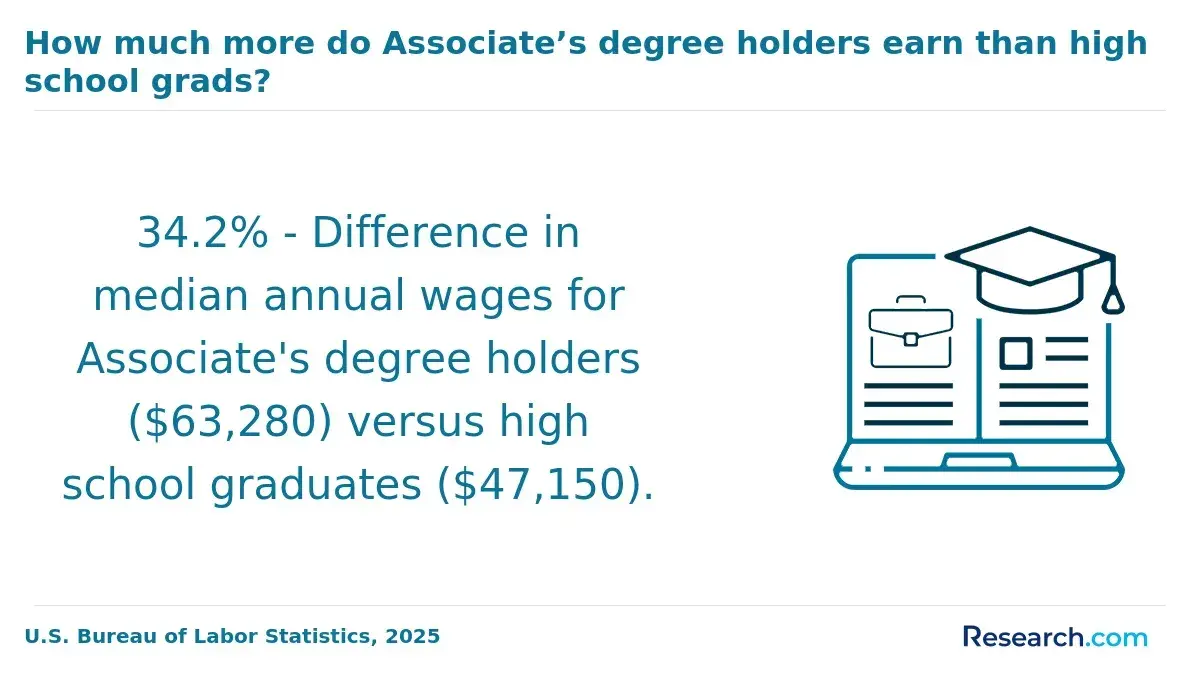
College Board's 2024 Trends in College Pricing reported average published in-state tuition and fees of $11,610 at public four-year institutions for 2024-25. That figure is not an online anthropology price quote, but it shows why avoiding unnecessary credits can matter: every extra term can add tuition, fees, books, and opportunity cost.
Use this simple cost model when comparing programs. If tuition is $400 per credit, then 15 applicable transfer credits reduce tuition by $6,000 before fees; 30 applicable transfer credits reduce tuition by $12,000; and 60 applicable transfer credits reduce tuition by $24,000. The same math should be repeated with each school's actual tuition, technology fees, online course fees, and financial aid package.
These are the cost items to compare before choosing the program with the highest transfer limit.
- Remaining credits after the official degree audit, not just total accepted credits
- Per-credit tuition for online students, including whether out-of-state online tuition differs from in-state tuition
- Required fees for technology, distance learning, graduation, transcript evaluation, portfolio review, or lab-based courses
- Financial aid eligibility at your expected enrollment load, especially if you plan to attend part time
- Course availability by term, because delayed required courses can add living expenses or lost time even if tuition is low
If your priority is minimizing tuition in a helping profession rather than studying anthropology specifically, it may also be useful to compare affordability patterns in fields such as the cheapest online counseling degree options. The best value is the program that aligns with your career goal and accepts the most useful credits, not simply the lowest advertised tuition.
Can Prior Learning, Military Training, Exams, or Certifications Count Toward an Online Anthropology Degree?
Some online anthropology programs consider nontraditional credit, including prior learning assessment, military training, standardized exams, and professional certifications. These credits can be valuable, but they are usually more limited than traditional college transfer credit and may apply mainly to electives.
Ask each school how it handles the following sources before assuming they will shorten your degree.
- Prior learning assessment portfolios based on documented college-level learning from employment, community research, museum work, field experience, language immersion, or nonprofit service
- Military training reviewed through the Joint Services Transcript and American Council on Education credit recommendations
- CLEP, DSST, AP, or IB exams that may satisfy social science, humanities, language, or general education categories
- Professional certificates or workplace training that may be eligible only if the university has an approved credit recommendation or internal review process
- Credit by examination for language, statistics, or general education areas, where permitted by the institution
Portfolio and exam credit can be especially helpful when you are short a few electives but less useful when your remaining requirements are upper-division anthropology courses. Unlike portfolio-heavy or skills-demonstration fields such as a game development online degree, anthropology programs may require discipline-specific theory, methods, and capstone courses that must be completed through the university.
Do Older College Credits Expire When Transferring Into an Online Anthropology Degree?
Older college credits do not always expire, but they may be reviewed differently depending on the subject. General education courses in areas such as history, literature, humanities, introductory social science, or basic electives are often more durable. Courses tied to current methods, statistics software, laboratory science, research ethics, or major requirements may receive closer review.
The key issue is not age alone. Schools usually ask whether the course was college-level, completed at an appropriately accredited institution, earned with an acceptable grade, and still comparable to the current requirement. An older cultural anthropology course may transfer smoothly as an elective, while an old statistics or methods course may need departmental approval if the program expects recent competency.
To avoid surprises, gather syllabi or catalog descriptions for older courses before applying. If you cannot find them, contact the previous institution's registrar, department office, or archived catalog. This is especially important for students returning after a long break, because a missing syllabus can make it harder to prove that an older course matches a current anthropology requirement.
Watch for these red flags when evaluating older credits.
- The school accepts the credits generally but excludes them from the anthropology major because course content is outdated or not equivalent
- The credits came from an institution that was not regionally accredited or did not hold recognized accreditation at the time
- The course grade falls below the minimum required for transfer or for major applicability
- The credits duplicate courses already completed, which may reduce the total number of usable credits
- The program requires a current methods, statistics, language, or capstone course that older credits cannot replace
Other Things You Should Know About Anthropology
Yes. Many programs accept individual college credits even if you did not complete an associate degree. However, an associate degree can make lower-division general education transfer more predictable, especially in states with formal articulation agreements.
It can be, if the institution is properly accredited and the program includes rigorous coursework in theory, methods, research, writing, and cultural analysis. Employers and graduate programs usually care more about accreditation, skills, experience, and academic performance than whether courses were completed online.
Choose based on your completed coursework and goals. A BA may fit students with language, humanities, or cultural studies credits, while a BS may fit students with more science, statistics, biological anthropology, or archaeology coursework. Ask for audits under both options if the school offers them.
Transferred credits can affect satisfactory academic progress calculations and remaining aid eligibility, but they do not automatically disqualify you. Ask the financial aid office how your accepted credits, remaining program length, enrollment status, and prior aid usage will be evaluated.
References
- 2025 Most Affordable Online Colleges for Anthropology Degrees https://www.onlineu.com/most-affordable-colleges/anthropology-degrees
- Understanding FAFSA: Separating Myth from Fact - Anna Maria College https://annamaria.edu/understanding-fafsa-separating-myth-from-fact/
- Why Study Anthropology? | Durham University ISC https://www.durhamisc.com/blog/why-study-anthropology
- Who Majors in Anthropology? An Infographic and a Request | Savage Minds https://savageminds.org/2014/05/05/who-majors-in-anthropology/comment-page-1/
- 2025 Most Affordable Online Colleges for Anthropology Degrees https://www.onlineu.com/most-affordable-colleges/anthropology-degrees
- Myths of Accreditation: Accreditation is just for Academia http://www.iacet.org/events/iacet-blog/blog-articles/myths-of-accreditation-accreditation-is-just-for-academia/
- Curriculum and Suggested Sequence of Courses https://history-anthro.catholic.edu/academics/undergraduate/anthropology-ba/course-sequences/index.html
- Anthropology Major | Courses For Degree | Career Girls https://www.careergirls.org/college-majors/anthropology/
- Anthropology Graduate Programs 2026+ https://www.gradschools.com/programs/anthropology
- Graduate Admissions https://socialsciences.uoregon.edu/anthropology/apply/graduate-admissions
- Why study an anthropology major? https://study.uq.edu.au/stories/why-study-anthropology-major