2027 Interior Design Degree Outlook Through 2030: Enrollment, Salary, and Hiring Projections

Co-Founder and Chief Data Scientist
Deciding whether to pursue or continue a interior design degree requires analyzing more than overall job growth projections. While the Bureau of Labor Statistics anticipates modest employment increases near 8% through 2030, this reflects uneven demand across regions and sectors. Growing enrollment-up 12% in bachelor's programs since 2022-suggests rising graduate supply that may intensify competition for entry-level roles.
Meanwhile, evolving credential expectations and automation in design tools complicate salary trajectories. These factors reveal potential oversaturation in some markets and caution against relying on single metrics. This article examines interior design enrollment, salary patterns, hiring projections, industry demand, geographic opportunity, and emerging workforce changes through 2030 to enable better-informed education and career decisions.
Key Things to Know About the Interior Design Degree Outlook Through 2030
- Enrollment in interior design programs has stabilized post-pandemic, reflecting a more selective applicant pool; this signals a tradeoff where fewer, better-prepared candidates may face tighter competition in saturated markets.
- Employers increasingly prioritize digital proficiency and sustainability expertise, reshaping hiring to favor graduates with specialized skills, which pressures programs to evolve curricula or risk graduate underemployment.
- Rising tuition costs paired with modest hiring growth highlight a timing and access challenge; students must weigh program duration and debt against regional job variability and sector-specific demand shifts.
- Key Things to Know About the Interior Design Degree Outlook Through 2030 Key Things to Know About the Interior Design Degree Outlook Through 2030
- How is Interior Design Degree Enrollment Expected to Change Through 2030? Enrollment Trends Through 2030
- How Many Interior Design Graduates Will Enter the Workforce by 2030? Graduate Workforce Entry Projections
- What Are the Hiring Projections for Interior Design Graduates Through 2030? Hiring Projections Through 2030
- Which Interior Design Careers Will Experience the Most Job Growth? Fastest-Growing Career Paths
- What Is the Salary Outlook for Interior Design Graduates Through 2030? Salary Outlook Through 2030
- Which Industries Will Hire the Most Interior Design Graduates by 2030? Top Hiring Industries
- Where Will Demand for Interior Design Graduates Be Strongest? Strongest Geographic Demand
- Which Interior Design Specializations Will Be Most in Demand by 2030? Which Interior Design Specializations Will Be Most in Demand by 2030?
- How Will AI and Technology Affect Interior Design Careers Through 2030? How Will AI and Technology Affect Interior Design Careers Through 2030?
- Is a Interior Design Degree Worth Pursuing Based on 2030 Projections? Degree Value Through 2030
How is Interior Design Degree Enrollment Expected to Change Through 2030?
Moderate growth in interior design degree enrollment through 2030 reflects a balance between increasing interest in the field and constraints imposed by labor market realities and tuition pressures. While the National Center for Education Statistics projects an annual growth rate of around 1.5% to 2%, this growth is unevenly distributed, with certain programs expanding offerings in digital tools and sustainable design, while others face capacity limits or declining applicant pools.
For prospective students, this means a shifting competitive landscape where specialized skills aligned with employer demand-such as proficiency in 3D modeling or virtual reality-can influence admission decisions and career prospects more heavily than generalist training.
The projected growth of interior design students through 2030 is shaped by demographic trends, including a modest rise in college-age populations and growing diversity among applicants, which may broaden the pool but also encourages programs to diversify curricula and experiential opportunities. However, increased enrollment may risk oversaturation in some regional markets, especially where workforce demand remains steady but not rapidly expanding, potentially leading to tighter job placement outcomes for new graduates.
In contrast, institutions that embrace hybrid and interdisciplinary models may better manage class size and program availability, thereby responding to employer expectations for flexible, practice-ready designers.
Economic considerations also play a critical role in shaping enrollment trends, as rising tuition costs and concerns about graduate employment temper rapid expansion. Students are increasingly weighing degree value against uncertain hiring rates, and some choose paths such as RN to BSN without clinicals or other healthcare adjacent programs perceived as more directly linked to robust job markets.
For educators and workforce planners, understanding these nuanced tradeoffs is essential to aligning program capacity with real-world demand and avoiding the pitfalls of both graduate oversupply and access limitations.
How Many Interior Design Graduates Will Enter the Workforce by 2030?
The number of interior design graduates by itself does not guarantee clear workforce opportunities, as entry into the field depends on multiple factors beyond degree completion. While annual degrees conferred have hovered around 3,000 to 3,500 recently, this modest pipeline faces dilution because some graduates pursue careers adjacent to interior design, such as architecture or marketing, or choose to delay workforce entry for further study or experience building.
Moreover, employment rates are shaped by regional demand disparities and economic cycles, meaning that even stable national growth projections-like the Bureau of Labor Statistics' forecasted 6% growth through 2032-do not necessarily translate to uniform hiring increases across all settings.
Graduation counts alone also obscure the importance of practical skills and relevant experience in securing interior design roles. Employers often prioritize candidates with portfolios, internships, or software proficiency, which can narrow the pool of qualified entrants irrespective of degree numbers.
A growing share of programs incorporating online or hybrid delivery may affect how graduates are prepared for market realities, while demographic shifts and credential layering further complicate straightforward entry forecasts. Practical workforce entry, then, may represent only a portion of the total degree completers, with the true competitive landscape shaped by how effectively individuals navigate these tradeoffs.
What Are the Hiring Projections for Interior Design Graduates Through 2030?
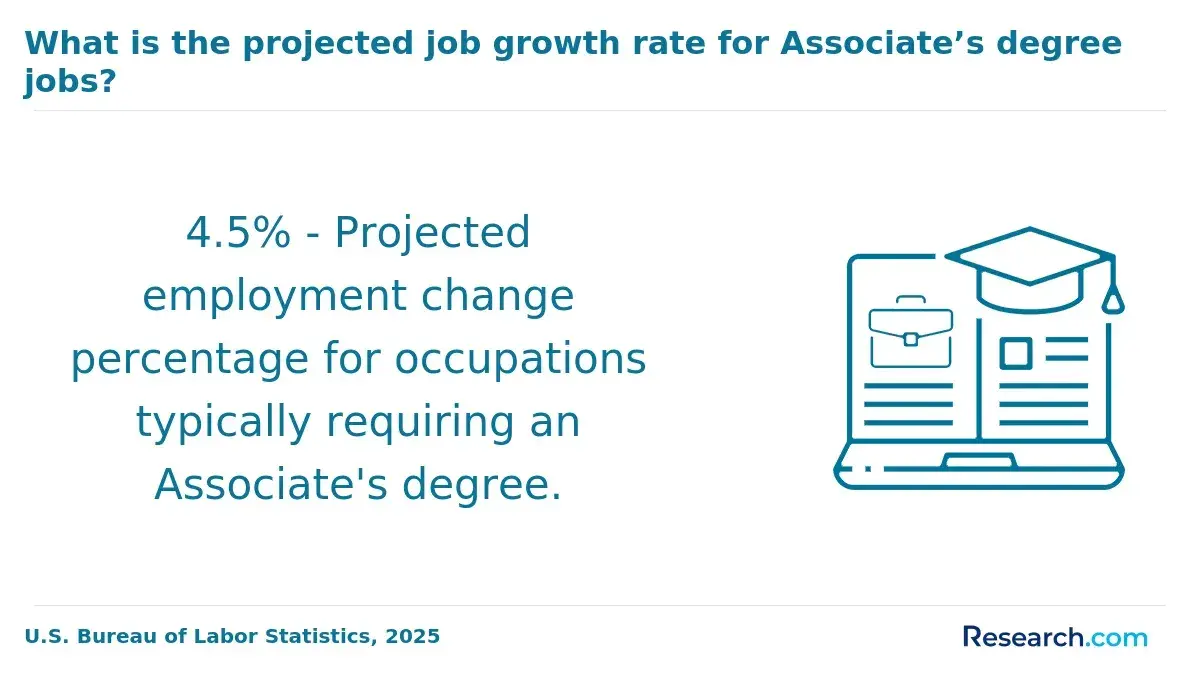
Employer demand for interior design graduates through 2030 is projected to be moderate but sensitive to economic fluctuations, with growth roughly matching average occupational trends. According to the U.S. Bureau of Labor Statistics in 2024, employment for interior designers is expected to increase by about 5% over the next decade.
This signals stable but not robust expansion, heavily influenced by market sectors such as commercial and residential renovations, where geographic and economic conditions vary significantly. Graduates in areas experiencing construction booms may find more abundant opportunities, while others face tighter markets and stronger competition for entry-level roles.
Hiring projections must be interpreted with caution by prospective students and degree holders, as overall job growth does not translate directly into accessible positions without competitive preparation. Many employers prioritize candidates with comprehensive portfolios, internships, and skills in digital tools like 3D modeling and virtual reality, which are becoming baseline expectations rather than differentiators.
The annual average of 4,000 to 5,000 openings nationally includes both new jobs and replacements from retirements or career changes, underscoring the importance of versatile skill sets and credentials beyond traditional design knowledge. Moreover, salary progression remains modest, with median wages near $58,000 in 2023, emphasizing that financial return on education for interior design may require sustained experience and ongoing adaptation to shifting industry standards.
Which Interior Design Careers Will Experience the Most Job Growth?
Specialized interior design careers that integrate technology and sustainability principles are poised for stronger growth than generalist roles through 2030, according to recent U.S. Bureau of Labor Statistics data. Positions like healthcare space planners and sustainable design consultants are particularly influenced by regulatory demands and environmental standards, driving higher job openings despite differing baseline employment volumes.
For students evaluating interior design job growth in the United States, these specializations often require advanced proficiency in building codes and digital tools such as BIM, making ongoing skills development crucial beyond initial degree completion.
Those focused on commercial adaptive reuse and residential renovation also benefit from demographic shifts and evolving workspace models post-pandemic, though their growth rates may lag behind the fastest-growing niches. A learner choosing between a broad-based interior design degree and a targeted credential must consider these labor market nuances alongside program costs and duration.
Effective preparation might involve supplementing a degree with focused credentials or related fields, as exemplified by those pursuing a healthcare administration degree to better align with the expanding healthcare design sector.
Although many employers value interdisciplinary skills, competition remains stiff for entry-level positions, and wage growth varies by region and specialization. A long-term outlook grounded in data confirms that rapid growth percentages do not necessarily translate to the largest number of job openings, highlighting an ongoing tradeoff between specialization benefits and employment accessibility.
Strategic educational choices, informed by current demand patterns and workforce projections, remain essential for those targeting high-demand interior design careers by specialization.
What Is the Salary Outlook for Interior Design Graduates Through 2030?
Salary projections for interior design graduates through 2030 must be viewed in context with inflation trends, labor market shifts, and evolving credential expectations. While the U.S. Bureau of Labor Statistics (BLS) reports a median annual wage near $63,000 in 2024, this figure alone doesn't capture the nuanced wage variations influenced by geography, specialization, and ongoing skill demands.
Employment growth at roughly 7% aligns with average occupational expansion, underscoring moderate but consistent opportunities rather than rapid financial gains.
The following factors are key to understanding how earning potential might change for graduates over the coming decade.
- Geographic Location: Salaries vary widely depending on metropolitan versus rural settings. Designers in high-cost urban markets often command higher wages to offset living expenses, while those in less dense areas face slower growth and lower starting pay.
- Specialization Demand: Focusing on growing sectors like sustainable design, healthcare environments, or technology-integrated interiors can boost compensation. These niche areas are increasingly prioritized by employers valuing expertise in regulatory compliance and emerging materials.
- Professional Credentials: Licensure and certifications remain critical. Those holding recognized professional credentials generally surpass median salary brackets and gain access to senior roles that require project oversight.
- Experience Level: Mid-career professionals with 5 to 10 years in the industry can expect a salary jump to the $60,000-$75,000 range, notably when coupled with management experience of complex projects.
- Technical Proficiency: Mastery of digital modeling and design software is increasingly non-negotiable. Employers reward candidates who integrate these skills with client management capabilities.
- Industry Cycles: Economic fluctuations impacting construction and real estate directly influence demand for design services and, by extension, wage stability.
- Competitive Landscape: The field remains competitive, with supply often matching demand. Therefore, continuous skill updating and strategic career moves are essential for premium compensation gains.
A recent graduate from a mid-sized city faced a starting offer below the national median, reflecting local market constraints and limited negotiation leverage as a newcomer. Despite initial apprehension, this graduate chose to accept the offer while simultaneously pursuing specialized certification in sustainable interiors.
This dual approach balanced immediate financial pragmatism against longer-term salary growth potential, illustrating how careful career planning and ongoing skill development are crucial to navigating real-world compensation outcomes in interior design through 2030.
Which Industries Will Hire the Most Interior Design Graduates by 2030?
The industries projected to hire the most interior design graduates by 2030 reflect a fusion of urban expansion, workplace evolution, and the rising prioritization of sustainability and health-focused environments. Hiring demand will be shaped by factors such as regulatory changes, technological integration, remodeling trends, and growing specialization within sectors.
Prospective interior design degree holders should consider how workforce replacement needs and evolving service demands influence not only job availability but also the skill sets required for entry-level and advancing roles.
The following key industries are expected to offer the strongest hiring prospects for interior design graduates through 2030.
- Architectural and Engineering Services: This sector will continue leading demand due to ongoing construction, renovation, and infrastructure upgrades. Graduates skilled in regulatory compliance, CAD software, and sustainable materials will find opportunities in project design and coordination roles.
- Commercial Real Estate: Shifting office environments driven by hybrid work models and wellness trends increase needs for designers who can create flexible, adaptive spaces. Experience with workplace strategy and human-centered design supports access to roles focused on space planning and environmental psychology.
- Healthcare Facilities: Expansion in hospitals, clinics, and eldercare drives demand for interior designers knowledgeable about infection control, accessibility standards, and patient-centered environments. Specialized credentials or experience in healthcare design improve employability in this niche.
- Retail and Hospitality: Although hiring can fluctuate with economic cycles, sustained consumer interest in experiential retail and boutique hospitality maintains steady roles. Skills in branding, immersive design, and customer experience remain critical but competition can be intense.
- Sustainability Consulting: Rising emphasis on green building and eco-friendly interiors creates new pathways within consulting firms and corporate sustainability teams. Expertise with environmental certifications and innovative materials enhances prospects amid evolving industry standards.
Prospective students exploring the best educational routes should carefully evaluate programs' alignment with these sector needs, understanding long-term salary outlooks and hiring trends to optimize career decisions.
For those interested in healthcare-related advanced practice, exploring the best DNP programs online may provide complementary expertise. Overall, being attuned to industry shifts and developing targeted skills will remain essential for navigating the top US industries hiring interior design degree holders through 2030.
Where Will Demand for Interior Design Graduates Be Strongest?
Employment demand for interior design graduates will remain unevenly distributed through 2030, shaped by concentrated industry activity and regional economic dynamics. For example, metropolitan hubs like New York City and Los Angeles benefit from ongoing corporate office redesigns and luxury residential projects, but these areas also present high living costs and competitive applicant pools that can offset entry-level salary gains.
Meanwhile, Sun Belt states such as Texas and Florida exhibit rising hiring volumes tied to population growth and infrastructure expansion, often offering a more balanced cost-of-living-to-job-opportunity ratio. These regional differences highlight the importance for candidates to weigh local credential expectations and specialization against practical lifestyle factors rather than relying solely on national hiring trends.
The healthcare and commercial architecture sectors consistently generate strong interior design employment, driven by hospital expansions and workplace environment adaptations for hybrid models. Designers skilled in ergonomics, regulatory compliance, or sustainable materials tend to secure more stable and better-compensated roles, reflecting employer preferences for specialized expertise amid fluctuating construction activity.
However, entry-level graduates without advanced CAD or LEED certification may face significant competition and less job security, especially when economic cycles reduce demand in residential renovation markets. This segmentation underscores a strategic tradeoff between broad skill acquisition and focused specialization depending on career timing and long-term goals.
Emerging fields involving smart home technology and green building solutions are creating new avenues but remain relatively niche compared to traditional commercial and healthcare-related design work. These sectors often require designers to stay current with fast-evolving codes and digital modeling tools, which can lengthen early career development but improve marketability over time.
Assessing local employer density, public investment in infrastructure, and the pace of urban redevelopment can help prospective students and professionals predict more accurately where sustainable employment opportunities are likely to concentrate.
Which Interior Design Specializations Will Be Most in Demand by 2030?
Employment projections for interior design specializations through 2030 indicate clear differentiation based on technical knowledge, regulatory expertise, and adaptability to evolving industry standards. Students weighing options should consider not only growth rates but also the depth of specialized skills required and corresponding employer preferences. For instance, selecting healthcare interior design often demands proficiency in infection control protocols and accessibility compliance, aligning with rising hospital expansions and an aging population.
Conversely, sustainable interior design appeals to candidates interested in environmental standards and ESG integration, reflecting corporate governance trends.
A practical decision scenario might involve a student choosing between commercial interior design focused on flexible workspaces and technology integration versus residential design; the former generally offers broader market resilience given the shift toward hybrid work models, while the latter's slower growth may limit opportunities except in niche luxury or regional markets.
The U.S. Bureau of Labor Statistics projects employment growth for interior design occupations around 5%, with concentration expected in areas demonstrating intersectional specialty skills.
Key specializations projected to experience the strongest demand by 2030 include:
- Healthcare Interior Design: Driven by increased healthcare infrastructure investment and demographic shifts, this area requires knowledge of medical regulations, infection control, and therapeutic environments, making it a stable sector often linked to public and private healthcare employers.
- Sustainable/Green Design: Emphasizing eco-friendly materials, energy efficiency, and WELL Building Standards, this specialization meets growing corporate and institutional commitments to ESG criteria, blending technical and regulatory competencies.
- Commercial Tech-Integrated Design: Focused on flexible office layouts, audiovisual systems, and employee well-being, this specialization addresses the evolving needs of hybrid work models, with demand tied to corporate real estate strategies.
- Institutional Design: Encompassing schools, government buildings, and large public facilities, this field requires familiarity with accessibility laws and safety standards and benefits from public sector project funding.
- Luxury Residential Design: Despite slower overall growth, this niche benefits from high-income clients and demands strong aesthetic and project management skills, often linked to regional markets with wealth concentration.
These specializations reflect a trend favoring interior design roles that combine creative aptitude with specialized technical knowledge and practical regulatory understanding, influencing employability and salary potential across diverse sectors.
How Will AI and Technology Affect Interior Design Careers Through 2030?
AI and automation are set to augment rather than replace many interior design responsibilities through 2030, accelerating productivity while reshaping the skill sets employers prioritize. Routine tasks such as space planning and 3D visualization will increasingly be handled by AI-driven software, allowing designers to focus more on client consultation, creative problem-solving, and project management.
For example, entry-level roles may require proficiency in AI-powered tools to generate initial layouts efficiently, but higher-value tasks involving nuanced aesthetic judgment and ethical considerations will remain reliant on human expertise. Students and professionals who neglect to integrate advanced design software and data analytics into their practice risk decreased employability in firms that demand hybrid technological fluency.
Emerging technology trends shaping interior design careers by 2030 emphasize cross-disciplinary capabilities, combining digital competencies with traditional craftsmanship in an evolving job market. This shift influences enrollment patterns, as programs that fail to incorporate AI applications, virtual reality, and continuous upskilling opportunities may see declining interest and relevance.
Employers increasingly seek candidates who can interpret and critically manage AI-generated outputs rather than simply produce manual designs. Current degree holders must evaluate coursework and certifications based on practical outcomes-prioritizing applied projects that simulate tech-integrated workflows to remain competitive in hiring pools.
As AI automates up to 45% of routine design tasks according to Gartner, sustained career advancement will hinge on a commitment to lifelong learning and adaptability. This dynamic mirrors trends in adjacent professions, where interdisciplinary skill sets improve salary trajectories and job stability.
Prospective students should assess educational pathways with a clear focus on how programs prepare them for evolving industry standards rather than purely creative credentials. For those exploring related fields, resources like the best 5 year speech pathology programs offer insight into accelerated, outcome-focused degree options that balance technical and human-centered skills essential in the modern workforce.
Is a Interior Design Degree Worth Pursuing Based on 2030 Projections?
The outlook for an interior design degree through 2030 reflects steady but modest job growth, with employment projected to increase around 7% according to the U.S. Bureau of Labor Statistics. This rate slightly exceeds the average across all occupations but does not indicate rapid expansion. For a prospective student balancing tuition costs and career flexibility, understanding these labor market realities is critical.
An example might be a student in a metropolitan area weighing the benefits of specialized training and internships versus a broader liberal arts path, as metropolitan areas tend to offer higher salaries, sometimes exceeding $90,000 for seasoned professionals, while entry-level wages often hover in the high $30,000s to low $60,000s depending on geographic and sector variations.
Interest in interior design degree programs remains steady with gradual enrollment increases, suggesting consistent demand for credentials but also a growing pool of graduates competing for limited positions. Graduates may face underemployment risks if they lack software proficiency or robust portfolios.
As the future job prospects for interior design graduates in 2030 depend on adaptable skill sets and professional networks, students should weigh the return on investment against the increasing credential requirements and the specific industry segments they target. For those evaluating different educational pathways, consulting resources like best easiest LPN programs to get into may offer comparative insight on program accessibility and time to completion.
References:
- Careers in Interior Design - The Ultimate Guide | NYIAD https://www.nyiad.edu/design-articles/career-guides/interior-design
- Are Interior Designers in Demand? https://pro.houzz.com/pro-learn/blog/startup-guide-interior-design-employment-outlook
- hiring - Tłumaczenie po polsku - Słownik angielsko-polski Diki https://www.diki.pl/slownik-angielskiego
- Interior Designing Career Options in 2026: Best Jobs & Growth Paths https://aaft.com/blog/interior/interior-designing-career-options/
- Interior Design In The 21st Century: Opportunities And Growth - Le Mark Institute https://lemarkinstitute.com/blogs/interior-design-in-the-21st-century-opportunities-and-growth/
- Will Interior Design Be in Demand in the Future? | James & James https://jamesandjamesfurniture.com/blogs/news/will-interior-design-be-in-demand-in-the-future
- Explosive Growth Predicted: AI in Interior Design Market to Surpass $4 Billion by 2030 Amid Rising Smart Home Demand https://uk.finance.yahoo.com/news/explosive-growth-predicted-ai-interior-120300357.html
- WorkBC Site Maintenance - Service Temporarily Unavailable https://www.workbc.ca/career-profiles/interior-designers-and-interior-decorators
- About Faculty of Interior Design - Academy of Fine Arts https://en.asp.waw.pl/strona-glowna/faculties/faculty-of-interior-design/about-faculty-of-interior-design/
- Interior Design Careers for Graduates: Your Ultimate Guide https://wisdomdesigncollege.in/blogs/career-in-interior-design-for-graduates
Other Things You Should Know About Interior Design
Accreditation often signals that a program meets industry standards and can streamline licensure and employment, but highly accredited programs may also follow rigid curricula that limit creative exploration. Prospective students must prioritize accreditation if they aim for traditional licensure or employment with established firms, where credentials are closely scrutinized. However, if a student's goal is to innovate or freelance in niche markets, programs with more flexible and project-based learning might better develop unique portfolios, even if they lack formal accreditation.
Many interior design programs feature intense studio work, tight deadlines, and significant hands-on projects that mirror professional pressures. However, actual entry-level positions can sometimes emphasize administrative or client-relations tasks more than design, causing a disconnect between educational stress and workplace realities. Students should seek programs offering internships or cooperative experiences that provide exposure to typical job functions to avoid over-preparation for creative work alone and under-preparation for business and client management.
Salary data for interior design varies widely by region, with urban centers typically offering higher wages but also higher living costs. Graduates should balance raw salary projections against local market saturation and cost of living rather than assuming relocation guarantees better compensation. Prioritizing markets with stable or growing design industries and nuanced demand, rather than just high starting salaries, can improve long-term career sustainability and progression.
While early specialization in areas like sustainable design or healthcare environments can open targeted job opportunities, it may also limit flexibility if industry demand shifts unexpectedly. A practical approach is to build a strong foundational skill set while gaining exposure to multiple specialties through electives or internships before committing. This allows graduates to adapt to evolving market needs or pivot between sectors, which is crucial given the fluctuating nature of interior design job markets through 2030.