2027 Interior Design Career Outcomes by Degree Level Report: Pay, Employment, and Advancement Patterns

Co-Founder and Chief Data Scientist
Choosing the right interior design degree can determine a graduate's ability to secure employment and climb career ladders, yet comparing outcomes across degree levels is rarely straightforward. For example, a working professional eyeing a bachelor's versus an associate degree must weigh more than just time and cost; they confront distinct employer expectations and differing career trajectories.
Recent 2024 data reveal that bachelor's degree holders exceed associate degree completers in mid-career advancement rates by over 30%, highlighting critical mobility gaps. Understanding these patterns shapes smarter education investments and realistic career planning. This article dissects pay, employment, and advancement trends by degree level, empowering informed interior design education decisions.
Key Things to Know About Interior Design Career Outcomes by Degree Level
- Associates degrees often enable quicker workforce entry with lower upfront costs but limit eligibility for advanced roles, highlighting a tradeoff between immediate employment and long-term career mobility in interior design.
- Bachelor's degree holders are preferred by 68% of employers for mid-level interior design positions, signaling industry valuation of comprehensive credentials for leadership and project management access.
- Master's degrees delay labor-market entry yet correlate with a 25% higher rate of credential attainment, influencing timing decisions for professionals balancing cost, career goals, and advancement opportunities.
- What Career Outcomes Can Students Expect From Each Interior Design Degree Level? Career Outcomes by Degree
- How Much Do Interior Design Graduates Earn by Degree Level? Salary by Degree Level
- Which Interior Design Degree Level Offers the Strongest Employment Prospects? Best Degrees for Employment
- What Entry-Level Jobs Can You Get With a Interior Design Degree? Entry-Level Career Opportunities
- How Do Interior Design Degree Levels Affect Career Advancement and Promotion Opportunities? Career Growth by Degree
- Is a Interior Design Degree Worth It Based on Salary, Employment, and ROI? Salary, ROI, and Value
- How Do Associate, Bachelor's, Master's, and Doctoral Interior Design Degrees Compare? Comparing Degree Levels
- Which Industries and Employers Hire Interior Design Graduates by Degree Level? Which Industries and Employers Hire Interior Design Graduates by Degree Level?
- What Skills, Credentials, and Experience Improve Interior Design Career Outcomes? What Skills, Credentials, and Experience Improve Interior Design Career Outcomes?
- Which Interior Design Degree Level Is Best for Your Career Goals? Choosing the Right Degree
What Career Outcomes Can Students Expect From Each Interior Design Degree Level?
Choosing an interior design degree level shapes not only immediate employment access but also long-term advancement dynamics within the field. For instance, certificate holders may enter the workforce faster but usually find themselves limited to support roles without direct project control or leadership opportunities.
Associate degree graduates often reach junior designer positions and benefit from embedded internships, yet they frequently encounter firm boundaries around independent project management, as employer expectations and industry standards typically favor candidates with bachelor's degrees for core interior design roles.
This delineation matters significantly for working adults and transfer students weighing shorter programs against the tradeoff of slower progression toward higher responsibility and pay.
Bachelor's degree graduates enjoy broader employment prospects and stronger alignment with licensure pathways, which increasingly influence hiring and advancement opportunities, as reflected in data from the U.S. Bureau of Labor Statistics showing more stable employment outcomes among this group.
Master's degree holders, by comparison, access specialized tracks-such as sustainable design or healthcare environments-with growing demand across healthcare systems and consultancy markets, often leading to leadership roles or niche expertise that surpass typical bachelor's-level portfolios.
Doctoral degrees remain niche, largely preparing individuals for academic or policy-oriented careers rather than conventional design practice, where practical experience paired with bachelor's or master's credentials retains more labor market value.
Adult learners and professionals thus face critical decisions on time investment, credit transferability, and targeted career goals, where understanding these interior design degree employment and advancement opportunities is crucial for strategic planning toward leadership or specialized practice. A flexible alternative to traditional paths may include exploring options like a fast track psychology degree online for interdisciplinary versatility in client-focused design settings.
How Much Do Interior Design Graduates Earn by Degree Level?
Earnings for interior design graduates show clear stratification based on degree level. According to the U.S. Bureau of Labor Statistics in 2024, bachelor's degree holders typically earn median wages near $60,000 annually, while associate degree or certificate holders often see starting pay closer to $40,000-$45,000.
This disparity reflects employer preferences for credential-driven roles such as project management or client-facing positions that require comprehensive knowledge and certification like the NCIDQ.
However, moving from an associate to a bachelor's degree involves weighing not only the potential salary increase but also the additional time, cost, and credit-transfer complexities, especially for working adults or military-affiliated students balancing career progression with educational investment.
Master's degree holders may capture a modest 10-15% wage premium by specializing in niches such as sustainable or healthcare design, which remain less accessible without graduate-level expertise. Yet, doctoral degrees are uncommon in practice-focused interior design careers and tend to be most relevant for those pursuing academic or research pathways rather than significantly higher pay.
Urban centers with concentrated design firms often offer higher wages and more advancement opportunities, amplifying the return on advanced degrees in those regions. Candidates should interpret pay data alongside employment stability and promotion rates, which favor bachelor's and graduate degree holders, while acknowledging the risk of underemployment or stagnation common among associate and certificate recipients in a competitive labor market.
One interior design graduate recounted how after earning an associate degree, they initially accepted a support role with limited upward mobility and realized local employers prioritized candidates with a bachelor's for leadership positions. When considering a bachelor's degree, they carefully analyzed transfer-credit policies and tuition costs, balancing the prospect of a roughly $15,000 higher median salary against two more years of study and the delayed full-time income.
Their decision was further influenced by conversations with hiring managers emphasizing NCIDQ eligibility and complex project experience, which only became attainable after advanced coursework. Ultimately, this comparison between published data and local job market realities shaped a cautious but informed plan to pursue further education aligned with their long-term career goals.
Which Interior Design Degree Level Offers the Strongest Employment Prospects?
The strongest employment prospects in interior design typically align with holding a bachelor's degree, largely because this credential meets the common baseline for licensure eligibility and professional certification such as NCIDQ, factors that heavily influence employers' hiring decisions.
For example, an associate degree graduate may secure entry-level or assistant roles more quickly, but these positions often do not lead to independent project management or higher pay without further credentialing.
Employers tend to favor bachelor's degree holders who have completed internships and developed comprehensive skills across design theory, technology, and business practices, resulting in approximately 3.5% lower unemployment rates compared to those with associate degrees or certificates.
While master's degrees offer deeper specialization and access to leadership or academic roles, these opportunities serve a narrower segment of the market and typically require a longer upfront investment without guaranteed immediate salary gains. Many professionals use advanced degrees to pivot into strategic niches, such as sustainable or healthcare design, where demand is growing but remains specialized.
Students weighing options must consider whether entering the workforce sooner with a certificate or associate degree aligns with their goals or if investing additional time and resources into a bachelor's or master's program will improve long-term job stability and upward mobility within a regulated industry environment.
What Entry-Level Jobs Can You Get With a Interior Design Degree?
Entry-level positions for interior design graduates vary considerably by degree level, with implications for early career stability and growth potential. Associate degree holders typically gain footholds as junior design assistants or CAD technicians, roles focused on technical execution rather than client engagement or project leadership.
Conversely, those with a bachelor's degree often access a broader range of positions, including project coordination and space planning, which blend creative problem-solving with communication skills and regulatory knowledge. According to 2024 data from the U.S. Bureau of Labor Statistics, about 30% of new interior design workers enter assistant roles requiring at least a bachelor's degree, highlighting an increasing preference for higher credentials among employers.
Licensure requirements also affect job eligibility, especially for independent practice, where passing the NCIDQ exam-typically achievable after a bachelor's degree plus experience-is often mandatory. Internships and portfolios demonstrating applied skills are critical, as many advertised "entry-level" roles actually demand prior design exposure.
Firms value transferable competencies such as proficiency in Revit, AutoCAD, and project management, which are especially pertinent given the rise of remote work settings. Graduates who opt for associate or certificate pathways must weigh the tradeoff between quicker employment and potentially slower advancement, while bachelor's and graduate degree holders generally see better long-term mobility and leadership prospects within interior design career opportunities for recent graduates.
For students evaluating degrees, matching educational credentials with realistic job market conditions is essential. Those pursuing advanced or specialized academic routes should consider supplementing study with robust internships or practical experience to bridge the gap from theory to applied design work.
Exploring complementary avenues, such as an accounting degree online, could provide additional skills relevant to budgeting and project management aspects of design. Ultimately, understanding how entry-level interior design jobs in the United States align with degree level informs better decision-making around employability and career progression.
How Do Interior Design Degree Levels Affect Career Advancement and Promotion Opportunities?
Degree attainment in interior design shapes not only initial hiring but also progression into leadership and specialized roles, with bachelor's degrees significantly enhancing eligibility for supervisory positions compared to associate degrees or certificates. Regulatory requirements in many states mandate a bachelor's degree plus experience for licensure, creating clear promotion pathways that often exclude those without this credential level.
For example, a designer with an associate degree may enter the field in technician roles but will likely encounter ceiling effects without further education or licensure, slowing advancement timing. This creates a strategic tradeoff for working professionals weighing immediate employment against longer-term mobility, especially as employers increasingly prioritize project management skills and leadership readiness often developed through bachelor's curricula.
Data from the National Center for Education Statistics in 2024 shows a measurable increase in mid-management appointments among bachelor's degree holders, highlighting how credential level signals readiness for complex client interactions and team coordination.
Transfer and continuing education pathways remain critical for adult learners aiming to bridge gaps from associate to bachelor's levels without restarting career timelines, though the additional time and cost must be factored against likely promotion benefits. Master's or advanced credentials may matter more in specialized or academic roles but offer diminishing returns on routine supervisory eligibility in many firms where a bachelor's degree already sets the minimum threshold.
One interior design graduate recalled hesitating over whether to pursue a bachelor's after earning an associate degree while working full-time. Company leadership required a bachelor's for team lead positions, and though project roles were accessible without it, the graduate felt stalled despite strong practical skills. "I worried that without the degree, my experience wouldn't count as much when they promoted from within," they said.
Ultimately, enrolling in a transfer program provided a sense of cautious optimism, balancing work demands with the clearer advancement roadmap a bachelor's offered in their regional job market.

Is a Interior Design Degree Worth It Based on Salary, Employment, and ROI?
Choosing to pursue an interior design degree involves weighing salary potential against time-to-completion and employment stability, all of which vary notably by degree level. Those holding a bachelor's degree generally access higher starting salaries and more robust job markets compared to associate degree holders, but the median annual wages remain sensitive to location, experience, and specialization rather than degree alone.
For working adults or military-affiliated students balancing responsibilities, the opportunity costs of a four-year program versus quicker entry from shorter credentials can shape career trajectories significantly, especially given early career trends toward part-time and contract work.
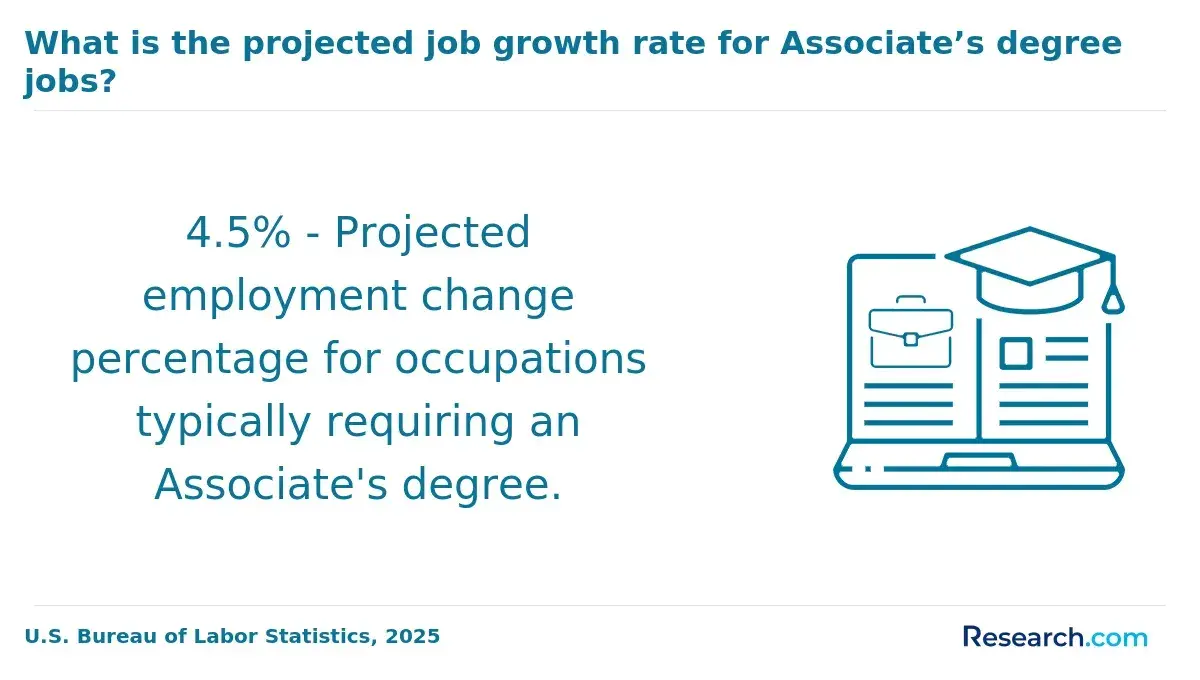
Employment growth in interior design aligns with average national rates, suggesting steady but not rapidly expanding demand. Professional certifications, which typically require a bachelor's degree and practical experience, improve employability and advancement chances-factors important for those aiming beyond entry level roles.
Prospective students should also consider how loan repayment, combined with tuition and living costs, might affect real-world return on investment. Those analyzing interior design degree salary and employment outcomes often find that advancing education pays off primarily when aligned with regional demand and leadership aspirations, while shorter programs may suit those prioritizing faster workforce entry despite potentially lower earnings.
Understanding return on investment of an interior design degree also means recognizing the value of complementary credentials and portfolio development in career growth. Students and professionals who can navigate part-time enrollment or transfer credits effectively tend to mitigate disruption and debt burden.
Exploring options like best certifications for jobs related to interior design can augment degree benefits and expand specialized opportunities, making credential attainment a critical component in long-term employment outcomes.
How Do Associate, Bachelor's, Master's, and Doctoral Interior Design Degrees Compare?
Entry into interior design careers through an associate degree often limits individuals to junior roles with constrained pathways toward leadership or licensure, as many employers prioritize candidates with bachelor's degrees for full professional eligibility. While such programs offer a cost-effective and quicker route to employment, transfer credit policies vary widely, which can complicate later pursuit of advanced degrees and reduce flexibility for career changes.
By contrast, a bachelor's degree remains the predominant baseline. Data from the National Center for Education Statistics in 2024 shows that roughly 65% of practicing interior designers hold at least this level, reflecting its strong alignment with both accreditation standards and preparation for credentials like the NCIDQ exam, which materially enhances advancement and salary potential.
Master's degrees provide a distinct advantage for those targeting specialized roles or leadership positions within firms or academia, offering broader research experience and professional portfolios that can justify the added time and financial investment.
However, these gains are not guaranteed across all sectors, making the decision to continue education beyond a bachelor's dependent on specific career goals and regional demand.
Doctoral degrees, though uncommon, primarily serve those aiming for academic or high-level consultancy positions and typically do not translate into higher immediate earnings within traditional design practice. Students must weigh the stability and prestige of such roles against the length and cost of doctoral study, recognizing that outside established educational settings, doctoral credentials may offer limited practical employment mobility.
Which Industries and Employers Hire Interior Design Graduates by Degree Level?
Hiring patterns for interior design graduates demonstrate clear distinctions tied to degree level, which directly shape employment scope and advancement potential. Associate degree holders frequently secure technical roles in residential or retail design firms, focusing on CAD proficiency and execution tasks rather than client interaction or project leadership.
For example, an associate-level graduate might consistently find work drafting and assisting within smaller construction firms where hands-on experience holds more weight than licensure, aligning with regional labor market demands documented in the U.S. Bureau of Labor Statistics' 2024 data.
Bachelor's degree graduates tend to enter firms requiring deeper regulatory understanding, such as architecture, healthcare, or corporate design consultancies, where mastering building codes, sustainability, and client coordination is critical. This level commonly serves as a gateway to supervisory roles, a pattern noted by the National Kitchen & Bath Association, reflecting employer preference for comprehensive training when assigning elevated responsibilities.
Master's degree holders, conversely, access niche sectors-including urban planning and academic research-where strategic leadership and policy development dominate, and where certifications like NCIDQ increasingly factor into hiring decisions. These advanced credentials often translate into higher salaries and specialized consulting opportunities, as supported by findings from the American Society of Interior Designers.
Doctoral credentials remain markedly specialized, primarily confined to research or emerging technology-focused consultancies, while certificate programs mostly enable skill refinement for practitioners rather than foundational hiring, underscoring the varied practical value of each educational tier.
What Skills, Credentials, and Experience Improve Interior Design Career Outcomes?
Technical proficiency in software such as AutoCAD, Revit, and SketchUp remains a baseline expectation that directly impacts employability and early productivity in interior design roles. Employers view demonstrated mastery of these tools alongside a well-curated portfolio as essential for distinguishing candidates, especially when considering advancement from associate to bachelor's degree levels.
The Interior Design credential requirements for career advancement notably highlight the National Council for Interior Design Qualification (NCIDQ) certification as a critical licensure that signals competency in legal, safety, and technical standards, thereby shaping promotion readiness and client trust. Candidates without such credentials often face slower mobility or must compensate through substantial field experience or specialized training.
Internships and practical apprenticeships create measurable advantages, with documented experiential learning increasing the likelihood of full-time placement by approximately 20% within six months post-graduation. This applied training develops essential skills in client communication, project management, and portfolio-building that employers prioritize beyond purely academic credentials.
For working professionals and adult learners, balancing prior credits with targeted internship opportunities can yield a meaningful advantage, especially when combined with leadership and client engagement exposure that supports mid-career transitions. Those exploring advanced qualifications should also consider flexible options like online master's programs for counseling that may complement design expertise in project or team management contexts.
Advancement tradeoffs often emerge when comparing associate degrees supported by certifications with bachelor's or graduate degrees paired with NCIDQ certification, which remains a key gatekeeper for managerial roles.
While associate-level qualifications can secure support positions, long-term career mobility typically requires strategic combination of licensure, portfolio depth, and demonstrated leadership within design teams.
The essential skills and certifications for interior design professionals thus center on integrating technical mastery with professional licensure and immersive experiential components, which collectively translate to stronger labor market outcomes and hierarchical mobility aligned with individual career goals.
Which Interior Design Degree Level Is Best for Your Career Goals?
Choosing the ideal interior design degree level often hinges on balancing immediate workforce entry against long-term career flexibility and advancement. For example, earning an associate degree can enable quicker employment-supported by data showing about 68% of graduates find work within a year-but may limit eligibility for senior roles and NCIDQ certification, which many employers require.
This path suits students prioritizing practical experience and lower upfront costs, but the tradeoff includes fewer opportunities in specialized areas or leadership positions compared to holders of bachelor's or graduate degrees.
Bachelor's degrees remain the standard for most interior designers, with approximately 75% of professionals holding this credential or higher, according to the U.S. Bureau of Labor Statistics. A bachelor's degree not only broadens access to licensure and specialized fields like sustainable or historic design but also aligns with employer expectations for comprehensive training.
For adult learners or transfer students, the time and credit requirements for a bachelor's may represent a manageable investment given the enhanced career mobility it offers. Many who seek leadership roles or focus areas then pursue graduate study, despite the risk of increased debt and delayed earnings.
Graduate degrees sharpen expertise and open pathways to academia, consultancy, and executive positions but are less common and come with higher financial and time commitments. Such advanced study is typically critical for specialized certifications and roles demanding deep knowledge.
Adult professionals evaluating degree progression should consider that additional credentials may be necessary to fully leverage career advancement, a dynamic parallel to choices made by those exploring a paralegal associate degree. Ultimately, selecting an interior design degree level should reflect individual goals, the practical realities of the employment landscape, and long-term credentialing requirements.
References
- What’s The Best Course To Do To Become An Interior Designer? https://www.idbs.online/whats-the-best-course-to-do-to-become-an-interior-designer/
- Interior Design Career Opportunities: Turn Creativity into Success https://nifglobal.college/blog/interior-design-career-opportunities-where-creativity-meets-career-growth/
- How to become an Interior Designer - Salary, Qualifications, Skills & Reviews – SEEK https://au.seek.com/career-advice/role/interior-designer
- Eight Careers That Rely on Interior Design Skills and How to Get Started | Belmont University https://www.belmont.edu/stories/articles/2024/interior-design-career-paths.html
- Landing Your First Interior Design Job: Key Skills Employers Seek https://blog.herzing.ca/your-first-interior-design-job-what-do-employers-look-for
- Entry-Level Interior Design Jobs: Your Gateway to a Creative Career https://www.creationsatelier.com/blog/entry-level-interior-design-jobs-your-gateway-to-a-creative-career
- Your Career in Interior Design - Career Services https://careerservices.myyu.ca/your-career-in-interior-design/
- How to Become an Interior Designer in 15 Simple Steps https://www.nda.ac.uk/blog/become-an-interior-designer/
Other Things You Should Know About Interior Design
Accreditation plays a crucial role in interior design education, especially concerning professional licensing and employer recognition. Programs accredited by bodies like the Council for Interior Design Accreditation (CIDA) often align better with industry standards and can smooth the pathway toward becoming a licensed interior designer.
Choosing a non-accredited program may limit eligibility for certain credentials and restrict employment opportunities, so prioritizing accredited programs offers a practical advantage despite potentially higher costs or competitive admissions.
While advanced degrees can deepen design expertise, they demand significant time and financial investment and may not guarantee immediate employment gains compared to targeted certifications or portfolio development.
For career changers already holding a bachelor's degree in another field, pursuing focused certifications or practical experience through internships and projects often leads to faster, more cost-effective integration into interior design roles. Prioritizing applied skills and networking over lengthy academic programs tends to yield stronger short-term employment outcomes for career switchers.
Associate degree programs typically offer faster completion with less-intensive workload but provide a narrower curriculum and fewer internship requirements.
In contrast, bachelor's degrees demand a larger time commitment and rigorous coursework, including comprehensive studio work and real-world projects, which better prepare graduates for complex professional roles. Students must weigh immediate time constraints and flexibility against the deeper preparation and broader opportunities afforded by bachelor's programs, recognizing that lighter workload paths may prolong career entry or limit advancement.
Master's degrees can position candidates favorably for leadership and specialized roles due to advanced design training and research skills, but extensive professional experience often serves as an equivalent or stronger qualifier for managerial positions.
Employers frequently value proven project management and client interaction abilities over formal credentials alone. Therefore, those targeting leadership should consider whether investing in a master's degree aligns with their current career stage or if focusing on gaining relevant experience and demonstrated results offers a more practical pathway.