2027 Engineering Technology Salary Trends Report: Are Wages Keeping Up With Tuition and Inflation?

Co-Founder and Chief Data Scientist
Consider a prospective engineering technology student assessing whether the degree's financial return justifies the rapidly rising costs of higher education. Tuition fees have surged in recent years, while inflation affects everyday expenses and future earnings.
Meanwhile, starting salaries and wage growth in engineering technology fields may not always keep pace with these economic pressures. This misalignment forces students and graduates to look beyond initial salary figures when weighing the true value of their investment.
Salary growth, education costs, and inflation often move at different rates, complicating straightforward comparisons. Evaluating long-term earning potential requires analyzing how these factors interact over time rather than focusing on salary alone.
This article examines engineering technology salary trends alongside tuition increases and inflation, exploring their combined impact on return on investment, affordability, and the financial validity of pursuing this degree. Understanding these dynamics is essential for making informed education and career decisions.
Key Things to Know About Engineering Technology Salary Trends
- Engineering technology graduates see median starting salaries 18% below engineering peers, which amid 7% annual tuition inflation means initial returns often lag adjusted education costs.
- Long-term earning potential correlates strongly with specialization areas like automation control, emphasizing targeted skills over broad credentials to offset tuition debt impacts.
- A 2024 industry report finds 62% of grads experience wage growth surpassing inflation only after 5 years, indicating delayed but meaningful career advancement.
- Key Things to Know About Engineering Technology Salary Trends Key Things to Know About Engineering Technology Salary Trends
- What Is the Current Salary Outlook for Engineering Technology Graduates? Salary Outlook
- Are Engineering Technology Salaries Keeping Up With Inflation? Inflation Impact
- How Do Tuition Costs Compare With Engineering Technology Salary Growth? Tuition vs Salary
- Does a Engineering Technology Degree Deliver a Positive Return on Investment? Degree ROI
- Which Industries Offer the Highest Salaries for Engineering Technology Graduates? Which Industries Offer the Highest Salaries for Engineering Technology Graduates?
- Which States and Cities Offer the Highest Pay for Engineering Technology Professionals? Which States and Cities Offer the Highest Pay for Engineering Technology Professionals?
- How Do Engineering Technology Salaries Grow Throughout a Career? Career Growth
- How Do Engineering Technology Salaries Compare With Similar Degrees? Salary Comparison
- How Is Employer Demand Affecting Engineering Technology Salary Trends? Employer Demand
- How Can Students Maximize Their Lifetime Earnings With a Engineering Technology Degree? Maximizing Earnings
What Is the Current Salary Outlook for Engineering Technology Graduates?
Salary trends for engineering technology graduates in 2024 reveal a landscape shaped by specialization, geographic factors, and industry demands rather than uniform earnings. Median wages for roles in electrical, mechanical, civil, and industrial technologist positions typically fall between $60,000 and $75,000, according to the U.S. Bureau of Labor Statistics.
Entry-level graduates might start nearer to $55,000, while specialized fields like electronics or software testing technology can push starting salaries above $65,000. However, the engineering technology graduate salary trends 2024 emphasize that inflation-driven cost increases and tuition hikes have somewhat offset these gains, making real income growth less pronounced.
Consider two graduates holding the same degree: one enters manufacturing automation in a high-cost region such as the San Francisco Bay Area, the other takes a position in a less tech-intensive area. The former might see mid-career salaries exceed $80,000 due to regional demand and specialization, while the latter could experience slower wage growth.
This illustrates that long-term earning potential depends heavily on strategic decisions regarding specialization and location. Prospective students should also evaluate career trajectories rather than focus solely on starting salaries, acknowledging that certifications and advanced technical credentials can significantly improve income prospects.
As wage gains remain modest against rising expenses, exploring options like financial aid or alternative affordable programs, such as those listed among the cheapest online MSW, becomes crucial.
The outlook for those with engineering technology degrees is steady but uneven, underscoring the importance of aligning educational investments with industry trends and personal career goals. Demand remains particularly strong in aerospace, renewable energy, and manufacturing automation, fueling job opportunities but concentrated in select metropolitan areas.
Understanding the nuanced variation in average earnings for engineering technology degrees helps candidates frame their choices realistically, balancing educational costs and regional market dynamics to optimize financial outcomes over time.
Are Engineering Technology Salaries Keeping Up With Inflation?
Nominal wage increases in engineering technology salaries can give an impression of growth, but when adjusted for inflation, the real earning power often tells a different story. Wage growth for engineering technology-related occupations has averaged about 3.2% annually, slightly above the 2.9% inflation rate reported by the U.S. Consumer Price Index, yet this marginal lead may not translate into meaningful purchasing power increases.
For instance, a recent graduate earning a 3.5% annual salary increase may still find day-to-day expenses and long-term financial commitments, such as mortgage payments or healthcare costs, rising at a pace that effectively erodes these gains. This subtle mismatch between salary growth and inflation affects the actual value of take-home pay, constraining discretionary spending and savings potential.
However, the question of whether engineering technology salary trends vs inflation truly align depends heavily on specialization and geography. Emerging fields within engineering technology, like automation and robotics, have demonstrated wage increases closer to 4.5%, outpacing inflation and offering stronger economic leverage.
Yet many traditional roles contend with stagnant wages that do not keep pace with the rising cost of living or tuition fees, making the return on investment for an engineering technology degree uneven. New students and career changers must therefore critically assess these wage dynamics alongside rising education costs, using resources such as best online degrees and market data to make informed decisions about their financial and professional futures.
How Do Tuition Costs Compare With Engineering Technology Salary Growth?
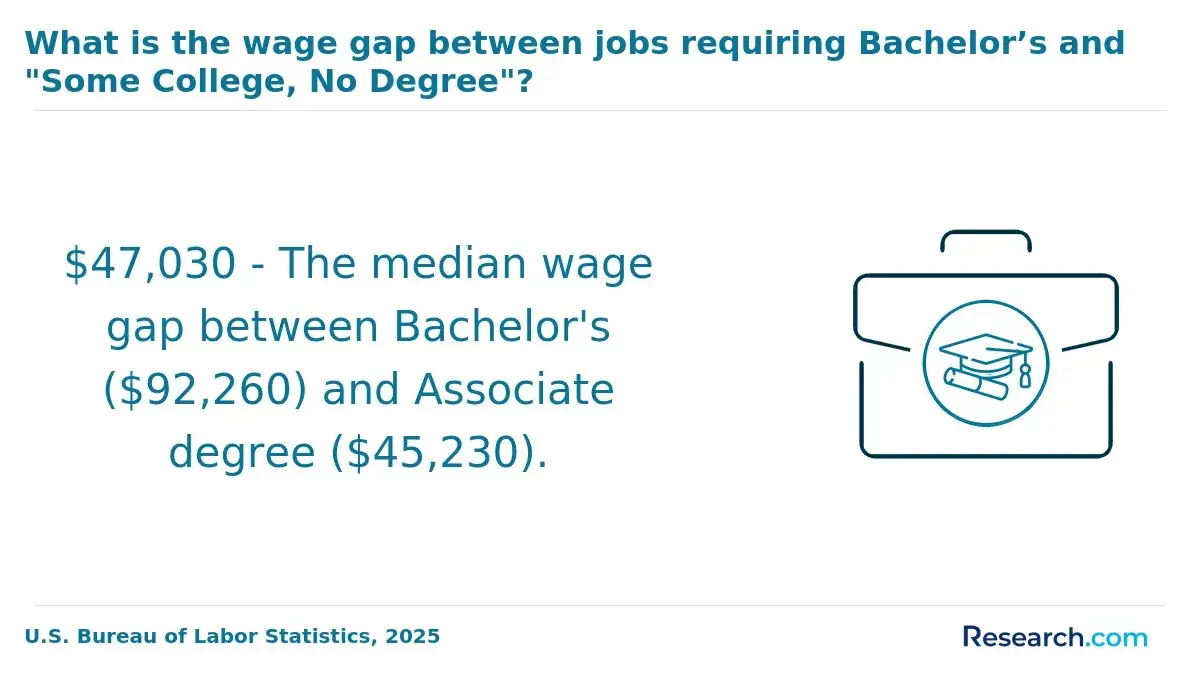
Evaluating tuition costs alongside salary growth for engineering technology graduates reveals a nuanced financial picture often missed when these figures are viewed in isolation. According to the National Center for Education Statistics and the U.S. Bureau of Labor Statistics, annual tuition at public four-year colleges offering engineering technology programs averages between $10,000 and $15,000 for in-state students, with private institutions charging upwards of $30,000.
Meanwhile, early-career salaries hover around $58,000 annually, growing modestly to about $75,000-$80,000 for those with 5 to 10 years of experience. When tuition inflation regularly exceeds general inflation, but median salaries increase only by about 3% to 4% per year-barely keeping pace with a roughly 4% inflation rate-graduates may find their financial returns on this degree delayed or diminished over time.
This dynamic matters because the impact of rising tuition can vary greatly depending on a student's financial strategy and career path. For example, a student who finances education through substantial debt may feel the weight of tuition rising faster than their salary growth, complicating repayment efforts and long-term financial planning.
Conversely, those who combine degree attainment with targeted skills development, geographic mobility, or credentialing may improve their earning capacity enough to offset higher upfront costs. Understanding the intersection of tuition expenses and actual wage growth offers a more realistic framework for assessing the degree's value, accounting for individual circumstances and economic shifts rather than relying on raw cost or salary numbers alone.
One recent graduate recounted how the rising tuition costs influenced their decision-making during college. Faced with steady increases in tuition and living expenses, they hesitated before committing to a private institution and ultimately opted for a public university in-state to reduce upfront debt.
Despite an early salary that felt stagnant relative to costs, gaining specialized certifications and relocating for better opportunities after five years significantly improved their income. This experience underscored that while tuition costs initially felt like a barrier, strategic moves beyond graduation had a decisive effect on bridging the gap between educational investment and financial reward.
Does a Engineering Technology Degree Deliver a Positive Return on Investment?
Return on investment in higher education means weighing the total cost of earning an engineering technology degree against the long-term benefits gained through career progression, earnings, and job stability. It is not simply about starting salaries, which for engineering technology graduates often trail behind traditional engineering fields, but about how earnings grow over time as skills and certifications accumulate.
For instance, a graduate from a community college program in engineering technology may start with a modest wage but experience steady salary increases that, over a decade, outpace inflation and tuition growth. Data from the U.S. Bureau of Labor Statistics and the National Center for Education Statistics in 2024 show that median wages in manufacturing, electronics, and civil technology fields rise consistently, reflecting solid demand and favorable employment conditions.
Several key factors influence whether this degree translates into positive financial returns. Geographic location impacts salary potential, as metropolitan areas typically offer higher wages but come with elevated living costs. The type of institution also matters; two-year technical programs generally have lower tuition and quicker entry into the workforce, improving short-term ROI, while four-year programs may incur more debt but offer higher wages in mid-career.
Economic fluctuations and industry trends further complicate projections, making it essential for students to consider their specialization and regional job markets. Ultimately, the degree's value depends on individual circumstances and how well graduates leverage their practical skills in the evolving job landscape.
Which Industries Offer the Highest Salaries for Engineering Technology Graduates?
For graduates seeking to maximize their return on investment in engineering technology education, targeting industries with strong salary potential is essential. Salary levels reflect not only demand but also the specialized skills and certifications that different sectors require. According to 2024 data from the U.S. Bureau of Labor Statistics and the National Association of Manufacturers, certain industries consistently top the list for compensation.
Among these, sectors with complex technical challenges and high innovation rates tend to offer the highest wages. Below are some of the leading sectors with highest salaries for engineering technology graduates:
- Energy Sector: Oil and gas extraction leads in compensation due to the intricate processes and safety regulations involved. Graduates working here often engage in maintaining and innovating extraction technologies, requiring advanced technical skills and familiarity with regulatory compliance.
- Aerospace and Defense: These industries demand expertise in designing, testing, and producing sophisticated aerospace systems and military hardware. High salaries correspond to the specialized knowledge in system integration and stringent quality standards.
- Advanced Manufacturing: Focused on automation and robotics, this sector values technologists capable of bridging engineering design with on-the-floor innovation. Skills in robotics, process optimization, and smart factory technologies enhance earning potential.
- Information Technology and Telecommunications: Roles in systems integration and network security are highly sought after, reflecting the critical need for maintaining and protecting complex communication infrastructures. Graduates adept in these areas often earn premium pay.
- Biomedical Device Industry: Rapid innovation in medical equipment and healthcare technologies creates demand for technologists skilled in developing and maintaining diagnostic and therapeutic devices, often translating into higher salaries.
- Manufacturing Automation: This subset emphasizes expertise in programming automated systems and improving productivity through technology, rewarding technologists with competitive compensation due to the sector's strategic importance.
- Government and Defense Contracting: Engineering technology graduates involved in defense contracts often receive above-average salaries tied to specialized projects and security clearances, with long-term career stability in public sector roles.
For those weighing career choices, understanding these top sectors with highest salaries for engineering technology graduates provides a clearer picture of where technical skills yield the greatest financial reward. Practical decisions also benefit from exploring education paths aligned with these industries, such as programs offering certifications in automation or network security.
For instance, pursuing an online masters in communication can position professionals for strong roles in IT and telecommunications. Evaluating salary data within this context helps align educational investments with stable, lucrative career opportunities.
Which States and Cities Offer the Highest Pay for Engineering Technology Professionals?
Geographic location remains a critical factor shaping earnings for engineering technology professionals, with top-paying regions closely tied to concentrated industrial sectors and local economic conditions. While annual salaries can be notably higher in states boasting advanced manufacturing, aerospace, and technology enterprises, these gains often come with increased living costs that can diminish disposable income.
Students and recent graduates should weigh potential salary premiums against expenses such as housing and tuition when choosing where to build their careers. The following list highlights key states and metro areas known for high wages in this field, emphasizing important tradeoffs for those assessing return on their educational investment:
- California Bay Area: Home to Silicon Valley and other tech hubs, this region offers median salaries exceeding $90,000, driven by a concentration of innovation and tech companies. However, the very high cost of living and tuition rates can offset these earnings, demanding careful financial planning from graduates aiming for net positive outcomes.
- Texas Metro Areas: Cities like Houston and Dallas provide competitive compensation in the $80,000-$85,000 range, buoyed by energy, aerospace, and manufacturing sectors. Lower living costs here compared to coastal areas allow for better disposable income despite slightly lower salaries.
- Seattle, Washington: The strong aerospace presence, notably Boeing, supports average engineering technology wages near $87,000. While living expenses are significant, the area's established industry clusters mean plentiful job opportunities and potential career growth.
- Chicago, Illinois: With its diverse industrial base-including manufacturing and engineering services-Chicago offers salaries generally between $75,000 and $80,000. Graduates benefit from strong professional networks but must consider urban living costs and tuition inflation in the region.
- Boston, Massachusetts: Known for advanced engineering and technology firms, Boston's salaries fall within the $75,000 to $82,000 range. The area's robust academic-industry partnerships foster career development yet are coupled with some of the highest tuition fees nationally.
How Do Engineering Technology Salaries Grow Throughout a Career?
Engineering technology salaries tend to rise steadily but unevenly through different career stages, influenced by industry, specialization, and individual choices. Entry-level graduates usually start near $60,000 annually, with modest gains in the first few years as they build foundational skills and earn credentials.
By mid-career, roughly five to fifteen years in, professionals often see salaries climb to between $85,000 and $95,000, reflecting increased responsibility and expertise, particularly in higher-paying sectors like aerospace or advanced manufacturing. However, late-career salaries above $100,000 typically require deliberate engagement in leadership roles, management, or technology specialization, as wage growth may flatten if ongoing development is neglected.
Consider two graduates from the same engineering technology program: one pursues continuous certification and shifts toward project management, while the other remains in a technical role without additional qualifications. Although their starting salaries might be similar, the first may reach or surpass six figures within 15 to 20 years, leveraging skills that align with strategic and supervisory demands.
Meanwhile, the second might experience slower salary growth, closer to the median for general technical roles. According to 2024 U.S. Bureau of Labor Statistics data, such divergence is common, underscoring that sustained professional development, adaptability, and sector choice strongly predict long-term earnings rather than tenure alone.
One graduate recalled hesitating when offered a specialized certification program early in their career, concerned about the upfront effort amid rising tuition debt. They ultimately enrolled, noting that this decision led to advanced projects and a supervisory position within a decade.
Reflecting on the path, they acknowledged how embracing continual learning-not just accumulating years of experience-was key to surpassing peers in salary growth, even as economic pressures and inflation challenged initial expectations about return on their education investment.
How Do Engineering Technology Salaries Compare With Similar Degrees?
Engineering technology graduates often face nuanced salary tradeoffs compared with peers in closely related technical fields. Although starting salaries are somewhat lower, especially relative to traditional engineering or computer science degrees, the overall compensation trajectory reflects different industry demands and educational investments.
For students weighing if an engineering technology degree justifies its cost amid rising tuition and inflation, practical application and job stability in hands-on roles are key considerations. Below is a comparison of how engineering technology wages stack up against similar degrees, offering clarity for those deciding on a career pathway:
- Traditional Engineering: Electrical and electronics engineers earn a median annual wage around $103,000, significantly higher than engineering technology's approximately $67,000. This gap partly arises from more intensive theoretical training and licensure potential, enabling roles in design and development. However, engineering graduates often incur longer degree programs and higher educational costs.
- Computer Science: Entry-level salaries average near $75,000, reflecting strong demand in software and IT sectors. Computer science roles emphasize coding and systems architecture, whereas engineering technology focuses on applied manufacturing and installation, often leading to faster practical skill acquisition but lower initial pay.
- Applied Sciences: These fields typically offer salaries lower than engineering technology due to less specialized technical training. Engineering technology holders benefit from industry certifications and real-world experience that boost earnings over time, particularly in construction, industrial, and manufacturing settings.
- Technical Certifications and Experience: Mid-career salaries for engineering technology professionals can approach parity with traditional engineering roles when factoring in experience and certifications, suggesting a wage growth trajectory that rewards applied expertise even if starting pay is modest.
For prospective students especially seeking cost-effective pathways, exploring online associate degree programs may provide entry points into engineering technology fields without the extended tuition commitments of traditional four-year degrees.
How Is Employer Demand Affecting Engineering Technology Salary Trends?
The demand for engineering technology professionals significantly shapes salary trends by driving competition among employers for qualified candidates. For instance, in sectors like aerospace and renewable energy, companies aggressively offer signing bonuses and above-average starting salaries to attract individuals with specialized skills.
According to the U.S. Bureau of Labor Statistics' 2024 report, engineering technology occupations are expected to grow faster than the average for all fields, reflecting heightened employer demand impact on engineering technology salaries. This demand not only increases hiring activity but also pushes organizations to adopt more competitive compensation strategies to retain talent.
However, the relationship between demand and salary growth is complex, influenced by factors such as economic conditions, experience levels, specialization areas, and budgetary constraints within organizations. While strong employer demand can accelerate wage increases, these gains do not always keep pace with rising tuition costs or living expenses, creating financial tradeoffs for graduates.
For example, a recent survey by the National Society of Professional Engineers revealed a persistent skills gap, prompting employers to offer premium salaries that may improve long-term earnings potential but also requiring ongoing skill development to maintain.
Prospective students and career changers should carefully evaluate these engineering technology salary trends by industry demand alongside education expenses. Those who continuously upgrade their expertise often find salaries that outpace inflation over time despite upfront costs.
For insights on related career opportunities, it's useful to review good paying jobs for introverts, which sometimes intersect with engineering technology roles, offering alternative pathways with competitive pay.
How Can Students Maximize Their Lifetime Earnings With a Engineering Technology Degree?
Maximizing lifetime earnings with an engineering technology degree requires strategic decisions beyond degree completion. Recent 2024 data from the U.S. Bureau of Labor Statistics and industry research emphasize that targeted specialization, skills enhancement, and geographic positioning strongly impact salary trajectories.
For example, a graduate focusing on renewable energy in Seattle often outpaces peers in less dynamic markets due to higher demand and wage premiums. Prioritizing growth areas and credentials forms the foundation of sustained income growth.
Below are key strategies that shape long-term financial outcomes for engineering technology professionals:
- Industry Specialization: Concentrate on high-demand sectors like aerospace, renewable energy, or advanced manufacturing where employers offer premium salaries tied to applied technical and project management skills.
- Professional Certifications: Obtain recognized credentials such as Certified Manufacturing Engineer (CMfgE) or automation certifications to increase marketability and accelerate promotions.
- Geographic Placement: Choose metropolitan hubs with robust industrial ecosystems like Houston, Seattle, or Boston where wages tend to be significantly higher despite living costs.
- Continuous Skill Development: Regularly update technical skills and digital proficiencies through courses and workshops to maintain relevance amid technological advances.
- Leadership Pursuit: Seek roles that combine engineering technology expertise with business or data analytics to command higher salaries reflecting broader strategic impact.
- Networking and Mentorship: Build professional networks and find mentors in target industries to access better job opportunities and insider knowledge on emerging trends.
- Pragmatic Career Planning: Evaluate job offers and career moves not only by starting salary but also by long-term growth potential and skill-building opportunities based on labor market analyses.
References
- The price of college is rising faster than wages for people with degrees | USAFacts https://usafacts.org/articles/is-college-worth-it-the-price-of-college-is-rising-faster-than-wages-for-people-with-degrees/
- Why an Engineering Degree is a Solid Investment | Vaughn College https://www.vaughn.edu/blog/why-an-engineering-degree-is-a-solid-investment/
- Major Differences https://www.educationnext.org/major-differencecs-why-some-degrees-cost-colleges-more-than-others/
- Graduate engineering salary round up https://targetjobs.co.uk/careers-advice/engineering/graduate-engineering-salary-round
- Which Country Pays Engineers Best? The Complete 2026 Salary Comparison https://www.fed-group.ch/en/fed-engineering/job-search/which-country-pays-engineers-best
- Does College Pay Off? A Comprehensive Return On Investment Analysis - FREOPP https://freopp.org/whitepapers/does-college-pay-off-a-comprehensive-return-on-investment-analysis/
- Engineering career map | Wise https://wise.jobs/engineering-career-map
- Study reveals huge boost to lifetime earnings for engineering graduates https://www.imeche.org/news/news-article/study-reveals-huge-boost-to-lifetime-earnings-for-engineering-graduates
- Salary Trends 2026: What Engineering, Manufacturing & Technology Employers Need to Know https://www.europrojects.co.uk/blog/2026/02/salary-trends-2026
Other Things You Should Know About Engineering Technology
Longer program durations often mean higher overall tuition costs and deferred earnings, which can widen the gap between wages and educational expenses for engineering technology majors. However, extended study periods may allow students to specialize or gain certifications that command better starting salaries. Prospective students should prioritize program structures that balance timely completion with practical, employer-valued skills rather than assuming longer is always better or worse. Early workforce entry might improve short-term financial stability but limit upward mobility if the credential is incomplete or less comprehensive.
Community colleges typically offer lower tuition and faster completion, but graduates often start at lower salary levels compared to those from four-year institutions due to employer preferences and perceived rigor. For many in engineering technology fields, this tradeoff calls for prioritizing cost-efficiency and quicker workforce entry if immediate return on investment is critical. However, if the goal is long-term salary growth, investing in a four-year program with stronger industry connections and broader curriculum might produce better earnings despite higher tuition.
Students who work while pursuing engineering technology credentials handle tuition and inflation pressure differently, often accumulating less debt but extending their time to graduation. This balancing act can slow initial wage growth since delayed degree completion may postpone eligibility for higher-paying roles. Financially, part-time study can reduce stress by spreading out costs, but it demands high personal time management and may limit opportunities for internships that boost post-graduate salaries. Deciding to work part-time should consider both immediate financial relief and possible long-term impacts on career advancement.
Static skills quickly lose value as technology advances and inflation erodes real wages, making continuous learning essential for engineering technology professionals. Those who fail to update technical competencies or obtain new certifications risk stagnating salaries, especially given wage trends that have not consistently kept pace with tuition and living costs. Active investment in skill development, even after graduation, is a strategic necessity to offset inflation's impact on earnings and remain attractive to employers in evolving industries.