2027 Engineering Technology Degree Popularity by Gender, Region, and Degree Level

Co-Founder and Chief Data Scientist
A student considering an engineering technology degree in 2024 may encounter sharply contrasting enrollment patterns by gender and region that complicate how the program's popularity reflects its real-world value. For instance, women accounted for just 22% of engineering technology bachelor's completions nationally last year-a gap that varies widely by state, hinting at demographic, cultural, or institutional factors influencing access and interest. Regional disparities further skew perceptions, as programs in the Midwest show high enrollment but lower female representation, raising questions about peer diversity and future workforce dynamics. These enrollment trends shape not only academic experience but also employer demand and career networking opportunities.
Understanding these nuances is crucial for students weighing degree level choices and geographical options.
This article analyzes engineering technology degree popularity by gender, region, and degree level to clarify these patterns and support informed educational and career decisions.
Key Things to Know About Engineering Technology Degree Popularity by Gender, Region, and Degree Level
- Women constitute only about 19% of engineering technology enrollees in the Midwest, highlighting persistent gender gaps that signal industry entry barriers and influence targeted recruitment efforts.
- Southern states report higher enrollment in associate over bachelor's engineering technology programs, reflecting cost and time considerations that may limit access to advanced credentials despite employer preferences for four-year degrees.
- Nationally, bachelor's level engineering technology degrees grew 12% since 2022, indicating workforce shifts toward deeper technical expertise but also raising questions about return on investment and skill specialization tradeoffs.
- Key Things to Know About Engineering Technology Degree Popularity by Gender, Region, and Degree Level Key Things to Know About Engineering Technology Degree Popularity by Gender, Region, and Degree Level
- How Does Job Market Demand Influence Engineering Technology Degree Popularity? Market Demand and Degree Popularity
- How Does Online Engineering Technology Degree Enrollment Compare to Traditional Campus Programs? Online vs. Campus Enrollment
- What Degree Level Is Most Common Among Engineering Technology Students? Most Common Degree Levels
- How Do Enrollment Trends Differ Between Associate, Bachelor's, Master's, and Doctoral Engineering Technology Degrees? Enrollment Trends by Degree Level
- How Popular Is the Engineering Technology Degree Compared to Other College Majors? Degree Popularity vs. Other Majors
- Why Is the Engineering Technology Degree More Popular in Certain States and Regions? Regional Popularity Drivers
- What Demographic Groups Are Driving Growth in Engineering Technology Degree Programs? Growth by Demographic Groups
- What Is the Future Outlook for Engineering Technology Degree Enrollment by Gender, Region, and Degree Level? What Is the Future Outlook for Engineering Technology Degree Enrollment by Gender, Region, and Degree Level?
- How Have Engineering Technology Degree Enrollment Trends Changed Over the Past Decade? How Have Engineering Technology Degree Enrollment Trends Changed Over the Past Decade?
- Where Is the Engineering Technology Degree Most Popular Across the United States? Geographic Popularity Analysis
How Does Job Market Demand Influence Engineering Technology Degree Popularity?
Employer demand shapes the popularity of engineering technology degree programs by influencing which skills and credentials are prioritized regionally and by industry sector. For instance, states like Texas and California with robust manufacturing and aerospace industries see higher concentrations of applicants and graduates aligning their education with local market needs. However, labor market demand alone does not fully explain enrollment patterns, as many employers weigh experience and professional certifications heavily, complicating straightforward degree-to-job pipelines. This dynamic means prospective students must consider not only current openings but also credential requirements and industry expectations relevant to their targeted sector and location.
Regional differences in workforce demand create distinct enrollment trends that reflect not only economic opportunity but also varying efforts at gender inclusion and access. Male enrollment still dominates many engineering technology programs, but evolving employer diversity initiatives and shifting social norms are gradually changing these demographics. In states where economic growth in technology-driven sectors is strong, programs are increasingly adapting to attract a broader range of candidates, emphasizing how regional labor market conditions directly impact engineering technology degree popularity by gender and level. Aspiring students should balance these factors when evaluating the long-term relevance of their degree in specific areas, especially considering that the suitability of online programs that pay well may differ significantly by region and industry specialization.
How Does Online Engineering Technology Degree Enrollment Compare to Traditional Campus Programs?
Online engineering technology programs have expanded the student demographic beyond those traditionally served by campus-based offerings, particularly by increasing access for working adults and individuals in rural areas who cannot relocate. According to 2024 data from the National Center for Education Statistics, about 30% of engineering technology students now engage in fully online courses, reflecting a significant shift driven by demand for flexible scheduling and geographic reach. This modality growth contrasts with campus programs that still draw predominantly younger, full-time students near urban institutions but often offer greater hands-on training, which many employers prioritize. As a result, prospective students must consider tradeoffs between accessibility and experiential learning that affect both employability and long-term career development.
Gender dynamics also vary between program types, with online engineering technology enrollment showing a slightly higher share of female students compared to traditional campuses, possibly because flexible formats better accommodate those managing multifaceted roles outside of school. Despite this, women remain underrepresented overall, indicating persistent barriers across modalities. Completion rates for online students may lag somewhat due to challenges like limited in-person labs and self-directed motivation, emphasizing the importance of hybrid or virtual practical components. These nuances underline how modality influences not only who enrolls but how students navigate and complete their education, shaping workforce readiness in this technical field.
One engineering technology student faced a decision to choose between a local community college's campus program and a fully online alternative after relocating for family reasons. The student was initially skeptical about online learning quality and concerned about missing in-person collaboration and lab experiences, which seemed critical for skill development. However, the online program's flexible hours allowed balancing part-time work and caregiving, while connections through virtual labs partially offset isolation. This experience highlights how individual circumstances and priorities intersect with modality considerations, revealing that what might seem like a secondary factor can become decisive when access and life demands constrain traditional attendance options.
What Degree Level Is Most Common Among Engineering Technology Students?
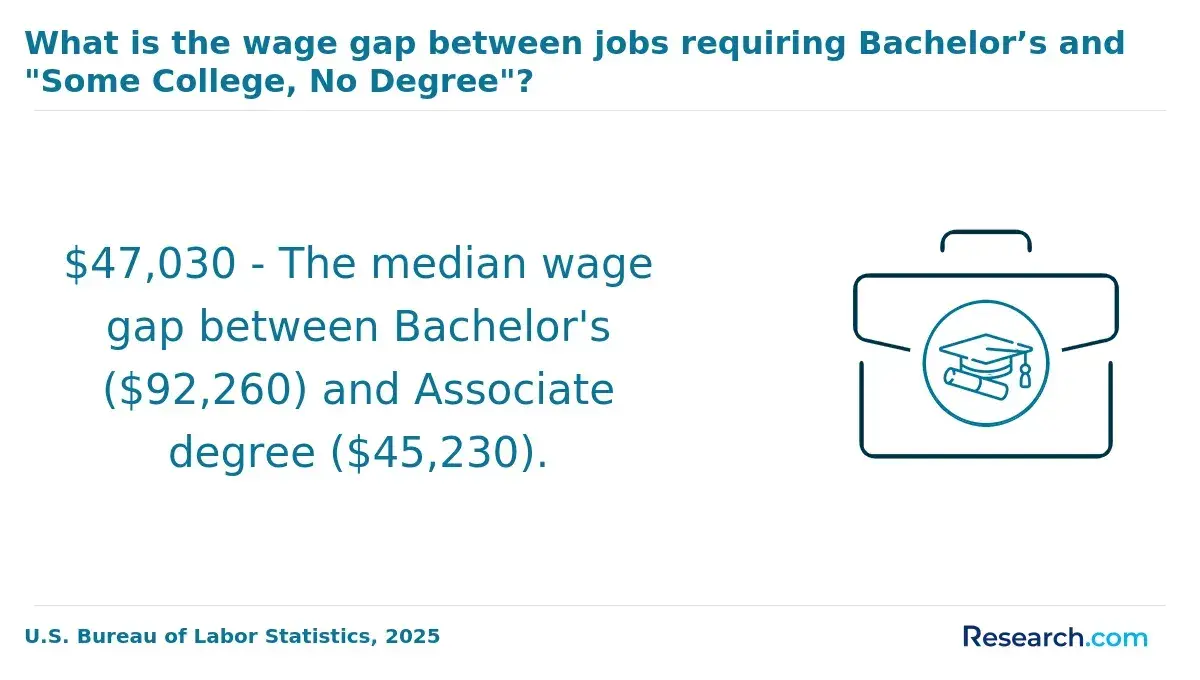
The associate degree remains the most prevalent credential among engineering technology students, representing about 55% of completions according to recent data from the National Center for Education Statistics and IPEDS for 2023-2024. This dominance reflects the alignment of associate programs with immediate workforce needs, especially for entry-level positions in manufacturing, construction, and other technical fields where practical skills are prioritized over extended theoretical study. For many students, the associate degree offers a quicker, more cost-effective path to employment, contrasting with the longer, more resource-intensive bachelor's programs.
Bachelor's degrees, accounting for roughly 35% of completions, tend to attract those pursuing supervisory roles or specialized technical expertise that requires a stronger grounding in engineering principles. The additional time and financial investment associated with bachelor's programs poses a clear tradeoff, as the broader curriculum prepares students for mid-level responsibilities but may delay labor market entry. Meanwhile, master's and doctoral credentials remain rare in this field due to the applied focus of engineering technology and limited demand for academic research roles, restricting advanced degrees to specialized niches related to leadership or innovation.
Transfer pathways from associate to bachelor's programs and the expansion of online degree offerings have broadened access and flexibility, though regional workforce demands heavily influence degree-level preferences. Industrial hubs may drive greater interest in higher-level degrees, but the field's overall emphasis on practical skills and rapid employment keeps the associate credential central. Prospective students must weigh immediate employability against longer-term specialization goals when choosing their educational route within engineering technology.
How Do Enrollment Trends Differ Between Associate, Bachelor's, Master's, and Doctoral Engineering Technology Degrees?
Enrollment patterns in engineering technology degrees reflect differing career objectives and labor market demands, with associate programs capturing nearly 60% of total enrollments due to their accessibility and direct pipeline to technical roles. Students often choose associate degrees for rapid workforce entry and regional industry alignment, particularly in manufacturing hubs. In contrast, bachelor's programs show slower enrollment growth despite offering a broader balance of theory and practice, preparing graduates for mid-level supervisory positions where employers seek both applied skills and foundational knowledge, as evidenced by a 3% increase in completions reported by the National Center for Education Statistics in 2024.
Master's enrollments, while smaller, are expanding at approximately 5-7% annually, largely among working professionals targeting specialized technical expertise or managerial roles tied to emerging fields like automation and digital manufacturing. This growth suggests increasing demand for credentials that bridge technical depth with leadership capabilities. Doctoral programs remain highly specialized with minimal growth, concentrated in research institutions and innovation clusters, signaling a niche market for advanced R&D skills. Understanding these distinctions is crucial for educational planning and selecting pathways that align with individual career trajectories and regional workforce trends. Prospective students should also consider exploring nationally accredited online colleges for flexible access to these varied degree options.
How Popular Is the Engineering Technology Degree Compared to Other College Majors?
The relative popularity of the engineering technology degree suggests a specialized but steadily growing niche within STEM education, reflecting a distinct balance between theoretical understanding and practical application that differentiates it from traditional engineering fields. According to data from the National Center for Education Statistics in 2024, engineering technology programs account for about 3% of bachelor's degree enrollment in STEM, trailing behind conventional engineering but exceeding many specialized technical disciplines. This moderate enrollment influences program availability, peer cohort size, and specialization options, which in turn affects the extent of industry alignment and workforce integration for graduates.
Enrollment trends reveal demographic and geographic patterns that bear practical implications. Female students, representing approximately 21% of enrollees, outnumber their presence in traditional engineering but still lag relative to fields like health sciences, indicating ongoing diversity challenges. Regionally, higher concentrations in the Midwest and Southern U.S. reflect industrial demand tied to manufacturing sectors, shaping program growth and employment opportunities. Graduate-level engineering technology programs attract fewer students and often prioritize management and applied skills over research, signaling a divergence in student and employer expectations depending on degree level.
One former student recounts discovering the engineering technology program at a midwestern state university, noting smaller class sizes compared to traditional engineering majors. The student was intrigued but cautious, as academic advisors pointed out that while the program was growing, it lacked the broad name recognition of mechanical or electrical engineering. This relative uniqueness sometimes sparked curiosity among peers but also hesitance, as the student weighed the benefits of practical skills against fewer alumni networks and job postings. Nonetheless, the student valued the program's focus on workforce-ready competencies tailored to regional industry needs, which ultimately aligned well with local employer demand.
Why Is the Engineering Technology Degree More Popular in Certain States and Regions?
Higher concentrations of local industry dramatically shape the demand and popularity of engineering technology degrees across U.S. regions. For instance, Michigan's robust automotive sector and California's advanced manufacturing hubs create direct hiring pipelines that encourage regional colleges to offer tailored programs. This alignment means students in these states often have more internship and employment opportunities, influencing both enrollment decisions and perceived degree value. In contrast, Midwest states with less concentrated industrial activity see different enrollment dynamics, where workforce demand correlates strongly with regional economic shifts rather than sheer population size.
Regional factors influencing engineering technology program popularity also hinge on educational accessibility and public policy emphasis. States with well-established community colleges and technical institutes that incorporate hands-on training, often linked to local employers, exhibit higher graduation rates. Moreover, states investing in STEM workforce development signal stronger long-term support for these programs, making them more attractive to diverse and underrepresented populations. Demographic trends interact with these factors, affecting networking environments and student outcomes, which are critical for those assessing the practical return of their degree in varying labor markets.
For prospective students comparing degrees or considering where to study, evaluating these regional dynamics is as important as the curriculum itself. Online program availability can supplement access but may not fully replace the benefits of local industry connections and program reputation. Students exploring related educational pathways might also examine options such as the admin assistant degree for complementary skills in workforce settings.
What Demographic Groups Are Driving Growth in Engineering Technology Degree Programs?
Shifts in Enrollment in engineering technology programs reflect evolving workforce demands and educational accessibility rather than simple demographic trends. Women's enrollment nearing 40% signals more than gender parity; it indicates that targeted recruitment and expanded career pathways have made technical roles more attainable and relevant to diverse skill sets, responding directly to employer calls for inclusive talent pipelines. Similarly, adult learners fueling a 15% rise in part-time and online participation demonstrate how flexible delivery models accommodate working professionals adapting to rapid technological change, though this demographic often balances competing priorities that can affect program completion and learning depth.
Regional enrollment concentrations in the Midwest and Southern U.S. underscore how local economies focused on manufacturing and applied technology shape program growth and student exposure to region-specific industry needs. This geographic pattern also intersects with expanded access through community colleges, where first-generation students increasingly pursue associate degrees that offer affordable pathways but may limit immediate advancement compared to bachelor's programs. Concurrently, rising Hispanic and African American participation reflects both federal support initiatives and critical efforts to correct historic underrepresentation; however, success depends on sustained institutional support addressing retention and pipeline equity beyond initial enrollment.
These demographic and regional dynamics affect prospective students' experiences by diversifying peer networks and altering classroom environments, which in turn influence program design and resource allocation. Educators must balance serving nontraditional learners with maintaining rigorous technical standards, while employers should recognize the varied backgrounds graduates bring to engineering technology roles. Understanding these trends helps policymakers and institutions craft responsive strategies that align educational outcomes with workforce realities, ensuring the degree's relevance amid shifting labor market and societal expectations.
What Is the Future Outlook for Engineering Technology Degree Enrollment by Gender, Region, and Degree Level?
Enrollment in engineering technology degree programs is expected to reflect ongoing demographic shifts and regional economic variations rather than uniform growth. Female representation, now at approximately 30%, indicates progress toward closing gender gaps but still highlights persistent disparities in advanced degree participation and career advancement opportunities. This shift necessitates program adjustments to support retention and success for a diversifying student body without compromising rigor or employer expectations for technical proficiency.
Regionally, enrollment growth aligns closely with local industry needs: manufacturing hubs in the Midwest and South sustain associate degree popularity as quick workforce entry points, while western regions tied to aerospace and tech sectors gradually increase demand for higher degree levels. Institutions expanding online and hybrid offerings effectively broaden access, particularly in urban areas, but rural programs face challenges due to population declines and resource limitations, impacting long-term educational planning and regional workforce pipelines.
Beyond access, the rising enrollment at bachelor's and master's levels reflects employer preference for advanced competencies and leadership potential in engineering technology roles, influencing student decisions to pursue extended education amid cost and time tradeoffs. Graduate programs also attract international and professional learners aiming for upskilling, adding complexity to program design and career pathway alignment. These nuanced enrollment trajectories require prospective students and workforce stakeholders to weigh immediate employment needs against future advancement prospects informed by evolving labor market demands and institutional capacity.
How Have Engineering Technology Degree Enrollment Trends Changed Over the Past Decade?
Engineering technology degree enrollment trends by gender and region reveal nuanced shifts that extend beyond raw numbers, reflecting evolving workforce demands and educational priorities. The growth in bachelor's degree completions by approximately 15% contrasts with a slight decline in associate degree participation, indicating a market preference for credentials with deeper theoretical and applied rigor. This evolution influences how students and employers perceive program relevance, with stronger emphasis on four-year degrees that better align with complex technical skill requirements in modern industries.
Changes in engineering technology program participation over the past decade also highlight gradual gains in gender diversity, with female enrollment increasing from near 20% to 28%. While still predominantly male, this shift suggests the impact of targeted outreach and support structures intended to reduce longstanding barriers. Regional disparities further complicate the landscape: enrollment growth is strongest in the South and West, areas buoyed by expanding manufacturing and technology sectors as well as increased online program availability. However, the practical challenges of delivering hands-on engineering technology curricula remotely continue to affect retention and completion outcomes.
Prospective students navigating these trends should consider the tradeoffs between degree level, mode of delivery, and geographic location, especially as employers seek graduates capable of integrating both theory and applied skills in dynamic work environments. For those comparing pathways or evaluating program value, examining offerings such as the best online electrical engineering programs USA can provide useful benchmarks. Understanding these enrollment dynamics is key to informed decision-making in an increasingly competitive and specialized technical workforce.
Where Is the Engineering Technology Degree Most Popular Across the United States?
The geographic distribution of engineering technology degree popularity in the United States largely reflects regional industrial demand and the availability of targeted educational institutions rather than an even spread across states. Concentrations in the Great Lakes and Southeastern regions mirror the presence of robust manufacturing, automotive, aerospace, and energy sectors that require graduates with practical, applied technical skills. These clusters create ecosystems where community colleges and technical schools flourish, offering accessible programs with direct workforce ties. Such localization influences both the range of program choices available to students and perceptions of degree value, as proximity to industry hubs often enhances internship and employment opportunities.
States with dense institutional availability and diverse populations-such as Florida and North Carolina-demonstrate how demographic factors intersect with educational infrastructure to shape enrollment trends in engineering technology degree programs. Metropolitan centers like Detroit and Houston exemplify urban environments where economic scale supports hands-on training and industry networking, crucial for those evaluating career pathways. For students examining engineering technology degree enrollment by region in the United States, understanding these localized dynamics is essential to making informed decisions about where to study and work. This regional concentration also affects the labor market, reinforcing demand for graduates in specific corridors rather than broadly nationwide.
These enrollment patterns parallel findings in related technical fields, and those seeking comparative insights may consider exploring resources like the GIS degree data, which highlights similar geographical variances. Overall, workforce alignment, educational accessibility, and regional economic conditions remain key drivers shaping the most popular states for engineering technology degree programs.
References:
- Online Degree vs. Traditional: Choosing the Right Path https://beal.edu/online-degree-vs-traditional/
- From A levels to engineering infographic https://www.engineeringuk.com/research-and-insights/our-research-and-evaluation-reports/from-a-levels-to-engineering-infographic/
- U.S. Degree Attainment - Society of Women Engineers https://swe.org/research/2026/us-degree-attainment/
- Types of College Degrees https://www.act.org/content/act/en/students-and-parents/high-school-success/what-to-do-after-high-school/college-degrees.html
- Polish Graduate tracking system - articles https://ela.nauka.gov.pl/en/labor-market/gender_employment_gap
- Online Degree vs. Traditional | University of Arkansas Grantham https://www.uagrantham.edu/blog/pros-cons-online-degree-vs-traditional-university/
- Which Degree is Right for Me – Engineering or Engineering Technology? - Purdue University Northwest https://www.pnw.edu/which-degree-is-right-for-me-engineering-or-engineering-technology/
- Engineer Survey: Engineering Vs Engineering Technology https://www.chiefdelphi.com/t/engineer-survey-engineering-vs-engineering-technology/47716
- 2023 Most Popular Engineering Technologies Bachelor's Degree Schools in the Plains States Region - Course Advisor https://courseadvisor.com/majors/engineering-technologies/rankings/most-popular/bachelors-degrees/the-plains-states/
- APLU Report: Despite Recent Gains, Increasing African American & Hispanic Degrees in Engineering Seen as Key to Filling Employment Needs in High Tech Fields - APLU https://www.aplu.org/news-and-media/news/aplu-report-despite-recent-gains-increasing-african-american-hispanic-degrees-in-engineering-seen-as-key-to-filling-employment-needs-in-high-tech-fields/
Other Things You Should Know About Engineering Technology
Gender representation varies notably across regions and degree levels, with some programs exhibiting significant male dominance. This imbalance can affect peer dynamics, networking opportunities, and mentorship availability, especially for women and non-binary students. Prospective students from underrepresented genders should weigh the benefits of enrolling in programs actively fostering diversity initiatives, as these environments tend to offer stronger support systems and can improve long-term career outcomes.
Regional differences in degree popularity often mirror local industry demands and standards, which influences employer preferences for specific degree levels or specializations. Choosing a program aligned with regional employer expectations can ease job placement but might limit flexibility if relocating later. Students should prioritize programs with strong employer partnerships and graduates' placement records within their desired geographic area to maximize practical employment advantages.
Associate degrees often provide faster entry into the workforce with more hands-on training, suitable for technical roles requiring direct application skills. However, bachelor's degrees generally open pathways to higher-skill positions and management roles but require greater time and financial investment. Students should consider their career goals carefully: prioritize associate degrees for immediate job readiness and bachelor's degrees for long-term growth and leadership potential.
Employers expect higher degree levels to correlate with advanced problem-solving abilities, project management skills, and theoretical understanding. Consequently, bachelor's and beyond typically involve more complex responsibilities and longer work hours than roles typically filled by associate degree holders. Students must assess their willingness to commit to these demands and recognize that choosing a higher degree level may mean a heavier academic workload upfront but can lead to more strategic career opportunities.