2027 Counselor Education Career Outcomes by Degree Level Report: Pay, Employment, and Advancement Patterns

Co-Founder and Chief Data Scientist
Deciding between a master's or doctoral path in counselor education presents a significant challenge, especially when clarity on pay scales and job stability remains elusive. Recent 2024 labor analyses reveal that doctoral-level graduates have only a marginal advantage in employment rates over master's holders, defying common assumptions about return on investment at advanced levels.
This subtlety matters because it reshapes expectations about career mobility and long-term advancement, particularly for working professionals balancing cost, time, and career interruptions. Understanding these nuanced pay and employment patterns is critical for informed degree-level choices. This article examines pay disparities, job prospects, and advancement dynamics across counselor education degree levels to guide strategic decision-making.
Key Things to Know About Counselor Education Career Outcomes by Degree Level
- Master's degrees dominate initial licensure eligibility, reflecting employer preferences for advanced credentials but limiting entry-level access for bachelor's holders despite growing paraprofessional roles.
- Doctoral graduates show slower employment growth yet gain broader leadership and faculty roles, indicating a strategic tradeoff between immediate job availability and long-term advancement potential.
- Certificates and associate credentials offer faster, lower-cost workforce entry but correlate with narrower career mobility, emphasizing timing and financial access as critical factors in credential selection.
- Key Things to Know About Counselor Education Career Outcomes by Degree Level Key Things to Know About Counselor Education Career Outcomes by Degree Level
- What Career Outcomes Can Students Expect From Each Counselor Education Degree Level? Career Outcomes by Degree
- How Much Do Counselor Education Graduates Earn by Degree Level? Salary by Degree Level
- Which Counselor Education Degree Level Offers the Strongest Employment Prospects? Best Degrees for Employment
- What Entry-Level Jobs Can You Get With a Counselor Education Degree? Entry-Level Career Opportunities
- How Do Counselor Education Degree Levels Affect Career Advancement and Promotion Opportunities? Career Growth by Degree
- Is a Counselor Education Degree Worth It Based on Salary, Employment, and ROI? Salary, ROI, and Value
- How Do Associate, Bachelor's, Master's, and Doctoral Counselor Education Degrees Compare? Comparing Degree Levels
- Which Industries and Employers Hire Counselor Education Graduates by Degree Level? Which Industries and Employers Hire Counselor Education Graduates by Degree Level?
- What Skills, Credentials, and Experience Improve Counselor Education Career Outcomes? What Skills, Credentials, and Experience Improve Counselor Education Career Outcomes?
- Which Counselor Education Degree Level Is Best for Your Career Goals? Choosing the Right Degree
What Career Outcomes Can Students Expect From Each Counselor Education Degree Level?
Career outcomes for counselor education differ markedly by degree level, shaping not only immediate employment opportunities but also long-term progression and earning potential. For those with associate degrees or certificates, roles tend to be limited to paraprofessional or support capacities, as these credentials rarely meet state licensure thresholds for independent practice. Many working adults and transfer students pursuing these entry-level credentials must plan carefully for credit articulation and additional schooling if they aim to advance beyond supervised roles, balancing time investment against constrained initial earnings and role mobility. In contrast, bachelor's degree holders gain access to broader but still primarily supervised positions, often serving as a necessary stepping stone toward master's-level qualifications in counselor education degree level employment outcomes.
The master's degree remains the critical inflection point for career readiness, licensure eligibility, and advancement into leadership and specialized counseling roles. This level typically requires completion of clinical practicums and passing state licensing exams, which employers overwhelmingly prioritize when hiring for independent clinical positions. Data from the National Center for Education Statistics' 2024 graduate outcomes survey show that individuals with master's degrees report substantially higher employment rates in licensed counseling roles relative to bachelor's degree holders. Adult learners and military-affiliated students often leverage flexible degree pathways and frequently explore accelerated MHA programs online for complementary healthcare administration skills, emphasizing the need to integrate practical qualifications with counseling expertise to meet increasing demand across healthcare systems.
Doctoral credentials primarily serve those targeting academic, research, or high-level administrative roles rather than direct clinical work, marking diminishing returns in pay premiums tied solely to licensure. Graduates at this level often prioritize advanced research methods and program development, with career paths oriented toward university faculty or senior counselor educator positions. The practical tradeoff for many prospective students lies in whether the extended time and resource commitment required for doctoral education align with their professional advancement goals, especially considering that state licensing boards universally mandate a master's degree for clinical independence. For working professionals, judicious selection of credential level fundamentally shapes both role access and career sustainability within counselor education.
How Much Do Counselor Education Graduates Earn by Degree Level?
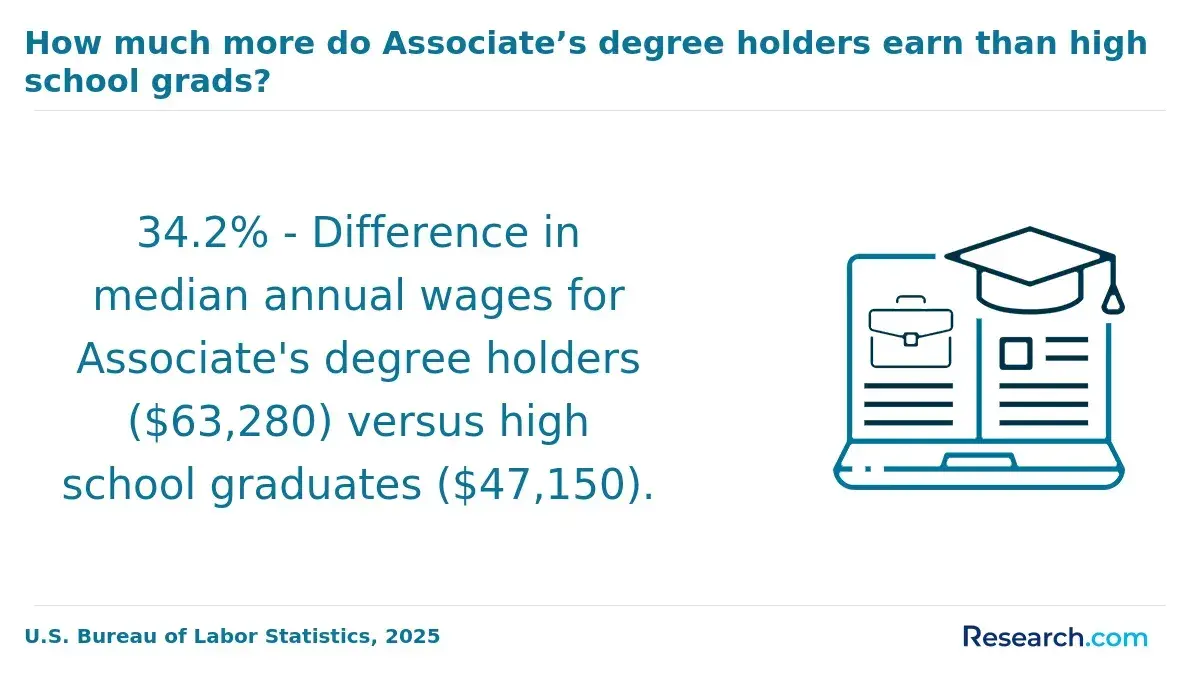
Income potential for counselor education graduates varies substantially depending on degree level, with licensure credentials and specialization serving as key differentiators. Entry-level certificates and associate degrees typically offer median wages near $35,000 to $45,000, reflecting limited licensure and narrower roles mostly in support capacities. Bachelor's degrees increase access to a broader labor market but often require further certifications for meaningful wage growth, with median earnings around $45,000 to $55,000-still below master's-level professionals. Advanced degrees, especially master's, command median salaries between $60,000 and $70,000, buoyed by licensure mandates and demand in sectors like mental health and school counseling where regulatory barriers restrict workforce entry.
Doctoral credentials correlate with the highest earnings, frequently surpassing $85,000, as graduates often assume supervisory, administrative, or academic positions with expanded responsibilities beyond direct counseling. Yet pursuing higher degrees involves tradeoffs: longer completion times, increased financial investment, and the need to balance transfer credits or prior experience. Geographic factors and organizational type can sway pay scales, with metropolitan healthcare systems often offering superior compensation and stability. For working adults or military-affiliated learners, assessing these pay bands alongside licensure pathways, job market saturation, and personal timelines is critical before advancing educational commitments.
One recent graduate, after comparing published salary data and local job postings, expressed surprise at how closely entry-level associate roles tied to a certificate matched some bachelor's-level salaries in less competitive markets. Initially inclined to stop at a bachelor's, they reconsidered the extended time and cost for a master's aimed at licensure, realizing the payoff depended heavily on employer expectations and available specializations. Discussions with hiring managers highlighted that while the master's remains the standard for full professional status, flexibility in accredited prior learning and targeted field experience sometimes allowed strategic shortcuts, prompting a cautious but optimistic outlook on investing in further credentials.
Which Counselor Education Degree Level Offers the Strongest Employment Prospects?
Master's degrees continue to serve as the primary gateway to secure employment in counselor education, largely because state licensure and employer requirements hinge on this level of education. For example, aspiring licensed professional counselors must complete graduate degrees along with supervised clinical hours before practicing independently. Candidates holding bachelor's degrees or certificates may access entry-level or paraprofessional roles, but their scope is limited and often does not include independent counseling or eligibility for higher salaries. Consequently, many individuals who aim to move beyond support positions face pressure to pursue master's programs despite the additional time and financial investment.
Doctoral degrees in counselor education tend to enhance prospects not for broad employment but for specialized roles such as university faculty, clinical supervisors, or research directors, which are fewer in number and often require balancing return on investment against program length and cost. Those opting for associate or certificate credentials may enter the workforce more rapidly but encounter constrained upward mobility and limited recognition in competitive job markets that favor graduate-level qualifications. According to the College Scorecard, master's graduates exhibit a median employment rate within one year of about 78%, compared to below 50% for those with only bachelor's credentials, illustrating how credential depth translates into tangible labor-market advantages.
Deciding when and how to invest in counselor education involves weighing immediate employment against longer-term advancement, especially across diverse regional licensure landscapes and employer expectations. Some students prioritize entering the field quickly through lower credentials, while others strategically plan credit transfers into graduate programs or pursue master's degrees part-time while working. This tradeoff highlights the practical necessity of aligning educational pathways with specific career goals and regulatory frameworks rather than assuming all credentials offer equivalent opportunities or earning potential.
What Entry-Level Jobs Can You Get With a Counselor Education Degree?
Entry-level job opportunities with a counselor education degree vary widely by degree level, shaping the practical pathways available to graduates. Bachelor's degree holders frequently encounter roles focused on supportive, nonclinical functions such as behavioral health technicians or case manager assistants, where developing foundational skills like client communication is essential but scope for independent practice is restricted. In comparison, those with a master's degree often qualify for positions requiring or leading to licensure, including mental health counselor trainee or school counselor intern roles, although these typically demand completion of supervised clinical hours before full certification and autonomy. Employment for mental health counselors and marriage and family therapists is expected to grow by 19% through this decade, illustrating the demand but also the professional gatekeeping that can affect immediate employability.
Doctoral graduates face a narrower initial labor market primarily in advanced clinical or academic roles that depend heavily on research output and teaching experience rather than entry-level clinical work. Candidates with internship or practicum experience tend to access more substantial opportunities, especially in under-resourced or rural areas where licensing scarcity creates demand. Consequently, interpreting counselor education entry-level job opportunities requires weighing employment stability against realistic credentialing timelines and skill-building potential, clarifying whether a degree will serve as a stepping stone or a long-term terminal credential. For students considering accelerated pathways, reviewing the best accelerated programs may help align their educational choices with workforce expectations and practical employability in this field.
How Do Counselor Education Degree Levels Affect Career Advancement and Promotion Opportunities?
Advanced degrees in counselor education carry considerable weight in defining career trajectories, particularly when moving beyond frontline clinical roles. While a master's degree typically unlocks entry into licensed counseling positions, progression into supervisory or administrative roles often demands doctoral qualifications or equivalent specialized credentials. For instance, data from Lightcast in 2024 shows that 67% of counseling leadership jobs require doctoral-level credentials or comparable experience, illustrating how employers prioritize advanced education when delegating program management or policy responsibilities. This educational stratification also affects promotion timelines, as those holding doctorates tend to access leadership opportunities earlier due to competencies in research, evaluation, and administration cultivated through their advanced training.
Working professionals considering whether to pursue further education must weigh pragmatic tradeoffs: obtaining a doctoral degree or specialized certification can accelerate internal mobility and broaden eligibility for competitive leadership roles but demands significant time and financial investment. Transfer-credit pathways and recognition of prior learning can mitigate these barriers for adult learners and military-affiliated students, but the decision often hinges on immediate employment needs versus long-term strategic positioning. Counselors with master's degrees frequently face longer waits for advancement and increased competition, underscoring the necessity for clear goal-setting about where additional credentials will yield measurable career returns.
A counselor education graduate recounted grappling with this decision after several years in community mental health. Though qualified for direct service roles, uncertainty about pursuing a doctoral program delayed applying for supervisory openings. The graduate noted, "I hesitated because the job postings demanded a doctoral degree or robust leadership experience, and I wasn't sure if my work history alone would suffice." Ultimately, recognizing that specialized training was essential to lead programs effectively, the graduate enrolled in an EdD program, describing the choice as a cautious but necessary investment to meet employer expectations and avoid stagnation in mid-level positions.
Is a Counselor Education Degree Worth It Based on Salary, Employment, and ROI?
Deciding whether to pursue a counselor education degree should hinge on a clear-eyed analysis of salary prospects, employment stability, and practical return on investment rather than broad assumptions about value. For example, master's degree holders typically enter the workforce with median salaries and licensure eligibility crucial for clinical roles, but they must balance these gains against program costs, potential debt, and the time investment required-especially for working adults or military-affiliated students managing competing priorities. Those considering additional education must weigh the incremental salary increases available through doctoral credentials against longer completion timelines and less certain job growth outside specialized academic or supervisory positions.
The counselor education degree salary and employment outcomes vary considerably by credential level and local labor market conditions, affecting both immediate employability and long-term career mobility. Bachelor's degree holders often face limited licensure options, thereby reducing both earning potential and advancement pathways. Conversely, graduate-level programs offer access to rapidly growing fields, though candidates should factor in opportunity costs such as delayed earnings and tuition debt, with some opting to explore alternative pathways like accelerated formats exemplified by 1 year MHA programs online to expedite qualification and reduce overall expenses.
Assessing return on investment for counselor education careers requires accounting not only for salary but also credentialing requirements that vary by state and role, plus financial aid availability and part-time options that influence total time-to-completion. Students unable to secure timely licensure or full-time employment risk prolonged debt repayment, which compresses net ROI despite growing demand projected for mental health counselors. Ultimately, prospective students must evaluate how degree level, program fit, cost structure, and regional demand intersect to inform realistic financial and professional outcomes for their counselor education pathway.
How Do Associate, Bachelor's, Master's, and Doctoral Counselor Education Degrees Compare?
Associate degrees in counselor education typically limit graduates to entry-level support roles with modest employment prospects, capturing about 65% placement in related fields within a year, according to the National Center for Education Statistics 2024. While these programs may offer a cost-effective start, their impact on clinical licensure and independent practice is minimal, often prompting students to view them as stepping stones rather than final career qualifications. Bachelor's degrees broaden access to counseling jobs and some specialized functions but rarely fulfill licensure standards alone, resulting in a plateau in wage growth and advancement unless combined with graduate credentials. Credit transfer policies between associate and bachelor's programs are generally favorable, facilitating deliberate stacking of credentials for incremental career progression.
Master's degrees remain the pivotal credential for professional licensure and are closely tied to independent practice rights, supervisory roles, and higher earnings potential. Demand for master's-level counselors is growing faster than the average for all occupations, reflecting both regulatory conditions and expanding service needs. However, the decision to pursue a master's should factor in not only increased job stability but also the balance of graduate tuition costs and time against expected salary improvements. Doctoral programs, while less directly connected to traditional counseling positions, cater to individuals targeting leadership, academic, or policy-making roles, where the investment in extended study and increased debt burdens yields returns in institutional influence and specialized consultation rather than frontline clinical work. Prospective students must weigh the limited clinical applicability of doctoral degrees against their niche opportunities in education administration and research, recognizing that for many, stopping at a master's level offers the most practical blend of career mobility and financial viability.
Which Industries and Employers Hire Counselor Education Graduates by Degree Level?
Employment patterns for counselor education graduates reflect sharply differentiated industry expectations and role complexities aligned to degree level. Those with associate degrees typically occupy support roles within nonprofits, government agencies, or healthcare entry positions, where practical skills and on-the-job training outweigh licensure or clinical authority. For instance, behavioral health technicians and case management aides often fill these roles, but such positions come with limited upward mobility or salary growth. Employers in these sectors prioritize immediate client interaction support rather than clinical expertise, shaping recruitment and advancement in ways that may constrain long-term professional development.
Bachelor's degree holders often engage in educational and human services environments where intervention assistance and program coordination are common functions, though independent practice remains restricted without licensure. Master's degree graduates dominate licensed counselor roles across mental health clinics, schools, and private practices, benefiting from required clinical hours and a credential framework that facilitates higher pay and supervisory opportunities.
According to 2024 data from the Bureau of Labor Statistics, employment growth among bachelor's-level behavioral health workers is steady but eclipsed by increases for master's-level counselors, underscoring how credential depth influences employer demand and career trajectories. Doctoral graduates shift toward leadership, research, or policy roles within academia and healthcare systems, where advanced evidence-based practice and publication records become critical for differentiation. Certificate programs frequently serve niche skill gaps like substance use counseling but generally supplement rather than replace advanced degrees, highlighting the practical tradeoff between time investment and credential utility.
What Skills, Credentials, and Experience Improve Counselor Education Career Outcomes?
Licensure remains the linchpin for counseling professionals aspiring to secure and sustain employment with decent pay and advancement potential, especially at the master's and doctoral levels. Employers expect candidates to hold credentials such as Licensed Professional Counselor (LPC) or Licensed Mental Health Counselor (LMHC) as a baseline for clinical roles, and those without appropriate licensure face significant barriers to upward mobility.
Candidates should prioritize accumulating supervised clinical hours and applied experiences early, because these not only support licensure requirements but also provide critical opportunities for professional networking and leadership development. For example, a master's graduate with specialized certification in addiction counseling paired with demonstrated leadership during internships is more readily considered for supervisory positions, illustrating how combining credentials and practical exposure affects promotion readiness.
At the bachelor's level, a strategy focused on certifications in crisis intervention or peer counseling improves entry into paraprofessional roles but typically offers limited pathways for substantial pay increases or role changes without advancing education. Skill diversification, including proficiency in electronic health records and teletherapy platforms, increasingly influences employers' hiring decisions and candidates' ability to navigate evolving service environments.
Portfolio evidence showcasing reflective practice and case management success has become a significant factor in demonstrating readiness for advanced responsibilities, aligning with workforce expectations for candidate competency beyond basic degrees. Prospective students and working professionals should consider how their existing credits and real-world experience can integrate with new qualifications, recognizing that while more accelerated options exist-such as 5 year speech pathology programs-careful credential layering best supports sustained career mobility within counselor education professional licensure requirements.
Which Counselor Education Degree Level Is Best for Your Career Goals?
Choosing between associate, bachelor's, master's, or doctoral degrees in counselor education reflects critical tradeoffs in career trajectory and practical workforce considerations. For example, associate or bachelor's degrees might allow faster entry into support roles such as case management, but these positions generally cap out early in salary and advancement without additional credentials. The U.S. Department of Education's 2024 data reveal that while bachelor's degree holders have an initial employment rate near 75%, only about 30% advance to licensed counselor roles without graduate study. This gap underscores how degree-level decisions can directly influence licensure eligibility, salary growth, and long-term mobility.
Master's degrees remain essential for most licensed counselor positions, which are the gateway to independent clinical practice and higher pay brackets. Master's programs provide both specialization options and preparation for certification, aligning with employer expectations for accredited graduate credentials. Data show master's graduates often face lower debt-to-income ratios compared to doctoral candidates, making this level a pragmatic choice for working adults balancing cost and career-readiness. Doctoral degrees, however, cater specifically to those targeting leadership, research, or academic roles, with fewer graduates moving immediately into frontline counseling but gaining sustained advancement potential across administrations.
Adult learners and transfer students must weigh program delivery and credit transfer flexibility alongside licensure demands and specialization depth. Those exploring counselor education should evaluate how degree progression affects opportunity cost and employment access, especially since many roles require graduate credentials for advancement. For those interested in healthcare-related counseling specialization, pathways such as top psychiatric mental health nurse practitioner programs online may also complement counselor education goals, reflecting increasing multidisciplinary workforce integration. Understanding these dynamics helps align educational investment with realistic outcomes in pay, employment, and career advancement by counselor education degree level.
References
- The Pipeline Problem in Doctoral Counselor Education and Supervision - The Professional Counselor https://tpcjournal.nbcc.org/the-pipeline-problem-in-doctoral-counselor-education-and-supervision/
- What Can I Expect with a Degree in Higher Ed Counseling? https://www.ucumberlands.edu/blog/what-can-i-expect-degree-higher-ed-counseling
- Bringing the benefits of career counselling/guidance to youth https://euroguidance.eu/to-bring-the-benefits-of-career-counseling-guidance-to-the-youth
- Accredited Online Counseling Degrees | Compare Programs https://www.accreditedonlinecolleges.org/counseling/
- Become a Guidance or Career Counselor - Education, Licensing & Salary https://www.counselingschools.com/careers/guidance-counseling
- Counselor Education Recruitment Poland | Find Top Experts https://www.academicjobs.com/pl/discipline-recruitment/technical-and-career/counselor-education
- How does a college degree improve graduates’ employment and earnings potential? - APLU https://www.aplu.org/our-work/4-policy-and-advocacy/publicuvalues/employment-earnings/
- Research Summary: Education and Lifetime Earnings https://www.ssa.gov/policy/docs/research-summaries/education-earnings.html
- Is a master's degree in counseling worth it? | edX https://www.edx.org/resources/is-a-masters-in-counseling-worth-it
- CCE Impact Book https://www.cce-global.org/assets/impactbook
Other Things You Should Know About Counselor Education
Higher degree levels in counselor education typically require a significantly greater time investment, especially doctoral programs that combine coursework, research, and extensive practicum experiences. For working adults or those with family obligations, this increased workload can limit the ability to maintain employment or other responsibilities simultaneously. Prospective students should weigh whether they can realistically manage the demands of advanced programs without sacrificing other critical areas of their lives, or if pursuing a master's level program with a more structured timeline offers a better balance for their circumstances.
Employers increasingly prioritize candidates with direct clinical practicum or internship experiences, which vary substantially by degree level. While master's programs usually include supervised clinical training essential for licensure, advanced degrees often focus more on research or administration, which might not translate into immediate clinical readiness. Candidates aiming for direct counseling roles should prioritize programs with strong fieldwork components at the master's level rather than doctoral programs that skew toward academia or policy roles.
A doctorate opens more doors to academic positions, research roles, and higher-level leadership opportunities but often at the expense of flexibility in entry-level counseling jobs. Many professional counseling roles legally or practically require a master's level license, making doctoral preparation less directly applicable for frontline counseling work. If immediate employability in typical counseling roles is the priority, completing a master's program is frequently the more strategic choice, reserving doctoral studies for those aiming at educational or systemic career trajectories.
Master's programs in counselor education commonly offer part-time options with established pathways to licensure, allowing students to continue working while studying without dramatically extending completion times. Doctoral programs, however, often demand more concentrated study periods with less flexibility due to research milestones and clinical hours. Students should prioritize program structures that align with their available time and career timing objectives to avoid prolonged education that may delay employment or advancement.