2027 Should You Choose a BS in Business Administration or A Franchise Management Certificate for Your Next Career Step?
Audited and Verified:
Our Editorial and Data Verification Process
Research.com uses government datasets, official education statistics and primary institutional information to support its career and degree guides. Our review process checks factual accuracy, occupational definitions, source dates and the requirements associated with the credentials discussed.
How This Article Was Fact-Checked
Our editorial team verifies salary estimates, employment projections, education requirements and program information against original data providers and official organizations. Salary figures are checked against the relevant occupational definitions and reporting periods. Information about licensure, accreditation and required in-person training is reviewed separately.
Fact-checked and verified on:

Co-Founder and Chief Data Scientist
If your next step is operating a franchise, a broad business degree may be more education than you need right now. If you want to qualify for roles across industries, a short franchise certificate may be too narrow.
This comparison is for prospective owners, franchise employees, and career changers weighing those choices. It explains what each credential teaches, where experience matters more, and how to check the time, cost, and career value before enrolling.
Key Things You Should Know
- Choose a BS in Business Administration when you need a bachelor's credential and broad preparation for roles beyond franchising; choose a franchise management certificate when you already have business foundations and need focused training.
- A certificate does not confer a bachelor's degree, guarantee college credit, or replace a franchisor's required training. A degree does not qualify you automatically to manage or purchase a franchise. Compare each program's remaining cost with the job you actually want.
- For context, the U.S. Bureau of Labor Statistics projects 18% employment growth for logisticians from 2025 to 2035, but that occupation-wide forecast is not an outcome promised by either credential.
What is the difference between a business administration degree and a franchise management certificate?
A BS in Business Administration is an undergraduate degree covering multiple business functions alongside general education. A franchise management certificate is a narrower course of study focused on operating or supporting a business under a franchisor's brand and system. The word certificate can describe a credit-bearing college award, a noncredit continuing-education program, or training offered by a private provider; its value depends on who awards it and what it requires.
The comparison below separates the credentials by what they formally provide, rather than assuming that overlapping management topics make them interchangeable.
| Decision factor | BS in Business Administration | Franchise management certificate |
| Scope | Accounting, finance, marketing, operations, management, and other business subjects | Franchise-specific operations, brand standards, unit economics, and franchisor-franchisee relationships, depending on the provider |
| Credential | Bachelor's degree awarded by a college or university | Certificate awarded by the named provider; not a bachelor's degree or business license |
| Best use | Meeting a degree requirement or building options across business functions and industries | Addressing a defined franchise knowledge gap without pursuing a full degree |
| Main limitation | More coursework and potentially greater expense than a focused training need warrants | Limited value where an employer requires a bachelor's degree or substantial operating experience |
If your goal is general people leadership rather than franchise operations, a different bachelor's pathway may also be worth considering; undergraduate leadership programs with shorter timelines provide another comparison. Verify the actual curriculum and credits before treating any degree title as a substitute for another.
Which is better for career growth: a BS in business administration or franchise management certificate?
The BS generally offers greater career portability; the certificate can be the better immediate investment for a specific franchise role. An employer seeking a bachelor's degree for an operations, marketing, or analyst position may not accept a certificate instead. Conversely, someone already supervising a franchise location may gain more near-term value from targeted work on royalty reporting, multi-unit support, or franchise relationships than from repeating introductory business subjects.
Start with your existing experience and intended next role. A restaurant supervisor seeking a franchise field-support position should compare job postings for requirements in coaching owners, interpreting store performance, and enforcing brand standards. A career changer with no business degree who wants options outside restaurants or franchising has a stronger reason to consider the BS. In either case, documented results and relevant experience matter: neither credential alone makes someone ready to manage multiple units.
If you must keep working while earning a degree, explore business administration colleges for working professionals, then check whether required courses fit your schedule. The recommendation shifts toward a certificate if you already satisfy degree requirements for your target jobs; it shifts toward the BS if a missing bachelor's credential repeatedly blocks advancement.
What careers can you pursue with each business credential?
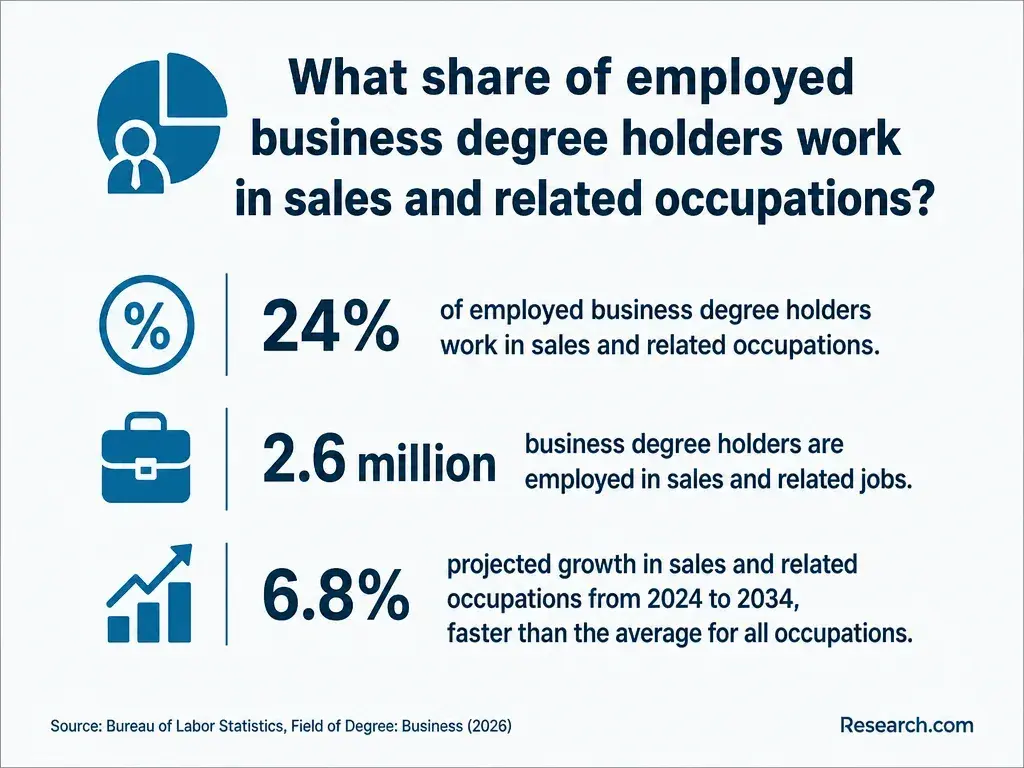
A business administration graduate might seek entry-level operations coordinator, marketing coordinator, sales-support, or administrative roles, matching applications to relevant coursework and work samples. Franchise-specific training may support an existing unit manager, franchise operations assistant, field-support employee, or prospective owner. Those are possible pathways, not positions awarded upon completion.
Franchise field consultants, multi-unit leaders, and corporate operations managers commonly need evidence that they can interpret performance information, coach people, and resolve operating problems. If your intended function is HR rather than franchise operations, compare its distinct preparation requirements; HR bachelor's completion with transferred coursework may be more relevant to someone who already has college credits.
Prospective franchise owners face a different test from job applicants: they must evaluate the franchise agreement, financing, market, and their capacity to run the business. Education can improve that evaluation, but it cannot remove investment risk or replace professional legal and financial advice.
Expect a general education component and a business core that may include accounting, economics, finance, marketing, management, business law, statistics, and operations. Schools differ in course depth, electives, concentrations, and whether they require an internship or capstone. A course in entrepreneurship or small-business management is useful preparation, but it is not necessarily instruction in franchise agreements or franchisor systems.
For franchise work, look beyond course titles. Can you build a cash-flow model, interpret unit-level costs, assess customer demand, communicate with staff, and test an operating assumption? An approved project using public information or permitted workplace data can demonstrate those skills more convincingly than an elective name alone. A supply chain interest may justify a more specialized path; accelerated degree planning for supply chain undergraduates is a useful comparison if procurement and distribution - not franchise ownership - are your primary goals.
Depending on the provider, instruction may cover franchise business models, brand compliance, site or territory considerations, staffing, local marketing, operating metrics, and communication between franchisees and franchisors. Strong programs distinguish general principles from the rules of a particular brand and give learners a chance to analyze realistic operating decisions.
Examine the syllabus for applied work: for example, comparing proposed operating costs with projected revenue, identifying cash-flow risks, or planning a response to inconsistent service standards. Projections should be labeled as assumptions, not presented as proven returns. Ask who teaches the courses, what feedback learners receive, and whether the program addresses franchise disclosure documents and when to seek qualified advice.
A certificate emphasizing schedules and implementation may overlap with project coordination without replacing project-management experience. If that function - not franchising - is your target, finish project management studies with transferred college credits as a separate degree option to evaluate.
A bachelor's degree typically requires substantially more coursework than a certificate, but your remaining timeline depends on accepted transfer credits, course sequencing, and enrollment pace. A certificate might consist of a short training series or several academic courses. Do not compare advertised calendar lengths without checking actual required hours and start dates.
No single reliable price applies to either credential. For a usable comparison, request the degree's cost to finish after an official credit evaluation and the certificate's complete program charge. Include required fees, materials, technology, travel, and time away from paid work. If a certificate promises college credit, get written confirmation from the receiving college about whether that credit would apply to your intended degree requirements.
To test whether the BS is financially feasible, compare the least expensive business administration schools, then obtain individualized estimates. A lower advertised tuition rate does not necessarily mean a lower completion cost if more courses remain.
Neither format is inherently better. Online study may reduce commuting and broaden program choice, while campus study may make scheduled collaboration and local employer connections easier. Your deciding factor is whether the program's actual obligations fit your work and learning needs.
Ask about live sessions, group projects, proctored assessments, required visits, internship arrangements, and access to instructors. For a franchise certificate, also check whether practical exercises use a real franchise system, a simulation, or only prerecorded lessons. An online program is not automatically self-paced; compare accelerated undergraduate programs only after confirming their weekly workload and course sequence.
A BS applicant generally needs to meet the institution's undergraduate admission rules; entry to the business major may have separate conditions. Previous college work can also affect placement and degree requirements. Schools decide whether prior courses satisfy accounting, math, statistics, or other required subjects, so admission is not the same as credit toward graduation.
Certificate entry varies more widely. A noncredit program may welcome applicants without prior college study, while a credit-bearing undergraduate certificate may require admission to the college or specific prerequisite courses. Ask whether professional experience is recommended or mandatory. For a closer look at variable degree rules, see understanding business administration entry standards.
For a BS, verify the college's recognized institutional accreditation and check whether any claimed AACSB, ACBSP, or IACBE accreditation actually covers the business program you are considering. These are distinct forms of recognition; none guarantees a job or proves that franchise-specific content is included.
For a certificate, identify the awarding organization and ask whether it is credit-bearing, how learners are assessed, and whether instructors have relevant franchise experience. A private provider's completion certificate is not the same as an accredited college award or a professional license. Franchisors may also require their own training regardless of either credential.
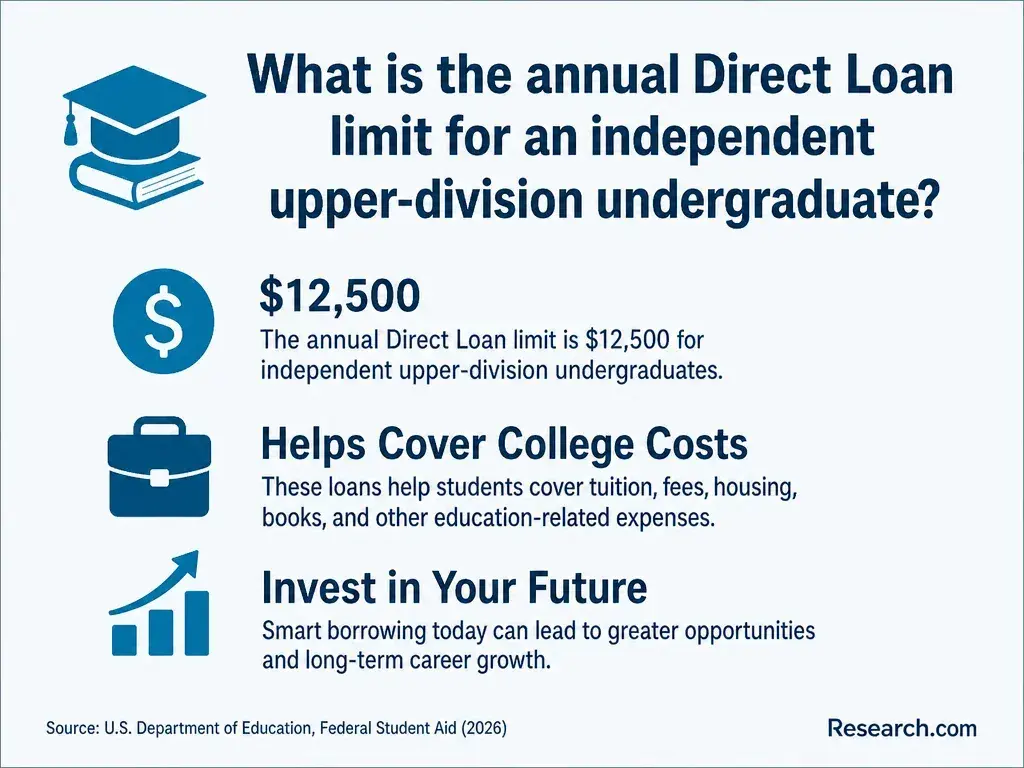
If federal student aid is part of your degree decision, check eligibility for the specific institution and program rather than assuming accreditation alone settles it. You can review business administration colleges participating in federal aid programs, then confirm your own aid options with each school.
What salaries and job outlooks can graduates expect?
Neither credential has a single salary or job-growth rate. The U.S. Bureau of Labor Statistics reports occupation-wide figures, not earnings for graduates of a particular program or owners of franchises.
For one potentially relevant business function, BLS reports a May 2025 median annual wage of $82,320 for logisticians and projects 18% employment growth from 2025 to 2035. That outlook may interest readers considering distribution or supply chain roles, but employers will evaluate the specific analytical skills and experience the job requires. Readers weighing a specialized degree can compare supply chain program tuition time and earnings context rather than attributing that occupation's wage to a general BS.
Franchise ownership income is different from a wage: revenue must cover operating expenses, debt obligations, and other costs before it yields owner income. Before paying for either credential, examine local job postings or a prospective franchise's disclosures and decide whether the education addresses a documented gap.
Other Things You Should Know About Business Administration
Not necessarily. A franchisor sets its own selection and training requirements. You still need to assess the agreement, finances, and operating demands before committing.
It may demonstrate preparation, but it does not assure loan approval. A lender will assess factors such as the proposed business, financial position, and repayment risk.
Potentially, if your faculty approves the scope and you have permission to use any nonpublic information. A public-data case study may be an alternative when company records are unavailable.
Do not assume so. The franchisor determines training requirements for its system, and a general certificate may not cover that brand's procedures.
- Accreditation in the U.S. | ed.gov http://www.ed.gov/laws-and-policy/higher-education-laws-and-policy/college-accreditation/accreditation-in-the-us
- A Consumer's Guide to Buying a Franchise | Federal Trade Commission https://www.ftc.gov/business-guidance/resources/consumers-guide-buying-franchise
- Standardization and adaptation in business format franchising - ScienceDirect https://www.sciencedirect.com/science/article/pii/S0883902697000979
- Online Franchise Certification - Self-Paced | Global Supply Chain Institute https://haslam.utk.edu/franchise-certification-program-self-paced/
- Can Work Experience Count Toward a College Degree? | Whitworth Online https://online.whitworth.edu/news-articles/can-work-experience-count-toward-a-college-degree/
- Can You Go to Community College for Business | San Juan College https://www.sanjuancollege.edu/blog/can-you-go-to-community-college-for-business/
- Certificate Eligibility and Requirements - Business Administration and Management https://help.professional.ucsb.edu/career/business-administration-and-management/certificate-eligibility-and-requirements-business-administration-and-management
- Accreditation Process | AACSB https://www.aacsb.edu/educators/accreditation/accreditation-process
- Online Graduate Certificate in Franchise Management | Information Technology Services https://business.louisville.edu/academics-programs/certificates/online-graduate-certificate-franchise-management
- Business Administration Degrees (Types, Courses & FAQ) | allbusinessschools.com https://www.allbusinessschools.com/business-administration/degrees/