2027 Online BS in Business Administration Admissions with Military Service Without Recent College Coursework: What to Check
Audited and Verified:
Our Editorial and Data Verification Process
Research.com uses government datasets, official education statistics and primary institutional information to support its career and degree guides. Our review process checks factual accuracy, occupational definitions, source dates and the requirements associated with the credentials discussed.
How This Article Was Fact-Checked
Our editorial team verifies salary estimates, employment projections, education requirements and program information against original data providers and official organizations. Salary figures are checked against the relevant occupational definitions and reporting periods. Information about licensure, accreditation and required in-person training is reviewed separately.
Fact-checked and verified on:

Co-Founder and Chief Data Scientist
Military service can provide substantial leadership and operations experience, but it does not tell you whether an online business program will admit you - or how much of your training will count toward graduation. If your college coursework is old or nonexistent, the most useful questions concern admission rules, required records, credit evaluation, and the courses you would still need. This guide helps service members and veterans separate those decisions, compare realistic completion paths, and ask schools for answers before committing time or education benefits.
Key Things You Should Know
- No recent college coursework does not automatically prevent admission. Ask whether the school admits first-year, transfer, and returning applicants under different rules, and whether older courses face recency limits.
- Military training may earn college credit, but admission, accepted credit, and credit that satisfies the business degree are separate decisions. Request an official degree audit before estimating completion time.
- Compare the remaining required courses, scheduling rules, total cost, and benefit eligibility - not just a school's advertised military-credit maximum or accelerated timeline.
What Is an Online BS in Business Administration for Military Students?
An online BS in Business Administration is an undergraduate degree covering functions such as accounting, management, marketing, finance, and operations. Some schools add concentrations; others award only a general business degree. The "BS" label does not establish a uniform curriculum, so check the catalog for the exact degree and requirements.
Military experience may provide useful examples for assignments and career planning. A service member who coordinated supplies, supervised personnel, or tracked budgets can connect that work to business concepts without assuming it automatically earns academic credit. Online delivery can also reduce travel, but it may still involve live meetings, group work, fixed deadlines, or proctored exams. Compare business administration programs for studying around work commitments against your duty schedule rather than relying on the word "flexible."
Can You Get Admitted Without Recent College Coursework?
Often, yes - but the applicable admission route matters. An applicant with no college history may be evaluated as a first-year student; someone with older credits may be a transfer or returning student. A school may admit either applicant while requiring particular math or business courses before entry into the major or before taking upper-level classes.
Ask admissions whether it imposes a course-age limit, a minimum transferable-credit threshold, or a separate business-major application. If past grades are weak, ask whether academic renewal, a written explanation, or conditional admission is available. Those are school-specific policies, not automatic accommodations for military service. If application expense affects where you apply, accredited online colleges without application fees can be a starting point; confirm each school's current fee and accreditation independently.
For an applicant whose math skills are rusty, the immediate question is whether the program requires a completed prerequisite for admission or simply expects preparation for its first quantitative course. That distinction determines whether to apply now or take a targeted course first.
What Admission Requirements Apply to Military Applicants?
Military status generally adds documentation to the standard application rather than replacing academic requirements. Requirements vary by school and applicant category. Before requesting records, confirm which documents must be official and whether the business major has its own deadline or GPA rule.
A practical application sequence is to gather the records the school requests, then ask admissions to identify anything missing:
- Confirm whether you must provide a high school transcript or equivalent, plus transcripts from every previously attended college.
- Request the applicable military learning record, such as a Joint Services Transcript or a Community College of the Air Force transcript, and ask how the institution receives it.
- Check whether the application requires a résumé, personal statement, test scores, or documentation supporting an exception; do not assume military service waives these items.
- Ask the business department when any math, accounting, economics, or statistics prerequisites must be completed.
If your goal is specifically human resources, compare the general business major's entry rules with transfer admission options for human resources majors. A more specialized route may use prior credits differently; neither route should be judged solely by its admission decision.
Colleges may evaluate documented military courses and occupations using American Council on Education credit recommendations, military transcripts, institutional equivalencies, or a separate prior-learning assessment process. An ACE recommendation is evidence for review, not a guarantee of credit. Experience that is valuable to an employer may still lack an applicable academic equivalent.
The distinction most likely to change your graduation plan is where approved credit lands. The table separates outcomes that are often described simply as "transfer credit."
| Evaluation result | Effect on the business degree |
| Credit not accepted | Does not reduce remaining degree requirements. |
| Accepted as a general elective | May help reach the total credit requirement but leave business courses unfinished. |
| Applied to a specific requirement | May satisfy general education, a prerequisite, or a business requirement if the authorized office approves the equivalency. |
Send official records to the school's transfer-credit office and request a written evaluation tied to the current catalog. Then review the degree audit with a business adviser: identify unmet general education, business core, concentration, and in-residence requirements. If a course appears misclassified, ask about the documented appeal or substitution process. Compare ranked online business bachelor's completion routes only after schools show how your own credit would apply; a published fast path may not be your path.
Start with institutional accreditation: confirm that the institution and its accreditor are recognized through the U.S. Department of Education's accreditation records. Check the school's identity and accreditation status rather than assuming an online campus or similarly named institution is covered.
Next, distinguish institutional accreditation from optional business-school or programmatic accreditation. If a school advertises AACSB, ACBSP, or IACBE accreditation, consult the accreditor's directory and confirm the covered institution, business unit, degree level, and program. An accredited institution does not necessarily have an accredited business program, and a school-wide claim does not establish that a particular online BS is covered.
Accreditation is an initial screen, not proof that the program accepts your military credit, offers needed courses when you can take them, or produces a particular career outcome. When comparing economical college choices for business administration majors, verify accreditation first and then obtain a personalized degree audit and cost estimate.
Most programs combine general education with a business core, but course titles and depth vary. Expect to examine financial statements, organizational decisions, marketing, operations, and quantitative evidence. Review the actual sequence if you have been away from school: a statistics or finance course may depend on math or accounting preparation that military work has not formally satisfied.
Look beyond the course list to how you will demonstrate learning. A case analysis might let a former logistics specialist evaluate purchasing trade-offs; a spreadsheet assignment might require interpreting costs and uncertainty. Ask whether a capstone, internship, or workplace project is required and whether a military or civilian workplace can be used with faculty approval and appropriate permission to use its information.
If your target is project coordination rather than broad business preparation, compare the business core with online project management programs for smaller budgets. Choose by required skills, transferable credit, and remaining courses - not by assuming a project-management elective or military leadership experience is equivalent to a specialized degree or professional certification.
Completion time depends on the approved degree audit, prerequisite sequence, course availability, and how many courses you can sustain during service, work, or family obligations. Accepted military credit helps only to the extent that it replaces requirements or fills credits the degree still needs. An accelerated calendar does not remove required coursework.
For each school, request a term-by-term plan and an itemized estimate covering remaining tuition, mandatory fees, books or software, proctoring, and any required travel. Ask how charges change with part-time enrollment or a leave of absence. If using military tuition assistance or a VA education benefit, confirm your individual eligibility, the program's approval where applicable, payment timing, and any uncovered balance with the appropriate benefits office and the school certifying official. Do not assume all veterans receive the same benefit or that different funding sources can be combined without restrictions.
A specialized alternative may have a different aid and credit picture. If project management is your goal, information on financial aid packages for online project management bachelor's students can inform the comparison, but obtain school-specific offers and remaining-credit estimates before deciding which route costs less.
Online study can preserve access while you relocate or work irregular hours; campus study may make scheduled faculty meetings and local recruiting easier to use. Neither format is inherently more rigorous or more flexible. The useful comparison is whether its attendance, assessments, advising, and applied-learning opportunities fit your circumstances.
Ask online programs whether classes are asynchronous, whether exams need a particular location or time, and how group presentations work across time zones. Ask campus programs whether required classes are offered at times you can attend and whether a deployment or transfer of duty station would interrupt progress. Accelerated business education for working adults may shorten the calendar for some students, but compressed terms can make each week harder to manage; examine course sequencing and leave policies before choosing that pace.
A business degree can help translate military work into civilian terms, but hiring depends on the role's requirements and evidence of relevant work. Logistics and procurement experience may support supply-chain applications; personnel administration may support HR operations; planning and coordination may support project roles. Describe what you did, the decisions you supported, and the tools you used without implying that a military title directly matches a civilian management position.
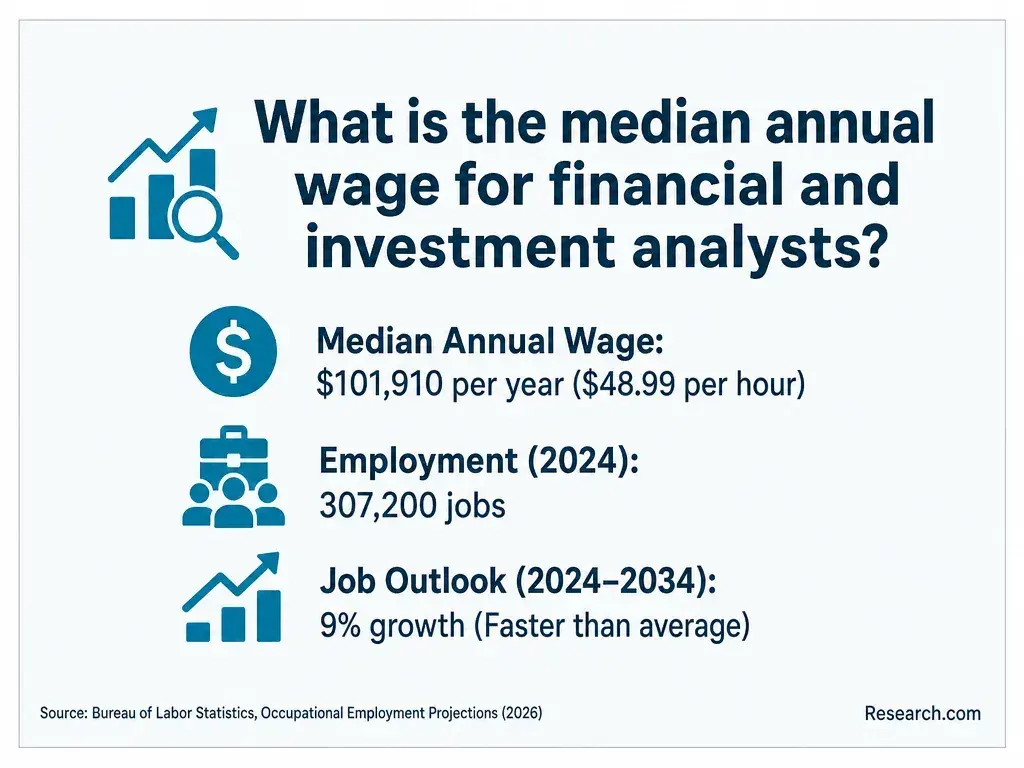
For context, the U.S. Bureau of Labor Statistics reports a May 2025 median annual wage of $82,320 for logisticians. That is an occupation-wide figure, not a starting salary or a projected return from a BS in Business Administration. Use it to investigate a relevant occupation, then check local postings for education, software, and experience requirements. Evaluating business administration tuition time commitment and career value is more meaningful when you compare those requirements with your existing experience and actual remaining degree cost.
What Certifications and Job Outlook Should Business Students Consider?
Consider a certification only after identifying the civilian job you want and checking its issuing organization's eligibility rules. Project management, HR, accounting, and procurement credentials have different education, experience, examination, and continuing-education requirements. A business course, military assignment, or concentration does not automatically meet them.
The Bureau of Labor Statistics projects 18% growth in U.S. logistician employment from 2025 to 2035. That outlook may make supply-chain skills worth investigating for someone with relevant military experience, but it does not predict an individual job offer. Compare postings for the responsibilities you can already document with any gaps a degree, approved certification, or targeted training would address.
For an HR transition, review human resources college study options alongside the general business curriculum. A specialized degree may offer more HR coursework, while a broad business degree may better fit someone still comparing functions. Neither substitutes for checking a certification body's current rules.
Other Things You Should Know About Business Administration
Possibly. Confirm that the school permits enrollment from your location and that you can access course systems, attend any live sessions, and complete proctored exams under local and military network restrictions.
Contact your adviser, registrar, financial-aid office, and, if applicable, school certifying official promptly. Ask about withdrawal or military-leave procedures and how a pause affects grades, aid, benefits, and your return date.
Usually only under the school's academic rules. Request an updated degree audit first: a change can alter required courses and delay graduation even if previously completed credits remain accepted.
Yes, if a résumé is requested or accepted. Translate duties into clear civilian descriptions of responsibilities and skills, while keeping sensitive assignments and protected information out of the document.
- Document Requirements | dfas.mil https://www.dfas.mil/Careers/Apply/Documents/
- Joint Services Transcript Academic Institutions - JST https://jst.doded.mil/institution.html
- JST: Joint Services Transcript | militaryonesource.mil https://www.militaryonesource.mil/benefits/joint-services-transcript/
- Military Training Evaluation Program (MTEP) | dantes.mil https://www.dantes.mil/credit4training/
- Joint Services Transcripts (JST) | Military Transfer Credit | Coles College of Business https://campus.kennesaw.edu/current-students/registrar/transfer/military-transfer-credit.php
- Multiple Measures | California Community Colleges https://www.cccco.edu/about-us/chancellors-office/divisions/educational-services-and-support/equitable-placement/multiple-measures/
- Online Bachelor's Degree in Business Administration | Purdue Global https://www.purdueglobal.edu/degree-programs/business/bachelor-business-administration/
- Online B.S. in Business Administration for Transfer Students | sonoma.edu https://business.sonoma.edu/programs/undergraduate/bachelors-online-degree-completion-program
- Transfer of Credit - catalog.uark.edu - University of Arkansas https://catalog.uark.edu/undergraduatecatalog/academicregulations/transferofcredit/
- Subject requirement (A-G) - UC Admissions https://admission.universityofcalifornia.edu/admission-requirements/first-year-requirements/subject-requirement-a-g.html