2027 BS in Business Administration Decision Guide: A General Business Degree for Immediate Employment or Future Graduate Study
Audited and Verified:
Our Editorial and Data Verification Process
Research.com uses government datasets, official education statistics and primary institutional information to support its career and degree guides. Our review process checks factual accuracy, occupational definitions, source dates and the requirements associated with the credentials discussed.
How This Article Was Fact-Checked
Our editorial team verifies salary estimates, employment projections, education requirements and program information against original data providers and official organizations. Salary figures are checked against the relevant occupational definitions and reporting periods. Information about licensure, accreditation and required in-person training is reviewed separately.
Fact-checked and verified on:

Co-Founder and Chief Data Scientist
A general business degree can keep several career and graduate-school options open, but breadth alone will not make you job-ready or satisfy every graduate prerequisite. This guide is for students choosing a BS in Business Administration who want to work after graduation without closing the door on further study.
It explains what the degree covers, which roles are realistic starting points, and how to compare programs on applied learning, cost, flexibility, and academic preparation. The goal is a degree plan that serves your next step - not just a credential with a broad name.
Key Things You Should Know
- A BS in Business Administration offers broad preparation; pair it with relevant experience and work samples for entry-level hiring, or targeted electives for graduate-study prerequisites.
- Programs often require around 120 semester credits, but transferred credits, course sequencing, and enrollment pace determine your actual completion time.
- The U.S. median annual wage for human resources specialists was $75,940 in May 2025; that occupation-wide figure is not an expected starting salary for business graduates.
What Is a BS in Business Administration?
A Bachelor of Science in Business Administration is an undergraduate degree built around several business functions rather than one occupation. Its core commonly introduces accounting, finance, marketing, management, operations, and quantitative decision-making. The BS designation does not guarantee a particular amount of mathematics or analytics: compare actual course requirements rather than relying on the degree title.
The degree fits students who want access to a range of business roles or who have not yet chosen a function. That flexibility has a cost. A general business curriculum may offer less accounting, technical, or industry-specific depth than a specialized major. A BBA can cover similar ground; neither title is inherently better for employment or graduate admission. If you already know you want to work in HR, compare the business core and electives against human resources degree costs and options before choosing the broader route.
For future graduate study, keep the distinction between eligibility and preparation in view. A completed bachelor's degree may meet a basic application requirement, while a specialized master's program may still expect particular quantitative or subject courses. Review likely graduate programs early enough to use electives deliberately.
What Careers Can You Pursue With a BS in Business Administration?
For a new graduate, the strongest targets are usually roles with defined entry-level responsibilities - not positions that already require ownership of a department or major budget. Prior employment, internships, and industry knowledge can change which roles are within reach. The table separates possible starting work from advancement that typically depends on experience.
| Business function | Possible starting roles and work | Experience-dependent progression |
| Operations and projects | Operations or project coordinator; track schedules, records, vendors, and process measures | Project manager or operations manager with responsibility for delivery, staff, or budgets |
| Marketing | Marketing coordinator; support campaigns, reporting, and customer research | Marketing manager accountable for strategy and results |
| Human resources | HR assistant or specialist, depending on employer requirements; support recruiting and employee processes | HR manager responsible for policies, staff, and complex employee matters |
| Supply chain | Purchasing or logistics support; maintain orders, inventory records, and supplier information | Supply chain leadership with broader planning and operational authority |
The degree is most useful for hiring when you can connect coursework to evidence: a spreadsheet analysis, a clearly documented process project, customer-facing work, or an internship with supervised responsibilities. If logistics is already your target, compare the general degree with online supply chain programs balancing cost and completion time; focused coursework and industry exposure may serve that goal better.
U.S. Bureau of Labor Statistics projections indicate 6% employment growth for human resources specialists from 2025 to 2035. That describes an occupation, not a placement rate for BS graduates. Check local postings for the required HR experience and software skills before treating the outlook as a personal job forecast.
How Much Can You Earn With a Business Administration Degree?
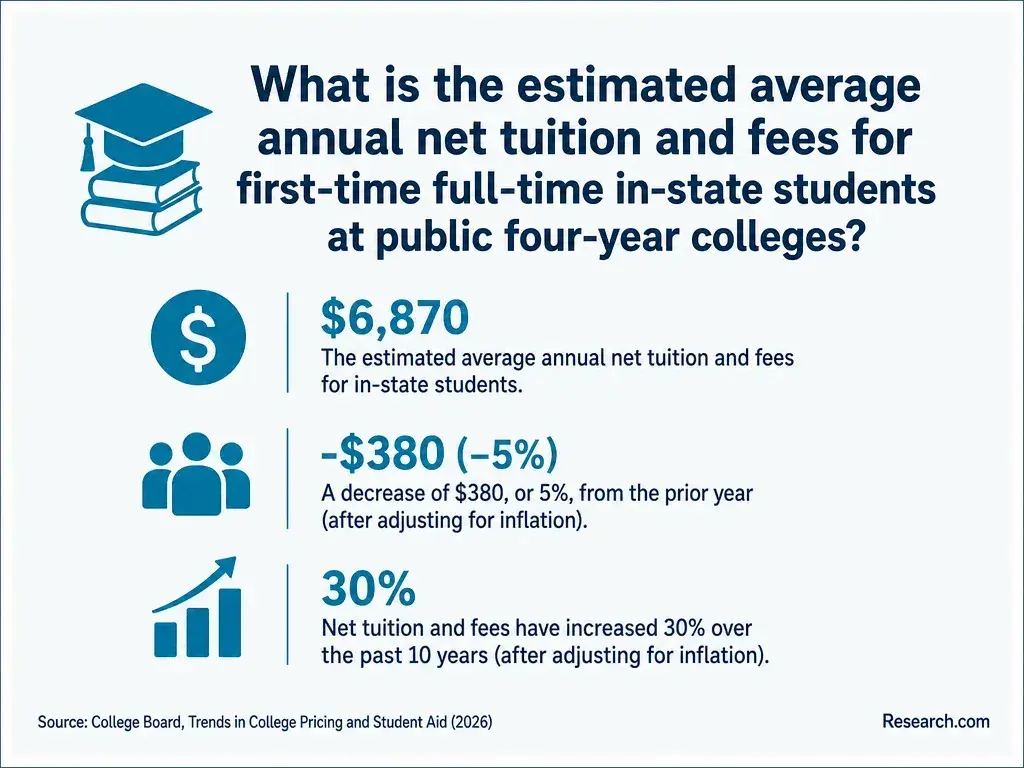
There is no single salary for a BS in Business Administration. Pay attaches to a job, location, industry, and level of responsibility - not to the degree title. The Bureau of Labor Statistics reports a May 2025 median annual wage of $75,940 for human resources specialists. A median covers workers across experience levels, so it should not be used as a new graduate's salary estimate or as evidence that an HR role requires this exact major.
For a useful earnings comparison, collect local postings for jobs you could plausibly obtain with your current experience and note their stated pay ranges and requirements. Then compare the degree's remaining cost with a narrower path to the same role. For example, someone aiming at project work can examine project management tuition and mandatory fees alongside the general BS - but should compare similar entry-level roles, not a coordinator's likely first job with an experienced manager's pay.
Requirements vary by school, but a general business degree typically combines general education with introductory accounting, economics, marketing, management, finance, operations, business law, communication, and statistics or other quantitative work. Upper-level courses may add strategy, analytics, information systems, electives, and a capstone. An elective cluster is not necessarily an officially recorded concentration.
Plan courses backward from the decision you want to preserve. For immediate employment, prioritize assignments that produce defensible work samples: a spreadsheet model with stated assumptions, a marketing analysis using permitted data, or a supervised operations project. For graduate study, check the prerequisites of programs you might apply to; a general business statistics course, for example, may not replace a specific calculus or accounting requirement.
Sequencing matters as much as the course list. Accounting or statistics may precede advanced electives, and some required classes may not run every term. If project management is a potential focus, review how prior courses apply when you compare transfer policies at online project management colleges. Credit accepted as an elective may still leave a required course unfinished.
A conventional full-time bachelor's path often takes about four academic years and requires around 120 semester credits. Your timeline depends on credits that apply to the degree, not simply credits a school accepts. General education, business prerequisites, upper-level major requirements, and any residency rule can leave different amounts of work after transfer.
Ask each school for a degree audit showing remaining requirements and when those courses will be offered. A part-time student may benefit more from reliable course availability than an advertised accelerated calendar. If you have HR coursework, evaluate transfer-friendly online HR colleges against the general BS: a faster-looking program may take longer if your credits do not satisfy its major requirements. Treat a preliminary credit estimate as provisional until the receiving institution completes its evaluation.
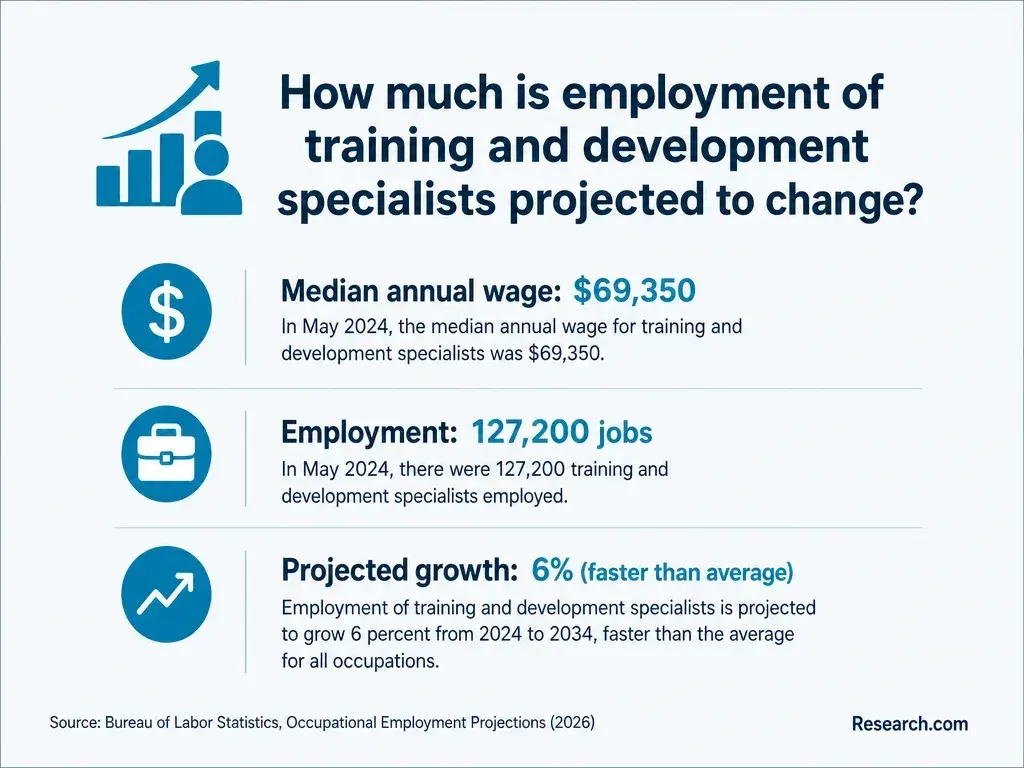
Compare total remaining cost, not advertised tuition alone. That means tuition for courses you still need, mandatory fees, books and software, possible travel or proctoring costs, and any lost earnings from reducing work hours. A delayed required course can also extend enrollment and add expense. No school's final cost can be calculated reliably before its credit evaluation and aid offer are available.
Use the same assumptions when comparing programs: the same expected enrollment pace, your evaluated remaining credits, and each school's actual charging method. For a starting shortlist, economical college choices for business administration majors can help identify candidates, but request a personalized cost estimate from each one. Keep grants separate from loans, and check when employer reimbursement arrives; an eventual payment may not solve an upfront tuition bill.
Choose the format in which you can complete the required work and build useful relationships and experience. Online delivery can reduce travel, but it does not necessarily mean self-paced study. Scheduled presentations, team projects, proctored exams, and fixed deadlines may still conflict with work or caregiving. Campus study may make it easier to use nearby recruiting and student activities, though commuting and class schedules can be limiting.
Before enrolling, ask for recent syllabi and a typical term schedule. Confirm live-attendance rules, group-work expectations, internship access, software requirements, and whether career services serve online students. A US online business college selection guide can provide comparison candidates; the school's current course policies should decide whether a format actually fits your week.
First-year applicants generally submit evidence of secondary-school completion; transfer applicants provide transcripts from previous colleges. Schools set their own GPA, application, and document rules. Admission to the university may also be separate from entry into an upper-division business major, which can have prerequisite courses or additional standards.
If you have prior college work, request both an admission decision and a written evaluation of how credits apply to the BS. Ask specifically about mathematics, accounting, and economics equivalencies rather than assuming an accepted course satisfies the business core. Application costs are another practical comparison point: colleges with no upfront application payment may reduce the cost of exploring options, but an application-fee policy says nothing by itself about program quality or total tuition.
Verify institutional accreditation first through the institution's stated accreditor and the accreditor's own directory. Then check whether a business-school accreditor - such as AACSB, ACBSP, or IACBE - covers the school and the specific program or academic level you are considering. Institutional and business accreditation are different claims; neither alone demonstrates job placement or acceptance by a particular graduate school.
Ask the school to confirm its current accreditation status, the exact BS program covered, and whether the status applies to your enrollment location or format. If financial aid is central to your decision, accredited online business administration study with aid eligibility offers a useful shortlist. Verify the institution's current federal-aid participation and your own eligibility directly before relying on aid in a cost plan.
Do Business Administration Graduates Need Licenses or Certifications?
There is no general license required simply to hold a BS in Business Administration or apply for ordinary business roles. Particular work may be different: regulated financial services, public accounting, and some other occupations have separate rules, while HR and project management credentials have their own eligibility standards. A business course or concentration does not automatically satisfy them.
Start with the target job posting or credential issuer's requirements. If your objective is supervisory development rather than a regulated occupation, weigh relevant work responsibility and employer training against another degree or certificate. Undergraduate leadership programs with shorter timelines are another degree option to compare, but a faster completion claim does not establish that the program provides more appropriate preparation - or a management job.
Other Things You Should Know About Business Administration
Some MBA programs consider applicants without full-time postgraduation experience; others prefer or require substantial work experience. Check each program's admissions policy and consider whether working first would help you make better use of the degree.
Not necessarily. Analytics, accounting, and other specialized programs may specify courses or preparation beyond the business core. Compare their published prerequisites with your planned transcript before choosing electives.
Yes, if it demonstrates relevant analysis, clear writing, and an honest account of your contribution. Describe its methods and limitations; do not present a classroom proposal as an implemented business result.
Keep permitted, nonconfidential samples of substantial assignments and a record of the courses and skills they demonstrate. Build relationships with instructors or supervisors who can speak specifically about your work, while following any employer or school rules on data and intellectual property.
- Fast Facts: Tuition costs of colleges and universities (76) | ed.gov https://nces.ed.gov/fastfacts/display.asp
- Accreditation in the U.S. | ed.gov http://www.ed.gov/laws-and-policy/higher-education-laws-and-policy/college-accreditation/accreditation-in-the-us
- Chapter 3 - Courses and Enrollment, Full Course of Study, and Reduced Course Load | USCIS https://www.uscis.gov/policy-manual/volume-2-part-f-chapter-3
- Transfer Students/College Degree Holders | fitnyc.edu https://www.fitnyc.edu/admissions/undergraduate-applicants/transfer-students.php
- Does an MBA Require an Undergrad Business Degree? | AACSB https://www.aacsb.edu/insights/articles/2017/11/do-i-need-an-undergraduate-business-degree-to-get-my-mba
- Information for Transfer Students - NYU SPS https://www.sps.nyu.edu/info/information-for-students/information-for-transfer-students.html
- Entry-Level Jobs With a Business Administration Degree | Warner Pacific University http://www.warnerpacific.edu/blog/top-entry-level-jobs-ba-business-administration/
- What Can You Do With a Business Administration Degree? | snhu.edu https://www.snhu.edu/about-us/newsroom/business/what-can-you-do-with-a-business-administration-degree
- What Are the Prerequisites for an MBA Program? | marymount.edu https://marymount.edu/blog/what-are-the-prerequisites-for-an-mba-program/
- Internships - VCU Career Services - Virginia Commonwealth University https://careers.vcu.edu/experience/gaining-experience/internships/