2027 Should You Choose a BS in Business Administration or A Leadership Development Certificate for Your Next Career Step?
Audited and Verified:
Our Editorial and Data Verification Process
Research.com uses government datasets, official education statistics and primary institutional information to support its career and degree guides. Our review process checks factual accuracy, occupational definitions, source dates and the requirements associated with the credentials discussed.
How This Article Was Fact-Checked
Our editorial team verifies salary estimates, employment projections, education requirements and program information against original data providers and official organizations. Salary figures are checked against the relevant occupational definitions and reporting periods. Information about licensure, accreditation and required in-person training is reviewed separately.
Fact-checked and verified on:

Co-Founder and Chief Data Scientist
If you want more responsibility at work, a leadership certificate may sharpen skills you can use immediately. A BS in Business Administration asks for a larger investment but can provide broader business preparation and satisfy a bachelor's-degree requirement. The distinction matters most when you are weighing a specific promotion, career change, or unfinished degree. This guide compares what each credential teaches, what employers may expect, and how to check the time and cost before you enroll - so you can choose the next step that addresses your actual qualification gap.
Key Things You Should Know
- Choose the BS when a target role requires a bachelor's degree or you need broad preparation in finance, operations, and other business functions; a leadership certificate does not replace the degree.
- Choose a certificate when you already meet the role's education requirements and need focused practice in supervising, coaching, or leading change.
- Compare your target job's requirements before paying: the Bureau of Labor Statistics projects 11% employment growth for training and development specialists from 2025 to 2035, but that occupation-wide outlook does not predict a certificate holder's prospects.
What is the difference between a BS in Business Administration and a leadership development certificate?
A BS in Business Administration is an undergraduate degree combining general education with business subjects such as accounting, finance, marketing, operations, and management.
A leadership development certificate is a narrower credential focused on skills such as communication, coaching, team performance, or organizational change. Certificates may be college-awarded and credit-bearing, noncredit continuing education, or employer-issued; those forms are not interchangeable.
The comparison below shows what each credential can reasonably signal to an employer. Neither establishes that you have successfully managed people or budgets.
| Decision factor | BS in Business Administration | Leadership development certificate |
| Credential | Completed bachelor's degree | Certificate of completion or academic certificate, depending on the provider |
| Learning scope | Business functions, quantitative work, and management concepts | Focused leadership practices and their application |
| Best use | Meeting a degree requirement or building broad business knowledge | Addressing a defined leadership skill gap |
| Key limitation | Does not confer managerial experience or authority | Usually does not satisfy a bachelor's-degree requirement |
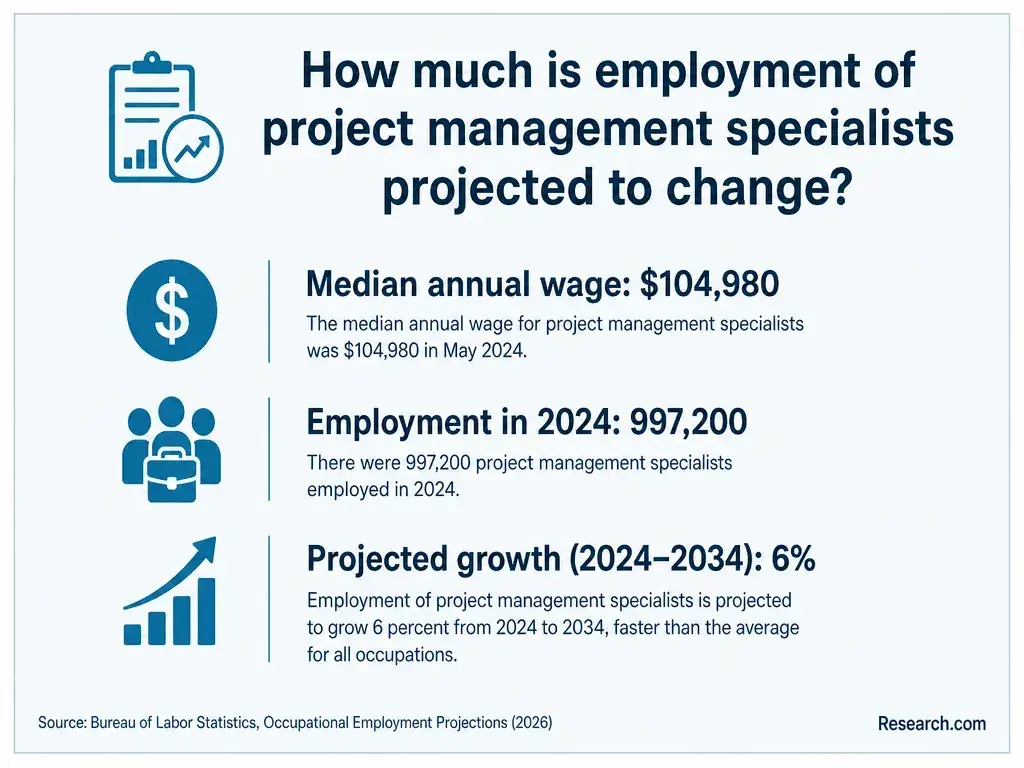
If your goal is specifically to manage projects rather than people, compare the actual curriculum of lower-priced project management degrees as another option. A general leadership certificate may not teach the scheduling, budgeting, and risk-management work that your target role requires.
Which is better for career advancement: a business administration degree or leadership certificate?
The better option is the one that closes the gap between your current qualifications and a specific next role. If postings for that role require a bachelor's degree and you do not have one, a certificate alone is unlikely to clear the education screen.
If you already have a bachelor's degree and your manager wants evidence that you can coach colleagues or lead a team initiative, a focused certificate and a documented workplace project may be more direct than another undergraduate degree.
Experience changes the calculation. An employee who already owns schedules, trains colleagues, or improves a process can use a certificate to develop and document those responsibilities.
Someone changing from a non-business field may need accounting or operational knowledge that a leadership course does not cover. For a move into HR, compare the actual job requirements with human resources degree levels; employee relations and HR operations are more specific than general leadership.
Before choosing, collect several postings for your target role and note which requirements recur: a degree, functional knowledge, supervisory experience, or a particular skill. Then ask your employer which evidence would matter in its promotion process. If neither credential addresses the missing requirement, mentorship, a stretch assignment, or targeted training may be the better next step.
What careers can you pursue with a BS in Business Administration?
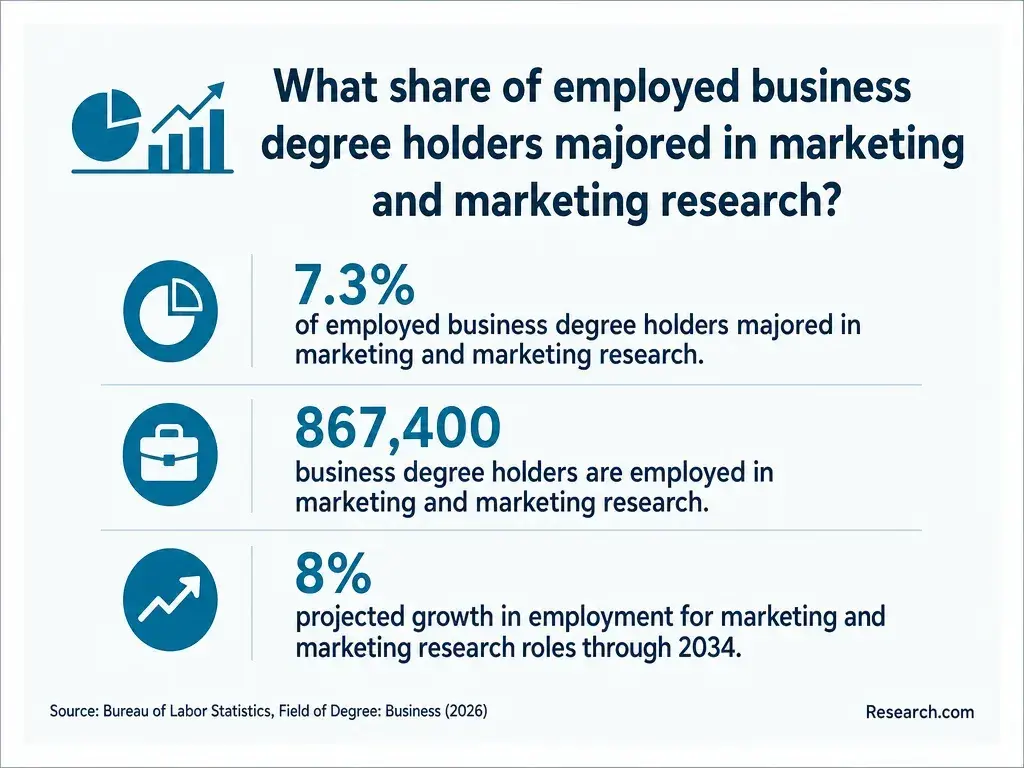
A BS can support applications for business roles, but the job title alone does not establish readiness. Graduates often pursue coordinator or specialist work in operations, marketing, HR, sales support, or procurement, depending on their experience and coursework.
For example, an operations coordinator may track schedules and process measures, while an HR specialist may handle recruiting or employee records under applicable workplace policies. Management jobs generally call for demonstrated responsibility beyond completing a degree.
If project coordination is the goal, look for evidence of planning, stakeholder communication, budget tracking, and follow-through - not just a leadership course title. When comparing a general BS with specialized study, an accredited online project management tuition guide can help frame the financial comparison; check each program's actual courses and your remaining requirements before deciding.
For a career change, use relevant work samples or supervised projects to connect your previous experience to the new function. A certificate may strengthen an application for responsibility within a field you already know; the BS may open roles with degree requirements. Neither provides a professional license or guarantees a management position.
A business administration BS typically moves from introductory business and general education courses into subjects such as accounting, statistics, finance, marketing, operations, and organizational behavior. A concentration, if offered, adds a defined set of courses; an elective or leadership-themed assignment is not necessarily an official concentration. Programs may also use cases, simulations, or a capstone, but their requirements vary.
A leadership certificate usually spends less time on financial statements or quantitative analysis and more on feedback, conflict, team dynamics, and change. That focus can be valuable if you can apply it at work. Check whether assignments require access to colleagues or workplace information, and obtain permission before using confidential material. A classroom leadership plan is not evidence that an employer approved or implemented it.
Curriculum depth matters more than similar-sounding course names. If you need project-specific tools, compare course descriptions and assessed projects in online project management bachelor's programs accepting transfer credits with those in a general BS and a leadership certificate. Ask how prior credits would apply; acceptance as electives does not mean they satisfy major requirements.
BS applicants generally provide prior academic records, but admission to a university, entry into its business major, and application of transfer credit are separate decisions. Depending on the school, applicants may need mathematics or introductory business courses before entering upper-level work. A previous degree or substantial professional experience does not automatically waive those requirements.
Leadership certificate entry rules vary more widely. An open-enrollment noncredit course may have few formal requirements; an academic certificate may require admission, prerequisites, or a specified academic standing.
Ask whether the certificate is undergraduate, graduate, or noncredit before assuming you qualify - or that its courses could later count toward a BS. For degree applicants, what to check before applying for a business administration degree can help organize questions for admissions and advising.
A bachelor's degree is a multiyear commitment for a student starting without college credit. A returning student's timeline depends on the school's official evaluation of prior coursework, remaining requirements, course sequencing, and enrollment pace.
A leadership certificate may run for weeks, months, or longer if it is credit-bearing or taken part-time. The shorter calendar option is not automatically the one that meets your career deadline: a certificate cannot substitute for an unfinished degree when a bachelor's is required.
Ask for a term-by-term degree plan or certificate schedule, including courses offered infrequently and any required live sessions. If you plan to keep working, compare realistic weekly commitments with online business administration degrees for employed adults. An accelerated calendar can compress the same coursework into a less manageable period.
There is no reliable single price for either pathway. Compare the cost to finish your goal, not only advertised tuition: remaining degree credits or certificate courses, mandatory fees, books and software, travel, and any income lost through reduced work hours. For a BS, request an official transfer evaluation and degree audit before estimating the bill. A lower-priced certificate may still be poor value if the role requires a bachelor's degree.
Eligible students in eligible degree programs may have access to federal student aid; certificate eligibility depends on the specific program and provider. Scholarships, employer education benefits, and payment plans have separate conditions.
Confirm aid eligibility with the school, and ask your employer about reimbursement limits, approved providers, grade rules, and whether payment arrives only after course completion. Use financial aid planning for low-cost business administration degrees to frame those questions, then compare written offers rather than assuming aid will cover the balance.
Neither format is inherently better. Online study can remove a commute, while campus classes may offer a predictable meeting time and easier in-person contact. For an employed adult, the deciding issue is whether required attendance, group meetings, exams, and assignment deadlines fit the actual workweek. An online course can still require live participation or scheduled assessments.
Check the same details for a short certificate as for a degree: live-session times, presentation requirements, technology, instructor access, and policies if a work shift changes.
If a BS includes an internship or capstone, confirm whether you may propose a workplace project and who must approve it. Online business degree rankings for US college applicants can surface options, but a ranking cannot establish that a program's schedule works for you.
For a BS, verify the institution's accreditation status with the accreditor and check that the degree appears in the current catalog. If a school cites AACSB, ACBSP, or IACBE, check the accreditor's listing to see whether its recognition covers the relevant business school or program. Institutional accreditation and business-specific accreditation have different scopes; neither proves that graduates get particular jobs.
For a certificate, identify exactly who awards it, whether it carries academic credit, how performance is assessed, and whether an employer recognizes it. Request the current curriculum, total charges, completion requirements, and written rules for applying courses to a degree.
An application fee tells you little about academic quality; colleges that waive online application costs may reduce an upfront expense, but still require the same accreditation and program checks.
What are the salary and job outlook differences between these pathways?
No occupation-wide wage figure measures the pay increase from earning this BS or certificate. Salary depends on the job, location, industry, and experience. The following US Bureau of Labor Statistics figures provide context for two relevant occupations - not starting salaries or outcomes attributable to either credential.
| Occupation | May 2025 median annual pay | Projected US employment growth, 2025-2035 |
| Human resources specialist | $75,940 | 6% |
| Training and development specialist | $69,280 | 11% |
These roles may draw on business education or leadership development, but employers set their own education and experience requirements. The growth projections describe employment across each occupation, including experienced workers; they are not forecasts for new graduates or certificate holders.
Compare local postings and your current pay with the full cost and time of study. Affordable business administration study and earnings considerations may help structure that comparison, but do not count on a raise until you have evidence that the credential changes your opportunities.
Other Things You Should Know About Business Administration
Possibly, if it awards academic credit and the receiving school accepts that credit toward a requirement. Get a written evaluation; noncredit training usually cannot be assumed to transfer.
No. Both may document learning, but they have different issuers and may have different assessments. Describe the awarding organization and skills gained accurately on your résumé.
Not automatically. Compare the missing business coursework with targeted classes, a certificate, employer training, or graduate study if appropriate. Check second-degree rules before applying.
Describe specific responsibilities - such as training colleagues, coordinating a project, or resolving a workflow problem - and explain your contribution without claiming authority or results you cannot document.
- Accreditation in the U.S. | ed.gov http://www.ed.gov/laws-and-policy/higher-education-laws-and-policy/college-accreditation/accreditation-in-the-us
- Employer-offered educational assistance programs can help pay for college | Internal Revenue Service https://www.irs.gov/newsroom/employer-offered-educational-assistance-programs-can-help-pay-for-college
- Types of Financial Aid: Grants, Work-Study, and Loans | studentaid.gov https://studentaid.gov/understand-aid/types
- The difference between a certificate, a bootcamp, and a business degree | Ohio University https://www.ohio.edu/news/2026/08/difference-between-certificate-bootcamp-business-degree
- The Value of Certificates vs. Degrees: What's Right for You? | calmu.edu https://www.calmu.edu/the-value-of-certificates-vs.-degrees-whats-right-for-you
- Business Administration | Los Angeles City College https://programmap.lacitycollege.edu/academics/interest-clusters/35a8c892-4bad-4dde-b56e-ec2f7bf0fbc6/programs/76ae5998-c823-dd78-d77c-a79a4de80505
- 11 Types of Business Degrees and Career Pathways | National University https://www.nu.edu/blog/types-of-business-degrees/
- What Jobs Can You Get with a Bachelor's Degree? | snhu.edu https://www.snhu.edu/about-us/newsroom/career/bachelors-degree-jobs
- Leadership Certificates: Building Skills for Impactful Change | post.edu https://post.edu/blog/leadership-certificates-building-skills-for-impactful-change/
- Credit for Prior Learning | UMass Global https://www.umassglobal.edu/admissions/transfer-center/credit-prior-learning