2027 Best Online Associate Science in Nursing (ASN) Programs

Co-Founder and Chief Data Scientist
Over the past few years, online nursing education has surged—more than 70% of registered nurses surveyed in 2024 reported being enrolled in online or hybrid programs, reflecting a major shift toward virtual learning in the field. Pursuing an Associate of Science in Nursing (ASN) online is an accessible and efficient pathway to becoming a registered nurse—especially suited for working adults, career changers, or those seeking a fast-track into healthcare.
Choosing the right ASN program requires careful attention to accreditation (ACEN or CCNE), cost, curriculum structure, and NCLEX licensure pass rates. This guide highlights some of the best online ASN programs available, offering detailed comparisons to help prospective nursing students make informed decisions about their education and future career.
What are the benefits of getting an online associate of science in nursing (ASN) degree?
- Online ASN programs allow students to complete coursework on their own schedule, making it easier to balance education with work or family responsibilities.
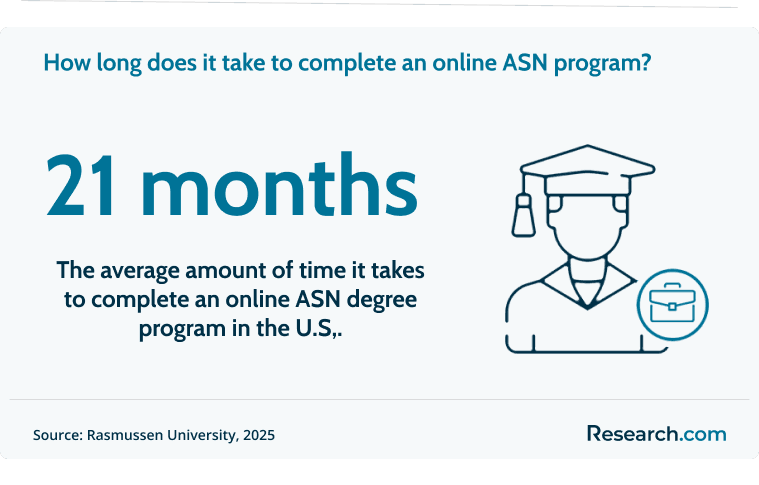
- Most programs can be completed in about 21 months, enabling students to become licensed RNs and start working sooner than with traditional four-year degrees.
- Compared to bachelor's programs, online ASN degrees often have more affordable tuition and fewer credit hour requirements, reducing both cost and time investment.
What can I expect from an online associate of science in nursing degree program?
An online ASN program offers a mix of virtual coursework and in-person clinical experiences designed to prepare students for the NCLEX-RN licensure exam. Students can expect to study subjects such as anatomy, pharmacology, nursing fundamentals, and specialized areas like pediatric or mental health nursing.
While theoretical learning is completed online, hands-on clinical rotations are required and typically arranged at local healthcare facilities. The flexible format is ideal for working adults or those balancing family responsibilities, while still providing rigorous, accredited training for a nursing career.
Where can I work with an online ASN degree?
Graduates of an online ASN program, once licensed as registered nurses, can work in a wide variety of healthcare settings. These include hospitals, outpatient clinics, long-term care facilities, rehabilitation centers, home healthcare services, and physicians' offices.
RNs may also find roles in schools, correctional institutions, or community health organizations, depending on their interests. The ASN credential opens doors to diverse work environments, allowing nurses to specialize over time or pursue further education.
How much can I earn with an online ASN degree?
Earnings for registered nurses with an ASN degree vary by region, experience, and healthcare setting, but are generally competitive. According to the U.S. Bureau of Labor Statistics, the median annual salary for RNs was approximately $86,070 as of 2023.
New graduates may start on the lower end, but wages typically increase with experience, certifications, and additional responsibilities. While ASN-prepared nurses may earn slightly less than BSN-prepared RNs in some settings, many still enjoy strong salaries and benefits.
- List of the Best Online Associate of Science in Nursing Programs for 2027 List of Programs
- How long does it take to complete an online ASN program? Completion Time
- How does an online ASN program compare to an on-campus program? How does an online ASN program compare to an on-campus program?
- What is the average cost of an online ASN program? Average Cost
- What are the financial aid options for students enrolling in an online ASN program? Financial Aid
- What are the prerequisites for enrolling in an online SN degree program? Requirements
- What courses are typically in an online ASN program? What courses are typically in an online ASN program?
- What types of specializations are available in an online ASN program? What types of specializations are available in an online ASN program?
- How do I choose the best online associate of science in nursing degree program? How do I choose the best online associate of science in nursing degree program?
- hat career paths are available for graduates of an online ASN degree program? Career Paths
- What is the job market for graduates with an online associate’s degree in nursing? Job Market
- Should I consider an accelerated BSN online program after my ASN? Should I consider an accelerated BSN online program after my ASN?
- How can I seamlessly transition from an ASN to a BSN? How can I seamlessly transition from an ASN to a BSN?
Best Online Associate of Science in Nursing Programs for 2027
An online Associate of Science in Nursing program can help you move toward registered nurse licensure without spending every class day on campus. The important catch is that “online” does not mean fully remote: pre-licensure nursing programs still require in-person labs, simulations, and clinical rotations because students must demonstrate patient-care skills before they can graduate and sit for the NCLEX-RN exam.
This guide is for prospective nursing students comparing online, hybrid, and bridge ASN or ADN programs. It explains how these programs work, how long they take, what they cost, how to evaluate accreditation and clinical placement support, and what career paths may be available after licensure. If you plan to continue beyond the associate level, an ASN can also be a practical first step before later pursuing options such as online BSN to MSN pathways.
Quick Answer: What Is the Best Online ASN Program?
The best online ASN program is the one that is approved for RN licensure in the state where you intend to practice, provides verified in-person clinical training, prepares students for the NCLEX-RN exam, and fits your schedule and budget. Because nursing licensure is state-regulated, students should not choose a program based on online flexibility alone. Accreditation, state board approval, clinical placement arrangements, NCLEX-RN outcomes, and total cost matter more than convenience.
Most online ASN programs are actually hybrid programs. Students complete nursing theory online, then attend required skills labs, simulations, intensives, or clinical rotations at approved healthcare sites.
How Research.com Ranks Online ASN Programs
Research.com evaluates nursing programs using a structured ranking process designed to make program comparison clearer for students. You can review our methodology for more detail. Data and institutional information are drawn from sources such as:
- IPEDS database
- Peterson's database, including the Distance Learning Licensed Data Set
- College Scorecard database
- National Center for Education Statistics
Rankings should be used as a starting point, not as the final decision. Before enrolling, confirm the program’s current tuition, state approval status, clinical placement process, and eligibility requirements for your intended state of licensure.
Online ASN Program Comparison
| School | Program | Length | Tuition or Cost Listed | Accreditation or Approval Listed |
| Herzing University | Associate of Science in Nursing | 20 to 24 months; 72 credit hours | $925 per credit | Higher Learning Commission (HLC) |
| University of Jamestown | Associate of Science in Nursing - Hybrid | 20 months; 70 credit hours | $560 per credit | Higher Learning Commission (HLC) |
| Purdue Global | Associate of Science in Nursing | One and a half years | $315 per credit | National League for Nursing Commission for Nursing Education Accreditation (NLN CNEA) |
| Midway University | Associate Degree in Nursing | Two years | $883.33 per credit hour for full-time students; $990 per credit hour for part-time students | Accreditation Commission for Education in Nursing (ACEN) |
| Weber State University | Associate Degree in Nursing | 18 months | $308 | Accreditation Commission for Education in Nursing (ACEN) |
| Panola College | Associate Degree in Nursing | 24 months | $128 per credit | Accreditation Commission for Education in Nursing (ACEN) |
| University of Charleston | Associate Degree of Nursing - Hybrid/Weekend | 16 months | $380 per credit | HLC |
| Rasmussen University | Associate Degree in Nursing | 21 months; 102 credit hours | $453 per credit; estimated total tuition $46,206 + ~$7,845 in fees; approx. $54,051 total for Florida residents | Higher Learning Commission (HLC) |
| Excelsior University | Associate in Applied Science in Nursing | 2 years full-time; up to 4.5 years part-time | Tuition estimates not publicly disclosed; students pay exam fees | Accreditation Commission for Education in Nursing (ACEN) |
| North Palm College | Associate of Science in Nursing - Hybrid/Online | 14–18 months; 74 credit hours; ~585 clinical hours | Not publicly disclosed; likely includes tuition, exam fees, skills lab fees, and travel for clinical sessions | Licensed/approved by the Florida Board of Nursing |
1. Herzing University - Associate of Science in Nursing
Herzing University offers a partially online Associate of Science in Nursing program for students who want to pursue registered nurse licensure without already holding a nursing license. The curriculum combines online nursing coursework with required clinical practice and two in-person skills intensives. Students study areas such as pharmacology, mental health nursing, and medical-surgical nursing while preparing for the NCLEX-RN exam.
- Program length: 20 to 24 months; 72 credit hours
- Tracks or concentrations: N/A
- Cost per credit or tuition: $925 per credit
- Accreditation: Higher Learning Commission (HLC)
2. University of Jamestown - Associate of Science in Nursing - Hybrid
The University of Jamestown offers a hybrid ASN program for students who want online coursework paired with face-to-face clinical and simulation training. The program uses its simulation center in Fargo, ND, and clinical partnerships with local healthcare organizations. Students move through seven major nursing courses covering nursing practice, psychiatric care, pediatrics, maternal-child health, and NCLEX preparation.
- Program length: 20 months; 70 credit hours
- Tracks or concentrations: N/A
- Cost per credit or tuition: $560 per credit
- Accreditation: Higher Learning Commission (HLC)
3. Purdue Global - Associate of Science in Nursing
Purdue University Global offers a pre-licensure Associate of Science in Nursing program intended to prepare students for the NCLEX-RN exam. Its nursing theory courses are delivered online and include subjects such as pharmacology, medical-surgical nursing, maternal-infant health, pediatrics, and mental health care. Students should verify location and clinical requirements before enrolling because pre-licensure nursing education requires in-person training.
- Program length: One and a half years
- Tracks or concentrations: N/A
- Cost per credit or tuition: $315 per credit
- Accreditation: National League for Nursing Commission for Nursing Education Accreditation (NLN CNEA)
4. Midway University - Associate Degree in Nursing
Midway University offers an Associate Degree in Nursing that prepares students for RN licensure and can connect to Midway’s RN to BSN pathway. The curriculum covers medical-surgical nursing, pediatrics, mental health, leadership, pharmacology, and maternal-infant health. Licensed practical nurses can also consider the LPN-to-ADN bridge option if they want to advance into registered nursing.
- Program length: Two years
- Tracks or concentrations: N/A
- Cost per credit or tuition: $883.33 per credit hour for full-time students; 12–19 credit hours per semester; $990 per credit hour for part-time students
- Accreditation: Accreditation Commission for Education in Nursing (ACEN)
5. Weber State University - Associate Degree in Nursing
Weber State University offers an ACEN-accredited hybrid ASN/ADN program that blends online nursing theory with scheduled in-person simulation and clinical learning. Over four semesters, students build from basic nursing skills and pharmacology into adult care, mental health nursing, maternal and pediatric nursing, advanced nursing care, and a capstone preceptorship designed to support RN licensure readiness.
- Program length: 18 months
- Tracks or concentrations: N/A
- Cost per credit or tuition: $308
- Accreditation: Accreditation Commission for Education in Nursing (ACEN)
6. Panola College - Associate Degree in Nursing
Panola College provides a closed-access ADN program that includes classroom instruction, in-person labs, and clinical learning within a 70-mile radius of Carthage, Texas. Students complete prerequisite general education and nursing theory courses before entering clinical rotations, which are typically scheduled 3–4 days per week under faculty supervision.
- Program length: 24 months
- Tracks or concentrations: N/A
- Cost per credit or tuition: $128 per credit
- Accreditation: Accreditation Commission for Education in Nursing (ACEN)
7. University of Charleston - Associate Degree of Nursing - Hybrid/Weekend
The University of Charleston offers a hybrid ASN program requiring 61 credit hours. Students complete theory through online modules while attending campus-based labs and clinical experiences, including a required 180-hour practicum. Courses include Fundamentals of Nursing, Health Assessment, Medical-Surgical Nursing I, and Pediatric and Obstetric Nursing, with related lab and clinical components.
- Program length: 16 months
- Tracks or concentrations: N/A
- Cost per credit or tuition: $380 per credit
- Accreditation: HLC
8. Rasmussen University - Associate Degree in Nursing
Rasmussen University offers a hybrid Associate Degree in Nursing through its Professional Nursing track. Students complete online coursework along with in-person simulation labs and clinical rotations. The curriculum includes pharmacology, medical-surgical care, maternal-child nursing, and mental health, and full-time students may complete the program in as few as 21 months through multiple yearly start dates.
- Program length: 21 months; 102 credit hours
- Tracks or concentrations: N/A
- Cost per credit or tuition: $453 per credit; estimated total tuition $46,206 + ~$7,845 in fees; approx. $54,051 total for Florida residents
- Accreditation: Higher Learning Commission (HLC)
9. Excelsior University - Associate in Applied Science in Nursing
Excelsior University offers a competency-based Associate in Applied Science in Nursing program for LPNs, LVNs, paramedics, and some military-trained applicants who want to pursue RN licensure while continuing to work. Coursework covers nursing fundamentals, lifespan care, leadership, pharmacology, and pathophysiology. The program culminates in the CPNE, a multi-day skills assessment requiring students to demonstrate core RN competencies before graduation.
- Program length: 2 years full-time; up to 4.5 years part-time
- Tracks or concentrations: LPN/LVN/paramedic-to-RN bridge using a competency-based, experience-driven format
- Cost per credit or tuition: Tuition estimates not publicly disclosed; students pay exam fees
- Accreditation: Accreditation Commission for Education in Nursing (ACEN)
10. North Palm College - Associate of Science in Nursing - Hybrid/Online
North Palm College offers a hybrid/online ASN program designed to prepare students for the NCLEX-RN exam. The curriculum includes medical-surgical nursing, family and mental health topics, pharmacology, and the nursing process, with digital simulations and study modules intended to support flexible learning.
- Program length: 14–18 months; 74 credit hours; ~585 clinical hours
- Tracks or concentrations: N/A
- Cost per credit or tuition: Not publicly disclosed; likely includes tuition, exam fees, skills lab fees, and travel for clinical sessions
- Accreditation: Licensed/approved by the Florida Board of Nursing
How Long Does It Take to Complete an Online ASN Program?
Online ASN programs commonly take about 21 months to complete, but the exact timeline depends on enrollment status, transfer credits, required prerequisites, clinical scheduling, and whether the student enters a bridge route. Students with prior healthcare experience may also compare ASN options with pathways such as accelerated CNA to RN bridge programs online.
The fastest programs are not always the best choice. A shorter timeline may require a heavier course load, more frequent clinical days, or less flexibility for students who work full time. Part-time programs may take longer but can be more manageable for students balancing employment, caregiving, or commute time to clinical sites.
Every pre-licensure ASN program requires in-person clinical preparation. Online lectures can be completed remotely, but students still need to attend approved labs, simulations, skills intensives, and clinical rotations. Before enrolling, ask where clinicals occur, who arranges them, how often students must travel, and whether evening or weekend clinical options are available.
| Timeline Factor | How It Can Affect Completion | What to Ask Before Enrolling |
| Full-time enrollment | May support a faster path but usually requires more weekly study and clinical time | How many hours per week should students expect for coursework, labs, and clinicals? |
| Part-time enrollment | Can reduce weekly workload but may extend graduation | Is part-time enrollment allowed throughout the nursing sequence? |
| Transfer credits | May reduce general education requirements if accepted | Which courses transfer, and is there a minimum grade requirement? |
| Bridge status | LPNs, LVNs, paramedics, or military-trained applicants may qualify for advanced standing in some programs | What documentation or license is required for bridge admission? |
| Clinical placement | Limited clinical availability can delay progress | Does the school secure placements, or must students find their own sites? |
How Does an Online ASN Program Compare to an On-Campus Program?
Online and campus-based ASN programs have the same core purpose: preparing students for RN licensure and entry-level nursing practice. The main difference is how the academic portion is delivered. Online programs move nursing theory into a virtual format, while campus programs usually require more frequent in-person attendance for lectures, labs, advising, and peer interaction.
Students who are changing careers, working in allied health, or living far from a campus may prefer the online or hybrid model. For example, healthcare workers researching medical assistant advancement paths may find an ASN appealing because RN licensure can lead to broader clinical responsibilities. However, students who need frequent face-to-face support may be better served by a campus-based program.
| Factor | Online or Hybrid ASN | On-Campus ASN |
| Course delivery | Theory courses are usually completed through an online learning platform | Lectures and discussions usually happen in person |
| Flexibility | Often better for students with work, family, or commuting constraints | Works well for students who prefer a fixed weekly campus schedule |
| Clinical training | Still required in person at approved sites or during scheduled intensives | Usually arranged through nearby facilities connected to the school |
| Student support | Advising, tutoring, and technical support are often remote | Students may have easier same-day access to faculty, labs, and campus services |
| Best fit | Self-directed learners who can manage deadlines and travel for clinicals | Students who learn best through in-person structure and immediate instructor access |
What Is the Average Cost of an Online ASN Program?
The cost of an online ASN program varies widely by institution, program length, credit requirements, residency status, lab fees, exam fees, and travel costs for clinical training. Published tuition does not always represent the full cost of attendance, so students should request a complete program cost sheet before committing.
Examples of estimated total tuition figures include:
- Herzing University - $66,000: This online ASN option pairs remote coursework with in-person clinical experiences and required on-site intensives for NCLEX-RN preparation.
- Purdue University - $20,500: Purdue’s ASN program is listed as a lower-cost route into nursing compared with several other options in this guide.
- University of Jamestown - $39,200: Jamestown’s hybrid ASN combines online learning with clinical and simulation work connected to its Fargo, ND location and may be completed in as few as 20 months.
- University of Charleston - $23,700: The University of Charleston offers a 16-month hybrid ASN format with online coursework and required in-person weekend clinical components.
Students interested in specialized nursing roles, such as those researching how to become an infusion nurse, should view ASN tuition as only the first cost decision. Future certifications, continuing education, and possible BSN completion may also affect long-term education expenses.
| Cost Item | Why It Matters | Question to Ask |
| Tuition | This is the largest visible cost but may not include required fees | Is tuition charged by credit, semester, or full program? |
| Clinical travel | Hybrid students may need to travel for labs, intensives, or assigned rotations | How far are clinical sites from where I live? |
| Lab and simulation fees | Hands-on nursing training often carries separate charges | Are lab, simulation, and skills testing fees included in tuition? |
| Exams and licensing costs | Students should budget for NCLEX-RN preparation and licensure-related expenses | Which exam, background check, and licensing costs are not included? |
| Lost work hours | Clinical days can reduce the number of hours a student can work | Can clinicals be scheduled around employment, or are they fixed? |
The chart below provides a visual comparison of the listed tuition examples.
What Financial Aid Options Are Available for Online ASN Students?
Students in eligible online or hybrid ASN programs may qualify for several types of financial aid. The key is confirming that the school and program participate in aid programs and that the nursing program meets enrollment and accreditation requirements.
- Federal financial aid: Students should submit the Free Application for Federal Student Aid (FAFSA) to find out whether they qualify for options such as Pell Grants and Direct Subsidized or Unsubsidized Loans.
- State grants and scholarships: Some states provide nursing workforce grants, residency-based awards, or tuition support for students who meet eligibility rules.
- School scholarships: Institutions may offer scholarships, tuition discounts, or need-based aid for nursing students, including online learners.
- Employer tuition reimbursement: Hospitals, long-term care facilities, clinics, and other healthcare employers may help pay tuition for employees pursuing RN credentials, sometimes with a post-graduation work commitment.
- Private loans and outside scholarships: Private education loans and scholarships from nursing organizations, foundations, or local groups may help cover remaining gaps, but students should review repayment terms carefully.
Affordability matters at every level of healthcare training. Students comparing ASN programs may also benefit from reviewing shorter entry routes such as accelerated online certified nursing assistant programs if they want to enter the workforce before committing to RN education.
What Are the Prerequisites for an Online ASN Degree Program?
Admission requirements vary, but online ASN programs typically screen for academic readiness, clinical eligibility, and the ability to meet healthcare facility requirements. Because clinical partners often require background checks, immunizations, and drug screening, admission to the school does not always guarantee permission to begin clinical rotations.
- High school diploma or GED: Applicants generally need proof of high school completion or an equivalent credential. Some schools may also set a minimum GPA, often around 2.5 or higher.
- Prerequisite coursework: Common prerequisites include anatomy and physiology, microbiology, English composition, and basic math or algebra. Programs may require a minimum grade, typically a “C” or better.
- Entrance exam: Some schools require a nursing entrance exam such as the TEAS, which measures reading, math, science, and English readiness.
- Background check and drug screening: Clinical sites usually require students to clear a criminal background check and drug screen before patient-care assignments.
- CPR certification and health documentation: Students often need Basic Life Support for Healthcare Providers, current immunizations, and a physical exam. These requirements can overlap with healthcare mobility expectations found in roles such as those described in travel medical assistant requirements.
| Admission Requirement | Why Schools Require It | How to Prepare |
| Diploma or GED | Confirms basic academic eligibility | Request official transcripts early |
| Science prerequisites | Builds the foundation for pharmacology, assessment, and patient care | Complete anatomy, physiology, and microbiology before applying if required |
| Entrance exam | Helps schools assess readiness for nursing coursework | Use official TEAS preparation materials if the exam is required |
| Clinical clearance | Protects patient safety and meets facility policies | Ask whether past legal or health issues could affect placement eligibility |
| CPR and immunizations | Ensures students can enter healthcare settings safely | Schedule vaccinations and certification before clinical deadlines |
What Courses Are Typically Included in an Online ASN Program?
An online ASN curriculum combines general education, nursing theory, skills training, simulation, and clinical practice. The academic content may be delivered online, but skills and clinical components require hands-on participation. The course sequence is usually designed to prepare students for the NCLEX-RN exam and safe entry-level nursing practice.
- Anatomy and Physiology I & II: Students study the structure and function of body systems, including cardiovascular, respiratory, musculoskeletal, and other major systems needed for nursing assessment and care planning.
- Microbiology: This course examines microorganisms, infection control, immunity, and disease transmission, all of which are essential for safe healthcare practice.
- Pharmacology: Students learn medication classes, actions, dosage principles, adverse effects, and safe administration practices.
- Foundations of Nursing Practice: This introductory nursing course covers assessment, communication, vital signs, hygiene, documentation, and basic care skills, often with lab or simulation requirements.
- Medical-Surgical Nursing: Students learn to care for adult patients with acute and chronic conditions while developing clinical judgment and prioritization skills.
- Mental Health Nursing: Coursework focuses on psychiatric conditions, therapeutic communication, crisis response, and nursing care for patients with behavioral health needs.
- Maternal-Child Nursing: Students study pregnancy, labor and delivery, postpartum care, newborn care, child development, and common pediatric conditions.
Some ASN content overlaps with allied health training. For example, students researching how to get certified as a medical assistant may recognize similar basic science and patient-care concepts, although RN education is broader and leads to a different scope of practice after licensure.
What Specializations Are Available in an Online ASN Program?
ASN programs usually do not offer formal concentrations in areas such as oncology, critical care, or pediatrics. The associate degree is meant to provide broad preparation for entry-level registered nursing rather than deep specialization.
Some programs do offer pathway-based options for applicants who already have healthcare training. LPN-to-RN, paramedic-to-RN, LVN-to-RN, and military medic-to-RN routes may allow qualified students to build on prior clinical experience. These pathways differ from advanced nursing certificates, such as the shortest online WHNP post-master's certificate programs, which are intended for nurses who already hold graduate-level preparation.
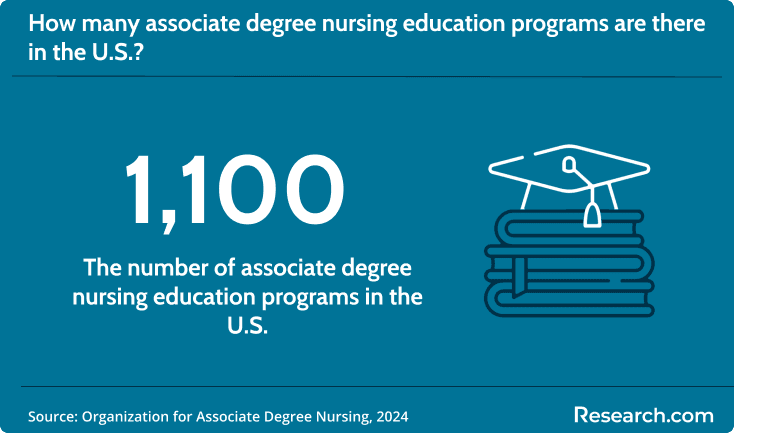
In the United States, there are over 1,100 associate degree nursing education programs, and many include hybrid or online components for working adults and other nontraditional students. While formal ASN specializations are uncommon, students may gain exposure to areas such as maternal-child health, geriatrics, psychiatric nursing, and adult medical-surgical care through required rotations.
| Pathway | Who It May Fit | Decision Point |
| Traditional ASN or ADN | Students without prior nursing licensure | Best for those starting the RN path from the beginning |
| LPN/LVN-to-RN | Licensed practical or vocational nurses | May recognize prior nursing education and experience |
| Paramedic-to-RN | Paramedics seeking broader nursing roles | Requires careful review of transfer and bridge policies |
| Military medic-to-RN | Applicants with qualifying military healthcare training | Eligibility depends on documentation and school policy |
How Do I Choose the Best Online Associate of Science in Nursing Program?
Choosing an online ASN program is a licensure decision, not just an education decision. A program can be flexible and affordable but still be the wrong choice if it does not meet your state’s nursing board requirements or if it leaves students responsible for finding clinical sites without adequate support.
- Verify accreditation and approval: Confirm institutional accreditation and, when applicable, programmatic nursing accreditation through a recognized body such as the Accreditation Commission for Education in Nursing (ACEN). Also verify state board approval for the state where you want to become licensed.
- Check NCLEX-RN preparation and pass-rate information: Schools that publish NCLEX-RN outcomes give students a clearer picture of licensure preparation. Ask for the most recent available results.
- Understand clinical placement responsibilities: Ask whether the school assigns clinical sites or expects students to locate their own. This is one of the most important questions for online students.
- Compare total cost, not just tuition: Include fees, books, supplies, uniforms, background checks, immunizations, travel, exam costs, and possible lost work hours.
- Evaluate schedule realism: Flexible online coursework does not make nursing school easy. Clinicals and labs may be fixed, intensive, or scheduled during weekdays.
- Plan for your next credential: If you expect to pursue a BSN later, review transfer policies, RN-to-BSN partnerships, and whether credits will apply toward future study.
Questions to Ask Before You Apply
| Question | Why It Matters |
| Will this program make me eligible for RN licensure in my state? | Licensure rules vary, and not every online program supports every state. |
| Who arranges clinical placements? | Students may face delays if clinical site responsibility is unclear. |
| How many campus visits, intensives, or simulation days are required? | Travel time and lodging can affect cost and feasibility. |
| What is included in the published tuition? | Fees and clinical costs can substantially change affordability. |
| Are NCLEX-RN preparation resources included? | Licensure exam preparation is central to the value of the program. |
| What happens if I fail or must repeat a nursing course? | Repeat policies can affect time, cost, and graduation eligibility. |
Common Mistakes to Avoid When Choosing an Online ASN Program
- Assuming “online” means no campus or clinical attendance: Pre-licensure nursing always includes in-person clinical skill development.
- Choosing only by tuition price: A low per-credit cost may not include fees, travel, supplies, or exam expenses.
- Skipping state board verification: Always confirm that the program meets licensure requirements where you plan to practice.
- Ignoring clinical placement details: If the school does not arrange clinicals, you need to know exactly what support is available.
- Relying only on rankings: Rankings can help narrow your list, but your final choice should be based on licensure fit, affordability, support, and schedule compatibility.
- Assuming salary outcomes are guaranteed: Earnings vary by employer, location, shift, experience, specialty, and licensure status.
What Career Paths Are Available After an Online ASN Program?
After completing an ASN or ADN program, graduates must pass the NCLEX-RN exam and obtain RN licensure before practicing as registered nurses. Once licensed, ASN-prepared RNs can work in hospitals, outpatient clinics, long-term care facilities, home health, rehabilitation settings, and community health organizations.
- Registered Nurse (RN) - $93,600: RNs assess patients, administer medications, monitor conditions, document care, and work with healthcare teams in hospitals, clinics, long-term care, and community settings.
- Charge Nurse - $85,509: Charge nurses coordinate nursing shifts, assign staff responsibilities, monitor workflow, and communicate between bedside nurses and managers.
- Home Health Nurse - $75,459: Home health nurses provide care in patients’ homes, often supporting chronic disease management, medication education, wound care, and family instruction.
- Nursing Care Facility Nurse - $90,935: Nurses in long-term care settings support older adults or disabled patients, coordinate care plans, communicate with physicians, and supervise care aides.
- Clinical Nurse Liaison - $92,034: Clinical nurse liaisons help coordinate transitions of care, evaluate patient needs, and support admissions, discharges, or service coordination.
ASN programs offer a focused route into nursing, similar in speed-oriented structure to healthcare programs such as accelerated online medical billing and coding certificate programs, but RN licensure requires a much larger clinical component and state-regulated exam process.
| Role | Typical Work Setting | What to Consider |
| Registered Nurse | Hospitals, clinics, rehabilitation centers, community health settings | Often the main entry-level role after ASN completion and RN licensure |
| Charge Nurse | Hospital units, long-term care, specialty units | Usually requires experience and leadership ability |
| Home Health Nurse | Patient homes and home health agencies | Requires independence, communication skills, and comfort working outside a facility |
| Nursing Care Facility Nurse | Long-term care and skilled nursing facilities | Good fit for nurses interested in ongoing patient relationships and care coordination |
| Clinical Nurse Liaison | Hospitals, post-acute providers, care coordination teams | May require strong communication, assessment, and transition-of-care skills |
The chart below summarizes common ASN-related nursing career paths and the salary figures listed for each.
What Is the Job Market for Online Associate Degree in Nursing Graduates?
The employment market for ASN-prepared registered nurses remains broad because RNs are needed across hospitals, outpatient care, long-term care, home health, and community settings. After NCLEX-RN success and state licensure, graduates can seek direct patient-care roles and may later move into specialty, leadership, or BSN-completion pathways.
ASN graduates may also find opportunities in population-specific areas, including aging services and long-term care. Students interested in older-adult care can explore related gerontology career paths to better understand how aging trends connect to healthcare workforce needs.
The U.S. Bureau of Labor Statistics projects a need for approximately 194,500 new RNs each year through 2032. That figure reflects both newly created jobs and replacement needs as nurses retire or leave the field. For ASN graduates, the practical takeaway is that RN licensure can open doors in many healthcare environments, but hiring requirements vary by employer, region, specialty, and whether a BSN is preferred or required.
Should I Consider an Accelerated BSN Online Program After My ASN?
An ASN can qualify graduates for RN licensure, but many nurses later pursue a BSN to broaden career options, meet employer preferences, or prepare for graduate study. An accelerated BSN online pathway may be useful if it recognizes prior nursing coursework and clinical experience, reduces repeated classes, and offers a schedule compatible with working as an RN. If you are comparing post-ASN options, review accelerated BSN online programs and pay close attention to transfer rules, clinical requirements, and total cost.
How Can I Move from an ASN to a BSN?
Many ASN graduates transition into RN-to-BSN programs after passing the NCLEX-RN and obtaining licensure. These bridge programs are designed for working nurses and often accept prior associate-level nursing credits. To make the transition smoother, compare credit transfer policies, course sequencing, part-time options, employer tuition benefits, and whether the BSN program is accepted by employers or graduate schools you may target later. Students looking for flexible completion routes can compare accessible online RN to BSN programs as part of their long-term planning.
What Graduates Say About Online ASN Programs
- : "The online ASN format let me keep my full-time job while I worked toward becoming a nurse. I still had structured clinical expectations, but being able to complete theory courses from home made the goal realistic for me. — Danielle"
- : "I worried that nursing would be too hands-on to learn partly online. What helped was the balance: online lectures for theory, then in-person labs and clinicals where I could practice skills with guidance. — Andrea"
- : "As a military spouse, I needed a program that gave me more flexibility than a traditional campus schedule. The online ASN route helped me keep moving toward RN licensure while managing family and relocation challenges. — Pedro"
Key Insights
- Online ASN programs are usually hybrid: Nursing theory may be online, but labs, simulations, and clinical rotations must happen in person.
- Licensure fit is the first filter: Before comparing tuition or speed, confirm that the program supports RN licensure in the state where you plan to practice.
- Program length varies: Many online ASN programs take about 21 months, but timelines can shift based on prerequisites, transfer credits, clinical availability, and full-time or part-time enrollment.
- Total cost is more than tuition: Budget for fees, supplies, background checks, immunizations, travel, exam costs, and potential lost work hours during clinical placements.
- Clinical placement support can make or break the experience: Ask whether the school secures sites or expects students to arrange their own rotations.
- An ASN can be a starting point, not the endpoint: Many graduates pursue BSN or MSN pathways later to expand career options, qualify for leadership roles, or prepare for advanced nursing practice.
References:
- Herzing University. (2025). Online ASN Program. Herzing University
- Indeed. (2025). Clinical nurse liaison salary in the United States. Indeed.com
- Organization for Associate Degree Nursing. (2024). The Vital Role of Associate Degree Nursing Programs in Supporting the Nursing Workforce. OADN
- Purdue Global. (n.d.). Associate of Science in Nursing — Iowa and Maine. Purdue
- Rasmussen University. (2025). Professional Nursing (ADN/RN) Program. Rasmussen
- U.S. Bureau of Labor Statistics. (2025). Occupational Outlook Handbook: Registered Nurses. U.S. BLS
- University of Charleston. (2025). Cost Sheet: Associate Degree Programs. UCWV
- University of Jamestown. (2025). Associate of Science in Nursing. UJ
- ZipRecruiter. (2025). RN Charge Nurse Salary. ZipRecruiter
Other things you should know about an online associate’s degree in nursing
Yes. Online ASN programs are eligible for federal financial aid if the school is accredited by a U.S. Department of Education-recognized agency and participates in Title IV aid. Students usually complete the FAFSA and may qualify for grants, federal loans, or work-study based on need and enrollment status.
In 2027, the main accrediting bodies for online ASN programs include the Accreditation Commission for Education in Nursing (ACEN) and the Commission on Collegiate Nursing Education (CCNE). Accreditation ensures that programs meet quality standards set by these recognized nursing education authorities.