2027 Art Studies Degree Outlook Through 2030: Enrollment, Salary, and Hiring Projections

Co-Founder and Chief Data Scientist
Choosing to pursue or continue an art studies degree involves weighing more than just rising enrollment or anticipated job openings. While national data shows a 4% increase in art studies graduates between 2022 and 2024, regional hiring growth in creative sectors varies widely, signaling uneven demand. Relying solely on salary projections may obscure intense competition among graduates and the increasing importance of specialized skills or portfolios. Employers often prioritize hands-on experience and digital proficiency, not just academic credentials. This complexity challenges students and professionals to evaluate supply, industry shifts, and geographic factors before committing time and resources to an art studies path.
This article examines art studies enrollment, salary patterns, hiring projections, industry demand, geographic opportunity, and emerging workforce changes through 2030 to help readers make better-informed education and career decisions.
Key Things to Know About the Art Studies Degree Outlook Through 2030
- Enrollment in art studies programs dropped nearly 12% since 2020, reflecting shifting student priorities toward STEM and business fields, which may tighten future graduate pipelines and elevate competition within specialized art niches.
- Employers increasingly value interdisciplinary skills alongside traditional art expertise, implying that graduates who integrate digital design or marketing proficiencies are more likely to meet evolving hiring criteria.
- Rising tuition costs paired with only modest hiring growth through 2030 suggest prospective students must weigh the high educational investment against uncertain demand, especially in saturated metropolitan art markets.
// PREVIEW //
- Key Things to Know About the Art Studies Degree Outlook Through 2030 Key Things to Know About the Art Studies Degree Outlook Through 2030
- How is Art Studies Degree Enrollment Expected to Change Through 2030? Enrollment Trends Through 2030
- How Many Art Studies Graduates Will Enter the Workforce by 2030? Graduate Workforce Entry Projections
- What Are the Hiring Projections for Art Studies Graduates Through 2030? Hiring Projections Through 2030
- Which Art Studies Careers Will Experience the Most Job Growth? Fastest-Growing Career Paths
- What Is the Salary Outlook for Art Studies Graduates Through 2030? Salary Outlook Through 2030
- Which Industries Will Hire the Most Art Studies Graduates by 2030? Top Hiring Industries
- Where Will Demand for Art Studies Graduates Be Strongest? Strongest Geographic Demand
- Which Art Studies Specializations Will Be Most in Demand by 2030? Which Art Studies Specializations Will Be Most in Demand by 2030?
- How Will AI and Technology Affect Art Studies Careers Through 2030? How Will AI and Technology Affect Art Studies Careers Through 2030?
- Is a Art Studies Degree Worth Pursuing Based on 2030 Projections? Degree Value Through 2030
How is Art Studies Degree Enrollment Expected to Change Through 2030?
Enrollment in art studies degree programs through 2030 will reflect constrained growth shaped by shifting labor market demands and evolving educational delivery models. While traditional studio arts programs at smaller liberal arts colleges may see flat or declining numbers due to tuition pressures and limited institutional capacity, fields that blend creative skills with technology-such as digital animation and graphic design-are likely to attract more students, responding to employer expectations for interdisciplinary competencies. This shift creates a tradeoff: programs emphasizing classical fine arts risk contraction, which may reduce specialization options and admission competition, while those aligned with digital media could expand, influencing the supply of graduates with distinct career trajectories.
The slow but steady adaptation in art studies degree enrollment, supported by data from the National Center for Education Statistics, highlights how demographic trends and regional population growth contribute modestly to student volume, particularly in multidisciplinary and digital art programs. However, the variability in institutional offerings means prospective students must carefully consider how enrollment changes might impact class sizes and the availability of practical, career-oriented training pathways. Educators and advisors can draw attention to this dynamic by helping learners assess options, including hybrid models, which better match labor market realities without sacrificing foundational skills. For individuals balancing timeliness and employability, exploring an accelerated medical assistant program may represent a pragmatic alternative amid evolving workforce conditions within the broader context of higher education choices.
How Many Art Studies Graduates Will Enter the Workforce by 2030?
Graduate numbers alone do not fully determine workforce opportunities for art studies degree holders, as many factors influence labor market entry and relevance. Enrollment and completion rates have stabilized recently, with a slight increase driven partly by hybrid learning models and institutional adjustments. However, not all students transitioning from education to the workforce will pursue careers directly tied to their degrees; a significant portion diversify into related or peripheral sectors such as education, marketing, or design, where employment growth remains sluggish. This divergence means that while around 55,000 art studies graduates may emerge annually by 2030, the pool actively seeking work aligned with their training is likely closer to 40,000 to 45,000, reflecting attrition to further education or alternative career paths.
Shifts in demographic trends and evolving student priorities suggest nuanced impacts on enrollment and graduation patterns, with some programs adapting curricula to include digital literacy and entrepreneurial skills to better position graduates for competitive markets. Yet, practical challenges persist as employers increasingly demand interdisciplinary competencies, pressing new entrants to supplement their artistic expertise with project management or technological fluency. This reality affects job-readiness and labor market navigation, especially in locales where creative sector growth is uneven. Graduates must carefully weigh program attributes and labor dynamics to avoid oversaturation or misalignment, recognizing that a degree's nominal output figure does not guarantee proportional hiring opportunities within core artistic roles.
A recent graduate completing an art studies program in 2024 shared the tensions involved in entering this labor market. Despite strong artistic credentials, they encountered intense competition in traditional creative fields and had to broaden their job search into adjacent sectors, balancing portfolios and freelance work while pursuing additional certifications. With rising graduate numbers anticipated through the decade, they noted a growing sense of caution among peers regarding oversupply and underscored the importance of strategically acquiring cross-disciplinary skills to maintain employability. Their experience highlights the practical complexity behind aggregate degree projections and the individualized navigation required to turn graduation into sustainable employment.
What Are the Hiring Projections for Art Studies Graduates Through 2030?
Employer demand for art studies graduates through 2030 appears moderate and uneven, heavily influenced by specialization and industry alignment rather than broad occupational growth. While the U.S. Bureau of Labor Statistics projects a 3% increase in employment for fine artists, this rate mirrors average job growth and conceals substantial variation; many traditional fine arts graduates face intense competition, limited full-time roles, and reliance on freelance work. For example, a student focusing solely on painting in a mid-sized metropolitan area may find entry-level jobs scarce despite overall sector growth, highlighting the importance of geographic and niche-specific conditions when interpreting broad national projections.
Industries that blend artistic skill with technology and media show stronger hiring potential, particularly graphic design roles, which are expected to grow by approximately 6% through 2030 according to recent labor analyses. These fields require proficiency beyond core artistic ability, demanding digital literacy, multimedia expertise, and adaptability to evolving software tools. Graduates lacking these cross-disciplinary skills often face stalled wage growth and career progression, underscoring the practical necessity of ongoing skill development. Employers increasingly prefer candidates who combine creative talent with competencies such as animation, coding basics, or user experience design, especially in expanding sectors like advertising, gaming, and online media.
This outlook stresses the need for students and practitioners to critically evaluate the alignment between their artistic training and marketable technical skills. While hiring projections suggest ongoing opportunities, they do not guarantee accessible entry points or stable career trajectories without strategic skill acquisition, networking, and portfolio diversification. Consequently, those targeting conventional art paths must weigh the financial and professional tradeoffs of high competition and often fragmented work against those pursuing hybrid roles with higher demand and more consistent openings in technologically integrated creative industries.
Which Art Studies Careers Will Experience the Most Job Growth?
Projected job growth through 2030 indicates that careers linked to digital media within art studies will see the most significant expansion, particularly multimedia artists and animators with estimated increases around 22%. This surge is propelled by rising demand in industries like entertainment and gaming, where proficiency in evolving digital tools is essential. Conversely, graphic designers face slower growth near 6%, largely due to automation and template-driven workflows reducing entry-level openings. Prospective students should weigh this contrast: while a focus on digital and multimedia skills aligns with robust market demand, traditional roles often require broader adaptability and networking to manage less consistent hiring patterns.
The outlook for art therapists and museum technicians also reflects important sector dynamics; art therapists benefit from growing integration of mental health services across healthcare systems, showing growth near 17%, while museum roles are influenced by fluctuating public funding and cultural interest, with projections close to 9%. However, higher percentage growth in smaller fields does not always translate into large job volumes, so candidates must consider regional variations and replacement demand when evaluating opportunities in art studies job growth in the United States. Balancing these factors can influence long-term stability and skill versatility.
Students navigating these projections might also explore interdisciplinary links such as healthcare or digital technology to enhance employability. For those prioritizing timely credentials, programs identified as cheapest fastest RN to BSN online offer a parallel example of how cost and duration factor into career-relevant education decisions. Ultimately, informed choices hinge on understanding the nuanced interplay between growth statistics, employer expectations, and the evolving landscape of art studies careers with highest hiring projections.
What Is the Salary Outlook for Art Studies Graduates Through 2030?
Evaluating salary projections for art studies graduates through 2030 requires attention to inflation, sector-specific labor demand, evolving credential requirements, and shifting occupational roles. Wage growth in arts-related fields often parallels national averages but varies significantly based on specialization, geography, and demonstrated skills. Employers frequently value practical experience and technological adaptability over formal degrees alone, impacting compensation outcomes. The following factors capture key dynamics influencing earnings for art studies graduates in the coming decade.
- Industry Variation: Compensation differs widely across roles such as graphic design, fine arts, and art direction, with digital media and commercial design offering higher earning potential. Graduates targeting creative director or art management positions often benefit from premium salaries linked to leadership responsibilities.
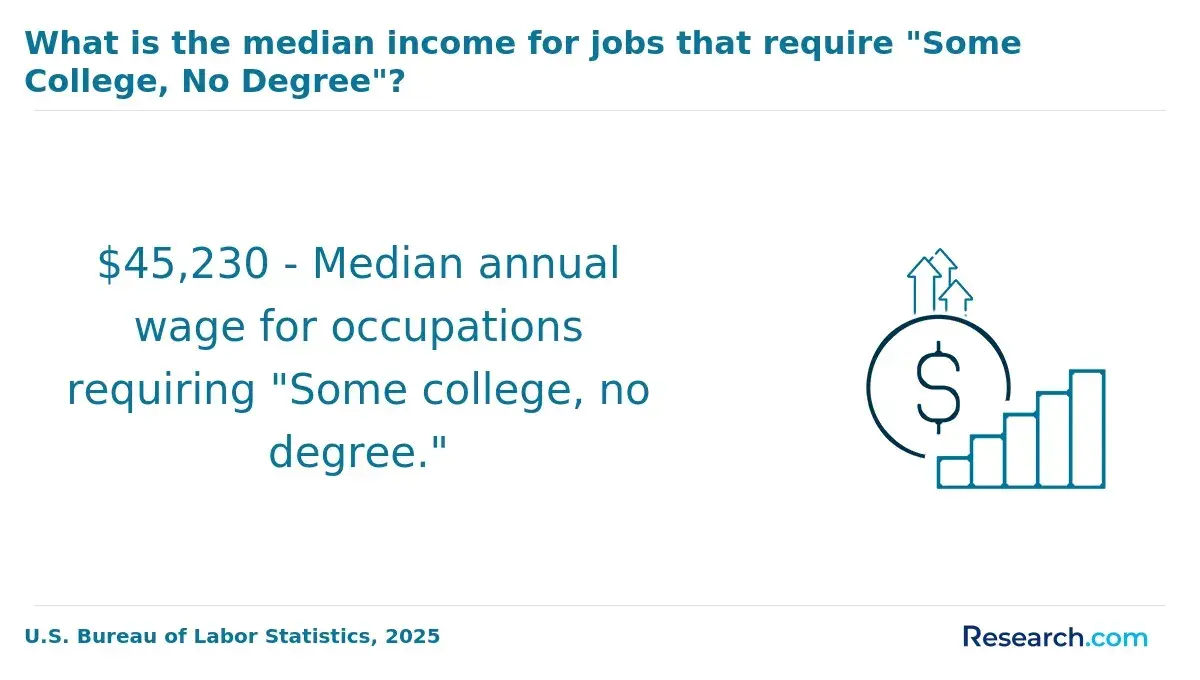
- Experience and Career Progression: Entry-level salaries typically start below overall bachelor's degree medians, generally between $37,000 and $45,000, but mid-career incomes can increase to $50,000-$70,000. Advancing portfolios and specialized skills accelerate wage growth.
- Geographic Location: Regional labor markets affect pay scales; urban centers with robust creative industries tend to offer better salaries but also come with higher living costs, influencing net financial benefit.
- Technological Adaptation: Familiarity with emerging digital tools and platforms is critical. Employers prioritize candidates who integrate technical proficiency with artistic expertise, leading to stronger hiring prospects and compensation.
- Credential and Skill Signaling: While formal degrees provide a baseline, additional certifications, internships, and continuous learning shape competitive advantage, especially in sectors emphasizing innovation.
- Labor Market Trends: Moderate annual wage growth around 3%, as projected by recent national statistics, reflects steady demand but also underscores the need for strategic career choices to outpace inflation.
- Employer Hiring Preferences: Practical experience, adaptability, and networking often outweigh traditional credentials, meaning proactive engagement beyond academics influences salary trajectories.
A recent graduate entering the art studies workforce in a mid-sized metropolitan area accepted an initial offer near $38,000 after weighing local salary benchmarks and cost-of-living factors. Despite some apprehension about starting below national averages, they focused on building a diverse portfolio and pursuing freelance opportunities to supplement income. Their decision reflected a pragmatic approach-acknowledging that early salary constraints are common but can be mitigated through targeted skill development and market positioning over time.
Which Industries Will Hire the Most Art Studies Graduates by 2030?
Employment prospects for art studies graduates through 2030 will depend heavily on evolving industry demands, technological change, and workforce replacement needs. Growth tends to concentrate in sectors that blend traditional artistic skills with digital proficiency, reflecting how creative work adapts to new platforms and consumer behaviors. However, competition remains strong, especially in education and cultural institutions. Graduates who diversify their skill sets, particularly in digital tools and interdisciplinary collaboration, will have a strategic advantage navigating this landscape. Below is an outline of the top industries hiring art studies graduates by 2030 and the nuanced hiring outlook within each.
- Digital Media and Entertainment: This sector experiences sustained growth due to expanding streaming services, animation, and interactive content production. Entry-level opportunities typically involve digital design, animation, and visual effects, where blending creativity with technical software skills is critical. Proficiency in emerging virtual and augmented reality tools can enhance prospects.
- Advertising and Marketing Agencies: The shift toward immersive branding and social media drives demand for visual storytellers and graphic designers. Graduates with expertise in user experience design and digital campaign analytics are preferred. The rise of influencer-driven marketing creates dynamic roles that combine art with strategic communication.
- Cultural Institutions: Museums and galleries maintain stable but modest hiring, primarily for curatorial, educational, and community engagement roles. These positions favor candidates with specialized knowledge in art history and public programming but offer lower job growth and typically require patience with limited salary gains.
- Education Sector: From K-12 to postsecondary instructors, qualified art teachers remain essential but face intense competition. Long-term employment often necessitates additional certification or graduate credentials, and roles may have lower pay scales compared to industry jobs.
- Interactive and Game Design: Rapid expansion in gaming offers strong prospects for graduates skilled in storytelling, digital art, and user interface design. Specialized portfolios and experience with animation software improve hiring chances in this highly competitive and evolving field.
- Non-Profit Arts Organizations: These roles emphasize mission-driven work in community arts programming and outreach. While growth is limited, demand persists for graduates skilled in program development, grant writing, and arts education, often requiring flexible skill combinations.
- Corporate Creative Departments: Increasingly, large companies build internal creative teams focused on branding, product design, and internal communications. Art studies graduates with hybrid skills in design, marketing strategies, and digital tools can access these stable but selective roles.
The art studies career growth and hiring trends in the US underscore the importance of aligning educational pathways with realistic industry expectations. It is instructive to consider scenarios where graduates who combine digital expertise with traditional arts are often favored over those with narrowly focused credentials. For those pursuing teaching roles, programs such as the fastest post master's FNP certificate illustrate how specialized certification paths outside art can accelerate employability-highlighting the broader trend where added credentials enhance market competitiveness, even in adjacent fields.
Where Will Demand for Art Studies Graduates Be Strongest?
Demand for art studies graduates is concentrated in metropolitan hubs where technology, media, and creative industries intersect, creating a competitive but opportunity-rich landscape. Coastal cities like Los Angeles, New York, San Francisco, and Seattle maintain high employer density due to dense media and tech sectors, but costs of living and intense applicant pools can diminish net employment benefits for many candidates. Conversely, emerging regional markets such as Austin and Atlanta offer growing digital economies combined with more affordable living expenses, presenting a strategic tradeoff between earning potential and quality of life for graduates weighing relocation decisions.
Employers increasingly prioritize digital fluency alongside artistic skills, reflecting the shift toward multimedia content creation, graphic design, and animation within advertising, publishing, and gaming sectors. This evolution narrows the pool of viable roles for graduates focused solely on traditional fine arts and incentivizes continuous technical skill development to remain competitive. Furthermore, emerging fields like augmented and virtual reality, as well as e-learning content production, present niche avenues that demand interdisciplinary capabilities but may require specialized credentials or portfolios aligned with industry expectations.
National-level growth projections can obscure local variations in job availability, credential requirements, and compensation patterns which vary widely by sector and geography. Graduates should critically assess how regional economic composition, employer concentration, and remote-work flexibility influence the practical accessibility of positions. A strategic approach that balances specialization in digital competencies with awareness of local market dynamics will better position art studies graduates for sustainable employment outcomes through 2030.
Which Art Studies Specializations Will Be Most in Demand by 2030?
Specializations within art studies that integrate technology and adaptability will outperform traditional tracks through 2030, reflecting shifting employer demands and evolving digital landscapes. For example, a student weighing a conventional fine arts path against a digital media arts focus must consider not only growth rates but also the technical skills and portfolio robustness expected by employers. While fine arts may offer rich personal fulfillment, its salary volatility and limited full-time roles contrast sharply with fields where demand rises between 12% and 18%, such as animation or game design. Practical career flexibility increasingly favors those who can meld creative talent with digital fluency and cross-disciplinary collaboration.
Below is a summary of specializations expected to lead in demand and relevance by 2030:
- Digital Media Arts and Animation:Projected to grow 15%-18%, this specialization capitalizes on digital marketing and entertainment sectors requiring strong skills in software like Adobe Creative Suite, 3D modeling, and basic programming, emphasizing both creativity and technical proficiency.
- Graphic Design with Digital Focus:Combines traditional visual communication with UX/UI principles, reflecting steady demand from businesses prioritizing user experience in digital products, requiring adaptability to evolving design tools and human-centered design knowledge.
- Game Design and Interactive Art:Driven by the expanding gaming industry and virtual experiences, this area demands programming basics alongside storytelling and artistic skills, offering opportunities in a market forecasted for robust growth.
- Art Therapy:As healthcare systems integrate creative therapies for mental health and rehabilitation, this niche requires appropriate certification and knowledge of psychological principles, with demand growing steadily but remaining specialized.
- Arts Administration:Focused on nonprofit and cultural management, this field demands leadership capabilities, fundraising skills, and organizational savvy, reflecting growing emphasis on arts sustainability within community institutions.
How Will AI and Technology Affect Art Studies Careers Through 2030?
Artificial intelligence and automation are more likely to augment common responsibilities in art studies career paths than fully replace them, particularly through 2030. Routine and repetitive tasks such as image editing or pattern generation are increasingly automated, shifting entry-level roles toward collaboration with AI tools and a higher emphasis on digital fluency. This creates a demand for hybrid professionals who combine core artistic skills with competencies in AI-assisted design, virtual reality, and interactive media development. Graduates lacking these digital proficiencies risk narrower job prospects as industries recalibrate hiring criteria to prioritize technological and interdisciplinary expertise.
The impact of emerging technologies on art studies jobs 2030 reveals divergent growth patterns across sectors. While traditional art roles may contract or plateau, sectors integrating immersive experiences, game design, and digital marketing show the fastest expansion, demanding adaptability and continuous skill development from professionals. Educationally, practical experience with AI and digital platforms alongside foundational artistic training becomes crucial for employability, particularly in the United States where employer expectations increasingly reflect this blend. For students and professionals seeking to align with evolving market needs, evaluating coursework, certifications, and project-based learning opportunities is essential to maintain relevance rather than relying solely on conventional analog skills.
Prospective candidates should recognize that art studies career trajectories require nuanced decision-making about specialized skills and ethical considerations related to AI integration. There are parallels with other fields, such as nursing, where understanding detailed pathways like how to become a nurse practitioner illuminates the importance of targeted education and credentialing. While long-term projections retain uncertainty, a pragmatic approach focusing on emerging tech competencies balanced with critical thinking will better position individuals for sustainable roles amidst the dynamic landscape of AI integration in art studies career paths United States.
Is a Art Studies Degree Worth Pursuing Based on 2030 Projections?
Employment projections through 2030 indicate that art studies degree holders face a notably competitive labor market, with job growth in related occupations estimated at 3-4%, slightly below the average across all fields according to the U.S. Bureau of Labor Statistics. For a student weighing the choice between degrees, this slower expansion combined with lower median starting salaries-around $40,000 for recent graduates as reported by the National Association of Colleges and Employers-suggests important tradeoffs in potential return on investment. Geographic location, specialization in commercial or digital arts, and the ability to develop a strong portfolio and networking connections will heavily influence one's success in securing sustainable employment.
Enrollment trends reveal a modest decline in art studies programs, reflecting shifting student preferences towards fields with clearer or higher-paying career pathways. Those committed to an art studies degree must consider how to supplement academic credentials with practical experience or entrepreneurial skills to improve hiring outcomes. Unlike some professional degrees with structured advancement timelines, art-related roles often require navigating unpredictable opportunities, making flexibility and real-world skills critical. Prospective students should carefully assess their personal goals and financial commitment, balancing these factors against the moderate demand and competition they will encounter in the evolving job market, while recognizing alternate career paths such as education or digital media. For career comparisons or alternative directions, resources like how to become an athletic director illustrate the necessity of aligning degree choices with market realities.
References
- These are the artistic careers with the most job opportunities - TAI ARTS https://taiarts.com/en/blog/artistic-careers-with-job-opportunities/
- Art and Humanities Degree Careers and Salary in Europe - StudyinEurope.eu https://www.studyineurope.eu/ru/art-humanities/art-humanities-degree-careers-salary-europe/
- Jobs demanding ‘creativity’ most likely to grow in next decade, research finds - Arts Professional https://www.artsprofessional.co.uk/news/jobs-demanding-creativity-most-likely-grow-next-decade-research-finds
- Six profitable careers you can get with an art school degree https://www.cca.edu/newsroom/6-highest-paying-careers-you-can-get-art-school-degree/
- How Arts Programs Profit Students and Schools - Gray DI https://www.graydi.us/blog/gray-insights/the-artists-are-not-starving-how-arts-programs-profit-students-and-schools
- Careers in the Arts: Who Stays and Who Leaves? https://snaaparts.org/findings/reports/careers-in-the-arts-who-stays-and-who-leaves
- Are art degrees useless? https://publicdelivery.org/opinion/are-art-degrees-useless/
- How will higher education be different in 2030? | British Council https://www.britishcouncil.org/voices-magazine/future-higher-education
- 150+ Art Careers - The Ultimate List https://www.studentartguide.com/articles/art-careers-list
- Careers in Art History - For Art History https://forarthistory.org.uk/careers-in-art-history/
Other Things You Should Know About Art Studies
Art studies programs vary significantly in their balance of practical studio work and academic theory. Prospective students must prioritize programs that align with their career goals-those seeking to enter creative practice or design roles should emphasize studio-intensive curricula, while those aiming for research, curation, or education careers may benefit more from theory-heavy programs. Overlooking this alignment can result in a mismatch between acquired skills and employer expectations, potentially limiting job prospects or requiring additional training.
The reputation and network strength of the institution can heavily influence initial employment opportunities, especially in competitive art markets. Graduates from schools with strong industry connections tend to secure internships and entry-level positions more readily, which positively affects early career salaries. However, long-term salary growth often depends more on portfolio quality, continued skill development, and professional networks grown post-graduation, suggesting that initial institutional prestige should be weighed alongside personal initiative.
Art studies graduates face cyclical demand and evolving employer needs, so adaptability is vital. Actively diversifying skills-such as digital media proficiency or project management-improves resilience against industry fluctuations. Prioritizing opportunities for interdisciplinary collaboration or freelance work can also buffer against traditional employment volatility. Graduates should view their degree as a foundational credential that requires continual augmentation through practical experience and networking to sustain employability long term.
Specializing deeply within a niche can give graduates a competitive edge in targeted sectors but may restrict flexibility if market demand shifts. Conversely, a broader focus supports versatility, allowing transition across various creative roles but may dilute mastery and market differentiation. For students uncertain about their long-term path, programs that offer balanced exposure combined with elective specialization opportunities can optimize both employability and adaptability over time.