2027 Art Studies Degree Program Availability Report: Which States and Schools Offer the Most Options

Co-Founder and Chief Data Scientist
The concentration of art studies degree programs across states and institutions reflects complex interactions among local industry demands, cultural investment priorities, and educational resource allocation. Recent data from the National Center for Education Statistics indicates a moderate annual enrollment growth in arts-related fields, underscoring selective regional commitment to sustaining creative workforce pipelines. This uneven program distribution can affect practical training opportunities, networking access, and alignment with evolving employer needs in the creative economy. Examining where the most expansive program offerings exist provides insight into how educational infrastructure supports or constrains career pathways in diverse art disciplines.
This report analyzes state and school-level availability patterns to reveal strategic institutional roles, accessibility challenges, and labor market responsiveness in art studies education.
Key Benefits of States and Schools That Offer the Most Art Studies Degree Program Options
- Broader degree options correlate with higher interdisciplinary exposure, but managing diverse curricula can extend time to degree completion, requiring students to weigh depth against possible delays.
- Employers increasingly favor candidates from varied art studies programs for versatile skill sets, signaling a shift toward hybrid creative-professional roles and cross-sector adaptability.
- States with extensive art studies offerings often reduce geographic barriers, enabling more equitable program access; however, cost variability remains a critical factor influencing student enrollment decisions.
- Key Benefits of States and Schools That Offer the Most Art Studies Degree Program Options Key Benefits
- Which States Offer the Most Art Studies Degree Programs? Top States
- Why Do Some States Have More Art Studies Programs Than Others? Program Availability
- Which Colleges Offer the Largest Number of Art Studies Degree Options? Top Schools
- How Do Online Programs Improve Access in States With Limited Options? Online Program Access
- How Much Does Art Studies Program Tuition Vary by State? Tuition Across States
- How Does Art Studies Program Demand Affect Admissions Decisions? Program Demand
- How Do Art Studies Specialization Options Vary by Region? Specialization Options
- How Does Regional Employer Demand Affect Career Outcomes? Employer Demand
- What Factors Matter Most When Comparing Art Studies Programs Across States? Key Comparison Factors
- Which Regions May See the Fastest Growth in Art Studies Education? Fastest Growing Region
Which States Offer the Most Art Studies Degree Programs?
Variations in the availability of art studies degree programs across states stem largely from differences in population size, higher education infrastructure, and regional industry demands. States with dense university networks and vibrant creative economies tend to offer broader academic options, allowing students to tailor their studies toward diverse specializations and practical career routes. According to 2024 data from the National Center for Education Statistics, the top US states for art studies degree availability also reflect areas where institutional investments and cultural sectors align to support both traditional and emerging disciplines.
- California: As a sprawling state with an extensive higher education system including the University of California and California State University networks, California leads in the range and depth of art studies programs. Its numerous private art schools complement public offerings, covering traditional fine arts, digital media, and interdisciplinary design. The state's robust creative industries provide students with meaningful internship and employment prospects, enhancing long-term practical outcomes.
- New York: Home to a concentrated cluster of universities, art conservatories, and cultural institutions, New York benefits from proximity to galleries, museums, and design firms. This density fosters practical learning opportunities through internships and networking but is counterbalanced by high living costs and intense competition, factors that can influence accessibility and graduate success.
- Texas: Reflecting demographic growth and increased public funding, Texas has expanded art studies offerings within major university systems like the University of Texas. Its programs emphasize a blend of classic techniques and applied digital arts, benefiting from more affordable tuition and living expenses. While cultural employer density is lower than coastal states, Texas provides a practical balance between cost, program variety, and workforce alignment.
Other states such as Florida, Illinois, and Pennsylvania offer specialized programs influenced by local cultural economies, but the scale and diversity remain more limited. Prospective students should weigh program availability against regional employment dynamics and institutional strength to ensure alignment with career objectives in art studies. For those interested in integrating technology into their education path, examining options alongside the best online AI degree programs might offer additional strategic value given the growing intersection between creative fields and digital innovation.
Why Do Some States Have More Art Studies Programs Than Others?
State differences in art studies degree offerings largely reflect disparities in higher education infrastructure and regional labor market demand for graduates in creative fields. States with well-funded public university systems and robust urban populations are better positioned to sustain diverse art studies programs that meet evolving industry needs.
The concentration of cultural institutions and creative industry clusters within states also influences program breadth, as universities align curricula with local employer skills requirements. According to National Center for Education Statistics data from 2024, Northeastern and West Coast states typically allocate more per capita funding to postsecondary education, reinforcing program availability in those areas.
The drivers of regional variation in art studies program availability include the scale and focus of state higher education budgets, institutional research capacity, and proximity to creative economy hubs that generate consistent demand for art graduates. States prioritizing arts funding and cultural policies contribute to workforce development by supporting specialized studios, faculty hiring, and equipment investments required for comprehensive art disciplines.
Furthermore, employer demand in these regions encourages institutions to expand offerings in digital media, fine arts, and interdisciplinary programs to align credentials with current occupational trends. These structural factors create a feedback loop where university capacity and industry clustering jointly propel program growth or contraction, depending on state policy and economic conditions.
These systemic disparities shape student access to varied art studies options, driving some toward online alternatives that can bridge geographic gaps without replicating local institutional resources. The expansion of quality online education provides a practical response to uneven spatial distribution but may not fully recover the experiential advantages of physical campuses embedded in creative ecosystems.
Understanding these patterns is essential for policymakers and prospective students aiming to align educational pathways with labor market realities, as regional program scarcity often means fewer tailored opportunities for career-relevant skill development and innovation in the arts. For example, comparisons with fields like criminal justice reveal how program availability and cost dynamics influence degree pursuit nationally, as detailed in analyses of criminal justice degree cost.
Which Colleges Offer the Largest Number of Art Studies Degree Options?
The range of art studies degree options available at a college is largely determined by the institution's size, funding, and academic infrastructure rather than geographic location alone. Larger or research-intensive universities tend to offer more specialized tracks, concentrations, and flexible learning formats, reflecting their capacity to invest across multiple departments and interdisciplinary initiatives. This breadth of offerings supports diverse student interests and aligns programs closely with evolving industry needs and educational trends.
- Large Public Research Universities: These institutions typically house numerous art-related departments and benefit from substantial state funding and research grants, enabling extensive program varieties. For example, flagship state universities in California, New York, and Texas deploy resources that support conventional disciplines like fine arts and art history alongside emerging fields such as digital media and interdisciplinary arts.
- Specialized Art Institutes: Schools focused exclusively on art education emphasize studio-based learning and highly specialized curricula, which often include unique interdisciplinary or applied concentrations. The Rhode Island School of Design and the School of the Art Institute of Chicago exemplify how concentrated expertise and targeted resources create diverse degree pathways within a relatively compact institution.
- Comprehensive Private Universities: These institutions leverage diverse faculty expertise and often integrate art studies within broader liberal arts and technology units, enabling cross-disciplinary degrees and innovative program models. Their flexibility in curriculum design supports niche specializations aligned with industry trends and often includes hybrid or online delivery formats.
According to data from the National Center for Education Statistics in 2024, institutions with larger full-time faculty and research budgets report a notably higher number of distinct art studies degree titles. This correlation reflects how investment in faculty diversity and facility development is central to expanding academic options. While these broad offerings enhance adaptability for graduates entering varied creative sectors, students must consider the tradeoff between a wide range of programs and the depth of specialized training each offers.
How Do Online Programs Improve Access in States With Limited Options?
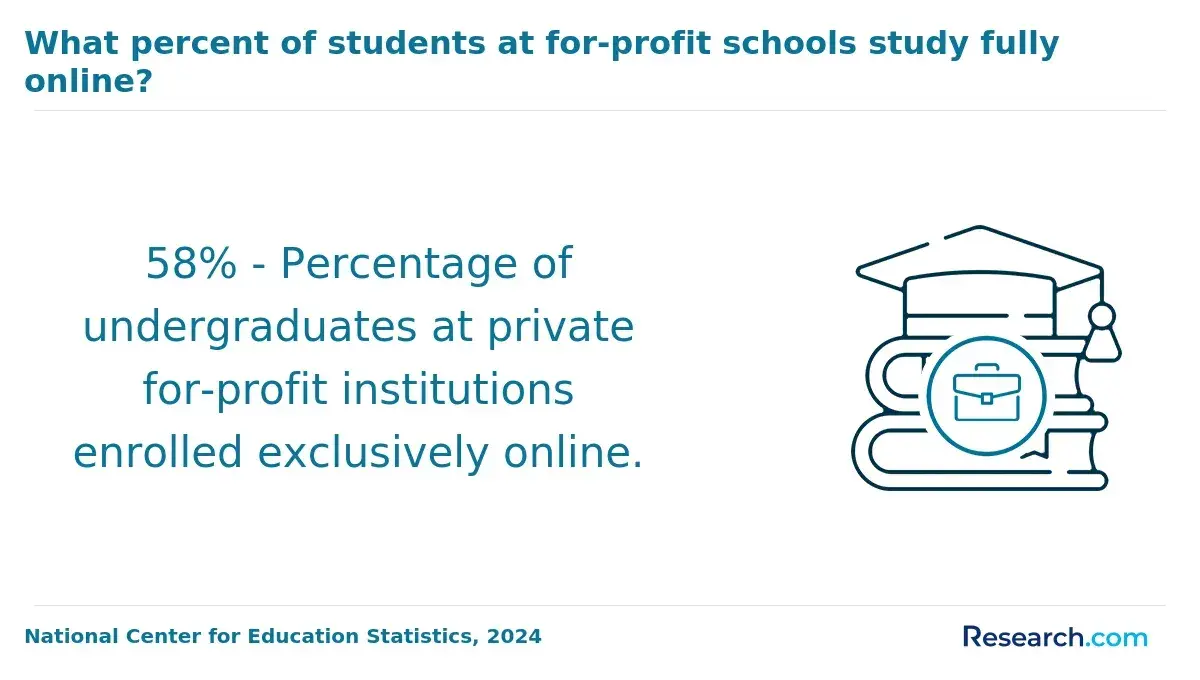
Online art studies programs have fundamentally altered access for students in states where physical degree options are sparse or absent. According to a 2024 report from the National Center for Education Statistics, over 40% of undergraduates enrolled in fully online bachelor's programs live in states with fewer than five traditional art studies programs. This shift diminishes geographic barriers, allowing those who otherwise face limited local choices-often in rural or underserved areas-to pursue specialized training without relocating. Consequently, online modalities redistribute enrollment patterns, enabling a more geographically diverse student body to access rigorous curricula from accredited institutions nationwide.
The expansion in access hinges on several structural factors unique to digital delivery. Asynchronous learning models reduce dependency on strict campus schedules, accommodating students' local responsibilities while broadening enrollment beyond state borders. Institutions scale their offerings without the constraints of physical facilities, thereby extending their reach into regions underserved by higher education infrastructure. Online programs also mitigate costs and logistical challenges associated with relocation or commuting, which often restrict participation in traditionally structured art studies. This combined flexibility encourages steady enrollment growth from diverse socioeconomic and geographic segments, reshaping institutional competition and student mobility across regions.
These dynamics influence broader patterns in workforce development and regional equity by creating new pipelines for talent in creative fields, particularly in states historically disadvantaged in educational resource distribution. Increased access through online routes fosters participation from populations that might otherwise be excluded, contributing to a more representative artistic workforce. Institutional competition intensifies as geographic exclusivity diminishes, compelling programs to innovate in curriculum delivery and student support to attract a national audience. Ultimately, online art studies programs function as critical structural solutions, addressing persistent inequities in educational opportunity tied to state and regional disparities.
One art studies graduate recalls navigating the uncertain timeline of rolling admissions amid limited local options. Initially hesitant to commit without knowing all program deadlines, they delayed applying while balancing job demands and portfolio development. The flexibility of online program intake windows ultimately eased their decision, allowing completion of prerequisite work with less pressure. Despite occasional stress over delayed response times from admissions offices, the ability to begin coursework remotely in a region lacking nearby programs was decisive in pursuing their degree. This experience underscores how timing and access interplay uniquely in online enrollment for students constrained by geography.
How Much Does Art Studies Program Tuition Vary by State?
Tuition for art studies programs varies notably across states due to differences in public funding allocation, institutional type, and residency-based pricing structures. Public universities typically offer reduced tuition rates for in-state residents, reflecting the underlying state subsidies that support these institutions. In contrast, out-of-state students and attendees at private colleges often face substantially higher fees that align more closely with operational costs and institutional priorities. These funding models and their connections to local tax bases and state education policies create a complex tuition landscape rather than arbitrary price differences, influencing how programs are financed and priced from region to region.
Recent data from the U.S. Department of Education College Scorecard and the National Center for Education Statistics (NCES) show public in-state tuition for art studies bachelor's programs frequently ranges from approximately $5,000 annually in Southern and Midwestern states to more than $15,000 in high-cost markets like New York and California. Private institutions generally exceed $30,000 per year regardless of state, though this figure is influenced by factors such as school prestige and available resources. This state-by-state art studies program tuition costs variation highlights how institutional funding formulas and regional economic conditions drive tuition disparities rather than differences in educational content alone.
These affordability gaps have tangible effects on student decision-making, particularly for those weighing the benefits of in-state versus out-of-state study or considering enrollment at private institutions. Such variations shape access to the widest range of academic options and can limit mobility when students prioritize lower tuition over specialized program offerings.
Prospective students must also consider practical post-graduation realities, including lower early-career earnings in creative fields compared to STEM, which exacerbate the financial burden of higher tuition. For students balancing cost and credential value, exploring linked options such as paralegal online programs may offer alternative pathways aligned with labor market demands and financing constraints.
How Does Art Studies Program Demand Affect Admissions Decisions?
Rising demand for art studies programs intensifies admissions selectivity by shrinking the ratio of available seats to qualified applicants, compelling institutions to tighten enrollment criteria. This shift often pushes programs to weigh artistic portfolios, auditions, and demonstrated skill more heavily alongside academic records to differentiate candidates. Schools with high application volumes must balance quality against constrained resources, resulting in more competitive thresholds that prioritize students with distinctly prepared, focused artistic visions. These changes reflect an evolving admissions landscape shaped less by simple academic metrics and more by nuanced assessments of creative potential amid growing applicant pools.
The underlying drivers of this selectivity include finite institutional capacity-limited studio space, faculty bandwidth, and accreditation demands-which resist rapid expansion despite rising interest. Programs must also align admissions with labor market realities, where employability in creative fields hinges on both technical proficiency and portfolio strength. Consequently, admissions decisions incorporate workforce relevance, restricting intake to those deemed most likely to succeed professionally. This dynamic creates cyclical effects: tighter admissions push applicants to invest more in polished presentations, further raising standards and maintaining program prestige.
For prospective students, heightened demand reshapes preparation strategies and influences geographic enrollment choices, as competition spikes in states with dense program availability like California or New York. It also constrains accessibility, particularly where fewer programs exist, amplifying pressure on personal portfolios and goal articulation. Meanwhile, programs under pressure sustain rigorous curricula to uphold outcomes valued by employers, impacting long-term graduate success but also potentially marginalizing candidates better suited to different learning environments. This interplay underscores how enrollment pressures extend beyond admissions into the broader educational and career pipeline.
One graduate recalls navigating a rolling admissions cycle where late application submission felt risky due to mounting demand. They hesitated to refine their portfolio more fully, fearing missed deadlines amid varied acceptance timelines. Ultimately, the delay meant waiting longer for decisions but resulted in stronger admission offers at targeted schools. This experience highlighted the strategic complexity imposed by fluctuating demand, where timing and portfolio maturity directly influence outcomes in a competitive selection environment.
How Do Art Studies Specialization Options Vary by Region?
Art studies specialization options reflect distinct regional economic priorities and industry concentrations that shape institutional offerings. Coastal regions like California and New York, hubs for creative and digital media industries, provide extensive pathways in digital arts, animation, and curatorial studies, aligning curricula with cutting-edge local demands. In contrast, the Midwest and Southern states emphasize traditional or applied arts such as graphic design and studio arts, tailoring programs to meet workforce requirements linked to regional educational systems, manufacturing, and public institutions. According to 2024 data from the National Center for Education Statistics, over 65% of art studies programs in Western and Northeastern states include advanced digital or multimedia specializations, compared to fewer than 30% in the South and Midwest, illustrating the uneven distribution driven by local market needs.
Variations in program focus are further influenced by dominant industries, university research strengths, and strategic employer partnerships. Institutions in urban creative economies integrate internships and collaborative projects with media companies and galleries, reinforcing employability in specialized fields. Meanwhile, universities in less urbanized areas often concentrate on foundational skills or community art roles, reflecting workforce demands for practical, broadly applicable expertise. State-level workforce trends and funding priorities also affect curriculum design, with schools adapting capabilities to serve evolving regional art markets, public education sectors, and cultural organizations. This symbiosis between labor market signals and academic specialization deepens the divide in available pathways and practical training across states.
These regional disparities have concrete implications for students' career trajectories and geographic mobility. Access to a diverse range of specializations in technology-driven art forms is generally confined to coastal and metropolitan centers, where industry connections enhance internship and employment prospects. Conversely, strong local ties in traditional art disciplines may benefit graduates remaining within their communities but limit exposure to emerging digital sectors. Prospective students must therefore navigate these trade-offs by aligning program selection with both their long-term professional goals and the structural realities of regional art economies, acknowledging that program availability is not merely academic but integrally tied to local workforce ecosystems.
How Does Regional Employer Demand Affect Career Outcomes?
Regional employer demand significantly shapes career outcomes for graduates of art studies degree programs by influencing the availability of jobs and the diversity of opportunities immediately after graduation. Metropolitan areas with strong creative sectors and cultural hubs tend to concentrate galleries, museums, advertising agencies, and media firms that actively recruit graduates with specialized artistic skills, creating a more dynamic local labor market.
States like California, New York, and Illinois demonstrate this effect through higher densities of art-related employers, which often translate to increased initial job placements and varied career pathways. Graduates entering markets with limited cultural institutions may encounter fewer direct opportunities, frequently necessitating geographic mobility or relocation to sustain their career growth within the art studies field.
The interplay between industry concentration and university-employer collaboration is a key mechanism behind regional differences in art studies career outcomes. In regions with tightly knit creative ecosystems, academic programs often partner with local employers to provide relevant internships and apprenticeships, enhancing practical skills and employability. Wage variations further underscore regional disparities; according to a 2024 U.S. Bureau of Labor Statistics report, creative professionals in top-demand urban centers earn up to 20% more than their counterparts in less saturated markets.
This competitive wage structure incentivizes both students and employers to align training with localized industry needs, reinforcing specialized hiring ecosystems that sustain long-term career trajectories. These patterns highlight the critical need for prospective students to evaluate the labor market geography when considering their education and employment plans in art studies.
Decisions about where to study and work carry broader implications amid evolving employment landscapes, including the partial expansion of remote work in creative fields. While remote options grow, regional demand remains a fundamental determinant of sustained career advancement and earnings potential for art studies graduates by state. Prospective students balancing program availability, such as choices between in-person and online formats, should assess how regional labor market conditions align with their professional goals. Those exploring alternative education routes might also consider fields with robust online options that parallel art studies in career viability, such as a math degree online, to broaden their workforce adaptability in relation to regional economic demands.
What Factors Matter Most When Comparing Art Studies Programs Across States?
Comparing art studies programs across states requires evaluation well beyond simple availability metrics. State-level differences critically shape educational access, tuition burden, specialization breadth, and labor market outcomes for graduates. Understanding how these factors intersect helps prospective students and researchers identify which programs offer meaningful academic rigor aligned with long-term professional viability. Regional disparities in tuition and program diversity are especially impactful on affordability and curricular choice, while proximity to art industries influences practical career pathways.
- Program Diversity and Specialization: States with a wide variety of institutions offering specialized tracks such as fine arts, digital media, and art history enable students to tailor their education to niche career goals. For instance, California and New York collectively provide over 150 distinct art studies programs, fostering greater academic flexibility and intra-state transfer options.
- Curriculum Integration with Industry Practice: Employers increasingly favor graduates with hands-on experience. Programs that embed internships, portfolio development, and collaborative projects prepare students for workforce demands, with the 2024 National Association of Colleges and Employers survey reporting that 68% of employers prefer candidates demonstrating practical experience.
- Regional Tuition and Affordability: Financial considerations vary widely by state and institution type. Public universities in Midwestern states often offer more affordable tuition compared to coastal counterparts, impacting who can access quality programs without incurring excessive debt. This variation directly influences the actual cost-benefit balance of pursuing a degree in different regions.
- Geographic Location and Networking Opportunities: Proximity to metropolitan centers and vibrant art markets enhances exposure to galleries, exhibitions, and potential employers. Such ecosystems provide crucial post-graduation opportunities that smaller or rural states may lack, affecting graduates' ability to establish sustainable careers.
- Accessibility to Online and Accelerated Art Studies Programs: Given geographic and financial constraints, students may explore flexible options such as online architecture programs offering accelerated pathways, though these must be scrutinized for academic rigor and workforce recognition alongside traditional programs.
These factors collectively shape the educational quality and employability outcomes from art studies degree program availability by state. Evaluating them holistically ensures decisions align with both academic ambitions and practical realities.
Which Regions May See the Fastest Growth in Art Studies Education?
Regions with simultaneous growth in employer demand, demographic shifts, and higher education investment are most likely to see expansion in art studies education. Such alignment usually reflects broader economic developments that underpin sustainable program growth and diversification. Evaluating these structural factors helps clarify where educational offerings will not only expand but also deepen in specialization and relevance to evolving creative industries.
- Southeast: This region combines strong population growth with expanding metropolitan hubs supporting arts and cultural sectors. States such as Texas and Georgia have boosted community colleges and universities to meet rising enrollment, reflected in a 7% increase reported recently by the National Center for Education Statistics. The growth supports a broadening of programs that balance traditional fine arts and emerging digital media, though some programs remain newer and evolving.
- West: Anchored by California, Oregon, and Washington, the West integrates tech-driven creative industries with interdisciplinary art education, emphasizing digital innovation. The region's economic ecosystem encourages programs that blend artistic skills with practical digital applications, reflecting employer demand in alternative media and tech-related fields. Institutional capacity here often includes well-funded, expansive university systems driving curriculum advances.
- Mountain West: Although smaller in scale, growing population diversity and state-level investments in arts education foster gradual expansion. Rising local industry partnerships in cities like Denver and Salt Lake City support demand for vocationally oriented and hybrid art studies programs, aligning education with practical career outcomes amid regional economic diversification.
This prioritized regional growth perspective underscores how workforce demand, institutional responsiveness, and demographic trends collectively shape where art studies education will expand most robustly in the near term.
References:
- New evidence of the benefits of arts education | Brookings https://www.brookings.edu/articles/new-evidence-of-the-benefits-of-arts-education/
- New Opportunities for Interest-Driven Arts Learning in a Digital Age https://wallacefoundation.org/report/new-opportunities-interest-driven-arts-learning-digital-age
- Research - National Art Education Association https://www.arteducators.org/resources/research/
- Studying Art in USA - 2023 Applications | ArtConnect Magazine https://www.magazine.artconnect.com/artist-opportunities/study-usa-2023
- Arts and Design Alumni Employment and Perspectives on Their Work and⦠https://snaaparts.org/findings/reports/arts-and-design-alumni-employment-and-perspectives-on-their-work-and-careers
- How Arts Programs Profit Students and Schools - Gray DI https://www.graydi.us/blog/gray-insights/the-artists-are-not-starving-how-arts-programs-profit-students-and-schools
- Best Art Schools in the US: Value, Aid, and Choices https://www.road2college.com/top-art-colleges/
- Average Cost of College by State [2025]: Tuition + Fees https://educationdata.org/average-cost-of-college-by-state
- The 15 Best Art Schools in the U.S. 2026 | Art & Object https://www.artandobject.com/slideshows/10-best-art-schools-us
- Ranking the Best U.S. States for Arts Education and Opportunities https://www.vecteezy.com/blog/design-tips/state-art-education-rankings
Other Things You Should Know About Art Studies
States with a wide range of art studies degree programs often present significant differences in curriculum focus, from fine arts to digital media. This variety can influence the depth of hands-on learning and access to specialized facilities or collaborative projects. Students should weigh whether the diversity of offerings supports exposure to emerging techniques or if choosing a state with fewer but more focused programs might provide a more cohesive skill-building experience aligned to specific career paths.
Smaller schools may offer more personalized instruction and direct mentorship, which can enhance skill development but may lack the breadth of specializations a larger institution provides. Conversely, large schools with extensive art studies programs can facilitate interdisciplinary collaboration and networking but sometimes at the expense of individualized attention. Prospective students must decide whether a broader educational ecosystem or concentrated, intensive training better suits their artistic goals and learning style.
Schools that embed internships, gallery exhibitions, or industry partnerships within their curricula give students crucial exposure to real-world artistic practice and professional standards. Prioritizing such programs can improve portfolio development and direct employment pathways after graduation. However, these opportunities are not uniformly available even at states with numerous programs, so students should critically evaluate how well experiential learning is supported over purely academic focus, especially if immediate job readiness is a priority.
In 2027, California, New York, and Texas are leading states offering robust networking and post-graduation opportunities for art studies students, owing to a high concentration of art programs and thriving art scenes that attract industry professionals, events, and internships.