2027 Art History Career Outcomes by Degree Level Report: Pay, Employment, and Advancement Patterns

Co-Founder and Chief Data Scientist
Choosing the right degree level in art history often confronts students and working learners with a costly dilemma: which credential will meaningfully enhance employability and career growth? A 2024 National Arts Workforce Study reveals that individuals with graduate degrees in art history experience 30% higher rates of career advancement but face longer job-search periods compared to bachelor's holders.
This reflects a tradeoff between initial employment speed and long-term mobility that demands careful evaluation. Understanding these nuanced outcomes is vital for anyone balancing education costs, time commitment, and career goals. This article unpacks pay, employment, and advancement patterns by art history degree level to clarify those crucial tradeoffs.
Key Things to Know About Art History Career Outcomes by Degree Level
- Associate degrees in art history often lead to entry-level roles with limited advancement, highlighting a tradeoff between lower upfront costs and slower career progression in specialized cultural institutions.
- Employers in museums and academia increasingly require master's or doctoral credentials for curatorial and research positions, signaling credential inflation affecting workforce access for bachelor's holders.
- Longer degree paths like doctorates delay workforce entry and increase educational expenses, challenging students to weigh timing and financial burden against niche, high-level career opportunities in art history.
- Key Things to Know About Art History Career Outcomes by Degree Level Key Things to Know About Art History Career Outcomes by Degree Level
- What Career Outcomes Can Students Expect From Each Art History Degree Level? Career Outcomes by Degree
- How Much Do Art History Graduates Earn by Degree Level? Salary by Degree Level
- Which Art History Degree Level Offers the Strongest Employment Prospects? Best Degrees for Employment
- What Entry-Level Jobs Can You Get With a Art History Degree? Entry-Level Career Opportunities
- How Do Art History Degree Levels Affect Career Advancement and Promotion Opportunities? Career Growth by Degree
- Is a Art History Degree Worth It Based on Salary, Employment, and ROI? Salary, ROI, and Value
- How Do Associate, Bachelor's, Master's, and Doctoral Art History Degrees Compare? Comparing Degree Levels
- Which Industries and Employers Hire Art History Graduates by Degree Level? Which Industries and Employers Hire Art History Graduates by Degree Level?
- What Skills, Credentials, and Experience Improve Art History Career Outcomes? What Skills, Credentials, and Experience Improve Art History Career Outcomes?
- Which Art History Degree Level Is Best for Your Career Goals? Choosing the Right Degree
What Career Outcomes Can Students Expect From Each Art History Degree Level?
Decisions about pursuing an art history degree have clear consequences for career trajectory shaped by degree level, with each credential offering distinct trade-offs between time invested and role accessibility. Students earning associate degrees often face limited upward mobility and generally occupy support roles within cultural institutions, reflecting a narrower scope of employer expectations and slower wage growth, a reality highlighted by the U.S. Bureau of Labor Statistics 2024 data. Transfer pathways to bachelor's programs remain vital for these learners, especially adult and military-affiliated students seeking to leverage prior credits while navigating the restricted employment and advancement patterns for art history graduates that associate credentials entail.
Bachelor's degrees serve as the crucial baseline for most professional art history roles, providing necessary exposure to internships, specialized coursework, and critical analysis needed for positions such as curators or educators. However, in practical workforce terms, progression beyond entry to mid-level responsibilities often demands graduate education, a key consideration for those balancing work and study.
Unlike certificates that boost competitiveness for entry-level positions without fulfilling leadership prerequisites, master's degrees significantly increase eligibility for advanced curatorial roles and museum administration, offering better job stability and advancement prospects as reported by IPEDS 2024. Prospective students evaluating these options should also explore alternative educational investments, such as BCBA masters programs online, when aligning career goals with market demand factors.
How Much Do Art History Graduates Earn by Degree Level?
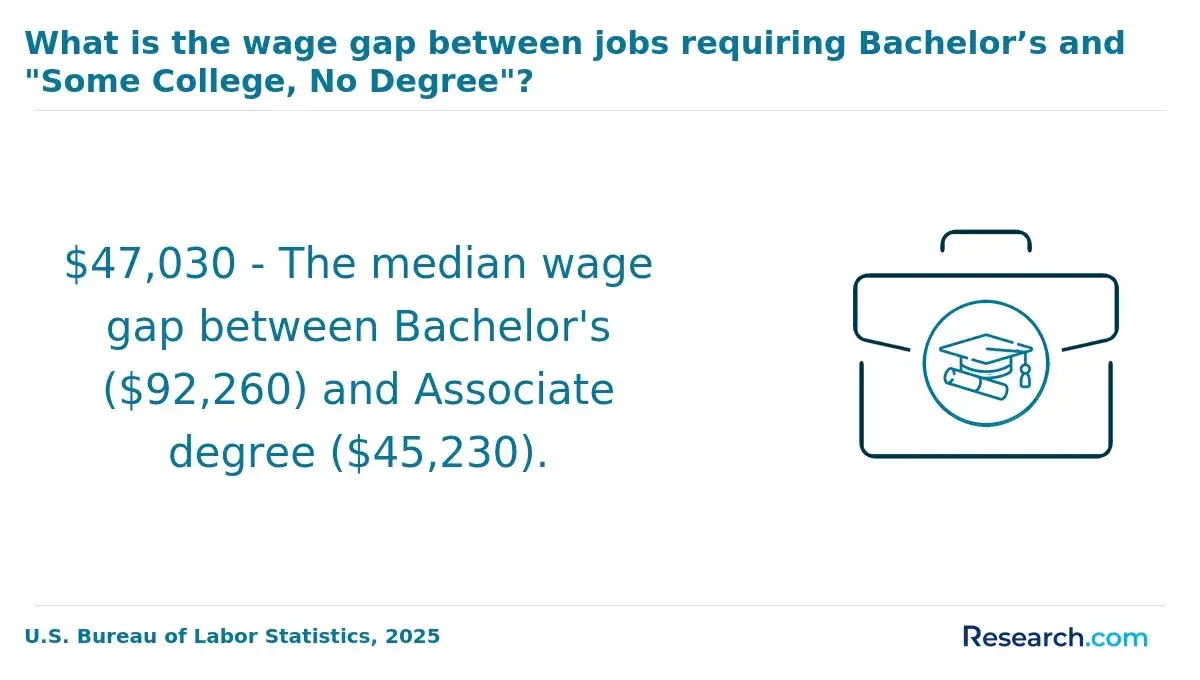
Income disparities among art history graduates closely reflect their academic attainment, but the decision to pursue advanced degrees carries nuanced consequences beyond salary alone. While bachelor's degree holders typically earn between $45,000 and $55,000 annually in roles such as curatorial support or education assistance, master's graduates can expect roughly 15 to 25 percent higher wages, reflecting eligibility for higher-responsibility roles like senior curators or adjunct faculty. However, these gains come with tradeoffs including extended time in school, potential debt, and the need for specialized skills that may not be equally valued across all regions or institutions. Doctoral graduates often surpass $70,000 annually but face longer educational commitments and a highly competitive job market concentrated in tenure-track and major research settings, factors that critically shape long-term employability and leadership prospects.
Lower-tier credentials such as certificates or associate degrees usually correspond to wages near $30,000 to $40,000 and are often limited to technical or administrative positions within museums or cultural organizations. Geographic location, institutional preferences for multidisciplinary expertise, and accumulated practical experience can partially offset these credential-based constraints, highlighting the importance of internships and networking. Adult learners and working professionals, particularly those balancing transfer credits and time-to-completion, must weigh how additional degrees align with local labor demands and career advancement timelines, as employers often prioritize incumbents with both advanced knowledge and demonstrable industry connections over credential accumulation alone.
One art history graduate recalled grappling with whether to pursue a master's after earning a bachelor's, noting that local museum job postings favored candidates who combined a master's with hands-on digital curation experience. Despite the higher cost and longer study period, she found the degree advantageous for accessing better-paid roles but hesitated when comparing the abstract earnings data with the practical entry requirements and employer conversations. This process sharpened her focus on acquiring targeted skills alongside formal education, revealing that pay differences are only part of a complex equation involving timing, specialization, and real-world institutional expectations.
Which Art History Degree Level Offers the Strongest Employment Prospects?
The strongest employment prospects in art history typically align with graduate-level credentials due to employer preferences for specialized knowledge and demonstrated research experience. While associate or certificate credentials may allow quicker labor market entry, these qualifications often restrict candidates to supportive or technical roles with limited wage growth and advancement. For example, a candidate with only an associate degree might secure an entry-level curator assistant position but face significant barriers moving into leadership or research-focused curator roles without further study.
Bachelor's degrees represent a baseline for many professional positions in museums, academia-adjacent roles, and cultural programming, but they often do not shield graduates from competitive job markets or early career stagnation. Data from the U.S. Bureau of Labor Statistics in 2024 highlights that about 75% of art history bachelor's degree holders find employment within five years, indicating reasonable but not guaranteed access. In contrast, master's degrees tend to unlock superior income opportunities and lower unemployment rates, reflecting employer demand for the advanced specialization and fieldwork integral to these programs.
Doctoral qualifications cater largely to niche academic and research positions, often requiring extended time before stable employment despite potential for higher lifetime earnings. Those weighing whether to pursue further education should consider the tradeoff between earlier workforce entry and the cumulative advantages of graduate study, including leadership roles and specialized curatorial work. Given the increasing importance of internships and applied experience, many students find that investing in a master's degree better positions them for mobility and strategic advancement compared to entering the field solely with undergraduate credentials.
What Entry-Level Jobs Can You Get With a Art History Degree?
Entry-level art history jobs in the United States tend to demand a blend of degree level, practical experience, and relevant technical skills, shaping access to roles that vary widely in scope and stability. Bachelor's degree holders most commonly enter support positions such as museum technician or archival assistant, where research and organizational skills are paramount but leadership in curatorial or conservation work is uncommon without graduate study. Hiring managers often prioritize candidates with demonstrable internships, volunteer work, or portfolio evidence showing familiarity with collections management and educational programming, underscoring the tradeoff between degree credentials and real-world exposure for employment prospects.
Data from the U.S. Bureau of Labor Statistics and the National Center for Education Statistics in 2024 highlight that advanced credentials frequently serve as gateways to positions like assistant curator or museum registrar, which require specialized certification or graduate degrees alongside practical experience. Those pursuing entry points with only an associate's or bachelor's degree should weigh these limits against opportunities in publishing or cultural nonprofits, where critical writing and project management skills transfer effectively but upward mobility may depend on further education. Prospective learners evaluating these options may find comparative insights through exploring good online colleges that offer programs aligned with these pathways, helping balance immediate employability with future career flexibility.
How Do Art History Degree Levels Affect Career Advancement and Promotion Opportunities?
Career progression in art history is strongly contingent on degree level, with employers often favoring candidates holding master's or doctoral credentials for supervisory and curatorial positions. While a bachelor's degree typically suffices for entry-level employment, leadership roles and specialized museum or academic appointments demand advanced degrees due to the need for research expertise and professional networks. Data from the National Center for Education Statistics (2024) indicates that graduate degree holders in art history enjoy significantly higher rates of leadership attainment and more systematic pathways to promotion, reflecting institutional preferences for deeper scholarly and managerial preparation. However, the longer initial education period required for advanced degrees can delay workforce entry, posing a tradeoff for mid-career professionals weighing the value of additional investment against faster eligibility for higher-level roles.
Beyond degree attainment, employers emphasize specialized skills often gained in graduate programs, such as digital archiving or conservation techniques, which can influence advancement and hiring. Those with graduate credentials are also perceived as better equipped for grant administration and supervisory responsibilities, which align with leadership expectations in many cultural institutions. For working adults and transfer students, the decision to pursue further study must consider prior experience and whether extra qualifications will materially affect promotion potential or salary gains. Ongoing professional development often complements formal degrees, meaning that certifications and training could sometimes substitute for additional academic credentials in maintaining career momentum.
One art history graduate recounted hesitance about committing to a master's program after several years in museum education, uncertain if the advanced degree would significantly enhance promotion chances within their regional institution. They noted, "While I've held stable roles, the higher-ups emphasized that supervisory openings usually require a master's or more formal qualifications. But balancing time and cost made me question whether experience alone might suffice." This individual's cautious optimism, paired with observed institutional credential norms, illustrates the practical challenges many face when deciding how far to advance academically to meet evolving job expectations and competitive promotion standards.

Is a Art History Degree Worth It Based on Salary, Employment, and ROI?
Salary potential and employment stability for art history graduates vary substantially by degree level, institution type, and local labor market conditions, making the decision to pursue further education highly situational. Those with only a bachelor's degree often face limited job openings with modest compensation, frequently encountering underemployment or roles outside their field. In contrast, individuals advancing to master's or doctoral programs may access specialized academic or curatorial positions offering higher pay but at the cost of additional time and student debt, complicating return on investment calculations for many working professionals or adult learners.
The interplay between program completion time, debt burden, and realistic career pathways is particularly crucial for students weighing art history degree salary and employment rates. Since industry growth is slower than average and job turnover mainly fuels openings, geographic factors and networks within museum administration become critical for advancement. For those balancing education with other life demands, or transferring credits from related programs, exploring alternatives such as construction management degrees online might offer a more direct path to financial stability. Consequently, evaluating opportunity costs alongside personal circumstances is essential when assessing whether the modest financial returns justify extended academic commitments in art history.
Return on investment for art history graduates typically hinges on supplemental credentials, internships, and strategic positioning within cultural sectors rather than degree attainment alone. Early-career earnings often lag behind fields with clear professional licenses or robust STEM demand, pressing graduates to consider underemployment risks and loan repayment challenges relative to potential rewards. Thus, realistic expectations and careful planning, especially for military-affiliated students and working adults, remain indispensable in navigating these nuanced outcomes and achieving long-term livelihood goals.
How Do Associate, Bachelor's, Master's, and Doctoral Art History Degrees Compare?
Choosing to stop at an associate degree in art history often limits graduates to support roles such as entry-level museum technicians or gallery assistants, where opportunities for advancement and pay are restricted. While this credential entails lower costs and shorter completion time, transferability of credits to bachelor's programs can vary widely and may impact longer-term educational planning. Bachelor's degrees offer a significant boost in employability, with data from the National Center for Education Statistics (2024) indicating employment rates about 10 percentage points higher than those with associate degrees, reflecting employer preference for the broader analytical and theoretical training they provide. However, without graduate education or substantial experience, a bachelor's degree typically caps access to senior curatorial or leadership positions, underscoring the necessity of strategic post-baccalaureate investment for those targeting such roles.
Master's degrees increasingly serve as gateways to mid-tier professional roles that combine specialization with research or digital skills, which align closely with growing employer demand in museums and academic administration. The tradeoff involves higher tuition and longer study periods but often results in better job stability and earning potential, especially in niches like conservation or digital humanities. Doctoral programs remain essential for those seeking university faculty posts or senior museum leadership, where rigorous research and original scholarship are critical. However, the competitive and narrow job market, coupled with Ph.D. completion rates below 60%, requires prospective candidates to weigh the benefits of ultimate credential prestige against significant time investment and constrained employment opportunities outside academia or specialist consulting.
Which Industries and Employers Hire Art History Graduates by Degree Level?
The hiring landscape for art history graduates varies substantially depending on degree level, with employers calibrating expectations around credentials, practical experience, and specialized skills. Associate degree holders typically secure roles in museums, galleries, or education settings that emphasize logistical support or administrative tasks rather than advanced research; these positions often prioritize hands-on experience over formal education credentials. For example, museum technicians or curatorial assistants hired by cultural institutions frequently gain entry with associate degrees and relevant internships, yet face limited advancement without further study. According to 2024 Bureau of Labor Statistics data, these entry-level roles compose a significant share of employment opportunities at entry points into art history careers.
Bachelor's degree graduates encounter a distinct employer set, primarily within nonprofit cultural organizations, public institutions, and universities that expect strong communication and research abilities. These roles, such as curators or archivists, demand analytical rigor and often serve as gateways to supervisory responsibilities, although senior leadership generally requires postgraduate credentials. Master's degree holders widen their marketability to roles involving collections management, grant administration, and conservation, where the ability to lead projects and manage teams is increasingly valued by employers. Doctoral graduates mostly align with academia or policy research, occupying leadership positions with responsibilities in publishing, grant sourcing, and shaping cultural initiatives. Certificate programs appeal to private galleries or auction houses focused on technical skills like digital archiving or appraisal, reflecting a niche but growing employer demand for credentialed specialization.
Choosing whether to stop at an associate or bachelor's degree, or to pursue graduate education, requires weighing employer screening tendencies and expected job functions. While advanced degrees enable access to leadership and research-intensive environments, the longer educational timeline and variable pay uplift can constrain practical returns for some. A 2024 Council of Graduate Schools analysis noted that PhD holders experience significantly greater access to grant-funded projects but must commit to substantial scholarly output. Consequently, career planning in art history demands careful evaluation of how degree level aligns with target sectors, role complexity, and realistic advancement pathways.
What Skills, Credentials, and Experience Improve Art History Career Outcomes?
Employers in museums, galleries, and related cultural sectors increasingly prioritize candidates who combine foundational Art History knowledge with tangible applied skills and documented experiential learning. A bachelor's degree alone provides essential critical thinking and research competencies, but internships and field placements often serve as decisive factors, with about 65% of hiring managers favoring those with verified practical experience. This preference reflects the reality that entry-level positions typically require more than academic training, demanding adaptability and real-world problem-solving ability alongside scholarly understanding.
As students consider advancing their credentials, graduate degrees open opportunities for specialization and leadership but often must be paired with certifications in areas like museum studies or digital curation to differentiate candidates effectively. Technical skills such as digital cataloging and database management, highlighted in 2024 O*NET data, directly impact promotion readiness and salary growth. For working adults, transfer students, or military-affiliated learners, navigating these credential layers involves balancing prior experience with new qualifications while targeting roles aligned with their unique combination of soft skills, leadership exposure, and sector-specific proficiencies.
Given these dynamics, strategic engagement in internships or apprenticeships significantly enhances employability, as candidates with such experience are roughly 30% more likely to secure permanent roles within a year of graduation. For those exploring flexible options or broader career pathways, pursuing online degrees for remote jobs in complementary fields may provide additional leverage. Integrating essential skills and credentials for Art History careers with practical experience and certification impact on Art History job prospects remains crucial for sustainable career mobility and market relevance.
Which Art History Degree Level Is Best for Your Career Goals?
Choosing an art history degree level directly shapes your employment access and advancement options in this competitive field. For those aiming at entry-level museum or gallery roles with limited time and financial investment, an associate degree offers lower completion risk and modest cost but restricts growth since most employers now prefer a bachelor's degree as the minimum. Bachelor's degrees markedly improve employment outcomes-with about 78% securing work within a year, according to the U.S. Department of Education-and provide versatile skills for shifting into education or administration, making them a practical choice for career flexibility or transfer students assessing their next steps.
Advanced graduate credentials unlock specialized roles and leadership paths but come with higher opportunity costs and longer study periods. Master's degree holders gain access to curatorial leadership, conservation, and teaching positions, often experiencing a roughly 10% increased chance of promotion or pay raises, though increased debt must be weighed carefully. Doctoral degrees mainline into academia and intensive research but involve significant delayed earnings and elevated completion risk, which means they suit those targeting highly specialized research careers or university faculty roles. Working adults considering further education should also explore flexible options, including 12 month MBA programs, to complement their art history background and broaden career advancement avenues.
Comparing employment outcomes by art history degree level helps clarify these practical tradeoffs. Decisions about advancing beyond a bachelor's hinge on balancing specialization opportunities against cost, time, and career goals, especially for military-affiliated students or degree completers evaluating long-term mobility and employer expectations in heritage sectors. Graduate-level study preparation remains essential for leadership and scholarly roles, while bachelor's credentials often provide the most adaptable foundation for those prioritizing broader role eligibility and career switching. Effective credit transfer strategies and realistic assessment of delayed earnings potential strongly influence sustainable workforce planning in the art history domain.
References
- Careers in Art History - For Art History https://forarthistory.org.uk/careers-in-art-history/
- The Art Institute https://www.theartinstitute.co.uk/nz/en/blog-art-history-graduates-1
- Careers | 6 reasons why you should study an Art History degree | Ruth Millington https://ruthmillington.co.uk/why-should-you-study-an-art-history-degree/
- Types of College Degrees https://www.act.org/content/act/en/students-and-parents/high-school-success/what-to-do-after-high-school/college-degrees.html
- Art History Major Outcomes https://talk.collegeconfidential.com/t/art-history-major-outcomes/3593223
- What Can You Do With an Art History Degree? https://willamette.edu/academics/college/art-history/career-options
- Why Study Art History: Culture, History, Society | Careers https://www.nec.ac.uk/insight/why-study-art-history-understanding-culture-history-society-exciting-career-opportunities/
- Careers in the Field of Art History https://www.wlu.edu/art-and-art-history-department/art-history/careers-in-the-field-of-art-history
- Is College Worth it? | Return on Investment Analysis of College Degree https://educationdata.org/college-degree-roi
- Careers for Art History Majors: 15 Jobs That Use Your Degree | Extern https://www.extern.com/post/careers-for-art-history-majors-guide
Other Things You Should Know About Art History
Advanced degrees in art history often require substantial time commitments, especially at the master's and doctoral levels, with limited direct impact on immediate earnings or broad employment options. Students must consider whether the deep specialization and research skills gained justify several additional years of study given the often narrow range of higher-level roles available and the competitive nature of academia and museums. For those prioritizing faster entry into the workforce, a bachelor's degree complemented by internships or certificate programs may offer a more efficient path without sacrificing access to meaningful roles.
Graduate programs frequently emphasize research, critical analysis, and theory, which can limit immediate practical skills sought by many employers outside academia and curatorial positions. Prospective students should evaluate whether programs include applied experiences such as internships, digital humanities, or cross-disciplinary collaboration to enhance versatility. Programs lacking these components may yield graduates whose skills align narrowly with scholarly or teaching careers, restricting opportunities in broader cultural, nonprofit, or commercial sectors.
Many employers view master's degrees as sufficient qualification for roles in museums, galleries, and cultural organizations, often valuing practical experience and networks alongside credentials. Doctoral degrees, while signaling deep expertise, can sometimes lead to overqualification for typical industry roles or pigeonhole graduates into academic positions with limited openings. Therefore, candidates should prioritize a master's degree when seeking applied professional work and reserve doctoral studies for those explicitly targeting research, teaching, or curatorial leadership that demands highest-level scholarship.
Working adults must balance immediate income and experience with educational advancement, making part-time or low-residency programs appealing for maintaining employment while studying. However, such formats may extend graduation timelines and reduce networking opportunities critical for advancement in art history fields. When career acceleration is a priority, full-time programs with immersive learning environments and connections to internships or industry contacts generally offer stronger returns despite short-term sacrifices.