2027 How Employers Are Changing Hiring Criteria for Art History Graduates in the AI Era

Co-Founder and Chief Data Scientist
Imagine a recent art history graduate scanning job listings only to find that a degree alone no longer opens doors as it once did. With artificial intelligence reshaping industries at an unprecedented pace, employers increasingly seek candidates who complement their academic background with technical savvy and adaptable skills. According to a 2024 report by the U. S. Bureau of Labor Statistics, nearly 75% of employers now prioritize digital literacy and problem-solving abilities alongside traditional qualifications in their hiring decisions.
This shift means prospective art history students and graduates must rethink their career preparation to include AI awareness and transferable skills that extend beyond the classroom. The evolving labor market demands a hybrid approach where expertise in art history integrates with technological proficiency and strategic thinking. This article examines how hiring criteria for art history graduates are changing, highlights the growing importance of AI literacy and versatile skills, and outlines strategies students can adopt to stay competitive in the AI era.
Key Things to Know About the Changing Hiring Criteria for Art History Graduates in the AI Era
- Employers increasingly expect art history graduates to contextualize AI-driven cultural analytics, shifting focus from pure theory to applied digital interpretation, which compels students to gain hands-on experience with emerging AI tools.
- A 2024 survey found 68% of hiring managers prioritize AI literacy alongside traditional critical thinking, indicating graduates must combine domain expertise with data proficiency to influence multidisciplinary projects effectively.
- Transferable skills such as coding familiarity and digital archiving now differentiate candidates, meaning art history programs integrating technical competencies produce graduates better aligned with evolving job market demands.
- Key Things to Know About the Changing Hiring Criteria for Art History Graduates in the AI Era Key Things to Know About the Changing Hiring Criteria for Art History Graduates in the AI Era
- How Is AI Changing What Employers Look for in Art History Graduates? How Is AI Changing What Employers Look for in Art History Graduates?
- Which AI Skills Are Employers Expecting Art History Graduates to Have? AI Skills
- Which Human Skills Are Employers Looking for in Art History Graduates? Human Skills
- How Are AI Tools Changing Daily Work in Art History Careers? AI Workplace Tools
- How Are Employers Evaluating Art History Candidates Beyond Academic Credentials? Hiring Criteria
- How Are Art History Degree Programs Adapting to AI? AI Curriculum
- Which Industries Are Changing Hiring Expectations Most for Art History Graduates? AI and Industry Expectations
- How Is AI Changing Career Growth for Art History Professionals? AI and Career Growth
- How Should Art History Students Prepare for AI-Driven Hiring? Career Preparation
- How Should Students Choose a Art History Program for the AI Era? How Should Students Choose a Art History Program for the AI Era?
How Is AI Changing What Employers Look for in Art History Graduates?
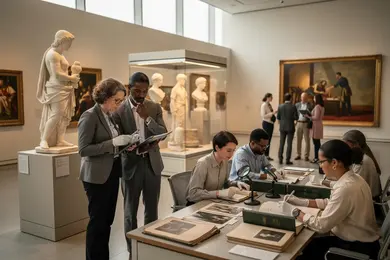
Employers hiring art history graduates are increasingly emphasizing the ability to collaborate with AI technologies rather than just completing routine tasks. Recent data from the World Economic Forum shows over half of employers now prioritize digital literacy and AI fluency alongside traditional expertise. For instance, a museum seeking a curator might favor candidates who can use AI-driven tools to analyze provenance records efficiently and detect patterns unrecognizable through manual research.
This shift reflects a broader move toward augmenting human judgment with AI's capacity to handle large datasets and automate repetitive work, enhancing decision-making rather than replacing the professional's critical insight. The evolving expectations also highlight a demand for hybrid skill sets blending art historical knowledge with competencies in data analytics, coding fundamentals, and AI applications.
According to the U.S. Bureau of Labor Statistics, roles in cultural heritage management and auction house analysis now explicitly require familiarity with machine learning platforms and digital asset management systems. However, despite increasing AI integration, human skills like adaptability, problem-solving, and effective communication remain indispensable. Graduates must not only interpret complex AI-generated findings but also translate these insights for diverse stakeholders.
Art history graduates preparing to meet these shifting demands would benefit from immersive experiences involving AI applications in their field, whether through internships or targeted coursework. Cultivating these interdisciplinary capabilities aligns well with employer preferences identified in a 2024 survey by the National Association of Colleges and Employers, which found 68% of managers seek candidates who demonstrate agility with emerging technologies.
Those interested in expanding their qualifications might consider programs offering blended curricula or pursue an MBA online to deepen their strategic and technological competencies, positioning themselves to thrive at the intersection of art history and artificial intelligence.
Which AI Skills Are Employers Expecting Art History Graduates to Have?
Workplace expectations in art history are shifting as AI technologies integrate more deeply into the discipline's professional practices. Employers increasingly demand candidates who not only possess traditional art historical knowledge but can also wield AI to enhance research, curation, and digital archiving. This evolution reflects a broader labor market trend where AI competency is becoming a practical necessity, not merely an optional skill.
For graduates aiming to navigate this complex landscape, understanding which AI skills matter most helps bridge academic training and workplace demands. Below are key AI skills employers now expect art history professionals to demonstrate.
- Digital Image Recognition: This skill enables automated analysis and classification of artworks using machine learning tools. Employers seek graduates who can apply platforms like TensorFlow to streamline provenance studies and condition reports, significantly reducing manual workload. Building proficiency in open-source computer vision tools through targeted coursework or AI degree programs strengthens this competency.
- Natural Language Processing (NLP): NLP allows for the interpretation of extensive artist correspondence, archives, and historical documents. Employers value graduates who leverage these AI methods to uncover insights that traditional analysis might miss. Developing familiarity with NLP libraries and textual data sets prepares students for such tasks.
- Critical AI Literacy: Beyond technical skills, understanding AI's limitations and biases is crucial. Art history professionals must critically assess AI-generated outputs to avoid reductive interpretations and to preserve cultural nuance in exhibitions and educational materials. Engaging with interdisciplinary discussions on technology ethics fosters this interpretive skill.
- Data Management and Visualization: Employers prioritize candidates who can organize and visualize complex datasets with AI-enabled software, facilitating clearer storytelling and research presentations. Familiarity with tools like Tableau or Python's visualization libraries and collaboration with data specialists enhances this practical ability.
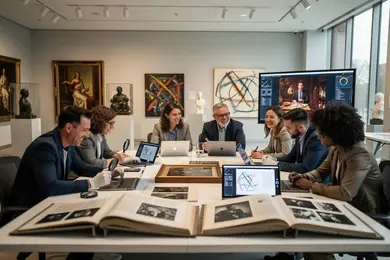
- Computational Collaboration: Being able to communicate art historical research questions in computational terms bridges the gap between humanities scholars and AI developers. Employers expect graduates to effectively partner with data scientists, which demands both foundational programming awareness and domain-specific insight. Participating in digital humanities or interdisciplinary projects helps cultivate this skill.
Which Human Skills Are Employers Looking for in Art History Graduates?
Artificial intelligence increasingly automates routine analysis and data processing tasks in the art history field, shifting employer attention toward skills that AI cannot replicate. This technological shift elevates uniquely human attributes such as critical reasoning, empathy, and ethical judgment, which are essential for interpreting cultural artifacts in context and engaging diverse audiences.
As AI tools take on repetitive work, professionals who can synthesize complex visual and historical information with nuanced understanding maintain a distinct advantage. The following five human skills have become particularly crucial for Art History graduates navigating AI-augmented workplaces.
- Critical Thinking and Interpretation: AI can organize and retrieve data, but the ability to critically analyze art within broader social and historical frameworks remains a human strength. Art history students bolster this skill by engaging deeply with diverse theories and practicing contextual analysis, preparing to provide interpretive insights that machines cannot produce autonomously.
- Creativity and Adaptability: Employers prize graduates who innovate-whether in curating exhibitions or developing digital humanities projects-especially as these roles require flexibility in responding to evolving technologies. Cultivating creativity through interdisciplinary collaborations and adapting to new digital tools helps graduates thrive alongside AI.
- Emotional Intelligence: Empathy and cultural awareness enhance collaboration across departments such as marketing or conservation, especially in hybrid work environments fueled by AI. Developing active listening and cross-cultural communication skills equips graduates to navigate complex stakeholder dynamics sensitively and effectively.
- Ethical Judgment: As AI handles data processing, human oversight is critical to ensure that interpretations honor cultural significance and avoid reductive conclusions. Building ethical frameworks through coursework and internships enables graduates to steward cultural heritage responsibly amid technological shifts.
- Digital Literacy with Artistic Insight: Proficiency in digital archiving, metadata standards, and online curation complements human intuition. Learning emerging digital tools while maintaining critical discernment allows graduates to leverage AI-driven efficiencies without sacrificing interpretive depth.
One art history graduate recalled facing a tense moment while assisting in a museum's online exhibit launch. The AI tool had generated automated descriptions, but some nuances were missing, causing concern among curators and community stakeholders. Drawing on their contextual knowledge and interpersonal skills, the graduate facilitated a dialogue that balanced efficient digital workflows with cultural sensitivity. This experience underscored how human skills remain indispensable in integrating AI solutions while preserving meaningful storytelling and ethical stewardship.
How Are AI Tools Changing Daily Work in Art History Careers?
AI tools are fundamentally reshaping the routine tasks of art history professionals by automating repetitive processes such as cataloging and provenance verification. This automation can significantly reduce the hours spent on manual data entry, as reflected in a 2024 report from the National Endowment for the Humanities showing up to a 40% decrease in time devoted to these activities in institutions using AI-driven image recognition.
For example, an art historian at a large museum might spend less time cross-referencing physical archives and more time interpreting the cultural significance of artworks, supported by AI-generated data that quickly identifies stylistic patterns or historical contexts. This shift allows workers to focus on critical analysis and nuanced judgment rather than labor-intensive sorting and verification tasks.
Beyond streamlining workflows, AI adoption is changing the skillset employers seek in art history roles. According to a 2024 survey by the American Alliance of Museums, 68% of museums have integrated AI applications to improve exhibit curation and visitor engagement, emphasizing the need for professionals capable of leveraging AI for dynamic visualizations and storytelling. This evolution encourages collaboration across disciplines, combining art history with digital humanities and data science expertise.
The modern art historian must therefore balance the insights offered by AI with ethical oversight and critical thinking, ensuring that algorithmically generated interpretations are contextualized and vetted rather than accepted uncritically. Training programs increasingly emphasize digital literacy and AI competency to prepare graduates for these more complex responsibilities in a technologically enhanced professional environment.
How Are Employers Evaluating Art History Candidates Beyond Academic Credentials?
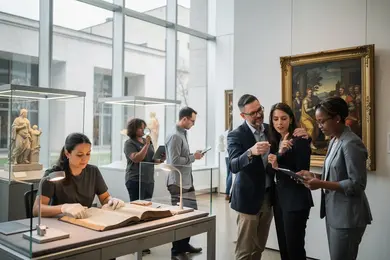
Employers looking to hire art history graduates now seek much more than strong academic records. Recent findings from the 2024 National Association of Colleges and Employers (NACE) report reveal that over 68% of employers prioritize candidates who demonstrate practical experience with digital tools and AI literacy. This trend underscores a shift toward evaluating portfolios, internships, and real-world projects that showcase the ability to apply AI-assisted research, data visualization, and digital archiving within art historical contexts.
For example, a graduate who has completed an internship curating digital exhibits using AI tools will often stand out more than one with exclusively traditional coursework. Such practical experience signals adaptability and proficiency in emerging technologies-traits highly valued in today's hiring landscape. Alongside technical skills, employers place increasing emphasis on communication, teamwork, and problem-solving abilities, mirroring findings from the 2024 LinkedIn Workforce Report and the American Council on Education.
Soft skills are essential for articulating complex historical narratives clearly and collaborating across disciplines, especially in hybrid or remote work settings. Recruiters recognize that art history graduates who combine their analytical background with interpersonal dexterity and AI fluency are better equipped for the evolving demands of the cultural and creative sectors. This holistic approach to hiring reflects broader employer expectations for art history graduates in the AI era, who must integrate traditional knowledge with digital innovation and interpersonal collaboration to remain competitive.
Networking through digital forums and active participation in AI art research communities also enhances employment prospects, as highlighted by the 2024 Pew Research Center workforce survey. Graduates engaging in these spaces often develop projects and certifications that further demonstrate readiness for tech-integrated roles. Those exploring advanced academic avenues may also consider programs noted among the best art therapy programs in the world, which increasingly incorporate technology and interdisciplinary training.
How Are Art History Degree Programs Adapting to AI?
Art history degree programs are undergoing significant transformation as they integrate AI-driven technologies alongside traditional scholarship to align with evolving workforce demands. A 2024 report from the National Center for Education Statistics notes that over 60% of master's-level humanities programs now incorporate coursework in digital humanities and AI applications, signaling a strategic shift toward equipping students with hybrid analytical skills.
For instance, students are increasingly trained to use machine learning algorithms to analyze provenance or to manage expansive digital image collections, blending historical expertise with technological proficiency. These curricular enhancements also emphasize critical engagement with AI's capabilities and limitations, encouraging students to assess ethical concerns in contexts like museum curation or conservation tasks.
Institutions balance the inclusion of AI tools with maintaining rigorous art historical methodologies, although resource constraints and rapid tech evolution present challenges to comprehensive instruction. Partnerships with cultural institutions and experiential projects are becoming more common, offering students firsthand experience with AI-assisted workflows and fostering adaptability in roles spanning digital archiving to ethical consultancy.
Such integrations reflect a pragmatic recalibration of art history education to prepare graduates who can navigate the complexities of an AI-augmented cultural sector. The aim is not to replace foundational knowledge but to expand it with interdisciplinary fluency and lifelong learning frameworks that address continuous technological change. Ultimately, these programs recognize that competitive candidates must combine deep contextual insight with technological literacy to meet the nuanced demands of modern art historical professions.
Which Industries Are Changing Hiring Expectations Most for Art History Graduates?
The speed at which AI technologies influence hiring practices varies widely by industry, creating distinct expectations for art history graduates. Some sectors remain anchored in traditional skills, while others rapidly integrate AI-driven tools, demanding interdisciplinary expertise. This means graduates who evaluate career options must navigate not only differing roles but also the evolving technical proficiencies employers prioritize.
For example, a recent graduate comparing opportunities found that marketing roles prized data-informed creativity, whereas museums emphasized digital curation skills. Here are five key industries reshaping their hiring criteria through AI advancements.
- Cultural Institutions: Museums and galleries increasingly require candidates who combine deep art knowledge with digital fluency. AI applications like virtual exhibits and visitor analytics are redefining curator roles. The American Alliance of Museums' 2024 workforce report notes a 35% rise in demand for digital literacy alongside traditional scholarship.
- Marketing and Advertising: Adoption of AI-powered design and consumer behavior platforms is transforming hiring needs. Employers seek art history graduates capable of producing visually engaging content shaped by data insights, with Gartner reporting 42% of firms now using such technology.
- Education Technology: EdTech companies are embedding AI to create personalized learning experiences. They favor candidates who can collaborate on integrating cultural material within interactive tech, reflecting a 28% growth in recruitment of graduates skilled in educational software tools, as per 2024 National Center for Education Statistics data.
- Auction Houses: These firms leverage AI to authenticate artworks and enhance valuation processes. Graduates are expected to understand both art historical context and machine-assisted verification technologies, blending connoisseurship with tech sensibility.
- Publishing: AI impacts content curation and distribution strategies, shifting employer focus towards applicants who can manage digital workflows and optimize audience engagement using AI tools, aligning with broader trends in media digitization.
One graduate, weighing her options between museum work and a marketing role, felt uncertain as each offered distinct expectations beyond her core art history training. She noted how museums prized digital exhibit skills she had yet to master, while marketing demanded proficiency in AI-driven analytics that initially intimidated her.
Ultimately, she enrolled in a specialized digital humanities course to bridge this gap, recognizing that fluency in both traditional art narratives and emerging AI tools would enhance her adaptability across sectors. This experience underscores how evolving hiring landscapes compel art history graduates to thoughtfully balance their discipline's heritage with technological competencies.
How Is AI Changing Career Growth for Art History Professionals?
The pace at which artificial intelligence is integrated into different industries varies widely, leading to divergent shifts in hiring expectations for art history graduates. Sectors with advanced digital infrastructure adopt AI tools faster, emphasizing tech-savviness and interdisciplinary skills, while more traditional fields may retain conventional criteria longer. This uneven adoption means art history professionals must strategically assess which industries prioritize AI competencies and adjust their skill development accordingly.
Understanding these evolving employer demands is crucial for navigating career development trends for art history graduates in the AI era. Below are five industries where hiring expectations are reshaping most rapidly.
- Museums and Galleries: AI-powered image recognition and digital archiving tools have revolutionized curatorial and conservation roles. Employers seek graduates comfortable with database management, digital asset tagging, and provenance verification technologies, enhancing exhibition curation and research depth.
- Academic Institutions: Beyond traditional research and teaching, universities now value art history specialists who can incorporate AI-driven data analysis and visualization into interdisciplinary projects. Programming skills and ethical AI literacy are increasingly important for contributing to digital humanities programs.
- Digital Preservation: As institutions digitize collections, proficiency in AI-enabled preservation techniques, such as automated restoration suggestions and metadata enrichment, is crucial. Professionals must blend art historical insight with technological fluency to maintain cultural heritage effectively.
- Tech and Startups: Emerging firms developing virtual exhibits and interactive art experiences prioritize candidates who combine art expertise with knowledge of machine learning algorithms and user experience design. These roles demand adaptability and collaborative skills across creative and technical domains.
- Media and Publishing: AI tools for content generation, trend analysis, and audience targeting are reshaping hiring criteria. Art history graduates familiar with AI applications can contribute to producing contextualized, data-driven cultural content that appeals to diverse audiences.
Workforce transformation data from the U.S. Bureau of Labor Statistics underscores this trend toward interdisciplinary competencies. Early-career art history professionals boost their employability by acquiring skills such as programming in Python for data visualization and ethical considerations around AI use in cultural heritage. Those aiming for flexibility might also explore one-year degree programs for seniors that emphasize these emerging competencies alongside foundational knowledge.
How Should Art History Students Prepare for AI-Driven Hiring?
Preparing for AI-driven hiring in art history requires more than traditional scholarship; it demands a hybrid skill set combining technical expertise, digital literacy, and human-centered abilities. The World Economic Forum's 2024 report reveals that 50% of current roles will soon require advanced digital skills, pushing art history graduates to complement their humanities background with AI competencies.
Employers now favor candidates who can leverage machine learning tools in areas like image recognition and digital archiving while maintaining critical cultural insight. Successful preparation blends both technical fluency and collaborative judgment. Below are practical strategies for preparing art history graduates for AI integration.
- Develop Technical Proficiency: Acquiring skills in AI fundamentals, data visualization, or digital humanities helps students navigate the increasing use of technology in art curation and research. Understanding these tools translates into competitive advantage when applying to roles demanding technical fluency.
- Gain Interdisciplinary Experience: Engaging in projects that combine art history with technology cultivates versatility. This approach reflects a 35% job growth in roles requiring humanities insight alongside tech-savvy capabilities, as reported by the National Center for Education Statistics.
- Enhance Collaborative Skills: AI augments rather than replaces human judgment, making teamwork and project management essential. Developing these interpersonal skills enables graduates to work effectively on interdisciplinary teams integrating AI tools.
- Build AI Literacy: Familiarity with machine learning applications relevant to art history-such as automated image analysis-equips students with practical competencies sought by employers adapting to AI workflows.
- Pursue Relevant Certifications: Complementing a degree with certificates in data science or digital curation signals readiness for AI-driven roles. Students can explore pathways similar to those highlighted by the best online colleges for forensic science, where technical certifications enhance humanities education.
How Should Students Choose a Art History Program for the AI Era?
Choosing an art history program today requires looking beyond traditional factors such as reputation or tuition costs. The rapid integration of artificial intelligence in arts sectors demands that students select programs with curricula aligned to evolving workplace expectations. Employers increasingly value graduates who combine art historical expertise with data analysis and AI literacy, as reflected in 2024 findings from the American Council on Education.
For example, a graduate proficient in AI-driven provenance research can access more specialized roles that merge technology and humanities. Below are key evaluation factors to guide prospective students.
- Interdisciplinary Curriculum: Programs that blend art history with digital humanities and computational methods equip students with versatile skills demanded in AI-enhanced roles. Look for courses involving machine learning, data visualization, or digital preservation techniques.
- Access to AI Tools: Hands-on experience with AI platforms-such as digital image recognition or augmented reality applications-enhances practical competence. Programs offering labs or projects with these tools foster real-world readiness.
- Collaborative Opportunities: Partnerships with computer science, museum studies, or IT departments ensure exposure to diverse perspectives and innovative problem-solving, vital for adapting to evolving roles in curation and archiving.
- Experiential Learning: Internships or project work with institutions using AI emphasize applying theoretical knowledge practically. Such experiences improve employability by demonstrating adaptability to technology-driven art environments.
- Ethical and Critical Thinking: AI's increasing role raises complex ethical questions. Programs emphasizing critical engagement with AI's cultural impact prepare students for thoughtful leadership in AI-integrated art fields.
References
- Art History Specialist - Freelance AI Trainer Project http://job-boards.eu.greenhouse.io/agency/jobs/4589008101
- AI in the Art History Classroom - For Art History https://forarthistory.org.uk/ai-in-the-art-history-classroom/
- AI Applications for Ancient Art History Education https://ai-antiquity.org/index.php/ai/article/view/22
- The Art Institute https://www.theartinstitute.co.uk/us/en/blog-art-history-graduates-1
- Ryz Labs - Art History Expert - AI Trainer https://www.ryzlabs.com/jobs/art-history-expert-ai-trainer-remote-d6d1c
- The top skills to hire for in the age of AI https://nz.employer.seek.com/hiring-advice/article/top-skills-to-hire-for-in-the-age-of-ai
- What jobs can you get with a degree in art history? https://www.iesa.edu/paris/news-events/art-history-jobs
- Jobs - Marketing Manager https://www.artinity.com/job-art-history-researcher
- Creative Industry Displacement by 2030 | Early Signals of AI Impact https://jobsdata.ai/predictions/creative-industry-displacement
- How AI influences art and creative work | Contemporary Lynx - magazine on art & visual culture https://contemporarylynx.co.uk/how-ai-influences-art-and-creative-work
Other Things You Should Know About Art History
Many employers now prioritize candidates who can demonstrate hands-on experience, such as internships in museums or galleries, over purely academic achievements. This shift reflects a demand for graduates who can navigate real-world settings with practical problem-solving skills, rather than just possessing theoretical knowledge. Candidates should therefore seek opportunities to apply art history concepts in professional environments to increase employability.
Given the complex nature of roles involving art history, employers increasingly value interdisciplinary capabilities, especially in digital humanities, data analysis, or communications. Prioritizing such skills can enhance adaptability and widen career options, but graduates must balance this with depth in their primary field to avoid becoming generalists without a competitive edge.
Graduates who invest heavily in mastering AI and digital tools may gain immediate hiring advantages, but risk underdeveloping critical interpretive and contextual analysis skills that remain central to the discipline. Employers often seek a blend, so an unbalanced focus on technology could limit a graduate's long-term career flexibility and credibility within academic or curatorial roles.
Specializing can yield deeper expertise valued in niche positions, yet broadening skillsets and experience across multiple roles may provide resilience as AI reshapes industry demands. Early-career workers must assess their own career goals carefully: those aiming for academic or curatorial paths might prioritize specialization, while those interested in commercial or tech-integrated sectors should embrace versatility.