
2027 How to Become an English Teacher in Colorado: Requirements & Certification

Co-Founder and Chief Data Scientist
Becoming an English teacher in Colorado means making several connected decisions: which degree or preparation route to choose, how to meet Colorado Department of Education requirements, how to document subject-area competency, and how to compare job opportunities across districts. This guide is for future middle school and high school English language arts teachers, career changers considering alternative licensure, and current educators thinking about endorsements, ESOL preparation, or advancement. You will learn the main steps to licensure, the education and testing expectations, salary ranges, classroom realities, professional development rules, and practical ways to choose a cost-effective path without overlooking accreditation or state approval.
Quick Answer: How do you become an English teacher in Colorado?
To become an English teacher in Colorado, you generally need a bachelor’s degree, completion of a state-approved teacher preparation program, documented English language arts competency, fingerprinting and background checks, and an Initial Teacher License from the Colorado Department of Education. Traditional candidates usually complete student teaching through a college or university program, while career changers may explore alternative licensure if they already hold a bachelor’s degree.
Key Things to Know Before You Start
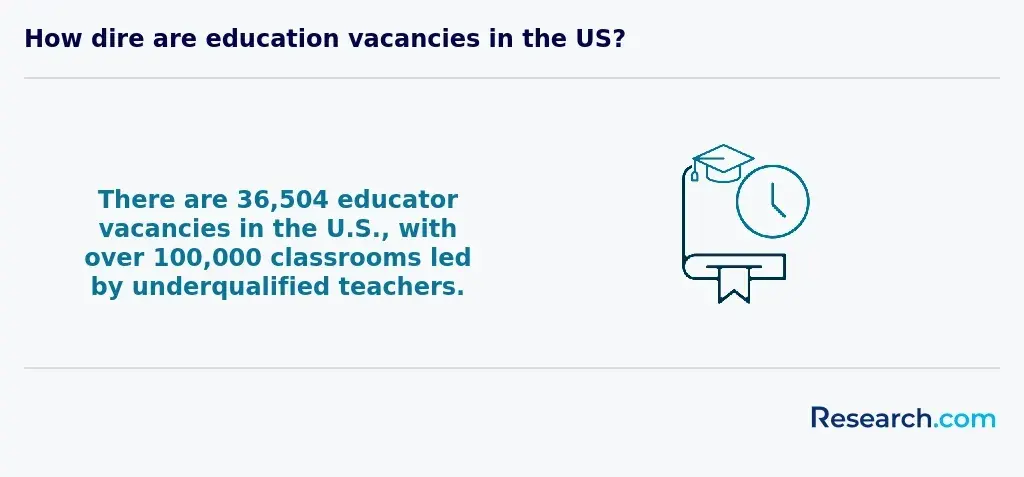
- Colorado has reported strong need for qualified educators, and the broader USA teacher shortage includes 36,504 needed educators and over 100,000 classrooms taught by underqualified teachers.
- Salary data varies by source and role. The average salary for English teachers in Colorado is cited at approximately $58,000 annually, while another current estimate places the average around $55,000 per year.
- High school English teacher pay in Colorado ranges widely by experience, district, credentials, and location. As of August 2024, the 10th percentile is $41,621, the 25th percentile is $50,677, the median is $60,623, the 75th percentile is $73,934, and the 90th percentile is $86,054.
- Urban districts such as Denver and Boulder may offer higher salaries, sometimes exceeding $65,000, while some rural districts may be closer to $50,000.
- Do not choose a program based only on convenience or tuition. Confirm that it is regionally accredited, state-approved where needed, and aligned with Colorado licensure requirements.
- Steps to become an English teacher in Colorado
- Education requirements for Colorado English teachers
- Certification and licensing process
- Student teaching, internships, and classroom experience
- Colorado English standards and curriculum expectations
- Job market and salary expectations
- Professional development and continuing education
- Classroom management and teaching methods
- Other teaching paths in Colorado
- Lower-cost pathways to a Colorado teaching credential
- Career advancement and English teaching specializations
- Creative arts in English instruction
- Digital innovation in the English classroom
- Resources and support for new English teachers
- Work-life balance and burnout prevention
- Diversity and inclusivity in Colorado English teaching
- Advanced degrees for Colorado teachers
- ESOL certification requirements
- How long certification can take
- Alternative careers using English teaching skills
- Dual certification options
- Emerging trends and challenges
- Using historical perspectives in English teaching See also trends, dual certification, alternative careers, advanced degrees, inclusivity, resources, key insights, and additional considerations.
Steps to Become an English Teacher in Colorado
The clearest path to becoming an English teacher in Colorado is to work backward from licensure. Before enrolling in a program, identify the grade level you want to teach, confirm the license and endorsement expectations, and verify that your preparation program can recommend you for Colorado licensure.
| Step | What to do | Why it matters |
| 1. Earn a bachelor’s degree | Complete a degree in English, education, English language arts, or a closely related field. Some students compare flexible options such as an accelerated bachelor's degree online program when they need a faster route. | A bachelor’s degree is the academic foundation for teacher preparation and licensure. |
| 2. Complete teacher preparation | Enroll in a state-approved teacher preparation program that includes pedagogy, classroom methods, assessment, and student teaching. | Colorado expects candidates to show they are prepared to teach real students, not just understand English content. |
| 3. Demonstrate English competency | Meet the state’s subject-area requirement through approved coursework or a state-approved content assessment for English language arts. | This verifies that you have the content knowledge needed for English instruction. |
| 4. Complete background requirements | Submit fingerprinting and complete required background checks. | Schools must confirm educator suitability before placing teachers with students. |
| 5. Apply for licensure | Submit your application, transcripts, program verification, fees, and required documentation to the Colorado Department of Education. | The Initial Teacher License is the official credential that allows you to begin teaching in Colorado public schools. |
| 6. Apply strategically for jobs | Target districts that match your grade-level interests, location needs, salary goals, and support expectations. | Your first placement can shape your mentoring, workload, and long-term retention in teaching. |
Colorado’s Initial Teacher License is valid for three years. During that early career period, teachers should save documentation of professional learning, build strong evaluation records, and identify whether they want to pursue endorsements, advanced degrees, or leadership roles.
Education Requirements for Becoming an English Teacher in Colorado
Colorado English teacher candidates typically need both subject knowledge and educator preparation. A degree in English alone may not be enough if it does not include an approved teacher preparation sequence. Likewise, an education degree should include enough English language arts content to support licensure and classroom readiness.
- Bachelor’s degree: Candidates should hold a bachelor’s degree from a regionally accredited institution. Common majors include English, English education, secondary education with an English emphasis, literature, writing, composition, or related fields.
- English content preparation: Coursework should build strength in literature, composition, rhetoric, linguistics, language development, reading, writing instruction, and analysis of texts.
- Pedagogy and assessment: Effective English teachers need training in lesson design, grading writing, discussion facilitation, differentiation, classroom management, and assessment of reading and writing growth.
- Approved teacher preparation: A state-approved preparation program is important because it connects coursework with supervised student teaching and provides the verification needed for licensure.
- Accreditation check: Before enrolling, confirm that the institution is regionally accredited and that the teacher preparation route is recognized for Colorado licensure purposes.
Traditional Degree vs. Alternative Licensure
| Path | Best for | Main advantage | Key caution |
| Traditional undergraduate teacher preparation | Students who know early that they want to teach English | Combines degree requirements, methods courses, and student teaching in one planned sequence | Changing majors late may add time and cost |
| Post-baccalaureate teacher preparation | Graduates with a bachelor’s degree who still need educator training | Allows candidates to add licensure preparation after completing a degree | Program length and cost can vary substantially |
| Alternative licensure | Career changers with a bachelor’s degree and relevant subject background | May allow candidates to teach while completing required preparation | Not every candidate or district placement will qualify |
| Online or hybrid preparation | Working adults or students outside major metro areas | Greater scheduling flexibility | Field placements, student teaching, and state approval must still meet Colorado expectations |
The strongest program is not always the cheapest or fastest. Ask whether the program provides Colorado-specific advising, help with placements, licensure documentation support, and preparation for English language arts competency requirements.
Certification and Licensing Process for Colorado English Teachers
The Colorado English teacher licensing process is documentation-heavy, so it helps to keep records from the beginning of your program. Candidates should save official transcripts, field placement records, assessment results, program verification forms, and professional communication from their preparation provider.
To qualify for an Initial Teacher License in Colorado, applicants generally need to meet these requirements:
- Degree requirement: Hold at least a bachelor’s degree from a regionally accredited institution.
- Teacher preparation: Complete an approved educator preparation program that includes supervised practice and methods training.
- Program verification: Submit confirmation from the teacher preparation program showing completion of required coursework and clinical training.
- Application materials: Provide official transcripts, pay required fees, and submit all documents requested through the state licensure process.
- English language arts competency: Demonstrate subject competency by completing 24 semester hours of relevant coursework or by passing a state-approved English language arts content assessment.
- Background screening: Complete fingerprinting and background checks before receiving authorization to teach.
Application fees, transcript costs, testing costs, and background check expenses can add up. If affordability is a concern, compare state-approved preparation options and scholarship availability rather than enrolling in the first convenient program. Students exploring education degrees may also review low-cost online elementary education options to understand how tuition and delivery formats differ across teaching fields.
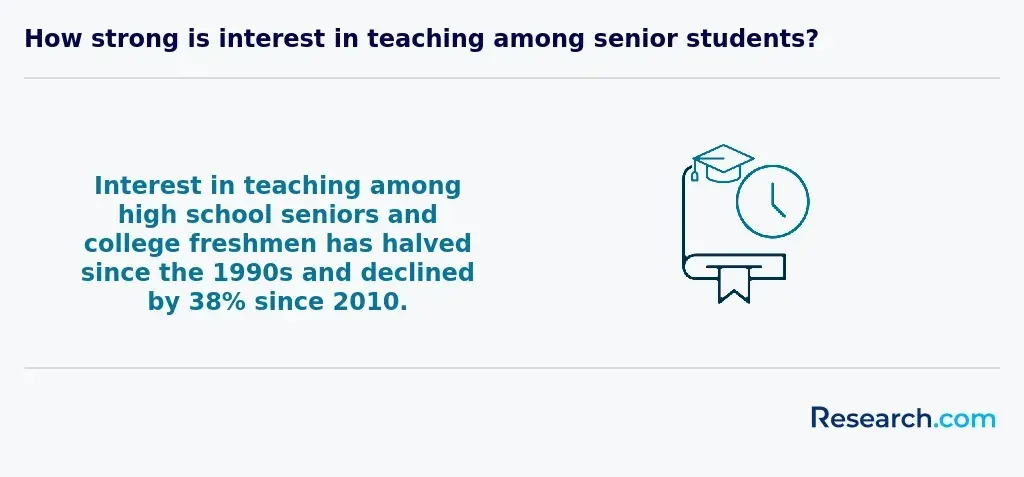
The interest pipeline for teaching is a concern nationally. The desire to become a teacher among HS seniors and college freshmen has halved since the 1990s and has declined since 2010 by 38%, which makes strong preparation, mentoring, and retention support especially important.
Licensure is more than a checklist. The goal is to show that you can teach English language arts responsibly, support diverse learners, manage a classroom, and assess student progress in reading, writing, speaking, listening, and critical analysis.
Student Teaching, Internships, and Classroom Experience
Teaching experience is one of the most important parts of English teacher preparation in Colorado because it turns theory into practice. A candidate may understand literature and composition well but still need guided experience designing lessons, leading discussions, grading writing fairly, adapting for English learners, and managing classroom routines.
Most traditional preparation programs include a student teaching placement that usually lasts a full semester. During this period, candidates work under a mentor teacher, gradually take on planning and instruction, and receive feedback on classroom performance.
Where to Find Field Experience
- University or college placement offices connected to teacher preparation programs
- Local school districts that partner with educator preparation providers
- Alternative licensure programs that match candidates with classroom-based training
- Educational organizations and professional networks that share practicum or internship opportunities
How to Make Student Teaching Count
- Ask your mentor teacher for specific feedback on lesson pacing, questioning, writing conferences, and classroom routines.
- Keep a teaching portfolio with lesson plans, assessments, reflections, and examples of student-centered instruction.
- Observe more than one teacher if possible so you can compare classroom cultures and instructional styles.
- Practice differentiating assignments for students who need extra support, advanced challenge, language scaffolds, or accommodations.
- Use feedback to improve quickly rather than waiting until formal evaluations.
Career changers should examine alternative licensure carefully. It can be a practical route for individuals with a bachelor’s degree outside education, but it still requires serious time, mentoring, and compliance with state expectations.
Colorado English Standards and Curriculum Requirements
English teachers in Colorado are expected to align instruction with state academic expectations while also serving students with varied cultural, linguistic, and learning needs. The Colorado State Board of Education plays a central role in education standards and policy, and teachers should become comfortable using state resources when planning curriculum.
- English language arts standards: Teachers plan instruction around reading, writing, communication, research, language use, and analysis of complex texts.
- Culturally and Linguistically Diverse Education: Colorado requires training for educators in elementary education, math, science, social studies, and English language arts related to Culturally and Linguistically Diverse Education.
- Professional learning expectation: Approved training may include 45 contact hours or three semester hours in Culturally and Linguistically Diverse Education.
- Culturally responsive practice: English teachers should select texts, discussion routines, and writing assignments that recognize student identity, language background, and lived experience without lowering academic expectations.
- Curriculum alignment: Strong lesson plans connect standards, learning objectives, formative assessment, literacy skill development, and student reflection.
For English teachers, standards alignment should not mean a rigid script. The best classrooms use standards as a structure while giving students meaningful reasons to read, write, debate, revise, research, and communicate.
Job Market and Salary Expectations for English Teachers in Colorado
The Colorado market for English teachers depends heavily on district location, school level, local staffing needs, candidate credentials, and experience. Secondary English roles can be competitive in some desirable districts, while other districts may have more urgent hiring needs.
Salary expectations should be evaluated by district salary schedule rather than statewide averages alone. One cited estimate places the average salary for an English teacher in Colorado around $55,000 per year. Another cited figure gives the average salary as approximately $58,000 annually. Teachers in urban areas such as Denver and Boulder often earn higher salaries, sometimes exceeding $65,000, while rural districts may be closer to $50,000.
| Colorado high school English teacher salary level | Salary as of August 2024 |
| 10th percentile | $41,621 |
| 25th percentile | $50,677 |
| 50th percentile / median | $60,623 |
| 75th percentile | $73,934 |
| 90th percentile | $86,054 |
Benefits matter as much as base pay. Compare health insurance, retirement plans, mentoring, class size, planning time, professional development funding, and salary advancement for graduate credits or additional endorsements.
-
: "
One Colorado teacher described the early career experience this way: entering the classroom felt uncertain at first, but strong colleagues, community support, and visible student growth made the work feel meaningful. Anecdotes like this should not replace salary research, but they do highlight why mentoring and school culture matter when choosing a district.
"
Professional Development and Continuing Education for English Teachers in Colorado
Professional learning is part of staying licensed and becoming more effective. Colorado educators are cited as needing 90 contact hours of professional learning every seven years, equivalent to six semester hours of college coursework. Teachers should verify current renewal rules directly with the Colorado Department of Education because licensure policies and documentation processes can change.
- District or BOCES in-service education: Approved school districts or BOCES may offer professional development. For every 15 hours in these programs, educators can receive one semester hour of credit.
- College and university coursework: Graduate or undergraduate coursework from accredited institutions can support renewal and deepen expertise in literacy, writing instruction, adolescent development, assessment, or educational leadership.
- Workshops and seminars: English teachers can attend sessions on writing instruction, discussion-based teaching, classroom management, culturally responsive curriculum, and literacy intervention.
- Educational travel: Teachers may earn credit for travel experiences when the learning connects directly to instructional practice.
- Conferences, mentoring, and research: Ongoing participation in professional communities can help teachers stay current and avoid isolation.
Graduate study can be useful, but it should match a career goal. If you want to deepen classroom practice, compare literacy, curriculum, and teaching programs. If affordability is central, review options such as online master's in teaching low tuition programs before committing.
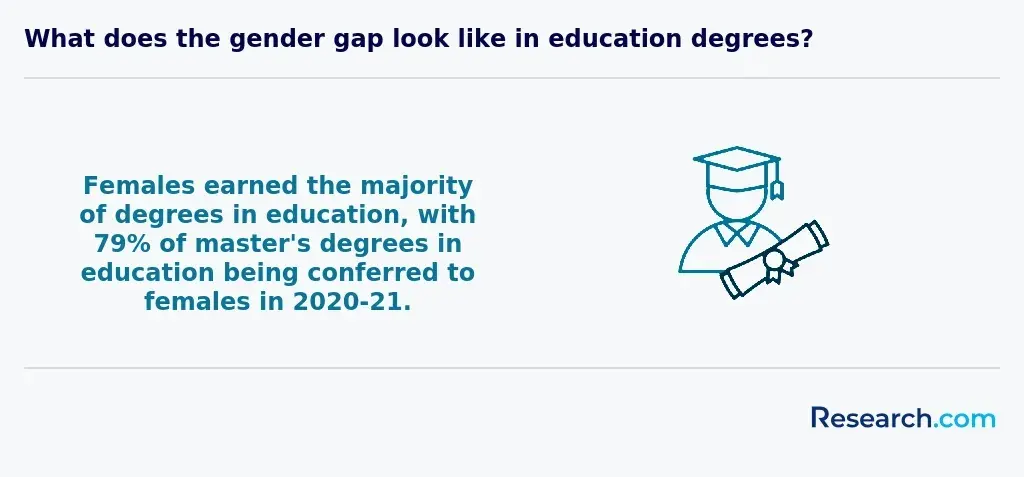
Education graduate enrollment patterns also show an opportunity for broader participation in the profession. Around 79% of master's degrees in education were conferred to women in 2020-21, indicating a great and underutilized opportunity for men to become teachers.
Classroom Management and Teaching Methods for English Teachers
English classrooms require a balance of structure and intellectual freedom. Students need routines that make discussion, reading, drafting, revision, and peer feedback feel safe and productive. Without strong management, even well-designed literature or writing lessons can lose momentum.
- Teach expectations explicitly: Model how students should discuss texts, annotate readings, conduct peer review, use classroom technology, and revise writing.
- Build predictable routines: Warm-ups, reading checks, writing conferences, exit tickets, and discussion protocols reduce confusion and protect instructional time.
- Use interactive learning carefully: Socratic seminars, group analysis, peer review, and creative projects can strengthen participation when roles and outcomes are clear.
- Differentiate without lowering rigor: Offer scaffolds, sentence frames, audio supports, choice in texts when appropriate, and extension tasks for advanced readers and writers.
- Respond to behavior consistently: Address small disruptions early, document patterns, communicate with families when needed, and use school support systems before problems escalate.
- Use technology for learning, not distraction: Digital annotation tools, discussion boards, multimedia composition, and online libraries can expand access when tied to clear objectives.
Creative and interdisciplinary instruction can also strengthen English learning. Music, performance, and rhythm can support language study, oral interpretation, and close reading; students interested in arts-integrated teaching may find inspiration from top music universities.
Other Teaching Paths Available in Colorado
If English is not the only subject or age group you are considering, compare teaching paths before choosing a degree program. Elementary education, special education, art, music, history, and ESOL may have different endorsement expectations, field placements, and job markets. For those drawn to younger learners, Research.com’s guide on how to become an elementary school teacher in Colorado can help you compare requirements before you commit to a secondary English route.
Cost-Effective Pathways for Obtaining a Teaching Credential in Colorado
The cheapest route is not always the best route, especially if a program does not lead smoothly to licensure. A cost-effective pathway is one that minimizes unnecessary credits, avoids non-approved programs, provides strong placement support, and helps you become employable in Colorado.
| Cost factor | What to check | Better decision |
| Tuition | Per-credit cost, total required credits, fees, and whether student teaching carries tuition charges | Compare total program cost, not just advertised tuition |
| Transfer credits | Whether prior English, education, or general education credits apply | Request a written transfer evaluation before enrolling |
| Licensure alignment | Whether the program is approved or appropriate for Colorado teacher licensure | Confirm with the school and Colorado Department of Education resources |
| Testing and application costs | Content assessment fees, transcripts, background checks, and licensure application fees | Budget for all required costs before choosing a start date |
| Time to completion | Full-time, part-time, online, hybrid, or alternative licensure timelines | Choose a pace that you can complete without leaving avoidable gaps |
Students comparing routes can review types of teaching certificates in Colorado to understand how traditional, alternative, and accelerated options may affect total cost and time.
Career Advancement and Specializations for English Teachers in Colorado
English teaching can lead to roles beyond one classroom, especially for educators who build expertise in literacy, curriculum, English learners, assessment, or teacher leadership.
- Department chair or team lead: Experienced English teachers may coordinate curriculum, mentor colleagues, lead data discussions, and support schoolwide literacy goals.
- Curriculum coordinator: Teachers with strong instructional design skills may move into district-level curriculum planning or assessment development.
- Literacy coach: Literacy specialists help teachers improve reading and writing instruction across grade levels and content areas.
- ESL or ESOL specialization: English teachers who add expertise in English language development can better support multilingual learners.
- Special education collaboration: English teachers who understand accommodations, IEP implementation, and accessible literacy strategies can serve a wider range of students.
- Administrative leadership: Some teachers pursue principal or administrative licensure to move into school leadership.
Additional certifications and graduate programs can improve mobility, but they should be chosen strategically. For example, some educators compare adjacent specialties and salary considerations, including early childhood education salary potential, before deciding whether to specialize.
Salary comparisons across states can also inform long-term planning. English professors in California earn the highest average salary at $102,568, according to Zippia. Other high-paying states include Connecticut at $88,360, Rhode Island at $84,815, New Hampshire at $81,795, Nevada at $81,749, New York at $81,298, the District of Columbia at $77,861, Delaware at $77,251, Vermont at $70,588, and Utah at $69,174.
Can Creative Arts Strengthen English Language Education in Colorado?
Yes, creative arts can make English instruction more engaging when they serve literacy goals rather than replacing them. Performance, visual interpretation, spoken word, music, digital storytelling, and dramatic reading can help students analyze theme, voice, structure, character, and audience.
- Use performance to help students interpret tone, pacing, and point of view.
- Pair visual art with literary analysis to examine symbolism and theme.
- Assign multimodal projects that require written reflection, citation, and explanation.
- Collaborate with arts teachers when projects require specialized media or performance skills.
Teachers interested in arts-integrated instruction may find it useful to compare English teaching with pathways such as how to become an art teacher in Colorado.
How Digital Innovation Can Transform an English Classroom
Digital tools can improve English instruction when they increase access, feedback, collaboration, and revision. They can also create distraction and privacy concerns when used without clear boundaries. The best approach is to choose tools that support a specific reading, writing, research, or communication objective.
| Digital tool type | Useful classroom application | Risk to manage |
| Online discussion platforms | Extend literary discussion beyond class time and give quieter students more space to respond | Low-effort posts if expectations are vague |
| Digital libraries | Expand access to texts, research sources, and differentiated reading materials | Uneven student access outside school |
| Collaborative documents | Support peer review, group analysis, and revision history | Academic integrity and off-task editing |
| Multimedia composition tools | Allow students to combine writing, audio, visuals, and presentation skills | Projects may focus on design instead of evidence-based writing |
Teachers who enjoy information literacy, digital archives, research instruction, and resource curation may also explore related graduate pathways such as "What can I do with masters in library science?".
Resources and Support for New English Teachers in Colorado
New teachers should not try to build a career in isolation. The first few years are easier when you have a mentor, a planning team, reliable curriculum resources, and administrators who understand the workload of English instruction.
- Colorado Department of Education resources: CDE provides licensure information, standards resources, and approved English learner professional development program information.
- Mentorship programs: New teachers should ask districts about induction, mentoring, observation cycles, and release time for coaching.
- Professional associations: Teacher organizations can provide workshops, advocacy updates, lesson-sharing communities, and peer support.
- School-based collaboration: English departments, grade-level teams, instructional coaches, and special education staff can help with planning and student support.
- Graduate education: Teachers who want deeper preparation may compare accredited online teaching master's programs and verify how each option supports licensure, salary advancement, or specialization.
Before accepting a job, ask how many preps you will teach, what curriculum materials are provided, whether common assessments exist, how new teachers are mentored, and how the school supports multilingual learners and students with disabilities.
Work-Life Balance and Burnout Prevention for Colorado English Teachers
English teachers often carry heavy grading loads because reading responses, essays, journals, research papers, and revisions take time to evaluate well. Burnout prevention should begin before the first semester, not after exhaustion sets in.
- Use focused rubrics: Grade for the learning target rather than marking every possible issue on every paper.
- Build revision cycles: Give feedback in stages so students improve drafts before final grading.
- Set communication boundaries: Follow district expectations while protecting personal time outside contract hours.
- Plan reusable routines: Discussion protocols, writing workshops, and reading conferences can be adapted across units.
- Ask for support early: Use mentors, department chairs, counselors, and administrators before workload or behavior concerns become unmanageable.
- Consider adjacent teaching interests: Some educators diversify their professional options by exploring other fields, such as music teaching qualifications in Colorado.
Diversity and Inclusivity in Colorado English Teaching
Colorado English teachers serve students with different languages, cultures, family backgrounds, reading histories, and access to academic support. Inclusive English teaching requires more than adding a few diverse texts; it involves curriculum choices, classroom norms, assessment design, and communication practices that help all students participate meaningfully.
- Use multicultural literature with purpose: Select texts that expand students’ perspectives and connect to standards, not texts chosen only for representation.
- Support English language learners: Provide vocabulary scaffolds, sentence frames, oral rehearsal, visual supports, and opportunities to use language in authentic contexts.
- Differentiate reading and writing tasks: Keep high expectations while offering access points for students with varied skill levels.
- Address bias and belonging: Classroom discussion norms should protect dignity while allowing students to engage with challenging ideas.
- Partner with families and communities: Family engagement can strengthen trust and help teachers understand student context.
Students still deciding on the right teaching route can review what degree do you need to be a teacher in Colorado to understand the broader state pathway before narrowing into English education.
Teacher Perspectives: What Graduates Say About Teaching English in Colorado
- Teaching English in Colorado has felt meaningful because the work combines student growth, community support, and daily opportunities to help young people become stronger readers and writers. Cindy
- The professional development opportunities and student energy have made the career feel sustainable, while Colorado’s outdoor lifestyle has helped support a healthier balance outside school. Jones
- Collaboration with other teachers and the diversity of classroom discussions have made English teaching feel creative, challenging, and connected to students’ real lives. Emilio
Should You Pursue an Advanced Degree?
An advanced degree can be worthwhile if it connects to a specific goal: improving instruction, qualifying for salary advancement, moving into literacy coaching, entering curriculum leadership, or preparing for administration. It is less useful if you enroll only because you feel pressured to collect credentials.
- Ask whether the degree will affect your district salary schedule.
- Compare tuition, fees, program length, and delivery format.
- Confirm whether coursework supports endorsements or leadership credentials.
- Review faculty expertise in literacy, writing instruction, curriculum, English learners, or adolescent education.
- Calculate how long it may take to recover the cost through salary movement or career advancement.
When comparing affordability across graduate programs, some professionals look at unrelated but structured examples such as the cheapest audiology programs to understand how program cost, clinical requirements, and long-term value can differ by field.
Requirements for ESOL Certification in Colorado
ESOL preparation can be valuable for English teachers because many classrooms include multilingual learners who need both language development and grade-level literacy instruction. Colorado educators seeking this specialization typically complete targeted coursework, practical experience with English learners, and any required evaluations tied to culturally responsive and linguistically appropriate instruction. For a more detailed breakdown, review the guide to Colorado ESOL certification requirements.
How Long Does It Take to Get a Teaching Certificate in Colorado?
The timeline depends on your starting point. Candidates who already hold a completed education degree may move through final licensure steps more quickly, while career changers may need additional coursework, field experience, and testing. A commonly cited timeframe is 12 to 18 months for candidates with a completed degree in education, while alternative routes or added endorsements can take longer. For a more detailed timeline, see how long does it take to get a teaching certificate in Colorado.
Alternative Careers That Use English Teaching Skills
English teachers build transferable strengths in writing, editing, communication, curriculum design, assessment, public speaking, coaching, and research. Those skills can lead to roles outside a traditional English classroom.
- Curriculum writer or instructional designer
- Literacy coach or intervention specialist
- Education consultant
- Assessment or test development specialist
- Academic advisor or student support professional
- School librarian or media specialist
Educators interested in library-based learning, research support, and schoolwide literacy may explore how to be a school librarian in Colorado.
Can Dual Certification Improve an English Teaching Career?
Dual certification can make sense when the second credential supports your students, your district’s needs, or your advancement goals. English teachers may consider endorsements or related preparation in ESOL, reading, special education, gifted education, speech-language support, or another content area.
The benefit is flexibility. The caution is cost and workload. Do not add a credential unless you understand the requirements, field experience expectations, and how it affects your job options. Teachers interested in communication-related student support may compare requirements through Colorado SLP license requirements.
Emerging Trends and Challenges for Colorado English Teachers
English teaching is changing as schools respond to technology, literacy gaps, multilingual classrooms, evolving standards, and new expectations around student engagement. Teachers who can adapt thoughtfully will be better prepared than those who rely on one fixed teaching style.
- AI and writing instruction: Teachers need clear policies and assignment designs that emphasize process, voice, evidence, revision, and ethical technology use.
- Digital literacy: Students must learn how to evaluate sources, identify misinformation, cite evidence, and write for digital audiences.
- Multilingual learning: English teachers increasingly need strategies that support language development and academic content together.
- Interdisciplinary teaching: English pairs naturally with history, media studies, arts, science communication, and civic learning.
- Teacher retention: Workload, grading volume, classroom behavior, and compensation remain practical concerns for long-term sustainability.
Teachers who enjoy interdisciplinary humanities instruction may compare English with related pathways such as how to become a high school history teacher in Colorado.
Using Historical Perspectives to Strengthen English Teaching
Historical context helps students read literature more deeply. When students understand the period, social conditions, language conventions, and conflicts surrounding a text, they can move beyond plot summary into interpretation and argument.
- Connect literary movements to historical events and cultural debates.
- Use primary sources to help students compare historical voices with literary representations.
- Teach students to question whose perspectives are centered, missing, or contested.
- Coordinate with history teachers on shared units when standards and schedules allow.
Teachers interested in this approach may find useful comparisons in high school history teacher requirements in Colorado.
Common Mistakes to Avoid
| Mistake | Why it can hurt you | Better approach |
| Choosing a program without checking approval and accreditation | You may complete credits that do not support Colorado licensure | Verify regional accreditation and state licensure alignment before enrolling |
| Comparing only tuition | Fees, testing, student teaching costs, and extra credits can change the real price | Calculate total cost to licensure |
| Assuming online always means easier | Field placements, deadlines, and state documentation still require planning | Ask how the program handles Colorado placements and licensure paperwork |
| Ignoring district salary schedules | State averages may not reflect your actual pay | Review salary schedules for specific districts where you plan to apply |
| Waiting to build a portfolio | You may struggle to show evidence of classroom readiness | Save lesson plans, assessments, reflections, and mentor feedback during preparation |
| Taking every grading task home | English teachers are especially vulnerable to grading overload | Use targeted rubrics, writing conferences, peer review, and staged feedback |
Key Insights
- Colorado English teacher licensure generally requires a bachelor’s degree, an approved teacher preparation program, English language arts competency, background checks, and an application through the Colorado Department of Education.
- The Initial Teacher License is valid for three years, so early-career teachers should track professional learning and plan for renewal from the start.
- Colorado candidates can demonstrate English language arts competency through 24 semester hours of relevant coursework or a state-approved content assessment.
- Student teaching is not a formality. It is the best opportunity to practice classroom management, writing instruction, discussion leadership, differentiation, and assessment before becoming teacher of record.
- Salary varies by district and experience. As of August 2024, Colorado high school English teacher salaries range from $41,621 at the 10th percentile to $86,054 at the 90th percentile, with a median of $60,623.
- The average salary for an English teacher in Colorado is also cited at approximately $58,000 annually, while another estimate places it around $55,000 per year.
- The Colorado Department of Education reported that as of 2023, there is significant demand for English teachers, with a projected growth rate of 10% in the next decade.
- A recent survey reported that 85% of English teachers in Colorado express high job satisfaction.
- In 2023, the Colorado Department of Higher Education noted that over 4,000 students graduated with degrees in English education.
- In the 2020-21 academic year, women received approximately 79% of master's degrees in education, showing an opportunity to broaden participation in the teaching workforce.
- Nationally, the USA has a need for 36,504 educators, with over 100,000 classrooms taught by underqualified teachers.
- The desire to become a teacher among HS seniors and college freshmen has halved since the 1990s and has declined since 2010 by 38%.
- English professors in California earn the highest average salary at $102,568. Other top-paying states for English professors include Connecticut ($88,360), Rhode Island ($84,815), New Hampshire ($81,795), Nevada ($81,749), New York ($81,298), the District of Columbia ($77,861), Delaware ($77,251), Vermont ($70,588), and Utah ($69,174).
Related Articles for Nearby States
- 2027 How to Become an English Teacher in Wyoming: Requirements & Certification
- 2027 How to Become an English Teacher in Nebraska: Requirements & Certification
- 2027 How to Become an English Teacher in Kansas: Requirements & Certification
- 2027 How to Become an English Teacher in New Mexico: Requirements & Certification
- 2027 How to Become an English Teacher in Utah: Requirements & Certification
- 2027 How to Become an English Teacher in Oklahoma: Requirements & Certification
- 2027 How to Become an English Teacher in Arizona: Requirements & Certification
- 2027 How to Become an English Teacher in Texas: Requirements & Certification
- 2027 How to Become an English Teacher in South Dakota: Requirements & Certification
- 2027 How to Become an English Teacher in Nevada: Requirements & Certification
References:
- Colorado Department of Education. (2024). Approved English learner professional development programs. Colorado Department of Education.
- Colorado Department of Education. (2024). Requirements for a Colorado initial teacher license. Colorado Department of Education.
- Salary.com. (2024). High school English teacher salary in Colorado. Salary.com.
- Zippia. (2024). Best states for English professor jobs. Zippia.
Other Things You Should Know About Becoming an English Teacher in Colorado
To become an English teacher in Colorado in 2027, candidates must complete a bachelor's degree in education or a related field, complete a teacher preparation program, and pass the Praxis exams. Additionally, they must apply for a teaching license through the Colorado Department of Education and undergo a background check.
In 2027, the Colorado English teacher certification exam covers literature, grammar, composition, language development, and pedagogical practices. Candidates are tested on their understanding of classical and contemporary works, writing techniques, and effective teaching methodologies to ensure they meet the state education standards.
In 2027, a foreigner must hold a valid work visa and have their credentials evaluated by a recognized agency. They should also pass a background check, demonstrate English proficiency, and meet Colorado's educational and certification requirements, such as completing a teacher preparation program and passing the PRAXIS exam.
To become an English teacher in Colorado in 2027, you need to earn a bachelor’s degree in English or education, complete an accredited teacher preparation program, pass the Praxis exams, undergo a background check, and obtain a Colorado teaching license through the Colorado Department of Education.





