2027 How to Become a Nurse in Florida

Co-Founder and Chief Data Scientist
Becoming a nurse in Florida is a licensing decision as much as an education decision. You need to choose the right credential, complete an approved program, pass the correct NCLEX exam, submit the required documentation, and keep your license active after you begin working. This guide explains the practical steps, education options, license types, common mistakes, and career paths so you can move toward nursing licensure in Florida with fewer delays and better expectations.
Quick answer: How do you become a nurse in Florida?
To become a nurse in Florida, you must complete an approved nursing education program, apply to the Florida Board of Nursing, pass the NCLEX-RN for registered nurses or the NCLEX-PN for practical nurses, complete fingerprinting and a criminal background check, and receive an active Florida nursing license before practicing. Your best path depends on whether you want to become a CNA, LPN, RN, or advanced practice nurse.
Key things to know before starting a Florida nursing pathway
- Florida is facing a major nursing workforce gap, with a projected deficit of over 59,000 registered nurses by 2027.
- Registered nurses in Florida earn about $79,000 per year on average, although pay changes by setting, experience level, specialty, and city.
- The employment outlook is strong, with the Bureau of Labor Statistics projecting 15% growth for registered nursing roles from 2022 to 2030.
- Florida nurses work in many environments, including large hospital systems, outpatient centers, long-term care facilities, home health, rural clinics, and telehealth-enabled care teams.
- Online nursing courses, hybrid programs, accelerated degree options, and telehealth training are changing how students enter nursing and how nurses deliver care.
- Steps to become a nurse in Florida
- Florida nursing education requirements
- Types of nursing roles recognized in Florida
- Florida nursing license requirements
- Types of nursing licenses in Florida
- Nurse Licensure Compact practice in Florida
- Advanced practice nursing roles and education options
- Practicing nursing without a license in Florida
- Current nursing workforce conditions in Florida
- Pharmaceutical career options for Florida nurses
- Moving from medical assistant to registered nurse
- Career advancement opportunities in nursing
- Nursing informatics and technology-driven practice
- Florida nursing job outlook
- LPN and LVN terminology in Florida
- Ways to pay for nursing school in Florida
- Documents needed for Florida nursing licensure
- How to compare Florida nursing schools
- Certified nurse midwife pathways in Florida
- How to choose an LPN program in Florida
- LPN program options to review in Florida
- Medical billing and coding transitions for nurses
What are the steps to becoming a nurse in Florida?
The process starts with deciding which nursing credential fits your goals. A student who wants the fastest patient-care entry point may choose a CNA or LPN route, while someone who wants broader clinical responsibility and stronger long-term mobility will usually pursue registered nursing through an ADN or BSN program.
- Choose your nursing role. Decide whether you want to become a CNA, LPN, RN, or APRN. Each role has a different scope of practice, education requirement, and licensing process.
- Enroll in an approved nursing program. For registered nursing, this usually means an Associate Degree in Nursing or a Bachelor of Science in Nursing. Practical nurses complete an approved practical nursing program.
- Complete classroom, lab, and clinical training. Nursing programs combine science courses, patient care instruction, simulation practice, and supervised clinical experience.
- Apply to the Florida Board of Nursing. Submit your application, education verification, required fees, and any other requested documentation.
- Complete fingerprinting and a background check. Florida requires this step before issuing a nursing license.
- Pass the required NCLEX exam. RN candidates take the NCLEX-RN, and LPN candidates take the NCLEX-PN.
- Receive your active license before practicing. You cannot legally work as a nurse in Florida until the proper license has been issued.
- Maintain your license through renewal and continuing education. Licensed nurses must follow the Florida nurses continuing education requirements to remain in good standing.
For RN candidates, the two most common starting points are the ADN and BSN. An ADN is generally shorter and can lead to RN licensure after passing the NCLEX-RN. A BSN takes longer but includes broader preparation in leadership, public health, research, and care coordination. In Florida, approximately 44.6% of registered nurses hold a BSN, which reflects the continuing preference among many employers for bachelor-prepared nurses.
| Path | Typical purpose | Best for | Important trade-off |
| ADN | Qualifies graduates to pursue RN licensure through the NCLEX-RN | Students who want a shorter and often more affordable RN pathway | Some employers may prefer or require a BSN for certain roles |
| BSN | Prepares students for RN licensure with broader clinical and leadership training | Students aiming for hospital roles, leadership, graduate school, or long-term advancement | Usually takes more time than an ADN |
| LPN program | Prepares students for practical nursing licensure through the NCLEX-PN | Students seeking a faster entry into bedside care | Scope of practice is more limited than an RN role |
| Graduate nursing degree | Supports advanced practice, education, leadership, or specialty practice | Licensed RNs seeking APRN or senior clinical roles | Requires additional education, certification, and often more clinical preparation |
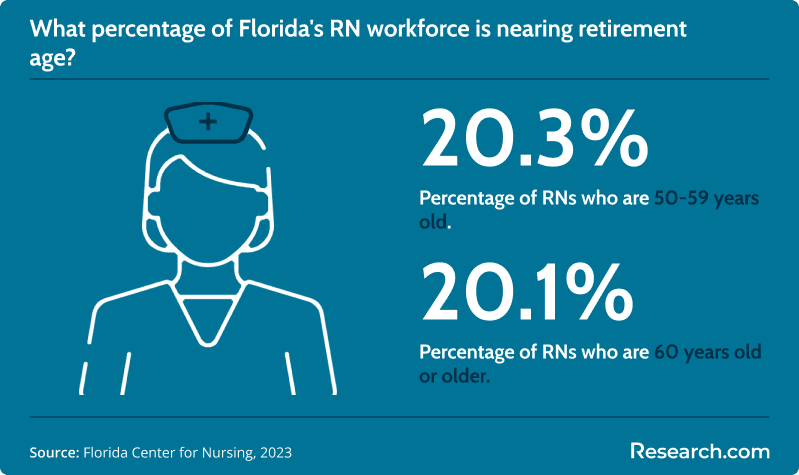
Florida’s demand for nurses is expected to remain strong as the population ages and current nurses leave the workforce. More than 25% of current nurses are expected to retire within five years, which may create additional openings. If you are considering advanced clinical education later, reviewing how much do DNPs make can help you understand how doctoral-level nursing compensation may vary by location and role.
What are the educational requirements for becoming a nurse in Florida?
Florida nursing education requirements depend on the license you want. CNAs complete state-approved training and a competency exam. LPNs complete practical nursing education and pass the NCLEX-PN. RNs complete an approved ADN, BSN, diploma, or equivalent qualifying program and pass the NCLEX-RN. APRNs need graduate-level nursing education and specialty certification.
- Associate Degree in Nursing: This two-year route is commonly offered by community colleges and prepares graduates for the NCLEX-RN. It is often attractive to students who want a more direct and lower-cost route into registered nursing.
- Bachelor of Science in Nursing: This four-year degree includes deeper preparation in clinical judgment, evidence-based practice, leadership, care systems, and population health. Some students who already have a bachelor’s degree in another field use accelerated BSN programs and may complete nursing preparation in 12 to 18 months.
- Master of Science in Nursing: An MSN is generally completed after a BSN and often takes two additional years. It can prepare nurses for roles such as nurse practitioner, nurse educator, clinical leader, or specialty nurse. Some career changers may consider accelerated MSN programs online when they already hold a non-nursing bachelor’s degree.
- Doctor of Nursing Practice: The DNP is the highest clinical nursing degree and usually takes three to four years. It is designed for advanced practice, systems leadership, quality improvement, and high-level clinical decision-making.
- Diploma in Nursing: Some hospital-based programs still offer diploma preparation. These programs combine classroom instruction with clinical training and generally take about three years to complete.
Online and hybrid nursing programs can make coursework more flexible, but clinical hours still require approved hands-on training. Before enrolling, confirm that the program is properly accredited and approved for Florida licensure. This is especially important if you plan to study online from another state or complete clinicals near your home.
Students with healthcare experience may be able to use bridge pathways. For example, medical assistants who want to enter practical nursing can review medical assistant to LPN online options. Regardless of format, look for accreditation from organizations such as the Commission on Collegiate Nursing Education (CCNE) or the Accreditation Commission for Education in Nursing (ACEN), because accreditation affects licensure eligibility, transfer credit, graduate school options, and employer confidence.
| Education option | Typical length stated | Credential it supports | When it makes sense |
| Practical nursing certificate or diploma | Usually about one year | LPN | You want a faster entry into nursing care and may later bridge to RN |
| ADN | Two-year program | RN | You want RN licensure without committing to a four-year degree at the start |
| BSN | Four-year degree | RN | You want broader career mobility, hospital competitiveness, and graduate school preparation |
| MSN | Usually two additional years beyond the BSN | Advanced or specialty roles | You want to become an NP, educator, leader, or specialist |
| DNP | Usually three to four years | Highest clinical nursing preparation | You want advanced practice leadership, systems improvement, or top-level clinical preparation |
What types of nurses can legally practice in Florida?
Florida recognizes several nursing and nursing-related roles. The main difference between them is scope of practice: what the person is legally allowed to do, how independently they can work, and what level of education and supervision is required.
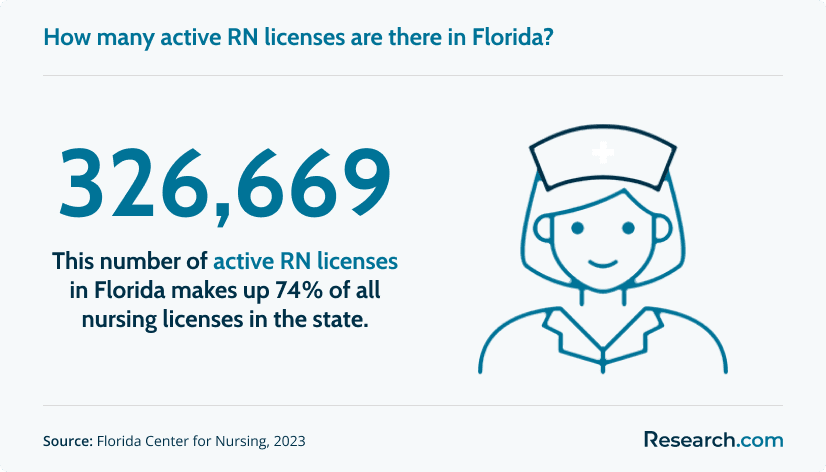
- Registered Nurses: RNs provide assessments, care planning, medication administration, patient education, coordination of care, and clinical monitoring. They typically qualify through an ADN or BSN from an accredited institution. As of 2023, more than 200,000 RNs practice in Florida.
- Licensed Practical Nurses: LPNs deliver basic nursing care under the direction of RNs, physicians, or other authorized providers. They commonly complete a one-year diploma or certificate program and must pass the NCLEX-PN. Demand is especially relevant in long-term care and similar settings.
- Advanced Practice Registered Nurses: APRNs include nurse practitioners, clinical nurse specialists, certified registered nurse anesthetists, and certified nurse midwives. They need graduate nursing education, national certification in their specialty, and state authorization. Florida has seen increasing need for APRNs, especially nurse practitioners involved in primary care access.
- Certified Nursing Assistants: CNAs are not licensed nurses, but they are essential members of the care team. They complete state-approved training and pass a competency exam to provide direct support such as help with activities of daily living, basic patient observation, and comfort care.
| Role | Education or training | Exam or certification | Common work settings |
| CNA | State-approved nursing assistant training | Competency exam | Long-term care, hospitals, rehabilitation, home care |
| LPN | Practical nursing program | NCLEX-PN | Nursing homes, clinics, home health, physician offices |
| RN | ADN, BSN, or qualifying nursing program | NCLEX-RN | Hospitals, outpatient care, public health, schools, case management |
| APRN | Master’s or doctoral nursing degree | National specialty certification | Primary care, specialty clinics, hospitals, anesthesia, women’s health |
What are the licensing requirements for nurses in Florida?
The Florida Board of Nursing sets the requirements for RN and LPN licensure. The process is designed to verify education, test readiness for safe practice, screen applicants through background checks, and ensure that nurses meet professional standards before working with patients.
- Approved education: RN applicants generally complete an ADN or BSN, while LPN applicants complete a practical nursing certificate or diploma program.
- NCLEX exam: RN candidates must pass the NCLEX-RN, and LPN candidates must pass the NCLEX-PN. These exams measure entry-level nursing knowledge and judgment.
- Fingerprinting and background screening: Florida requires nursing applicants to complete fingerprinting and a criminal background check before licensure.
- Board application: Applicants submit required forms, education records, exam information, background documentation, and fees to the Florida Board of Nursing. Depending on the license type, application fees commonly range from $100 to $200.
- Continuing education after licensure: Nurses must complete required continuing education and renew their licenses on schedule to keep practicing legally.
Licensure delays often happen because applicants choose an unapproved program, submit incomplete transcripts, miss fingerprinting instructions, or assume an online program automatically meets Florida requirements. Check requirements before you enroll, not after graduation.
| Common licensing mistake | Why it causes problems | Better approach |
| Choosing a program based only on cost | Low tuition does not guarantee licensure eligibility or strong clinical preparation | Verify approval, accreditation, NCLEX support, and clinical placement access |
| Assuming online means fully remote | Nursing requires supervised clinical practice | Ask where clinicals occur and who arranges placements |
| Waiting to review background requirements | Past legal issues may need additional documentation | Contact the appropriate licensing authority early for guidance |
| Submitting incomplete records | Missing transcripts or verification can slow board review | Create a document checklist before applying |
What types of nursing licenses are available in Florida?
Florida offers nursing credentials for different levels of responsibility. Before choosing a program, match the license to the work you actually want to do.
- Certified Nursing Assistant: CNAs complete state-approved preparation and a competency exam. They help patients with daily care needs and support licensed nurses.
- Licensed Practical Nurse: LPNs complete a practical nursing program and pass the NCLEX-PN. They may monitor patient status, provide routine nursing care, and administer medications within their permitted scope and supervision requirements.
- Registered Nurse: RNs qualify through an approved nursing education pathway and pass the NCLEX-RN. They conduct assessments, develop and implement care plans, educate patients and families, and coordinate care across teams.
- Nursing Assistant Training Program: This training route prepares students for CNA work by covering essential bedside care, safety, communication, and patient support skills.
- Advanced Practice Registered Nurse: APRNs include nurse practitioners, clinical nurse specialists, nurse anesthetists, and nurse midwives. These roles require graduate nursing education and national certification in the specialty. If you are comparing advanced practice options, reviewing nurse practitioner salary details can help you understand how compensation differs by city, industry, and role in Florida.
| License or credential | Scope level | Good fit if you want... |
| CNA | Supportive patient care | A short entry point into healthcare and direct patient contact |
| LPN | Practical nursing care under supervision | Hands-on nursing duties without completing an RN program first |
| RN | Full registered nursing practice | Broader responsibility, more role variety, and advancement potential |
| APRN | Advanced clinical practice | Diagnosis, treatment planning, specialty practice, or provider-level responsibilities |
Can a Compact nurse practice in Florida?
Yes. Florida participates in the Nurse Licensure Compact, which allows eligible nurses with a multistate compact license to practice in Florida and other compact states without obtaining a separate single-state license for each location. Florida compact licensure can also allow an eligible RN to practice in 34 other states.
The compact is especially useful for nurses who travel, relocate, provide telehealth across state lines, or work for organizations operating in multiple states. However, compact practice is not automatic for every nurse. Eligibility depends on your primary state of residence, license status, and compliance with compact rules.
Students should also be careful when choosing nursing programs. A program that supports Florida licensure may still need review for licensure in another state. If you may move after graduation, confirm whether your program meets the licensing rules of the state where you plan to work. Career changers comparing graduate-entry pathways can also review direct entry MSN programs for non-nurses when evaluating whether an accelerated graduate nursing route fits their background.
What are advanced practice roles and educational opportunities in Florida?
Advanced practice nursing is for licensed RNs who want to diagnose, manage complex care, specialize deeply, teach, lead systems, or expand access to care. In Florida, advanced practice roles include nurse practitioners, certified nurse midwives, clinical nurse specialists, and nurse anesthetists. These roles require graduate nursing education, specialty preparation, and national certification.
Many RNs pursue a Master of Science in Nursing or Doctor of Nursing Practice when they want to move into advanced clinical practice. Programs may focus on family practice, adult-gerontology, psychiatric-mental health, pediatrics, women’s health, anesthesia, midwifery, or systems leadership. If your goal is nurse practitioner practice, comparing the best NP programs in Florida can help you evaluate specialization choices, clinical placement support, and program format.
Florida’s healthcare needs make advanced practice roles important, especially in primary care and underserved regions. Recent laws have expanded nurse practitioner autonomy, which can increase the impact of APRNs in appropriate practice settings. Still, students should verify current scope-of-practice rules before choosing a specialization.
Can you practice as a nurse without a license in Florida?
No. You cannot legally practice as a nurse in Florida unless you hold the appropriate active license or authorization for that nursing role. Working as a nurse without a license can endanger patients, expose the individual to penalties, and undermine the standards that protect the public.
Students, CNAs, and unlicensed assistive personnel may perform certain tasks only within the limits of their role and supervision. They cannot represent themselves as licensed nurses or perform duties reserved for LPNs, RNs, or APRNs. The Florida Board of Nursing requires approved education, the proper NCLEX exam when applicable, and required screening before a nurse may practice.
This requirement matters even more as telehealth, electronic records, remote monitoring, and new care models expand. Technology can change where care is delivered, but it does not remove the need for licensure. Florida also faces an aging workforce, with over 42% of licensed nurses in Florida aged 50 and older, making safe entry of properly prepared new nurses essential.
- : "A Florida nurse described licensure as the moment she understood the weight of professional responsibility: shadowing an experienced RN showed her that wanting to help was not enough; passing the NCLEX and earning a license gave her the legal and clinical foundation to care for patients safely."
What is the state of nursing in Florida?
Florida’s nursing workforce is shaped by high demand, population growth, retirements, regional care gaps, and a wide range of employment settings. For aspiring nurses, this creates opportunity, but it also makes school choice, licensure planning, and specialty selection more important.
Where nurses work in Florida
According to a 2023 report from the Florida Center for Nursing, hospitals employ a major share of the state’s nursing workforce: 61.8% of RNs and 37.1% of APRNs work in hospitals. LPN employment is more concentrated in long-term care, with 40.8% of LPNs working in elderly care settings.
| Nursing group | Major employment setting noted | Share reported |
| RNs | Hospitals | 61.8% |
| APRNs | Hospitals | 37.1% |
| LPNs | Elderly care settings | 40.8% |
Challenges facing Florida nursing
The state must balance strong demand with safe staffing, workforce aging, clinical training capacity, and the need for qualified faculty. The Florida Board of Nursing regulates nursing practice and can act when licensees fail to meet professional standards. That oversight is important because nursing shortages cannot be solved by lowering safety expectations.
Cost of living considerations
Salary should be evaluated alongside local expenses. According to the Bureau of Economic Analysis, average annual personal consumption expenditure in Florida for 2021 was $50,689, or slightly more than $4,200 per person each month. Living costs are often higher in metro areas such as Miami and Orlando than in smaller communities, although some urban roles may also pay more.
Can nurses transition to pharmaceutical roles in Florida?
Yes, but moving from nursing into a pharmaceutical or pharmacy-related career usually requires additional education and a different licensure process. Nursing experience can be valuable because nurses understand medication administration, patient counseling, safety monitoring, and clinical communication. However, pharmacy practice has its own academic and regulatory requirements.
If you are considering this route, compare the time, cost, prerequisites, and licensure steps before leaving nursing. A practical starting point is this guide on how to become a pharmacist in Florida.
How can I transition from a medical assistant role to become a registered nurse in Florida?
Medical assistants often bring useful patient-care experience, but they still need to complete an approved RN education pathway and meet Florida licensure requirements. The most common route is enrolling in an ADN or BSN program, completing required clinical training, applying to the Florida Board of Nursing, and passing the NCLEX-RN.
When comparing programs, ask whether your prior coursework can transfer, whether your clinical experience helps with admission, and whether the schedule fits working adults. Bridge-style programs may help, but they should still be checked for accreditation, clinical placement quality, and NCLEX preparation. For a broader planning guide, review the resource on moving from medical assistant to RN.
What are the opportunities for career advancement in nursing?
Nursing offers several advancement routes in Florida. An LPN may bridge to RN. An RN may earn a BSN, pursue specialty certification, move into charge nurse or care coordination roles, enter informatics, or complete graduate education. Graduate-prepared nurses may become nurse practitioners, educators, clinical specialists, administrators, or quality improvement leaders.
The right advancement path depends on whether you want more direct patient responsibility, a higher level of autonomy, leadership duties, teaching responsibilities, or a technology-focused role. If your goal is advanced clinical practice, review the nurse practitioner education requirements in Florida before selecting an MSN or DNP program.
| Current role | Possible next step | Why nurses choose it |
| CNA | LPN or RN program | More clinical responsibility and formal nursing licensure |
| LPN | LPN-to-RN bridge | Broader scope of practice and more career options |
| RN with ADN | RN-to-BSN | Better preparation for leadership, hospital roles, or graduate study |
| BSN-prepared RN | MSN or DNP | Advanced practice, teaching, leadership, or specialization |
| Experienced nurse | Informatics, billing, coding, pharmaceutical, or administrative roles | Less bedside work or a shift into systems, data, education, or operations |
How can nursing informatics enhance nursing practice in Florida?
Nursing informatics helps nurses use data, electronic health records, clinical decision tools, telehealth platforms, and workflow systems to improve care delivery. In Florida, where care may be delivered across hospitals, outpatient networks, home health, and remote services, informatics can help nurses coordinate information more accurately and respond to patient needs more efficiently.
Nurses who enjoy technology, documentation improvement, analytics, and systems design may benefit from formal training. Programs in nursing informatics programs can support roles in EHR optimization, quality improvement, population health reporting, clinical education, and healthcare technology implementation.
What is the job outlook for nursing in Florida?
Florida’s nursing job outlook is strong across multiple roles. RNs led the state in the highest number of annual job openings for 2022-2023, with 12,883 positions expected to be available. Nursing faculty demand is projected to rise by 25% from 2022 to 2030, creating nearly 4,972 openings over that eight-year span. Nurse practitioner opportunities have also expanded sharply, with positions increasing by 150.93% between 2012 and 2021.
Compensation varies by location, specialty, employer, shift, and experience. As of August 2024, the average annual salary for registered nurses in Florida was approximately $79,716. Urban hospitals, specialty units, advanced credentials, and hard-to-fill shifts may affect pay, but no salary outcome is guaranteed.
How can I transition from an LPN to an LVN role in Florida?
Florida uses the LPN title rather than LVN for practical nurses. In many states, LPN and LVN refer to a similar level of practical nursing practice, but terminology and licensing rules vary by state. If you are already an LPN in Florida and see LVN job postings, confirm whether the employer is using out-of-state terminology or whether the role requires licensure in another state.
If you plan to work in a state that uses the LVN title, you may need to meet that state’s endorsement or licensure requirements. For more detail, review how to become an LVN in Florida and compare the guidance with the board of nursing rules for the state where you intend to practice.
How can I finance my nursing education in Florida?
Before enrolling, build a full cost plan. Tuition is only one part of nursing school expenses. You may also pay for fees, uniforms, books, technology, health screenings, transportation to clinical sites, exam preparation, background checks, fingerprinting, and licensure applications.
- Start with federal aid. Complete the FAFSA to determine eligibility for grants, loans, and work-study options.
- Ask schools about nursing scholarships. Some colleges and healthcare partners offer awards for nursing students.
- Check employer tuition support. Hospitals, long-term care providers, and health systems may offer tuition reimbursement or career ladder support for employees.
- Compare program length and schedule. A cheaper program that delays graduation or makes work impossible may not be the lowest-cost option overall.
- Review online and hybrid options carefully. Some flexible programs reduce commuting costs, but they must still meet clinical and licensure requirements.
Students seeking flexible formats can compare the best online nursing programs in Florida while confirming clinical placement, accreditation, and eligibility for licensure.
What documents and verifications are essential for Florida nursing licensure?
Florida nursing applicants should prepare documentation early to avoid delays. Typical items include official transcripts, proof of program completion, identification, application forms, fingerprinting confirmation, background check materials, and NCLEX-related verification. Requirements can vary by license type and applicant status, so do not rely only on a school checklist.
Before submitting an application, compare every document against the current requirements for nursing licensure in Florida. If you were educated outside Florida, have prior disciplinary history, or are applying by endorsement, allow extra time for verification.
| Document or verification | Why it matters |
| Official transcripts | Confirms completion of the required nursing education |
| Program completion verification | Shows the board that you finished an eligible course of study |
| Fingerprinting and background check | Required for public protection and applicant screening |
| NCLEX results or authorization steps | Connects exam eligibility and exam completion to licensure |
| Identification and application forms | Allows the board to match your records accurately |
What criteria should I use to evaluate the best nursing schools in Florida?
The best nursing school for you is not always the most advertised or the cheapest. It is the program that is approved for your license goal, fits your schedule, provides reliable clinical training, prepares students for the NCLEX, and offers support through graduation and licensure.
- Accreditation and state approval: Confirm that the program is recognized for Florida licensure and, when applicable, accredited by a respected nursing accreditor.
- NCLEX preparation: Ask how the program supports exam readiness and what resources are available for students who struggle.
- Clinical placements: Find out where clinicals occur, how placements are arranged, and whether travel is required.
- Faculty and student support: Strong advising, tutoring, simulation labs, and remediation support can affect completion.
- Transfer and bridge policies: If you have prior credits or plan to continue from LPN to RN or ADN to BSN, policies matter.
- Total cost: Compare tuition, fees, books, supplies, transportation, and lost work time.
- Graduate outcomes: Review completion, licensure, and employment indicators when available.
Students comparing schools can start with Research.com’s overview of the best nursing schools in Florida, then verify each program’s current approval, clinical structure, and admission requirements directly with the school.
What are the pathways to becoming a certified nurse midwife in Florida?
Certified nurse midwives are advanced practice nurses who specialize in reproductive health, pregnancy, birth, postpartum care, and related patient education. In Florida, this pathway generally begins with RN licensure, followed by graduate nursing education focused on nurse-midwifery and completion of required clinical experiences.
Prospective CNMs should choose an accredited graduate program, confirm board certification requirements, and review Florida’s APRN licensure process. Because midwifery involves advanced clinical responsibility, program quality and clinical placement strength are especially important. A step-by-step overview is available in the guide on how to become a nurse midwife in Florida.
What are the most important factors to consider when choosing an LPN program in Florida?
An LPN program should prepare you for practical nursing work and the NCLEX-PN, but it should also fit your life. Before enrolling, confirm accreditation or approval status, program length, clinical site access, schedule flexibility, cost, student support, and graduate outcomes.
- Approval and accreditation: Do not assume every advertised program qualifies you for licensure.
- Clinical training: Ask how many clinical experiences are included and where they take place.
- NCLEX-PN support: Look for structured exam preparation, practice testing, and remediation help.
- Schedule format: Evening, weekend, hybrid, and online coursework may help working students, but clinical hours remain in person.
- Bridge potential: If you may become an RN later, ask whether credits transfer into LPN-to-RN pathways.
Students who need flexible options can review online LPN programs in Florida, but should confirm that any online coursework is paired with approved clinical training.
What are the best LPN programs to consider in Florida?
The strongest LPN program for you is one that is approved for Florida licensure, prepares students for the NCLEX-PN, offers dependable clinical placements, and fits your budget and schedule. Rankings can be a useful starting point, but they should not replace your own program review.
When comparing online LPN programs in Florida, ask admissions advisors whether the program meets Florida practical nursing requirements, how clinical placements work, what student support is available, and whether graduates can later bridge into RN programs.
What do nurses say about becoming a nurse in Florida?
- One Florida nurse described the career as deeply meaningful because the state’s diverse patient population helped her become more culturally aware, adaptable, and compassionate in daily practice. Angela
- Another nurse said Florida appealed to him because hospitals, research organizations, and continuing education opportunities gave him room to keep developing professionally. David
- A third nurse emphasized the value of mentorship, peer support, and the state’s steady adoption of new healthcare tools as reasons she sees Florida as a strong place to build a nursing career. Linda
Can nurses transition to medical billing and coding roles in Florida?
Yes. Nurses who want to move away from bedside care may be well suited for medical billing and coding because they already understand diagnoses, procedures, documentation, patient care workflows, and compliance-sensitive healthcare environments. However, billing and coding require separate training in coding systems, reimbursement rules, claims processes, and payer documentation standards.
This pathway can make sense for nurses interested in administrative work, remote-friendly roles, revenue cycle operations, auditing, or documentation improvement. For training and certification details, review the guide on how to become a medical biller and coder in Florida.
Related Articles for Nearby States
- 2027 How to Become a Nurse in Georgia
- 2027 How to Become a Nurse in Alabama
- 2027 How to Become a Nurse in South Carolina
- 2027 How to Become a Nurse in Mississippi
- 2027 How to Become a Nurse in Tennessee
- 2027 How to Become a Nurse in North Carolina
- 2027 How to Become a Nurse in Louisiana
- 2027 How to Become a Nurse in Kentucky
- 2027 How to Become a Nurse in Arkansas
- 2027 How to Become a Nurse in Virginia
References:
- Florida Center for Nursing. (2023). The state of the nursing workforce in Florida 2023. Retrieved August 20, 2024, from Florida Center for Nursing.
- Indeed. (12 August 2024). Home care nurse salary in Florida. Retrieved August 20, 2024, from Indeed.com.
- Indeed. (12 August 2024). Registered nurse salary in Florida. Retrieved August 20, 2024, from Indeed.com.
- Palm Beach Atlantic University. (05 March 2024). How to become a nurse in Florida. Retrieved August 20, 2024, from Palm Beach Atlantic University.
- Nurse Journal. (10 Oct 2023). Become an RN in Florida: Requirements, licensing, & employment outlook. Retrieved August 20, 2024, from NurseJournal.org.
- Florida Board of Nursing. (14 Aug 2024). Florida Board of Nursing. Retrieved August 20, 2024, from FloridaNursing.gov.
- University of Florida College of Nursing. (n.d.). Licensing and certification in other states. Retrieved August 20, 2024, from University of Florida College of Nursing.
- Salary.com. (29 July 2024). Nurse practitioner salary in Florida. Retrieved August 20, 2024, from Salary.com.
- Smiley, R., Ruttinger, C., Oliveira, C., Hudson, L., Allgeyer, R., Reneau, K., Silvestre, J., & Alexander, M. (2021). “The 2020 national nursing workforce survey.” Journal of Nursing Regulation. (21)00027-2. https://doi.org/10.1016/S2155-8256
Key Insights
- Florida nursing licensure requires more than finishing school: you must complete an approved program, pass the correct NCLEX exam, clear background screening, and receive an active license before practicing.
- The ADN is often the faster RN route, while the BSN may offer stronger long-term flexibility for hospital roles, leadership, and graduate study.
- Do not enroll in any nursing program until you verify approval, accreditation, clinical placement arrangements, and licensure eligibility.
- Florida’s nursing demand is strong, with a projected deficit of over 59,000 registered nurses by 2027 and 12,883 expected RN openings for 2022-2023.
- Career mobility is one of nursing’s biggest advantages: CNAs can move into LPN or RN training, LPNs can bridge to RN, and RNs can advance into APRN, informatics, education, leadership, billing, coding, or pharmaceutical-related roles.
- Salary should be weighed against local living costs, schedule demands, specialty, and employer type; the average annual RN salary in Florida was approximately $79,716 as of August 2024, but individual outcomes vary.
- The safest decision is to plan backward from your target role: identify the license required, choose an eligible program, budget for total costs, prepare documents early, and confirm every requirement with the appropriate Florida licensing authority.
Other Things You Need to Know About Nursing in Florida
To become a nurse in Florida in 2027, complete a state-approved nursing program, earn a nursing degree (ADN or BSN), pass the NCLEX-RN exam, and apply for Florida RN licensure through the Florida Board of Nursing. Continuing education is also required to maintain licensure.
In 2027, to become a licensed nurse in Florida, candidates must pass the NCLEX-RN examination after earning a degree from an accredited nursing program. Additionally, applicants need to undergo a background check, verify eligibility, and submit necessary documentation to the Florida Board of Nursing.
In 2027, becoming a nurse in Florida is a great career choice due to a steady demand for nurses, competitive salaries, and diverse work environments. Florida's growing population and healthcare needs ensure job security and opportunities for career advancement.