2027 Childhood Development Careers: Guide to Career Paths, Options & Salary

Co-Founder and Chief Data Scientist
Choosing a childhood development career is really a decision about how you want to support children and how far you want to go in school to qualify for that work. Some paths focus on daily care and early learning. Others lead to teaching, therapy, counseling, research, or program leadership. The right option depends on your goals, your budget, your timeline, and the license or credential your state or employer expects.
This guide is built for students, career changers, childcare workers, teacher assistants, and education professionals who are comparing childhood development careers and degree options in 2026. You’ll find a clear overview of the field, the credentials different roles usually require, salary figures cited for this guide, degree pathways, specialization options, alternative routes, and a practical checklist for choosing a program that actually fits your career plan.
Quick answer: Is a childhood development career worth it?
It can be worth pursuing if you want work that has a direct impact on children’s growth, learning, and well-being, and you are prepared for the demands of care, teaching, documentation, collaboration, and emotional labor. The field includes entry-level childcare positions as well as advanced roles such as special education teacher, speech-language pathologist, occupational therapist, child psychologist, and researcher.
Whether it is a good fit depends on your target job. Some roles may be open with a high school diploma, GED, credential, or associate degree, while others require a bachelor’s degree, master’s degree, doctoral study, supervised fieldwork, and state licensure. Salary also varies widely. In the figures cited for this guide, annual pay ranges from $37,120 for preschool teachers to $64,270 for special education teachers.
Why this field appeals to many people
- Many possible work settings: Childhood development professionals can work in childcare centers, preschools, schools, hospitals, family-service agencies, therapy clinics, research groups, nonprofits, and education technology companies.
- Multiple entry points: You may begin in childcare or assistant teaching and later move into a more specialized role with additional education.
- Work that matters: Many jobs involve helping children build language, social, emotional, physical, and cognitive skills during critical developmental years.
- Room to specialize: If you want deeper responsibility or higher pay, you can pursue areas such as special education, speech-language development, occupational therapy, child psychology, autism support, or early intervention.
- Why childhood development careers matter
- Qualifications needed for childhood development careers
- Career paths in childhood development
- Salary ranges by childhood development role
- How to start a childhood development career
- Degree programs for childhood development careers
- Jobs you can pursue with an associate degree
- Benefits of a master’s degree in childhood development
- Alternative pathways into the field and when graduate study makes sense
- Specializations within child development
- How psychological training can strengthen your career
- How fast-track online programs may support advancement
- Career outlook for childhood development professionals
- How interdisciplinary education can broaden your options
- Mentorship and networking in childhood development
- Financial planning for further education
- Fast-track certification options
- Emerging trends in childhood development careers
- Leadership training for childhood development professionals and career trends to watch
- How advanced degrees can expand career options
- Related degree paths such as family therapy
- How to choose the right childhood development program, including advanced-degree fit, future trends, job outlook, and final decision factors
Career snapshots: What childhood development work can look like
-
: "
As a preschool teacher, my day is full of routines, play, early learning, and social problem-solving. The job can be tiring, but it is rewarding to watch a child gain confidence or master a new skill. — Sarah
"
-
: "
My role in educational app development blends child development knowledge with data and technology. I focus on creating learning experiences that are age-appropriate, engaging, and useful at scale. — David
"
-
: "
As a child psychologist, I help children work through emotions, build coping skills, and strengthen self-confidence. Progress can be slow, but the small breakthroughs matter a lot. — Maria
"
Why childhood development careers matter
Childhood development careers matter because early experiences shape how children communicate, learn, regulate emotions, move, and relate to others. Professionals in this field support the skills that influence school readiness, health, independence, and long-term development.
The labor market is mixed by role. The cited BLS figures note that demand for childcare workers is declining, yet the occupation is still projected to create 160,200 annual new opportunities through 2034. That is a useful reminder that job outlook in this field is not one-size-fits-all. Replacement needs, family demand for care, school staffing, disability support, and specialty services all affect hiring.
The field is also wider than many people expect. Some professionals work in classrooms. Others support children in healthcare, special education, family services, policy, or research. Because the field includes both low-barrier and highly licensed roles, it helps to choose a career target before selecting a degree program.
What qualifications are needed for childhood development careers?
The qualifications you need depend on the job title, the employer, state rules, and whether the work involves teaching, therapy, assessment, supervision, or direct care. In 2024, there were 991,600 childcare workers employed in the U.S. across public, federal government, state government, and local government ownership.
Entry-level employers usually look for reliability, child supervision skills, communication, safety awareness, and basic knowledge of child development. Licensed teaching, counseling, psychology, and therapy roles require much more formal preparation.
Common qualification levels by role
| Career goal | Typical education or training | What to verify before enrolling |
| Childcare worker or assistant teacher | High school diploma, GED, employer training, CDA credential, associate degree, or related coursework depending on the employer | State childcare rules, background check requirements, CPR/first aid expectations, and whether the employer prefers a credential |
| Preschool teacher | Often an associate degree in early childhood education; requirements vary by setting and state | Whether the program meets local preschool or childcare licensing standards |
| Public school teacher | Bachelor’s degree, teacher preparation program, student teaching, and state licensure | State educator licensing alignment and field placement availability |
| Special education teacher | Bachelor’s degree and special education licensure; some roles may require graduate study | Licensure area, grade band, supervised teaching requirements, and state reciprocity rules |
| Speech-language pathologist, occupational therapist, school counselor, or psychologist | Graduate degree, supervised clinical or field experience, and state licensure or certification | Accreditation, clinical placement support, licensing exam preparation, and state-specific requirements |
Skills employers commonly want
- Age-appropriate communication: Being able to explain, redirect, and listen in ways children can understand.
- Patience and self-control: Children need adults who can stay calm during stress, conflict, and developmental challenges.
- Observation and recordkeeping: Many positions require tracking behavior, milestones, progress, safety concerns, and family communication.
- Lesson and activity planning: Teachers and caregivers often design structured, developmentally appropriate experiences.
- Family partnership: Work in this field often involves parents, guardians, and other caregivers.
- Ethics and safety awareness: Mandated reporting, confidentiality, health practices, and background checks are central in many settings.
The child development associate, or CDA, credential can help strengthen an entry-level application and show commitment to the field. Some employers also expect specialized training for children with disabilities, language needs, behavioral challenges, or medical needs.
What are the different career paths in childhood development?
Childhood development is an umbrella field that includes careers focused on learning, care, health, behavior, and family support. The best path for you depends on whether you want to teach, supervise, provide therapy, support families, lead programs, or study child development through research.
Early childhood education and care roles
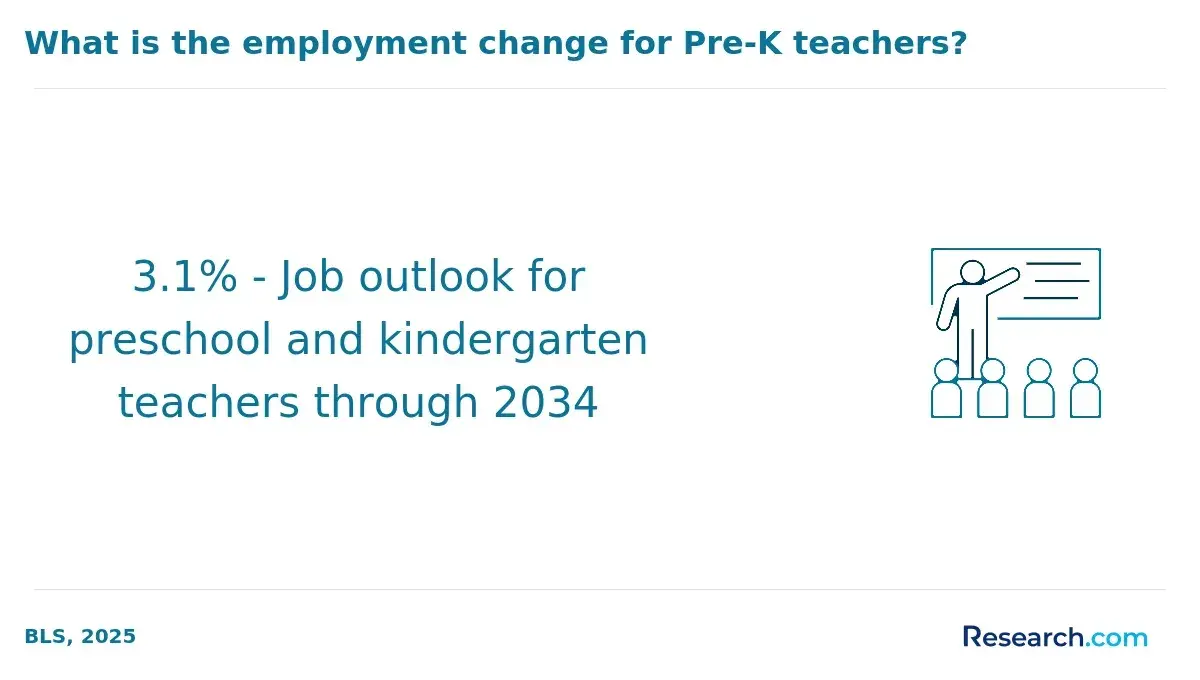
- Preschool teachers: There were 555,100 preschool teachers employed in schools and childcare services. They lead early learning activities, support literacy and numeracy, guide play-based learning, teach routines, and help children build social-emotional skills.
- Childcare workers: These professionals supervise children in childcare centers, homes, after-school programs, and related settings. Their work centers on safety, routines, meals, rest, activities, and communication with families.
- Infant and toddler caregivers: In the U.S., there were 19 million children under the age of five in 2024. Infant and toddler specialists focus on attachment, feeding, sensory exploration, early language, motor development, and safe care for very young children.
Special needs and developmental support roles
- Special education teachers: These educators support students with disabilities, help implement individualized education plans (IEPs), adapt instruction, track progress, and work with families and specialists.
- Speech-language pathologists: These specialists assess and treat speech, language, fluency, voice, communication, and swallowing needs. In the U.S. the projected job growth for speech-language pathologists is 19% through 2032.
- Occupational therapists: Pediatric occupational therapists help children build skills for daily living, school participation, fine motor tasks, sensory processing, and independence.
Clinical, family-support, and research roles
- Child life specialists: These professionals help children and families handle illness, hospitalization, medical procedures, and related stress.
- Play therapists: Play therapists use therapeutic play to help children express emotions, process experiences, and develop coping strategies.
- Child development researchers: Researchers study how children learn, grow, and respond to environments, policies, programs, and interventions.
What are the salary ranges for different childhood development careers?
Pay varies by job title, education, licensure, state, employer type, years of experience, and whether the role is classroom-based, clinical, administrative, or research-focused. The figures below are reference points, not guarantees.
Entry-level positions
| Role | Salary range or figure cited | Best fit for |
| Childcare Worker | $26,860 - $32,160 | People seeking direct care experience before pursuing teaching, early intervention, or family-support roles |
| Teacher's Aide | $23,000 - $30,000 | Students or career changers who want classroom exposure while completing additional education |
Early childhood educator roles
| Role | Salary range or figure cited | Typical career direction |
| Preschool Teacher | $30,700 - $33,080 | Lead teaching, curriculum planning, classroom management, and early learning support |
| Kindergarten Teacher | $41,760 | Licensed teaching in early elementary settings |
Specialized and advanced roles
| Role | Salary range or figure cited | Education or credential consideration |
| Special Education Teacher | $61,820 | Usually requires a bachelor’s degree and state licensure in special education |
| Speech-Language Pathologist | $79,060 | Requires graduate-level preparation and licensure |
| Occupational Therapist | $85,570 | Requires professional graduate education, supervised experience, and licensure |
| Child Life Specialist | $40,750 - $45,660 | Often requires specialized child-life coursework and supervised experience |
| Play Therapist | $52,000 | Usually tied to counseling, psychology, social work, or therapy training plus specialization |
How can you start a career in childhood development?
The smartest way to start is to work backward from the job you want. Childcare center administrators tended to have more education than lead teachers; 62% of administrators held at least a bachelor’s degree, while only 43% of lead teachers had the same level of education. That difference shows why it matters to define your long-term goal early.
Step-by-step roadmap
- Pick the age group or population you want to serve. Decide whether you are most interested in infants, toddlers, preschoolers, school-age children, children with disabilities, hospitalized children, multilingual learners, gifted children, or children who need behavioral or emotional support.
- Check real job postings in your state. Compare degree level, licensure, certifications, background checks, and experience requirements for the roles you want.
- Get hands-on exposure early. Volunteer, work part-time, shadow professionals, or seek internships in childcare centers, schools, hospitals, camps, or family-service agencies.
- Choose the lowest credential that still moves you forward. An associate degree may be enough for some childcare or preschool jobs, while therapy and psychology roles require graduate study.
- Build evidence of your skills. Keep lesson plans, activity ideas, observation notes, training certificates, reflective writing, and supervisor feedback when allowed.
- Plan the next step before you finish the first one. If you want leadership, specialization, or licensure, map out the next degree or credential now.
Questions to ask before you start
- Do I want to teach, provide care, deliver therapy, manage programs, research child development, or support families?
- Will my target job require a state license or certification?
- Does the program include supervised field experience?
- Will my credits transfer if I continue later?
- Is the curriculum built for the age group or population I actually want to work with?
What degree programs are available for childhood development careers?
Students can choose from several degree options in childhood development and early education, including campus-based programs and online bachelor's degrees in early childhood education. The best fit depends on whether your goal is direct care, preschool teaching, public school teaching, child development support, leadership, research, counseling, psychology, or therapy.
For the fall of 2025, 89,511 students enrolled in specific subject areas in teaching. That makes careful program comparison especially important. Not every education degree leads to the same licenses or job options.
Degree options compared
| Degree | Best for | Important limitation |
| Associate Degree in Early Childhood Education | Childcare, assistant teaching, preschool support, and a foundation for later bachelor’s study | May not be enough for licensed public school teaching or advanced clinical roles |
| Bachelor's Degree in Early Childhood Education | Preschool, kindergarten, early grades, curriculum support, and some public school teaching paths | Licensure requirements depend on state and program approval |
| Bachelor's Degree in Child Development | Family support, child life preparation, developmental services, nonprofit work, and graduate-school preparation | May be less directly tied to teacher licensure than an approved education program |
| Master's Degree in Education | Experienced educators seeking leadership, curriculum, administration, specialization, or preparation for doctoral study | Not every M.Ed. leads to licensure; check program outcomes |
| Master's Degree in Child Development | Advanced practice, research, policy, advocacy, program evaluation, and specialized child-development roles | Clinical roles may require a different licensed pathway, such as counseling, psychology, or therapy |
Associate Degree in Early Childhood Education (ECE)
An associate degree in ECE can prepare students for childcare centers, preschool classrooms, after-school programs, and assistant-level education roles. Coursework often covers developmental milestones, child guidance, health and safety, family communication, observation, and age-appropriate learning activities.
Bachelor's Degree in Early Childhood Education (ECE)
A bachelor’s degree in ECE usually offers deeper preparation in curriculum, assessment, classroom management, child development theory, family engagement, and supervised teaching. Students who need flexibility can compare online bachelor's degrees in child development, especially if they already work in childcare or education.
Bachelor's Degree in Child Development
A child development bachelor’s degree tends to cover growth from birth through adolescence and can be useful for family services, child advocacy, child life preparation, developmental support, research assistance, or graduate study.
Master's Degree in Education (M.Ed.)
For fall 2025, a total of 307,827 students enrolled in the field of education. A Master’s in Education can support advancement into curriculum, administration, instructional leadership, early childhood program management, or future doctorate degrees in educational leadership.
Master's Degree in Child Development
A master’s in child development can prepare graduates for research, policy, advocacy, leadership, program evaluation, and more specialized work. Working adults who are comparing flexibility and price may also want to review affordable online colleges for early childhood education before deciding.
Can I get a job in childhood development with an associate's degree?
Yes. An associate degree in early childhood education, or a closely related field, can qualify you for some childhood development jobs, especially in childcare, preschool, assistant teaching, after-school programs, and camp settings. It can also be a sensible first step if you plan to transfer into a bachelor’s program later.
Roles commonly accessible with an associate degree
- Preschool teacher or assistant preschool teacher: You may help plan activities, guide play, support early literacy and social-emotional development, and communicate with families.
- Childcare worker: You may supervise children, support daily routines, lead activities, monitor safety, and document basic progress.
- Teacher's aide: You may assist classroom teachers with preparation, small-group work, student support, and daily routines.
- Camp counselor: You may lead activities that build teamwork, creativity, confidence, and social growth.
When an associate degree is enough — and when it is not
| If your goal is... | An associate degree may be... | Next step to consider |
| Working in childcare or preschool | Enough for many employers, depending on state and setting | CDA credential, bachelor’s transfer pathway, or specialized training |
| Becoming a public school teacher | A starting point, but usually not sufficient | Bachelor’s degree in an approved teacher preparation program |
| Moving into administration | Helpful but often limited | Bachelor’s or master’s degree plus leadership experience |
| Providing therapy, counseling, or psychological services | Not sufficient for licensed practice | Graduate degree, supervised experience, and state licensure |
What are the benefits of getting a master's degree in childhood development?
A master’s degree is most useful when your goal requires advanced knowledge, leadership preparation, research skills, specialization, or eligibility for roles that are closed to entry-level degree holders. Among education degree types, special education had one of the highest master's level enrollees in 2025, at 54,884.
When a master’s degree can be worth it
- You want leadership roles. Graduate study may support movement into program director, curriculum coordinator, administrator, consultant, or policy-related work.
- You want to specialize. Some programs offer concentrations in early intervention, developmental research, curriculum, family services, or special education-related topics.
- You need research and evaluation skills. Graduate coursework can help you read studies, analyze program results, and apply evidence-based practice.
- You are preparing for more study. A master’s can serve as a bridge to doctoral work, advanced clinical pathways, or academic research.
When a master’s degree may not be the right move
- You are still undecided about which childhood development role you want.
- Your target job only needs a lower-cost credential or associate degree.
- The program does not lead to the licensure or credential your state requires.
- You would need to take on major debt without a clear salary or advancement plan.
What alternative pathways can lead to childhood development careers?
Not every childhood development professional starts with a traditional four-year degree. Career changers, current childcare workers, and working adults may use certificates, accelerated degrees, alternative teacher preparation, employer-sponsored training, transfer pathways, or graduate programs to enter the field more efficiently.
Some students consider one year degree programs after earning a bachelor’s degree, especially if they want a faster route into education, child development, curriculum, or a related specialization. These programs can be practical, but only if the coursework, field experience, and credential outcomes match the career you want.
Alternative pathways compared
| Pathway | Best for | Main risk to check |
| CDA credential or short certificate | Entry-level childcare workers who want to strengthen qualifications | May not transfer into a degree or qualify for licensed teaching |
| Associate-to-bachelor transfer pathway | Students seeking a lower-cost start | Credits may not transfer cleanly unless agreements are confirmed |
| Alternative teacher certification | Bachelor’s degree holders moving into teaching | State approval and supervised teaching requirements vary |
| Accelerated master’s program | Career changers who need graduate-level preparation quickly | Intensive pace can be difficult while working full-time |
| Employer-based training | Current childcare or education employees | Training may be employer-specific rather than portable |
Are there specializations within the child development field?
Yes. Fall 2025 undergraduate enrollment in teaching was 428,239, and many students use specialization to stand out in a crowded education and child-development market. Specialization can also help you target jobs that need more than general classroom or caregiving skills.
- Early intervention: Supports infants and toddlers with developmental delays or disabilities through family coaching, assessment, and service coordination.
- Curriculum development: Focuses on building age-appropriate learning experiences and evaluating age-appropriate curricula in this age of artificial intelligence.
- Child psychology: Centers on emotional, behavioral, cognitive, and mental health needs and requires advanced education and clinical training.
- Gifted education: Addresses identification, enrichment, challenge, and social-emotional support for gifted and talented learners.
- Play therapy: Uses therapeutic play to help children express feelings, work through experiences, and build coping skills.
- Autism Spectrum Disorder (ASD): Prepares professionals to support communication, social interaction, behavior, and inclusive learning for children with ASD.
How can psychological training strengthen a childhood development career?
Psychological training can help childhood development professionals better understand behavior, emotional regulation, trauma, family dynamics, assessment, motivation, and intervention planning. That knowledge is especially useful when working with children facing anxiety, behavior concerns, developmental delays, learning differences, medical stress, or family disruption.
It can also improve collaboration with teachers, counselors, pediatric specialists, social workers, and families. Professionals who want deeper clinical or research training may compare options such as an online doctorate in psychology, while remembering that licensure rules vary by state and by program type.
Can fast-track online programs help you move ahead faster?
Fast-track online programs may help working professionals complete advanced coursework more quickly, especially when they already have relevant experience and a clear career objective. These programs can be useful for educators who want leadership, curriculum, administration, or specialized education roles.
The trade-off is intensity. A shorter schedule usually means heavier course loads, compressed assignments, and less flexibility if work or family responsibilities change. Professionals exploring leadership-focused doctoral study can review online EdD programs no GRE as one possible route, but they should still confirm accreditation, dissertation or capstone requirements, transfer rules, and employer recognition.
What is the outlook for childhood development careers?
The outlook for childhood development careers varies by role. Childhood development remains tied to major needs such as school readiness, disability support, family services, and the Head Start initiative, but pay and demand are not the same across childcare, teaching, therapy, psychology, and leadership jobs.
Several forces continue to shape demand in this area:
- Early learning access: Public attention to preschool quality and school readiness keeps early education in focus.
- Childcare availability: Families still need dependable care, although staffing, wages, affordability, and access vary by region.
- Special needs support: Children with disabilities, developmental delays, communication needs, and behavior challenges require trained specialists. Students can review a list of careers working with special needs for related options.
- Health and therapy services: Speech-language pathology, occupational therapy, child life, counseling, and psychology follow different demand patterns than traditional childcare roles because they are linked to clinical and specialized services.
- Program leadership and compliance: Early learning programs and childcare centers need administrators who understand staffing, safety, curriculum, family engagement, and budgeting.
How can interdisciplinary education expand your options?
Interdisciplinary study is useful when it adds a skill you will actually use on the job. Childhood development professionals increasingly work with data, learning technology, literacy resources, family systems, community programs, assistive tools, and research-based interventions.
Training in research methods, children’s literature, information organization, digital resources, or program evaluation can support curriculum design and evidence-based practice. Professionals interested in literacy, school media, or children’s resources may consider options such as the cheapest library science degree online as a complementary path.
How can mentorship and networking improve career prospects?
Mentorship can save time because many childhood development decisions are shaped by state rules, employer expectations, and the setting you want to work in. A mentor can help you identify which credentials matter, prepare for observations, document experience, and avoid programs that do not align with your plan.
Networking matters too because many roles depend on field placements, school partnerships, childcare centers, healthcare facilities, and professional referrals. Graduate students and future researchers may also benefit from academic networks connected to higher education PhD programs, especially if they plan to work in research, faculty roles, leadership, or education policy.
How can you plan financially for further education?
Before you enroll, compare the full cost of the program against the job it can realistically help you reach. Tuition is only part of the price. You should also account for fees, books, background checks, testing, licensure, transportation to field placements, lost work hours, technology costs, and any unpaid internship or practicum requirements.
Ways to keep education costs under control
- Start with the lowest credential that still works for your goal. If a certificate or associate degree qualifies you for your first role, you may not need a more expensive program right away.
- Check transfer credit rules early. Ask whether the credits will count toward a bachelor’s or graduate degree later.
- Use employer support if it is available. Childcare centers, school districts, and education organizations may offer tuition assistance or professional development funds.
- Compare aid packages, not just sticker price. A higher-tuition school may cost less after scholarships, grants, or employer reimbursement.
- Match the degree to the pay bump. Graduate study makes the most sense when it leads to advancement, specialization, licensure, or leadership.
Professionals who are thinking about doctoral-level leadership preparation can compare cost-conscious options such as a cheap doctorate in educational leadership online, but affordability should never be considered alone. Accreditation, faculty support, completion requirements, and career fit matter too.
Can fast-track certification programs help you enter the field sooner?
Fast-track certification programs can help some career changers and working adults enter education roles more quickly, especially if they already hold a bachelor’s degree or have relevant experience. These programs often focus on classroom management, pedagogy, assessment, child development, and supervised practice.
For aspiring teachers, an accelerated alternative teaching license may be a more direct route than starting a second bachelor’s degree. Before you enroll, confirm that the program is accepted in your state, includes the required field experience, and leads to the exact license area and grade level you need.
What trends are shaping childhood development careers now?
Childhood development careers are being shaped by technology, mental health needs, inclusion, family diversity, staffing pressure, and higher expectations for evidence-based practice. Staying current matters because schools, childcare programs, healthcare systems, and families are changing quickly.
- Technology and AI in early learning: Digital tools, learning apps, and adaptive platforms are more common, but professionals still need to judge whether they are age-appropriate, safe, accessible, and actually educational.
- More attention to mental health: Anxiety, stress, trauma, emotional regulation, behavior support, and social-emotional learning are getting more focus.
- Personalized support: Educators and specialists increasingly use observation, assessment, and family input to tailor services.
- Inclusive education: Programs are expected to serve children with disabilities, developmental delays, autism, language needs, and learning differences in more inclusive settings.
- Multicultural and multilingual practice: Cultural responsiveness, family partnership, and awareness of multilingual development matter more than ever.
- Data-informed decisions: Programs now rely more on documentation, developmental screening, progress monitoring, and outcomes data.
Can leadership training help you advance in childhood development?
Yes. Leadership training can help childhood development professionals move into supervision, curriculum leadership, program management, policy, coaching, or organizational improvement. Strong leaders in this field need more than care experience; they also need budgeting, staff development, compliance, family engagement, conflict resolution, assessment, and planning skills.
For professionals seeking doctoral-level preparation in management and organizational change, a doctorate in leadership online may be relevant. It works best when the curriculum matches the setting you want to lead, such as schools, childcare systems, nonprofits, higher education, or human services.
How can an advanced degree widen your career options?
An advanced degree can expand your options when your goal involves leadership, research, policy, specialized intervention, higher education, or more advanced clinical preparation. It can also move you from direct service into program design, supervision, consulting, evaluation, or advocacy.
Degrees such as an online PhD in educational leadership may support people who want to study systems, lead educational organizations, conduct research, or influence policy. Just remember that leadership degrees and licensure-based clinical degrees are not interchangeable.
Advanced degree decision checklist
- Does this degree lead to the exact role I want?
- Is the program accredited and recognized by employers or licensing boards?
- Will I get fieldwork, practicum, internship, or research experience?
- Can I realistically finish it while working?
- Will the likely career gain justify the time and cost?
What related degree options exist for people interested in family therapy?
If you want to support children within family relationships, parenting challenges, emotional health, trauma, or communication patterns, related counseling and therapy pathways may be a better fit than a child development degree alone. For example, online MFT degrees may be relevant for students interested in marriage and family therapy rather than classroom-based early childhood education.
This distinction matters. A child development degree may prepare you for education, developmental support, advocacy, or research, while a marriage and family therapy program is usually designed for counseling practice. If licensure matters to you, check state requirements before you enroll.
How do you choose the right childhood development program?
The best program is not necessarily the most famous, the fastest, or the cheapest. It is the one that lines up with your target role, state rules, budget, schedule, and preferred work setting.
Program selection checklist
| Factor | What to ask | Why it matters |
| Career alignment | What jobs do graduates actually get? | A general child development degree may not qualify you for licensed teaching or clinical practice. |
| Accreditation and approval | Is the school accredited, and is the program approved for the credential I need? | Licensure, transfer credit, graduate admission, and employer recognition may depend on it. |
| Field experience | Does the program include practicum, student teaching, internship, or supervised clinical work? | Childhood development careers require applied experience, not coursework alone. |
| Licensure preparation | Does the program meet requirements in my state? | Online programs do not automatically qualify students everywhere. |
| Transfer policy | Will my credits transfer into a higher degree later? | This matters if you plan to begin with an associate degree. |
| Cost and aid | What is the full cost after fees, books, placements, and financial aid? | Low tuition does not always mean low total cost. |
| Flexibility | Are courses online, hybrid, evening, part-time, or asynchronous? | Working adults need a schedule they can realistically maintain. |
| Student support | Does the school help with advising, placements, licensure exams, and career services? | Support can affect completion, credentialing, and job readiness. |
Common mistakes to avoid
- Picking a program before choosing a career goal: Start with the job you want, then find the credential it requires.
- Overlooking licensure rules: Teaching, counseling, psychology, speech-language pathology, and occupational therapy can all have strict state rules.
- Looking only at tuition: Fees, testing, field placements, transportation, lost wages, and licensure costs affect the real price.
- Assuming online always means flexible: Some online programs still require live sessions, daytime fieldwork, or local placements.
- Relying on rankings alone: Rankings can help, but they do not show whether a program fits your state, schedule, budget, or goals.
- Assuming salary is guaranteed: Pay depends on location, employer, role, education, licensure, experience, and labor market conditions.
- Skipping accreditation checks: An unrecognized program can create problems with transfer credit, licensure, financial aid, or employer acceptance.
Who is a good fit for this field?
- People who like working with children and families over time.
- Students who are patient, observant, ethical, and emotionally steady.
- Professionals who want a field with multiple pathways, from direct care to specialization or leadership.
- Career changers who are willing to complete the education or licensure needed for the role they want.
Who may want a different path?
- People who want high earnings quickly without extra schooling or licensure.
- Students who dislike noise, routines, caregiving tasks, emotional labor, or family communication.
- Professionals who do not want to complete supervised experience or maintain credentials.
- Anyone choosing the field only because they “like kids” without understanding the day-to-day work.
If you are aiming for a highly specialized role, research the full preparation path early. For example, students interested in psychology should review child psychologist education requirements before choosing a major or graduate program.
References
- Kurtz, H. & Baker, L. (2025, March 4). What Teacher Morale Looks Like in Every State. EdWeek. https://www.edweek.org/the-state-of-teaching/teaching-learning/what-teacher-morale-looks-like-in-every-state/2025/03
- National Student Clearinghouse Research Center. (2026, January 15). Final Fall Enrollment Trends. https://nscresearchcenter.org/final-fall-enrollment-trends
- U.S. Bureau of Labor Statistics. (2025, August 28). Occupational projections, 2024–2034, and worker characteristics. Retrieved February 2026, from https://www.bls.gov/emp/tables/occupational-projections-and-characteristics.htm
Key Insights
- Childhood development is a broad career field, not a single occupation. Your degree choice should match the job you actually want, whether that is care, teaching, therapy, research, family support, or leadership.
- Entry-level roles may be available with a diploma, GED, CDA credential, certificate, or associate degree, but licensed teaching, therapy, psychology, counseling, and leadership paths usually require more education and state-specific credentials.
- Salary can rise significantly as you move into specialized or licensed roles, but higher pay usually comes with more schooling, supervised experience, and licensure requirements.
- An associate degree can be a useful starting point, especially if you want to transfer later. A master’s or doctoral degree makes the most sense when it leads directly to specialization, advancement, research, or licensure.
- Before enrolling, verify accreditation, state approval, field experience, transfer policies, total cost, and likely job outcomes. These factors matter more than marketing language or rankings.
- Technology, mental health, inclusion, multilingual practice, and data-informed decision-making are reshaping the field, so ongoing learning is becoming more important.
- The best next step is simple: choose a target role, check real job postings in your state, identify the required credential, and then compare programs based on fit, cost, flexibility, and long-term value.
Other Things You Should Know About Childhood Development Careers
Most employers require the Certified Child Life Specialist credential from the Association of Child Life Professionals. Candidates need a bachelor’s degree with coursework in child development or a related field, 600 hours of a child life clinical internship, and must pass the CCLS exam.
The National Association for the Education of Young Children (NAEYC) and the Child Development Association (CDA) support childhood development careers in 2027 by offering resources, professional development, and networking opportunities. Joining these organizations can enhance career prospects and keep professionals updated on industry standards.
In 2027, some of the highest-paying careers in child development include Child Psychologist, Pediatric Occupational Therapist, and Director of a Childcare Center. Child Psychologists can earn upwards of $80,000 annually, depending on experience and location. Pediatric Occupational Therapists earn, on average, between $70,000 and $100,000, while a Childcare Center Director may earn approximately $50,000 to $80,000.