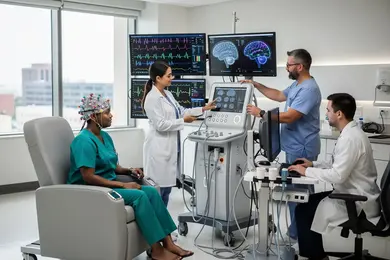
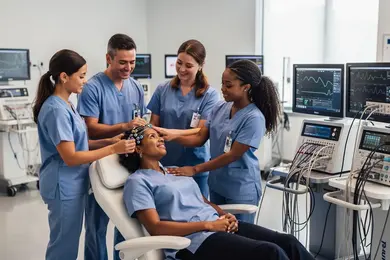
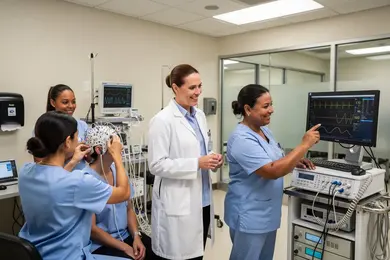
2027 Work Experience Requirements for Neurodiagnostic Technology Degree Programs

Co-Founder and Chief Data Scientist
Applicants to neurodiagnostic technology degree programs face a key obstacle-understanding varying work experience requirements. Experience thresholds differ widely by degree type-undergraduate, master's, doctoral, or professional-and by institution accreditation status. Evaluation criteria include the nature of experience-paid, unpaid, part-time, or international-and how documentation is validated. For instance, 76% of graduates across the U. S. report obtaining professional certification within six months, significantly impacting salary growth and job placement. This article dissects how accredited programs set and assess experience standards, guiding readers through nuanced admission criteria to enhance their competitiveness and clarify the practical steps needed to meet these complex requirements.
Key Things to Know About Work Experience Requirements for Neurodiagnostic Technology Degree Programs
- Work experience thresholds vary widely-undergraduate programs often require minimal clinical hours, while doctoral and professional degrees expect 1,000+ hours of accredited, supervised practice.
- Evaluations prioritize relevance-paid, unpaid, part-time, and international experiences are differently weighted depending on program goals and accreditation standards.
- Applicants typically must provide detailed documentation-logbooks, supervisor evaluations, and certifications-to verify clinical exposure across diverse degree formats nationwide.
What Are the Work Experience Requirements for Neurodiagnostic Technology Degree Programs at the Undergraduate Level?
Accredited neurodiagnostic technology undergraduate programs across community colleges and four-year institutions in the United States generally prioritize academic coursework and clinical practicums over prior work experience. Most undergraduate programs do not require work experience as an admission criterion-instead, viewing it as supplemental and not mandatory. This aligns with the broader work experience expectations for neurodiagnostic technology undergraduate programs in the United States, where hands-on learning is embedded within the curriculum to develop practical skills.
Some institutions recommend applicants possess relevant healthcare or patient care experience to better prepare for clinical components. A few programs offer course credit or advanced standing through experiential learning assessments, recognizing prior neurodiagnostic technician roles or related healthcare work. However, these options are not common at the bachelor's or associate degree levels. This contrasts sharply with graduate programs, which typically mandate documented clinical or professional work experience to ensure students have a foundational skill base before advancing.
For students entering directly from secondary school, focusing on undergraduate neurodiagnostic technology programs that integrate internships and clinical rotations is advisable. These programs provide vital exposure to real-world clinical settings within the academic framework. Additionally, career changers or mid-career professionals might consider options such as the RN to BSN online no clinicals pathway, which allows for advanced study without clinical prerequisites.
- Admission Requirements: Few undergraduate neurodiagnostic technology programs require prior work experience for admission; it is mostly supplemental.
- Experiential Credit: Some schools offer academic credit for previous healthcare work, but this remains uncommon at entry-level degrees.
- Program Structure: Emphasis is placed on clinical practicums and internships within the curriculum for hands-on learning.
- Graduate Contrast: Graduate programs typically require prior clinical or work experience to build upon foundational skills.
- Advice for New Students: Prioritize programs with internships and clinical exposure integrated into coursework to gain relevant experience.
How Much Professional Experience Do Neurodiagnostic Technology Graduate Programs Typically Require Before Admission?
Professional experience requirements for Neurodiagnostic Technology graduate programs in the United States vary significantly depending on program level, specialization, and institutional priorities. Many programs-with a focus on foundational knowledge at the undergraduate or entry-level master's stage-do not require prior work experience, treating it as an asset rather than a strict prerequisite. Such programs often admit recent graduates or allied health professionals based primarily on academic performance and relevant certifications.
- None: Several accredited programs allow admission directly from undergraduate studies without prior work experience.
- Recommended: Numerous programs suggest two to three years of relevant clinical or technical experience in EEG, neurophysiology, or neurodiagnostic settings to ensure practical familiarity that aids graduate training and clinical competence.
- Required: Elite or doctoral-level programs typically expect five or more years of professional practice emphasizing leadership, advanced skills, and complex case management.
The average work experience needed for US neurodiagnostic technology graduate admission often reflects this tiered approach. The typical applicant pool largely consists of working professionals seeking advancement or career changes-many possessing backgrounds in clinical neurophysiology or technical neurodiagnostic roles. Recent graduates and international applicants may face challenges documenting diverse work histories, underscoring the importance of careful verification of paid, unpaid, part-time, or international experience.
Admissions committees usually treat stated experience minimums as floors, not ceilings-exceeding these benchmarks can enhance application strength and readiness for demanding curricula. For applicants exploring alternative pathways or easy online degrees, some nursing programs that don't require TEAS test may offer insight into varied admissions flexibility.
What Types of Work Experience Are Considered Relevant for Admission Into Neurodiagnostic Technology Programs?
When graduate programs in neurodiagnostic technology request relevant work experience, the definition varies widely-often remaining vague in application materials. Typically, relevant experience involves roles and duties that indicate familiarity with neurodiagnostic procedures, patient interaction, and clinical settings. However, institutions differ in how they interpret this, prompting applicants to seek clearer guidance.
- Clinical Roles: Jobs closely tied to neurological evaluations-like EEG technologists, epilepsy monitoring technicians, or sleep study specialists-are highly regarded due to their direct engagement with diagnostic tools and patient care.
- Healthcare Environments: Experience gained in hospitals, neurology departments, outpatient clinics, or specialized neurophysiology labs tends to carry more weight than general healthcare roles without a neurological emphasis.
- Functional Duties: Hands-on operation of neurodiagnostic equipment, collecting and interpreting data, and managing test protocols are valued more than administrative or clerical health positions.
- Program Focus: Applicants aiming for specialized subfields-such as intraoperative monitoring-must demonstrate specific related experience, while generalist programs often accept broader neurodiagnostic backgrounds.
- Unpaid and International Experience: Volunteer work and internationally obtained positions can qualify if responsibilities and skills are well documented and made clear for U.S. admissions reviewers.
- Ambiguous Cases: When roles straddle technical and non-technical healthcare work, contacting admissions offices is advisable, as many programs evaluate these situations individually.
A professional who completed a neurodiagnostic technology program shared that navigating the work experience requirement was challenging. He explained, "It wasn't always clear which jobs would count, especially since I had some unpaid volunteer experience abroad. I made sure to document every task carefully and communicated directly with the admissions team. That dialogue helped clarify what counted and boosted my confidence in the application process." This firsthand perspective highlights the importance of proactive communication and thorough preparation when interpreting relevance for admissions.
How Do Neurodiagnostic Technology Master's Programs Evaluate Part-Time or Volunteer Work Experience?
Master's programs in neurodiagnostic technology often accept diverse types of work experience-including part-time jobs, freelance consulting, unpaid internships, and volunteer work-when evaluating applicants. Admissions committees prioritize the depth and relevance of this experience over the number of hours or formal employment status.
Key criteria include:
- Demonstrated Responsibility: Evidence that applicants handled important tasks such as operating diagnostic tools or contributing to clinical decisions highlights their capability and growth.
- Sustained Duration: Extended involvement in these roles, even if part-time, suggests dedication and skill development important to program admissions.
- Field Relevance: Work connected to neurodiagnostic technology-clinical support, research aids, or technical troubleshooting-is emphasized more than unrelated activities.
- Skill Development: Descriptions that focus on specific competencies, like analyzing neurophysiological data or managing lab workflows, offer stronger insight than mere listings of time spent.
- Letters of Recommendation: Supervisor endorsements from part-time or volunteer settings often provide valuable context that can compensate for lack of traditional full-time experience.
Some programs with flexible admissions criteria particularly appreciate candidates with varied experience, including those on accelerated pathways. Applicants with primarily part-time or volunteer backgrounds should frame their resumes around skills gained and decision-making responsibilities, not just job titles. International students must carefully interpret and present their foreign work history to align with U.S. expectations. For readers interested in related career options, exploring biology degree jobs may offer additional insights into interdisciplinary opportunities.
What Is the Minimum Work Experience Requirement for Neurodiagnostic Technology MBA or Professional Degree Programs?
Full-time daytime neurodiagnostic technology degrees typically accept recent graduates or those with minimal work experience, emphasizing foundational learning and often requiring little to no prior employment. Part-Time and Online Formats, is designed for mid-career professionals, these programs usually expect two to five years of relevant experience, focusing on practical aptitude in health and technology fields.
- Experience Calculation: Admissions committees calculate an entering class's average years of experience to ensure cohort consistency-this average reflects the competitive baseline applicants should meet or exceed.
- Experience Types Considered: Paid, unpaid, part-time, and international work can count toward requirements, though the weight given varies by institution; applicants must provide clear evidence such as detailed CVs or reference letters.
- Median Versus Minimum Requirements: Median experience data more accurately portray admitted students' profiles than stated minimums, offering a realistic benchmark for candidates assessing their own qualifications.
- International Applicants: Foreign work histories often require verification and contextual alignment with U.S. standards to satisfy admissions expectations.
One professional who built her career post-degree shared that determining eligibility felt daunting at first due to varied experience interpretations, especially balancing unpaid clinical internships with part-time roles. She emphasized that "transparent documentation and proactive communication with admissions made all the difference." Her experience highlighted how clarity about one's experience-and understanding program nuances-can transform anxiety into confidence during application preparation.
How Do Neurodiagnostic Technology Doctoral Programs Distinguish Between Industry Experience and Academic Research Experience?
Doctoral programs in Neurodiagnostic Technology differentiate sharply between applied professional experience and academic research experience based on their orientation. Practice-focused doctorates place significant value on hands-on industry involvement, seeing real-world clinical work as essential to shaping relevant dissertation topics. Conversely, research-centric Ph.D. programs emphasize scholarly activity, seeking candidates with substantial undergraduate or master's research credentials and evidence of academic inquiry.
- Program Emphasis: Practice-oriented degrees prioritize field experience because it directly supports practical, application-driven research.
- Research Orientation: Ph.D. tracks favor academic achievements such as publications and laboratory involvement over clinical exposure.
- Applicant Preferences: Some programs prefer portfolios showcasing technical skills and professional work, while others request detailed records of research participation including abstracts or presentations.
- Documentation: Evaluations rely on resumes or professional portfolios to verify industry experience, compared to research dossiers or recommendation letters validating academic expertise.
- Tailored Narratives: Candidates should align personal statements with program goals-highlighting clinical proficiency for applied degrees and scholarly contributions for research programs.
Advisory Contact: Engaging with program directors is advised to clarify how experience balances against GPA and test scores during admissions.
Recent data indicates that over 65% of Neurodiagnostic Technology doctoral programs in 2024 place increased emphasis on integrated professional experience to meet evolving clinical demands.
Which Neurodiagnostic Technology Degree Programs Accept Internships or Co-Op Experience in Lieu of Full-Time Work History?
Several accredited neurodiagnostic technology degree programs-including bachelor's completion and professional master's tracks-accept internships or co-op experiences as substitutes for full-time work history, though policies vary widely by institution and program type. These alternatives are particularly valuable for recent graduates, career changers, and international students who may encounter challenges communicating traditional paid employment records.
- Co-Op Credit: Structured co-op placements are integrated with academic schedules and offer paid, typically semester-long work experiences coordinated by the institution. They require formal supervision and evaluation by both academic advisors and employers, with clear learning objectives connected to program outcomes, ensuring substantial academic rigor.
- Internship Credit: Internships tend to be less rigidly structured, potentially paid or unpaid, and can have shorter durations or more flexible schedules. While some programs accept internships to meet experiential requirements, others view them as supplementary rather than equivalent to professional employment.
- Documentation: Formal recognition generally demands verification such as supervisor evaluations, detailed records of duties performed, reflective reports linking experiences to program competencies, and proof of hours and compensation where applicable.
- Holistic Admissions: Competitive neurodiagnostic technology programs increasingly value internship experience in holistic admissions-highlighting initiative, clinical exposure, and relevant skill-building-even when internships don't formally replace paid work experience, especially benefiting candidates lacking traditional employment records.
- Verification Advice: Applicants should obtain explicit written confirmation from admissions offices or program coordinators that any planned internship or co-op placement meets experiential requirements before committing time and resources.
A 2024 survey of accredited neurodiagnostic programs revealed that 38% formally recognize co-op placements as equivalent to traditional work experience, underscoring a growing trend toward flexible, competency-based pathways in this specialized healthcare field.
How Do Neurodiagnostic Technology Online Programs Handle Work Experience Verification During the Admissions Process?
Online neurodiagnostic technology programs accommodating adult and non-traditional learners employ a multidimensional approach to verifying work experience, crucial for admissions work experience evaluation for online neurodiagnostic technology degrees. This process leans heavily on documentation submitted by applicants, addressing the challenges of verifying claims without in-person contact.
- Resume Submission: A detailed professional resume is essential, outlining job roles, responsibilities, and timelines. This foundational document enables programs to assess the relevance and depth of experience in neurodiagnostic technology contexts.
- Employer Confirmation Letters: Letters from current or former supervisors validate job titles and specific competencies, providing qualitative insight that supports the verification of practical skills.
- Professional References: References offer an additional validation layer by attesting to the candidate's technical abilities, helping offset the absence of face-to-face interviews.
- LinkedIn Profiles and Digital Footprints: Admissions committees may cross-reference LinkedIn profiles to verify employment history and gauge professional engagement. While these profiles supplement formal documents, they do not replace required verifications.
- Verification Challenges: Programs often navigate difficulties verifying experience with unpaid, part-time, or internationally earned positions due to differing job market terminologies and record-keeping standards across regions, especially within the United States.
- Admissions Integrity Safeguards: Integrity is maintained through follow-up emails to employers, requests for specific documentation formats, and brief phone verifications when necessary.
Variation in Experience Requirements: Some online neurodiagnostic technology degree programs treat work experience as a mandatory admission criterion, demanding thorough proof before acceptance, while others view it as supplemental-enhancing applications but not strictly required.
Applicants should prepare a robust resume and secure at least one employer reference confirming practical skills. For those exploring pathways in related healthcare fields, resources on online sonography programs can offer insights into similar admissions verifications and professional expectations.
What Role Does Work Experience Play in Neurodiagnostic Technology Program Rankings and Selectivity?
Work experience holds significant weight in how neurodiagnostic technology degree programs are ranked and how selective they become. Ranking methodologies from respected accrediting bodies emphasize several experience-related metrics that influence program standing and reputation. Key factors include average entering student experience, employer reputation scores, and alumni career outcomes-each forming interconnected feedback loops that enhance program perception and attract competitive applicants. This interplay demonstrates how work experience impacts neurodiagnostic technology program rankings across the United States.
- Average Experience: Programs often report the typical professional background of incoming students. Higher average experience signals a cohort with substantial hands-on knowledge, correlating positively with program rigor and student success.
- Employer Reputation: Employers value graduates who exhibit strong practical skills, which boosts a program's ranking and appeal. This reputation reinforces selectivity around applicants with robust work experience.
- Alumni Career Outcomes: Graduates with prior work experience tend to achieve better job placement and career advancement, reinforcing the school's standing and attracting future applicants with similar backgrounds.
- Applicant Behavior: Those with richer professional histories typically target higher-ranked programs known for advanced clinical exposure. Simultaneously, programs enrolling experienced cohorts continue to receive more competitive applications.
- Selectivity Data: Prospective students should use average entering work experience as a strategic tool to tailor their applications-selecting programs where their background aligns well with admitted cohorts increases admission prospects.
- Holistic Decision-Making: Rankings provide insight but represent only one aspect of program quality. Fit with specialization, cost, and specific career outcomes in neurodiagnostic technology matter equally for informed choices.
Career changers, international applicants evaluating how paid, unpaid, part-time, and foreign experience count, and mid-career professionals pursuing accelerated or traditional pathways should carefully review work experience expectations by program type and concentration. This understanding enhances application strategies and outcome success in neurodiagnostic technology degree programs.
For further clarity on comparative program quality, prospective students can explore which school is better SNHU vs WGU as an example of how reputation and outcomes influence decision-making in related fields.
How Do Neurodiagnostic Technology Programs With Accelerated Tracks Adjust Their Work Experience Expectations?
Accelerated Neurodiagnostic Technology programs-like 12-month master's degrees, combined bachelor's-to-master's tracks, or executive fast-tracks-adjust work experience expectations based on their target students. Programs aimed at recent graduates usually require less prior experience, emphasizing strong academic performance and technical aptitude. In contrast, accelerated formats serving mid-career professionals often demand substantial experience, highlighting leadership and applied practice within healthcare or neurodiagnostic settings.
- Work Experience: Recent graduate tracks typically have lower thresholds, while executive-style pathways expect deeper professional backgrounds to complement compressed instruction.
- Cohort Composition: Faster-paced programs sometimes exhibit less variation in experience levels-either concentrating on entry-level students or seasoned practitioners-which influences peer learning dynamics.
- Course Depth: Due to shortened timelines, accelerated formats may limit elective options and reduce content breadth, relying on students' prior experience to apply concepts practically.
- Support Services: Many accelerated tracks enhance career resources, especially for those with limited field exposure, to compensate for fewer hands-on learning opportunities.
- Classroom Interactions: Students lacking significant professional history might find it challenging to engage fully in peer discussions compared to classmates with more field experience.
- Profile Enhancement: Applicants without extensive experience are advised to strengthen applications through leadership roles, project management, or research contributions to remain competitive.
Enrollment in accelerated neurodiagnostic technology programs has risen by 18% over the last two years, according to 2024 statistics from the National Board for Certification in Neurodiagnostic Technology-reflecting both growing interest and variability in applicants' backgrounds.
Which Neurodiagnostic Technology Degree Concentrations Require the Highest Levels of Prior Professional Experience?
Certain neurodiagnostic technology degree tracks set high bars for prior professional experience-primarily clinical leadership, executive roles, and health policy specializations. These options typically target mid-career professionals who bring several years of direct patient care, supervisory duties, or technical expertise. Applicants are expected to showcase proven decision-making skills and applied competence, reflecting the complex responsibilities anticipated post-graduation.
- Clinical Focus: Programs centered on intricate diagnostic methods or specialized testing demand extensive hands-on experience, linking practical skills with theoretical knowledge.
- Executive and Policy Tracks: These concentrations emphasize backgrounds in healthcare management, regulatory compliance, or policy formulation, favoring professionals experienced in cross-disciplinary leadership.
- Accreditation Impacts: Accreditation standards often require programs to verify applicant competency through measurable professional experience, thus favoring candidates beyond entry level.
- Dual-Tier Structures: Many institutions address diverse student needs by offering foundational tracks for less experienced candidates alongside accelerated, advanced paths for seasoned practitioners, allowing clear entry points aligned to background.
- Applicant Advice: Prospective enrollees should examine the work histories of current students and alumni in their desired concentration to gauge typical experience expectations and fit.
A 2024 survey revealed that nearly 65% of neurodiagnostic technology master's programs now mandate at least two years of relevant professional work for advanced specialization enrollment, underscoring growing emphasis on mature professional credentials.
What Graduates Say About the Work Experience Requirements for Neurodiagnostic Technology Degree Programs
- Riggs: "Completing my neurodiagnostic technology degree online was challenging but rewarding, especially when it came to understanding the work experience requirements. I learned that undergraduate programs often set minimum hours that must be completed under supervision, ensuring foundational skills are solid before advancing. This structure-rigid yet fair-helped me stay on track and focus on mastering essential techniques early in my career."
- Curtis: "Reflecting on my journey through the neurodiagnostic technology degree, I appreciate how diverse the evaluation of clinical experience can be across degree levels. Master's and doctoral programs demand not only more hours but also detailed documentation and reflective logs to prove competency and critical thinking. This comprehensive system truly highlights the professionalism expected in the field and prepared me well for real-world clinical environments."
- Waylon: "My professional degree in neurodiagnostic technology stood out because the work experience thresholds were tailored to reflect the complexity of diverse patient populations encountered. Accredited programs nationwide emphasize rigorous documentation-often requiring verification forms signed by supervisors-to maintain consistency and credibility. These requirements elevated my confidence in the hands-on skills I developed and underscored the importance of meticulous record-keeping in clinical practice."
Other Things You Should Know About Neurodiagnostic Technology Degrees
Applicants lacking traditional work experience can enhance their applications by pursuing relevant volunteer opportunities, internships, or observational roles in clinical neurodiagnostic settings. Completing certified training programs or enrolling in preparatory courses related to neurodiagnostic procedures can also demonstrate commitment and foundational skills. These alternatives provide practical exposure that many programs consider valuable alongside paid experience.
Most neurodiagnostic technology programs require official verification of work experience through signed letters from supervisors or employers detailing job responsibilities, duration, and hours worked. Pay stubs, professional certifications, or timesheets may supplement these documents. It is essential that the documentation clearly reflects experience relevant to neurodiagnostic tasks to meet program-specific criteria.
International applicants should provide official documentation from their previous employers detailing their roles, responsibilities, and duration of employment. Additionally, any foreign work experience documentation must be translated into English and may require evaluation by a credential evaluation service to ensure it meets 2027 program standards.
Work experience can be a significant factor in qualifying for scholarships or fellowships within neurodiagnostic technology programs. Many funding opportunities prioritize candidates with hands-on clinical or research experience, viewing it as an indicator of readiness and commitment. Applicants with documented relevant work backgrounds often have improved access to competitive financial awards designed to support advanced training.
References
- AS in Neurodiagnostic Technology - Carlow University https://www.carlow.edu/academic-programs/healthcare-degrees/as-in-neurodiagnostic-technology/
- Neurodiagnostic Technology Training Program https://www.vumc.org/allied-health-education/neurodiagnostic-technology-training
- Electroneurodiagnostic (END) Technologist https://www.healthcareerpaths.org/programs/fd8c1b2f-b0f3-47ee-9cce-29aadd968643/
- Neurodiagnostic (EEG) Technology https://mccollege.edu/electroneurodiagnostic-technologist/
- Neurodiagnostic Technologist Career Guide: Skills, Education, and Certifications - Neuro Pathway https://myneuropathway.com/blog/building-a-successful-career-in-neurodiagnostics-skills-and-qualifications/
- Neurodiagnostic Technologist - Explore Healthcare Careers - Mayo Clinic College of Medicine & Science https://college.mayo.edu/academics/explore-health-care-careers/careers-a-z/neurodiagnostic-technologist/
- Neurodiagnostic Technology Program | Lurie Children's https://www.luriechildrens.org/en/for-healthcare-professionals/education/medical-education-training/training-programs/neurodiagnostic-technology-program/
- Neurodiagnostic Technologist Programs (NDT) - EEG, END https://www.medicaltechnologyschools.com/neurodiagnostic-technologist
- Neurodiagnostic Technology Requirements https://www.southeasttech.edu/_showcase/test-pages/neurodiagnostic-technology/requirements.php
- Neurodiagnostic Tech Certification & Licensure Guide â Trusted Health https://www.trustedhealth.com/allied-career-guide/neurodiagnostic-tech/certification-guide