2027 Shortest Online Health Services Doctorate Programs: Fast PhD, DBA, EdD, DNP, PsyD, and Professional Doctorate Options

Co-Founder and Chief Data Scientist
Choosing the shortest online health services doctorate is really a decision about speed, workload, accreditation, and career fit. The stakes are high: the U.S. Bureau of Labor Statistics reported a May 2024 median wage of $117,960 for medical and health services managers, making advanced leadership credentials attractive for experienced professionals.
This guide is for nurses, healthcare administrators, educators, clinicians, and health systems professionals comparing fast PhD, DBA, EdD, DNP, PsyD, and professional doctorate pathways. You will learn which options are typically fastest, what slows students down, and how to choose a program without sacrificing quality.
Key Things You Should Know
- The fastest online health services doctorates are usually practice-focused programs such as post-master's DNP, DHA, DBA in healthcare management, and EdD health leadership tracks; many can be structured around 18 to 36 months, while research PhD and PsyD pathways often take longer.
- Dissertation requirements, clinical hours, internships, residencies, practicum placements, and slow committee feedback are the most common reasons a "fast" doctorate extends beyond the advertised timeline.
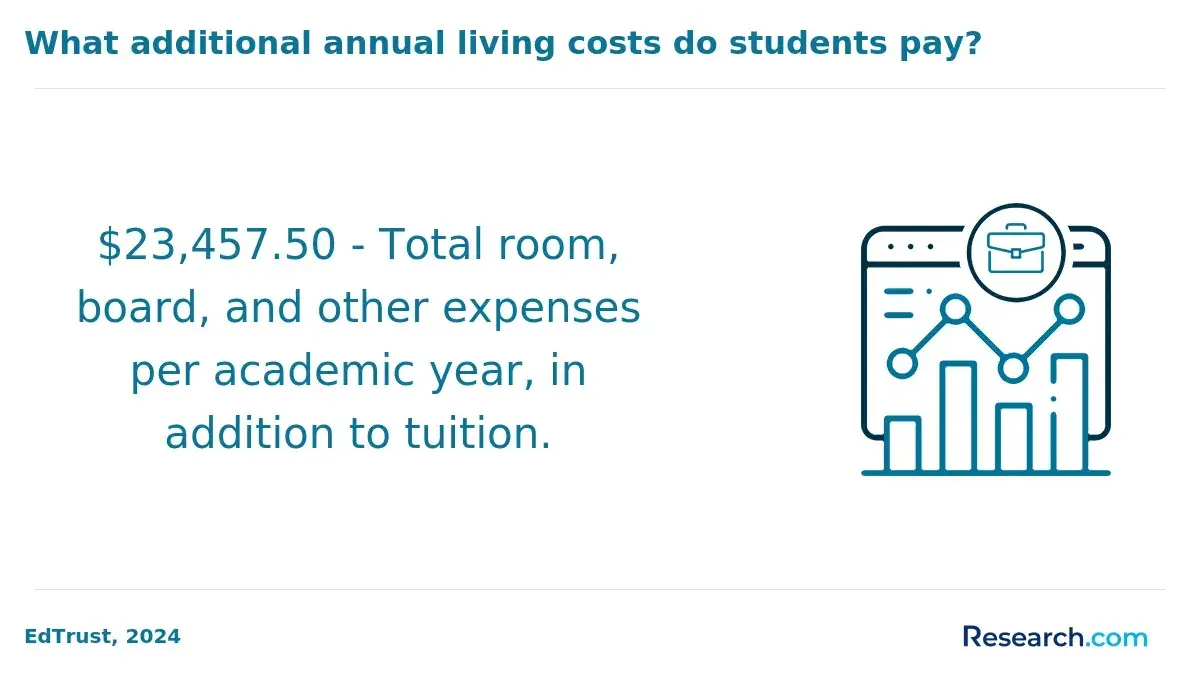
- Cost and speed are linked: federal graduate Direct Unsubsidized Loans are capped at $20,500 per academic year for many students in 2024-25, so finishing faster can reduce living-cost exposure, but only if the accelerated pace does not force course repeats or delay final projects.
Which Online Health Services Doctorate Programs Can Be Completed the Fastest?
The fastest online health services doctorate programs are generally designed for professionals who already hold a relevant master's degree, have substantial work experience, and want to apply research to practice rather than train for a new entry-level clinical role.
In this context, "health services" can include healthcare administration, health leadership, nursing practice, health sciences, public health leadership, behavioral health administration, health informatics, and organizational management in healthcare settings.
The table below compares common online doctorate types by their usual speed potential. Timelines vary by school, transfer policy, enrollment pace, final project design, and whether the program requires licensure-related clinical placements:
| Doctorate type | Common health services focus | Fastest realistic online completion pattern | Best fit | Main speed risk |
| DNP | Nursing practice, executive leadership, population health, informatics | Often shortest for MSN-prepared nurses when clinical hour gaps are already met | Licensed nurses seeking advanced practice, systems leadership, quality improvement, or executive nursing roles | Required practice hours, clinical site approvals, and state board or certification requirements |
| DHA or DHSc | Health administration, health sciences, systems leadership, quality improvement | Often fast when built around an applied doctoral project instead of a traditional dissertation | Healthcare managers, directors, consultants, and policy or operations professionals | Capstone scope creep, residency requirements, and limited transfer credit |
| DBA in healthcare management | Healthcare strategy, finance, operations, organizational leadership | Can be fast for MBA or MHA graduates with strong quantitative and management preparation | Executives and managers pursuing senior leadership, consulting, or business-focused academic roles | Applied dissertation demands, statistics sequence, and business research design |
| EdD in health professions education or leadership | Health education, academic leadership, training, curriculum, interprofessional learning | Can be accelerated when cohort-based and capstone-oriented | Clinical educators, faculty developers, program directors, and healthcare training leaders | Institutional research approvals, practicum expectations, and dissertation-in-practice timelines |
| DrPH | Public health leadership, population health, policy, epidemiology, community health | Moderately fast for MPH-prepared professionals in executive or applied tracks | Public health leaders, nonprofit executives, health department professionals, and population health strategists | Applied practice experiences, policy projects, and methods requirements |
| PhD | Health services research, health policy, nursing science, public health research | Usually slower because original research and dissertation depth are central | Future researchers, tenure-track faculty candidates, and policy analysts needing advanced research training | Dissertation data collection, publication expectations, and faculty match |
| PsyD | Clinical psychology, behavioral health, integrated care | Rarely the shortest if it leads toward licensure | Students pursuing clinical psychology practice, assessment, therapy, or behavioral health leadership | APA accreditation expectations, practicum, internship, supervision, and state licensure rules |
For students who are not yet ready for doctoral admission, a masters in healthcare administration can be a practical bridge because many fast doctorates expect graduate-level preparation in finance, policy, leadership, and healthcare systems.
The most important takeaway is that the shortest advertised timeline is not always the fastest actual pathway. A post-master's DNP or applied DHA may be faster for a prepared healthcare professional, while a PhD or PsyD may be slower but better aligned with research, faculty, or licensure goals.
Which Type of Online Health Services Doctorate Offers the Fastest Path to Graduation?
For most working professionals, the fastest path is a practice doctorate that replaces a traditional dissertation with an applied project, quality improvement initiative, executive capstone, or dissertation-in-practice. These formats still require doctoral-level analysis, but they are usually more compatible with existing workplace data, leadership problems, and professional networks.
The fastest option depends on what you already have. A nurse with an MSN and documented advanced practice hours may move quickly through a DNP. A healthcare executive with an MBA, MHA, or MPH may progress faster in a DBA, DHA, DrPH, or EdD than in a PhD that requires more theory-building and original research:
| If your main goal is... | Usually fastest suitable doctorate | Why it may be faster | When a slower degree may be better |
| Senior healthcare administration | DHA, DHSc, DBA, or EdD | Programs often use applied leadership projects tied to real healthcare organizations | Choose a PhD if you want research-intensive faculty or policy research roles |
| Executive nursing leadership | Post-master's DNP | Builds on prior nursing graduate education and clinical experience | Choose a PhD in nursing if your goal is nursing science research |
| Healthcare business strategy | DBA in healthcare management | Uses management research, applied analytics, and organizational problem-solving | Choose a PhD if you need stronger preparation for academic research careers |
| Teaching health professionals | EdD in health professions education | Often focuses on curriculum, assessment, leadership, and applied educational improvement | Choose a PhD if your target is research-intensive higher education faculty work |
| Clinical psychology practice | PsyD | Practice-oriented compared with many psychology PhD programs | Do not choose based on speed alone because licensure requires supervised training and state-specific steps |
Students comparing doctoral entry points should also think backward from admissions. If you are still completing undergraduate preparation, an affordable online bachelor's pathway such as a cheapest online healthcare administration degree may lower total education cost before you pursue graduate and doctoral study.
A fast doctorate makes the most sense when it deepens an existing career path. It is less useful when it forces you into a credential that does not match your employer's expectations, state licensure rules, or long-term professional identity.
What Program Features Help Students Finish an Online Health Services Doctorate Faster?
Fast completion is rarely accidental. The shortest online health services doctorate programs usually combine efficient curriculum design with strong faculty support and clear final-project milestones.
When reviewing programs, look for features that reduce administrative waiting time and help you make steady academic progress. The following features are especially important because they affect the real timeline, not just the marketing claim:
- Post-master's entry options that do not require students to repeat graduate coursework they have already completed.
- Generous but clearly limited transfer credit policies for relevant graduate courses, doctoral credits, or certificates.
- Year-round start dates or multiple annual intakes, which can prevent students from waiting several months for the next cohort.
- Short terms or accelerated sessions that allow focused course completion without requiring a full traditional semester.
- Embedded dissertation or capstone milestones beginning early in the program instead of after all coursework is finished.
- Applied project options that let students use workplace problems, de-identified organizational data, quality improvement initiatives, or policy analysis.
- Dedicated doctoral advising, writing support, methodology coaching, and predictable committee response timelines.
- Limited or virtual residency requirements when appropriate for the discipline and accreditation expectations.
Students considering accelerated healthcare programs should confirm that speed comes from thoughtful curriculum design rather than simply compressing the same workload into fewer weeks. A heavier pace can be worthwhile, but only when the school has enough academic support to keep students moving.
A useful test is to ask how the program measures progress after admission. If the school can explain average time to proposal approval, project completion, and committee review, it is more likely to understand what actually delays doctoral students.
What Requirements Most Commonly Extend the Length of an Online Health Services Doctorate?
The requirements that most often lengthen an online health services doctorate are not always the credit hours. Delays usually appear in the transition from coursework to independent doctoral work, especially when students must coordinate committees, sites, data access, or licensure-related experiences.
The following requirements deserve close review before enrolling because they can turn a short advertised program into a much longer commitment:
- Dissertation or doctoral project approval: Topic changes, unclear methodology, slow committee feedback, or institutional review delays can add terms to the timeline.
- Clinical or practicum hours: DNP and PsyD students may need approved practice sites, qualified supervisors, and documentation that meets program and professional standards.
- Internship requirements: PsyD programs connected to psychology licensure often require intensive supervised training that cannot be rushed.
- Residencies or intensives: Some online programs require campus visits, synchronous seminars, simulation labs, or executive weekends that must fit the school calendar.
- Statistics and research methods prerequisites: Students without recent quantitative preparation may need additional coursework before starting dissertation or capstone work.
- Licensure or certification alignment: Programs tied to nursing, psychology, counseling, or other regulated fields may need to meet rules that vary by state.
- Faculty match: A strong dissertation or project chair match can speed progress, while a poor match can lead to revisions, delays, or topic changes.
One common mistake is assuming that an online program is entirely asynchronous. Some doctorates include live seminars, residencies, proctored assessments, project defenses, or site-based experiences. Before enrolling, ask for the full academic calendar, residency schedule, and final-project sequence in writing.
How Do Enrollment Choices Affect Completion Time in an Online Health Services Doctorate?
Enrollment pace is one of the biggest factors in how quickly students finish, but faster is not always better. A full-time doctoral load can work for students with flexible jobs, strong family support, and prior graduate-level writing experience.
Part-time study may be better for professionals managing executive responsibilities, clinical shifts, caregiving, or unpredictable work schedules.
The table below shows how enrollment choices commonly affect completion time and risk. Use it to compare the pace you can sustain, not just the pace you would prefer:
| Enrollment choice | Typical effect on time | Best for | Main trade-off |
| Full-time online | Fastest coursework completion and earlier entry into capstone or dissertation work | Students with flexible work schedules or employer support | Higher weekly workload and less room for professional disruptions |
| Part-time online | Longer completion time but more manageable weekly commitment | Working professionals, caregivers, and clinicians with shift-based schedules | More total terms, possible tuition increases, and longer time before career benefits |
| Cohort-based accelerated | Can create predictable progress through fixed course sequences | Students who value structure, peer accountability, and set deadlines | Less flexibility if you need to pause or retake a course |
| Self-paced or competency-based elements | May speed progress for highly prepared students | Experienced professionals with strong writing and independent study habits | Can slow students who need more instructor interaction |
| Stop-out or leave option | Protects students during emergencies but extends graduation | Students with unpredictable professional or personal obligations | Re-entry rules may change project timelines or course sequencing |
To choose the right pace, estimate weekly hours honestly. Doctoral courses often require advanced reading, research design, writing, discussion leadership, and revision. If your work schedule changes seasonally, ask whether the program allows temporary reduced loads without losing good academic standing.
The best pace is the fastest one you can maintain without compromising grades, project quality, mental health, or employment stability. A slightly slower plan can be the better ROI if it prevents burnout or repeated courses.
Which Online Health Services Doctorate Programs Are Best for Working Professionals?
The best online health services doctorate for working professionals is usually one that lets students connect assignments to their current job while protecting time for research and writing.
For a healthcare manager, that might mean a DHA or DBA focused on operations, finance, workforce management, or quality improvement. For a nurse leader, it may mean a DNP with an executive leadership or systems focus. For an educator, it may mean an EdD centered on health professions education.
Working adults should prioritize programs with predictable scheduling and practical support. The following characteristics are especially important for students who cannot pause their careers for doctoral study:
- Asynchronous coursework with optional live sessions or recordings for students in clinical, administrative, or rotating schedules.
- Project designs that allow students to study real workplace problems without violating patient privacy, organizational policy, or research ethics rules.
- Clear policies for employer tuition assistance, payment plans, military benefits, and graduate financial aid.
- Faculty who have healthcare leadership, clinical, public health, informatics, or policy experience relevant to the student's field.
- Milestone calendars that show when the proposal, data collection, analysis, defense, and final approval are expected.
- Student services that operate outside standard business hours, including writing centers, library support, and technical assistance.
Professionals in health informatics or analytics should also compare doctoral outcomes with labor-market data. For example, reviewing a health information management salary guide can help determine whether a doctorate, certification, or targeted master's-level credential offers the most practical next step.
A red flag for working professionals is a program that advertises flexibility but requires frequent daytime meetings, inflexible residencies, or unclear practicum expectations. Flexibility should be visible in the course schedule, project process, and student support model.
Does Finishing an Online Health Services Doctorate Faster Affect Cost or Academic Quality?
Finishing faster can reduce total cost, but only under the right conditions. Students may save on additional terms, technology fees, living-cost exposure, and delayed career progression.
However, accelerated programs can become more expensive if they charge premium tuition, require extra residencies, or create a workload that increases the risk of course withdrawal or delayed final-project completion.
Cost should be evaluated as total cost to completion, not just tuition per credit. Ask schools for the full program cost, required fees, residency expenses, books and software, continuation fees, and charges for dissertation or capstone extension terms:
| Cost or quality factor | Why it matters in a short program | Question to ask |
| Accreditation | Institutional accreditation affects financial aid eligibility and employer recognition; specialized accreditation may matter in nursing, psychology, public health, or business | Is the institution accredited, and does the program hold any field-specific accreditation relevant to my goal? |
| Total tuition and fees | A short program is not automatically cheaper if per-credit tuition or required fees are high | What is the estimated total cost if I finish on time, and what fees apply if I need extra terms? |
| Final project support | Weak dissertation or capstone support can erase the benefit of accelerated coursework | What is the average time from proposal approval to final defense or project completion? |
| Residency and travel | Online students may still need to pay for travel, lodging, missed work, and campus intensives | How many in-person sessions are required, and when are they scheduled? |
| Faculty availability | Fast progress depends on timely feedback and committee continuity | How are chairs assigned, and what response timelines are expected? |
Academic quality is not determined by speed alone. A shorter program can be rigorous if it has selective admissions, qualified faculty, strong assessment standards, transparent outcomes, and a well-managed doctoral project process. Conversely, a longer program can still be low value if support is weak or the curriculum does not match the student's goals.
Students should be cautious with programs that promise extremely fast completion without explaining transfer credit rules, project requirements, accreditation, or student support. Doctoral work requires independent inquiry, advanced writing, and defensible analysis; any program that minimizes those expectations deserves careful scrutiny.
Which Careers Benefit Most From Completing an Online Health Services Doctorate Quickly?
The careers that benefit most from a fast online health services doctorate are typically roles where the student already has experience and needs the doctorate for leadership credibility, promotion eligibility, executive influence, consulting authority, or academic advancement. The credential is most powerful when it builds on a strong professional record rather than replacing practical experience.
Medical and health services management is one of the clearest examples. The BLS May 2024 median wage of $117,960 indicates that leadership roles in healthcare can carry strong earning potential, but salary varies widely by organization size, region, responsibility level, and prior experience. A doctorate may help in senior roles, but it should be weighed against cost, time, and alternative credentials:
| Career direction | Doctorate types that may fit | How faster completion may help | Important limitation |
| Hospital or health system executive | DHA, DBA, EdD, DNP | May support advancement into strategy, operations, quality, or executive leadership | Employers still weigh experience, performance, and leadership record heavily |
| Nursing executive or advanced practice leader | DNP | Can align with practice leadership, evidence-based improvement, and systems change | Licensure, certification, and clinical requirements vary by role and state |
| Health professions educator | EdD, DNP, PhD | May support faculty, curriculum, simulation, or program leadership roles | Research universities may prefer or require a PhD for tenure-track research roles |
| Healthcare consultant | DBA, DHA, DrPH, DHSc | Can strengthen credibility in quality, finance, operations, population health, or analytics consulting | Client outcomes and industry expertise matter more than the credential alone |
| Public health or population health leader | DrPH, PhD, DHA | May support policy, program evaluation, and systems-level leadership | Some roles value field experience and grant or data expertise as much as degree level |
| Clinical psychologist | PsyD or PhD in psychology | Speed may matter less than accredited training and supervised experience | Licensure pathways are state-specific and typically cannot be rushed |
A fast doctorate is least useful when the student is using it to bypass missing experience. For example, a healthcare administration doctorate will not automatically qualify someone for executive leadership without management experience, budgeting exposure, team leadership, and measurable organizational impact.
What Student Characteristics Lead to Faster Completion of an Online Health Services Doctorate?
Students who finish online health services doctorates quickly usually have more than ambition. They have the academic preparation, professional context, and personal systems needed to complete advanced work without long pauses.
The traits below are strong predictors of smoother progress because they reduce the friction that often appears during doctoral coursework and final-project stages:
- Clear career goal: Students who know whether they want executive leadership, education, research, clinical practice, or consulting can choose the right doctorate from the start.
- Relevant master's preparation: Prior graduate coursework in healthcare policy, finance, leadership, statistics, research methods, or clinical practice can reduce remediation and improve confidence.
- Strong writing habits: Doctoral programs require sustained scholarly writing, revision, citation management, and argument development.
- Access to a project setting: Students who can use their workplace or professional network for an applied project may avoid delays finding a site or data source.
- Time-blocking discipline: Consistent weekly study blocks often matter more than occasional long writing sessions.
- Comfort with feedback: Fast students revise efficiently and do not treat faculty critique as a setback.
- Supportive employer or family structure: Flexibility during residencies, project deadlines, and intensive terms can protect momentum.
Students who should consider a slower pace include those changing fields, returning after a long academic break, managing heavy clinical workloads, or lacking recent research and statistics preparation. Taking an extra term early can be smarter than rushing into a dissertation or capstone without a viable topic.
Before enrolling, write a one-page doctoral plan that names your target role, preferred doctorate type, weekly study hours, funding source, possible project topic, and backup plan if work or family obligations change. If the plan feels unrealistic on paper, the accelerated format may feel even harder in practice.
How Should Students Compare the Shortest Online Health Services Doctorate Programs?
The best comparison process starts with career alignment, then checks speed, cost, accreditation, support, and risk. Students should avoid ranking programs by advertised completion time alone because the shortest program may not meet licensure expectations, employer preferences, or academic goals.
Use the following sequence to compare programs in a practical way. This process helps separate genuinely efficient doctoral pathways from programs that only appear fast on the surface:
- Define the outcome first: Decide whether you need the doctorate for executive leadership, nursing practice, research, higher education, public health, behavioral health, consulting, or promotion.
- Confirm accreditation and professional alignment: Check institutional accreditation and any field-specific accreditation that matters for nursing, psychology, public health, business, or education roles.
- Compare real completion data: Ask for median or average time to completion, not only the fastest possible timeline.
- Map every requirement: List credits, transfer limits, residencies, practicum or clinical hours, dissertation or capstone milestones, comprehensive exams, and defense expectations.
- Calculate total cost to completion: Include tuition, fees, travel, software, books, continuation terms, and the cost of reducing work hours if necessary.
- Evaluate doctoral support: Ask how chairs are assigned, how often students meet with advisors, and how long faculty typically take to return feedback.
- Check flexibility before you need it: Review leave policies, part-time options, course sequencing, retake rules, and what happens if you miss a cohort milestone.
- Speak with current students or alumni when possible: Ask what slowed them down and whether the advertised timeline matched their experience.
A strong shortlist should include at least one fastest option, one best-fit option, and one lower-risk option. The right choice is usually the program that balances speed with accreditation, faculty support, realistic workload, and career relevance.
Choose the shortest online health services doctorate only if it still meets the standards of your profession. When licensure, faculty hiring, executive credibility, or employer reimbursement is involved, the fastest path must also be defensible.
Other Things You Should Know About Health Services
They can be, especially when the school is institutionally accredited, the program is relevant to the role, and the student can show professional accomplishments. Employers usually care about accreditation, experience, leadership results, and whether the degree fits the job.
Many professional doctorate programs no longer require the GRE, but policies vary by school and degree type. Programs may instead emphasize a master's degree, GPA, professional experience, writing samples, interviews, licenses, or leadership background.
Yes, some graduates teach in colleges, universities, nursing programs, public health programs, or professional training settings. However, research-intensive tenure-track roles may prefer a PhD, while practice-focused teaching roles may accept a DNP, EdD, DBA, DHA, DrPH, or similar doctorate depending on the institution.
It may be worth it if the doctorate supports a clear goal such as executive leadership, advanced clinical practice, faculty work, consulting, or specialized research. It may not be worth it if the cost is high, the career benefit is unclear, or a certificate, license, or targeted master's-level credential would meet your goal more efficiently.
References
- Doctor of Healthcare Science Tuition and Financial Aid https://www.pacificu.edu/healthcare-science-dhsc/tuition-and-financial-aid
- Online Doctorate in International Public Health https://www.euclid.int/online-doctorate-international-public-health/
- 1-2 Year Doctoral Programs Online: Top Schools & More https://www.phds.me/online-programs/one-year-doctoral-programs/
- Best Online Ph.D. and Doctoral Programs | OEDb https://www.oedb.org/rankings/online-phd-programs/
- 2025 Most Affordable Online Doctorates in Education https://www.onlineu.com/most-affordable-colleges/education-doctoral-degrees
- Ranking the Top 10 Online DRPH Programs https://www.masterspublichealth.net/best/online-doctor-public-health/
- What Is An Accelerated Doctorate Degree Online? https://www.affordablecollegesonline.org/degrees/best-accelerated-doctorate-phd-programs/
- How to Pay for a Ph.D in 2026 - ELFI https://www.elfi.com/how-to-pay-for-a-ph-d/
- The Price of a PhD: What to Expect and How to Fund Your Studies - Swiss School of Business Research https://ssbr-edu.ch/the-price-of-a-phd-what-to-expect-and-how-to-fund-your-studies/