2027 Flexible Online Health Services Doctorate Programs: Part-Time, Hybrid, and Self-Paced Options
Audited and Verified:
Our Editorial and Data Verification Process
Research.com uses government datasets, official education statistics and primary institutional information to support its career and degree guides. Our review process checks factual accuracy, occupational definitions, source dates and the requirements associated with the credentials discussed.
How This Article Was Fact-Checked
Our editorial team verifies salary estimates, employment projections, education requirements and program information against original data providers and official organizations. Salary figures are checked against the relevant occupational definitions and reporting periods. Information about licensure, accreditation and required in-person training is reviewed separately.
Fact-checked and verified on:

Co-Founder and Chief Data Scientist
Choosing an online health services doctorate is often a scheduling decision as much as an academic one. Many candidates are clinicians, administrators, analysts, or public health professionals trying to advance without leaving work.
The U. S. Bureau of Labor Statistics reports that medical and health services managers had a median pay of $117,960 in 2024, showing why advanced leadership preparation attracts experienced professionals. This guide explains part-time, hybrid, and asynchronous formats so you can compare flexibility, cost, completion time, residency rules, and career value before enrolling.
Key Things You Should Know
- Flexible online health services doctorates are most often professional degrees such as DHA, DrPH, DNP leadership tracks, or PhD programs in health services research, with part-time formats commonly taking 4 to 7 years depending on dissertation or capstone requirements.
- Program flexibility usually means asynchronous coursework, evening live sessions, limited campus residencies, or adjustable credit loads; it rarely means unlimited self-pacing because doctoral milestones require faculty review, research approval, and cohort deadlines.
- Career outcomes depend more on accreditation, specialization, experience, employer needs, and dissertation or applied project relevance than on whether the program is online, hybrid, or part-time.
Which Flexible Online Health Services Doctorate Programs Offer Part-Time Options?
Part-time options are common in online health services doctorate programs because many applicants already work in healthcare leadership, clinical practice, informatics, policy, quality improvement, or public health. The key is to distinguish between a program that merely allows fewer credits and one intentionally designed for working adults.
Flexible doctorate options usually fall into a few degree categories. The right one depends on whether your goal is executive leadership, applied practice, academic research, teaching, policy, or systems improvement.
| Doctorate type | Common focus | Typical flexibility pattern | Best fit |
| DHA or Doctor of Health Administration | Healthcare leadership, operations, strategy, quality, finance | Often online or hybrid, commonly part-time, with applied capstone or dissertation-in-practice | Managers, directors, consultants, and executives seeking senior leadership roles |
| DrPH | Public health leadership, population health, policy, epidemiology, health equity | Often hybrid or online with occasional residencies, field-based projects, or practicum elements | Public health professionals moving into leadership, policy, or population health strategy |
| PhD in Health Services, Health Policy, or Health Systems | Research methods, policy analysis, outcomes research, economics, academic scholarship | May be less self-paced; part-time online options exist but often require structured research milestones | Students aiming for research, faculty, think tank, policy, or advanced analytics roles |
| DNP with leadership, systems, or executive focus | Nursing systems leadership, evidence-based practice, quality improvement | Commonly online with clinical or practice-hour requirements and scheduled project milestones | Licensed nurses seeking executive, quality, academic, or advanced practice leadership roles |
Students who are still comparing graduate healthcare pathways may also want to look at a masters in healthcare administration before committing to a doctorate. A master's degree can be the more practical option if you need administrative credentials for promotion but do not yet need doctoral-level research, teaching, or executive preparation.
When reviewing part-time options, look beyond marketing terms. A genuinely flexible program should clearly state how many credits part-time students take, whether dissertation or capstone courses can be extended, how often synchronous meetings occur, and whether leaves of absence are available without restarting the program.
How Do Hybrid and Fully Online Health Services Doctorate Programs Differ?
Hybrid and fully online programs can both be flexible, but they create different trade-offs. A fully online doctorate minimizes travel and may work better for students with unpredictable schedules, while a hybrid doctorate may offer stronger in-person networking, research mentoring, simulation, or executive-style intensives.
The table below compares the practical differences that matter most when you are balancing work, family, travel, and doctoral milestones.
| Format | How it works | Main advantage | Main trade-off |
| Fully online asynchronous | Students complete weekly modules, discussions, readings, and assignments without required live class times | Strongest fit for shift workers, caregivers, and students in different time zones | Requires high self-discipline and may offer less real-time faculty interaction |
| Fully online synchronous | Students attend live virtual classes, often in the evening or on weekends | More structure, peer discussion, and immediate feedback | Less flexible for rotating schedules or frequent travel |
| Hybrid low-residency | Most coursework is online, but students attend short campus sessions or intensives | Good balance of online access and in-person mentoring | Travel costs, time away from work, and residency timing must be planned early |
| Hybrid cohort-based | Students move through scheduled online and campus experiences with the same peer group | Stronger professional network and predictable sequence | Harder to slow down, pause, or accelerate independently |
The most important question is not whether hybrid or online is "better." It is whether the format matches your life. A rural hospital administrator may value fully online access, while a healthcare consultant may find short residencies useful for networking and applied project development.
Hybrid can also be valuable when the doctorate includes leadership simulations, data labs, doctoral seminars, or project presentations. Fully online can be equally rigorous when the school provides strong advising, library access, virtual writing support, research software, and structured dissertation or capstone checkpoints.
Do Online Health Services Doctorate Programs Offer Self-Paced or Asynchronous Learning?
Many online health services doctorate programs offer asynchronous learning, but fewer are truly self-paced. Asynchronous means you can log in at convenient times within weekly or module-based deadlines. Self-paced means you can move through material faster or slower with minimal fixed deadlines, which is less common at the doctoral level.
This distinction matters because doctoral study depends on feedback cycles. Faculty must approve research questions, literature reviews, methods, ethics applications, data collection plans, applied projects, and final defenses. Those steps usually require scheduled reviews even when coursework is flexible.
Before assuming a program will fit your schedule, ask admissions and program faculty these specific questions:
- Are courses asynchronous, synchronous, or a mix of both?
- How often are live sessions required, and are recordings available if a student cannot attend?
- Can students take one course at a time, or is there a required minimum credit load?
- Are dissertation, capstone, or doctoral project courses offered every term?
- What happens if a student needs to pause during the proposal, data collection, or final defense stage?
- Are there maximum time limits for degree completion?
A common mistake is choosing a program because it advertises "online" without checking whether live meetings occur during work hours. Another mistake is assuming asynchronous coursework means faculty will provide immediate feedback at any time. Flexibility helps, but doctoral progress still depends on communication, deadlines, and institutional review processes.
Completion time varies by degree type, enrollment intensity, transfer credit, dissertation or capstone scope, and how quickly students complete research approvals. In general, flexible online health services doctorates are not designed to be rushed; they are designed to make sustained progress possible while students continue working.
The timeline below summarizes common patterns. It is not a guarantee because schools set their own credit requirements, residency rules, and doctoral project expectations.
| Enrollment pattern | Common completion range | Why it may take longer | Who it fits |
| Full-time online | About 3 to 5 years | Research design, data access, faculty review, or project delays | Students with employer support, reduced work hours, or strong academic preparation |
| Part-time online | About 4 to 7 years | Lower course loads, professional travel, family obligations, or extended dissertation work | Working administrators, clinicians, public health professionals, and analysts |
| Accelerated professional doctorate | About 2.5 to 4 years where available | Heavy workload, limited breaks, and strict sequencing | Experienced professionals with a clear project topic and strong time availability |
| Research-intensive PhD | Often 4 to 7 or more years | Methods training, publication expectations, dissertation complexity, or assistantship obligations | Students pursuing research, faculty, policy, or advanced analytics careers |
Students looking for speed should be cautious. Shorter formats can work well when they are transparent about workload and doctoral project expectations, but they can become risky if they compress complex research milestones without adequate advising. If you are exploring faster routes, compare scheduling demands across accelerated healthcare programs before assuming the quickest option is the best one.
The safest approach is to build a personal completion plan before enrolling. Estimate weekly study hours, identify busy work seasons, confirm whether your employer can support data collection or a capstone site, and ask how many students finish within the advertised timeline.
Flexible online health services doctorate programs accommodate working professionals by reducing relocation requirements and structuring coursework around professional schedules. The best programs also recognize that experienced students bring workplace problems, leadership responsibilities, and applied data access into the classroom.
Look for flexibility features that support progress without lowering academic expectations. These features matter because doctoral attrition often happens when work, advising, and research timelines collide.
- Evening or weekend live sessions: Helpful for students who want real-time discussion but cannot attend during business hours.
- Asynchronous weekly modules: Useful for healthcare workers with variable shifts, travel, or on-call responsibilities.
- One-course-at-a-time pacing: Reduces overload for students managing leadership roles or family care.
- Applied dissertation or capstone options: Allows students to connect doctoral work to quality improvement, access, safety, operations, policy, or workforce challenges.
- Employer-aligned projects: Can make the degree more relevant if the workplace supports data access, ethics review, and project implementation.
- Dedicated doctoral advising: Keeps students moving through topic approval, proposal development, research review, and final defense.
Healthcare education is also being shaped by data analytics, artificial intelligence, telehealth expansion, and value-based care. Flexible doctorate programs that integrate analytics, implementation science, informatics, and evidence-based leadership may be more useful than programs that focus only on broad management theory.
A practical red flag is a program that advertises flexibility but cannot explain how working students are supported during dissertation or capstone phases. Coursework flexibility is only one part of the degree; the final project is often where students need the most structure.
Attendance and residency requirements vary widely. Some online health services doctorates have no campus visits, while others require short residencies for orientation, research seminars, project presentations, comprehensive exams, or dissertation defense. Hybrid programs may also require in-person intensives once or several times during the degree.
Residency requirements are not automatically a disadvantage. A short residency can improve faculty access, peer connection, research planning, and presentation skills. The issue is whether the schedule and cost are realistic for you.
| Requirement | What to verify | Why it matters |
| Live online attendance | Frequency, time zone, recording policy, and absence rules | Rigid live attendance can conflict with clinical shifts, executive travel, or caregiving |
| Campus residency | Number of visits, length of each visit, location, and required terms | Travel, lodging, and time away from work can add meaningful cost |
| Practicum or field experience | Site approval, supervision rules, and whether your workplace can qualify | Some programs require applied hours or projects that must meet formal standards |
| Comprehensive exams | Online or in-person format, timing, retake rules, and preparation support | Exam timing can affect progression into dissertation or capstone stages |
| Dissertation or capstone defense | Virtual defense availability and committee scheduling policies | Defense rules can affect travel plans and final graduation timing |
Licensure-related programs require extra caution. For example, DNP tracks tied to advanced nursing practice may involve state board rules, clinical hours, or certification expectations that differ from nonclinical health administration doctorates. Always confirm requirements with the school, relevant licensing board, and any certification body before enrolling.
One avoidable mistake is budgeting only for tuition. If a program requires residencies, include airfare, lodging, meals, parking, childcare, lost work time, and professional attire or presentation materials in your total cost estimate.
Costs for flexible online health services doctorate programs vary by institution, degree type, credit requirements, residency travel, technology fees, dissertation continuation fees, and whether tuition is charged per credit or per term. Public universities may be less expensive for in-state students, but online doctoral pricing can differ from campus tuition, so students should calculate the full program cost.
Use the following cost categories when comparing programs. The listed items are common charges rather than a price quote for any specific school.
- Per-credit or per-term tuition for required doctoral coursework.
- University, technology, library, graduation, and online learning fees.
- Residency travel, lodging, meals, and local transportation if campus visits are required.
- Books, research software, statistical tools, transcription, data access, or project materials.
- Dissertation, capstone, continuation, or doctoral supervision fees after coursework ends.
- Opportunity costs such as reduced work hours, unpaid leave, or delayed promotion timing.
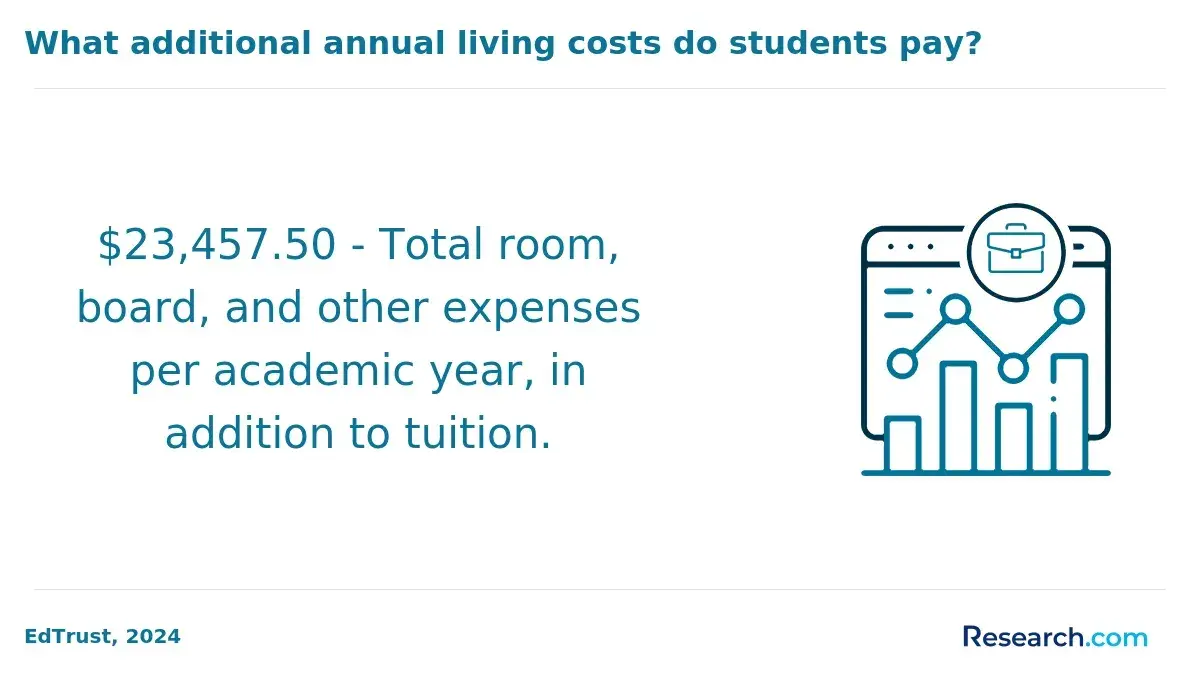
Federal Student Aid graduate loan rules allow eligible graduate and professional students to borrow up to $20,500 per year in Direct Unsubsidized Loans, with Graduate PLUS Loans potentially covering remaining eligible costs after other aid. That borrowing capacity can help access, but it also makes it easy to overborrow if students do not compare total program cost against realistic career benefits.
If affordability is your main concern and you are not certain you need a doctorate, comparing a cheapest online healthcare administration degree can help you see whether a lower-cost bachelor's or master's pathway would meet your immediate career goal first.
To reduce cost, ask whether the program accepts transfer credits, offers employer tuition partnerships, provides alumni or military discounts, allows pay-as-you-go enrollment, or includes dissertation support without extra continuation charges. Also ask for a written total cost estimate based on your intended pace, not just a per-credit tuition figure.
Flexible online health services doctorate programs benefit students who need advanced preparation but cannot relocate or pause their careers. They are especially useful when the student's current role can support applied research, leadership projects, or data-informed improvement work.
The best fit depends on your goal, current experience, and tolerance for independent study. This comparison can help you decide whether the format matches your situation.
| Student profile | Why flexibility helps | Potential concern |
| Healthcare managers and directors | Can connect coursework to strategy, finance, operations, workforce, or quality problems | Need enough time for writing and research outside demanding leadership roles |
| Clinicians moving into leadership | Can keep practicing while building systems, policy, or executive skills | May need support transitioning from clinical thinking to organizational research |
| Public health professionals | Can apply doctoral work to population health, health equity, emergency preparedness, or policy | Some roles may value DrPH or PhD preparation differently |
| Health informatics or data professionals | Can use workplace data challenges to shape applied projects or research questions | Must confirm access to usable, ethical, and approved data sources |
| Aspiring faculty or researchers | Online study may provide access to specialized programs without relocation | Research-intensive academic careers may require publications, methods depth, and faculty mentorship beyond basic flexibility |
Students who benefit least are those seeking entry-level healthcare roles, those without a clear career reason for doctoral study, or those who need frequent in-person accountability. A doctorate can be valuable, but it is usually not the most efficient first credential for someone new to healthcare administration.
Health information, analytics, and compliance roles are increasingly important in healthcare organizations. If your interest is more data and records focused than executive leadership focused, reviewing health information management salary information may help you compare whether a doctorate, master's degree, certificate, or specialized informatics credential offers the better next step.
Program flexibility does not automatically weaken career outcomes. Employers usually care more about accreditation, institutional reputation, relevant experience, leadership results, specialization, research skills, and whether the graduate can solve real healthcare problems. However, flexibility can affect outcomes indirectly if it changes networking, mentorship, research productivity, or time to completion.
The labor market context is favorable for many healthcare leadership paths. The U.S. Bureau of Labor Statistics projects employment for medical and health services managers to grow much faster than the average for all occupations from 2023 to 2033, reflecting demand tied to healthcare delivery, aging populations, regulation, technology, and complex payment systems. This does not mean every doctorate graduate will move into an executive role, but it does mean healthcare organizations continue to need skilled leaders.
Flexible doctorates may support career advancement when students choose projects that produce evidence of impact. Examples include reducing patient throughput delays, improving population health outreach, strengthening cybersecurity governance, analyzing workforce retention, implementing quality metrics, or evaluating telehealth access.
Students should also understand that career outcomes vary by sector. Hospitals, insurers, consulting firms, public health agencies, universities, long-term care systems, digital health companies, and government organizations may value different degree types. A DHA may fit executive operations, a DrPH may fit population health leadership, a PhD may fit research and faculty roles, and a DNP may fit nursing systems leadership.
Do not choose a flexible program only because it is convenient. Ask whether graduates publish, present, move into leadership roles, earn faculty appointments, or complete projects relevant to your field. If the school cannot explain typical outcomes in a transparent way, treat that as a red flag.
How Should Students Choose the Most Flexible Online Health Services Doctorate Program?
The most flexible online health services doctorate is the one that aligns with your career goal, schedule, budget, learning style, and doctoral project needs. A program can be highly flexible for one student and frustrating for another if the attendance model, residency timing, or research expectations do not match real life.
Use a structured evaluation process before applying. These steps help you avoid choosing based only on tuition, speed, or brand recognition.
- Define the outcome you want, such as executive leadership, public health policy, faculty work, consulting, informatics leadership, quality improvement, or applied research.
- Choose the degree type that fits that outcome, such as DHA, DrPH, PhD, DNP leadership, or a related health systems doctorate.
- Verify institutional accreditation and, when relevant, programmatic accreditation, state authorization, certification alignment, or licensure implications.
- Ask for a written schedule showing synchronous sessions, residency dates, course sequence, dissertation or capstone milestones, and maximum time to completion.
- Calculate total cost, including tuition, fees, travel, software, dissertation continuation charges, and any lost income from reduced work hours.
- Review faculty expertise to confirm that someone can supervise your intended topic or applied project area.
- Ask about student support, including doctoral writing help, research methods tutoring, statistics support, library access, career services, and dissertation coaching.
- Request outcome information, such as completion patterns, common career paths, alumni examples, and whether students complete projects in their workplaces.
Common red flags include unclear accreditation, vague total cost estimates, no published dissertation or capstone process, limited faculty availability, required residencies disclosed late, pressure to enroll quickly, and promises of guaranteed promotions or salaries. A reputable program should help you understand both the benefits and the limits of the degree.
The smartest choice is usually not the fastest or cheapest program in isolation. It is the program that lets you finish without sacrificing academic quality, financial stability, professional momentum, or the specific career outcome you are pursuing.
Other Things You Should Know About Health Services
Sometimes. Some programs accept applicants from business, public administration, analytics, social services, or policy backgrounds, but they may require relevant professional experience, prerequisite coursework, or a strong statement explaining the connection to health services.
Many professional doctorate programs have made the GRE optional or do not require it, but policies vary. Research-focused PhD programs may be more likely to request test scores, writing samples, research statements, or evidence of quantitative preparation.
Some can, but eligibility depends on the university, state authorization rules, residency requirements, visa limitations, and whether the student must complete fieldwork or clinical components in an approved location. Applicants should confirm requirements directly with the school.
Students need strong academic writing, literature review, citation, research synthesis, and professional communication skills. If you have been out of school for several years, choose a program with doctoral writing support and research methods resources.
- Doctor of Philosophy (PhD) in Health Sciences https://www.rushu.rush.edu/college-health-sciences/academic-programs/doctor-philosophy-health-sciences
- Top Online PhD in Public Health (DrPH) Programs - MPH Online https://www.mphonline.org/online-phd-in-public-health/
- Top 10 Online PhD Programs for Working Professionals in 2025 - Maverick Business Academy London https://mbalondon.org.uk/top-10-online-phd-programs-for-working-professionals-in-2025/
- Ranking the Top 10 Online DRPH Programs https://www.masterspublichealth.net/best/online-doctor-public-health/
- What Is An Accelerated Doctorate Degree Online? https://www.affordablecollegesonline.org/degrees/best-accelerated-doctorate-phd-programs/
- Careers https://www.publichealthdegrees.org/careers/
- Campus vs Online vs Hybrid Doctor of Education (EdD) Programs https://www.onlineeddprograms.com/faqs/campus-online-hybrid-edd-programs
- Transform Healthcare: Top Online PhDs in Health Sciences https://www.phds.me/online-programs/phd-in-health-sciences/
- Health Science Ph.D. (Online/Hybrid) - Degree Info & School Reviews https://www.edumed.org/online-schools/health-science-degrees/phd-doctorate/
- 1-Year Online PhD Programs: Fast-Track Your Doctorate https://bemoacademicconsulting.com/blog/1-year-phd-programs-online