2027 Best Online Health Services Doctorate Programs for Mid-Career Professionals

Co-Founder and Chief Data Scientist
Many health services professionals reach a point where experience is no longer the only differentiator; leadership, research, analytics, and system-level strategy start to matter more. The U. S. Bureau of Labor Statistics projects medical and health services manager employment to grow 29% from 2023 to 2033, reflecting strong demand for advanced leadership in care delivery.
This guide is for working professionals comparing online doctorate options, including DHA, DHSc, DrPH, and PhD pathways. You will learn how to compare programs, costs, timelines, admissions, specializations, and career fit before committing years of time and tuition.
Key Things to Know About Online Health Services Doctorate Programs for Mid-Career Professionals
- The best online Health Services doctorate for a mid-career professional is usually an accredited, flexible program with applied research support, clear dissertation or capstone milestones, and coursework tied to healthcare leadership, policy, analytics, quality, or population health.
- Career upside depends on role and employer: the BLS reported a May 2024 median salary of $117,960 for medical and health services managers, but a doctorate should be evaluated as a leadership investment rather than a guaranteed raise.
- Most working students should compare total program cost, weekly time expectations, residency requirements, faculty access, and employer tuition support before enrolling; federal graduate Direct Unsubsidized Loans are capped at $20,500 per academic year.
Is earning an online Health Services doctorate worth it for mid-career professionals?
An online Health Services doctorate can be worth it when it directly supports a role you are already moving toward: executive administration, health system strategy, population health leadership, quality improvement, policy, health informatics leadership, consulting, or teaching. It is less likely to pay off if you only need a management credential, a narrow technical skill, or eligibility for a role that does not value doctoral preparation.
For mid-career professionals, the main question is not "Is a doctorate prestigious?" but "Will this credential help me solve bigger problems, qualify for higher-level roles, or build authority in a defined area of health services?" If your near-term goal is department management or entry-level healthcare administration, a masters in healthcare administration may be a more efficient step before doctoral study.
The table below summarizes when a doctorate makes practical sense and when another path may be better. Use it to test whether the degree matches your real career problem.
| Decision point | A doctorate may be worth it when | A doctorate may not be the best next step when |
| Career target | You are pursuing executive leadership, system-level quality, policy, consulting, research leadership, or faculty roles. | You mainly need eligibility for first-line management or a role that lists a master's degree as sufficient. |
| Professional experience | You can use your current workplace as a laboratory for applied research, quality improvement, or leadership projects. | You have limited health services experience and still need broader operational exposure. |
| Return on investment | Your employer values doctoral credentials for promotion, internal leadership pipelines, or tuition assistance. | You would self-fund the full cost without a clear advancement path or salary band tied to the credential. |
| Time capacity | You can protect 12 to 20 hours per week for coursework, reading, writing, and research over multiple years. | Your work, family, or health demands make sustained doctoral-level writing unrealistic right now. |
A doctorate is strongest as a career accelerator for professionals who already have credibility in healthcare and want to move from managing programs to shaping systems. It should not be treated as a shortcut around experience, licensure, networking, or measurable leadership results.
Which online Health Services doctorate programs are the best for mid-career professionals?
The best program depends on whether you want an applied leadership doctorate, a research-intensive degree, a public health leadership path, or an academic career route. For working professionals, the strongest options usually combine regional accreditation, online or low-residency delivery, transparent completion requirements, experienced faculty, and a dissertation or capstone model that can connect to your current work.
The programs below are examples of online or low-residency U.S. doctorate options commonly considered by health services professionals. Availability, curriculum, residencies, and tuition can change, so confirm current details with each institution before applying.
| Program | Degree type | Format fit for professionals | Best fit |
| Franklin University Doctor of Healthcare Administration | DHA | Online professional doctorate structure | Healthcare managers who want applied leadership, strategy, and doctoral research without relocating. |
| University of Mississippi Medical Center Doctor of Health Administration | DHA | Online or primarily online professional format | Administrators seeking senior health services leadership training from an academic health center environment. |
| Medical University of South Carolina Doctor of Health Administration | DHA | Executive-oriented format with online components | Experienced managers who want a health administration doctorate tied to healthcare delivery systems. |
| A.T. Still University Doctor of Health Sciences | DHSc | Online health sciences doctorate | Clinicians, educators, and administrators interested in applied health leadership, education, and evidence-based practice. |
| Nova Southeastern University Doctor of Health Science | DHSc | Online coursework with professional-practice orientation | Health professionals seeking doctoral-level preparation across education, leadership, and health services practice. |
| MCPHS Doctor of Health Sciences | DHSc | Online professional doctorate model | Working healthcare professionals who want interdisciplinary leadership and applied scholarship. |
| University of North Carolina at Chapel Hill Executive Doctoral Program in Health Leadership | DrPH | Online executive public health leadership format with limited campus requirements | Population health, public health, and system leaders who want doctoral leadership training with a public health focus. |
| University of Alabama at Birmingham Executive Doctor of Science in Healthcare Leadership | DSc | Executive hybrid or blended structure | Senior professionals interested in healthcare leadership, implementation, and organizational improvement. |
When comparing "best" programs, avoid relying on a single ranking. A strong program for a hospital operations director may not be the best choice for a health informatics leader, public health executive, or aspiring professor.
Use this short process to build a realistic shortlist before you contact admissions teams:
- Define the job title or leadership function you want three to five years after graduation.
- Choose the degree type that matches that goal, such as DHA for administration, DHSc for interdisciplinary health leadership, DrPH for public health leadership, or PhD for research-heavy careers.
- Confirm regional accreditation and, when relevant, programmatic accreditation or alignment with recognized health administration or public health standards.
- Compare dissertation, capstone, or doctoral project requirements and ask whether your current workplace can be used for applied research.
- Review residency requirements, synchronous class times, and expected weekly workload before assuming the program is manageable.
What specializations are available in Health Services doctorate programs?
Health Services doctorate programs often let professionals focus on the part of the healthcare system they want to influence. The specialization matters because it shapes your research topic, faculty mentorship, elective choices, and the types of roles your degree supports.
The table below compares common specialization areas and the professionals who may benefit most from each one.
| Specialization area | Typical focus | Best fit for |
| Healthcare administration and executive leadership | Strategy, finance, governance, operations, workforce, and organizational performance | Directors, service line leaders, practice managers, and executives moving into broader system leadership. |
| Health policy | Regulation, access, payment models, advocacy, and policy evaluation | Professionals working in government, associations, payer organizations, consulting, or public health agencies. |
| Quality improvement and patient safety | Process improvement, outcomes measurement, risk reduction, and safety culture | Quality directors, nursing leaders, clinical operations managers, and performance improvement professionals. |
| Health informatics and data analytics | Information systems, health data governance, analytics, interoperability, and digital transformation | Health IT leaders, informatics managers, HIM professionals, and analytics directors. |
| Population health | Community health outcomes, prevention, social determinants of health, and care coordination | Public health professionals, accountable care leaders, community health executives, and payer-side managers. |
| Health professions education | Curriculum design, clinical education, assessment, faculty development, and learning outcomes | Clinicians, program directors, academic administrators, and healthcare educators. |
If your background is in medical records, compliance, coding, analytics, or health IT leadership, compare informatics-focused doctorates with the career and compensation context around health information management salary. That can help you decide whether a full doctorate or a targeted graduate certificate better matches your next move.
A practical rule is to choose the specialization that connects your past experience to your future authority. Mid-career applicants usually submit stronger doctoral applications when their research interests grow naturally from real operational problems they have already seen at work.
What admission requirements should professionals prepare for Health Services doctorate programs?
Admissions committees usually look for evidence that you can handle doctoral-level writing, research, and independent work while contributing meaningful professional experience. Requirements vary, but Health Services doctorate applicants are commonly expected to have a master's degree, healthcare or related leadership experience, academic writing ability, and a clear statement of purpose.
The preparation list below can help mid-career applicants avoid last-minute gaps and present a coherent application.
- Confirm the required prior degree, since some programs require a master's in healthcare administration, public health, nursing, business, health sciences, or a related field, while others evaluate applicants more broadly.
- Request official transcripts early and review whether your graduate GPA meets the program's minimum standard.
- Update your resume to emphasize budgets, teams led, quality outcomes, policy work, data projects, service line improvements, or measurable healthcare leadership contributions.
- Prepare a statement of purpose that explains your career goal, research interest, and why the specific doctorate format fits your working schedule.
- Ask recommenders who can speak to your leadership, analytical ability, writing skills, and readiness for long-term doctoral work.
- Check whether the GRE, interview, writing sample, professional license, or minimum years of experience are required or optional.
Common mistakes include writing a vague statement about "wanting to lead," applying without a focused research interest, ignoring writing requirements, or choosing recommenders based only on title. A stronger application shows that you understand the difference between graduate coursework and doctoral inquiry.
Professionals should also ask admissions advisors how the program supports students who have been out of school for several years. Good signs include writing resources, research methods support, library access, dissertation coaching, structured milestones, and faculty who actively mentor applied projects.
How much does an online Health Services doctorate program cost?
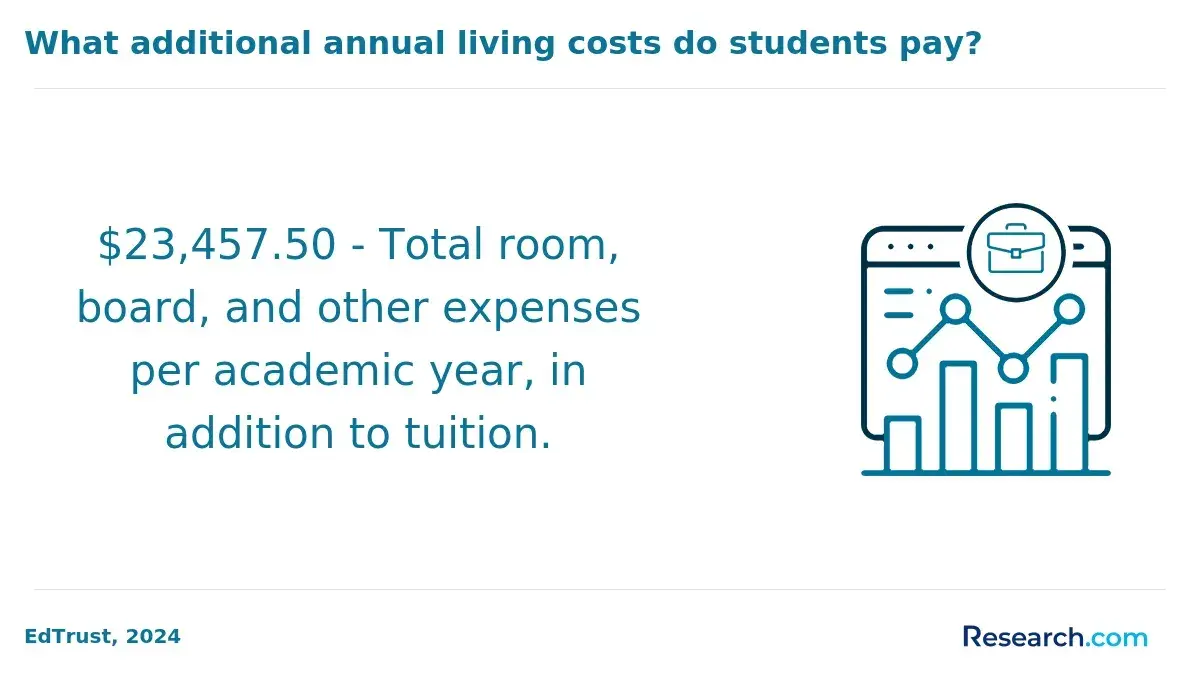
The cost of an online Health Services doctorate varies widely because programs differ by credit load, tuition model, residency requirements, dissertation fees, and institutional type. Instead of comparing only per-credit tuition, calculate total cost to completion, including the extra terms many students need for doctoral writing or dissertation revisions.
For a current financing benchmark, Federal Student Aid lists the graduate Direct Unsubsidized Loan annual limit at $20,500, while graduate students may use Grad PLUS Loans for additional eligible costs after credit approval. This matters because many doctorate programs exceed the annual unsubsidized limit, so employer support, scholarships, payment plans, and out-of-pocket budgeting can significantly affect affordability.
When comparing cost, include every required expense rather than only tuition. The most common cost categories are:
- Tuition charged per credit, term, or full program
- Technology, online learning, library, graduation, and dissertation continuation fees
- Residency, intensive, or campus visit travel costs when the program is hybrid or low-residency
- Books, statistical software, research tools, transcription, editing, or conference expenses
- Lost income or reduced work hours if the program requires schedule changes
- Loan interest, origination fees, and repayment obligations after enrollment
Students who are still deciding whether doctoral study is necessary may want to compare the economics of the cheapest online healthcare administration degree with a doctorate. A lower-cost bachelor's or master's pathway can be the better investment if your employer does not require doctoral preparation for the roles you want.
Ask each program for a written total-cost estimate based on your expected pace. Also ask whether tuition is locked, whether dissertation continuation terms cost extra, and whether employer reimbursement can be deferred until grades are posted.
What is the typical timeline for online Health Services doctorate programs?
Most online Health Services doctorates are designed for working adults, but "online" does not mean short or easy. A professional doctorate often includes coursework, comprehensive exams or portfolio milestones, a proposal stage, and a dissertation, capstone, or applied doctoral project.
The table below shows typical completion patterns by study pace. Use it to judge whether the program's advertised timeline matches your work and family obligations.
| Enrollment pace | Typical structure | Common completion range | Best fit |
| Full-time online | Heavier course load with faster progression through research and project milestones | About 3 to 4 years | Professionals with flexible jobs, strong support at home, or the ability to reduce work obligations. |
| Part-time online | One or two courses at a time with a slower dissertation or capstone timeline | About 4 to 6 years | Full-time employees, parents, caregivers, and leaders with unpredictable work demands. |
| Executive or cohort-based | Structured sequence with set start dates, peer cohort, and occasional intensives | About 3 to 5 years | Managers who benefit from deadlines, networking, and a highly organized program calendar. |
| Extended dissertation phase | Coursework completed, but research, approvals, data collection, or writing take longer | Varies by school limit | Students whose research access, work demands, or writing progress slows after coursework. |
The most important timeline risk is the transition from structured classes to independent doctoral work. Many working professionals do well in coursework but lose momentum when the dissertation or capstone requires self-directed writing every week.
If your main barrier is speed rather than doctoral-level research, compare shorter accelerated healthcare programs before committing to a doctorate. Accelerated master's or certificate options may provide faster career mobility when you do not need a terminal degree.
What skills can professionals learn from online Health Services doctorate programs?
A strong online Health Services doctorate should deepen the skills that help professionals move from operational execution to system-level decision-making. The curriculum should also help students evaluate evidence, manage complexity, and communicate recommendations to executives, boards, clinicians, payers, regulators, and community stakeholders.
The skills below are especially useful for mid-career professionals who already understand healthcare operations but want broader authority.
- Strategic healthcare leadership, including governance, service line planning, organizational change, and cross-functional decision-making
- Applied research design, including problem framing, literature review, qualitative and quantitative methods, and ethical data use
- Health services finance, including budgeting, reimbursement, value-based care concepts, and resource allocation
- Quality improvement and patient safety methods, including measurement, implementation, risk analysis, and outcome evaluation
- Policy and regulatory analysis, including how payment rules, accreditation expectations, and public policy affect organizational choices
- Data-informed leadership, including analytics interpretation, informatics governance, AI-aware decision-making, and communication of evidence to nontechnical audiences
- Teaching, mentoring, and workforce development skills for professionals who supervise teams or want adjunct, faculty, or training roles
AI and automation are increasingly changing health services work, especially in analytics, revenue cycle, documentation review, patient flow, and population health outreach. A doctorate does not turn every graduate into a data scientist, but it should help leaders ask better questions about bias, quality, privacy, implementation risk, and whether technology improves outcomes.
Before enrolling, review course descriptions for practical skill signals. Look for assignments involving real datasets, policy briefs, quality dashboards, strategic plans, implementation projects, and publishable or presentation-ready scholarship.
What career opportunities open up for online Health Services doctorate degree holders?
An online Health Services doctorate can support advancement into senior leadership, consulting, research, policy, education, and specialized healthcare improvement roles. It is most useful when paired with relevant experience, measurable achievements, and a professional network in the area where you want to lead.
The BLS reported a May 2024 median salary of $117,960 for medical and health services managers and projects 29% job growth from 2023 to 2033. That data reflects strong demand for healthcare management overall, but salary outcomes still depend on employer type, region, responsibility level, prior experience, and whether the role actually rewards doctoral education.
The table below connects common post-doctorate paths with the type of professional background that usually fits each one.
| Career path | How the doctorate can help | Best prior background |
| Healthcare executive or senior administrator | Builds credibility in strategy, finance, governance, and system-level leadership. | Operations, service line management, hospital administration, practice leadership, or managed care. |
| Quality, safety, or performance improvement leader | Strengthens applied research, measurement, implementation, and outcomes evaluation skills. | Clinical leadership, quality improvement, nursing administration, patient safety, or accreditation. |
| Health policy or public health leader | Supports policy analysis, population health strategy, program evaluation, and stakeholder communication. | Public health agencies, nonprofits, payers, government, advocacy, or community health. |
| Health informatics or analytics leader | Adds executive-level context for data governance, digital transformation, and evidence-based decision-making. | Health IT, HIM, analytics, informatics, revenue cycle, or EHR implementation. |
| Consultant or independent advisor | Can strengthen authority when paired with a focused niche and documented results. | Operations improvement, compliance, strategy, quality, informatics, or policy. |
| Faculty, adjunct instructor, or academic administrator | May support teaching and scholarly work, depending on institution and discipline expectations. | Teaching, clinical education, program management, research, or professional training. |
One common mistake is assuming that a doctorate automatically opens executive roles. Employers still look for leadership results, financial judgment, communication skills, and the ability to manage people through change.
How can Health Services doctorate students balance their time between studies and work?
Balancing doctoral study with a healthcare career requires more than motivation. Working students need a repeatable system for protecting study time, managing research milestones, and communicating clearly with employers and family members.
The following steps can help mid-career students stay realistic before and after enrollment.
- Audit your weekly schedule before applying and identify at least three protected study blocks that can survive work emergencies.
- Ask the program for the expected weekly workload during both coursework and the dissertation or capstone phase.
- Talk with your supervisor about flexibility, tuition assistance, project access, and whether your doctoral work can align with organizational priorities.
- Choose a research topic connected to a real problem you can access ethically and consistently, rather than a topic that sounds impressive but requires unavailable data.
- Use vacation days strategically for residencies, comprehensive exams, proposal writing, or major project deadlines.
- Build a support system that includes faculty, classmates, family, colleagues, and a writing accountability routine.
- Revisit your course load each term instead of assuming you must always move at the fastest pace.
Healthcare work can be unpredictable, especially for leaders responsible for staffing, compliance, patient flow, or crisis response. A flexible program is valuable, but too much flexibility can also make procrastination easier; the best fit is often a program with clear milestones and enough structure to keep you moving.
Red flags include programs that cannot explain dissertation support, vague faculty availability, no clear policy for leaves of absence, or schedules that require synchronous attendance during your busiest work hours. If a program's rhythm does not fit your real calendar, it is better to know before you enroll.
What should professionals evaluate when choosing an online Health Services doctorate program?
Choosing an online Health Services doctorate should be a structured decision, not a reaction to advertising, ranking badges, or a single low tuition number. Mid-career professionals should compare academic quality, career fit, cost, support, and feasibility at the same time.
The table below highlights the most important evaluation areas and why each one affects your likelihood of completing the degree and using it well.
| Evaluation area | What to verify | Why it matters |
| Accreditation | Confirm institutional accreditation recognized by the U.S. Department of Education and check any relevant programmatic standards. | Accreditation affects transferability, employer recognition, federal aid eligibility, and academic credibility. |
| Degree type | Compare DHA, DHSc, DrPH, DSc, EdD, and PhD expectations. | Each degree signals a different balance of administration, health sciences, public health, education, or research. |
| Online format | Check asynchronous classes, live sessions, residencies, intensives, and exam requirements. | The format determines whether the program can realistically fit your work schedule. |
| Faculty match | Review faculty expertise in your intended research area. | A poor faculty match can slow dissertation or capstone progress. |
| Research support | Ask about methods courses, IRB guidance, writing support, data access, and milestone timelines. | Doctoral completion often depends on support after coursework ends. |
| Total cost | Request a full estimate including fees, residencies, continuation terms, and financing assumptions. | The lowest advertised tuition may not be the lowest total cost to finish. |
| Career services and network | Look for alumni outcomes, executive mentors, faculty connections, and healthcare employer relationships. | Mid-career ROI often comes from targeted positioning, not the credential alone. |
| Licensure relevance | Confirm whether the degree affects any state license, certification, or clinical scope requirement. | Most Health Services doctorates do not create new clinical licensure by themselves. |
Before enrolling, ask admissions and faculty specific questions that reveal how the program actually works for employed students.
- How many students in my intended track are working full-time?
- What is the typical time from coursework completion to dissertation or capstone completion?
- How are dissertation chairs assigned, and can students change advisors if the fit is poor?
- Are residencies required, and what are the exact dates, locations, and costs?
- Can my workplace serve as the setting for an applied doctoral project?
- What happens if my job changes, I relocate, or I need to pause enrollment for one term?
- What recent doctoral projects or dissertations have students completed in my area of interest?
A strong choice is one you can complete, afford, and explain clearly to an employer. If you cannot describe how the curriculum, research project, and credential connect to your next role, keep comparing programs.
Other Things You Should Know About Health Services
It can be respected when the school is properly accredited, the program has rigorous doctoral requirements, and the degree matches the role. Employers usually care more about institutional credibility, relevant experience, leadership results, and the quality of your applied research than whether the coursework was online.
Many do, but requirements vary. Some programs require a traditional dissertation, while professional doctorates may use an applied dissertation, doctoral project, capstone, or practice-based research project. Ask each program how the final project is supervised and assessed.
Possibly. A doctorate may qualify you for adjunct, lecturer, program director, or some faculty roles, especially when paired with professional experience. Tenure-track research positions may prefer or require a PhD, publications, and a stronger research record.
Not always. Some programs welcome administrators, analysts, policy professionals, educators, and public health workers without clinical licenses. However, programs focused on clinical leadership or health professions education may prefer or require licensure, so check admissions rules carefully.
References
- Enhancing Clinical Education: Evidence-Based Strategies - European Society of Medicine https://esmed.org/enhancing-clinical-education-evidence-based-strategies/
- DHSc vs. Ph.D. | Key Differences in Health Science Degrees https://www.tuw.edu/health/dhsc-vs-phd/
- What can I do with an online DrPH? - MPH Online https://www.mphonline.org/careers-online-drph/
- Best Online Ph.D. and Doctoral Programs | OEDb https://www.oedb.org/rankings/online-phd-programs/
- Average Cost of a Doctorate Degree [2026]: Ph.D., Psy.D. & More https://educationdata.org/average-cost-of-a-doctorate-degree
- How to Pay for a Ph.D in 2026 - ELFI https://www.elfi.com/how-to-pay-for-a-ph-d/
- Can You Get Financial Aid for Doctoral Programs? - Graduate Programs for Educators https://www.graduateprogram.org/blog/can-you-get-financial-aid-for-doctoral-programs/
- Funding your Degree https://gradsense.org/funding-your-degree/
- Doctor of Public Health (Dr.P.H.) https://www.nymc.edu/shsp/programs/drph/
- Online Doctorate in International Public Health https://www.euclid.int/online-doctorate-international-public-health/