2027 Are Online Health Services Doctorate Degrees Respected by Employers? Hiring Trends and Career Outcomes

Co-Founder and Chief Data Scientist
Employers increasingly evaluate health services leaders on evidence-based decision-making, operational strategy, and measurable outcomes-not just where they sat in class. The U.S. Bureau of Labor Statistics projects medical and health services manager jobs to grow 29% from 2023 to 2033, making advanced credentials more relevant for professionals competing for executive, policy, analytics, academic, or consulting roles.
This guide explains when an online Health Services doctorate is respected, when it may not pay off, and how to judge accreditation, cost, employer recognition, salary potential, and alternatives before enrolling.
Key Things You Should Know
- Yes, an online Health Services doctorate can be respected by employers when it comes from an accredited institution, aligns with the target role, and is supported by relevant leadership, research, analytics, or clinical experience.
- The strongest financial fit is usually for experienced professionals pursuing senior healthcare administration, policy, consulting, informatics, quality improvement, faculty, or executive roles; BLS reports a May 2024 median wage of $117,960 for medical and health services managers.
- Delivery format matters less than accreditation, reputation in the target labor market, dissertation or capstone quality, employer partnerships, alumni outcomes, and whether the role actually rewards doctoral preparation.
What Is the True ROI of an Online Health Services Doctorate?
The true ROI of an online Health Services doctorate is the career value you receive after accounting for tuition, fees, time, opportunity cost, debt, and the strength of the credential in your target labor market.
In this field, "Health Services" may refer to doctoral study in healthcare administration, health services research, health systems leadership, health policy, health informatics, population health, or quality and safety.
Common degree types include the PhD, DHA, DrPH, EdD with a healthcare leadership concentration, and sometimes a professional doctorate in health administration or health sciences.
Employers do not evaluate all online doctorates the same way. A hospital system hiring a vice president of operations may care most about leadership history, accreditation, and demonstrated operational results.
A university hiring a tenure-track faculty member may prefer a research-intensive PhD with peer-reviewed publications. A consulting firm may value analytics, policy expertise, and the ability to lead complex client work more than the delivery format of the program.
This table summarizes how employer recognition usually works across major evaluation factors. It is useful because ROI depends less on the word "online" and more on whether the degree signals credible, job-relevant expertise:
| Employer recognition factor | Why it affects respect | What it means for ROI |
| Institutional accreditation | Shows the school meets recognized academic quality standards | Essential for employer acceptance, federal aid eligibility, and future academic mobility |
| Programmatic fit | Connects coursework and research to the actual job family | Improves value when the curriculum matches leadership, policy, analytics, or teaching goals |
| Degree type | Signals whether the doctorate is research-oriented, practice-oriented, or leadership-oriented | Determines whether the degree is better suited for academia, executive practice, consulting, or applied research |
| Professional experience | Helps employers see the doctorate as an extension of proven expertise | Usually produces stronger returns for mid-career and senior professionals than for early-career students |
| Capstone, dissertation, or research output | Demonstrates the ability to solve complex healthcare problems | Strengthens the credential when projects are tied to measurable workplace or industry outcomes |
| Alumni and employer network | Signals whether graduates are visible in relevant organizations | Can improve access to executive, academic, policy, or consulting opportunities |
For most students, the ROI question should be framed this way: will the doctorate help you qualify for roles you cannot reasonably reach with your current degree, experience, licenses, or certifications? If the answer is unclear, the degree may still have intellectual value, but the financial case is weaker.
How Much Does an Online Health Services Doctorate Increase Earning Potential?
An online Health Services doctorate may increase earning potential, but the effect is usually indirect. Employers rarely pay more simply because a candidate completed an online doctorate.
The financial benefit typically comes when the credential helps the graduate move into higher-responsibility roles such as executive leadership, health system strategy, academic administration, policy research, informatics leadership, quality and safety leadership, or consulting.
The most useful salary benchmark for many health services doctorate candidates is medical and health services management. BLS reported a May 2024 median annual wage of $117,960 for medical and health services managers, which suggests that the field has strong compensation potential at the management level.
However, that figure includes professionals with varied education levels, employers, locations, and years of experience, so it should not be treated as a doctoral salary forecast.
This comparison shows where a doctorate may influence earning potential most directly. The table is not a salary promise; it explains how the credential may interact with job requirements and advancement patterns:
| Career direction | Typical employer view of a doctorate | Potential earning impact |
| Healthcare executive leadership | Often respected when paired with strong operational experience | Can support movement into senior roles where compensation is tied to responsibility, scale, and performance |
| Health services research | Often expected or strongly preferred for principal investigator, research faculty, or senior analyst roles | May open access to research leadership roles that are not available with only a bachelor's or master's degree |
| Health policy and population health | Valued when the program includes methods, policy analysis, and applied systems work | Can improve competitiveness for senior government, nonprofit, or think tank roles |
| Health informatics or analytics leadership | Respected when combined with technical, data governance, and healthcare operations skills | Can support advancement into roles that bridge strategy, analytics, compliance, and clinical operations |
| Postsecondary teaching | Frequently required for full-time faculty roles, especially at universities | May be necessary for academic eligibility, though pay varies widely by institution and appointment type |
| Independent consulting | Can strengthen credibility, but client results matter heavily | May help with positioning, pricing, and specialization, but does not replace a strong track record |
The key distinction is between credential value and labor-market value. A doctorate may strengthen your profile, but the largest salary gains usually come from combining the degree with leadership accomplishments, budgets managed, teams supervised, quality outcomes improved, publications, grants, or measurable organizational results.
Which Careers Provide the Best Financial Return With an Online Health Services Doctorate?
The best financial returns usually occur in roles where doctoral-level expertise solves expensive or high-stakes problems: improving patient outcomes, reducing waste, managing compliance, leading strategy, interpreting healthcare data, or teaching future healthcare professionals.
An online doctorate is most likely to be rewarded when the employer can clearly connect the credential to better decisions, stronger research, or more effective leadership.
Health information and data-driven decision-making are especially important because employers are investing in analytics, interoperability, privacy, and AI-assisted workflows.
Professionals comparing informatics leadership paths may also want to understand health information management salary patterns before deciding whether a doctorate, certification, or master's degree is the better next step.
This table compares career paths where an online Health Services doctorate may have relatively strong, moderate, or limited financial return. It helps readers avoid assuming that every doctorate leads to the same employer response:
| Career path | Financial return potential | Why employers may value the doctorate |
| Health system executive or service line leader | Strong for experienced professionals | Supports strategic leadership, systems thinking, quality improvement, and evidence-based management |
| Health services researcher | Strong when research training is rigorous | Doctoral preparation may be expected for advanced research design, publication, and grant-related work |
| Healthcare quality, safety, or performance improvement director | Moderate to strong | Applied doctoral projects can demonstrate measurable process improvement and patient safety expertise |
| Health policy analyst or policy director | Moderate to strong | Employers may value advanced methods, policy evaluation, and population health strategy |
| Health informatics or analytics director | Moderate to strong when paired with technical skill | The doctorate adds credibility, but employers also expect data, governance, privacy, and platform fluency |
| Adjunct faculty | Often limited financially | A doctorate may qualify candidates to teach, but part-time academic pay may not justify high debt by itself |
| Entry-level healthcare administration | Often limited | Employers may prefer experience and a master's degree over a doctorate for early management roles |
One common mistake is pursuing a doctorate for a role that does not require or reward doctoral preparation. If your target job postings consistently list a master's degree, professional certification, and five to ten years of leadership experience as the primary requirements, a doctorate may help later but may not be the fastest route to a financial return.
How Does an Online Health Services Doctorate Affect Career Advancement?
An online Health Services doctorate can affect career advancement by changing how employers see your readiness for complex leadership, research, teaching, or advisory roles. It is usually most powerful as a mid-career accelerator rather than an entry-level credential.
For example, a director of quality improvement, clinical operations manager, public health program manager, or informatics leader may use the doctorate to move toward executive strategy, systemwide transformation, research leadership, or academic roles.
Career advancement depends on how clearly the doctorate builds on your existing professional story. A candidate who can say, "My doctoral capstone reduced readmissions risk through a data-driven care coordination model," is more compelling than a candidate who simply lists the degree. Employers respect applied proof.
When evaluating advancement value, look for these signs that the degree can translate into stronger promotion prospects:
- The curriculum includes healthcare finance, strategy, policy, quality improvement, analytics, leadership, ethics, and research methods relevant to your target role.
- The capstone or dissertation can be completed around a real organizational problem, not only a theoretical topic.
- Faculty have current healthcare leadership, policy, research, informatics, or academic experience in the U.S. market.
- The program provides access to alumni, executive mentors, research groups, residencies, practica, or employer-connected projects.
- Graduates hold roles similar to the roles you want, not just broad "healthcare" positions.
Current hiring trends make this alignment more important. Healthcare organizations are using AI-assisted documentation, predictive analytics, revenue cycle tools, and population health platforms, but they still need leaders who understand governance, ethics, equity, privacy, workflow design, and change management.
A doctorate can strengthen advancement prospects when it helps you lead that kind of transformation rather than merely adding a title.
How Does the Cost of an Online Health Services Doctorate Affect Its Overall Value?
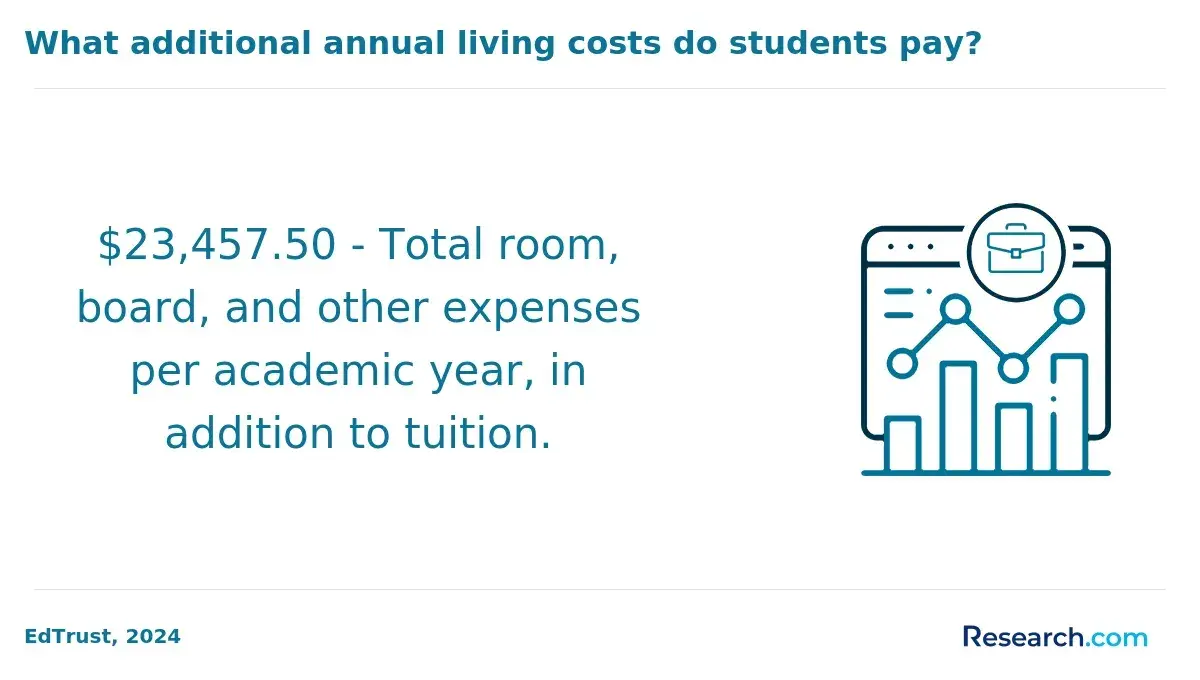
Cost has a direct effect on the value of an online Health Services doctorate because the degree's payoff may take years to appear. Tuition, technology fees, dissertation fees, travel for residencies, books, time away from consulting or overtime work, and loan interest all influence ROI. Even a respected program can be a poor financial choice if its cost is too high relative to your realistic career outcomes.
For readers still comparing earlier steps in the education pathway, researching the cheapest online healthcare administration degree options can provide useful context on how much costs vary before reaching the doctoral level. A lower-cost bachelor's or master's pathway may preserve flexibility if you are not yet sure that a doctorate is necessary.
Federal borrowing rules also matter. For the 2024-25 award year, Federal Student Aid lists the annual Direct Unsubsidized Loan limit for most graduate and professional students at $20,500.
That limit does not mean a doctorate should cost that much each year; it means students should be careful not to let loan availability substitute for a realistic ROI analysis.
Before choosing a program, compare total cost in a way that reflects actual completion rather than advertised per-credit tuition. The following items should be included in your estimate:
- Total credits required, including dissertation, capstone, continuation, or doctoral project credits.
- Mandatory fees, technology fees, graduation fees, residency fees, and travel costs for any campus intensives.
- Expected time to completion, including whether dissertation extensions create additional enrollment costs.
- Employer tuition assistance, military benefits, scholarships, fellowships, or assistantships that do not require excessive trade-offs.
- Interest costs if you plan to borrow, especially if repayment begins after several years of part-time study.
- Opportunity cost, including reduced work hours, missed promotions, consulting income, or family obligations.
A higher-cost program may be worthwhile if it has stronger employer recognition, a relevant alumni network, respected faculty, high-quality research supervision, and demonstrable outcomes in your target sector. However, paying more for prestige alone is risky if the program does not produce career connections, applied projects, or employer-valued expertise.
How Does the Time Commitment of an Online Health Services Doctorate Affect Its ROI?
The time commitment of an online Health Services doctorate affects ROI because many students complete the degree while working full time. Online formats can reduce relocation and commuting costs, but they do not remove the academic workload.
Most programs require advanced coursework, research methods, writing-intensive assignments, a dissertation or capstone, and sometimes residencies or synchronous sessions.
Students who want a faster route into management should compare doctoral study with accelerated healthcare programs, especially if they have not yet completed the graduate credential most commonly requested in their target job postings. A shorter program may produce a better near-term return if the doctorate is not required.
The time factor is not only about the number of years enrolled. It is about whether the degree helps you advance while you study or only after graduation. A working professional may benefit sooner if assignments, research, and capstone projects can be applied to current workplace problems.
Use this sequence to evaluate time-related ROI before enrolling:
- Review 20 to 30 job postings for your target roles and record whether they require, prefer, or rarely mention a doctorate.
- Ask your employer or target employers whether doctoral coursework, candidacy, or completion affects promotion eligibility.
- Estimate weekly study time during coursework and dissertation phases, then compare it with your work and family capacity.
- Confirm whether the program has required residencies, synchronous meetings, practicum hours, or research milestones that could interfere with employment.
- Ask about median time to completion and what support exists for students who stall during the dissertation or doctoral project stage.
- Identify at least one workplace project, publication, presentation, or portfolio artifact you can build before graduation.
A common red flag is a program that advertises speed but says little about dissertation support, faculty availability, research quality, or career outcomes. A shorter doctorate is not automatically a better investment if it is weakly recognized or leaves students without usable evidence of expertise.
Does an Online Health Services Doctorate Have the Same Career Value as a Campus-Based Degree?
An online Health Services doctorate can have the same career value as a campus-based degree when the school is properly accredited, the curriculum is rigorous, the degree name is credible, and the student can show relevant outcomes.
Many employers do not ask whether a degree was completed online, and transcripts often do not emphasize delivery format. Still, some hiring environments remain more sensitive to institutional reputation, research intensity, or in-person networking.
NCES distance education data published in 2024 show that online learning is now common among graduate students, with more than half of postbaccalaureate students taking at least one distance education course in fall 2022.
This matters because employer familiarity with online graduate education has grown, but familiarity does not erase the need to verify quality.
This table compares the career-value issues that typically separate online and campus-based doctorates. It helps readers focus on practical employer concerns rather than assuming one format is always superior:
| Comparison point | Online doctorate | Campus-based doctorate |
| Employer recognition | Strong when accredited and aligned with the role | Strong when the institution and program are respected in the field |
| Flexibility | Usually better for working professionals who cannot relocate | May require relocation, commuting, or reduced work hours |
| Networking | Depends heavily on residencies, cohort design, faculty access, and alumni engagement | Often easier to build through in-person research groups, events, and campus networks |
| Research visibility | Can be strong, but students must intentionally pursue publication and presentation opportunities | May offer more direct access to labs, centers, faculty projects, and funded research roles |
| Career fit | Often strong for applied leadership, administration, and working professionals | Often strong for research-intensive academic pathways and immersive scholarly training |
| Cost and opportunity cost | May reduce relocation and commuting costs | May provide more assistantship opportunities in some research-heavy programs |
For employer respect, the better question is not "online or campus?" It is "Will this program make me more credible for the exact role I want?" If you are pursuing tenure-track academic work, research productivity and faculty mentorship may matter more than flexibility. If you are pursuing executive healthcare leadership, applied problem-solving and leadership evidence may matter more than campus attendance.
How Does an Online Health Services Doctorate Compare With Other Career Advancement Options?
An online Health Services doctorate is only one career advancement option. Depending on your goal, a master's degree, graduate certificate, professional certification, fellowship, executive education program, or licensure pathway may produce a faster or more cost-effective return.
The doctorate is strongest when your target work requires advanced research, executive-level systems leadership, policy expertise, academic credibility, or a specialized scholarly identity.
For many healthcare administration roles, a masters in healthcare administration remains the standard graduate credential. If job postings in your target market consistently ask for an MHA, MBA, MPH, MSN, or related master's degree rather than a doctorate, earning or strengthening that credential may be the more practical step.
This comparison helps clarify when a doctorate is the right tool and when another option may be more efficient. It is especially useful for readers who want advancement but are unsure whether doctoral study is necessary.
| Option | Best fit | When it may outperform a doctorate |
| Master's degree in healthcare administration, public health, nursing leadership, or business | Professionals seeking management or director-level roles | When the target role requires a graduate degree but not doctoral-level research or scholarship |
| Graduate certificate | Professionals adding focused skills in analytics, quality, informatics, policy, or finance | When a targeted skill gap is blocking advancement more than degree level |
| Professional certification | Professionals needing recognized proof of specialized competence | When employers list specific credentials for compliance, project management, coding, privacy, quality, or informatics roles |
| Executive education | Senior professionals needing leadership development without a multi-year degree | When networking and short-term strategic skill building are more valuable than a doctoral title |
| Online Health Services doctorate | Experienced professionals pursuing executive, academic, research, policy, consulting, or systems leadership roles | When the role rewards advanced inquiry, authority, scholarship, and high-level organizational problem-solving |
A doctorate may not be the best choice if you are using it to compensate for limited experience. In health services hiring, employers often look for evidence that you have managed teams, budgets, compliance pressures, clinical operations, data systems, or strategic initiatives. Without that foundation, the degree may be respected academically but less powerful in hiring.
Which Professionals Benefit Most From an Online Health Services Doctorate?
The professionals who benefit most from an online Health Services doctorate are usually those who already have a strong base in healthcare, public health, administration, informatics, nursing leadership, policy, research, or education. The online format is especially useful for working adults who cannot pause their careers or relocate, but who can apply doctoral learning directly to real workplace challenges.
The strongest candidates often fall into several groups. These examples show where the degree is most likely to be respected and useful:
- Mid-career healthcare managers who want to move into executive, service line, operations, strategy, or systemwide leadership roles.
- Clinicians moving into administration, quality improvement, population health, informatics, or policy leadership, provided they maintain any required licenses.
- Health analysts, informatics professionals, or data governance leaders who want to influence strategy, ethics, interoperability, and organizational decision-making.
- Public health and health policy professionals who want stronger research, evaluation, leadership, or applied policy credentials.
- Faculty, trainers, or academic administrators who need a terminal degree for promotion, curriculum leadership, or full-time teaching eligibility.
- Consultants who need deeper credibility in healthcare systems, quality, policy, leadership, or evidence-based transformation.
The degree may be a weaker fit for students with little healthcare experience, people seeking entry-level administrative jobs, or professionals whose target roles require a specific license or clinical doctorate instead.
For example, an online Health Services doctorate generally does not replace state licensure requirements for nursing, medicine, therapy, psychology, or other regulated clinical professions.
Admissions requirements vary, but programs commonly expect a master's degree or significant graduate preparation, professional experience, transcripts, recommendations, a statement of purpose, and sometimes a writing sample, interview, résumé, or statistics prerequisite.
Applicants should verify whether the program accepts students without a healthcare background and whether that path is realistic for their target employers.
How Can Students Decide Whether an Online Health Services Doctorate Is Worth It?
Students can decide whether an online Health Services doctorate is worth it by testing the degree against employer expectations before applying. The goal is to move beyond marketing claims and determine whether the credential will be respected in the specific occupation, region, sector, and career level you are targeting.
Start with a structured decision process. These steps can help you evaluate employer acceptance and strengthen the career value of the doctorate:
- Define your target role as specifically as possible, such as hospital chief quality officer, health policy director, informatics executive, faculty member, consultant, or research leader.
- Collect job postings from employers you would actually consider and note the required degree, preferred degree, certifications, experience level, and skills.
- Verify institutional accreditation through recognized accreditation sources and confirm whether programmatic accreditation matters for your field or employer type.
- Ask schools for completion rates, average time to completion, alumni job titles, employer partnerships, dissertation support, residency requirements, and examples of doctoral projects.
- Speak with people who hire for your target roles and ask whether they distinguish between online and campus-based doctorates from accredited institutions.
- Compare total cost with realistic advancement scenarios, not with best-case salary assumptions.
- Review faculty expertise and confirm that at least a few faculty members match your research, leadership, policy, informatics, or quality improvement interests.
- Plan how you will present the degree on your résumé and LinkedIn profile by emphasizing outcomes, research, leadership projects, publications, presentations, and measurable workplace impact.
Several red flags should make you pause. Be cautious if a program is vague about accreditation, promises career outcomes, hides dissertation continuation costs, relies only on testimonials, has little faculty transparency, or cannot describe where graduates work.
Also avoid assuming that rankings alone predict employer recognition; rankings can be useful context, but hiring managers typically care more about credibility, relevance, performance, and fit.
The bottom line is that an online Health Services doctorate can be respected and valuable, but it is not automatically the smartest investment for every healthcare professional.
It is most worthwhile when it is accredited, affordable relative to your goals, aligned with employer expectations, connected to practical outcomes, and paired with experience that proves you can lead, research, teach, or solve complex health system problems.
Other Things You Should Know About Health Services
A DHA is usually practice-oriented and focused on healthcare leadership or administration. A PhD is typically research-oriented and often better for academic or research careers. A DrPH is a professional public health doctorate focused on leadership, policy, population health, and applied public health practice.
In general, graduates of accredited doctoral programs may use the title in academic and professional contexts, but they should avoid implying that they are medical doctors or licensed clinicians unless they hold the appropriate clinical degree and license. Workplace norms and state rules can vary.
Many do, but some professional doctorates use an applied doctoral project, capstone, or practice-based research project instead. Applicants should ask how the final project is structured, how faculty supervision works, and whether the project can be tied to a real healthcare organization problem.
Sometimes. Policies vary by school, degree type, accreditation rules, course age, and subject match. Some programs allow limited transfer credits, while others require all doctoral coursework to be completed in residence at the institution.
References
- Improve Hiring by 70%: 5 Science-Based Assessment Strategies https://discovered.ai/post/5-science-based-candidate-assessment-strategies/
- Accreditation In Healthcare: Key Accreditors To Look For https://www.accreditedschoolsonline.org/healthcare/accreditation/
- CPD Accreditation Explained: Meaning, Cost & How It Works https://www.cpdstandards.com/become-accredited/what-is-cpd-accreditation/
- Highest Paid Public Health Careers https://www.publichealthdegrees.org/careers/highest-paid-public-health-jobs/
- Best Practices to Successfully Assess and Hire a Graduate https://www.assesscandidates.com/assessing-and-hiring-a-graduate/
- Healthcare Recruitment Testing: Skills and Compliance Explained https://www.speedexam.net/blog/healthcare-recruitment-testing/
- 5 Reasons Why Professionals Consider an Online PhD in Public Health https://dblp.ucnedu.org/blog/5-reasons-why-professionals-consider-an-online-phd-in-public-health/
- A Deep Dive Into Ph.D. Employment Data from NSF https://www.christophertsmith.com/reflections/a-deep-dive-into-phd-employment-data-from-nsf
- eSkill – Pre-Employment Testing & Skills Assessments https://www.eskill.com/resources/blog/how-hospitals-are-using-pre-employment-testing-to-hire-better-medical-staff
- Highest Paying Jobs in Public Health and their Salaries - MPH Online https://www.mphonline.org/highest-paying-jobs-public-health/