
2027 Online Health Services Doctorate Programs with No Dissertation Requirement

Co-Founder and Chief Data Scientist
Choosing an online health services doctorate without a dissertation is really a choice between academic research and applied leadership work. The distinction matters because the U. S. Bureau of Labor Statistics reports a May 2024 median annual wage of $117,960 for medical and health services managers, a field where advanced preparation can support leadership mobility.
This guide is for working healthcare professionals comparing DHA, DHSc, DNP, DrPH, and related programs. You will learn what replaces the dissertation, how to verify legitimacy, what costs to expect, and when a dissertation-free pathway is the smarter choice.
Key Things You Should Know
- Yes, some online health services doctorates replace the traditional dissertation with a capstone, applied doctoral project, quality improvement project, portfolio, or practice-based research project.
- No-dissertation does not mean no research: legitimate programs still require doctoral-level writing, data analysis, evidence review, and a final project tied to a real healthcare problem.
- Career fit matters: the BLS projects 23% employment growth for medical and health services managers from 2024 to 2034, but academic research careers may still favor dissertation-based PhD training.
Which Online Health Services Doctorate Programs Do Not Require a Dissertation?
Online health services doctorates without a traditional dissertation are most common in professional doctorate formats. These programs are usually designed for clinicians, administrators, public health practitioners, healthcare technology leaders, and policy professionals who want to solve applied problems rather than produce a theory-driven dissertation.
The most important point is terminology. A school may advertise "no dissertation" but still require a doctoral project, capstone, practice inquiry project, or applied research manuscript. That can be a good thing if your goal is leadership practice, but you should understand the final requirement before enrolling.
The table below summarizes the doctorate types most likely to offer online or hybrid no-dissertation pathways and what students typically complete instead. Exact requirements vary by university catalog, concentration, and accreditation expectations.
| Doctorate type | Common online availability | Traditional dissertation usually required? | Common final requirement | Best fit |
| Doctor of Health Administration (DHA) | Often online or low-residency | Sometimes, but many use applied projects | Applied doctoral project, healthcare improvement project, or strategic leadership project | Healthcare executives, administrators, operations leaders |
| Doctor of Health Science (DHSc) | Often online | Varies by school | Capstone, applied research project, portfolio, or translational research project | Clinical educators, allied health leaders, health science faculty, program directors |
| Doctor of Nursing Practice (DNP) | Widely online or hybrid | No traditional dissertation in standard practice-focused DNP models | DNP scholarly project or quality improvement project | Advanced practice nurses, nurse executives, informatics nurses, population health leaders |
| Doctor of Public Health (DrPH) | Available online or hybrid at some schools | May require dissertation, doctoral project, or integrated applied product | Applied practice project, portfolio, or dissertation-in-practice | Public health leaders, policy professionals, health equity and population health executives |
| Doctor of Medical Science (DMSc) | Often online for eligible physician assistants | Usually no traditional dissertation | Capstone, clinical leadership project, or evidence-based practice project | Physician assistants seeking leadership, education, or advanced clinical scholarship roles |
Students comparing doctoral programs often come from administration-oriented master's backgrounds. If you are not yet ready for doctoral study, a master's in healthcare administration can be a more practical first step because it builds the management foundation many DHA and DHSc programs expect.
What Replaces the Dissertation in an Online Health Services Doctorate?
In a dissertation-free online health services doctorate, the final requirement is usually not a shortcut. It is a different kind of doctoral work. A traditional dissertation aims to create original scholarly knowledge, while capstones and applied doctoral projects aim to use evidence to solve a real healthcare problem.
The table below compares the most common doctoral completion models so you can judge whether a program's "no dissertation" claim matches your learning goals.
| Completion requirement | Main purpose | Typical work involved | Best for | Possible limitation |
| Traditional dissertation | Produce original research that contributes to scholarship | Research proposal, literature review, methodology, data collection, defense, committee review | Future researchers, tenure-track faculty, policy researchers | Can take longer and may be less directly tied to workplace implementation |
| Applied doctoral project | Address a healthcare systems, leadership, or service delivery problem | Problem analysis, evidence review, data-informed intervention, evaluation plan, final presentation | Healthcare executives, administrators, quality leaders | May not carry the same weight for research-intensive academic roles |
| Capstone project | Integrate doctoral learning into a practical project | Case analysis, strategic plan, program evaluation, policy proposal, or implementation plan | Working professionals seeking applied leadership impact | Scope and rigor vary widely by program |
| DNP scholarly project | Improve practice or patient outcomes using evidence | Quality improvement design, clinical evidence synthesis, implementation, outcome evaluation | Nurses in advanced practice, executive, informatics, or population health roles | Usually limited to nursing practice contexts |
| Professional portfolio | Demonstrate mastery across competencies | Artifacts, reflective analysis, leadership evidence, project documentation | Experienced practitioners with broad leadership work | May be less familiar to some employers than a dissertation or capstone |
Before choosing a program, ask what the final project actually requires. A strong applied project should include evidence synthesis, stakeholder analysis, ethical review where appropriate, measurable outcomes, and faculty review. If a program says "no dissertation" but cannot clearly describe its doctoral-level culminating requirement, that is a red flag.
Are Online Health Services Doctorate Programs Without Dissertations Legitimate and Accredited?
Yes, a no-dissertation online health services doctorate can be legitimate if it is offered by an appropriately accredited institution and has a rigorous doctoral completion requirement. Accreditation matters more than the word "dissertation" because it signals that the institution has been reviewed for academic quality, governance, faculty qualifications, student support, and financial stability.
For U.S. students, the baseline is institutional accreditation from an agency recognized by the U.S. Department of Education or the Council for Higher Education Accreditation. Programmatic accreditation may also matter depending on the field. For example, nursing students should check DNP accreditation through recognized nursing accreditors, and public health students should review whether a school or program has public health accreditation when that matters for their goals.
Use the following checks before you treat a dissertation-free doctorate as credible. These steps help separate legitimate applied doctoral models from weak programs that rely on marketing language.
- Verify institutional accreditation in the U.S. Department of Education Database of Accredited Postsecondary Institutions and Programs or the CHEA database.
- Read the current academic catalog, not just the admissions page, to confirm whether the final requirement is a capstone, applied project, portfolio, dissertation-in-practice, or traditional dissertation.
- Check whether the doctorate type matches your field, such as DHA for healthcare administration, DHSc for health sciences leadership, DNP for nursing practice, or DrPH for public health leadership.
- Confirm whether the program has any residency, clinical, practicum, or project-site requirements that could affect completion.
- Ask whether the final project is reviewed by a committee, faculty mentor, project evaluator, or external stakeholder.
A legitimate no-dissertation program should be transparent about learning outcomes, faculty expertise, assessment methods, transfer credit policies, academic progression rules, and total cost. If those details are difficult to find, slow down before applying.
Are No-Dissertation Online Health Services Doctorate Programs Easier to Complete?
They may be more practical for working professionals, but they are not automatically easier. The difference is usually in the type of difficulty. A dissertation-based doctorate is difficult because it requires independent scholarly research over a long period. A capstone-based doctorate is difficult because it often requires implementation, organizational access, stakeholder engagement, and measurable applied results.
For many healthcare professionals, the applied format feels more manageable because it connects to their current workplace. Instead of spending years developing a theoretical study, students may examine a real issue such as readmission reduction, staffing workflow, revenue cycle improvement, patient safety, telehealth adoption, informatics implementation, or health equity programming.
Still, students commonly underestimate the work involved. The most frequent mistakes include assuming "no dissertation" means no research, failing to secure a project site early, choosing a topic that is too broad, underestimating data access barriers, and waiting too long to align the project with faculty expectations.
A no-dissertation doctorate may be easier to finish if you are organized, employed in a setting where you can study an applied problem, and comfortable writing evidence-based reports. It may be harder if you lack workplace access, need a highly flexible project topic, or want to pursue a research-intensive academic path where a traditional dissertation provides stronger preparation.
How Long Does It Take to Complete an Online Health Services Doctorate Without a Dissertation?
Many online health services doctorates without a traditional dissertation are designed for completion in about three to four years of part-time study, although some accelerated or full-time formats can be shorter and some students take longer. Timeline depends on transfer credits, course load, practicum requirements, project approval, and how quickly you complete the final applied project.
The table below shows typical timeline patterns by doctoral structure. Use it as a planning tool, not as a promise, because each school sets its own credit requirements and progression rules.
| Program structure | Common pacing | Typical timeline pattern | What can extend the timeline |
| Online DHA with applied doctoral project | Part-time for working professionals | Often about 3 to 4 years | Project approval delays, organizational data access, leadership practicum requirements |
| Online DHSc with capstone or applied research project | Part-time or cohort-based | Often about 3 to 5 years | Research methods sequence, project scope changes, faculty review cycles |
| Post-master's DNP | Part-time, often hybrid for clinical components | Often about 2 to 3 years | Clinical hours, practice site approval, quality improvement implementation |
| BSN-to-DNP | Longer professional pathway | Often about 3 to 5 years or more | Advanced practice clinical requirements, certification preparation, state authorization limits |
| Online DrPH with applied project or dissertation-in-practice | Part-time or executive format | Often about 3 to 5 years | Residency requirements, comprehensive exams, public health practice project scope |
Students seeking speed should be careful. Faster programs can be useful, but only if the curriculum, faculty support, accreditation, and project expectations are clear. If you want an earlier healthcare credential before doctoral study, comparing accelerated healthcare programs can help you decide whether a shorter undergraduate or master's pathway is more appropriate first.
How Much Do Online Health Services Doctorate Programs Without Dissertations Cost?
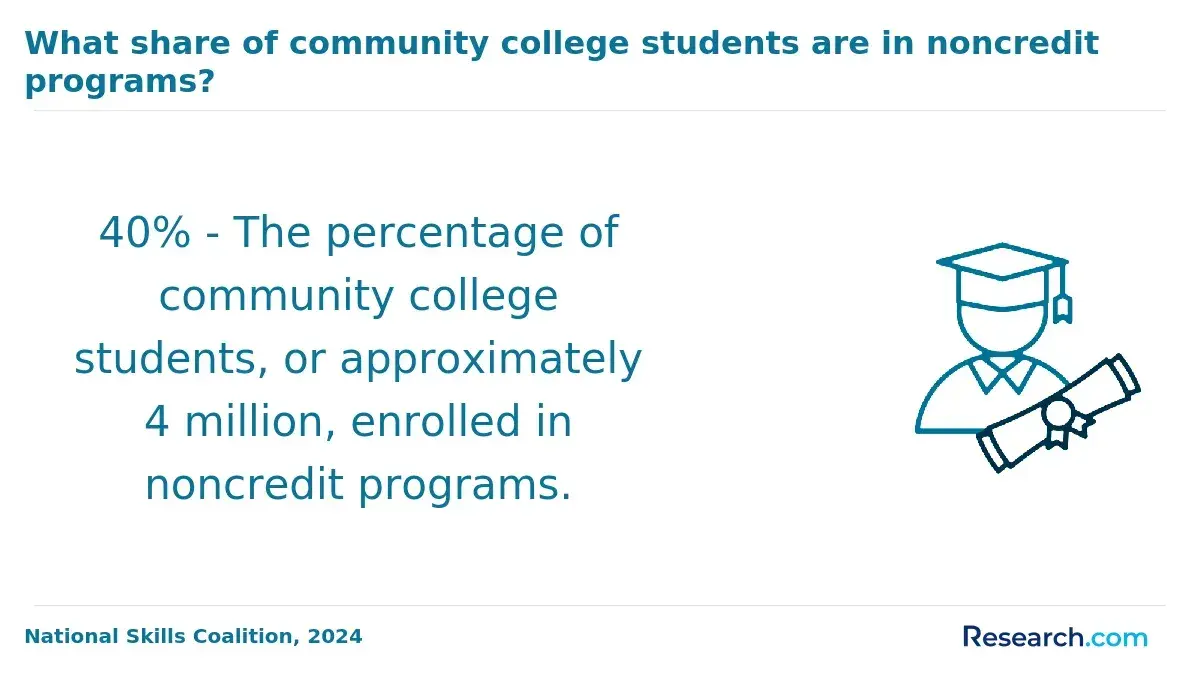
Costs vary widely because online health services doctorates may be offered by public universities, private nonprofit universities, and private for-profit institutions. The biggest drivers are tuition per credit, total required credits, transfer credit acceptance, residency fees, technology fees, project-course fees, books, travel, and how long you remain enrolled.
Graduate financing also matters. Federal Student Aid lists the annual Direct Unsubsidized Loan limit for most graduate and professional students at $20,500, which means students in higher-cost doctoral programs may need savings, employer tuition support, payment plans, scholarships, or Graduate PLUS loans to cover the remaining cost of attendance.
Because many schools publish tuition differently, compare total program cost rather than sticker tuition alone. The table below shows the major cost categories that can change what you actually pay.
| Cost factor | Why it matters | Questions to ask |
| Tuition per credit | Doctoral programs often price by credit, and total credits can differ substantially | How many credits are required after transfer evaluation? |
| Project or capstone enrollment | Some students pay additional terms while completing the final project | Is there a continuation fee if the project takes longer than planned? |
| Residency or intensive requirements | Even online programs may require travel, lodging, or time away from work | Are any campus visits, immersions, or synchronous intensives required? |
| Clinical, practicum, or project-site costs | Students may need background checks, documentation, preceptor arrangements, or site approvals | Who is responsible for finding and approving the site? |
| Employer tuition assistance | Healthcare employers may support degrees tied to leadership, quality, nursing, or informatics roles | Does the employer require repayment if you leave within a certain period? |
| Transfer credit | Accepted graduate credits can reduce both time and tuition | What is the maximum transfer credit limit and which courses are eligible? |
If cost is the main concern, it may be wise to compare lower-cost undergraduate or graduate options before committing to a doctorate. For students still building credentials, a cheapest online healthcare administration degree pathway may provide a less expensive route into management before doctoral specialization.
Who Benefits Most From an Online Health Services Doctorate Without a Dissertation?
A dissertation-free online health services doctorate is usually best for experienced professionals who want to apply evidence to leadership, operations, clinical practice, education, health policy, quality improvement, informatics, or population health. It is less ideal for students whose main goal is full-time academic research or a tenure-track research appointment.
The best-fit students usually have enough professional context to identify a meaningful applied problem. They may already work in hospitals, health systems, clinics, insurance organizations, public health agencies, long-term care organizations, health technology companies, universities, or government programs.
This pathway is especially useful for professionals with goals like these:
- Moving from department-level management into senior healthcare administration, strategy, operations, or service-line leadership.
- Using evidence-based practice to improve quality, safety, patient experience, access, equity, or workflow outcomes.
- Teaching in health sciences, healthcare administration, nursing, public health, or allied health programs where a professional doctorate is accepted.
- Leading interdisciplinary teams that require knowledge of finance, regulation, analytics, ethics, informatics, and organizational change.
- Building credibility for consulting, program evaluation, accreditation readiness, or healthcare transformation work.
Students focused on health data, records governance, privacy, coding operations, or analytics should also compare doctorate plans with career-level compensation expectations. Reviewing health information management salary information can help determine whether a doctorate is necessary or whether certifications and experience may offer a better near-term return.
How Does a No-Dissertation Online Health Services Doctorate Affect Career Opportunities?
A no-dissertation doctorate can support career advancement when the degree aligns with the role. Employers in healthcare administration, clinical leadership, quality improvement, health education, informatics, and public health often value applied problem-solving, leadership experience, and measurable project outcomes. However, employer recognition varies by organization, job level, degree type, accreditation, and whether the role is practice-focused or research-focused.
The strongest career fit is usually in applied leadership. The BLS projects 23% growth for medical and health services managers from 2024 to 2034, which suggests continued demand for professionals who can manage complex healthcare operations. That projection does not mean a doctorate is required for every management role, but it does show why advanced leadership preparation may be attractive in competitive health systems.
The table below connects common career directions with the doctorate format that usually fits best.
| Career direction | How a no-dissertation doctorate may help | When a dissertation-based doctorate may be better |
| Healthcare executive or administrator | Supports applied leadership, strategy, finance, operations, and systems improvement | If the role requires deep research methodology or academic publication history |
| Quality improvement or patient safety leader | Directly matches applied project work, data-informed interventions, and implementation planning | If the role is housed in a research institute or requires original investigator-led studies |
| Health professions educator | May support teaching, curriculum design, program leadership, and applied scholarship | If seeking tenure-track faculty roles at research universities |
| Public health program leader | Fits practice-based policy, population health, equity, and program evaluation work | If pursuing epidemiology research or grant-funded investigator roles |
| Healthcare consultant | Provides credibility when paired with experience and project evidence | If consulting niche depends on formal research design or peer-reviewed scholarship |
Technology is also changing career expectations. Healthcare leaders are increasingly expected to understand analytics, automation, AI-supported decision tools, cybersecurity, telehealth workflows, and electronic health record optimization. A strong applied doctorate should help students evaluate technology ethically and operationally, not just discuss it in theory.
How Do No-Dissertation Online Health Services Doctorates Compare With Traditional Doctorates?
The best choice depends on what you want the doctorate to do for you. A no-dissertation professional doctorate is usually designed for applied leadership and practice improvement. A traditional PhD or dissertation-based doctorate is usually designed for scholarly research, theory development, and academic research preparation.
The table below gives a practical comparison for students deciding between a dissertation-free pathway and a traditional research doctorate.
| Decision factor | No-dissertation professional doctorate | Traditional dissertation-based doctorate |
| Primary goal | Apply evidence to improve healthcare practice, leadership, systems, or education | Produce original research that contributes to scholarly literature |
| Common degrees | DHA, DHSc, DNP, DMSc, some DrPH programs | PhD in health services, health policy, public health, nursing, or health sciences |
| Final product | Capstone, applied project, scholarly project, portfolio, or dissertation-in-practice | Dissertation with original research and formal defense |
| Best student profile | Working professional seeking leadership, practice improvement, or applied teaching roles | Student seeking research faculty roles, research administration, or advanced scholarly work |
| Research depth | Moderate to substantial applied research and evidence synthesis | Extensive research design, theory, methods, and independent scholarship |
| Career positioning | Strongest for practice-based leadership and organizational change | Strongest for research-intensive academia and investigator roles |
A common mistake is assuming one format is universally better. It is more accurate to ask which format fits the job you want. If your future role depends on publishing original studies, leading funded research, or competing for tenure-track positions, a dissertation-based PhD may be the stronger credential. If your future role depends on improving healthcare delivery, leading teams, managing systems, or teaching applied professional content, a dissertation-free doctorate may be more relevant.
How Should Students Choose an Online Health Services Doctorate Without a Dissertation?
Choosing the right program requires more than searching for "no dissertation." You need to evaluate the full academic model, the credibility of the institution, the fit with your career goals, and the true cost of completion.
Use the following steps to compare programs in a way that protects your time, money, and career options.
- Start with the career target. Identify whether you want executive leadership, clinical leadership, teaching, public health practice, consulting, informatics, or research-oriented work.
- Match the degree type to the field. A DHA may fit administration better than clinical practice, while a DNP is specific to nursing and a DrPH is usually public health oriented.
- Verify accreditation before discussing tuition, admissions, or speed. Do not rely only on admissions representatives or marketing pages.
- Read the final project description in the catalog. Confirm whether the program requires a capstone, applied doctoral project, scholarly project, portfolio, dissertation-in-practice, or dissertation.
- Ask how project topics are approved. A good program should explain faculty mentoring, review milestones, data expectations, ethical review, and final evaluation.
- Check online format details. Look for synchronous class times, campus residencies, practicum hours, project-site requirements, and state authorization limits.
- Calculate total cost to completion. Include tuition, fees, continuation enrollment, travel, books, software, background checks, and possible lost work time.
- Review faculty expertise and student support. Look for faculty with healthcare leadership, research, policy, informatics, quality, or clinical practice experience aligned with your goals.
- Ask employers or professional mentors how the degree is viewed. Recognition can vary by health system, academic employer, government agency, and licensing environment.
- Compare alternatives. A certificate, master's degree, professional certification, or dissertation-based PhD may be better depending on your career stage.
Red flags include vague accreditation claims, pressure to enroll quickly, unclear project requirements, unusually short completion promises, limited faculty information, hidden residency costs, and refusal to provide a current catalog. A credible dissertation-free doctorate should make the final requirement easier to understand, not easier to hide.
Other Things You Should Know About Health Services
In academic and professional contexts, graduates of accredited doctoral programs may generally use the title, but workplace rules, state regulations, clinical licensure standards, and patient-facing disclosure requirements can vary. Clinicians should follow their licensing board's guidance.
Many professional doctorate programs do not require the GRE, especially for applicants with a relevant master's degree and professional experience. Requirements vary, so check the admissions page and current catalog for each school.
Many online DHA, DHSc, DNP, and DrPH programs are designed for working professionals, but full-time work can still be demanding during project, practicum, or residency phases. Ask how many hours students typically spend each week on coursework and final project milestones.
Possibly. Some programs accept a limited number of graduate transfer credits, but doctoral core courses, research courses, and final project credits often must be completed at the degree-granting institution.
References
- Health Science Ph.D. (Online/Hybrid) - Degree Info & School Reviews https://www.edumed.org/online-schools/health-science-degrees/phd-doctorate/
- 90+ Online Ed.D. Programs With No Dissertation in 2026 https://www.eddprograms.org/schools/no-dissertation/
- 1-2 Year Doctoral Programs Online: Top Schools & More https://www.phds.me/online-programs/one-year-doctoral-programs/
- Online Doctorate in International Public Health https://www.euclid.int/online-doctorate-international-public-health/
- Master’s Thesis vs. PhD Dissertation: Key Differences and How to Publish Your Research Globally https://www.globalxpublications.com/blog/masters-thesis-vs-phd-dissertation-publish-globally
- How Long to Get a Doctor of Health Science? | University of Bridgeport https://www.bridgeport.edu/news/doctor-of-health-science-online-length-of-program/
- What Is a Non-Dissertation Doctorate, and Is It Right for You? https://www.snu.edu/blog/what-is-a-non-dissertation-doctorate-and-is-it-right-for-you
- Online Ed.D. in Healthcare Leadership | No Dissertation https://blog.methodistcollege.edu/doctorate-degree-online-no-dissertation
- Best Online PhDs in Health Sciences https://www.onlineu.com/degrees/doctoral-health-sciences


