2027 Online Health Services Doctorate Programs That Do Not Require the GRE or GMAT

Co-Founder and Chief Data Scientist
Choosing an online health services doctorate is harder when admissions rules vary by school, degree type, and career goal. Many programs now remove GRE or GMAT requirements, shifting attention to experience, GPA, leadership, and fit.
The timing matters: the U.S. Bureau of Labor Statistics reports that medical and health services manager roles have a 2024 median salary of $117,960 and a projected 23% growth rate from 2024 to 2034. This guide helps working healthcare professionals compare no-test doctorate options, avoid weak programs, and decide whether applying without standardized scores is the right move.
Key Things You Should Know
- No-GRE and no-GMAT online health services doctorate programs are common in applied doctorates such as DHA, DHSc, DrPH, and some healthcare leadership-focused PhD programs, but applicants should verify current catalog language because test policies can change by term.
- Skipping the GRE or GMAT does not remove selectivity; programs often weigh graduate GPA, healthcare leadership experience, writing ability, recommendations, interviews, and alignment with a dissertation or capstone topic more heavily.
- The strongest career fit is usually for professionals pursuing senior healthcare administration, policy, consulting, teaching, population health, or health systems leadership roles; BLS data shows medical and health services managers had a 2024 median salary of $117,960.
Which Online Health Services Doctorate Programs Do Not Require the GRE or GMAT?
Online health services doctorate programs that do not require the GRE or GMAT are typically designed for experienced professionals rather than recent undergraduates. The most common options are the Doctor of Health Administration, Doctor of Healthcare Administration, Doctor of Health Sciences, Doctor of Public Health, and selected PhD programs in health services, health leadership, or healthcare management.
"No GRE" usually means the program does not ask for Graduate Record Examination scores. "No GMAT" means it does not require the Graduate Management Admission Test, which is more common in business-school-based healthcare management programs.
Some schools are test-free, meaning scores are not reviewed at all, while others are test-optional, meaning applicants may submit scores if they believe the scores strengthen the file.
The table below summarizes common online doctorate pathways in health services and how no-test admissions usually work. Use it as a starting point, not as a substitute for checking each school's current admissions page before applying:
| Program type | Common online degree names | Typical GRE or GMAT policy | Best fit | What to verify before applying |
| Healthcare administration doctorate | DHA, Doctor of Healthcare Administration, Doctor of Health Administration | Often no GRE or GMAT | Hospital, clinic, payer, long-term care, or healthcare operations leaders | Required management experience, capstone or dissertation format, and accreditation |
| Health sciences doctorate | DHSc, Doctor of Health Sciences | Often no GRE; GMAT is uncommon | Clinicians, educators, allied health leaders, and interdisciplinary healthcare professionals | Clinical background expectations, teaching outcomes, and applied research requirements |
| Public health doctorate | DrPH with health services, leadership, policy, or management focus | Frequently no GRE or test-optional, depending on school | Population health, policy, nonprofit, government, and public health leadership professionals | CEPH accreditation, practicum expectations, and in-person institute requirements |
| Research doctorate | PhD in Health Services, Health Policy, Health Systems, or Healthcare Management | Varies; some are test-optional, while others still request scores | Future researchers, faculty, policy analysts, and evidence-based health systems leaders | Faculty research match, dissertation expectations, statistics prerequisites, and funding model |
| Business-focused healthcare doctorate | DBA in Healthcare Management or Healthcare Administration | Often no GMAT, but policy varies | Executives focused on strategy, finance, organizational leadership, and consulting | Business accreditation, healthcare course depth, and whether the curriculum is healthcare-specific |
Examples of universities that have offered online or primarily online health administration, health sciences, or healthcare leadership doctorates without a standard GRE or GMAT requirement include Franklin University, National University, Capella University, Walden University, University of Phoenix, A.T. Still University, and Medical University of South Carolina. Because admissions policies can shift, confirm whether the policy is test-free, test-optional, waiver-based, or program-specific before you pay an application fee.
Why Have Online Health Services Doctorate Programs Eliminated GRE and GMAT Requirements?
Many online health services doctorate programs have eliminated GRE and GMAT requirements because their applicant pools are different from traditional full-time doctoral cohorts. These programs often recruit mid-career administrators, clinicians, policy professionals, and executives whose performance can be evaluated through graduate coursework, professional leadership, writing samples, and applied problem-solving.
The shift also reflects a broader admissions trend: schools increasingly want evidence that predicts doctoral persistence in practice-based programs. For an experienced healthcare leader, a strong master's GPA, sustained management responsibility, and a focused capstone idea may say more about readiness than a standardized test taken years after completing formal math or verbal coursework.
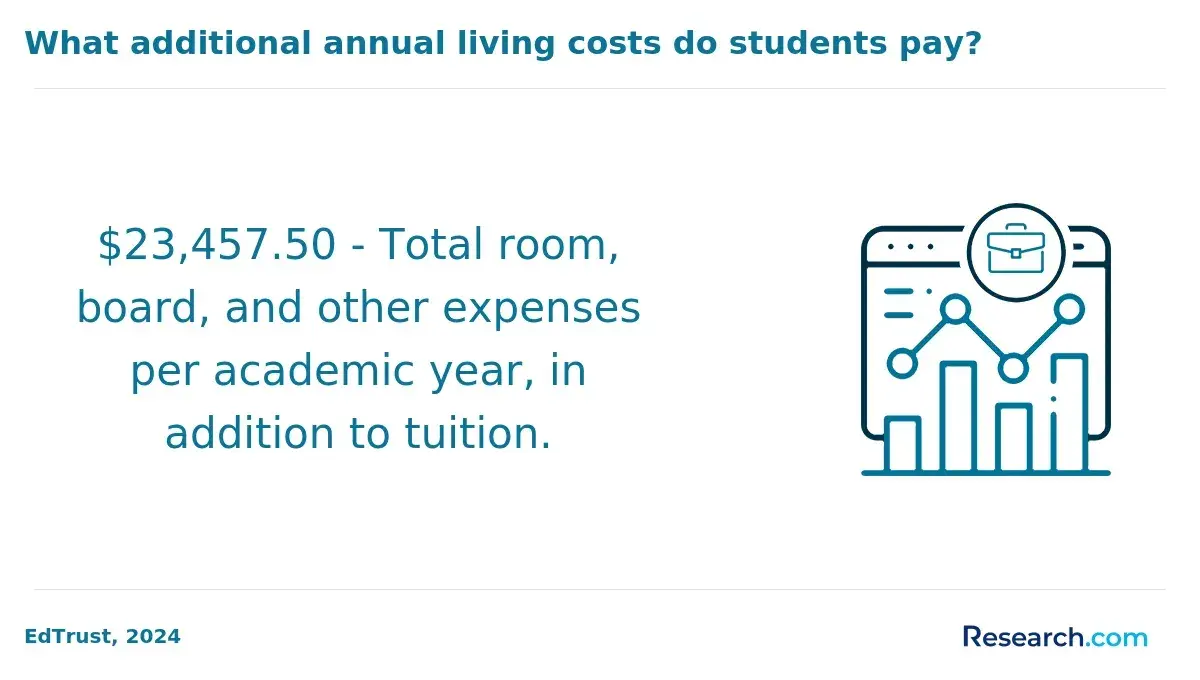
For students, this trend can reduce barriers. Test preparation can take months and may add costs for registration, prep materials, tutoring, and retesting. For schools, test-free admissions can widen access to applicants from clinical, rural, military, first-generation, and nontraditional backgrounds without necessarily lowering academic standards.
However, no-test admissions do not mean no-evidence admissions. Schools still need proof that applicants can succeed in doctoral-level reading, writing, statistics, leadership analysis, and independent research. In many programs, the absence of test scores simply moves more weight onto the rest of the application.
Decision point: A no-GRE or no-GMAT policy is most valuable when the rest of your application is strong. If your GPA, writing sample, experience, and recommendations are weak, skipping the test will not automatically make admission easier.
What Admissions Factors Matter Most Without GRE or GMAT Scores?
Without GRE or GMAT scores, admissions committees usually look for evidence that you can complete doctoral work while connecting your studies to real healthcare problems. Applicants moving from a masters in healthcare administration, public health, nursing, business, health informatics, or another related graduate program may already have several of the academic signals schools want to see.
The most important factors typically fall into a few categories. These materials help schools judge readiness, fit, and persistence when standardized testing is not part of the file:
- Graduate GPA and transcript pattern: Programs often look beyond the final GPA to see whether you performed well in research, statistics, finance, policy, leadership, or writing-intensive courses.
- Relevant professional experience: Healthcare leadership, clinical supervision, project management, quality improvement, policy work, informatics, or administrative responsibility can show that you understand the field's real problems.
- Statement of purpose: A strong essay explains why the doctorate is necessary for your goal, what problem you want to study, and why the program's curriculum fits that plan.
- Writing sample or scholarly work: Some schools use writing samples to assess whether you can synthesize evidence, cite sources, and communicate at a doctoral level.
- Recommendations: The strongest letters come from supervisors, faculty, executives, or clinical leaders who can describe your analytical ability, judgment, communication, and readiness for advanced work.
- Interview performance: Interviews may test whether your goals are realistic, whether you understand doctoral workload, and whether you can contribute to peer-based learning.
- Research or capstone alignment: Programs may favor applicants whose interests match faculty expertise, institutional priorities, or applied healthcare leadership themes.
If your academic record has a weakness, address it directly. For example, an applicant with a lower graduate GPA can strengthen the file with recent statistics coursework, professional certifications, published work, a strong supervisor letter, or evidence of leading measurable healthcare improvement projects.
Are No-GRE or No-GMAT Online Health Services Doctorate Programs Easier to Get Into?
No-GRE and no-GMAT online health services doctorate programs can be easier to apply to, but they are not always easier to get into. The application process may be faster and less expensive because you do not need to schedule, prepare for, and report standardized tests. The admissions decision, however, may still be selective.
The key distinction is between lower application friction and lower academic expectations. A test-free program may remove one hurdle while increasing scrutiny of your professional record, writing ability, and fit with the degree. In applied doctoral programs, committees may care more about whether you can turn experience into evidence-based leadership than whether you can produce a high test score.
The following comparison shows how admissions pathways differ. It helps applicants decide whether a no-test program is truly the best match or simply the most convenient option:
| Admissions policy | What it means | When it helps applicants | When applicants should be cautious |
| Test-free | GRE or GMAT scores are not required and may not be reviewed | You have strong experience, GPA, writing, and recommendations | You were hoping a high score would offset weaker academic or professional evidence |
| Test-optional | Scores are not required, but you may submit them | You have competitive scores that add evidence of quantitative or verbal readiness | Your scores are average or weak compared with the rest of your application |
| Test waiver | The school may waive the test if you meet conditions such as GPA, degree, or experience thresholds | You meet the waiver criteria and can document them clearly | You assume the waiver is automatic without written confirmation |
| Test-required | Scores must be submitted unless the school grants an exception | You are a strong test-taker and the program is otherwise a top fit | Testing delays could cause you to miss the deadline |
Taking the GRE or GMAT can still make sense if the program is highly competitive, your GPA is below the preferred range, you lack recent graduate coursework, or the school explicitly says strong optional scores can support the application. If the program is truly test-free, however, your time is usually better spent improving your statement, securing strong recommendations, and clarifying your doctoral goal.
Does Skipping the GRE or GMAT Affect the Quality of an Online Health Services Doctorate?
Skipping the GRE or GMAT does not automatically affect program quality. Quality depends more on accreditation, curriculum depth, faculty qualifications, student support, research or capstone expectations, graduation requirements, and employer recognition than on whether a standardized test is required.
Accreditation should be the first quality check. At minimum, the university should hold institutional accreditation recognized by the U.S. Department of Education or the Council for Higher Education Accreditation. Depending on the degree, specialized accreditation may also matter.
DrPH programs, for example, may be strengthened by CEPH accreditation, while business-focused healthcare doctorates may emphasize business school accreditation. Healthcare administration programs may also highlight CAHME alignment or related quality markers, though CAHME most commonly accredits master's-level healthcare management programs.
Quality also depends on the program's doctoral model. Some health services doctorates are applied and culminate in a capstone or practice-based project. Others are research doctorates that require a dissertation. Neither format is automatically better; the right choice depends on your goal:
| Quality factor | Why it matters | What to look for |
| Institutional accreditation | Supports eligibility for federal aid, transfer recognition, and employer acceptance | A regionally or nationally accredited institution listed by recognized accrediting bodies |
| Curriculum fit | Determines whether the degree supports administration, policy, research, teaching, or clinical leadership goals | Courses in health systems, finance, quality, policy, analytics, ethics, leadership, and research methods |
| Faculty expertise | Influences mentorship quality and dissertation or capstone alignment | Faculty with healthcare leadership, public health, policy, research, informatics, or executive experience |
| Doctoral project structure | Affects time to completion and career relevance | Clear dissertation, doctoral project, or capstone milestones with advising support |
| Online support | Online doctoral students often need structured advising to persist | Writing support, library access, statistics help, cohort advising, and transparent milestone tracking |
| Residency requirements | Impacts travel cost and scheduling flexibility | Clear expectations for virtual intensives, campus residencies, or practicum experiences |
Employers and academic institutions generally care less about the missing GRE or GMAT requirement and more about whether the doctorate came from a credible university and whether the graduate can demonstrate advanced expertise. A no-test policy is an admissions feature, not a quality rating.
Which Students Benefit Most From Online Health Services Doctorate Programs Without GRE or GMAT Requirements?
No-GRE and no-GMAT online health services doctorate programs are especially useful for professionals whose strongest qualifications come from experience, leadership, and prior graduate success rather than standardized testing.
They can be a good fit for people who already work in healthcare and need a flexible doctoral pathway that supports advancement without pausing their careers.
The best-fit applicants usually share several traits. The list below can help you decide whether a test-free admissions route aligns with your profile:
- Experienced healthcare managers: Directors, administrators, department heads, and operations leaders can use a doctorate to deepen strategy, policy, finance, and systems-level decision-making skills.
- Clinicians moving into leadership: Nurses, therapists, physicians, pharmacists, and allied health professionals may benefit if they want to move from direct care into administration, education, quality improvement, or population health leadership.
- Public health and policy professionals: Applicants working in government, nonprofits, community health, or health equity roles may prefer DrPH or health policy doctorates that evaluate applied leadership more than test scores.
- Working adults with limited testing time: Professionals balancing full-time work, family responsibilities, and continuing education can avoid months of test preparation if their application is already strong.
- Applicants with older graduate degrees: Mid-career professionals who completed a master's years ago may prefer programs that evaluate current leadership and writing ability instead of recent test performance.
These programs may be a poor fit if you are looking for a quick credential, do not have a clear career goal, dislike independent writing, or need a fully funded research doctorate. They may also be less ideal if you want a tenure-track faculty career in a research-intensive university, where a traditional PhD with strong research mentorship may carry more weight.
Employer Confidence in Online vs. In-Person Degree Skills, Global 2024

How Do Tuition and Financial Aid Compare for No-GRE Online Health Services Doctorate Programs?
Tuition for online health services doctorate programs varies widely because schools use different credit requirements, per-credit rates, residency fees, technology fees, and dissertation continuation charges. A no-GRE policy may save application-related costs, but it does not necessarily mean the program itself is affordable. Students comparing doctorate options after researching a cheapest online healthcare administration degree should be especially careful because doctoral pricing often works differently from undergraduate or master's pricing.
Federal loan costs are also a major factor. For the 2025-2026 academic year, Federal Student Aid lists a 7.94% interest rate for Direct Unsubsidized Loans for graduate and professional students and an 8.94% rate for Direct PLUS Loans. That matters because many doctoral students borrow at graduate loan rates, so reducing unnecessary credits, repeated courses, or extended dissertation enrollment can affect total repayment cost.
When comparing programs, look beyond the advertised tuition rate. The following cost categories are the ones most likely to change the real price of an online doctorate:
- Total credits required: A lower per-credit price can still lead to a high total cost if the program requires more credits than comparable options.
- Dissertation or capstone fees: Some students pay additional tuition or continuation fees while completing the final doctoral project.
- Residency and travel costs: Online programs may still require campus visits, intensives, practicums, or professional presentations.
- Employer tuition benefits: Hospitals, health systems, insurers, universities, and government employers may offer tuition assistance, but annual caps and repayment rules vary.
- Transfer or advanced standing credits: Some programs accept limited doctoral, graduate, or professional credits, while others require all coursework to be completed in residence.
- Scholarships and assistantships: Applied online doctorates may offer fewer assistantships than full-time research PhD programs, so ask early about institutional scholarships and departmental aid.
A practical ROI comparison should include the full program cost, likely time to completion, whether you can keep working, and whether the degree aligns with roles that actually require or reward doctoral preparation. The cheapest program is not always the best value if it lacks support, has unclear milestones, or does not match your career direction.
What Career Outcomes Can Graduates Expect From No-GRE Online Health Services Doctorate Programs?
Graduates of online health services doctorate programs often pursue senior leadership, consulting, policy, teaching, analytics, quality improvement, and research-adjacent roles. The degree can support advancement, but outcomes depend on prior experience, employer expectations, geography, institutional reputation, and the student's ability to translate doctoral work into measurable expertise.
The labor market for healthcare leadership remains strong. The U.S. Bureau of Labor Statistics reports that medical and health services managers had a 2024 median salary of $117,960, with employment projected to grow 23% from 2024 to 2034. This does not mean a doctorate automatically produces that salary; rather, it shows that the broader management field is expanding as healthcare systems need leaders who can manage operations, finance, compliance, quality, and data-driven improvement.
Career paths can differ by doctorate type. A DHA or healthcare administration doctorate often fits executive operations and systems leadership. A DHSc may support clinical education, interdisciplinary leadership, or allied health administration. A DrPH is often stronger for population health, government, policy, and public health leadership. A PhD is typically the better fit for research-intensive academic or policy analysis careers.
Students interested in data, compliance, informatics, and healthcare records leadership should also compare doctoral study with field-specific career paths. For example, reviewing health information management salary trends can help determine whether a doctorate, certification, or specialized master's credential is the more efficient route.
| Career direction | Relevant doctorate type | Common responsibilities | Important non-degree factors |
| Healthcare executive leadership | DHA, DBA in Healthcare Management, DHSc | Strategic planning, operations, finance, staffing, quality improvement, and compliance | Prior management scope, budget responsibility, and measurable leadership results |
| Public health leadership | DrPH, health policy doctorate | Program design, policy implementation, health equity strategy, community health, and population analytics | Public health experience, policy skills, grant experience, and stakeholder management |
| Academic teaching | DHSc, DHA, DrPH, PhD | Teaching, curriculum design, student mentoring, and applied scholarship | Publications, teaching experience, accreditation expectations, and institution type |
| Healthcare consulting | DHA, DBA, DHSc, PhD | Process improvement, market analysis, organizational change, technology adoption, and executive advising | Industry network, niche expertise, client results, and communication skills |
| Research and policy analysis | PhD, DrPH, health services research doctorate | Study design, data analysis, outcomes research, policy evaluation, and evidence synthesis | Statistical training, publications, faculty mentorship, and research portfolio |
Current healthcare leadership roles increasingly require comfort with analytics, digital health tools, artificial intelligence governance, patient privacy, value-based care, and interdisciplinary team management. A strong doctorate should help students evaluate evidence and lead change, not just add letters after their name.
What Common Application Mistakes Reduce Admission Chances to No-GRE Online Health Services Doctorate Programs?
The most common mistake is assuming that no GRE or GMAT means easy admission. In reality, a test-free policy often makes the rest of the application more important. Applicants who submit generic essays, vague goals, or weak recommendations may be less competitive than those who provide clear evidence of readiness.
Before applying, watch for mistakes that can weaken an otherwise qualified file. These issues are especially important when standardized test scores are not available to balance the application:
- Choosing a program only because it has no test requirement: Admissions convenience should not outweigh accreditation, curriculum fit, faculty support, and career relevance.
- Submitting a generic personal statement: A strong statement connects your background, doctoral goals, target problem, and reason for choosing that specific program.
- Ignoring minimum GPA or prerequisite rules: Some programs still enforce GPA thresholds, graduate degree requirements, statistics prerequisites, or professional experience expectations.
- Using weak recommendation writers: Choose people who can evaluate your leadership, writing, judgment, analytical ability, and readiness for doctoral-level work.
- Overlooking residency or practicum requirements: Online does not always mean fully remote, and travel obligations can affect cost and scheduling.
- Failing to explain academic weaknesses: If your transcript has low grades, withdrawals, or gaps, address them briefly and show evidence of recent readiness.
- Applying without a doctoral focus: You do not need a finished dissertation topic, but you should be able to identify a serious healthcare problem you want to study or solve.
Red flags also matter. Be cautious if a program is unclear about accreditation, promises unrealistic completion times, uses high-pressure admissions tactics, hides total costs, or cannot explain dissertation and capstone support. A legitimate no-test program should still be transparent about expectations.
How Should Students Compare Online Health Services Doctorate Programs Without GRE or GMAT Requirements?
The best way to compare no-GRE or no-GMAT online health services doctorate programs is to treat the test policy as one factor, not the deciding factor. Start with your career goal, then evaluate the degree type, accreditation, curriculum, cost, faculty, flexibility, and doctoral project structure. Students comparing timelines may also want to review accelerated healthcare programs to understand how speed, workload, and academic depth can differ across formats.
A structured comparison helps prevent impulse decisions. Use the steps below to narrow your list before contacting admissions offices:
- Define the outcome you want: Decide whether your goal is executive leadership, public health policy, teaching, consulting, research, informatics leadership, or clinical administration.
- Match the degree type to the goal: Compare DHA, DHSc, DrPH, PhD, and DBA pathways based on whether you need applied leadership training, public health expertise, research preparation, or business strategy.
- Verify accreditation: Confirm institutional accreditation first, then check whether specialized accreditation or professional recognition matters for your intended field.
- Read the admissions policy carefully: Identify whether the program is test-free, test-optional, or waiver-based, and ask whether optional scores help or are ignored.
- Calculate the total cost: Add tuition, fees, residency travel, books, dissertation continuation costs, and loan interest considerations.
- Compare doctoral milestones: Review coursework sequence, comprehensive exams, dissertation or capstone structure, practicum requirements, and expected advising frequency.
- Evaluate online flexibility: Ask whether courses are asynchronous, synchronous, cohort-based, self-paced, part-time, or full-time.
- Assess support services: Look for doctoral writing support, research librarians, statistics tutoring, faculty advising, career services, and clear escalation processes when students fall behind.
- Ask about completion data: Request available information on time to completion, attrition, dissertation support, and recent graduate outcomes.
- Compare at least three programs: A side-by-side review makes it easier to spot hidden costs, weak fit, or overly aggressive marketing.
Ask admissions counselors direct questions: Will GRE or GMAT scores be reviewed if submitted? How many students finish within the advertised timeline? What happens if the dissertation takes longer than expected? Are faculty available for the topic you want to study? What costs are not included in tuition? The answers can reveal whether the program's flexibility is matched by real academic support.
Other Things You Should Know About Health Services
Health services is a broader term that can include healthcare delivery, policy, public health, patient access, quality, informatics, and systems improvement. Healthcare administration usually focuses more directly on managing organizations, departments, budgets, staff, and operations.
Many online programs are designed for working professionals, but the workload can still be demanding. Ask about weekly time expectations, synchronous class times, residency requirements, dissertation milestones, and whether part-time enrollment is allowed.
The doctorate itself usually does not create a healthcare license. Licensure depends on the profession and state, such as nursing, medicine, counseling, or therapy. If your goal involves regulated clinical practice, check your state licensing board before enrolling.
No. Some programs require a traditional dissertation, while others use an applied doctoral project, capstone, or practice-based research project. Choose the format that best matches your goal: research careers usually favor a dissertation, while executive leadership roles may benefit from an applied project.
References
- Comparing Doctorate Programs for PAs, NPs, MDs, Chiropractors, and Podiatrists https://www.padoc.org/post/comparing-doctorate-programs-for-pas-nps-mds-chiropractors-and-podiatrists
- Average Cost of a Doctorate Degree [2026]: Ph.D., Psy.D. & More https://educationdata.org/average-cost-of-a-doctorate-degree
- MPH Programs With No GRE Requirement (2026) https://www.publichealthonline.org/mph-no-gre/
- Online MHA Programs No GRE Required (including GRE Waiver) https://www.mhaonline.com/faq/no-gre-online-mha-programs
- 2025 Online EdD Programs No GRE Required (Doctor of Education No GRE) https://www.onlineeddprograms.com/faqs/gre-mat-gmat-requirements
- Health Science Ph.D. (Online/Hybrid) - Degree Info & School Reviews https://www.edumed.org/online-schools/health-science-degrees/phd-doctorate/
- Online MHA Programs No GRE Required or That Offer a GRE Waiver https://www.onlineeducation.com/healthcare/faqs/gre-requirements-online-mha-programs
- Best Online Ph.D. and Doctoral Programs | OEDb https://www.oedb.org/rankings/online-phd-programs/
- 2025 Most Affordable Online Doctorates in Education https://www.onlineu.com/most-affordable-colleges/education-doctoral-degrees