2027 Best Online Health Services Doctorate Programs for Consulting Careers

Co-Founder and Chief Data Scientist
Consultants in healthcare are often hired to solve problems involving cost, access, quality, data, operations, and strategy. A Health Services doctorate can signal that you can evaluate evidence, lead complex change, and advise senior decision-makers. CMS reported that U. S. national health expenditures reached $4.9 trillion in 2023, underscoring why organizations need credible experts. This guide is for current consultants, healthcare leaders, and aspiring consultants comparing online doctoral options. You will learn which programs fit consulting goals, when the credential is worth it, and how to choose wisely.
Key Things to Know About Health Services Doctorate Programs for Consulting Careers
- An online Health Services doctorate is usually most valuable for consultants targeting executive advisory, healthcare strategy, policy, quality improvement, population health, analytics, or academic-consulting hybrid roles rather than entry-level consulting.
- The credential is optional for most consulting paths, but it can strengthen credibility in a market where BLS reported a $101,190 median annual wage for management analysts in May 2024 and strong demand for healthcare management expertise.
- Most strong-fit programs are applied doctorates such as DHA, DHSc, DrPH, or healthcare-focused DBA programs, often built for working professionals through online, hybrid, cohort, dissertation, or applied capstone formats.
How will a doctorate impact consulting careers in Health Services?
A Health Services doctorate is a terminal degree focused on healthcare systems, leadership, policy, operations, quality, population health, finance, research methods, and evidence-based decision-making. For consultants, its main value is not simply the title. It helps you build a defensible advisory approach: diagnose system problems, interpret healthcare data, design interventions, evaluate outcomes, and communicate recommendations to executives.
The impact is strongest when your consulting work depends on credibility with senior healthcare stakeholders. Hospitals, insurers, public health agencies, digital health companies, and private equity-backed healthcare groups often need advisors who can connect strategy with regulation, reimbursement, clinical workflow, patient outcomes, and organizational change.
BLS reported that medical and health services managers had a median annual wage of $117,960 in May 2024. That figure does not represent doctorate-holder consulting pay specifically, but it shows the market value of senior healthcare management expertise. For a consultant, the doctorate can help reposition your profile from generalist advisor to subject-matter expert in health systems performance.
The practical career impact often shows up in several ways. These are the areas where the degree can matter most for consulting professionals:
- Stronger executive credibility: A doctorate can help when advising C-suite leaders, boards, public agencies, or academic medical centers that value advanced credentials.
- Better evidence-based recommendations: Doctoral training usually deepens your ability to use research methods, outcomes data, and implementation science in client engagements.
- More specialized consulting positioning: You may be able to focus on areas such as value-based care, health equity, quality improvement, population health, revenue integrity, digital transformation, or healthcare workforce strategy.
- Potential access to teaching and thought leadership: The credential may support adjunct teaching, white papers, conference speaking, expert witness work, or advisory board participation.
- Higher-value client conversations: Consultants with doctoral-level training may be better prepared to discuss complex trade-offs involving cost, quality, access, compliance, and outcomes.
The limitation is important: a doctorate does not replace consulting experience, client management skills, industry relationships, or a strong track record. It is most powerful when layered onto meaningful healthcare, analytics, operations, policy, or consulting experience.
Is a Health Services doctorate a requirement to pursue consulting careers in the field?
No. A Health Services doctorate is usually not a formal requirement for healthcare consulting. Many consultants enter the field with an MBA, MHA, MPH, nursing degree, health informatics background, clinical credential, analytics experience, or years of healthcare leadership experience. If you are still building your foundation, a masters in healthcare administration may be a more practical first step than moving directly into a doctorate.
The doctorate becomes more relevant when your consulting goal depends on advanced authority. Examples include advising health systems on enterprise transformation, leading research-heavy engagements, consulting on policy implementation, developing evidence-based quality frameworks, or competing for senior independent consulting contracts where clients compare credentials closely.
This comparison can help you decide whether a doctorate is necessary, useful, or premature for your consulting path.
| Consulting goal | Is a doctorate usually needed? | Better-fit credential or experience | When a doctorate adds value |
| Entry-level healthcare consulting | No | Bachelor's, master's, internships, analytics skills | Usually later, after building client-facing experience |
| Hospital operations consulting | Not usually | MHA, MBA, Lean Six Sigma, healthcare operations experience | Helpful for senior advisory or systemwide transformation work |
| Health policy consulting | Sometimes | MPH, MPP, policy experience, data analysis | Valuable when research design, evaluation, or publication credibility matters |
| Population health or quality consulting | Sometimes | Clinical leadership, public health, quality improvement experience | Useful for evidence-based intervention design and outcomes evaluation |
| Independent executive consulting | Not required, but often helpful | Senior leadership record, niche expertise, referrals | Can strengthen credibility with boards, executives, and high-stakes clients |
| Academic consulting or thought leadership | Often helpful | Research, publications, teaching experience | Strong fit when you want to blend consulting with scholarship or teaching |
If your immediate goal is to get your first consulting job, the doctorate may not be the fastest route. If your goal is to become a recognized specialist, lead complex healthcare change, or differentiate yourself in senior advisory work, it can be a strategic investment.
What are the best online Health Services doctorate programs for consulting careers?
The best online Health Services doctorate for consulting is usually not the one with the most recognizable name alone. It is the program whose curriculum, research model, schedule, faculty expertise, and applied project structure match the consulting problems you want to solve.
The following programs are strong options to compare because they offer online or primarily online doctoral study in healthcare administration, health sciences, health services leadership, public health, or healthcare management. Always verify current modality, tuition, residency rules, accreditation status, and admissions requirements directly with the school before applying.
| Program | Doctorate type | Why it can fit consulting careers | Best for | Watch before applying |
| University of Mississippi Medical Center | Doctor of Health Administration | Public academic medical center context with emphasis on health administration, leadership, and applied healthcare systems knowledge | Healthcare managers moving into hospital, system, or policy consulting | Confirm current online requirements, campus expectations, and admissions experience expectations |
| Central Michigan University | Doctor of Health Administration | Executive-style doctoral structure with health services leadership and applied research components | Mid-career and senior professionals who want a structured cohort model | Review dissertation expectations and any synchronous or residency commitments |
| Medical University of South Carolina | Doctor of Health Administration | Health professions university setting with leadership-oriented preparation for complex healthcare organizations | Consultants interested in academic medical centers, care delivery, and executive healthcare leadership | Check current delivery format, campus intensives, and project requirements |
| Franklin University | Doctor of Healthcare Administration | Designed for working adults and focused on applied healthcare leadership, research, and organizational problem-solving | Working consultants who need online flexibility and a practice-oriented doctorate | Compare total cost, doctoral support, and dissertation timeline |
| A.T. Still University | Doctor of Health Sciences | Interdisciplinary health sciences orientation that can support population health, education, leadership, and health systems consulting | Clinicians, health educators, and population health professionals moving into advisory work | Make sure the curriculum aligns with business consulting, not only clinical or educational goals |
| Liberty University | Doctor of Business Administration in Healthcare Management | Business doctorate with healthcare management concentration, useful for consultants focused on strategy, leadership, and organizational performance | Consultants who want a business-first doctorate with healthcare specialization | Assess whether a DBA is better aligned than a DHA or DrPH for your target clients |
| Walden University | Doctor of Healthcare Administration | Online doctoral model with applied healthcare administration focus and broad access for working professionals | Professionals prioritizing flexibility and applied doctoral study | Examine student support, completion expectations, total cost, and employer perception |
| Capella University | Doctor of Health Administration or related healthcare leadership doctorate options | Competency-based and online doctoral pathways may appeal to experienced professionals seeking flexible progression | Self-directed learners with clear consulting goals and strong time-management skills | Clarify format, capstone or dissertation model, tuition structure, and doctoral milestones |
For consulting careers, shortlist programs by matching them to your intended advisory niche. A health system transformation consultant may benefit from a DHA, a population health consultant may prefer a DrPH or DHSc, and a strategy or operations consultant may find a healthcare-focused DBA more directly aligned.
Use this sequence when comparing programs so you do not overvalue brand name or speed at the expense of fit:
- Define the consulting niche you want to be known for, such as quality, strategy, policy, analytics, revenue cycle, population health, or digital health.
- Review the curriculum for courses that map directly to that niche and to real client problems.
- Compare dissertation, capstone, or applied project models and choose the one that can produce a portfolio-worthy consulting asset.
- Check whether faculty have healthcare leadership, policy, research, consulting, or systems transformation expertise.
- Ask admissions teams for completion expectations, residency rules, synchronous meeting times, and doctoral support resources.
- Estimate total cost, time away from billable work, employer tuition support, and the type of consulting revenue or opportunity the credential could realistically support.
Is work experience needed to enroll in a Health Services doctorate program?
Work experience is commonly expected, especially for DHA, DHSc, DrPH, and executive-style healthcare doctorates. Schools may not always require the same number of years, but the strongest applicants usually have healthcare leadership, clinical administration, consulting, quality improvement, analytics, public health, or policy experience. If you are earlier in your academic path, comparing the cheapest online healthcare administration degree options may make more sense before doctoral study.
The reason experience matters is practical. Applied doctorates are built around diagnosing real organizational problems. Without enough professional context, it can be harder to contribute to doctoral discussions, select a meaningful research topic, or translate coursework into consulting value.
This table summarizes how work experience expectations often differ by doctorate type. Exact requirements vary by school and should be confirmed in the current catalog.
| Doctorate type | Typical applicant profile | Experience importance | Consulting implication |
| DHA | Healthcare administrators, managers, executives, policy professionals | High | Best when you can apply coursework to operations, strategy, quality, or leadership problems |
| DHSc | Clinicians, health educators, allied health leaders, population health professionals | Moderate to high | Useful for clinical operations, workforce development, education, and population health consulting |
| DrPH | Public health practitioners, policy professionals, epidemiology or community health leaders | High | Strong fit for public health consulting, program evaluation, health equity, and policy implementation |
| Healthcare DBA | Business managers, executives, healthcare entrepreneurs, consultants | Moderate to high | Useful for strategy, finance, leadership, and organizational performance consulting |
| PhD in Health Services or related field | Research-oriented professionals, academics, analysts | Varies | Best for research consulting, academia, policy analysis, or evaluation-heavy advisory work |
If you do not yet have enough experience, you can strengthen your profile before applying. Focus on work that gives you measurable outcomes, not just job titles.
- Lead or contribute to a healthcare improvement project with measurable cost, quality, access, or patient experience outcomes.
- Build data skills in Excel, SQL, Tableau, Power BI, R, Python, or healthcare analytics platforms.
- Gain exposure to reimbursement, value-based care, compliance, quality reporting, or health information systems.
- Seek client-facing, cross-functional, or executive presentation experience if you want consulting roles.
- Publish, present, or document a project that shows your ability to turn evidence into decisions.
A common mistake is enrolling too early because the program is available online. The better question is whether you have enough professional context to turn doctoral assignments into a consulting portfolio.
Do online Health Services doctorate programs require dissertations?
Some online Health Services doctorates require a traditional dissertation, while others use an applied dissertation, doctoral project, capstone, consulting-style project, or practice-based research study. The distinction matters because your final doctoral work can either support your consulting brand or become a long academic obligation that does not connect clearly to your market.
For consulting careers, neither option is automatically better. A traditional dissertation can be valuable if you want academic credibility, policy research work, publication opportunities, or evaluation consulting. A capstone or applied project may be better if you want to solve an organizational problem and show clients a practical framework.
This comparison can help you choose the doctoral completion model that fits your goals and tolerance for research intensity.
| Completion model | What it usually involves | Best consulting use | Main risk |
| Traditional dissertation | Original research with formal methodology, literature review, data analysis, and committee review | Research consulting, policy evaluation, academic consulting, publication-focused careers | Can take longer than expected if the topic, data access, or committee process becomes difficult |
| Applied dissertation | Research study focused on a practical healthcare administration or systems problem | Healthcare quality, operations, leadership, and implementation consulting | Still requires rigorous research design and sustained writing time |
| Doctoral capstone | Practice-focused project that addresses a real organizational or field problem | Independent consulting, portfolio development, executive advisory work | May carry less research weight for academic roles |
| Consulting-style doctoral project | Client-like assessment, intervention, evaluation, or strategic recommendation | Building a reusable consulting framework or niche expertise | Quality depends heavily on project scope, faculty support, and access to data |
Before choosing a program, ask direct questions about the final doctoral requirement. These questions can prevent surprises later:
- Is the final requirement a traditional dissertation, applied dissertation, capstone, or doctoral project?
- Can the topic be based on a real consulting, employer, or healthcare system problem?
- What data access is required, and who is responsible for securing it?
- How are chairs or committee members assigned?
- What support is available for research design, statistics, qualitative methods, and writing?
- What are the most common reasons students slow down near the dissertation or capstone stage?
Do not choose a non-dissertation program simply because it sounds easier. The strongest capstones still require rigorous analysis, disciplined project management, and evidence-based recommendations.
How flexible are online Health Services doctorate programs for consulting professionals?
Online Health Services doctorate programs are often designed for working adults, but flexibility varies widely. Some are mostly asynchronous, some use live evening sessions, some require residencies, and some follow a fixed cohort schedule. If speed is a major concern, it may help to understand how accelerated healthcare programs structure compressed learning before assuming that faster doctoral study is better.
For consultants, flexibility should be judged against client travel, proposal deadlines, implementation sprints, and unpredictable workload cycles. A program that looks manageable during a slow month may become difficult during a major engagement.
This table summarizes the flexibility features that matter most for working consulting professionals.
| Flexibility feature | Why it matters for consultants | Best fit | Potential drawback |
| Asynchronous coursework | Allows weekly work to be completed around client schedules | Consultants with variable travel or deadlines | Requires strong self-discipline and planning |
| Live online sessions | Creates structure, discussion, and faculty access | Learners who benefit from accountability | Can conflict with client meetings or time zones |
| Cohort model | Builds peer network and predictable progression | Professionals who want community and structure | Less flexibility if you need to pause or slow down |
| Self-paced or competency-based elements | May allow faster progress through familiar material | Experienced, self-directed learners | Can be isolating and may require careful cost tracking |
| Low-residency format | Combines online learning with short in-person intensives | Professionals who value networking and faculty contact | Adds travel cost and scheduling constraints |
| Part-time enrollment | Reduces weekly workload and protects billable work | Active consultants and senior leaders | Extends time to completion |
BLS projected employment for management analysts to grow 9% from 2024 to 2034, faster than the average for all occupations. For healthcare consultants, that demand can make flexibility especially important: leaving the workforce for full-time study may not be necessary if your current role is already building marketable expertise.
When comparing flexibility, do not rely only on phrases such as "100% online" or "built for working professionals." Ask for specifics about weekly workload, synchronous sessions, residency dates, comprehensive exams, dissertation milestones, and whether leaves of absence are allowed.
What should you look for in Health Services doctorate programs for consulting careers?
A strong online Health Services doctorate should help you become a better advisor, not just complete advanced coursework. For consulting careers, program quality depends on fit, credibility, practical application, faculty support, and the ability to produce work that clients or employers will respect.
Use the following checklist as a practical screening tool when reviewing programs. It focuses on the features that most directly affect consulting readiness.
- Institutional accreditation: Confirm the university is accredited by a recognized institutional accreditor and understand that specialized accreditation rules vary by program type.
- Consulting-relevant curriculum: Look for courses in healthcare strategy, finance, quality improvement, health policy, analytics, leadership, organizational change, population health, and implementation.
- Applied research fit: Choose a program that lets you study real healthcare problems that connect to your consulting niche.
- Faculty expertise: Review whether faculty have healthcare leadership, research, policy, analytics, or consulting experience relevant to your goals.
- Doctoral support: Ask about writing support, methods coaching, dissertation or capstone advising, library resources, and milestone tracking.
- Transparent cost: Compare total tuition, fees, residency travel, continuation courses, technology fees, and the cost of extending dissertation work.
- Schedule realism: Match the program's pace to your client workload, family responsibilities, and travel demands.
- Employer and client perception: Consider how the degree type and institution will be viewed in your target consulting market.
- Portfolio value: Prioritize programs that help you create frameworks, research, evaluations, or strategic tools you can discuss with future clients.
Red flags are just as important as positive features. Be cautious if a program emphasizes speed more than rigor, avoids clear answers about dissertation completion, provides vague tuition estimates, lacks transparent faculty information, or cannot explain how online doctoral students are supported through the final project stage.
A common mistake is choosing a program based on name recognition alone. For consulting, a less famous program with the right applied research structure, healthcare curriculum, and faculty support may serve you better than a better-known option that does not match your niche.
What skills can consulting professionals gain from an online Health Services doctorate?
An online Health Services doctorate can develop skills that are difficult to build through routine work alone because doctoral study forces you to connect theory, evidence, data, ethics, and implementation. The most valuable skills are the ones that improve how you diagnose problems and defend recommendations.
The table below maps common doctoral skill areas to consulting responsibilities. Use it to identify whether a program's curriculum matches the work you want to do.
| Skill area | What doctoral study can develop | Consulting application |
| Research methods | Ability to design studies, evaluate evidence, and understand limitations | Assess whether a client's proposed intervention is supported by data |
| Healthcare analytics | Use of quantitative and qualitative evidence to interpret performance | Build dashboards, evaluate outcomes, and identify operational drivers |
| Policy and regulation | Understanding of reimbursement, compliance, public programs, and policy implementation | Advise clients on strategic responses to regulatory and payment changes |
| Quality improvement | Frameworks for improving safety, outcomes, efficiency, and patient experience | Design improvement initiatives and measure results |
| Strategic leadership | Change management, governance, stakeholder alignment, and decision-making | Guide executives through complex transformation efforts |
| Population health | Systems thinking around communities, risk, prevention, equity, and outcomes | Support value-based care, public health, and health equity consulting |
| Ethical decision-making | Structured thinking about trade-offs, equity, privacy, and organizational responsibility | Help clients evaluate high-stakes decisions beyond financial impact |
| Scholarly communication | Clear writing, evidence synthesis, presentations, and defensible recommendations | Create executive reports, white papers, proposals, and thought leadership |
AI is also changing what healthcare consultants need to know. Clients increasingly expect advisors to understand data governance, algorithmic bias, workflow integration, privacy, and change management around technology adoption. A strong doctoral program will not treat AI as a gimmick; it will help you evaluate whether technology actually improves outcomes, efficiency, or decision quality.
The skill gap to watch is translation. Many professionals can interpret healthcare data, and many can present strategy. Doctoral-level consultants are expected to connect evidence, operations, stakeholder behavior, and measurable impact in a way clients can act on.
Can an online Health Services doctorate credential increase your income potential as a consultant?
It can, but it should not be viewed as a guaranteed salary booster. Consulting income depends on role level, niche, employer type, client base, reputation, geography, billable rates, business development ability, and prior leadership experience. The doctorate may increase income potential when it helps you compete for higher-level advisory roles, premium independent consulting engagements, expert work, or leadership positions that feed consulting opportunities.
BLS reported a May 2024 median annual wage of $101,190 for management analysts. That broad category includes many consultants outside healthcare and does not isolate doctorate holders, but it gives a useful baseline for evaluating whether the time and cost of a doctorate are proportional to your target role. If your work is closer to health data, informatics, or information governance, reviewing health information management salary benchmarks can also help you compare adjacent career paths.
This table shows how the credential may influence income potential across consulting-related paths without implying guaranteed outcomes.
| Career path | How a doctorate may help | When ROI is more likely | When ROI is weaker |
| Healthcare strategy consultant | Signals deep systems knowledge and supports executive credibility | You already have consulting experience or healthcare leadership experience | You lack client-facing experience or business development skills |
| Quality and performance improvement consultant | Strengthens evidence-based improvement and evaluation skills | Your doctoral project produces a practical framework or measurable case study | The curriculum is too theoretical for operational consulting |
| Health policy consultant | Supports research, evaluation, and policy implementation expertise | You work with agencies, nonprofits, payers, or policy-focused firms | You do not build strong quantitative, qualitative, or writing skills |
| Independent consultant | Can differentiate your brand and justify expert positioning | You have a defined niche, referral network, and pricing strategy | You expect the credential alone to generate clients |
| Healthcare executive with consulting side work | Can support speaking, advisory, and board-related opportunities | You use the doctorate to deepen a recognized area of expertise | Your employer restricts outside consulting or conflicts of interest |
| Academic or research consultant | May improve eligibility for teaching, evaluation, and research-based advisory work | You publish, present, or build a research portfolio | You choose a practice doctorate when your goal requires research-heavy academic credentials |
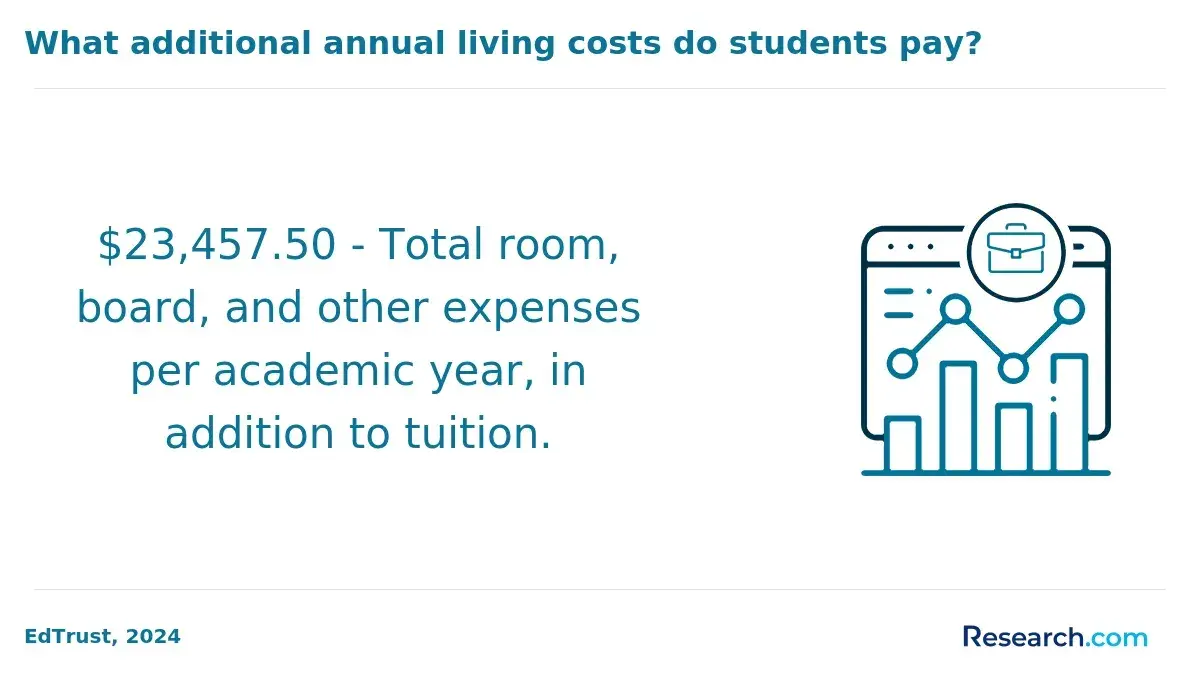
To evaluate ROI, estimate total program cost and opportunity cost, not tuition alone. Include fees, travel, books, reduced billable hours, dissertation extensions, and the time required to turn the degree into marketable consulting work.
A practical ROI test is simple: identify three specific consulting opportunities the doctorate could help you pursue, then estimate whether those opportunities require the credential, merely prefer it, or care more about experience. If you cannot name those opportunities yet, waiting may be financially smarter.
Is an online Health Services doctorate the right next step for your consulting career?
An online Health Services doctorate may be the right next step if you already have a clear consulting direction and need deeper credibility, research capability, or healthcare systems expertise. It is less likely to be the right move if you are still exploring the field, need entry-level experience, or assume the credential will automatically produce clients or promotions.
Use this readiness self-assessment before applying. It can help you decide whether to enroll now, wait, or pursue a different credential first.
- Your consulting niche is clear: You can name the healthcare problems you want to advise on and the clients you want to serve.
- You have relevant experience: You have led, analyzed, managed, or advised on healthcare problems that could support doctoral-level projects.
- You need doctoral-level credibility: Your target roles involve executive advisory, research, policy, academic consulting, or specialized expertise where the credential is valued.
- You can protect time: You can realistically reserve weekly study and writing time even during demanding client periods.
- You understand the final project: You know whether you want a dissertation, applied dissertation, capstone, or consulting-style project.
- You have a funding plan: You understand tuition, fees, travel, employer support, loans, and opportunity cost.
- You have compared alternatives: You have considered whether an MBA, MHA, MPH, certificate, fellowship, analytics training, or consulting experience would be more efficient.
If most of these statements are true, an online Health Services doctorate could be a strong strategic investment. If several are not true, your next step may be to build experience, clarify your niche, or complete a smaller credential before committing to doctoral study.
The best decision is not simply whether a doctorate is impressive. It is whether the program will help you solve higher-value healthcare problems, communicate with more authority, and build a consulting profile that clients can understand and trust.
Other Things You Should Know About Health Services
Usually not. Health Services doctorates are generally designed for leadership, research, consulting, administration, policy, or education rather than clinical licensure. If your work involves a licensed clinical profession, licensure rules are separate and vary by state and profession.
Institutional accreditation is essential. Specialized accreditation depends on the degree type and field, and some healthcare leadership doctorates may not have the same specialized accreditation pathways as master's programs. Always confirm how employers, clients, or academic institutions in your target market view the credential.
Yes, many students continue working while enrolled. However, you should check conflict-of-interest rules, data privacy requirements, and whether client or employer data can be used in doctoral projects. Written permission may be required.
The brand value can begin before graduation if you use coursework to publish insights, improve client deliverables, speak at industry events, or develop a clear niche. Still, you should avoid presenting yourself as having completed the doctorate until all degree requirements are officially finished.
References
- How to Pay for a Ph.D in 2026 - ELFI https://www.elfi.com/how-to-pay-for-a-ph-d/
- Digital Competency Development Program - GrantThornton https://grantthornton.pl/en/service/digital-consulting-digital-drive/digital-competency-development-program/
- Business Consultant Degrees: Become a Business Consultant https://www.nobledesktop.com/careers/business-consultant/required-degrees
- Health Science Ph.D. (Online/Hybrid) - Degree Info & School Reviews https://www.edumed.org/online-schools/health-science-degrees/phd-doctorate/
- Core skills you need for a consulting career | edX https://www.edx.org/resources/core-skills-to-launch-your-career-in-consulting
- How does a college degree improve graduates’ employment and earnings potential? - APLU https://www.aplu.org/our-work/4-policy-and-advocacy/publicuvalues/employment-earnings/
- Doctor of Health Science Degree | Online https://www.baypath.edu/academics/graduate-programs/health-science-doctorate-dhsc/
- Education and Training as a Pathway to Consulting Success https://www.imcusa.org/education-and-training-as-a-pathway-to-consulting-success/
- Funding your Degree https://gradsense.org/funding-your-degree/
- Is College Worth it? | Return on Investment Analysis of College Degree https://educationdata.org/college-degree-roi