2027 Online Health Services Doctorate Program Costs: Tuition, Fees, Financial Aid, and Employer Reimbursement

Co-Founder and Chief Data Scientist
An online health services doctorate can advance a healthcare leadership career, but the cost deserves careful scrutiny. Federal Student Aid data shows the U.S. federal student loan portfolio remains above $1.6 trillion, so borrowing for graduate school should be tied to a clear career and repayment plan.
This guide is for working professionals comparing DHA, DHS, DrPH, and related health services doctorates. You will learn how tuition, fees, residency expenses, aid, employer reimbursement, and ROI fit together before choosing a program.
Key Things to Know About Online Health Services Doctorate Program Costs
- Most online health services doctorates require roughly 42 to 60 post-master's credits; at common per-credit rates of about $600 to $1,300, tuition-only planning ranges often fall between $25,200 and $78,000 before fees and travel.
- Federal graduate aid can be substantial but expensive: eligible students may borrow up to $20,500 per year in Direct Unsubsidized Loans, while Grad PLUS can cover the remaining cost of attendance; 2025-26 fixed rates are 7.94% and 8.94%, respectively.
- Employer reimbursement can materially reduce out-of-pocket costs, but many plans cap tax-favored educational assistance at $5,250 per calendar year and may require job relevance, grades, continued employment, or preapproval.
What is the average tuition cost of an online Health Services doctorate program?
The average tuition cost of an online health services doctorate is best estimated from three inputs: required credits, tuition per credit, and whether the school charges a flat online rate. There is no single federal average specifically for online health services doctorates, so applicants should calculate a program-level total rather than relying on broad graduate-school averages.
For planning, many online health services doctorates include Doctor of Health Administration, Doctor of Health Sciences, health services leadership, public health leadership, or executive doctoral tracks. The table below shows how different tuition models can change the total before fees, books, travel, and dissertation continuation charges:
| Tuition model | Typical planning inputs | Tuition-only estimate | Best fit |
| Lower-cost public or regional online rate | 42 to 54 credits at about $600 to $800 per credit | $25,200 to $43,200 | Students who can find an accredited program aligned with their state, employer, or public-service goals |
| Midrange professional doctorate rate | 48 to 60 credits at about $800 to $1,000 per credit | $38,400 to $60,000 | Working healthcare managers seeking flexible pacing and applied leadership coursework |
| Higher-cost private or executive format | 48 to 60 credits at about $1,000 to $1,300 per credit | $48,000 to $78,000 | Students prioritizing cohort networking, executive coaching, specialized faculty, or institutional brand fit |
The lowest tuition is not always the best value, but it is the right starting point. If you are still deciding whether to pursue doctoral study or a lower-cost pathway first, comparing the cheapest online healthcare administration degree can help clarify whether you need a doctorate now or should build credentials in stages.
Before applying, ask each program for a written total-cost estimate that includes tuition, mandatory fees, dissertation enrollment, residency requirements, and the maximum number of transfer credits accepted. A program with fewer credits but higher per-credit tuition may still cost less than a lower-rate program that requires many additional doctoral credits.
Are online Health Services doctorate programs subject to distance learning or technology fees?
Yes. Online Health Services doctorate programs may charge distance learning, technology, library, graduation, program, clinical coordination, or dissertation fees. Some schools bundle these costs into a flat online tuition rate, while others list them separately on the student account.
The most important point is that small per-credit fees compound quickly. For example, a $75 per-credit online learning fee across 54 credits adds $4,050 to the degree, which can be the difference between staying within an employer reimbursement cap and needing additional loans.
Use this fee checklist when reading a tuition page or speaking with a graduate financial aid advisor:
- Ask whether online, distance learning, technology, library, student service, and graduation fees are included in the quoted tuition rate or billed separately.
- Confirm whether dissertation, capstone, or doctoral project continuation credits are charged at the same rate as coursework.
- Ask whether students pay fees during stop-out terms, leave of absence periods, or zero-credit dissertation supervision.
- Request the estimated cost of required software, research tools, statistical packages, proctoring, background checks, or professional memberships.
- Verify whether tuition and fees are locked for the cohort or may increase each academic year.
A common mistake is comparing programs only by base tuition. A more accurate comparison uses the total required credits multiplied by tuition and mandatory fees, then adds any required travel or continuation costs.
What out-of-pocket expenses should online Health Services doctorate students anticipate?
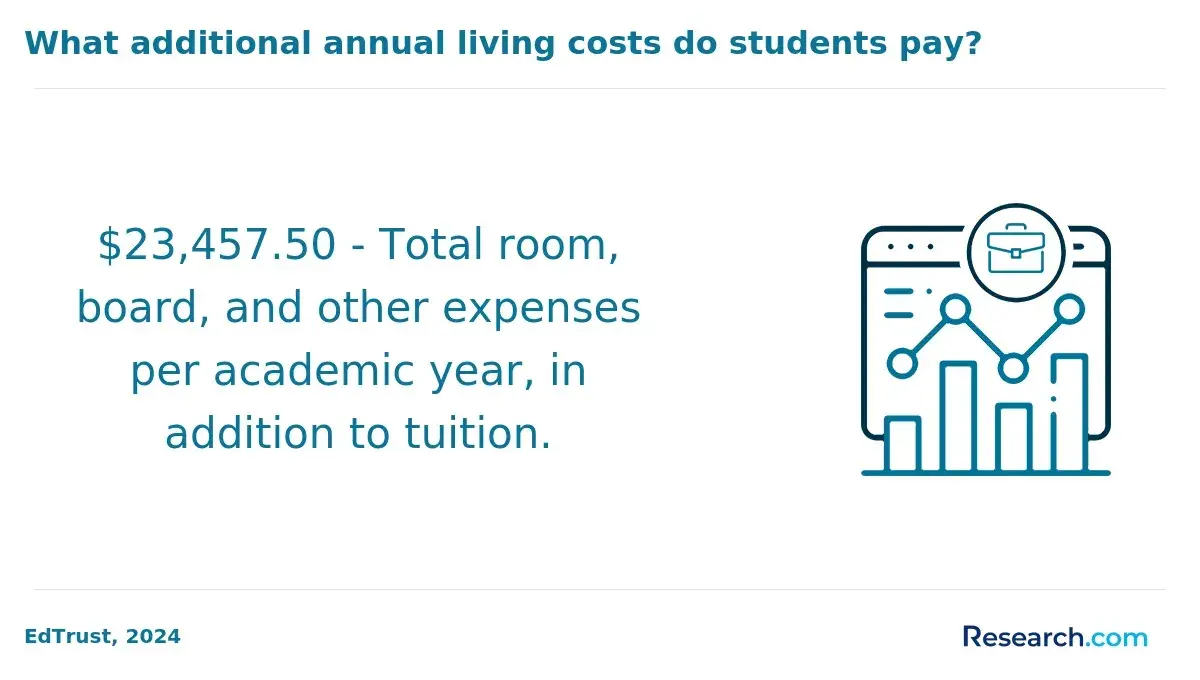
Online students often save on relocation and daily commuting, but they still have out-of-pocket expenses that may not be fully covered by employer reimbursement or scholarships. These costs matter because they can force students to borrow more than tuition alone suggests.
The table below summarizes common non-tuition costs and how they affect an online health services doctorate budget. Treat the amounts as planning categories to verify with each institution, not as guaranteed charges.
| Expense category | What it may include | Why it matters |
| Books and digital course materials | Textbooks, journal access, case-study platforms, e-books | Costs vary by course and may not be included in tuition |
| Technology | Computer upgrades, webcam, secure internet, cloud storage, statistical software | Doctoral research and synchronous sessions may require reliable hardware and software |
| Residency or intensive travel | Airfare, lodging, meals, local transportation, parking | Some "online" doctorates include short campus or conference-style residencies |
| Research and dissertation costs | Survey tools, transcription, data access, editing, formatting, poster printing | Applied doctoral projects can create expenses late in the program |
| Professional development | Association dues, conferences, certification preparation, networking events | These costs may improve career value but should be budgeted separately |
Students who want a faster pathway should also compare pacing carefully. Some accelerated healthcare programs reduce time in school, but a compressed format may increase short-term cash flow pressure if tuition is billed in larger blocks.
The biggest red flags are vague "estimated fees," unclear residency language, and dissertation policies that do not state what happens if the project takes extra terms. Ask for written answers before you pay a deposit.
Does in-state versus out-of-state residency status impact online Health Services doctorate tuition?
Residency status can affect online Health Services doctorate tuition, but the impact depends on the school's pricing model. Public universities may charge different in-state and out-of-state rates, while many online professional doctorates use a flat tuition rate for all online students regardless of residency.
The table below shows how to interpret the most common residency-based pricing structures. This comparison is especially important for applicants who are choosing between a public university in their state and a private or out-of-state online program.
| Pricing structure | How it works | When it can be financially smart | Potential drawback |
| Public in-state graduate tuition | Lower rate for residents who meet state rules | You live in the state, and the program matches your career goals | Residency rules may be strict, and some online programs exclude doctoral students from discounts |
| Public out-of-state tuition | Higher rate for nonresidents | The program offers a specialization or reputation advantage that justifies the premium | Total cost can exceed private flat-rate options |
| Flat-rate online tuition | Same rate for online students regardless of state | You are out of state or need predictable pricing | The flat rate may be higher than true in-state tuition |
| Cohort or executive pricing | Program price is tied to a cohort package or term rate | You value scheduling predictability and included services | Less flexibility if you slow down or step out |
Do not assume moving to a state will lower your doctoral tuition immediately. Many universities require documented domicile, tax ties, and time in state before reclassification, and some online professional programs do not offer residency discounts at all.
How do total costs for an online Health Services doctorate compare to traditional on-campus programs?
Online health services doctorates are not automatically cheaper than on-campus doctorates, but they often reduce indirect costs. The biggest savings usually come from staying employed, avoiding relocation, and limiting commuting rather than from lower tuition itself.
The table below compares the major cost categories for online and traditional formats. Use it to decide which format is more affordable for your life, not just which one advertises the lower tuition rate.
| Cost factor | Online doctorate | On-campus doctorate | Decision point |
| Tuition | May be flat-rate, per-credit, or similar to campus tuition | May offer in-state rates, assistantships, or campus-based funding | Compare total credits and fees, not delivery format alone |
| Employment income | Often easier to maintain full-time work | May require reduced work hours or relocation | Lost income can outweigh tuition differences |
| Travel and housing | Usually limited to residencies, if required | May include relocation, parking, commuting, and campus housing costs | Ask whether online residencies are mandatory |
| Funding access | Employer reimbursement may be easier to use while employed | Assistantships and campus fellowships may be more available | Funding type can change the net price significantly |
| Networking | Depends on cohort design, faculty access, and professional events | More frequent in-person interaction | Consider whether the career goal requires local academic networking |
Online study tends to make the most financial sense for mid-career healthcare professionals who can keep earning while enrolled. A campus program may be more affordable for students who receive a funded assistantship, tuition waiver, or fellowship that online students cannot access.
Can graduate assistantships and fellowships reduce online Health Services doctorate costs?
Graduate assistantships and fellowships can reduce doctoral costs, but online health services doctorate students should verify eligibility early. Many assistantships are designed for full-time, on-campus research or teaching roles, while online professional doctorate students are often working adults enrolled part-time.
That does not mean funding is unavailable. Students may find smaller departmental scholarships, doctoral research awards, public health fellowships, dissertation grants, employer-partner discounts, or project-based research stipends.
Ask these questions before assuming an assistantship will lower your cost:
- Are online doctoral students eligible for tuition waivers, stipends, or graduate assistant roles?
- Do assistantships require full-time enrollment, campus presence, teaching availability, or daytime work hours?
- Can professional doctorate students apply, or are awards limited to PhD students?
- Are fellowships renewable, and what GPA, progress, or service requirements apply?
- Can scholarship funds be combined with employer reimbursement, federal loans, or military benefits?
Avoid relying on assistantship funding unless the award is confirmed in writing. If a school markets "doctoral funding" broadly, ask whether recent online Health Services doctorate students actually received it.
What financial aid options are available for students enrolled in an online Health Services doctorate?
Eligible online health services doctorate students can use several forms of financial aid, but each option affects net cost differently. The Free Application for Federal Student Aid is the starting point for federal loans and many institutional awards, even at the doctoral level.
The table below compares major aid sources for online doctoral students. It focuses on how each source reduces the bill, not just whether it is available.
| Aid option | Typical value or coverage | Repayment requirement | Key limitation |
| Direct Unsubsidized Loan | Up to $20,500 per academic year for eligible graduate students | Yes | Interest accrues while enrolled |
| Grad PLUS Loan | Can cover the remaining cost of attendance after other aid | Yes | Requires credit check and has a higher interest rate than Direct Unsubsidized Loans |
| Institutional scholarships | Varies by school, program, merit, need, or affiliation | No, if requirements are met | Often competitive and may not cover full tuition |
| External scholarships and professional awards | Varies by association, foundation, or employer group | Usually no | Application timelines may not align with admission |
| Military and veteran education benefits | Depends on eligibility and benefit type | Usually no, if rules are met | Coverage varies by program approval, benefit remaining, and enrollment status |
Federal loan terms also matter. For 2025-26, Direct Unsubsidized Loans for graduate students carry a fixed 7.94% interest rate, while Grad PLUS Loans carry a fixed 8.94% rate; these rates make overborrowing especially costly for part-time students who take several years to finish.
Students comparing doctoral study with a lower-cost graduate credential may want to review affordable masters in healthcare administration options first, especially if their target leadership role does not require a terminal degree.
To reduce borrowing, apply for aid in layers: institutional scholarships first, then employer funds, then external awards, then federal loans only for the remaining amount. Borrowing the full cost of attendance every term is rarely the lowest-risk strategy.
Does employer tuition reimbursement cover an online Health Services doctorate?
Employer tuition reimbursement may cover an online health services doctorate when the degree is job-related and the employer's policy allows graduate or doctoral education. Coverage is common in healthcare systems, insurers, consulting firms, government agencies, and large corporate employers, but rules vary widely.
Under IRS educational assistance rules, up to $5,250 per calendar year in qualifying employer-provided education benefits may be excluded from taxable wages when the plan meets requirements. Amounts above that threshold may still be paid by the employer, but tax treatment depends on the plan and the employee's situation.
Employer policies usually focus on these conditions:
- The program must be accredited or approved by the employer's education benefits administrator.
- The coursework must relate to the employee's current role or a documented internal career path.
- The employee may need preapproval before the term begins.
- Reimbursement may require a minimum grade, proof of payment, and proof of completion.
- The employee may need to remain with the organization for a set period after reimbursement or repay some funds if they leave early.
Employer reimbursement works best when the doctorate supports a specific business need, such as service-line leadership, quality improvement, population health strategy, informatics governance, compliance, or executive succession planning. It works less well when the degree is only loosely connected to the employee's role.
How can working professionals negotiate employer sponsorship for an online Health Services doctorate?
Working professionals can often improve employer support by presenting the doctorate as a business investment rather than a personal education expense. The strongest request connects coursework and the doctoral project to measurable organizational priorities.
Use this negotiation sequence before enrolling or before the next budget cycle:
- Identify the employer's current priorities, such as reducing readmissions, improving patient access, strengthening compliance, expanding telehealth, or developing leaders for hard-to-fill roles.
- Map the doctorate curriculum to those priorities, naming specific courses, projects, or research methods that can be applied at work.
- Propose a doctoral project that solves a workplace problem while protecting patient privacy, research ethics, and organizational approvals.
- Ask for a defined support package, such as annual tuition reimbursement, paid residency days, conference travel, schedule flexibility, or a retention-based sponsorship agreement.
- Offer a return commitment, such as presenting project findings, mentoring staff, leading an internal initiative, or remaining with the organization for an agreed period.
- Get the agreement in writing, including reimbursement caps, grade rules, tax handling, repayment obligations, and what happens if your role changes.
Avoid framing the request around personal ambition alone. Employers are more likely to sponsor doctoral education when they can see how the degree will improve operations, leadership capacity, patient outcomes, compliance, or revenue integrity.
What ROI can graduates expect from an online Health Services doctorate?
ROI for an online health services doctorate depends on the gap between the total net cost and the career value the degree helps unlock. The degree may be worthwhile for professionals targeting senior healthcare administration, executive leadership, health policy, consulting, academia, population health, or applied research roles. It is less compelling if your target role can be reached with experience, certification, or a master's degree alone.
Labor-market data supports cautious optimism for healthcare leadership roles. The Bureau of Labor Statistics reported a May 2024 median pay of $117,960 for medical and health services managers and projects much faster-than-average growth for the occupation, which suggests strong demand for experienced healthcare leaders; however, a doctorate is not required for every role in that category.
The table below outlines how different career outcomes may affect ROI. Use it to test whether the doctorate is connected to a realistic advancement path, not as a salary promise.
| Career direction | How a doctorate may help | ROI consideration |
| Senior healthcare operations or service-line leadership | Builds advanced skills in strategy, quality, systems leadership, and evidence-based decision-making | Strongest when the employer values doctoral preparation for promotion or succession planning |
| Health policy, population health, or public health leadership | Supports applied research, evaluation, and cross-sector leadership | Best when paired with relevant experience and a policy-focused doctoral project |
| Healthcare consulting | Can strengthen credibility in specialized advisory work | ROI depends heavily on client base, niche expertise, and business development ability |
| Teaching or academic administration | May meet terminal-degree expectations for some faculty or leadership roles | Applicants should verify whether the institution prefers a PhD, DrPH, DHA, or other doctorate |
| Health information and data governance leadership | Can support advancement into informatics, compliance, analytics, or revenue-cycle strategy | Review role-specific compensation context, including health information management salary data, before assuming a doctoral premium |
A practical ROI test is to calculate your net cost after scholarships and employer funds, estimate the realistic annual income increase or promotion value, and divide net cost by that annual gain. If the payback period is longer than you are comfortable with, consider a lower-cost program, a slower cash-flow-friendly pace, more employer funding, or a different credential.
The best candidates for this investment usually have several years of healthcare experience, a clear leadership target, employer support, and a doctoral project that can strengthen their professional portfolio. Candidates should be cautious if they are unsure about their career direction, plan to borrow the full cost at high interest, or assume the degree alone will create executive opportunities.
Other Things You Should Know About Health Services
Many programs require about 42 to 60 post-master's credits, but requirements vary by degree type, transfer credit policy, and dissertation or doctoral project structure. Always confirm the exact number of billable credits.
Yes. Institutional accreditation is essential for federal financial aid eligibility, and programmatic accreditation may matter for certain public health, healthcare management, or academic goals. Ask the school which accreditors apply and whether they align with your career plans.
Sometimes. Some programs accept transfer credits from a relevant master's degree or doctoral coursework, but caps, age limits, grade requirements, and course-match rules vary. Get a written transfer evaluation before estimating savings.
You may need to pay continuation, supervision, or additional research credits until completion. This is one of the most common hidden cost areas, so ask how many extra terms recent students typically needed and what each term costs.
References
- Can You Get Financial Aid for Doctoral Programs? - Graduate Programs for Educators https://www.graduateprogram.org/blog/can-you-get-financial-aid-for-doctoral-programs/
- The Online College Students' Guide to Financial Aid https://www.edumed.org/financial-aid/
- Best Online Ph.D. and Doctoral Programs | OEDb https://www.oedb.org/rankings/online-phd-programs/
- 2025 Most Affordable Online Doctorates in Education https://www.onlineu.com/most-affordable-colleges/education-doctoral-degrees
- Average Cost of a Doctorate Degree [2026]: Ph.D., Psy.D. & More https://educationdata.org/average-cost-of-a-doctorate-degree
- How much does it cost to get a PhD? A clear breakdown https://vinuni.edu.vn/how-much-does-it-cost-to-get-a-phd/
- Tuition Reimbursement for MHA Programs https://www.mhaonline.com/blog/mha-tuition-reimbursement
- Are Online PhDs Cheaper Than Traditional Ones? - Swiss School of Business Research https://ssbr-edu.ch/are-online-phds-cheaper-than-traditional-ones/
- Funding your Degree https://gradsense.org/funding-your-degree/
- DrPH vs. PhD — National Association for Doctors of Public Health https://nadrph.org/drphvsphd