2027 Patient Identification Workflows: What Administrators Can Study

Co-Founder and Chief Data Scientist
A patient record matched to the wrong person can affect care long after a registration error occurs. Healthcare administrators help prevent those errors by examining how identity is collected, verified, used, and corrected across departments.
This guide explains the workflows and standards administrators study, then compares the education paths that can prepare someone to oversee them. It is for healthcare staff considering a move into management and for prospective students deciding whether a healthcare administration degree, a health information degree, or targeted training best fits their goals.
Key Things You Should Know
- Patient identification oversight covers registration, record matching, care handoffs, error correction, and measurement - not just checking an ID at the bedside.
- Two identifiers help staff distinguish patients before care, but administrators must also address duplicate records and incorrect record merges.
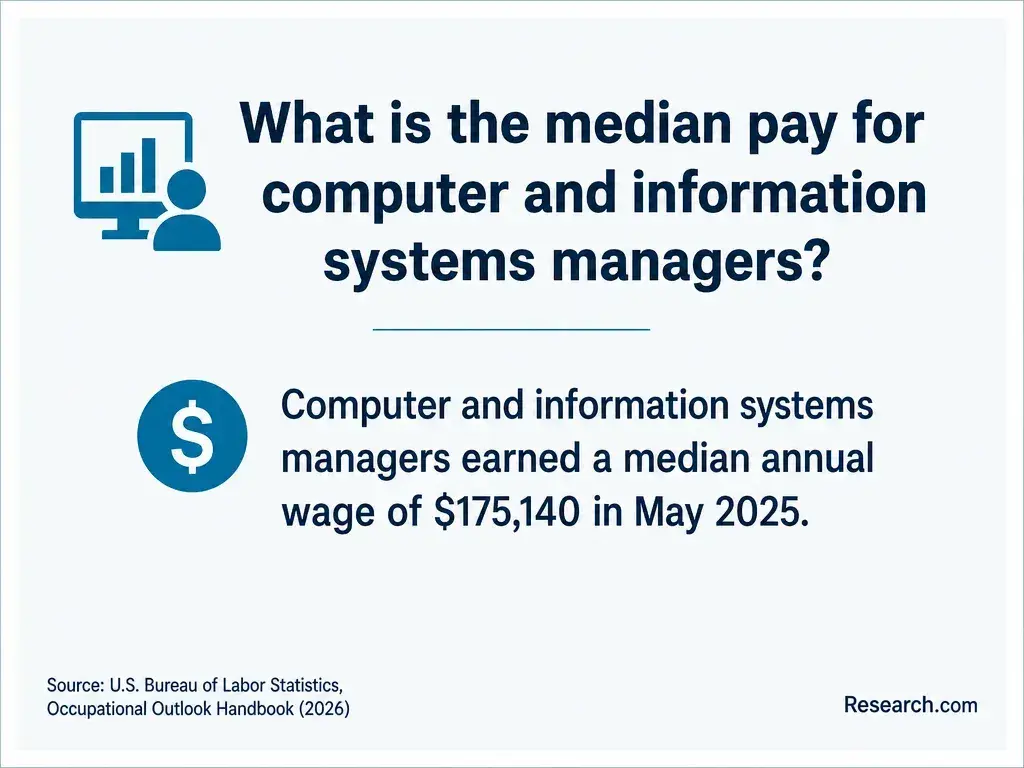
- In the US, management occupations had a median annual wage of $126,520 in May 2025; that broad figure is not a salary estimate for patient identification roles or degree graduates.
What are patient identification workflows in healthcare administration?
A patient identification workflow is the sequence of steps used to connect the right person with the right health record, service, specimen, medication, or result. It begins when staff collect demographic information and search for an existing record. It continues through appointments, admissions, clinical care, referrals, billing, and corrections when identities are confused.
Administrators study who performs each step, what the electronic health record permits, and where staff must pause to resolve uncertainty. A registration process that creates duplicate records can make prior information hard to find; an incorrect merge can place one person's information in another's chart. Both problems require coordinated work among registration, clinical teams, health information management, information technology, and patient safety staff.
The educational distinction matters: healthcare administration emphasizes staffing, operations, policy, and accountability, while health information management goes deeper into record integrity and information governance. Readers deciding which responsibility appeals to them can start by comparing management and information-focused healthcare degrees.
Why do healthcare organizations use two patient identifiers?
Two patient identifiers provide an independent way to confirm that care is being delivered to the intended person. Depending on the setting and task, staff may use a patient's name together with a date of birth or an assigned identification number. A room number or physical location is not a reliable identifier: patients move, and rooms are reused.
Administrators should distinguish point-of-care verification from record matching. Checking identifiers before collecting a specimen helps prevent a bedside error; finding the correct chart during registration helps prevent a duplicate or wrong-chart entry. A sound workflow needs both. Organizations should follow the applicable accreditation requirements and their own approved policies rather than assume that one script fits every setting or patient population.
For staff who want to work primarily on record integrity rather than broad operations, review accredited online health information management programs and examine their courses on data quality and health information systems.
How do administrators study patient identification workflow requirements?
Administrators start with the requirements that apply to their organization, including accreditation standards, organizational policies, privacy obligations, and the capabilities of its information systems. They then test whether the written procedure matches what staff actually do. Requirements can differ by care setting and change over time, so the current standard and local policy - not a course handout - should govern operational decisions.
A useful study sequence connects the rule to observable work and a measurable outcome:
- Map where staff collect identifiers, search for records, verify identity, label items, and correct discrepancies.
- Observe exceptions, such as patients who cannot communicate, inconsistent demographic details, or records that appear to belong to the same person.
- Review incident reports and data-quality measures, then identify whether errors arise from training, system design, workload, or unclear ownership.
- Test a revised procedure with frontline staff and monitor whether it reduces errors without creating new barriers to care.
Someone entering this work from registration or another associate-level role may be able to build on existing experience while completing a bachelor's degree. Before enrolling, checking how associate credits fit a healthcare administration degree can clarify the remaining coursework and cost.
No single degree is required for every patient identification oversight job. The best preparation depends on whether the target role owns daily registration procedures, health record integrity, quality improvement, or organization-wide operations. The comparison below shows where common degrees place their emphasis; individual curricula vary.
| Education path | Most relevant preparation | Best fit to investigate |
| Healthcare administration bachelor's degree | Healthcare operations, supervision, finance, and quality | Staff seeking broader operational responsibility |
| Health information management degree | Record integrity, data governance, and health information systems | Staff focused on matching, correcting, and protecting records |
| Master of health administration (MHA) | Healthcare-specific leadership, improvement, and organizational systems | Experienced professionals seeking wider management scope |
| MBA with relevant healthcare coursework | General management, finance, analytics, and change leadership | Professionals seeking broad business responsibility alongside healthcare experience |
An MBA can strengthen a manager's ability to fund, implement, and evaluate workflow changes, but it is not a substitute for learning patient safety practices or the organization's record systems. A doctorate is generally unnecessary for routine workflow oversight; those considering one for later executive, research, or teaching goals should examine healthcare leadership doctorate transfer credit considerations rather than assume previous graduate work will shorten a program.
Patient identification is usually taught within broader courses, not as a stand-alone degree subject. Relevant coursework may cover healthcare quality and patient safety, health information systems, data governance, process improvement, privacy, organizational behavior, and change management. Students should look for assignments that require them to analyze a workflow - not merely memorize terminology.
For example, an applied project might trace how a duplicate record is created, identify which team can correct it, and propose a safer registration process. A management-focused student would assess staffing, training, accountability, and implementation costs. A health information student might examine matching rules, documentation, and correction procedures in greater depth.
When comparing graduate curricula, ask to see course descriptions and applied-project requirements. Students considering an MHA can use choosing a CAHME-accredited online MHA as a starting point, then verify whether a particular program actually offers the quality, informatics, or operations work they need.
Online programs can work well for employed healthcare staff who can apply assignments to real operational problems. They are less useful for this goal when coursework is entirely theoretical and the student has no access to practical projects, relevant work experience, or employer feedback. Online delivery also does not guarantee that classes are self-paced.
Ask each program whether sessions are live, whether group projects require scheduled meetings, and whether internships, site-based projects, or campus visits are required. A prospective bachelor's student coordinating study with shift work may also want to examine rolling entry schedules for online healthcare management bachelor's degrees; a convenient start date matters less if later course sequencing conflicts with work.
For a career change, confirm who arranges fieldwork and whether the program's career services serve online students. Healthcare experience or an employer-sponsored project may provide a more direct route into workflow improvement than an online credential alone.
First, verify that the institution holds recognized institutional accreditation. Then check whether specialized accreditation is relevant to the degree: CAHME applies to eligible healthcare management graduate programs, CAHIIM to eligible health informatics and health information management programs, and AACSB or ACBSP may apply to business programs. These accreditations have different scopes; none makes every course a patient identification course.
Confirm the status of the specific program and delivery option through the accreditor and institution, especially if professional certification eligibility is part of your plan. When you compare university options for a healthcare administration bachelor's, also check the curriculum, transfer-credit policy, and applied-learning opportunities. Institutional recognition alone cannot establish that a program fits a record-integrity career goal.
Requirements vary by school and degree level. Bachelor's applicants generally need evidence of prior secondary or college study; graduate applicants generally need a bachelor's degree. Programs may request transcripts, a résumé, a statement of purpose, recommendations, or evidence of professional experience, but applicants should not treat any one school's requirements as universal. Likewise, completion time depends on transfer credits, course load, scheduling, and any fieldwork requirement.
Compare the full cost to completion, not an advertised per-credit price alone. Include required credits, mandatory fees, materials, technology, and any travel or fieldwork expenses; then account for employer tuition assistance and the cost of borrowing. A shorter program is not automatically cheaper if it has higher fees or requires time away from paid work.
Prospective graduate students can explore budget-friendly graduate study in healthcare administration, but should request a current, individualized cost estimate before applying. If the goal is to improve a procedure in a current job, employer training or a focused course may offer better value than a full degree.
Patient identification is usually a responsibility within a broader job, not a single career title. Registration supervisors may oversee identity collection and staff training. Health information professionals may investigate duplicates and incorrect merges. Quality or patient safety specialists may examine incidents and redesign processes. Health information systems analysts may help configure record-matching and verification tools, while healthcare managers coordinate changes across departments.
The most realistic move often builds on existing experience. A registrar might advance into registration supervision; a health information employee might pursue data-quality work; a clinician might move into patient safety. Each path has different technical and managerial gaps. For a wider view of possible roles, see job pathways for healthcare administration graduates, then compare job postings with your experience rather than treating a degree as automatic qualification.
What are the salary and job outlook for healthcare administration careers?
The US Bureau of Labor Statistics reports a $126,520 median annual wage for management occupations in May 2025. That is a broad occupational figure, not the expected pay for a new healthcare administration graduate or a patient identification specialist. Pay for a particular opportunity depends on its responsibilities, location, employer, and the applicant's experience.
BLS projects overall management employment to grow faster than the average for all occupations from 2025 to 2035, with about 1.1 million openings annually on average from growth and replacement needs. Those projections do not measure demand specifically for patient identification oversight. To assess a degree's financial value, compare local openings for your target role with the credential they request and the experience you already have.
If the likely next step is a modest expansion of current duties, compare employer-supported training and less expensive healthcare administration degree options before committing to a higher-cost graduate program. A broader degree becomes more compelling when it supports a credible path to responsibilities beyond one workflow.
Other Things You Should Know About Healthcare Administration
Yes. Patients can request an amendment to information in their records under applicable US health privacy rules. The organization reviews the request; it does not necessarily delete the original entry. Patients should contact its medical records or privacy office for the procedure.
Follow the organization's identity-resolution procedure and refer the records to authorized staff. Do not merge them based only on a matching name or another single detail; an incorrect merge can be difficult to unwind.
Yes. A safe process should allow staff to reconcile current and historical names while confirming identity through other approved information. Staff should use the organization's documented procedure rather than create an informal workaround.
No. Barcode technology can support verification for tasks such as medication administration, but it depends on correctly assigned records and labels. Staff must still follow the applicable identity-check procedure.
- Electronic Health Records | PSNet https://psnet.ahrq.gov/primer/electronic-health-records
- Oops, Sorry, Wrong Patient! A Patient Verification Process is Needed Everywhere, Not Just at the Bedside - PMC https://pmc.ncbi.nlm.nih.gov/articles/PMC4123800/
- Identity Proofing Best Practice | IDManagement https://www.idmanagement.gov/experiments/pid/bestpractice/
- Tool 3 Patient identification and matching to intended care | SA Health https://www.sahealth.sa.gov.au/wps/wcm/connect/public+content/sa+health+internet/resources/tool+3+patient+identification+and+procedure+matching
- White Paper on Unique Health Identifier for Individuals | ASPE https://aspe.hhs.gov/white-paper-unique-health-identifier-individuals
- Two Patient Identifiers - Understanding The Requirements https://www.jointcommission.org/en-us/knowledge-library/support-center/standards-interpretation/standards-faqs/000001463
- A Patient Verification Process Is Needed Everywhere | medscape.com https://www.medscape.com/viewarticle/742372