2027 Online Web Design Bachelor's Degree Programs With No Application Fee

Co-Founder and Chief Data Scientist
Many career changers hesitate to apply for online web design bachelor's degree programs due to costly application fees that add financial strain before enrollment. This upfront expense can deter qualified candidates already managing tight budgets or balancing job transitions. Research indicates that 42% of professionals entering creative fields prefer programs without application fees to minimize initial costs. For those seeking a flexible, accredited path to pivot into web design, eliminating application fees significantly lowers barriers. This article explores accredited online web design bachelor's degree programs with no application fee, aiming to guide prospective students toward affordable, accessible educational options.
Key Benefits of Online Web Design Bachelor's Degree Programs With No Application Fee
- Compare programs by examining accreditation status, curriculum relevance to current design trends, and credit transfer options to ensure alignment with your career goals and academic standards.
- Analyze total cost beyond application fees, including tuition, materials, and technology requirements; no application fee doesn't guarantee overall affordability.
- Research career support services and alumni outcomes, focusing on roles in digital media, UI/UX design, and related fields to confirm the program supports your employment aspirations.
What Does 'No Application Fee' Really Mean for an Online Web Design Bachelor's Program?
The phrase "no application fee" in online web design bachelor's degree programs can mean either a permanent waiver or a temporary promotional offer. Some institutions never charge an application fee, easing access for cost-conscious adult learners and first-generation students, while others waive fees only during specific admissions cycles or with special codes. Data from the National Center for Education Statistics (NCES) and College Scorecard indicate that about 60% of accredited schools offering online web design bachelor's degrees impose application fees, while roughly 40% do not. Permanent fee waivers are more frequent at large public universities and community college partnerships.
Examples of accredited institutions with permanent no-application-fee policies for online web design programs include Southern New Hampshire University, whose admissions page clarifies no fee is required; Western Governors University, which maintains this policy to simplify admissions for working adults; and Fort Hays State University, known for affordable online degrees with waived application fees on most undergraduate online programs.
When comparing affordable programs, understanding the distinction between permanent and temporary waivers is crucial. The benefits of no application fee in web design degrees extend beyond savings to include reduced financial barriers and better budget planning. Additionally, prospective students should consider verified accreditation, transfer credit policies, tuition rates, and financial aid options. For those exploring online degree options in related fields, the cheapest online masters in artificial intelligence may offer relevant insight into cost-effective educational pathways.
- Permanent Vs. Temporary Waivers: Permanent fee waivers guarantee consistent cost savings, while temporary waivers may expire or require conditions, risking unexpected expenses.
- Cost Transparency: Knowing if the application fee is always waived helps students build an accurate, realistic budget before applying.
- Enrollment Accessibility: Waived fees reduce financial barriers, broadening access for adult learners and first-generation college applicants.
- Marketing Vs. Policy: Schools may promote "no application fee" only during special periods, so discerning permanent policies from marketing tactics is essential.
Which Nationally and Regionally Accredited Schools Offer Online Web Design Bachelor's Degrees With No Application Fee?
Accreditation plays a critical role when considering nationally accredited online Web Design bachelor's programs with no application fee. Regional accreditation, offered by agencies like the New England Commission of Higher Education (NECHE) or the Higher Learning Commission (HLC), is generally more widely accepted for employer recognition and credit transferability. National accreditation, while legitimate, may offer more limited acceptance across institutions and employers, particularly in technology-driven fields like Web Design.
Below is a list of regionally and nationally accredited affordable online Web Design degrees with no application fee drawn from reliable data sources:
- Southern New Hampshire University: Regionally accredited by NECHE, SNHU provides a bachelor's degree in web design and development. Total tuition is estimated at $38,000, featuring flexible schedules and strong career support.
- Fort Hays State University: Accredited by the Higher Learning Commission (HLC), this institution offers a bachelor's in information networking and telecommunications with relevant web design coursework. Estimated tuition is around $22,000 for the degree.
- Bellevue University: Nationally accredited by HLC-recognized as a regional accreditator-Bellevue's bachelor's program focuses on web design and media arts. Tuition totals approximately $32,000.
- Academy of Art University: Nationally accredited by the WASC Senior College and University Commission (WSCUC), offering an online web design and interactive media degree with estimated tuition near $60,000.
Policies on application fees may change, so always verify current requirements directly with the institution. Combining a no-application-fee policy with careful review of tuition, financial aid, and transfer credit policies is essential for affordable degree completion in Web Design. For learners interested in exploring career outcomes, consider resources like the highest paying degrees to align your educational investment with job market demands.
2026 Update: Portfolio Readiness Before Applying
For 2026, this update adds a practical review point for students comparing no-application-fee online web design bachelor’s programs: whether the program helps you graduate with a usable, employer-ready portfolio, not just completed coursework.
- Check whether projects cover responsive websites, user experience, visual design, and basic front-end development.
- Look for portfolio reviews, instructor feedback, or critique sessions built into upper-level courses.
- Confirm whether capstone projects can be customized toward freelance, agency, nonprofit, or corporate web design work.
- Review whether accessibility, mobile-first design, and usability testing are included in required courses.
- Ask if students retain access to final project files and can publicly display their work after graduation.
- See whether career services support resumes, portfolios, interview prep, or client presentation skills.
A waived application fee can make applying easier, but portfolio quality helps determine whether the degree supports your actual career goals.
How Much Money Can Students Save by Choosing an Online Web Design Bachelor's Program With No Application Fee?
Applying to eight to ten online web design bachelor's degree programs that charge application fees typically costs between $200 and $750, based on data from the College Board and the Georgetown Center on Education and the Workforce, where fees range from $25 to $75 per school. For many students, especially those from low-income backgrounds or who are first-generation college applicants, these upfront charges can create a significant financial hurdle. Removing or waiving application fees reduces this initial burden, allowing prospective students to apply more broadly without immediate financial constraints.
While saving on application fees is only one part of the overall investment, it contributes meaningfully to affordability. Tuition per credit hour, availability of financial aid, transfer credit policies, and other expenses combine to define the total cost of earning a bachelor's degree. A no-fee application policy can thus support a cost-conscious enrollment strategy that directs funds toward essential items like textbooks, software, or certification exams relevant to web design careers.
- Upfront Savings: Eliminating fees saves students several hundred dollars during the application process, easing early financial pressure and expanding opportunities to apply widely.
- Greater Access: Waived fees remove barriers for financially vulnerable applicants, encouraging them to explore web design programs without fear of wasted expenses.
- Comprehensive Affordability: Application fee waivers are one element among many, complementing financial aid and tuition considerations for an overall budget-friendly approach.
- Resource Allocation: Avoiding upfront fees lets students prioritize other key costs like technology tools and course materials crucial to succeeding in web design studies.
A professional who enrolled in an online web design bachelor's degree program with no application fee described the experience as "a relief from the typical stress of applying." He recalled hesitating to apply broadly due to the mounting costs but found the waived fees "opened doors to programs I might have overlooked." Although the application process still required careful planning and time management, the financial aspect felt less daunting, enabling a more confident and systematic approach to selecting programs suited to his career goals.
Are Online Web Design Bachelor's Programs That Charge No Application Fee Accredited and Legitimate?
Many reputable institutions offering online web design bachelor's programs waive application fees to increase accessibility, especially for cost-conscious adult learners and first-generation students. A no-application-fee policy does not imply lower quality. Instead, legitimacy hinges on accreditation from recognized bodies. Regional accreditation ensures overall institutional standards, while programmatic accreditation targets specific fields relevant to web design, such as ABET for technology-related curricula or other agencies depending on the program's focus.
- Verify Accreditation: Use the Council for Higher Education Accreditation (CHEA) database to confirm if the institution and its programs hold recognized accreditation. This is essential for genuine online web design bachelor's programs that charge no application fee.
- Department of Education Lookup: The U.S. Department of Education provides a tool to check institutional status and federal aid eligibility, helping to avoid unaccredited providers.
- Accrediting Bodies: Look for regional accreditation plus relevant programmatic agencies depending on the discipline-such as ABET for technical design fields, or others aligned with business, education, or social work if applicable.
- Be Wary of Scams: Degree mills often use free applications to attract students but lack recognized accreditation and transparency. Avoid these to protect your educational investment and career prospects.
Prospective students weighing online web design bachelor's programs should confirm accreditation carefully to ensure legitimacy and quality. For those exploring related options, reviewing MSW programs with high acceptance rate can offer insights into accessible degree pathways.
What Are the Admission Requirements for Online Web Design Bachelor's Programs That Waive the Application Fee?
Applicants need a high school diploma or GED to prove basic academic readiness for college-level work in web design. This foundational requirement applies consistently across programs, regardless of application fees. Other requirements also include:
- Minimum GPA: Most programs set a minimum GPA, commonly between 2.0 and 2.5 on a 4.0 scale. Waived-fee programs can still enforce these standards, with some selective schools requiring higher GPAs to maintain quality.
- SAT/ACT Scores: Submission of standardized test scores is often optional or waived to improve accessibility for online learners, reflecting a shift toward more inclusive admissions policies.
- Discipline-Specific Requirements: While previous coursework in web design usually isn't mandatory, some institutions may request portfolios or examples of creative work if they apply selective admissions to gauge applicant aptitude.
- Admission Selectivity: Fee-waived programs frequently favor open admission to reduce barriers, but many remain selective and competitive, balancing inclusivity with academic rigor to uphold program standards.
- Acceptance Rates: Schools offering no-cost applications generally have higher acceptance rates, indicative of open admission policies; however, rigorous faculty and curriculum expectations still ensure educational quality.
- Rolling Admissions and Start Dates: Online web design programs often use rolling admissions with multiple annual start dates, enabling students to apply anytime without deadline pressure. This flexibility aligns well with fee waivers, giving learners control over enrollment timing.
One professional who built her career after completing an online web design bachelor's program without an application fee shared that she found the application process straightforward but thorough. She recalls feeling relieved at first-no fee was a financial help-but quickly realized the program still demanded strong time management and proof of skills through a writing sample and creative portfolio. "They wanted to see my potential, not just my ability to pay," she reflected. This balance of accessibility and rigor made her confident in the quality of her education and prepared her well for the evolving demands of the web design industry.
How Does Per-Credit-Hour Tuition at Online Web Design Bachelor's Programs Compare When the Application Fee Is Already Waived?
Tuition for online web design bachelor's degrees with waived application fees generally falls between $246 and $522 per credit hour, based on data from IPEDS and the U.S. Department of Education's College Scorecard. This range provides a clearer picture of how affordability varies compared to the national average cost of about $400 per credit hour for all online bachelor's programs as of 2023.
- University of Florida: Charges $309 per credit for 120 credits, totaling approximately $37,080; no application fee; offers flat-rate tuition for all online students, regardless of residency.
- Texas Tech University: $380 per credit hour with 120 total credits, estimated at $45,600; application fee waived; tuition is flat-rate for Texas residents and competitive for others.
- Oregon State University: $331 per credit hour for 180 credits, totaling roughly $59,580; no application fee; applies flat tuition rate for all online learners.
- University of Minnesota: Highest at $522 per credit hour, 120 credits amounting to $62,640; no application fee; provides diverse financial aid options despite higher tuition.
- Fort Hays State University: Most affordable at $246 per credit hour for 120 credits, estimated $29,520; no application fee; focuses on accessible online learning for adults.
Eliminating application fees lowers initial costs but doesn't necessarily reduce per-credit tuition. However, schools that waive fees often price their programs competitively to attract nontraditional students.
Institutions like the University of Florida and Oregon State University offer uniform tuition rates for online web design students regardless of residency, simplifying financial planning for out-of-state learners. Differences in program length and curriculum account for the wide per-credit price spectrum, with more affordable options focusing on adult learner accessibility.
According to a 2023 NCES report, 34% of online bachelor's programs eliminated application fees within the last five years, reflecting a growing effort to make higher education more accessible.
What Financial Aid and Scholarships Are Available for Online Web Design Bachelor's Students at No-Fee Programs?
Federal financial aid, including Pell Grants and subsidized or unsubsidized loans, is available to students attending any accredited institution, regardless of application fee policies. According to the U.S. Department of Education's Federal Student Aid resources, eligibility depends on financial need and enrollment status, not on whether an application fee is charged.
Numerous scholarships target online Web Design students, including discipline-specific awards, institutional grants, and third-party scholarship databases. Searching keywords such as "Web Design," "digital media," or "graphic design" on trusted scholarship platforms can reveal awards tailored to your field, helping reduce out-of-pocket costs effectively.
Working adults pursuing an online Web Design bachelor's degree often benefit from employer tuition reimbursement programs. These can be combined with institutional grants, allowing students to layer funding sources to minimize expenses while advancing their careers.
No-application-fee programs usually maintain exclusive scholarship funds and grants for enrolled students. Contacting the financial aid office at each school early helps uncover opportunities and meet deadlines for institutional awards.
Timely completion of the FAFSA is crucial since many financial aid resources are allocated on a first-come, first-served basis. Early application improves chances of securing both federal and institutional funds.
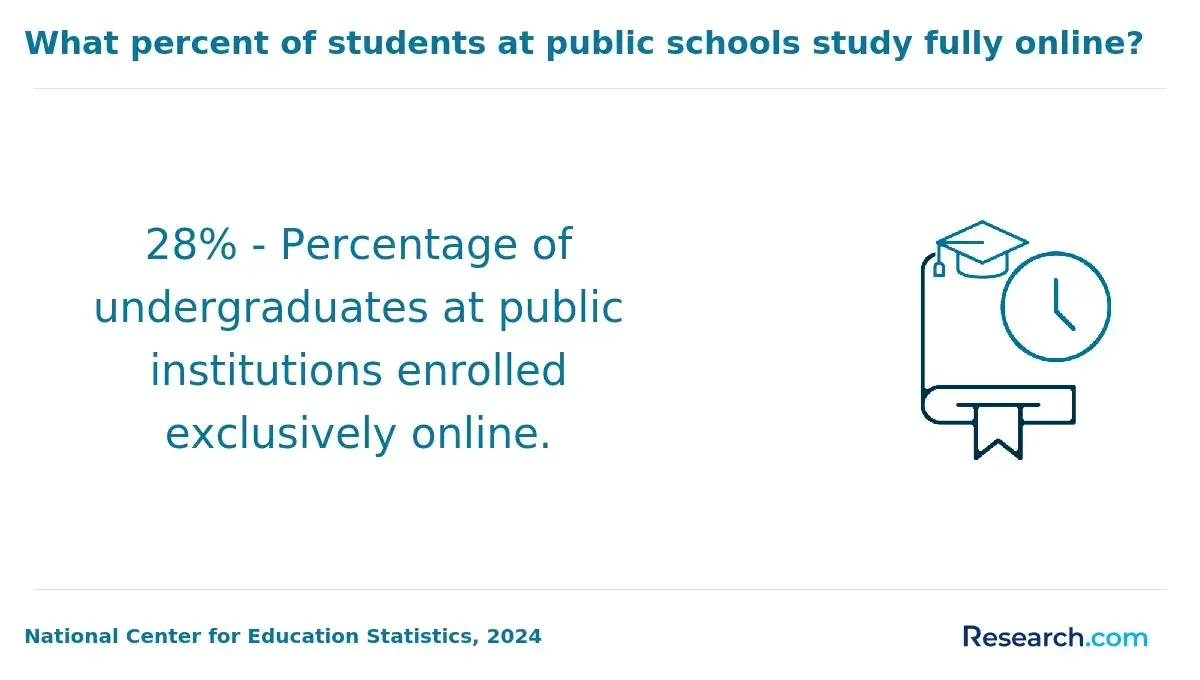
Recent National Center for Education Statistics data shows a 20% growth in online bachelor's degree enrollments over five years, highlighting the rising demand for accessible financial aid options for distance learners.
How Long Does It Take to Complete an Online Web Design Bachelor's Degree at a No-Application-Fee School?
Completing an online web design bachelor's degree at a no-application-fee school generally involves around 120 credit hours, with the average time to finish influenced by the student's pace and program format. Many full-time students follow a standard pace of four years, typically taking 15 credit hours per semester. Accelerated programs offer year-round enrollment, including summer and winter terms or compressed eight-week modules, helping motivated learners complete their degrees in two to three years. Part-time study is also common, especially for adults balancing work or family, often extending completion to five or six years or more.
- Asynchronous Flexibility: Online courses often allow students to study on their own schedules, letting them speed up or slow down course loads to fit personal commitments without missing deadlines.
- Competency-Based Models: Some programs enable learners to advance by demonstrating mastery, enabling faster completion for those with experience or prior knowledge.
- Transfer Credits & Assessments: Transfer credits from previous college work, military training, or professional experience-and credits earned through exams like CLEP-can reduce total credit requirements and shorten graduation time.
- Personal Timeline Factors: Students should consider credit load, work, family responsibilities, and whether their program uses semesters, trimesters, or eight-week modules when estimating degree completion times.
A realistic timeline helps avoid surprises and supports academic success for prospective students wondering how long does it take to complete an online web design bachelor's degree at a no-application-fee school. For those interested in complementary creative fields, exploring masters in art therapy programs can offer aligned career pathways and further education options.
Can Transfer Students Apply for Online Web Design Bachelor's Degrees With No Application Fee?
The majority of online web design bachelor's programs that waive the application fee also accept transfer students, making it easier for cost-conscious adult learners, first-generation students, and career changers to continue their education affordably. According to NCES and NC-SARA data, these institutions have high credit transfer acceptance rates, streamlining enrollment for transfer applicants. These schools use a systematic transfer credit evaluation process where students submit official transcripts, and academic advisors assess course equivalencies considering content relevance, credit hours, and grade criteria.
Transfer credit policies for online web design bachelor's degrees with no application fee often prioritize credits from regionally accredited community colleges, previous bachelor's degree coursework, and military training relevant to design or technology fields. Credits from non-accredited institutions or unrelated subjects like general humanities or physical education may not transfer easily. Many institutions maintain articulation agreements-formal partnerships between community colleges and four-year universities-that guarantee credit acceptance for students following specific course pathways.
Prospective students benefit from requesting an official transfer credit evaluation early in the application process. This enables them to estimate remaining coursework and overall program costs accurately, which is crucial for budgeting and planning. For those comparing options, considering programs aligned with these transfer policies and fee waivers can enhance affordability along with tuition considerations found in rankings such as the cheapest data science degree lists.
Are Online Web Design Bachelor's Degrees With No Application Fee Recognized by Employers?
Employers generally recognize online web design bachelor's degrees from accredited institutions as equivalent to traditional degrees, especially when the college holds regional accreditation. Research from Georgetown's Center on Education and the Workforce and SHRM surveys show that the delivery format-whether online or face-to-face-is less important than the legitimacy of accreditation. Degrees from unaccredited or lesser-known schools face skepticism regardless of their delivery method.
For web design roles, programmatic accreditation like ABET provides additional validation but is less crucial than regional accreditation. The field lacks formal licensing, though professional involvement with groups such as the International Web Association (IWA) can support career development and credibility.
Job seekers should emphasize their institution's regional accreditation and highlight practical experience through portfolios, internships, or projects in applications and interviews. This approach allows applicants to confidently present their skills and education, addressing employer concerns over the online nature of the degree.
What Technology Requirements and Online Learning Tools Are Used in No-Fee Online Web Design Bachelor's Programs?
- Reliable Internet Connection: A stable broadband connection is essential for smooth streaming of video lessons, real-time participation in live classes, and efficient handling of large design files.
- Up-to-Date Computer Hardware: Students need a relatively modern laptop or desktop, preferably under three years old, capable of running graphic design software such as Adobe Creative Suite without lag. Both Mac and Windows systems are generally supported.
- Webcam and Microphone: These tools are required for active involvement in virtual discussions, presentations, and live online sessions with instructors and classmates.
- Learning Management Systems: Platforms like Canvas, Blackboard, or D2L organize coursework, facilitate assignment submissions, and streamline communication with faculty through user-friendly interfaces.
- Design Software Access: Programs often include cloud-based licenses for key design tools, but students may face additional costs for specialized applications not covered by tuition.
- Virtual Labs and Simulations: Some programs offer online environments that mimic real design workflows, giving students practical experience without needing physical lab access.
- Technology Budgeting: Beyond tuition, prospective students should account for expenses like hardware upgrades, software purchases, and maintaining a reliable internet service to support their studies effectively.
What Graduates Say About Their Online Web Design Bachelor's Degree Programs With No Application Fee
- Jayce: "I chose the online web design bachelor's degree program with no application fee because it minimized upfront costs and allowed me to focus my budget on tuition and resources. The affordable pricing made it possible for me to balance work and study without financial stress. Since graduating, I've moved into a creative role at a digital agency where I apply everything I learned in real-world projects daily."
- Kaizen: "Opting for a program with no application fee was crucial for me as I was uncertain about changing careers and wanted to avoid unnecessary financial risks. The cost-effective nature of the online web design bachelor's degree helped me take that leap with confidence. Reflecting on my journey, this degree has opened doors to freelance opportunities that fit perfectly with my lifestyle."
- Dominic: "The biggest draw for me was the convenience and cost savings from the no application fee offering, which showed the program's commitment to accessibility. Investing in this online web design bachelor's degree was a smart move financially and professionally. It has substantially enhanced my portfolio and clients' trust, helping me establish myself firmly in the design industry."
Other Things You Should Know About Web Design Degrees
No-application-fee online Web Design programs often invest in accessible advising and support services to encourage enrollment and persistence. By removing financial barriers at the application stage, these programs attract a broader range of candidates and provide resources such as tutoring, technical support, and career counseling to help students complete their degrees. Retention strategies often include flexible course schedules and hands-on projects tailored to real-world Web Design challenges, which improve engagement and skill mastery.
In 2027, online Web Design bachelor's programs without application fees are generally recognized by employers if they are accredited. Graduates can pursue roles such as web designer, UX/UI designer, or front-end developer, benefiting from the practical skills these programs provide.
Students should look beyond the application fee waiver to evaluate program accreditation, curriculum relevance, faculty expertise, and support services. Comparing tuition rates, transfer credit policies, internship opportunities, and graduation rates provides a clearer picture of program quality and affordability. It is also important to assess the flexibility of course delivery and the availability of career assistance specific to the Web Design industry.
References
- 2025 Most Affordable Online Colleges for Web Design Degrees https://www.onlineu.com/most-affordable-colleges/web-design-degrees
- Basic Web Design Online Course | Holston Academy https://holstonacademy.org/courses/basic-web-design-course/
- Cost of Online Education vs. Traditional Education [2025]: Comparison https://educationdata.org/cost-of-online-education-vs-traditional-education
- How long does it take to learn web design https://www.agitraining.com/web-design-classes/how-long-to-learn-web-design
- bachelor webdesign e-learning https://m.umu.com/ask/t11122301573854270804
- Free Online Bachelor Program Opportunities - Swiss School of Business and Management Geneva https://www.ssbm.ch/free-online-bachelor-program-opportunities/
- Trying to decide on online degree program for Web Development https://www.sitepoint.com/community/t/trying-to-decide-on-online-degree-program-for-web-development/23454
- Is a degree necessary for web design https://d-fsl.org/blog/is-a-degree-necessary-for-web-design-13/
- How to Find Affordable Online Degrees With Financial Aid https://collegedegree.school/how-to-find-affordable-online-degrees-with-financial-aid/
- Does It Cost Money To Apply To College? https://www.affordablecollegesonline.org/college-resource-center/online-colleges-no-application-fees/