2027 Online Web Design Bachelor's Degree Completion Programs for Working Adults

Co-Founder and Chief Data Scientist
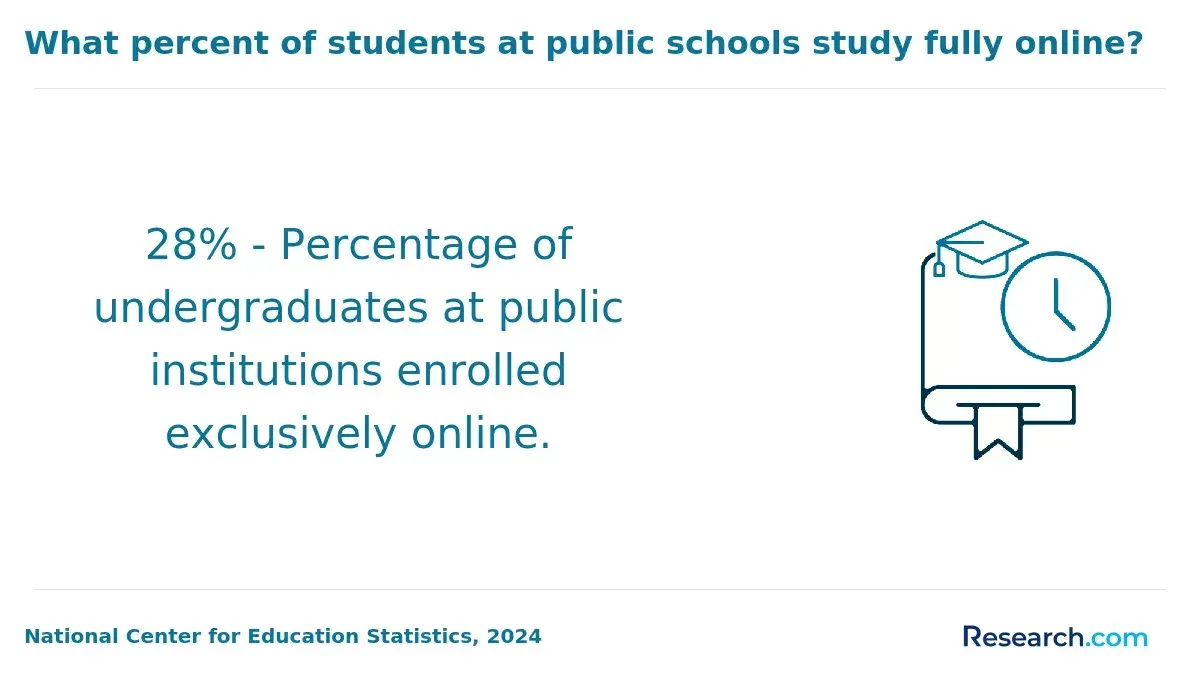
Balancing full-time work with the pursuit of a bachelor's degree in web design can be daunting for adults returning to higher education. Many face the challenge of finding programs that accommodate their busy schedules while recognizing prior college credits and professional experience. According to the National Center for Education Statistics, over 60% of online bachelor's degree students are aged 25 or older, highlighting the demand for flexible adult learning options. This article examines online web design bachelor's degree completion programs, focusing on transfer policies, program structure, accreditation, and career outcomes to help working adults select the best fit for their goals.
Key Benefits of Online Web Design Bachelor's Degree Completion Programs for Working Adults
- Programs offer flexible scheduling tailored for working adults, enabling balance between employment and academic commitments without disrupting professional responsibilities.
- Fully asynchronous coursework allows students to study at their own pace, accommodating varying work hours and preserving steady income throughout degree completion.
- Degree completion tracks often shorten graduation time by recognizing prior credits, accelerating progress compared to starting a traditional four-year web design bachelor's program from the beginning.
What Are Online Web Design Bachelor's Degree Completion Programs, and Who Are They Designed For?
Online web design bachelor's degree completion programs cater specifically to adults who have already earned some college credits but have not yet completed a bachelor's degree. Unlike traditional four-year programs that begin with general education courses and advance through major-specific curricula over several years, these completion programs focus on helping students finish the remaining credits required to graduate.
According to the National Center for Education Statistics (NCES), millions of Americans have "some college but no credential," highlighting a significant population of working adults, military veterans, and community college transfer students who can benefit from specialized options. Completion programs emphasize accelerated formats, high transfer credit acceptance, and flexible online or hybrid delivery to accommodate professional schedules and life commitments, making them a natural fit for working adults pursuing flexible web design degree programs for career professionals.
Demand for these programs has increased as employers now often require bachelor's degrees for positions that previously only needed associate degrees or professional experience. This shift encourages accessible paths to degree attainment aligned with busy adult lives. Key features of online web design degree completion programs include:
For those exploring educational paths, exploring different college majors can help clarify the best fit based on career ambitions and interests.
How Do Online Web Design Degree Completion Programs Differ From Traditional Four-Year Web Design Bachelor's Degrees?
Online web design degree completion programs offer distinct advantages in flexibility and efficiency, especially for working adults who seek to leverage transfer credit policies in web design degree completion programs. These programs generally require fewer credits-around 60 to 70 remaining-compared to the traditional 120-credit bachelor's degree.
- Credit Requirements: Completion pathways accept a broader range of previously earned credits from community colleges or other accredited institutions, reducing redundancy and accelerating degree finish times.
- Curriculum Sequencing: Unlike traditional four-year programs that progress linearly through general education, core courses, and electives, completion programs emphasize advanced web design topics and integrate competency-based learning or life-experience assessments. This tailoring better suits adult learners balancing work and family obligations.
- Time to Completion: Students transferring 60 or more credits often complete these degrees in two years or less, significantly shorter than the typical four-year timeline for traditional bachelor's students starting fresh.
- Program Costs and Credit Hour Pricing: According to IPEDS data comparing the same institutions, credit-hour costs for completion programs may be similar or slightly elevated due to their specialized format. Still, total tuition expenditure is typically lower because fewer credits are required, producing substantial savings.
- Adult-Oriented Learning Models: Many completion programs incorporate online labs, portfolios, and assessments that validate professional experience while offering schedule flexibility tailored to adult learners' realities.
Those evaluating degree paths will benefit from considering these practical trade-offs, whether they are community college transfers, military veterans, or mid-career professionals. For more information about top programs and career outcomes, explore the top degrees in the world.
2026 Update: Portfolio and Tool Readiness Before Enrolling
For this 2026 refresh, we reviewed what working adults should confirm before starting an online web design completion program, especially the hands-on tools and portfolio expectations that can affect success from the first term.
- Whether the program requires an existing design portfolio for admission or builds one through coursework.
- Which design, prototyping, coding, or content management tools students are expected to use.
- Whether software access is included in tuition or must be purchased separately.
- Minimum computer, internet, webcam, and storage requirements for remote design work.
- How projects are reviewed, such as instructor critique, peer feedback, or live presentations.
- Whether final portfolio pieces align with the student’s target role, such as UI design, front-end design, or visual web design.
Checking these details early helps working adults avoid surprise expenses, plan their workload, and choose a program that supports a stronger job-ready portfolio.
Which Accredited Universities Offer the Most Affordable Online Web Design Bachelor's Degree Completion Programs?
The most affordable programs share characteristics such as flat tuition rates for online learners, transfer credit acceptance often ranging from 70 to 90 credits, and recognition of prior learning to cut costs. Accredited by respected regional agencies, these schools balance flexibility with quality. Mid-range programs generally offer more specialized content or additional resources but come with higher tuition and more restrictive residency pricing. Options include:
- Fort Hays State University: At $218.67 per credit hour for all online students, Fort Hays State offers one of the lowest-cost options. Accredited by the Higher Learning Commission (HLC), it provides a Bachelor of Science in Information Networking and Telecommunications with concentrations relevant to web design. The program accepts up to 72 transfer credits and features flexible scheduling suited for working adults.
- University of North Texas at Dallas: Charging $234 per credit for in-state and $675 for out-of-state online students, UNT Dallas holds accreditation from the Southern Association of Colleges and Schools Commission on Colleges (SACSCOC). Their Bachelor of Applied Arts and Sciences includes web design coursework and allows up to 75 transfer credits, supporting adult learners to progress efficiently.
- Columbia College: Columbia College charges a flat tuition of $399 per credit regardless of residency, making costs predictable. Accredited by the Higher Learning Commission, it accepts up to 90 transfer credits. The program emphasizes project-based learning and prior learning assessments, helping to reduce overall expenses for students with existing knowledge and experience.
- Arizona State University: ASU Online's Bachelor of Science in Graphic Information Technology includes significant web design classes. Tuition runs between $561 and $593 per credit hour for all online students, placing it in the mid-cost range. ASU is regionally accredited by the Higher Learning Commission, and while it supports transfer of foundational and general education credits, its transfer policies are less lenient than more affordable peers.
- Western Governors University: WGU charges a flat rate of $3,500 every six months, operating on a competency-based model that encourages accelerated degree completion. Accredited by the Northwest Commission on Colleges and Universities (NWCCU), it values prior learning and professional experience, making it a strong option for motivated learners eager to finish quickly.
A professional who enrolled in an online web design bachelor's degree completion program shared that adapting to remote learning while managing family and work commitments was initially overwhelming. He appreciated programs that valued his prior experience, as it shortened his time to degree and controlled expenses. "Having the ability to transfer credits and test out of subjects I already knew really made the difference," he said, highlighting how flexible scheduling allowed him to maintain steady progress despite a busy career. He also noted that connecting with instructors who understood the needs of adult students was critical to staying motivated throughout the process.
How Many Transfer Credits Can Working Adults Apply Toward an Online Web Design Degree Completion Program?
Working adults seeking to complete an online web design bachelor's degree often transfer 60 to 90 semester hours toward the 120 to 130 required for graduation, though exact limits depend on program policies. Typical degree completion programs cap transfer credits at about two-thirds of total requirements to ensure students complete essential upper-division coursework and uphold academic standards.
- Transfer Credit Caps: Most institutions restrict transferable credits to maintain curriculum integrity, especially within core web design subjects. This ensures a substantial portion of the degree is earned directly through the awarding university.
- Credit Equivalency Evaluation: Schools carefully review previous transcripts, course content, grades, and accreditation status. This thorough assessment aligns transferred credits with degree requirements, minimizing unexpected credit losses.
- Articulation Agreements: Formal partnerships between community colleges and four-year universities facilitate smoother credit transfers. Such agreements provide clarity and guarantee acceptance of specific coursework, reducing hurdles for students advancing through degree completion programs.
- Credit Loss Implications: The U.S. Department of Education's Transfer Summit reports students typically lose about 40% of transferable credits, which can extend time to graduation and increase costs. Selecting programs with structured transfer pathways is critical to avoid these setbacks.
- Transfer-Friendly Options: Leading web design programs accept military training credits endorsed by the American Council on Education and recognize certain professional certifications. This flexibility benefits veterans and working professionals seeking credit for prior learning.
- Official Transcript Evaluation: Prospective students should obtain an official transfer credit assessment before enrolling. Early evaluation helps clarify how many credits will transfer, enabling informed decisions and preventing surprises.
For working adults exploring an online web design bachelor's degree completion, it's important to consider programs that optimize prior learning and transfer credits. Additionally, those interested in cybersecurity might find value in an online cyber security degree as a complementary or alternative pathway.
What Are the Typical Admission Requirements for Online Web Design Bachelor's Degree Completion Programs?
Most programs require completion of 24 to 60 credit hours from an accredited institution before admission. This prerequisite ensures students possess foundational knowledge, allowing coursework to concentrate on advanced topics. Prospective students should verify how many previously earned credits will be accepted toward their degree. Additional
- GPA Criteria: Admission standards typically expect a minimum cumulative GPA between 2.5 and 3.0 on a 4.0 scale. More competitive institutions may demand higher GPAs, reflecting their selective nature and rigorous academic expectations.
- Required Documentation: Applicants usually submit official transcripts, completed application forms, and occasionally a personal statement or résumé. Some programs also request portfolios showcasing work related to web design or associated creative fields to better assess relevant skills.
- Prerequisites in Related Fields: Completion of introductory courses in web design fundamentals, graphic design, or computer science is often necessary. Those lacking this background are encouraged to take prerequisite classes at community colleges or via online platforms to boost admission chances.
- Admission Flexibility: Open-admission completion programs offer easier access for working adults but may provide less academic support and hold lower prestige. Conversely, selective programs present stronger support and better career prospects but come with more rigorous entrance requirements.
- Conditional Admission: Some schools allow provisional acceptance for applicants who narrowly miss criteria, requiring progress evaluations through early coursework or skill tests to maintain enrollment.
- Strengthening Applications: Completing recommended prerequisite courses, building a portfolio, and maintaining a solid GPA on transfer work can improve admission prospects. Engaging with admissions advisors to clarify expectations and resources is also highly beneficial.
Reflecting on her experience, a professional who built her career after finishing an online web design bachelor's completion program shared that navigating the application was initially daunting. She appreciated that the portfolio submission allowed her to highlight real projects, compensating for a slightly lower GPA. Her advice emphasized proactive communication with admissions staff and taking prerequisite courses to ease transitions, describing her journey as challenging but ultimately rewarding and well worth the effort.
How Long Does It Take to Complete an Online Web Design Bachelor's Degree Completion Program as a Working Adult?
Completion times for an online web design bachelor's degree depend heavily on transferred credits and course load. Students transferring with 90 credits often finish within a year, while those with 30 credits might take up to three years. Sixty transferred credits generally equate to about two years of study. Most programs require around 120 credits to graduate, so the more credits transferred, the shorter the remaining timeframe.
Part-time study, typically six credits per semester, offers flexibility but extends the timeline. In contrast, accelerated full-time enrollment-usually 12 or more credits-can nearly halve the duration, although it demands increased dedication. Many institutions provide eight-week courses instead of traditional 16-week semesters, enabling motivated students to complete two courses per term. Including summer sessions can further speed progress, especially for full-time workers.
Some programs employ competency-based models, allowing learners to advance rapidly through familiar material. This approach suits experienced professionals and can significantly shorten degree completion. Realistically, a working adult taking two courses every eight weeks and transferring 60 credits might finish in about two years while managing a full-time job.
Life factors such as family responsibilities, work demands, and health significantly affect pacing and completion. Employer tuition assistance and flexible scheduling can help reduce financial and time barriers, facilitating faster degree attainment. Over 40% of adult online learners choose accelerated or competency-based programs, reflecting a rising preference for flexible education pathways (National Center for Education Statistics, 2023).
What Financial Aid, Grants, and Employer Tuition Assistance Options Are Available for Online Web Design Completion Students?
Adult learners pursuing an online web design bachelor's degree have access to a wide array of financial aid options tailored to fit their unique circumstances. Federal Pell Grants and Direct Loans remain foundational resources, available to eligible students regardless of age, contingent on income and enrollment status.
Beyond federal support, many states provide grants aimed at adults resuming their education after a pause. Additionally, institutions offer scholarships and fellowships designed specifically to help non-traditional students offset tuition costs throughout their degree completion journey.
Employer tuition assistance programs are particularly beneficial for working adults. Under IRS Section 127, employers may grant up to $5,250 annually in tax-free tuition benefits to employees seeking undergraduate degrees.
This tax provision allows students to utilize existing job benefits to fund their education without increasing taxable income. Students should proactively engage with their human resources departments to clarify tuition reimbursement policies and secure formal agreements.
Numerous dedicated scholarships and fellowships exist for adult learners completing a web design degree. These awards address the specific challenges faced by students who balance education, work, and family responsibilities, easing the financial burden and encouraging degree completion.
How Does Per-Credit-Hour Tuition for Online Web Design Completion Programs Compare Across Accredited Institutions?
Per-credit-hour tuition rates for online web design bachelor's degree completion programs vary significantly among accredited institutions. According to recent NCES and IPEDS data, the national average tuition rate per credit hour in this field is approximately $350. This figure offers a useful benchmark when evaluating specific programs, which can range from under $200 to more than $600 per credit hour depending on the public or private status and geographic location of the school.
Students transferring 60 or 90 credits will see total tuition costs fluctuate widely based on each program's per-credit rate and remaining credit requirements. A curated list of accredited web design degree completion program costs shows some highly affordable options charging around $200 per credit, equating to roughly $12,000 to $18,000 for degree completion. However, more expensive private institutions can have rates exceeding $500 per credit, pushing total tuition above $30,000 even if their credit requirements are lower. It is important to note that the lowest per-credit rates do not always mean the lowest total cost, especially if programs require more credits to graduate.
Ancillary fees such as technology charges, graduation fees, exam proctoring costs, and textbooks often add 10-20% or more to the total financial burden. Prospective students should carefully evaluate these additional expenses, as they are rarely included in advertised per-credit prices. This consideration is key to accurately assessing the full cost of any online web design bachelor's degree completion program.
For those considering a career change or professional advancement, understanding these cost factors is crucial. Some may also explore programs offering credit for prior learning or generous transfer policies, greatly reducing time and expense. To learn more about related degree options, see what is a project management degree.
What Prior Learning Assessment and Credit-by-Exam Options Exist in Online Web Design Degree Completion Programs?
Prior learning assessment (PLA) options provide a valuable pathway for working adults to leverage existing knowledge and accelerate their online web design degree completion. Many accredited programs recognize standardized credit-by-exam options such as CLEP and DSST exams, allowing students to bypass prerequisite courses by demonstrating competence. Portfolio assessments are also widely accepted; they require compiling artifacts that showcase skills and professional experience directly related to web design competencies.
The American Council on Education (ACE) credit recommendation system plays a critical role in translating military training and corporate learning into transferable academic credit. This is especially beneficial for veterans pursuing online web design bachelor's programs, where ACE evaluations can substantially reduce time and cost to degree. Programs with expansive PLA policies often accept up to 30-45 credits from a combination of exam, portfolio, and ACE-evaluated military or corporate training.
Key points to maximize prior learning credit in web design degree completion include:
- Extensive Credit Acceptance: Leading programs accept a high volume of PLA credits-up to 45-enabling substantial degree progress before enrolling in core web design courses.
- Diverse Evidence Types: Institutions commonly allow portfolios composed of work samples, training certificates, job descriptions, and reflective essays as proof of skills relevant to the web design curriculum.
- ACE Integration: Military service members benefit from ACE's rigorous evaluation system, which validates military and corporate learning experiences, facilitating smoother credit transfer in web design bachelor's programs.
- Documentation Guidance: Students are advised to thoroughly document their learning with clear evidence and follow institutional guidelines for submission to ensure efficient credit evaluation.
Before enrolling, prospective students should review how each program's credit-by-exam policies and prior learning assessment options align with their work experience. These credit pathways not only shorten degree duration but can significantly lower tuition costs, especially important when searching for cheap online college classes. This strategic approach empowers community college transfers, military veterans, and mid-career professionals to complete their web design bachelor's degree on their terms.
How Do Asynchronous Schedules in Online Web Design Programs Accommodate Full-Time Working Professionals?
- Fully Asynchronous Flexibility: Courses are designed for students to access lectures, assignments, and exams anytime, making it possible to study across different time zones and around work or family commitments without real-time meetings.
- Assignment Structures: Tasks and projects are usually submitted on flexible deadlines within each term, allowing learners to manage workloads at their own pace while ensuring consistent progress toward degree completion.
- Discussion Forums: Interaction occurs through asynchronous message boards, enabling thoughtful responses and peer engagement without needing simultaneous attendance, which benefits busy professionals.
- Synchronous vs. Hybrid Options: Programs with live sessions or a mix of formats may offer direct interaction but can be restrictive for shift workers, travelers, or caregivers due to fixed schedules, whereas asynchronous-only models maximize accessibility.
- Shorter Course Terms: Many schools use eight-week terms, which let students concentrate on fewer subjects at once, balancing learning intensity with career responsibilities and reducing burnout.
- Time Management Tips: Successful students often employ digital calendars, task management apps, and strict weekly routines to ensure steady progress while juggling multiple roles.
- Recommended Tools: Commonly cited resources include Google Calendar for scheduling, Trello or Asana for task tracking, and note-taking apps like Evernote to organize study materials efficiently.
What Concentrations and Career Tracks Are Available Within Online Web Design Degree Completion Programs?
Most online web design bachelor's completion programs incorporate concentrations within the standard 120-credit curriculum, avoiding additional credit requirements. This design helps working adults manage course loads and graduate on time while preparing them for specialized careers.
- UI/UX Design: Focused on user interface and experience, this concentration equips students for roles such as UX designers and usability analysts. According to the BLS, these careers offer median salaries between $85,000 and $100,000 with strong growth driven by demand for user-centered digital products.
- Front-End Development: Emphasizing skills in HTML, CSS, and JavaScript, this track leads to opportunities as front-end or web developers. Median wages average around $77,000, with job prospects benefiting from the expansion of digital content.
- Graphic and Visual Design: Centered on branding and visual communication, this path suits creative professionals aiming for positions like graphic designers and digital media artists. The median salary is near $56,000.
- E-commerce and Digital Marketing: Combining web design with online marketing strategies, this option prepares graduates for roles in digital branding and marketing management. Salaries vary but often surpass $70,000 in mid-level jobs, with added value from certifications like Google Analytics.
Choosing a concentration that aligns with personal interests and labor market demand is crucial. UI/UX and front-end development generally offer higher pay and steady employment, while graphic design appeals to creative individuals. Many concentrations also prepare students for certifications such as Certified Usability Analyst or Adobe Certified Expert, enhancing career opportunities after graduation.
What Graduates Say About Online Web Design Bachelor's Degree Completion Programs for Working Adults
- Jayce: "Choosing this online web design bachelor's degree completion program was a game changer for me because of its solid accreditation and well-structured curriculum. The clear transfer credit policy allowed me to bring in almost all my previous college credits, saving both time and money. Plus, the tuition model felt fair and transparent, which made it easier to plan my finances while focusing on advancing my career."
- Kaizen: "The program's recognition of prior learning options really stood out to me, as it acknowledged the skills I had developed outside traditional classrooms. Reflecting on my experience, the program's flexible design and employer-focused outcomes helped me quickly transition into a role that values practical web design expertise. The overall structure provided the balance I needed to complete my degree without sacrificing my current job."
- Dominic: "From a professional viewpoint, the rigorous accreditation standards gave me confidence that my degree would hold value in the industry. I appreciated how the transfer credit process was smooth and comprehensive, allowing a seamless pathway to degree completion. Most importantly, the program's career support and emphasis on real-world employer needs helped me secure a position that truly leverages my web design skills."
Other Things You Should Know About Web Design Degrees
Online Web Design completion programs typically offer dedicated academic advising to help students navigate transfer credits and course selection. Many provide technical support tailored to online learners, as well as access to online tutoring or writing centers. Career services often include resume critiques, interview preparation, and job placement assistance, particularly targeting professionals balancing work and study.
Some online Web Design programs employ flat-rate or subscription tuition models that allow students to take multiple courses within a set period for a single fee. This approach benefits working adults who wish to accelerate their degree without worrying about per-credit costs. However, these models are not universal, so it is important to confirm the tuition structure during program research.
In 2027, most employers and graduate schools respect a Web Design bachelor's degree earned online, provided it is accredited. Accreditation ensures that the program meets established quality standards, which assuages concerns about the legitimacy of online education.
References
- PLA Programme https://online-degrees.org/uni/prior-learning-assessment/programme
- Asynchronous work: What it is and how to embrace it | Culture Amp https://www.cultureamp.com/blog/asynchronous-work
- Understanding Online Course Pricing Today https://wallyboston.com/online-course-pricing/
- Asynchronous Education vs Fixed Schedule Online Classes: Which Works for Working Professionals https://puie.ac/asynchronous-education-vs-fixed-schedule-online-classes-which-works-for-working-professionals/
- Best Accredited Online Universities in 2025 https://www.study.eu/article/best-accredited-online-universities
- Most Affordable Online Web Development Degrees - Online Schools Report https://www.onlineschoolsreport.com/most-affordable-online-bachelors-in-web-development/
- Finish What You Started: Earn Your Bachelor’s Degree Online Part Time https://www.sacredheart.edu/news-room/news-listing/finish-what-you-started-earn-your-bachelors-degree-online-part-time/
- Benefits of Online Learning for Working Adults https://unity.edu/distance-education-blogs/benefits-of-online-learning/
- What methods of Prior Learning Assessment (PLA) qualify for additional credits? https://online.wpunj.edu/faq/what-methods-of-prior-learning-assessment-pla-qualify-for-additional-credits/
- Online Prior Learning Assessment (PLA) Programs | Colorado State University Global https://csuglobal.edu/admissions/transfer-students/alternative-credit-options/online-prior-learning-assessment-pla-programs